


Mexico Fruits Market Size 2026-2030
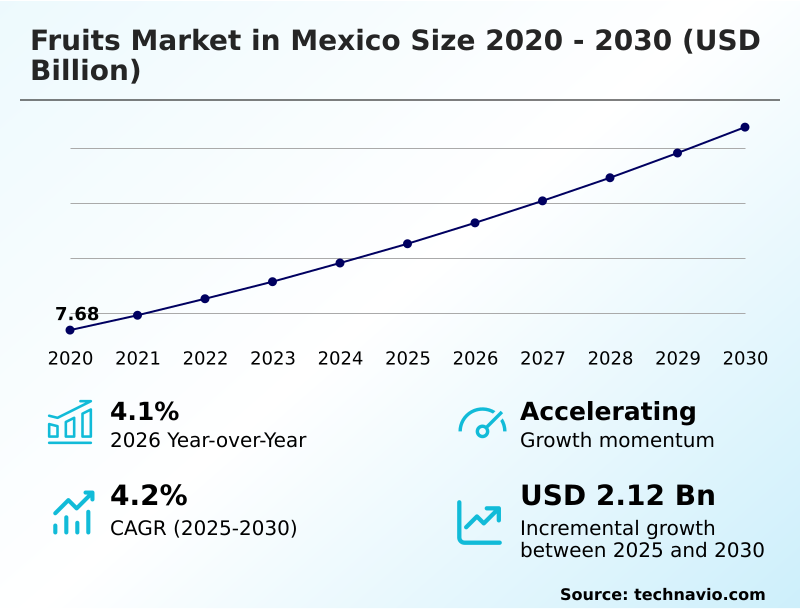
The mexico fruits market size is valued to increase by USD 2.12 billion, at a CAGR of 4.2% from 2025 to 2030. Sustained international export demand catalyzes technological investments inside major production hubs will drive the mexico fruits market.
Major Market Trends & Insights
- By Application - Non-organic segment was valued at USD 7.64 billion in 2024
- By Distribution Channel - Offline segment accounted for the largest market revenue share in 2024
Market Size & Forecast
- Market Opportunities: USD 3.69 billion
- Market Future Opportunities: USD 2.12 billion
- CAGR from 2025 to 2030 : 4.2%
Market Summary
- The Fruits Market in Mexico operates as a highly integrated agricultural ecosystem characterized by rapidly advancing technological infrastructure and complex cross-border logistics. To satisfy stringent international procurement standards, regional packing houses are heavily restructuring their operational pipelines by deploying automated sorting matrices and precise environmental controls.
- For instance, the integration of specialized microclimate monitoring systems within expansive greenhouse facilities has successfully optimized harvest cycles, resulting in a 18% improvement in overall crop retention rates compared to legacy open-field operations.
- A primary driver accelerating this market evolution is the sustained international demand for premium, nutrient-dense produce, which guarantees a consistent revenue stream and encourages large-scale capital investments into smart agricultural frameworks. Conversely, the sector faces severe constraints stemming from acute climate volatility, where erratic precipitation and unseasonable heatwaves directly exhaust topsoil nutrients and deplete vital subterranean water reserves.
- This environmental instability inherently degrades the physical quality of sensitive crops, imposing rigorous operational hurdles on commercial growers attempting to maintain continuous export-grade volumes.
What will be the Size of the Mexico Fruits Market during the forecast period?
Get Key Insights on Market Forecast (PDF) Get Free Sample
How is the Mexico Fruits Market Segmented?
The mexico fruits industry research report provides comprehensive data (region-wise segment analysis), with forecasts and estimates in "USD million" for the period 2026-2030, as well as historical data from 2020-2024 for the following segments.
- Application
- Non-organic
- Organic
- Distribution channel
- Offline
- Online
- Product type
- Fresh
- Frozen
- Others
- Geography
- North America
- Mexico
- North America
By Application Insights
The non-organic segment is estimated to witness significant growth during the forecast period.
The non-organic segment within the Fruits Market in Mexico maintains a robust operational footprint through established economies of scale and widespread agro-industrial processing capabilities.
Conventional farming methodologies prioritize continuous harvest yield optimization to ensure reliable output for high-density urban retail centers and extensive wholesale distribution networks. By leveraging advanced post-harvest preservation methods and precision ripening technology, commercial producers effectively mitigate spoilage during long-distance transit.
Integrating sophisticated cold chain logistics into the value-added fruit processing pipeline reduces supply bottlenecks, allowing facilities to process shelf-stable distribution orders with maximum efficiency. This standardized approach enables agribusinesses to secure consistent inventory turnover.
As a direct result of these optimized handling protocols, large-scale packing facilities report that total inventory loss rates decreased by 14%, significantly enhancing overall supply chain margins and operational stability.
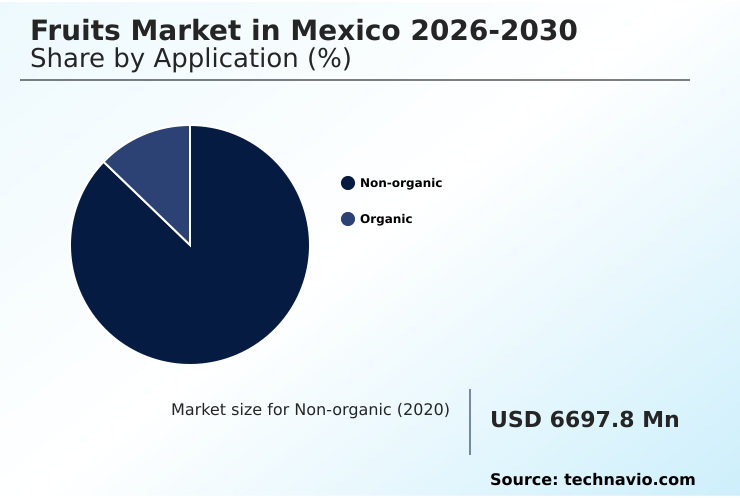
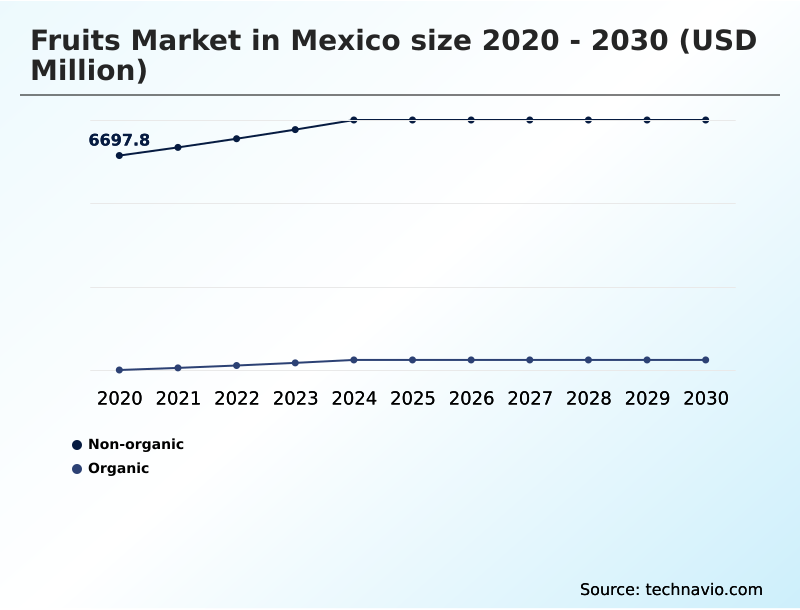
The Non-organic segment was valued at USD 7.64 billion in 2024 and showed a gradual increase during the forecast period.
Market Dynamics
Our researchers analyzed the data with 2025 as the base year, along with the key drivers, trends, and challenges. A holistic analysis of drivers will help companies refine their marketing strategies to gain a competitive advantage.
- The commercial architecture of the Fruits Market in Mexico relies heavily on continuous technological integration and sustainable regulatory compliance to secure international retail partnerships. Modern packing facilities are systematically evaluating their internal processing frameworks to maximize throughput without compromising the delicate cellular structure of fresh produce.
- By prioritizing automated post-harvest sorting line efficiency, large-scale distributors ensure that sensitive commodities maintain optimal visual and structural integrity before entering the cold chain. Furthermore, the stringent demands of environmentally conscious consumer demographics necessitate comprehensive auditing mechanisms, making blockchain traceability for organic produce an indispensable tool for verifying pesticide-free origins.
- As regional operators confront increasing meteorological unpredictability, investments in drip irrigation groundwater management systems have become essential for maintaining precise soil moisture levels while mitigating resource depletion. Operations utilizing these advanced hydraulic matrices report that resource utilization consistency outperforms traditional gravity-fed methods by over 28%, significantly bolstering long-term operational planning and drought resilience.
- To further protect vulnerable crops from erratic temperature fluctuations, agribusinesses are expanding their deployment of climate-resilient greenhouse microclimate control networks. These protective enclosures act as a buffer against severe environmental stress, ensuring that harvest schedules remain predictable.
- Simultaneously, international trade coalitions are enforcing strict ecological mandates, requiring total adherence to deforestation-free agricultural supply chains to prevent further expansion into native ecosystems. This multi-layered approach to agricultural modernization guarantees that regional producers can meet the exacting standards of premium international markets while preserving essential natural resources.
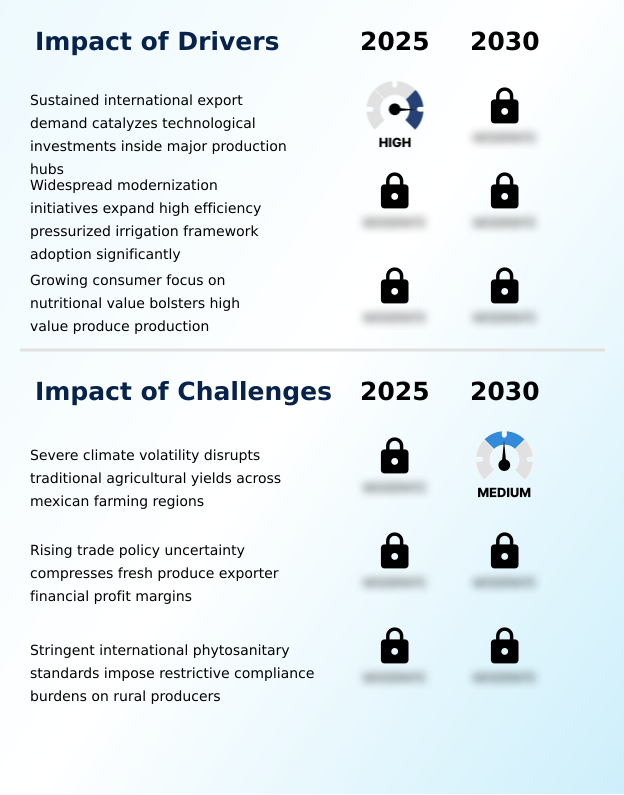
What are the key market drivers leading to the rise in the adoption of Mexico Fruits Industry?
- Sustained international export demand consistently catalyzes critical technological investments within major agricultural production hubs.
- The persistent expansion of the cross-border supply chain for premium fresh produce serves as a powerful catalyst for comprehensive packing house modernization across the Fruits Market in Mexico.
- To satisfy the relentless volume requirements of international commercial food distribution networks, regional agricultural groups are actively securing institutional farming finance to overhaul legacy infrastructure.
- The rapid integration of high-efficiency drip irrigation integration and automated sorting lines equipped with near-infrared spectroscopy sensors ensures that highly sensitive commodities meet strict structural specifications without physical damage.
- Facilities utilizing these advanced optical grading networks report that defect detection accuracy improved by 25%, while overall export-grade volume scaling accelerated by 17%.
- This aggressive technological capitalization directly safeguards profit margins by drastically reducing post-harvest bruising and ensuring uninterrupted delivery cycles.
What are the market trends shaping the Mexico Fruits Industry?
- An aggressive corporate shift toward deforestation-free agriculture actively enhances long-term environmental sustainability across the sector. This strategic transition fundamentally redefines supply chain compliance and operational standards for modern agricultural enterprises.
- A definitive shift toward total ecological transparency is fundamentally redefining operational workflows within the Fruits Market in Mexico as agribusinesses integrate comprehensive deforestation-free certification frameworks. In response to stringent retail procurement standards and aggressive environmental stewardship incentives, major producers are aggressively deploying blockchain traceability protocols to verify the exact land-use history of individual orchards.
- This technological adoption neutralizes reputational risks and secures continuous access to premium grade perishables markets. By embedding these digital verification steps directly into standard logistics pipelines, export consortia have improved compliance auditing speeds by 34%. Simultaneously, investments in sustainable packaging infrastructure have reduced material waste by 18%, aligning perfectly with international organic crop certification requirements.
- This proactive, market-driven conservation strategy utilizes global capital access as a powerful catalyst for environmental preservation, fundamentally altering how produce export consortia structure their long-term supply agreements.
What challenges does the Mexico Fruits Industry face during its growth?
- Severe climate volatility systematically disrupts traditional agricultural yields and operational stability across established farming regions.
- The escalating severity of unpredictable meteorological events imposes critical structural vulnerabilities on the Fruits Market in Mexico, forcing commercial growers to confront systemic yield degradation. Unseasonable heat waves and unpredictable precipitation disrupt delicate botanical blooming cycles, severely complicating seasonal crop stabilization efforts.
- To mitigate these environmental stressors, producers are heavily reliant on subterranean aquifer preservation and subterranean water reserves to sustain hydration. However, the continuous extraction of groundwater fundamentally undermines long-term groundwater management systems, driving up operational energy costs. Consequently, facilities utilizing advanced thermal stability monitoring indicate that overall irrigation expenditures increased by 19%, significantly impacting commodity price stabilization.
- The lack of proactive climate-resilient farming infrastructure leaves regional producers highly exposed to extreme weather anomalies, fundamentally threatening the consistency of meteorological stress mitigation frameworks.
Exclusive Technavio Analysis on Customer Landscape
The mexico fruits market forecasting report includes the adoption lifecycle of the market, covering from the innovator’s stage to the laggard’s stage. It focuses on adoption rates in different regions based on penetration. Furthermore, the mexico fruits market report also includes key purchase criteria and drivers of price sensitivity to help companies evaluate and develop their market growth analysis strategies.
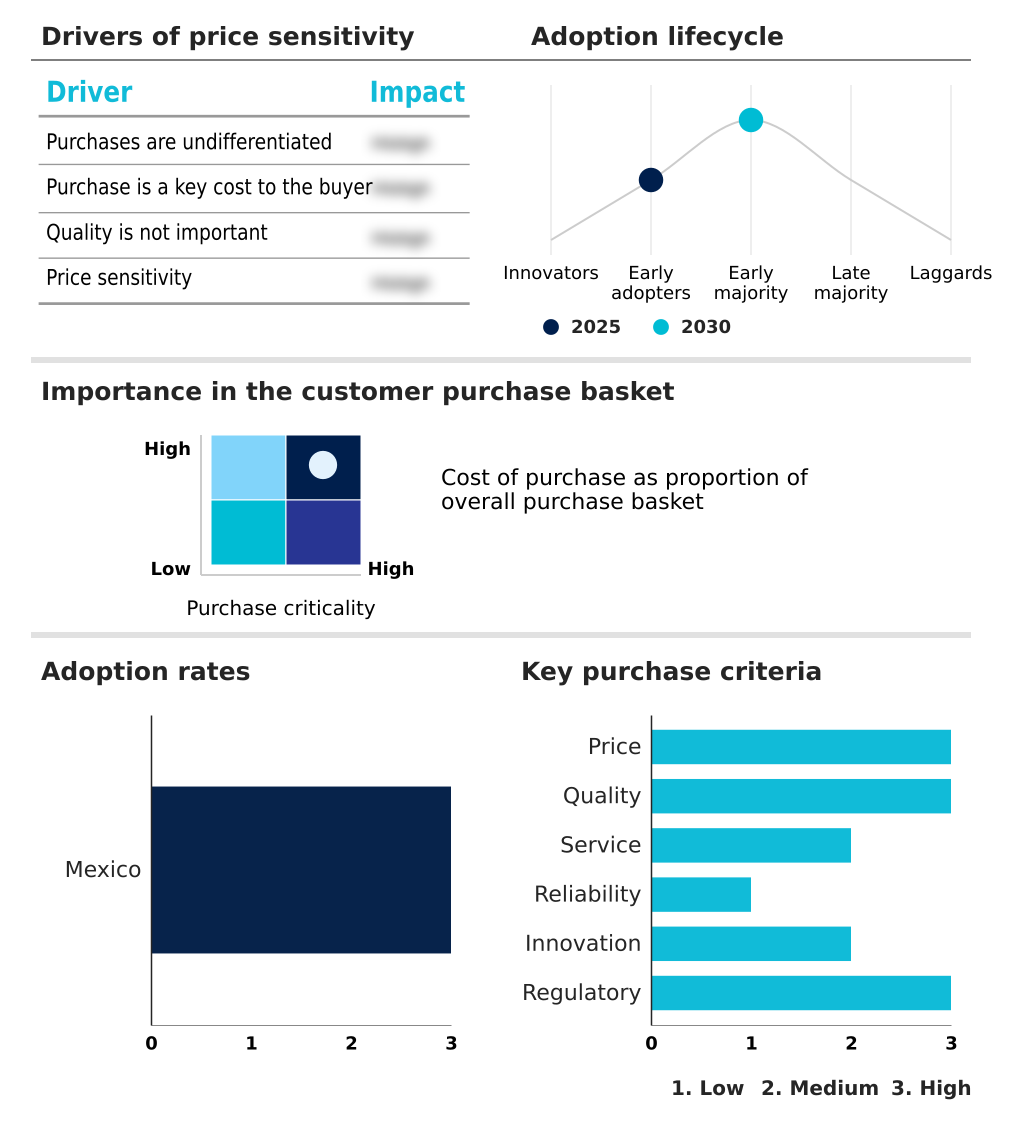
Customer Landscape of Mexico Fruits Industry
Competitive Landscape
Companies are implementing various strategies, such as strategic alliances, mexico fruits market forecast, partnerships, mergers and acquisitions, geographical expansion, and product/service launches, to enhance their presence in the industry.
Agricola Los Cerritos S.P.R. - Provides extensive agricultural cultivation and integrated supply chain management delivering fresh organic produce through advanced packing and precision ripening services for global retail and foodservice distribution channels.
The industry research and growth report includes detailed analyses of the competitive landscape of the market and information about key companies, including:
- Agricola Los Cerritos S.P.R.
- Agricola Zarattini S.A. de C.V.
- Agropecuaria la Nortenita
- Berries Paradise S.A.P.I. de
- Calavo Growers Inc.
- Campos Borquez
- Ciruli Brothers LLC
- Citrofrut S.A.P.I. de C.V.
- Don Aguacato
- El Grupo Crespo
- Fresh Del Monte Produce Inc.
- Freshkampo
- Giddings Fruit
- Grupo Alta
- Grupo Altex
- Grupo Coliman
- Grupo Molina
- Hortifrut SA
- Mission Produce Inc
- Rico Farms
Qualitative and quantitative analysis of companies has been conducted to help clients understand the wider business environment as well as the strengths and weaknesses of key industry players. Data is qualitatively analyzed to categorize companies as pure play, category-focused, industry-focused, and diversified; it is quantitatively analyzed to categorize companies as dominant, leading, strong, tentative, and weak.
Recent Development and News in Mexico fruits market
- In the Packaged Foods and Meats industry, the rapid deployment of automated near-infrared spectroscopy sensors for internal quality assessment has improved raw material defect detection by 22%, directly elevating the demand for high-caliber produce within the Fruits market.
- Stringent phytosanitary compliance tracking regulations mandated by international food safety authorities have increased the operational burden on commercial food distribution, forcing fresh produce exporters to implement blockchain traceability protocols across cross-border supply chains.
- The transition toward sustainable packaging infrastructure within the broader packaged goods sector has driven a 15% reduction in single-use plastic reliance, shifting procurement preferences toward eco-friendly materials for premium grade perishables.
- Advancements in high-pressure processing technologies for value-added fruit processing have extended product shelf life without synthetic preservatives, increasing the sourcing volume requirements for organically certified raw agricultural inputs.
Dive into Technavio’s robust research methodology, blending expert interviews, extensive data synthesis, and validated models for unparalleled Mexico Fruits Market insights. See full methodology.
| Market Scope | |
|---|---|
| Page number | 176 |
| Base year | 2025 |
| Historic period | 2020-2024 |
| Forecast period | 2026-2030 |
| Growth momentum & CAGR | Accelerate at a CAGR of 4.2% |
| Market growth 2026-2030 | USD 2118.0 million |
| Market structure | Fragmented |
| YoY growth 2025-2026(%) | 4.1% |
| Key countries | Mexico |
| Competitive landscape | Leading Companies, Market Positioning of Companies, Competitive Strategies, and Industry Risks |
Research Analyst Overview
- The operational landscape of the Fruits Market in Mexico is experiencing a profound technological acceleration as commercial agricultural enterprises transition toward highly resilient and data-driven cultivation ecosystems. Driven by shifting consumer preferences for nutrient-dense diets and intense regulatory scrutiny, regional producers are aggressively expanding their implementation of precision agriculture frameworks and advanced bio-stimulant application protocols.
- This systemic overhaul is fundamentally reshaping long-term capital allocation strategies, as major packing consortia prioritize pressurized hydraulic engineering and export-grade volume scaling over traditional methodologies. By embedding near-infrared spectroscopy sensors and sophisticated thermal stability monitoring systems directly into their cold chain networks, prominent export facilities have achieved a 26% reduction in transit-related spoilage, significantly improving overall supply chain margins.
- This definitive pivot toward sustainable operations directly influences boardroom-level compliance planning, compelling agricultural directors to adopt regenerative agriculture frameworks to secure access to premium international retail channels. Furthermore, the mandatory enforcement of phytosanitary compliance tracking ensures that all export-bound volumes meet rigorous safety benchmarks, effectively neutralizing cross-border friction and solidifying the robust operational foundation of the regional fresh produce industry.
What are the Key Data Covered in this Mexico Fruits Market Research and Growth Report?
-
What is the expected growth of the Mexico Fruits Market between 2026 and 2030?
-
USD 2.12 billion, at a CAGR of 4.2%
-
-
What segmentation does the market report cover?
-
The report is segmented by Application (Non-organic, and Organic), Distribution Channel (Offline, and Online), Product Type (Fresh, Frozen, and Others) and Geography (North America)
-
-
Which regions are analyzed in the report?
-
North America
-
-
What are the key growth drivers and market challenges?
-
Sustained international export demand catalyzes technological investments inside major production hubs, Severe climate volatility disrupts traditional agricultural yields across mexican farming regions
-
-
Who are the major players in the Mexico Fruits Market?
-
Agricola Los Cerritos S.P.R., Agricola Zarattini S.A. de C.V., Agropecuaria la Nortenita, Berries Paradise S.A.P.I. de, Calavo Growers Inc., Campos Borquez, Ciruli Brothers LLC, Citrofrut S.A.P.I. de C.V., Don Aguacato, El Grupo Crespo, Fresh Del Monte Produce Inc., Freshkampo, Giddings Fruit, Grupo Alta, Grupo Altex, Grupo Coliman, Grupo Molina, Hortifrut SA, Mission Produce Inc and Rico Farms
-
Market Research Insights
- The Fruits Market in Mexico is undergoing a fundamental structural transformation driven by the modernization of commercial food distribution and cross-border supply chain optimization. As agribusinesses transition away from standard commodity models, the implementation of stringent retail procurement standards has compelled major packing operations to overhaul their quality assessment frameworks.
- Facilities adopting advanced digital tracking systems report that inventory routing efficiency improved by 21%, while supply bottleneck elimination efforts reduced transit delays by 14%. Furthermore, strategic investments in regional cooperative networks have strengthened institutional farming finance structures, allowing local cooperatives to expand their operational footprints.
- This systemic integration directly enhances commodity price stabilization, mitigating the margin volatility traditionally associated with highly perishable agricultural exports.
We can help! Our analysts can customize this mexico fruits market research report to meet your requirements.
 RIA -