
Generative AI In Data Labeling Solution And Services Market Size 2025-2029
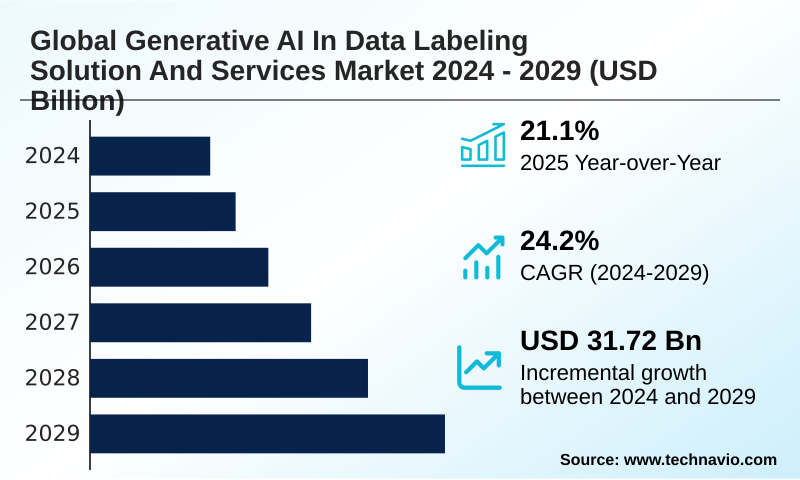
The generative ai in data labeling solution and services market size is forecast to increase by USD 31.7 billion, at a CAGR of 24.2% between 2024 and 2029.
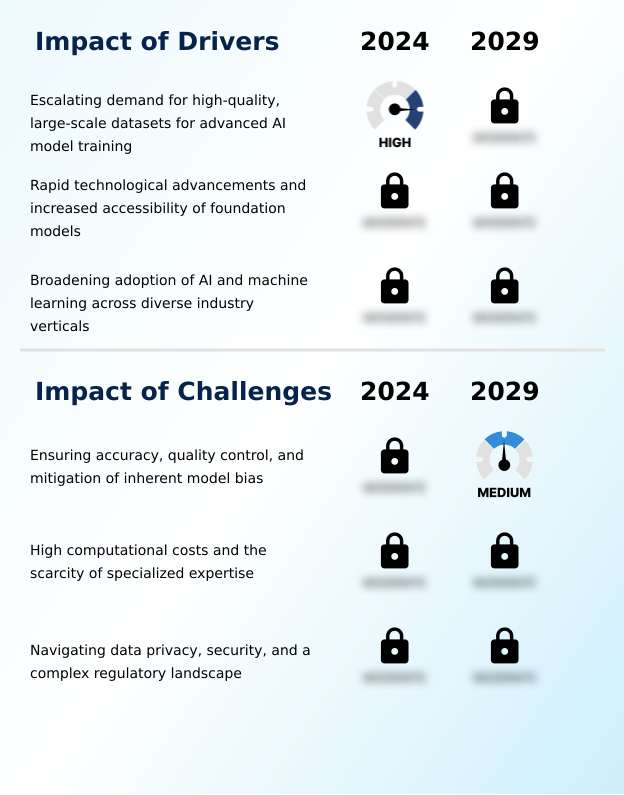
The global generative AI in data labeling solution and services market is shaped by the escalating demand for high-quality, large-scale datasets. Traditional manual data labeling methods create a significant bottleneck in the ai development lifecycle, which is addressed by the proliferation of synthetic data generation for robust model training. This strategic shift allows organizations to create limitless volumes of perfectly labeled data on demand, covering a comprehensive spectrum of scenarios. This capability is particularly transformative for generative ai in automotive applications and in the development of data labeling and annotation tools, enabling more resilient and accurate systems.However, a paramount challenge confronting the market is ensuring accuracy, quality control, and mitigation of inherent model bias. Generative models can produce plausible but incorrect labels, a phenomenon known as hallucination, which can introduce systemic errors into training datasets. This makes ai in data quality a critical concern, necessitating robust human-in-the-loop verification processes to maintain the integrity of generative ai in healthcare data. The market's long-term viability depends on developing sophisticated frameworks for bias detection and creating reliable generative artificial intelligence (AI) that can be trusted for foundational tasks.
What will be the Size of the Generative AI In Data Labeling Solution And Services Market during the forecast period?
Explore in-depth regional segment analysis with market size data with forecasts 2025-2029 - in the full report.
Request Free Sample
The global generative AI in data labeling solution and services market is witnessing a transformation driven by advancements in generative adversarial networks and diffusion models. These techniques are central to synthetic data generation, augmenting AI model training data and redefining the machine learning pipeline. This evolution supports a move toward more sophisticated data-centric AI workflows, which integrate automated data labeling with human-in-the-loop annotation for enhanced accuracy. The scope of application is broadening from simple text-based data annotation to complex image-based data annotation and audio-based data annotation, creating a demand for robust multimodal data labeling capabilities. This shift across the AI development lifecycle is significant, with projections indicating a 35% rise in the use of AI-assisted labeling for specialized computer vision systems.Building upon this foundation, the focus intensifies on annotation quality control and AI-powered quality assurance within modern data annotation platforms. Methods like zero-shot learning and few-shot learning are becoming more viable, reducing dependency on massive datasets. The process of foundation model fine-tuning is increasingly guided by reinforcement learning from human feedback, ensuring outputs align with specific operational needs. Key considerations such as model bias mitigation and data privacy compliance are being addressed through AI-assisted labeling and semi-supervised learning. This impacts diverse sectors, from medical imaging analysis and predictive maintenance models to securing network traffic patterns against cybersecurity threat signatures and improving autonomous vehicle sensors for robotics training simulation and smart city solutions.
How is this Generative AI In Data Labeling Solution And Services Market segmented?
The generative ai in data labeling solution and services market research report provides comprehensive data (region-wise segment analysis), with forecasts and estimates in "USD million" for the period 2025-2029,for the following segments.
- End-user
- IT data
- Healthcare
- Retail
- Financial services
- Others
- Type
- Semi-supervised
- Automatic
- Manual
- Product
- Image or video based
- Text based
- Audio based
- Geography
- North America
- APAC
- China
- India
- South Korea
- Japan
- Australia
- Indonesia
- Europe
- Germany
- UK
- France
- Italy
- The Netherlands
- Spain
- South America
- Middle East and Africa
- Rest of World (ROW)
By End-user Insights
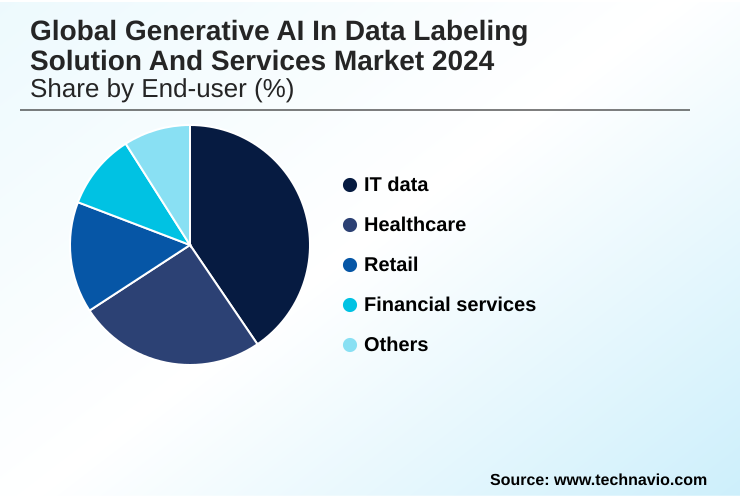
The it data segment is estimated to witness significant growth during the forecast period.
In the IT data segment, generative AI is transforming the creation of training data for software development, cybersecurity, and network management. It addresses the need for realistic, non-sensitive data at scale by producing synthetic code, structured log files, and diverse threat signatures. This is crucial for training AI-powered developer tools and intrusion detection systems. With South America representing an 8.1% market opportunity, the demand for localized and specialized IT datasets is expanding globally, driving innovation in ai model validation and performance.
This capability accelerates the development of more intelligent and resilient IT infrastructure. For network management, generative AI can simulate complex traffic scenarios, providing robust datasets for training predictive maintenance models without using proprietary operational data. The ongoing digital transformation across enterprises ensures a sustained need for these solutions to support next-generation AI-driven software engineering and operations. The use of data-centric ai workflows is becoming standard for improving system reliability through better training data.

Get a glance at the market share of various segments Request Free Sample
Regional Analysis
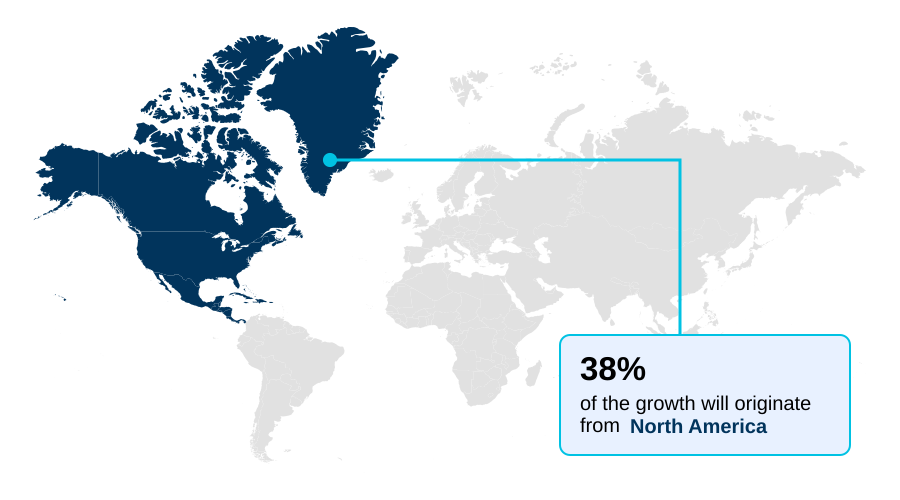
North America is estimated to contribute 38.4% to the growth of the global market during the forecast period.Technavio’s analysts have elaborately explained the regional trends and drivers that shape the market during the forecast period.
Request Free Sample
North America is the dominant market for generative AI in data labeling, driven by its advanced technology sector and high AI adoption rates. The region's automotive and healthcare industries require immense volumes of labeled data for autonomous driving and diagnostic models. Major cloud providers are integrating generative AI tools, lowering entry barriers. The competitive landscape in North America is characterized by established leaders and innovative startups focusing on data augmentation and synthetic data generation, creating a dynamic environment for ai model validation.
The market in North America benefits from a strong venture capital ecosystem and significant R&D investment, fostering continuous innovation. This environment pushes companies to develop comprehensive data engines that move beyond simple annotation. Despite this leadership, challenges related to data privacy and talent shortages persist. The Middle East and Africa, accounting for 4.81% of the global opportunity, represents a contrasting, high-potential emerging market, highlighting the varied global adoption rates for these data-centric ai workflows.
Market Dynamics
Our researchers analyzed the data with 2024 as the base year, along with the key drivers, trends, and challenges. A holistic analysis of drivers will help companies refine their marketing strategies to gain a competitive advantage.
The Global Generative AI in Data Labeling Solution and Services Market is witnessing a paradigm shift, driven by foundation model-powered pre-labeling which is fundamental to scaling data annotation with generative models. Enterprises are leveraging AI for automating complex labeling workflows, enabling efficient labeling for large language models and sophisticated automated annotation for multimodal datasets. To ensure accuracy, the human-in-the-loop for model alignment remains critical, complemented by rigorous AI-assisted quality control for labeling. This includes proactive bias detection in AI-generated labels to maintain high standards and robust quality control in AI-generated datasets. These advancements are pivotal in addressing the core challenges of data preparation for modern AI systems.Moreover, the market is actively addressing data limitations through generative AI for data scarcity issues, which encompasses generative AI for rare event simulation and the creation of synthetic data for AI model robustness. A key enabler is privacy-preserving synthetic data generation, which is particularly vital for producing synthetic medical data for HIPAA compliance. The applications are expansive, with generative AI in financial data analysis, generative AI for retail personalization, and AI data solutions for smart manufacturing demonstrating significant ROI. This technology is also essential for the training data creation for autonomous systems and is transforming sectors like data labeling for AI in agriculture through techniques such as cross-modal data correlation labeling.
What are the key market drivers leading to the rise in the adoption of Generative AI In Data Labeling Solution And Services Industry?
- The primary market driver is the escalating demand for vast, high-quality annotated datasets required to train increasingly sophisticated AI models.
The escalating demand for vast, high-quality datasets is the principal driver for the market. As AI models grow in complexity, their performance becomes fundamentally contingent on the volume and quality of their training data. Traditional manual data annotation is slow and expensive, creating a bottleneck in the ai development lifecycle. Generative AI addresses this by automating the annotation process through efficient pre-labeling tools and human-in-the-loop annotation workflows. This approach enables organizations to manage data-centric ai workflows orders of magnitude faster and more cost-effectively, accelerating innovation.Rapid technological advancements and the increased accessibility of foundation models serve as a critical catalyst. The capabilities of these models enable complex data labeling tasks with near-human performance. The availability of models via APIs and open-source alternatives has democratized access to state-of-the-art technology, allowing service providers to integrate generative AI without massive upfront investment in foundation model fine-tuning. Capabilities like zero-shot learning drastically reduce the setup time for new projects, while advanced reasoning enhances ai-powered quality assurance, making generative AI an indispensable component of the modern data labeling toolkit.
What are the market trends shaping the Generative AI In Data Labeling Solution And Services Industry?
- A key market trend is the increasing proliferation of synthetic data generation to enable more robust AI model training.
A paramount trend reshaping the market is the strategic shift toward generating high-fidelity synthetic data. This approach leverages generative models like diffusion models to create artificial data that is statistically indistinguishable from real-world datasets, directly addressing bottlenecks such as data scarcity, data privacy, and prohibitive acquisition costs. Synthetic data generation allows organizations to create limitless, perfectly labeled data on demand, covering rare events and edge cases essential for robust model training in areas like generative ai in manufacturing sector. Because this data contains no personally identifiable information, it mitigates privacy risks and simplifies compliance with regulations. Analysis indicates that the Asia-Pacific region presents a significant opportunity, accounting for 32.46% of the potential market expansion.The market is also witnessing the sophisticated evolution of human-in-the-loop frameworks, which are supercharged by the capabilities of large-scale foundation models. This paradigm positions human annotators as expert supervisors who validate and correct labels initially generated by AI. Generative AI models can perform zero-shot or few-shot pre-labeling with remarkable accuracy across various data types, from text to video. This AI-augmented approach dramatically increases the speed and consistency of the data labeling process, allowing enterprises to focus their valuable human resources on the most challenging and nuanced data points, thereby maximizing efficiency and improving outcomes for generative ai in data analytics.
What challenges does the Generative AI In Data Labeling Solution And Services Industry face during its growth?
- A primary challenge affecting industry growth is ensuring the accuracy and quality of generated labels while mitigating inherent model biases.
A paramount challenge is the imperative to guarantee the accuracy and quality of generated labels while mitigating the biases inherent in foundation models. The principle of garbage in, garbage out remains acutely relevant; inaccurate or biased datasets lead to flawed AI models. Generative models are susceptible to hallucination, where they produce plausible but factually incorrect information. These errors require robust human-in-the-loop (HITL) verification processes to detect. Furthermore, models trained on vast internet data can perpetuate and amplify societal biases, posing significant risks in high-stakes applications and demanding sophisticated quality control frameworks and algorithmic fairness audits.While generative AI promises efficiencies, its implementation involves substantial computational costs and a reliance on scarce, specialized expertise. Large-scale models require immense computational resources, primarily high-end graphics processing units, translating to high operational expenditures for hardware or cloud services. For many companies, this high capital expenditure for infrastructure is a formidable hurdle. Moreover, effectively deploying and optimizing these workflows requires a team of skilled machine learning engineers and data scientists. The limited global talent pool for such roles leads to intense competition and high salary expectations, creating significant barriers to adoption.
Exclusive Customer Landscape
The generative ai in data labeling solution and services market forecasting report includes the adoption lifecycle of the market, covering from the innovator’s stage to the laggard’s stage. It focuses on adoption rates in different regions based on penetration. Furthermore, the generative ai in data labeling solution and services market report also includes key purchase criteria and drivers of price sensitivity to help companies evaluate and develop their market growth analysis strategies.
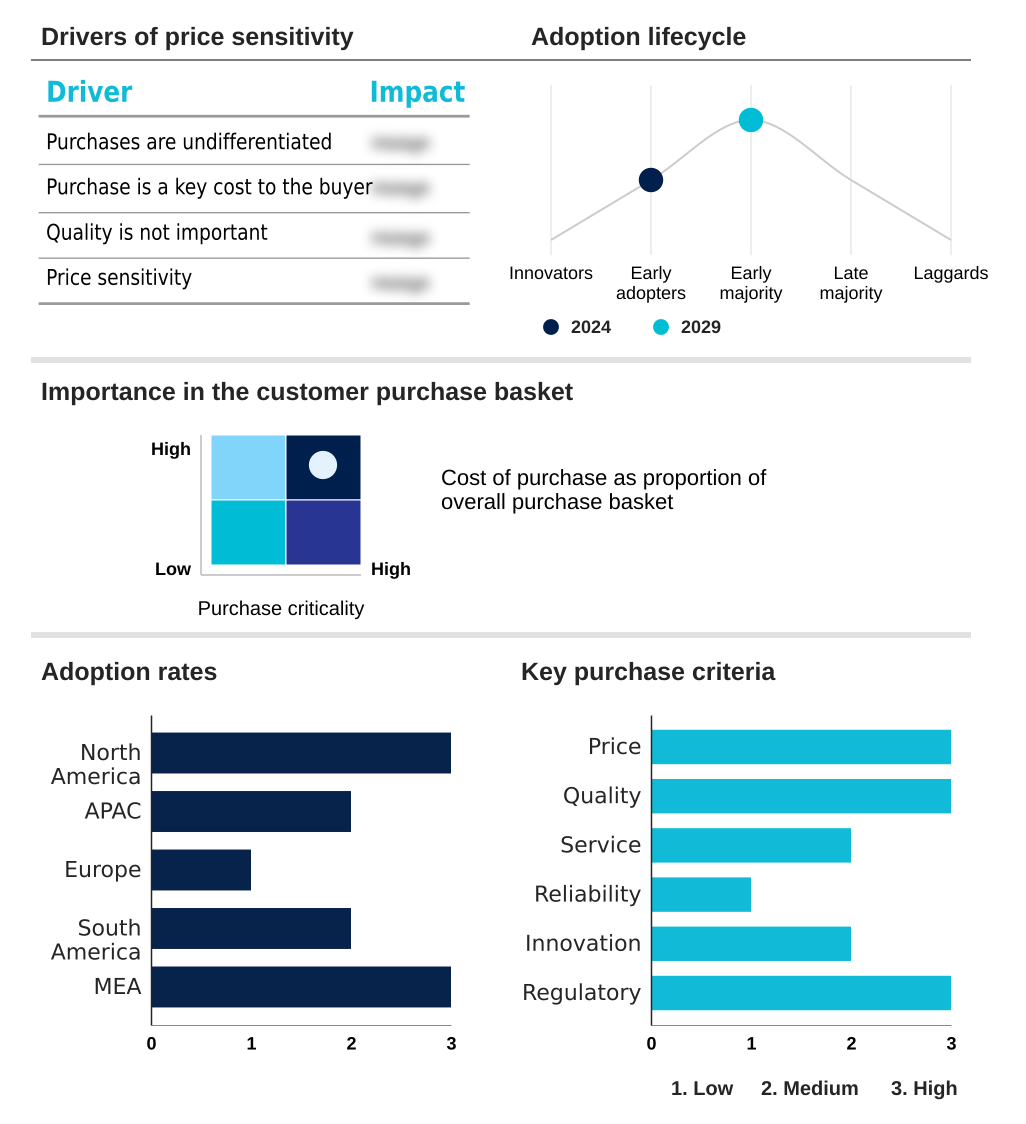
Customer Landscape
Key Companies & Market Insights
Companies are implementing various strategies, such as strategic alliances, generative ai in data labeling solution and services market forecast, partnerships, mergers and acquisitions, geographical expansion, and product/service launches, to enhance their presence in the industry.
ALEGION - The company delivers a data annotation platform incorporating built-in machine learning capabilities to facilitate automation and quality control. This solution is designed to support the complex data labeling workflows necessary for training advanced AI and generative AI systems, ensuring high-quality, model-ready data.
The industry research and growth report includes detailed analyses of the competitive landscape of the market and information about key companies, including:
- ALEGION
- Amazon Mechanical Turk, Inc.
- APPEN Ltd.
- Clickworker GmbH
- Cloudfactory
- Cogito Tech LLC
- Enable
- Heex Technologies
- iMerit
- Labelbox
- Scale
- Shaip
- SuperAnnotate
- TaskUs Inc.
- TELUS International Inc.
Qualitative and quantitative analysis of companies has been conducted to help clients understand the wider business environment as well as the strengths and weaknesses of key industry players. Data is qualitatively analyzed to categorize companies as pure play, category-focused, industry-focused, and diversified; it is quantitatively analyzed to categorize companies as dominant, leading, strong, tentative, and weak.
Recent Development and News in Generative Ai In Data Labeling Solution And Services Market
In May 2024, Scale AI announced it had raised $1 billion in a Series F funding round, valuing the company at $13.8 billion, to further its mission of building the data foundation for AI.In March 2024, Anthropic, a key developer of foundational models used in data labeling, released its Claude 3 model family, which set new industry benchmarks on a wide range of cognitive tasks, impacting the capabilities of AI-assisted annotation tools.In February 2024, TELUS International expanded its Fuel iX solution, powered by generative AI, to deliver enhanced end-to-end customer experience services, including AI-driven data annotation and model training capabilities.
Research Analyst Overview
The global generative AI in data labeling solution and services market is witnessing a transformation driven by advancements in generative adversarial networks and diffusion models. These techniques are central to synthetic data generation, augmenting AI model training data and redefining the machine learning pipeline. This evolution supports a move toward more sophisticated data-centric AI workflows, which integrate automated data labeling with human-in-the-loop annotation for enhanced accuracy. The scope of application is broadening from simple text-based data annotation to complex image-based data annotation and audio-based data annotation, creating a demand for robust multimodal data labeling capabilities. This shift across the AI development lifecycle is significant, with projections indicating a 35% rise in the use of AI-assisted labeling for specialized computer vision systems.Building upon this foundation, the focus intensifies on annotation quality control and AI-powered quality assurance within modern data annotation platforms. Methods like zero-shot learning and few-shot learning are becoming more viable, reducing dependency on massive datasets. The process of foundation model fine-tuning is increasingly guided by reinforcement learning from human feedback, ensuring outputs align with specific operational needs. Key considerations such as model bias mitigation and data privacy compliance are being addressed through AI-assisted labeling and semi-supervised learning. This impacts diverse sectors, from medical imaging analysis and predictive maintenance models to securing network traffic patterns against cybersecurity threat signatures and improving autonomous vehicle sensors for robotics training simulation and smart city solutions.
Dive into Technavio’s robust research methodology, blending expert interviews, extensive data synthesis, and validated models for unparalleled Generative AI In Data Labeling Solution And Services Market insights. See full methodology.
|
Market Scope
|
|
Report Coverage
|
Details
|
|
Page number
|
285
|
|
Base year
|
2024
|
|
Forecast period
|
2025-2029
|
|
Growth momentum & CAGR
|
Accelerating at a CAGR of 24.2%
|
|
Market growth 2024-2029
|
USD 31.7 billion
|
|
Market structure
|
Fragmented
|
|
YoY growth 2024-2029(%)
|
21.1%
|
|
Key countries
|
US, Canada, Mexico, China, India, South Korea, Japan, Australia, Indonesia, Germany, UK, France, Italy, The Netherlands, Spain, Brazil, Argentina, Colombia, South Africa, Saudi Arabia, UAE, Israel, Turkey
|
|
Competitive landscape
|
Leading Companies, Market Positioning of Companies, Competitive Strategies, and Industry Risks
|
Request Free Sample
What are the Key Data Covered in this Generative AI In Data Labeling Solution And Services Market Research and Growth Report?
- CAGR of the Generative AI In Data Labeling Solution And Services industry during the forecast period
- Detailed information on factors that will drive the growth and forecasting between 2024 and 2029
- Precise estimation of the size of the market and its contribution of the industry in focus to the parent market
- Accurate predictions about upcoming growth and trends and changes in consumer behaviour
- Growth of the market across North America, APAC, Europe, South America, Middle East and Africa
- Thorough analysis of the market’s competitive landscape and detailed information about companies
- Comprehensive analysis of factors that will challenge the generative ai in data labeling solution and services market growth of industry companies
We can help! Our analysts can customize this generative ai in data labeling solution and services market research report to meet your requirements.
Get in touch
1 Executive Summary
- 1 Executive Summary
- 1.1 Market overview
- Executive Summary - Chart on Market Overview
- Executive Summary - Data Table on Market Overview
- Executive Summary - Chart on Global Market Characteristics
- Executive Summary - Chart on Market by Geography
- Executive Summary - Chart on Market Segmentation by End-user
- Executive Summary - Chart on Market Segmentation by Type
- Executive Summary - Chart on Market Segmentation by Product
- Executive Summary - Chart on Incremental Growth
- Executive Summary - Data Table on Incremental Growth
- Executive Summary - Chart on Company Market Positioning
2 Technavio Analysis
- 2 Technavio Analysis
- 2.1 Analysis of price sensitivity, lifecycle, customer purchase basket, adoption rates, and purchase criteria
- Analysis of price sensitivity, lifecycle, customer purchase basket, adoption rates, and purchase criteria
- 2.2 Criticality of inputs and Factors of differentiation
- Chart on Overview on criticality of inputs and factors of differentiation
- 2.3 Factors of disruption
- Chart on Overview on factors of disruption
- 2.4 Impact of drivers and challenges
- Chart on Impact of drivers and challenges in 2024 and 2029
3 Market Landscape
- 3 Market Landscape
- 3.1 Market ecosystem
- Chart on Parent Market
- Data Table on - Parent Market
- 3.2 Market characteristics
- Chart on Market characteristics analysis
- 3.3 Value chain analysis
- Chart on Value chain analysis
4 Market Sizing
- 4 Market Sizing
- 4.1 Market definition
- Data Table on Offerings of companies included in the market definition
- 4.2 Market segment analysis
- 4.3 Market size 2024
- 4.4 Market outlook: Forecast for 2024-2029
- Chart on Global - Market size and forecast 2024-2029 ($ billion)
- Data Table on Global - Market size and forecast 2024-2029 ($ billion)
- Chart on Global Market: Year-over-year growth 2024-2029 (%)
- Data Table on Global Market: Year-over-year growth 2024-2029 (%)
5 Five Forces Analysis
- 5 Five Forces Analysis
- 5.1 Five forces summary
- Five forces analysis - Comparison between 2024 and 2029
- 5.2 Bargaining power of buyers
- Bargaining power of buyers - Impact of key factors 2024 and 2029
- 5.3 Bargaining power of suppliers
- Bargaining power of suppliers - Impact of key factors in 2024 and 2029
- 5.4 Threat of new entrants
- Threat of new entrants - Impact of key factors in 2024 and 2029
- 5.5 Threat of substitutes
- Threat of substitutes - Impact of key factors in 2024 and 2029
- 5.6 Threat of rivalry
- Threat of rivalry - Impact of key factors in 2024 and 2029
- 5.7 Market condition
- Chart on Market condition - Five forces 2024 and 2029
6 Market Segmentation by End-user
- 6 Market Segmentation by End-user
- 6.1 Market segments
- Chart on End-user - Market share 2024-2029 (%)
- Data Table on End-user - Market share 2024-2029 (%)
- 6.2 Comparison by End-user
- Chart on Comparison by End-user
- Data Table on Comparison by End-user
- 6.3 IT data - Market size and forecast 2024-2029
- Chart on IT data - Market size and forecast 2024-2029 ($ billion)
- Data Table on IT data - Market size and forecast 2024-2029 ($ billion)
- Chart on IT data - Year-over-year growth 2024-2029 (%)
- Data Table on IT data - Year-over-year growth 2024-2029 (%)
- 6.4 Healthcare - Market size and forecast 2024-2029
- Chart on Healthcare - Market size and forecast 2024-2029 ($ billion)
- Data Table on Healthcare - Market size and forecast 2024-2029 ($ billion)
- Chart on Healthcare - Year-over-year growth 2024-2029 (%)
- Data Table on Healthcare - Year-over-year growth 2024-2029 (%)
- 6.5 Retail - Market size and forecast 2024-2029
- Chart on Retail - Market size and forecast 2024-2029 ($ billion)
- Data Table on Retail - Market size and forecast 2024-2029 ($ billion)
- Chart on Retail - Year-over-year growth 2024-2029 (%)
- Data Table on Retail - Year-over-year growth 2024-2029 (%)
- 6.6 Financial services - Market size and forecast 2024-2029
- Chart on Financial services - Market size and forecast 2024-2029 ($ billion)
- Data Table on Financial services - Market size and forecast 2024-2029 ($ billion)
- Chart on Financial services - Year-over-year growth 2024-2029 (%)
- Data Table on Financial services - Year-over-year growth 2024-2029 (%)
- 6.7 Others - Market size and forecast 2024-2029
- Chart on Others - Market size and forecast 2024-2029 ($ billion)
- Data Table on Others - Market size and forecast 2024-2029 ($ billion)
- Chart on Others - Year-over-year growth 2024-2029 (%)
- Data Table on Others - Year-over-year growth 2024-2029 (%)
- 6.8 Market opportunity by End-user
- Market opportunity by End-user ($ billion)
- Data Table on Market opportunity by End-user ($ billion)
7 Market Segmentation by Type
- 7 Market Segmentation by Type
- 7.1 Market segments
- Chart on Type - Market share 2024-2029 (%)
- Data Table on Type - Market share 2024-2029 (%)
- 7.2 Comparison by Type
- Chart on Comparison by Type
- Data Table on Comparison by Type
- 7.3 Semi-supervised - Market size and forecast 2024-2029
- Chart on Semi-supervised - Market size and forecast 2024-2029 ($ billion)
- Data Table on Semi-supervised - Market size and forecast 2024-2029 ($ billion)
- Chart on Semi-supervised - Year-over-year growth 2024-2029 (%)
- Data Table on Semi-supervised - Year-over-year growth 2024-2029 (%)
- 7.4 Automatic - Market size and forecast 2024-2029
- Chart on Automatic - Market size and forecast 2024-2029 ($ billion)
- Data Table on Automatic - Market size and forecast 2024-2029 ($ billion)
- Chart on Automatic - Year-over-year growth 2024-2029 (%)
- Data Table on Automatic - Year-over-year growth 2024-2029 (%)
- 7.5 Manual - Market size and forecast 2024-2029
- Chart on Manual - Market size and forecast 2024-2029 ($ billion)
- Data Table on Manual - Market size and forecast 2024-2029 ($ billion)
- Chart on Manual - Year-over-year growth 2024-2029 (%)
- Data Table on Manual - Year-over-year growth 2024-2029 (%)
- 7.6 Market opportunity by Type
- Market opportunity by Type ($ billion)
- Data Table on Market opportunity by Type ($ billion)
8 Market Segmentation by Product
- 8 Market Segmentation by Product
- 8.1 Market segments
- Chart on Product - Market share 2024-2029 (%)
- Data Table on Product - Market share 2024-2029 (%)
- 8.2 Comparison by Product
- Chart on Comparison by Product
- Data Table on Comparison by Product
- 8.3 Image or video based - Market size and forecast 2024-2029
- Chart on Image or video based - Market size and forecast 2024-2029 ($ billion)
- Data Table on Image or video based - Market size and forecast 2024-2029 ($ billion)
- Chart on Image or video based - Year-over-year growth 2024-2029 (%)
- Data Table on Image or video based - Year-over-year growth 2024-2029 (%)
- 8.4 Text based - Market size and forecast 2024-2029
- Chart on Text based - Market size and forecast 2024-2029 ($ billion)
- Data Table on Text based - Market size and forecast 2024-2029 ($ billion)
- Chart on Text based - Year-over-year growth 2024-2029 (%)
- Data Table on Text based - Year-over-year growth 2024-2029 (%)
- 8.5 Audio based - Market size and forecast 2024-2029
- Chart on Audio based - Market size and forecast 2024-2029 ($ billion)
- Data Table on Audio based - Market size and forecast 2024-2029 ($ billion)
- Chart on Audio based - Year-over-year growth 2024-2029 (%)
- Data Table on Audio based - Year-over-year growth 2024-2029 (%)
- 8.6 Market opportunity by Product
- Market opportunity by Product ($ billion)
- Data Table on Market opportunity by Product ($ billion)
9 Customer Landscape
- 9 Customer Landscape
- 9.1 Customer landscape overview
- Analysis of price sensitivity, lifecycle, customer purchase basket, adoption rates, and purchase criteria
10 Geographic Landscape
- 10 Geographic Landscape
- 10.1 Geographic segmentation
- Chart on Market share by geography 2024-2029 (%)
- Data Table on Market share by geography 2024-2029 (%)
- 10.2 Geographic comparison
- Chart on Geographic comparison
- Data Table on Geographic comparison
- 10.3 North America - Market size and forecast 2024-2029
- Chart on North America - Market size and forecast 2024-2029 ($ billion)
- Data Table on North America - Market size and forecast 2024-2029 ($ billion)
- Chart on North America - Year-over-year growth 2024-2029 (%)
- Data Table on North America - Year-over-year growth 2024-2029 (%)
- Chart on Regional Comparison - North America
- Data Table on Regional Comparison - North America
- 10.3.1 US - Market size and forecast 2024-2029
- Chart on US - Market size and forecast 2024-2029 ($ billion)
- Data Table on US - Market size and forecast 2024-2029 ($ billion)
- Chart on US - Year-over-year growth 2024-2029 (%)
- Data Table on US - Year-over-year growth 2024-2029 (%)
- 10.3.2 Canada - Market size and forecast 2024-2029
- Chart on Canada - Market size and forecast 2024-2029 ($ billion)
- Data Table on Canada - Market size and forecast 2024-2029 ($ billion)
- Chart on Canada - Year-over-year growth 2024-2029 (%)
- Data Table on Canada - Year-over-year growth 2024-2029 (%)
- 10.3.3 Mexico - Market size and forecast 2024-2029
- Chart on Mexico - Market size and forecast 2024-2029 ($ billion)
- Data Table on Mexico - Market size and forecast 2024-2029 ($ billion)
- Chart on Mexico - Year-over-year growth 2024-2029 (%)
- Data Table on Mexico - Year-over-year growth 2024-2029 (%)
- 10.4 APAC - Market size and forecast 2024-2029
- Chart on APAC - Market size and forecast 2024-2029 ($ billion)
- Data Table on APAC - Market size and forecast 2024-2029 ($ billion)
- Chart on APAC - Year-over-year growth 2024-2029 (%)
- Data Table on APAC - Year-over-year growth 2024-2029 (%)
- Chart on Regional Comparison - APAC
- Data Table on Regional Comparison - APAC
- 10.4.1 China - Market size and forecast 2024-2029
- Chart on China - Market size and forecast 2024-2029 ($ billion)
- Data Table on China - Market size and forecast 2024-2029 ($ billion)
- Chart on China - Year-over-year growth 2024-2029 (%)
- Data Table on China - Year-over-year growth 2024-2029 (%)
- 10.4.2 India - Market size and forecast 2024-2029
- Chart on India - Market size and forecast 2024-2029 ($ billion)
- Data Table on India - Market size and forecast 2024-2029 ($ billion)
- Chart on India - Year-over-year growth 2024-2029 (%)
- Data Table on India - Year-over-year growth 2024-2029 (%)
- 10.4.3 South Korea - Market size and forecast 2024-2029
- Chart on South Korea - Market size and forecast 2024-2029 ($ billion)
- Data Table on South Korea - Market size and forecast 2024-2029 ($ billion)
- Chart on South Korea - Year-over-year growth 2024-2029 (%)
- Data Table on South Korea - Year-over-year growth 2024-2029 (%)
- 10.4.4 Japan - Market size and forecast 2024-2029
- Chart on Japan - Market size and forecast 2024-2029 ($ billion)
- Data Table on Japan - Market size and forecast 2024-2029 ($ billion)
- Chart on Japan - Year-over-year growth 2024-2029 (%)
- Data Table on Japan - Year-over-year growth 2024-2029 (%)
- 10.4.5 Australia - Market size and forecast 2024-2029
- Chart on Australia - Market size and forecast 2024-2029 ($ billion)
- Data Table on Australia - Market size and forecast 2024-2029 ($ billion)
- Chart on Australia - Year-over-year growth 2024-2029 (%)
- Data Table on Australia - Year-over-year growth 2024-2029 (%)
- 10.4.6 Indonesia - Market size and forecast 2024-2029
- Chart on Indonesia - Market size and forecast 2024-2029 ($ billion)
- Data Table on Indonesia - Market size and forecast 2024-2029 ($ billion)
- Chart on Indonesia - Year-over-year growth 2024-2029 (%)
- Data Table on Indonesia - Year-over-year growth 2024-2029 (%)
- 10.5 Europe - Market size and forecast 2024-2029
- Chart on Europe - Market size and forecast 2024-2029 ($ billion)
- Data Table on Europe - Market size and forecast 2024-2029 ($ billion)
- Chart on Europe - Year-over-year growth 2024-2029 (%)
- Data Table on Europe - Year-over-year growth 2024-2029 (%)
- Chart on Regional Comparison - Europe
- Data Table on Regional Comparison - Europe
- 10.5.1 Germany - Market size and forecast 2024-2029
- Chart on Germany - Market size and forecast 2024-2029 ($ billion)
- Data Table on Germany - Market size and forecast 2024-2029 ($ billion)
- Chart on Germany - Year-over-year growth 2024-2029 (%)
- Data Table on Germany - Year-over-year growth 2024-2029 (%)
- 10.5.2 UK - Market size and forecast 2024-2029
- Chart on UK - Market size and forecast 2024-2029 ($ billion)
- Data Table on UK - Market size and forecast 2024-2029 ($ billion)
- Chart on UK - Year-over-year growth 2024-2029 (%)
- Data Table on UK - Year-over-year growth 2024-2029 (%)
- 10.5.3 France - Market size and forecast 2024-2029
- Chart on France - Market size and forecast 2024-2029 ($ billion)
- Data Table on France - Market size and forecast 2024-2029 ($ billion)
- Chart on France - Year-over-year growth 2024-2029 (%)
- Data Table on France - Year-over-year growth 2024-2029 (%)
- 10.5.4 Italy - Market size and forecast 2024-2029
- Chart on Italy - Market size and forecast 2024-2029 ($ billion)
- Data Table on Italy - Market size and forecast 2024-2029 ($ billion)
- Chart on Italy - Year-over-year growth 2024-2029 (%)
- Data Table on Italy - Year-over-year growth 2024-2029 (%)
- 10.5.5 The Netherlands - Market size and forecast 2024-2029
- Chart on The Netherlands - Market size and forecast 2024-2029 ($ billion)
- Data Table on The Netherlands - Market size and forecast 2024-2029 ($ billion)
- Chart on The Netherlands - Year-over-year growth 2024-2029 (%)
- Data Table on The Netherlands - Year-over-year growth 2024-2029 (%)
- 10.5.6 Spain - Market size and forecast 2024-2029
- Chart on Spain - Market size and forecast 2024-2029 ($ billion)
- Data Table on Spain - Market size and forecast 2024-2029 ($ billion)
- Chart on Spain - Year-over-year growth 2024-2029 (%)
- Data Table on Spain - Year-over-year growth 2024-2029 (%)
- 10.6 South America - Market size and forecast 2024-2029
- Chart on South America - Market size and forecast 2024-2029 ($ billion)
- Data Table on South America - Market size and forecast 2024-2029 ($ billion)
- Chart on South America - Year-over-year growth 2024-2029 (%)
- Data Table on South America - Year-over-year growth 2024-2029 (%)
- Chart on Regional Comparison - South America
- Data Table on Regional Comparison - South America
- 10.6.1 Brazil - Market size and forecast 2024-2029
- Chart on Brazil - Market size and forecast 2024-2029 ($ billion)
- Data Table on Brazil - Market size and forecast 2024-2029 ($ billion)
- Chart on Brazil - Year-over-year growth 2024-2029 (%)
- Data Table on Brazil - Year-over-year growth 2024-2029 (%)
- 10.6.2 Argentina - Market size and forecast 2024-2029
- Chart on Argentina - Market size and forecast 2024-2029 ($ billion)
- Data Table on Argentina - Market size and forecast 2024-2029 ($ billion)
- Chart on Argentina - Year-over-year growth 2024-2029 (%)
- Data Table on Argentina - Year-over-year growth 2024-2029 (%)
- 10.6.3 Colombia - Market size and forecast 2024-2029
- Chart on Colombia - Market size and forecast 2024-2029 ($ billion)
- Data Table on Colombia - Market size and forecast 2024-2029 ($ billion)
- Chart on Colombia - Year-over-year growth 2024-2029 (%)
- Data Table on Colombia - Year-over-year growth 2024-2029 (%)
- 10.7 Middle East and Africa - Market size and forecast 2024-2029
- Chart on Middle East and Africa - Market size and forecast 2024-2029 ($ billion)
- Data Table on Middle East and Africa - Market size and forecast 2024-2029 ($ billion)
- Chart on Middle East and Africa - Year-over-year growth 2024-2029 (%)
- Data Table on Middle East and Africa - Year-over-year growth 2024-2029 (%)
- Chart on Regional Comparison - Middle East and Africa
- Data Table on Regional Comparison - Middle East and Africa
- 10.7.1 South Africa - Market size and forecast 2024-2029
- Chart on South Africa - Market size and forecast 2024-2029 ($ billion)
- Data Table on South Africa - Market size and forecast 2024-2029 ($ billion)
- Chart on South Africa - Year-over-year growth 2024-2029 (%)
- Data Table on South Africa - Year-over-year growth 2024-2029 (%)
- 10.7.2 Saudi Arabia - Market size and forecast 2024-2029
- Chart on Saudi Arabia - Market size and forecast 2024-2029 ($ billion)
- Data Table on Saudi Arabia - Market size and forecast 2024-2029 ($ billion)
- Chart on Saudi Arabia - Year-over-year growth 2024-2029 (%)
- Data Table on Saudi Arabia - Year-over-year growth 2024-2029 (%)
- 10.7.3 UAE - Market size and forecast 2024-2029
- Chart on UAE - Market size and forecast 2024-2029 ($ billion)
- Data Table on UAE - Market size and forecast 2024-2029 ($ billion)
- Chart on UAE - Year-over-year growth 2024-2029 (%)
- Data Table on UAE - Year-over-year growth 2024-2029 (%)
- 10.7.4 Israel - Market size and forecast 2024-2029
- Chart on Israel - Market size and forecast 2024-2029 ($ billion)
- Data Table on Israel - Market size and forecast 2024-2029 ($ billion)
- Chart on Israel - Year-over-year growth 2024-2029 (%)
- Data Table on Israel - Year-over-year growth 2024-2029 (%)
- 10.7.5 Turkey - Market size and forecast 2024-2029
- Chart on Turkey - Market size and forecast 2024-2029 ($ billion)
- Data Table on Turkey - Market size and forecast 2024-2029 ($ billion)
- Chart on Turkey - Year-over-year growth 2024-2029 (%)
- Data Table on Turkey - Year-over-year growth 2024-2029 (%)
- 10.8 Market opportunity by geography
- Market opportunity by geography ($ billion)
- Data Tables on Market opportunity by geography ($ billion)
11 Drivers, Challenges, and Opportunity
- 11 Drivers, Challenges, and Opportunity
- 11.1 Market drivers
- Escalating demand for high-quality, large-scale datasets for advanced AI model training
- Rapid technological advancements and increased accessibility of foundation models
- Broadening adoption of AI and machine learning across diverse industry verticals
- 11.2 Market challenges
- Ensuring accuracy, quality control, and mitigation of inherent model bias
- High computational costs and the scarcity of specialized expertise
- Navigating data privacy, security, and a complex regulatory landscape
- 11.3 Impact of drivers and challenges
- Impact of drivers and challenges in 2024 and 2029
- 11.4 Market opportunities
- Proliferation of synthetic data generation for robust model training
- Evolution toward advanced human-in-the-loop frameworks powered by foundation models
- Emergence of automated labeling for complex multimodal datasets
12 Competitive Landscape
- 12 Competitive Landscape
- 12.1 Overview
- 12.2 Competitive Landscape
- Overview on criticality of inputs and factors of differentiation
- 12.3 Landscape disruption
- Overview on factors of disruption
- 12.4 Industry risks
- Impact of key risks on business
13 Competitive Analysis
- 13 Competitive Analysis
- 13.1 Companies profiled
- 13.2 Company ranking index
- 13.3 Market positioning of companies
- Matrix on companies position and classification
- 13.4 ALEGION
- ALEGION - Overview
- ALEGION - Product / Service
- ALEGION - Key offerings
- SWOT
- 13.5 Amazon Mechanical Turk, Inc.
- Amazon Mechanical Turk, Inc. - Overview
- Amazon Mechanical Turk, Inc. - Product / Service
- Amazon Mechanical Turk, Inc. - Key offerings
- SWOT
- 13.6 APPEN Ltd.
- APPEN Ltd. - Overview
- APPEN Ltd. - Product / Service
- APPEN Ltd. - Key offerings
- SWOT
- 13.7 Clickworker GmbH
- Clickworker GmbH - Overview
- Clickworker GmbH - Product / Service
- Clickworker GmbH - Key offerings
- SWOT
- 13.8 Cloudfactory
- Cloudfactory - Overview
- Cloudfactory - Product / Service
- Cloudfactory - Key offerings
- SWOT
- 13.9 Cogito Tech LLC
- Cogito Tech LLC - Overview
- Cogito Tech LLC - Product / Service
- Cogito Tech LLC - Key offerings
- SWOT
- 13.10 Enable
- Enable - Overview
- Enable - Product / Service
- Enable - Key offerings
- SWOT
- 13.11 Heex Technologies
- Heex Technologies - Overview
- Heex Technologies - Product / Service
- Heex Technologies - Key offerings
- SWOT
- 13.12 iMerit
- iMerit - Overview
- iMerit - Product / Service
- iMerit - Key offerings
- SWOT
- 13.13 Labelbox
- Labelbox - Overview
- Labelbox - Product / Service
- Labelbox - Key offerings
- SWOT
- 13.14 Scale
- Scale - Overview
- Scale - Product / Service
- Scale - Key offerings
- SWOT
- 13.15 Shaip
- Shaip - Overview
- Shaip - Product / Service
- Shaip - Key offerings
- SWOT
- 13.16 SuperAnnotate
- SuperAnnotate - Overview
- SuperAnnotate - Product / Service
- SuperAnnotate - Key offerings
- SWOT
- 13.17 TaskUs Inc.
- TaskUs Inc. - Overview
- TaskUs Inc. - Product / Service
- TaskUs Inc. - Key offerings
- SWOT
- 13.18 TELUS International Inc.
- TELUS International Inc. - Overview
- TELUS International Inc. - Product / Service
- TELUS International Inc. - Key offerings
- SWOT
14 Appendix
- 14 Appendix
- 14.1 Scope of the report
- Market definition
- Objectives
- Notes and caveats
- 14.2 Inclusions and exclusions checklist
- Inclusions checklist
- Exclusions checklist
- 14.3 Currency conversion rates for US$
- Currency conversion rates for US$
- 14.4 Research methodology
- 14.5 Data procurement
- 14.6 Data validation
- 14.7 Validation techniques employed for market sizing
- Validation techniques employed for market sizing
- 14.8 Data synthesis
- 14.9 360 degree market analysis
- 360 degree market analysis
- 14.10 List of abbreviations