
Integrated Building Management Systems Market Analysis Europe, North America, APAC, South America, Middle East and Africa - US, China, UK, Germany, Japan, Canada, India, South Korea, France, Italy - Size and Forecast 2025-2029

Integrated Building Management Systems Market Analysis Europe, North America, APAC, South America, Middle East and Africa - US, China, UK, Germany, Japan, Canada, India, South Korea, France, Italy - Size and Forecast 2025-2029

Published: Feb 2025 254 Pages SKU: IRTNTR40961

Market Overview at a Glance

$16.75 B
Market Opportunity
13.3%
CAGR
12.0
YoY growth 2024-2025(%)

Integrated Building Management Systems Market Size 2025-2029

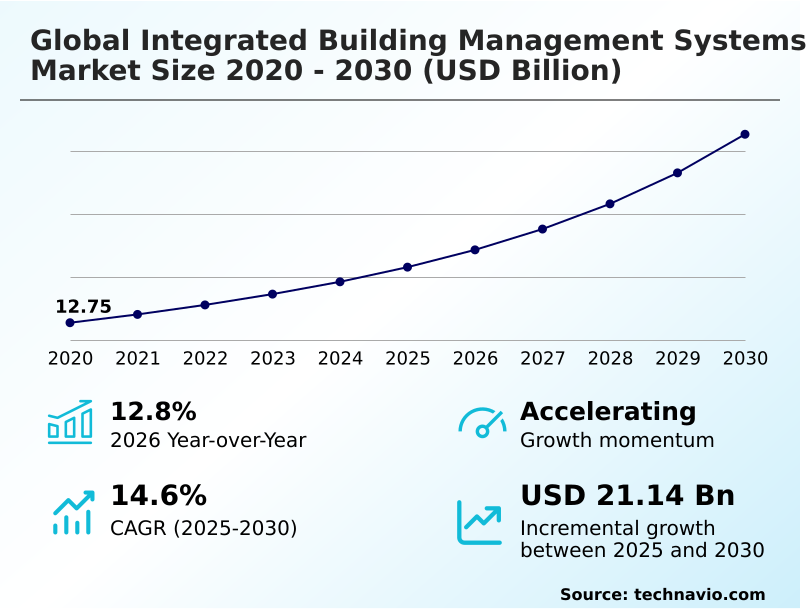
The integrated building management systems market size is forecast to increase by USD 16.75 billion at a CAGR of 13.3% between 2024 and 2029.

  • The Integrated Building Management Systems (IBMS) market is experiencing significant growth due to the increasing demand for greater ease in monitoring and controlling building operations. This trend is particularly prominent in the commercial sector, where the need for energy efficiency, cost savings, and improved occupant comfort is driving adoption. Another key driver is the growing popularity of coworking spaces, which require advanced building management systems to optimize resources and create flexible work environments. However, the IBMS market also faces challenges, including vulnerability issues and cyber security threats. As buildings become more connected, the risk of cyber attacks and data breaches increases, necessitating security measures.
  • Companies seeking to capitalize on market opportunities must prioritize cyber security and invest in advanced technologies to mitigate risks. Navigating these challenges effectively will require a strategic approach, with a focus on innovation, collaboration, and risk management. By staying abreast of market trends and addressing key challenges, businesses can position themselves for long-term success in the dynamic and evolving IBMS market.

What will be the Size of the Integrated Building Management Systems Market during the forecast period?
Integrated Building Management Systems Market Size

 Request Free Sample

  • The integrated building management systems (IBMS) market in the US is experiencing significant growth, driven by the increasing adoption of technology to optimize operational life and reduce costs for various industries and residential users. IBMS enables the centralized management of data centers, lighting systems, HVAC, and other building infrastructure through engineering solutions. A bottom-up approach to maintenance, utilizing preventive measures and smart devices, is increasingly popular to minimize maintenance costs and rectify issues before they escalate. The market's size is substantial, with revenues expected to expand due to the integration of IoT technology, energy management initiatives, and energy savings.
  • The US market is witnessing a shift towards energy efficiency, driven by legislations and the need to address peak energy demand and equipment failure. Commercial and industrial users are investing in IBMS to simplify operations, reduce operating costs, and enhance system efficiency. The integration of IBMS with energy usage monitoring and HVAC systems is a key trend, enabling users to optimize energy consumption and improve overall system performance.

How is this Integrated Building Management Systems Industry segmented?

The integrated building management systems industry research report provides comprehensive data (region-wise segment analysis), with forecasts and estimates in "USD million" for the period 2025-2029, as well as historical data from 2019-2023 for the following segments.

  • Component
    • Hardware
    • Software
    • Services
  • End-user
    • Commercial
    • Residential
    • Government
  • Application
    • Energy management
    • Lighting control
    • HVAC control
    • Others
  • Communication Technology
    • BACnet
    • LONWorks
    • Modbus
    • Ethernet/IP
    • Others
  • Geography
    • Europe
      • France
      • Germany
      • Italy
      • UK
    • North America
      • US
      • Canada
    • APAC
      • China
      • India
      • Japan
      • South Korea
    • South America
      • Middle East and Africa

      By Component Insights

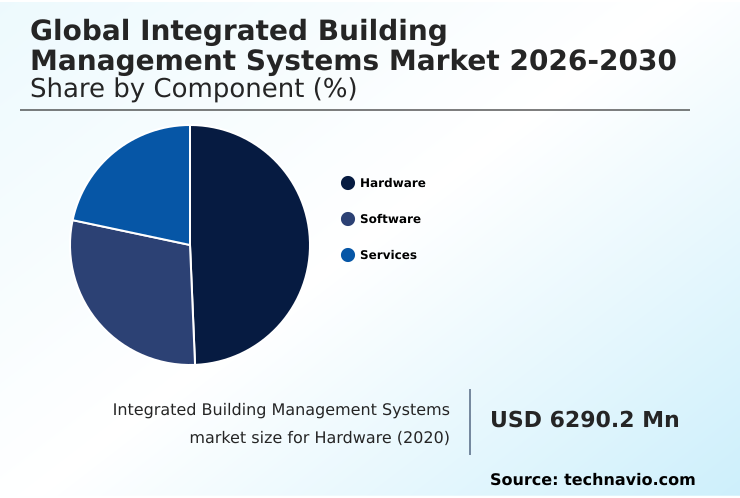
      The hardware segment is estimated to witness significant growth during the forecast period.

      Integrated Building Management Systems (IBMS) are essential for both industrial facilities and commercial establishments, including office buildings, hospitals, and distribution centers. These systems enable simplified operations, energy efficiency, and resource management. The hardware segment of IBMS consists of controllers, sensors, switches, cameras, storage devices, and gauges. Controllers manage various types of equipment and devices and different sections of the network, while sensors provide input data. Most hardware devices are installed on building premises, contributing significantly to the overall cost of IBMS implementation. Equipment failure can lead to significant operating costs and potential safety issues. IBMS provides critical information on HVAC systems, lighting, and energy consumption, enabling preventive maintenance and rectifying issues before they escalate.

      The technology also facilitates IoT integration, enhancing system efficiency and energy savings. Commercial users, including industrial facilities and large residential complexes, and healthcare facilities, benefit from engineering solutions that ensure safety and security, optimize peak energy demand, and provide energy management capabilities. Operational life, maintenance costs, and system efficiency are crucial factors in the decision-making process. Cloud-based solutions offer flexibility, scalability, and cost savings. Energy consumption data can be analyzed to identify initiatives and comply with legislations. Smart devices and networking enable servicing and monitoring of residential premises, data centers, educational institutes, warehouses, production plants, and airport and railway facilities.

      Trained personnel are essential for the successful implementation and servicing of IBMS. The lifespan of the system, energy savings, and revenues generated are significant considerations for both industrial and commercial users. Infrastructure facilities, such as factories and distribution centers, require a top-down approach, while residential users may prefer a bottom-up approach. In , IBMS plays a vital role in managing energy usage, optimizing operational life, and ensuring safety and security in various industries. The hardware segment accounts for the highest share of installation costs due to the high volume of components required. Preventive maintenance and energy savings are essential benefits for commercial and industrial users.

      Cloud-based solutions offer flexibility and cost savings, while trained personnel are essential for successful implementation and servicing.

      Integrated Building Management Systems Market Size

      Get a glance at the market report of share of various segments Request Free Sample

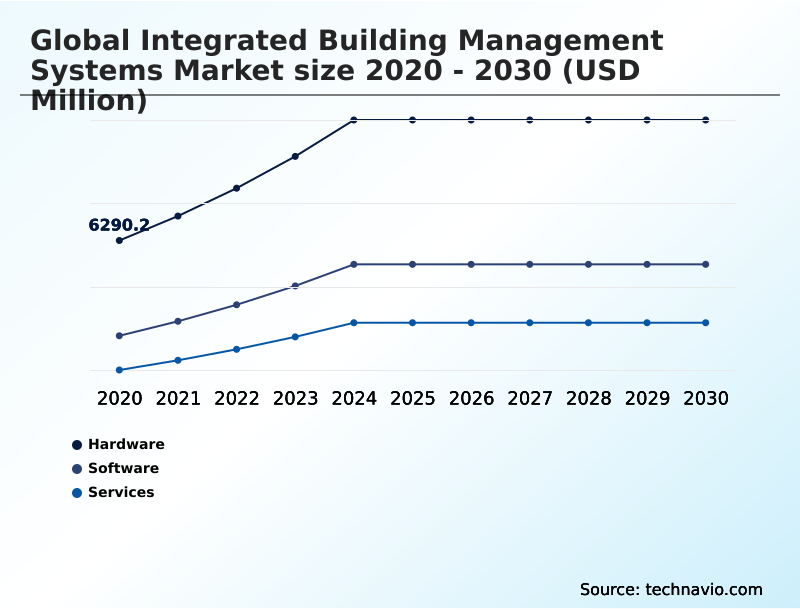
      The Hardware segment was valued at USD 6.86 billion in 2019 and showed a gradual increase during the forecast period.
      Regional Analysis

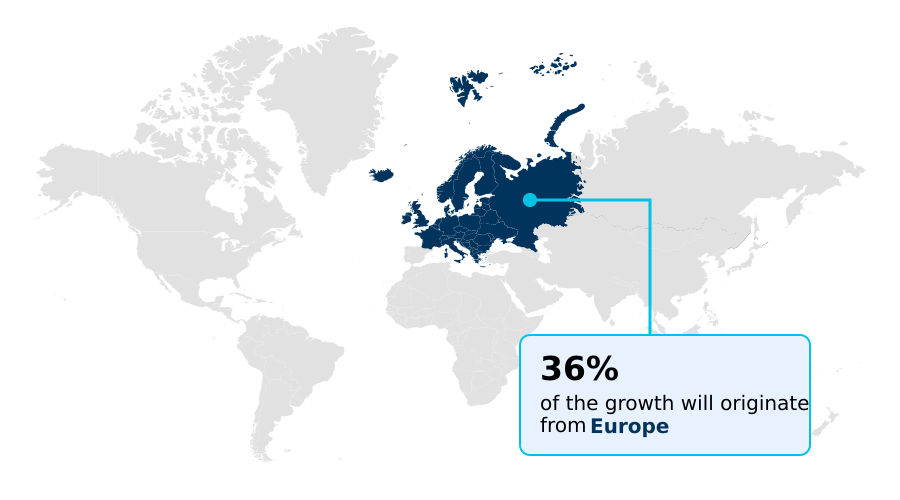
      Europe is estimated to contribute 34% to the growth of the global market during the forecast period.Technavio’s analysts have elaborately explained the regional trends and drivers that shape the market during the forecast period.
      Integrated Building Management Systems Market Share by Geography

      For more insights on the market size of various regions, Request Free Sample

      The Integrated Building Management Systems (IBMS) market is experiencing significant growth due to the increasing adoption of smart buildings and the focus on energy efficiency. Europe leads the way in technology adoption, with countries such as Sweden, Finland, Denmark, and the Netherlands having implemented policies promoting smart homes and buildings. Germany, in line with the EU directive, has installed smart home systems in approximately three-quarter of all light commercial buildings. Property owners are investing in IBMS to simplify operations, reduce maintenance costs, and minimize energy consumption. Commercial users, including office buildings, hospitals, distribution facilities, and industrial facilities, are major consumers of these systems.

      The market is driven by the need for energy savings, operational life extension, and preventive maintenance to rectify issues before they lead to equipment failure and peak energy demand. IBMS enables energy management, resource management, and the integration of smart devices, such as HVAC, lighting systems, and IoT sensors. Computer software solutions play a crucial role in designing, networking, and servicing these systems. The market's growth is further fueled by initiatives and legislations aimed at reducing carbon emissions and improving safety and security. Infrastructure facilities, such as data centers, educational institutes, and production plants, also benefit from IBMS.

      The market's revenue growth is attributed to the increasing demand for energy management, system efficiency, and the bottom-up approach to implementing these systems in residential premises, large residential complexes, and factories. The market's future potential lies in energy savings, networking, and the integration of smart devices to enhance the overall efficiency of buildings and reduce operating costs.

      Market Dynamics

      Our researchers analyzed the data with 2024 as the base year, along with the key drivers, trends, and challenges. A holistic analysis of drivers will help companies refine their marketing strategies to gain a competitive advantage.

      What are the key market drivers leading to the rise in the adoption of Integrated Building Management Systems Industry?

      • Greater ease in monitoring and controlling building operations is the key driver of the market. 

      • The Integrated Building Management Systems (IBMS) market is experiencing significant growth due to the increasing demand for efficient building operations and maintenance. IBMS functions as a central control system, managing and regulating various building sub-systems to maintain optimal performance and ensure adherence to pre-defined parameters. This enables property owners and managers to streamline building management, reducing operational costs and enhancing overall efficiency. Moreover, companies are introducing innovative products and services to monitor and manage building operations more effectively. For instance, Johnson Controls offers a comprehensive solution for companies aiming to achieve net-zero carbon and renewable energy targets.
      • IBMS plays a crucial role in facilitating these goals by optimizing energy usage and automating building processes. By simplifying building management and promoting energy efficiency, IBMS is becoming an essential tool for property owners and managers worldwide.

      What are the market trends shaping the Integrated Building Management Systems Industry?

      • Growing popularity of coworking spaces is the upcoming market trend. 

      • The proliferation of coworking spaces globally can be attributed to the increasing number of start-ups and the cost-effective option of leasing space on a membership basis as opposed to renting a full office. In a coworking environment, occupants share various facilities such as furniture, printers, phones, and technical support, while also jointly bearing property-related expenses and utilities. Technological advancements have significantly contributed to the expansion of coworking spaces. With the integration of building management systems, coworking spaces offer enhanced security, energy efficiency, and flexibility. These systems allow for remote monitoring and management of facilities, ensuring optimal energy usage and reducing operational costs.
      • Furthermore, they provide a seamless experience for tenants by automating various functions, including HVAC control, lighting, and access management. The adoption of these systems is expected to continue as coworking spaces increasingly become the preferred choice for businesses and entrepreneurs seeking flexibility and cost savings. The integration of advanced technologies in building management systems is set to revolutionize the way we work, making coworking spaces more efficient, productive, and attractive to tenants.

      What challenges does the Integrated Building Management Systems Industry face during its growth?

      • Vulnerability issues and cyber security threats in IBMS is a key challenge affecting the industry growth. 

      • The integration of an Integrated Building Management System (IBMS) involves complexities that surpass managing traditional, independent systems in a building, such as HVAC, lighting, and safety. As a building's infrastructure expands, integrating various units performing distinct functions becomes a challenge. Any weakness in this integration process leaves the IBMS susceptible to both physical and cyber threats. Historically, IBMS were not designed with future integration and hyperconnectivity in mind, resulting in a lack of logical security and safety features. External network access to IBMS poses a significant concern, particularly for facilities with substantial information technology infrastructures linked to various business systems.
      • Ensuring the secure and seamless integration of these systems is crucial to mitigate potential risks and maintain optimal building performance.

      Exclusive Customer Landscape

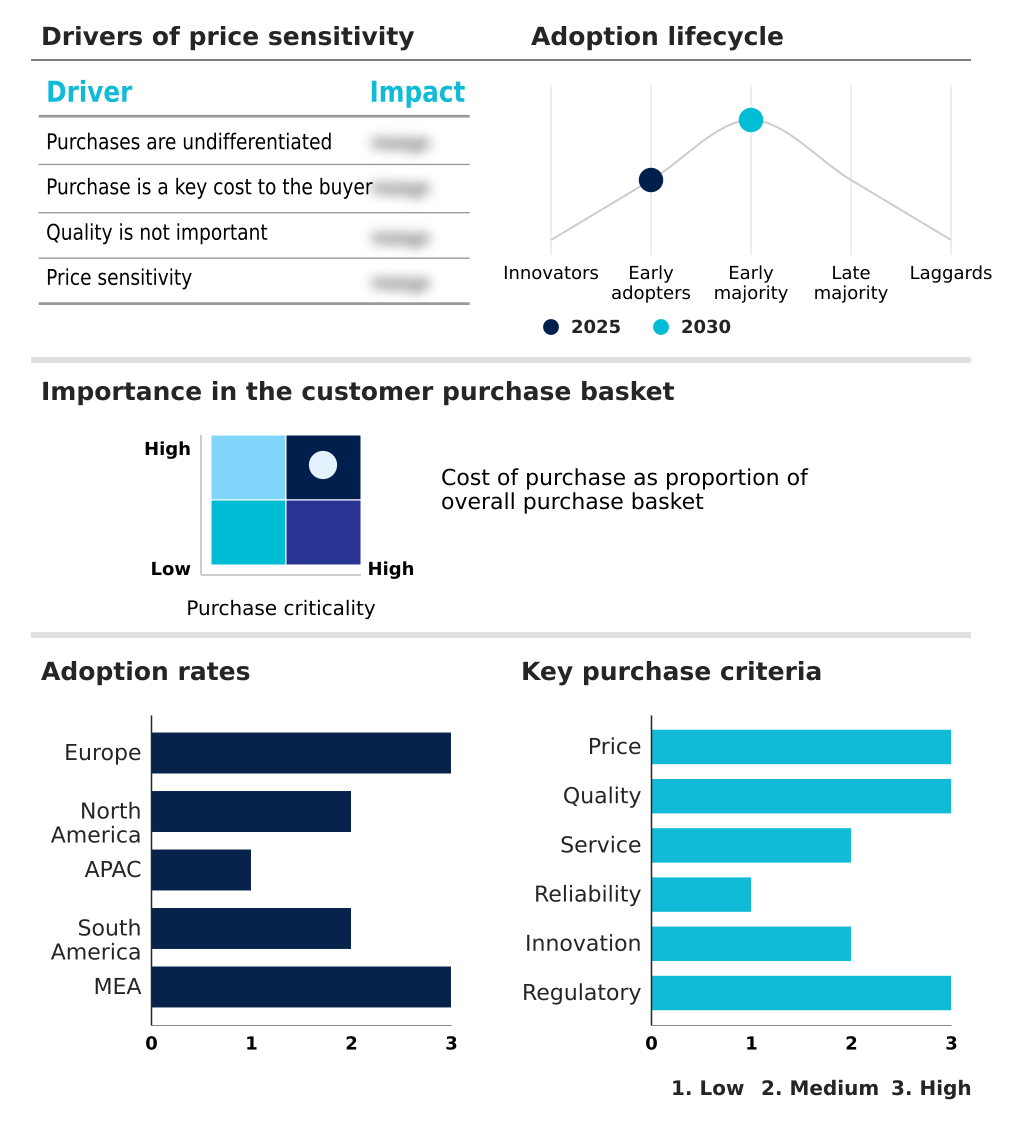
      The integrated building management systems market forecasting report includes the adoption lifecycle of the market, covering from the innovator’s stage to the laggard’s stage. It focuses on adoption rates in different regions based on penetration. Furthermore, the integrated building management systems market report also includes key purchase criteria and drivers of price sensitivity to help companies evaluate and develop their market growth analysis strategies.
      Integrated Building Management Systems Market Share by Geography

       Customer Landscape

      Key Companies & Market Insights

      Companies are implementing various strategies, such as strategic alliances, integrated building management systems market forecast, partnerships, mergers and acquisitions, geographical expansion, and product/service launches, to enhance their presence in the industry.

      ABB Ltd. - The company specializes in implementing advanced building management systems, including ABB i bus KNX, ABB i bus EIB, and ABB Ability for automation. These integrated solutions optimize energy consumption, enhance safety, and improve overall building performance. By leveraging open communication protocols, these systems enable seamless integration of various building functions, from lighting and HVAC to security and access control. With a focus on interoperability and scalability, the company empowers clients to future-proof their infrastructure and adapt to evolving building automation trends.

      The industry research and growth report includes detailed analyses of the competitive landscape of the market and information about key companies, including:

      • ABB Ltd.
      • Advantech Co. Ltd.
      • Azbil Corp.
      • Beijer Electronics Group AB
      • Carrier Global Corp.
      • Cisco Systems Inc.
      • Convergint Technologies LLC
      • Delta Electronics Inc.
      • Emerson Electric Co.
      • Honeywell International Inc.
      • Johnson Controls International Plc
      • Kieback and Peter GmbH and Co. KG
      • Lutron Electronics Co. Inc.
      • Messung Group of Companies
      • OBERIX Group
      • Prism Enterprise Electrical Trading LLC
      • Schneider Electric SE
      • Siemens AG
      • Snap One LLC
      • Vitrex

      Qualitative and quantitative analysis of companies has been conducted to help clients understand the wider business environment as well as the strengths and weaknesses of key industry players. Data is qualitatively analyzed to categorize companies as pure play, category-focused, industry-focused, and diversified; it is quantitatively analyzed to categorize companies as dominant, leading, strong, tentative, and weak.

      Research Analyst Overview

      Integrated Building Management Systems (IBMS) have gained significant traction in various sectors due to their ability to streamline operations, enhance energy efficiency, and ensure safety and security. IBMS enables the centralized control and management of multiple building systems, including HVAC, lighting, and energy consumption, among others. The implementation of IBMS in industrial facilities requires trained personnel to oversee the installation and configuration of the system. The initial costs of implementing IBMS can be substantial, but the long-term operational savings and system efficiency make it a worthwhile investment for infrastructure facilities. Equipment failure is a common challenge faced by commercial and industrial users, leading to increased operating costs and potential safety hazards.

      IBMS can help prevent equipment failure by providing real-time monitoring and predictive maintenance capabilities. The integration of IBMS with IoT technology and cloud-based platforms has simplified operations for office buildings, hospitals, and other large infrastructure facilities. Energy-efficient solutions have become a top priority for all types of users, from residential premises to large residential complexes, data centers, and educational institutes. The use of IBMS in distribution facilities and production plants has led to significant energy savings and initiatives to reduce peak energy demand. Legislation and regulations have also played a role in driving the adoption of IBMS in various sectors, including healthcare facilities and airports and railways.

      Maintenance costs are a significant concern for commercial and industrial users, and IBMS can help reduce these costs by enabling preventive maintenance and rectifying issues before they become major problems. Safety and security are essential considerations for all types of facilities, and IBMS can help ensure these requirements are met through advanced monitoring and control capabilities. The lifespan of IBMS can be extended through regular servicing and upgrades, making it a cost-effective solution for the long term. Energy management is a critical component of IBMS, and the system's ability to optimize energy usage and resource management has led to significant savings for users.

      The implementation of IBMS can be approached from a top-down or bottom-up perspective, depending on the size and complexity of the facility. Factories and production plants may require a more comprehensive top-down approach, while smaller facilities may benefit from a more targeted bottom-up approach. In , Integrated Building Management Systems offer numerous benefits for various sectors, including energy savings, operational efficiency, safety and security, and cost savings. The integration of IBMS with IoT technology, cloud platforms, and advanced engineering solutions has made it an essential tool for managing the complex infrastructure needs of modern facilities.

      Market Scope

      Report Coverage

      Details

      Page number

      254

      Base year

      2024

      Historic period

      2019-2023

      Forecast period

      2025-2029

      Growth momentum & CAGR

      Accelerate at a CAGR of 13.3%

      Market growth 2025-2029

      USD 16747.2 million

      Market structure

      Fragmented

      YoY growth 2024-2025(%)

      12.0

      Key countries

      US, China, UK, Germany, Japan, Canada, India, South Korea, France, and Italy

      Competitive landscape

      Leading Companies, Market Positioning of Companies, Competitive Strategies, and Industry Risks

      Request Free Sample

      What are the Key Data Covered in this Integrated Building Management Systems Market Research and Growth Report?

      • CAGR of the Integrated Building Management Systems industry during the forecast period
      • Detailed information on factors that will drive the growth and forecasting between 2025 and 2029
      • Precise estimation of the size of the market and its contribution of the industry in focus to the parent market
      • Accurate predictions about upcoming growth and trends and changes in consumer behaviour
      • Growth of the market across Europe, North America, APAC, South America, and Middle East and Africa
      • Thorough analysis of the market’s competitive landscape and detailed information about companies
      • Comprehensive analysis of factors that will challenge the integrated building management systems market growth of industry companies

      We can help! Our analysts can customize this integrated building management systems market research report to meet your requirements.

      Get in touch


      1 Executive Summary

      • 1.1 Market overview
        • Executive Summary - Chart on Market Overview
        • Executive Summary - Data Table on Market Overview
        • Executive Summary - Chart on Global Market Characteristics
        • Executive Summary - Chart on Market by Geography
        • Executive Summary - Chart on Market Segmentation by Component
        • Executive Summary - Chart on Market Segmentation by End-user
        • Executive Summary - Chart on Market Segmentation by Application
        • Executive Summary - Chart on Market Segmentation by Communication Technology
        • Executive Summary - Chart on Incremental Growth
        • Executive Summary - Data Table on Incremental Growth
        • Executive Summary - Chart on Company Market Positioning

      2 Technavio Analysis

      • 2.1 Analysis of price sensitivity, lifecycle, customer purchase basket, adoption rates, and purchase criteria
        • Analysis of price sensitivity, lifecycle, customer purchase basket, adoption rates, and purchase criteria
      • 2.2 Criticality of inputs and Factors of differentiation
        • Overview on criticality of inputs and factors of differentiation
      • 2.3 Factors of disruption
        • Overview on factors of disruption
      • 2.4 Impact of drivers and challenges
        • Impact of drivers and challenges in 2024 and 2029

      3 Market Landscape

      • 3.1 Market ecosystem
        • Parent Market
        • Data Table on - Parent Market
      • 3.2 Market characteristics
        • Market characteristics analysis
      • 3.3 Value chain analysis
        • Value chain analysis

      4 Market Sizing

      • 4.1 Market definition
        • Offerings of companies included in the market definition
      • 4.2 Market segment analysis
        • Market segments
      • 4.3 Market size 2024
        • 4.4 Market outlook: Forecast for 2024-2029
          • Chart on Global - Market size and forecast 2024-2029 ($ million)
          • Data Table on Global - Market size and forecast 2024-2029 ($ million)
          • Chart on Global Market: Year-over-year growth 2024-2029 (%)
          • Data Table on Global Market: Year-over-year growth 2024-2029 (%)

        5 Historic Market Size

        • 5.1 Global Integrated Building Management Systems Market 2019 - 2023
          • Historic Market Size - Data Table on Global Integrated Building Management Systems Market 2019 - 2023 ($ million)
        • 5.2 Component segment analysis 2019 - 2023
          • Historic Market Size - Component Segment 2019 - 2023 ($ million)
        • 5.3 End-user segment analysis 2019 - 2023
          • Historic Market Size - End-user Segment 2019 - 2023 ($ million)
        • 5.4 Application segment analysis 2019 - 2023
          • Historic Market Size - Application Segment 2019 - 2023 ($ million)
        • 5.5 Communication Technology segment analysis 2019 - 2023
          • Historic Market Size - Communication Technology Segment 2019 - 2023 ($ million)
        • 5.6 Geography segment analysis 2019 - 2023
          • Historic Market Size - Geography Segment 2019 - 2023 ($ million)
        • 5.7 Country segment analysis 2019 - 2023
          • Historic Market Size - Country Segment 2019 - 2023 ($ million)

        6 Qualitative Analysis

        • 6.1 Impact of AI on the Global Integrated Building Management Systems Market

          7 Five Forces Analysis

          • 7.1 Five forces summary
            • Five forces analysis - Comparison between 2024 and 2029
          • 7.2 Bargaining power of buyers
            • Bargaining power of buyers - Impact of key factors 2024 and 2029
          • 7.3 Bargaining power of suppliers
            • Bargaining power of suppliers - Impact of key factors in 2024 and 2029
          • 7.4 Threat of new entrants
            • Threat of new entrants - Impact of key factors in 2024 and 2029
          • 7.5 Threat of substitutes
            • Threat of substitutes - Impact of key factors in 2024 and 2029
          • 7.6 Threat of rivalry
            • Threat of rivalry - Impact of key factors in 2024 and 2029
          • 7.7 Market condition
            • Chart on Market condition - Five forces 2024 and 2029

          8 Market Segmentation by Component

          • 8.1 Market segments
            • Chart on Component - Market share 2024-2029 (%)
            • Data Table on Component - Market share 2024-2029 (%)
          • 8.2 Comparison by Component
            • Chart on Comparison by Component
            • Data Table on Comparison by Component
          • 8.3 Hardware - Market size and forecast 2024-2029
            • Chart on Hardware - Market size and forecast 2024-2029 ($ million)
            • Data Table on Hardware - Market size and forecast 2024-2029 ($ million)
            • Chart on Hardware - Year-over-year growth 2024-2029 (%)
            • Data Table on Hardware - Year-over-year growth 2024-2029 (%)
          • 8.4 Software - Market size and forecast 2024-2029
            • Chart on Software - Market size and forecast 2024-2029 ($ million)
            • Data Table on Software - Market size and forecast 2024-2029 ($ million)
            • Chart on Software - Year-over-year growth 2024-2029 (%)
            • Data Table on Software - Year-over-year growth 2024-2029 (%)
          • 8.5 Services - Market size and forecast 2024-2029
            • Chart on Services - Market size and forecast 2024-2029 ($ million)
            • Data Table on Services - Market size and forecast 2024-2029 ($ million)
            • Chart on Services - Year-over-year growth 2024-2029 (%)
            • Data Table on Services - Year-over-year growth 2024-2029 (%)
          • 8.6 Market opportunity by Component
            • Market opportunity by Component ($ million)
            • Data Table on Market opportunity by Component ($ million)

          9 Market Segmentation by End-user

          • 9.1 Market segments
            • Chart on End-user - Market share 2024-2029 (%)
            • Data Table on End-user - Market share 2024-2029 (%)
          • 9.2 Comparison by End-user
            • Chart on Comparison by End-user
            • Data Table on Comparison by End-user
          • 9.3 Commercial - Market size and forecast 2024-2029
            • Chart on Commercial - Market size and forecast 2024-2029 ($ million)
            • Data Table on Commercial - Market size and forecast 2024-2029 ($ million)
            • Chart on Commercial - Year-over-year growth 2024-2029 (%)
            • Data Table on Commercial - Year-over-year growth 2024-2029 (%)
          • 9.4 Residential - Market size and forecast 2024-2029
            • Chart on Residential - Market size and forecast 2024-2029 ($ million)
            • Data Table on Residential - Market size and forecast 2024-2029 ($ million)
            • Chart on Residential - Year-over-year growth 2024-2029 (%)
            • Data Table on Residential - Year-over-year growth 2024-2029 (%)
          • 9.5 Government - Market size and forecast 2024-2029
            • Chart on Government - Market size and forecast 2024-2029 ($ million)
            • Data Table on Government - Market size and forecast 2024-2029 ($ million)
            • Chart on Government - Year-over-year growth 2024-2029 (%)
            • Data Table on Government - Year-over-year growth 2024-2029 (%)
          • 9.6 Market opportunity by End-user
            • Market opportunity by End-user ($ million)
            • Data Table on Market opportunity by End-user ($ million)

          10 Market Segmentation by Application

          • 10.1 Market segments
            • Chart on Application - Market share 2024-2029 (%)
            • Data Table on Application - Market share 2024-2029 (%)
          • 10.2 Comparison by Application
            • Chart on Comparison by Application
            • Data Table on Comparison by Application
          • 10.3 Energy management - Market size and forecast 2024-2029
            • Chart on Energy management - Market size and forecast 2024-2029 ($ million)
            • Data Table on Energy management - Market size and forecast 2024-2029 ($ million)
            • Chart on Energy management - Year-over-year growth 2024-2029 (%)
            • Data Table on Energy management - Year-over-year growth 2024-2029 (%)
          • 10.4 Lighting control - Market size and forecast 2024-2029
            • Chart on Lighting control - Market size and forecast 2024-2029 ($ million)
            • Data Table on Lighting control - Market size and forecast 2024-2029 ($ million)
            • Chart on Lighting control - Year-over-year growth 2024-2029 (%)
            • Data Table on Lighting control - Year-over-year growth 2024-2029 (%)
          • 10.5 HVAC control - Market size and forecast 2024-2029
            • Chart on HVAC control - Market size and forecast 2024-2029 ($ million)
            • Data Table on HVAC control - Market size and forecast 2024-2029 ($ million)
            • Chart on HVAC control - Year-over-year growth 2024-2029 (%)
            • Data Table on HVAC control - Year-over-year growth 2024-2029 (%)
          • 10.6 Others - Market size and forecast 2024-2029
            • Chart on Others - Market size and forecast 2024-2029 ($ million)
            • Data Table on Others - Market size and forecast 2024-2029 ($ million)
            • Chart on Others - Year-over-year growth 2024-2029 (%)
            • Data Table on Others - Year-over-year growth 2024-2029 (%)
          • 10.7 Market opportunity by Application
            • Market opportunity by Application ($ million)
            • Data Table on Market opportunity by Application ($ million)

          11 Market Segmentation by Communication Technology

          • 11.1 Market segments
            • Chart on Communication Technology - Market share 2024-2029 (%)
            • Data Table on Communication Technology - Market share 2024-2029 (%)
          • 11.2 Comparison by Communication Technology
            • Chart on Comparison by Communication Technology
            • Data Table on Comparison by Communication Technology
          • 11.3 BACnet - Market size and forecast 2024-2029
            • Chart on BACnet - Market size and forecast 2024-2029 ($ million)
            • Data Table on BACnet - Market size and forecast 2024-2029 ($ million)
            • Chart on BACnet - Year-over-year growth 2024-2029 (%)
            • Data Table on BACnet - Year-over-year growth 2024-2029 (%)
          • 11.4 LONWorks - Market size and forecast 2024-2029
            • Chart on LONWorks - Market size and forecast 2024-2029 ($ million)
            • Data Table on LONWorks - Market size and forecast 2024-2029 ($ million)
            • Chart on LONWorks - Year-over-year growth 2024-2029 (%)
            • Data Table on LONWorks - Year-over-year growth 2024-2029 (%)
          • 11.5 Modbus - Market size and forecast 2024-2029
            • Chart on Modbus - Market size and forecast 2024-2029 ($ million)
            • Data Table on Modbus - Market size and forecast 2024-2029 ($ million)
            • Chart on Modbus - Year-over-year growth 2024-2029 (%)
            • Data Table on Modbus - Year-over-year growth 2024-2029 (%)
          • 11.6 Ethernet/IP - Market size and forecast 2024-2029
            • Chart on Ethernet/IP - Market size and forecast 2024-2029 ($ million)
            • Data Table on Ethernet/IP - Market size and forecast 2024-2029 ($ million)
            • Chart on Ethernet/IP - Year-over-year growth 2024-2029 (%)
            • Data Table on Ethernet/IP - Year-over-year growth 2024-2029 (%)
          • 11.7 Others - Market size and forecast 2024-2029
            • Chart on Others - Market size and forecast 2024-2029 ($ million)
            • Data Table on Others - Market size and forecast 2024-2029 ($ million)
            • Chart on Others - Year-over-year growth 2024-2029 (%)
            • Data Table on Others - Year-over-year growth 2024-2029 (%)
          • 11.8 Market opportunity by Communication Technology
            • Market opportunity by Communication Technology ($ million)
            • Data Table on Market opportunity by Communication Technology ($ million)

          12 Customer Landscape

          • 12.1 Customer landscape overview
            • Analysis of price sensitivity, lifecycle, customer purchase basket, adoption rates, and purchase criteria

          13 Geographic Landscape

          • 13.1 Geographic segmentation
            • Chart on Market share by geography 2024-2029 (%)
            • Data Table on Market share by geography 2024-2029 (%)
          • 13.2 Geographic comparison
            • Chart on Geographic comparison
            • Data Table on Geographic comparison
          • 13.3 Europe - Market size and forecast 2024-2029
            • Chart on Europe - Market size and forecast 2024-2029 ($ million)
            • Data Table on Europe - Market size and forecast 2024-2029 ($ million)
            • Chart on Europe - Year-over-year growth 2024-2029 (%)
            • Data Table on Europe - Year-over-year growth 2024-2029 (%)
          • 13.4 North America - Market size and forecast 2024-2029
            • Chart on North America - Market size and forecast 2024-2029 ($ million)
            • Data Table on North America - Market size and forecast 2024-2029 ($ million)
            • Chart on North America - Year-over-year growth 2024-2029 (%)
            • Data Table on North America - Year-over-year growth 2024-2029 (%)
          • 13.5 APAC - Market size and forecast 2024-2029
            • Chart on APAC - Market size and forecast 2024-2029 ($ million)
            • Data Table on APAC - Market size and forecast 2024-2029 ($ million)
            • Chart on APAC - Year-over-year growth 2024-2029 (%)
            • Data Table on APAC - Year-over-year growth 2024-2029 (%)
          • 13.6 South America - Market size and forecast 2024-2029
            • Chart on South America - Market size and forecast 2024-2029 ($ million)
            • Data Table on South America - Market size and forecast 2024-2029 ($ million)
            • Chart on South America - Year-over-year growth 2024-2029 (%)
            • Data Table on South America - Year-over-year growth 2024-2029 (%)
          • 13.7 Middle East and Africa - Market size and forecast 2024-2029
            • Chart on Middle East and Africa - Market size and forecast 2024-2029 ($ million)
            • Data Table on Middle East and Africa - Market size and forecast 2024-2029 ($ million)
            • Chart on Middle East and Africa - Year-over-year growth 2024-2029 (%)
            • Data Table on Middle East and Africa - Year-over-year growth 2024-2029 (%)
          • 13.8 US - Market size and forecast 2024-2029
            • Chart on US - Market size and forecast 2024-2029 ($ million)
            • Data Table on US - Market size and forecast 2024-2029 ($ million)
            • Chart on US - Year-over-year growth 2024-2029 (%)
            • Data Table on US - Year-over-year growth 2024-2029 (%)
          • 13.9 China - Market size and forecast 2024-2029
            • Chart on China - Market size and forecast 2024-2029 ($ million)
            • Data Table on China - Market size and forecast 2024-2029 ($ million)
            • Chart on China - Year-over-year growth 2024-2029 (%)
            • Data Table on China - Year-over-year growth 2024-2029 (%)
          • 13.10 UK - Market size and forecast 2024-2029
            • Chart on UK - Market size and forecast 2024-2029 ($ million)
            • Data Table on UK - Market size and forecast 2024-2029 ($ million)
            • Chart on UK - Year-over-year growth 2024-2029 (%)
            • Data Table on UK - Year-over-year growth 2024-2029 (%)
          • 13.11 Germany - Market size and forecast 2024-2029
            • Chart on Germany - Market size and forecast 2024-2029 ($ million)
            • Data Table on Germany - Market size and forecast 2024-2029 ($ million)
            • Chart on Germany - Year-over-year growth 2024-2029 (%)
            • Data Table on Germany - Year-over-year growth 2024-2029 (%)
          • 13.12 Japan - Market size and forecast 2024-2029
            • Chart on Japan - Market size and forecast 2024-2029 ($ million)
            • Data Table on Japan - Market size and forecast 2024-2029 ($ million)
            • Chart on Japan - Year-over-year growth 2024-2029 (%)
            • Data Table on Japan - Year-over-year growth 2024-2029 (%)
          • 13.13 Canada - Market size and forecast 2024-2029
            • Chart on Canada - Market size and forecast 2024-2029 ($ million)
            • Data Table on Canada - Market size and forecast 2024-2029 ($ million)
            • Chart on Canada - Year-over-year growth 2024-2029 (%)
            • Data Table on Canada - Year-over-year growth 2024-2029 (%)
          • 13.14 India - Market size and forecast 2024-2029
            • Chart on India - Market size and forecast 2024-2029 ($ million)
            • Data Table on India - Market size and forecast 2024-2029 ($ million)
            • Chart on India - Year-over-year growth 2024-2029 (%)
            • Data Table on India - Year-over-year growth 2024-2029 (%)
          • 13.15 South Korea - Market size and forecast 2024-2029
            • Chart on South Korea - Market size and forecast 2024-2029 ($ million)
            • Data Table on South Korea - Market size and forecast 2024-2029 ($ million)
            • Chart on South Korea - Year-over-year growth 2024-2029 (%)
            • Data Table on South Korea - Year-over-year growth 2024-2029 (%)
          • 13.16 France - Market size and forecast 2024-2029
            • Chart on France - Market size and forecast 2024-2029 ($ million)
            • Data Table on France - Market size and forecast 2024-2029 ($ million)
            • Chart on France - Year-over-year growth 2024-2029 (%)
            • Data Table on France - Year-over-year growth 2024-2029 (%)
          • 13.17 Italy - Market size and forecast 2024-2029
            • Chart on Italy - Market size and forecast 2024-2029 ($ million)
            • Data Table on Italy - Market size and forecast 2024-2029 ($ million)
            • Chart on Italy - Year-over-year growth 2024-2029 (%)
            • Data Table on Italy - Year-over-year growth 2024-2029 (%)
          • 13.18 Market opportunity by geography
            • Market opportunity by geography ($ million)
            • Data Tables on Market opportunity by geography ($ million)

          14 Drivers, Challenges, and Opportunity/Restraints

          • 14.1 Market drivers
            • 14.2 Market challenges
              • 14.3 Impact of drivers and challenges
                • Impact of drivers and challenges in 2024 and 2029
              • 14.4 Market opportunities/restraints

                15 Competitive Landscape

                • 15.1 Overview
                  • 15.2 Competitive Landscape
                    • Overview on criticality of inputs and factors of differentiation
                  • 15.3 Landscape disruption
                    • Overview on factors of disruption
                  • 15.4 Industry risks
                    • Impact of key risks on business

                  16 Competitive Analysis

                  • 16.1 Companies profiled
                    • Companies covered
                  • 16.2 Company ranking index
                    • Company ranking index
                  • 16.3 Market positioning of companies
                    • Matrix on companies position and classification
                  • 16.4 ABB Ltd.
                    • ABB Ltd. - Overview
                    • ABB Ltd. - Business segments
                    • ABB Ltd. - Key news
                    • ABB Ltd. - Key offerings
                    • ABB Ltd. - Segment focus
                    • SWOT
                  • 16.5 Advantech Co. Ltd.
                    • Advantech Co. Ltd. - Overview
                    • Advantech Co. Ltd. - Business segments
                    • Advantech Co. Ltd. - Key news
                    • Advantech Co. Ltd. - Key offerings
                    • Advantech Co. Ltd. - Segment focus
                    • SWOT
                  • 16.6 Azbil Corp.
                    • Azbil Corp. - Overview
                    • Azbil Corp. - Business segments
                    • Azbil Corp. - Key news
                    • Azbil Corp. - Key offerings
                    • Azbil Corp. - Segment focus
                    • SWOT
                  • 16.7 Beijer Electronics Group AB
                    • Beijer Electronics Group AB - Overview
                    • Beijer Electronics Group AB - Product / Service
                    • Beijer Electronics Group AB - Key offerings
                    • SWOT
                  • 16.8 Carrier Global Corp.
                    • Carrier Global Corp. - Overview
                    • Carrier Global Corp. - Business segments
                    • Carrier Global Corp. - Key news
                    • Carrier Global Corp. - Key offerings
                    • Carrier Global Corp. - Segment focus
                    • SWOT
                  • 16.9 Cisco Systems Inc.
                    • Cisco Systems Inc. - Overview
                    • Cisco Systems Inc. - Business segments
                    • Cisco Systems Inc. - Key news
                    • Cisco Systems Inc. - Key offerings
                    • Cisco Systems Inc. - Segment focus
                    • SWOT
                  • 16.10 Convergint Technologies LLC
                    • Convergint Technologies LLC - Overview
                    • Convergint Technologies LLC - Product / Service
                    • Convergint Technologies LLC - Key offerings
                    • SWOT
                  • 16.11 Delta Electronics Inc.
                    • Delta Electronics Inc. - Overview
                    • Delta Electronics Inc. - Business segments
                    • Delta Electronics Inc. - Key news
                    • Delta Electronics Inc. - Key offerings
                    • Delta Electronics Inc. - Segment focus
                    • SWOT
                  • 16.12 Emerson Electric Co.
                    • Emerson Electric Co. - Overview
                    • Emerson Electric Co. - Business segments
                    • Emerson Electric Co. - Key news
                    • Emerson Electric Co. - Key offerings
                    • Emerson Electric Co. - Segment focus
                    • SWOT
                  • 16.13 Honeywell International Inc.
                    • Honeywell International Inc. - Overview
                    • Honeywell International Inc. - Business segments
                    • Honeywell International Inc. - Key news
                    • Honeywell International Inc. - Key offerings
                    • Honeywell International Inc. - Segment focus
                    • SWOT
                  • 16.14 Johnson Controls International Plc
                    • Johnson Controls International Plc - Overview
                    • Johnson Controls International Plc - Business segments
                    • Johnson Controls International Plc - Key news
                    • Johnson Controls International Plc - Key offerings
                    • Johnson Controls International Plc - Segment focus
                    • SWOT
                  • 16.15 Kieback and Peter GmbH and Co. KG
                    • Kieback and Peter GmbH and Co. KG - Overview
                    • Kieback and Peter GmbH and Co. KG - Product / Service
                    • Kieback and Peter GmbH and Co. KG - Key offerings
                    • SWOT
                  • 16.16 Schneider Electric SE
                    • Schneider Electric SE - Overview
                    • Schneider Electric SE - Business segments
                    • Schneider Electric SE - Key news
                    • Schneider Electric SE - Key offerings
                    • Schneider Electric SE - Segment focus
                    • SWOT
                  • 16.17 Siemens AG
                    • Siemens AG - Overview
                    • Siemens AG - Business segments
                    • Siemens AG - Key news
                    • Siemens AG - Key offerings
                    • Siemens AG - Segment focus
                    • SWOT
                  • 16.18 Vitrex
                    • Vitrex - Overview
                    • Vitrex - Product / Service
                    • Vitrex - Key offerings
                    • SWOT

                  17 Appendix

                  • 17.1 Scope of the report
                    • 17.2 Inclusions and exclusions checklist
                      • Inclusions checklist
                      • Exclusions checklist
                    • 17.3 Currency conversion rates for US$
                      • Currency conversion rates for US$
                    • 17.4 Research methodology
                      • Research methodology
                    • 17.5 Data procurement
                      • Information sources
                    • 17.6 Data validation
                      • Data validation
                    • 17.7 Validation techniques employed for market sizing
                      • Validation techniques employed for market sizing
                    • 17.8 Data synthesis
                      • Data synthesis
                    • 17.9 360 degree market analysis
                      • 360 degree market analysis
                    • 17.10 List of abbreviations
                      • List of abbreviations

                    Research Methodology

                    Technavio presents a detailed picture of the market by way of study, synthesis, and summation of data from multiple sources. The analysts have presented the various facets of the market with a particular focus on identifying the key industry influencers. The data thus presented is comprehensive, reliable, and the result of extensive research, both primary and secondary.

                    INFORMATION SOURCES

                    Primary sources

                    • Manufacturers and suppliers
                    • Channel partners
                    • Industry experts
                    • Strategic decision makers

                    Secondary sources

                    • Industry journals and periodicals
                    • Government data
                    • Financial reports of key industry players
                    • Historical data
                    • Press releases

                    DATA ANALYSIS

                    Data Synthesis

                    • Collation of data
                    • Estimation of key figures
                    • Analysis of derived insights

                    Data Validation

                    • Triangulation with data models
                    • Reference against proprietary databases
                    • Corroboration with industry experts

                    REPORT WRITING

                    Qualitative

                    • Market drivers
                    • Market challenges
                    • Market trends
                    • Five forces analysis

                    Quantitative

                    • Market size and forecast
                    • Market segmentation
                    • Geographical insights
                    • Competitive landscape

                    Interested in this report?

                    Get your sample now to see our research methodology and insights!

                    Download Now

                    Frequently Asked Questions

                    Integrated Building Management Systems market growth will increase by $ 16747.2 mn during 2025-2029.

                    The Integrated Building Management Systems market is expected to grow at a CAGR of 13.3% during 2025-2029.

                    Integrated Building Management Systems market is segmented by Component( Hardware, Software, Services) End-user( Commercial, Residential, Government, South America, Middle East and Africa) Application( Energy management, Lighting control, HVAC control, Others, Middle East and Africa)

                    Johnson Controls International Plc, Honeywell International Inc., Siemens AG, Schneider Electric SE, United Technologies Corporation, Trane Technologies Plc, Delta Electronics Inc., Crestron Electronics Inc., BuildingIQ Inc., Distech Controls Inc., KMC Controls, Beckhoff Automation GmbH, Azbil Corporation, ABB Ltd., Emerson Electric Co., Carrier Global Corporation, Bosch Security Systems, Trend Control Systems Ltd., Legrand SA, Lutron Electronics Co. Inc. are a few of the key vendors in the Integrated Building Management Systems market.

                    Europe will register the highest growth rate of 34% among the other regions. Therefore, the Integrated Building Management Systems market in Europe is expected to garner significant business opportunities for the vendors during the forecast period.

                    US, China, Germany, Japan, UK, Australia, India, France, Brazil, UAE, Rest of World (ROW), Saudi Arabia, France, South Korea, Mexico, Italy

                    • Greater ease in monitoring and controlling building operationsThe major factor driving the global integrated building management systems market is the simplification of building operations and maintenance using IBMS. IBMS acts as a control system is the driving factor this market.
                    • which is responsible for the automatic regulation and control of facility sub-systems is the driving factor this market.
                    • the maintenance of the pre-defined parameters set for different systems in a building is the driving factor this market.
                    • and the precise control of their functionalities. Thus is the driving factor this market.
                    • IBMS allows property owners and managers to manage is the driving factor this market.
                    • control is the driving factor this market.
                    • and operate the functioning of their buildings easily and more efficiently. Also is the driving factor this market.
                    • companies are significantly launching new products and services for monitoring and controlling building operations. Johnson Controls provides a one-stop shop for companies is the driving factor this market.
                    • which is on a path to achieving net-zero carbon and renewable energy goals.There are various sub-systems in a building which operate as disparate units; these include HVAC is the driving factor this market.
                    • lighting is the driving factor this market.
                    • and the fire safety system. By installing and implementing IBMS is the driving factor this market.
                    • all these systems are connected to one centralized system for effective and transparent management. Moreover is the driving factor this market.
                    • the data generated from these systems is then collectively used by IBMS to achieve greater operational efficiency.For instance is the driving factor this market.
                    • all the parts of an HVAC system is the driving factor this market.
                    • including the duct temperature is the driving factor this market.
                    • pressure is the driving factor this market.
                    • and humidity is the driving factor this market.
                    • as well as the exhaust temperature is the driving factor this market.
                    • are connected to the IBMS is the driving factor this market.
                    • and if the value for any of these sub-systems exceeds the pre-defined limits is the driving factor this market.
                    • an alarm is generated. Along with the alarm is the driving factor this market.
                    • the fire safety systems are automatically activated is the driving factor this market.
                    • which helps the property manager and/or owner to make crucial decisions in real time. Similarly is the driving factor this market.
                    • IBMS continuously monitors the performance of systems is the driving factor this market.
                    • such as central fume collection is the driving factor this market.
                    • laminar flow units is the driving factor this market.
                    • dust collection system is the driving factor this market.
                    • and heat blowers is the driving factor this market.
                    • and provide early identification of units that require attention or maintenance. If a building uses non-integrated and manual management processes is the driving factor this market.
                    • i.e. is the driving factor this market.
                    • it does not have IBMS is the driving factor this market.
                    • then property managers and owners must keep a check on these sub-systems individually to ensure optimal operations. is the driving factor this market.

                    The Integrated Building Management Systems market vendors should focus on grabbing business opportunities from the Hardware segment as it accounted for the largest market share in the base year.