
Grain Processing Equipment Market Analysis, Size, and Forecast 2026-2030: APAC (China, India, and Japan), North America (US, Canada, and Mexico), Europe (Germany, France, and UK), South America (Brazil, Argentina, and Colombia), Middle East and Africa (South Africa, Turkey, and Saudi Arabia), and Rest of World (ROW)

Grain Processing Equipment Market Analysis, Size, and Forecast 2026-2030:
APAC (China, India, and Japan), North America (US, Canada, and Mexico), Europe (Germany, France, and UK), South America (Brazil, Argentina, and Colombia), Middle East and Africa (South Africa, Turkey, and Saudi Arabia), and Rest of World (ROW)

Published: Apr 2026 307 Pages SKU: IRTNTR81401

Market Overview at a Glance

$1.84 B
Market Opportunity
5.5%
CAGR 2025 - 2030
44.3%
APAC Growth
$2.22 B
Milling equipment segment 2024

Grain Processing Equipment Market Size 2026-2030

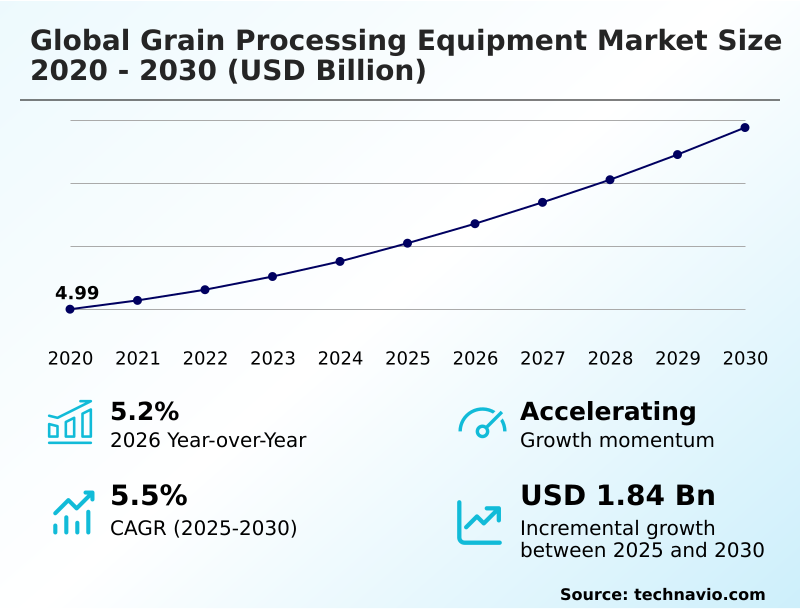
The grain processing equipment market size is valued to increase by USD 1.84 billion, at a CAGR of 5.5% from 2025 to 2030. Rising global demand for fortified and processed foods will drive the grain processing equipment market.

Major Market Trends & Insights

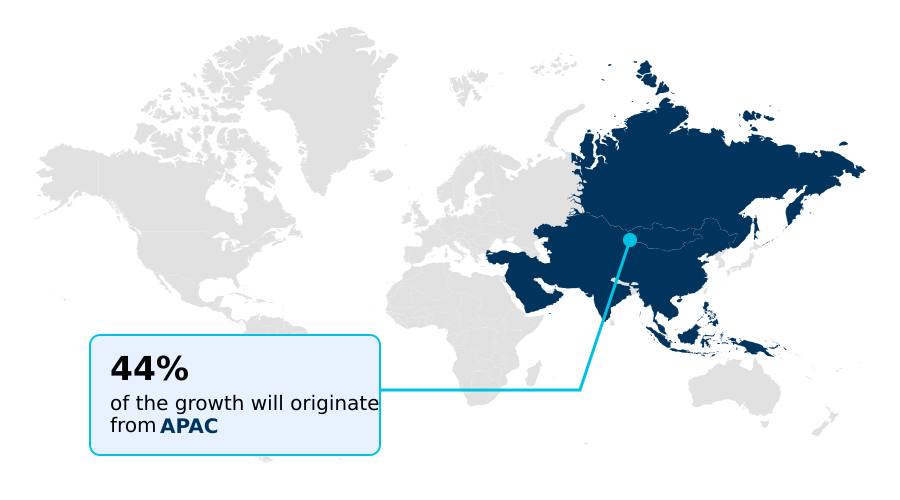
  • APAC dominated the market and accounted for a 44.3% growth during the forecast period.
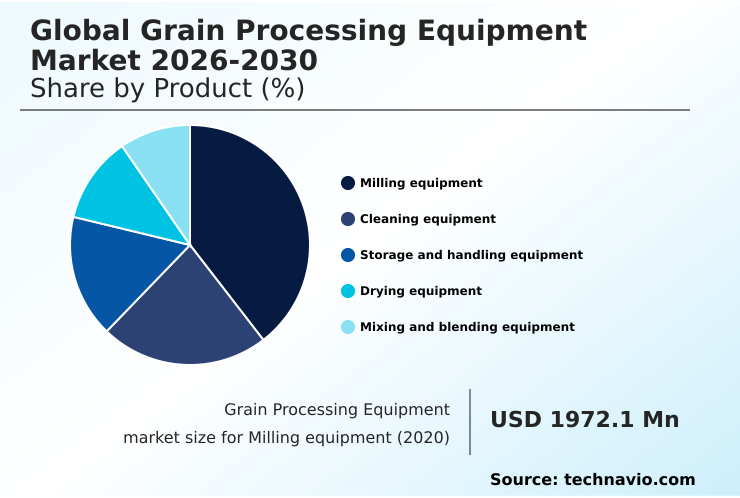
  • By Product - Milling equipment segment was valued at USD 2.22 billion in 2024
  • By End-user - Food processing companies segment accounted for the largest market revenue share in 2024

Market Size & Forecast

  • Market Opportunities: USD 2.89 billion
  • Market Future Opportunities: USD 1.84 billion
  • CAGR from 2025 to 2030 : 5.5%

Market Summary

  • The grain processing equipment market is fundamentally driven by the global need for food security and the increasing consumer demand for processed grain products. Modernization is a key theme, with facilities upgrading from legacy systems to highly automated solutions to enhance operational efficiency and yield optimization.
  • This transition involves integrating advanced technologies like predictive maintenance and quality control sensors to minimize downtime and ensure product consistency. For instance, a large-scale flour mill might implement a fully integrated system with automated dosing and optical sorters to meet stringent food safety compliance standards, resulting in a significant reduction in waste and improved profitability.
  • However, the high capital expenditure for such turnkey milling plants remains a considerable barrier for smaller operators. The industry is also adapting to demand for fortified food production by offering versatile equipment, such as flaking mills and steam conditioning units, capable of handling diverse grains and complex formulations.
  • This evolution underscores the sector's critical role in transforming raw agricultural output into safe, high-quality consumer goods.

What will be the Size of the Grain Processing Equipment Market during the forecast period?

Get Key Insights on Market Forecast (PDF) Request Free Sample

How is the Grain Processing Equipment Market Segmented?

The grain processing equipment industry research report provides comprehensive data (region-wise segment analysis), with forecasts and estimates in "USD million" for the period 2026-2030, as well as historical data from 2020-2024 for the following segments.

  • Product
    • Milling equipment
    • Cleaning equipment
    • Storage and handling equipment
    • Drying equipment
    • Mixing and blending equipment
  • End-user
    • Food processing companies
    • Flour mills
    • Feed manufacturers
    • Grain mills
    • Ethanol producers
  • Type
    • Automatic
    • Semi-automatic
  • Geography
    • APAC
      • China
      • India
      • Japan
    • North America
      • US
      • Canada
      • Mexico
    • Europe
      • Germany
      • France
      • UK
    • South America
      • Brazil
      • Argentina
      • Colombia
    • Middle East and Africa
      • South Africa
      • Turkey
      • Saudi Arabia
    • Rest of World (ROW)

By Product Insights

The milling equipment segment is estimated to witness significant growth during the forecast period.

Milling equipment, a cornerstone of the grain processing equipment market, includes a range of devices like roller mills and hammer mills designed for precise particle size reduction.

The focus of this segment is on achieving high extraction rates, with modern systems improving yield by over 5%. Innovations such as advanced optical sorters and efficient pneumatic conveying systems enhance operational consistency and product purity in food processing machinery.

As facilities upgrade, they integrate sophisticated post-harvest equipment, including fluidized bed dryers and robust silo aeration systems, to maintain grain quality.

This modernization is crucial for both large-scale cereal milling solutions and specialized feed manufacturing systems, supported by reliable bucket elevators and comprehensive grain storage infrastructure, reflecting advancements in agricultural processing technology.

Request Free Sample

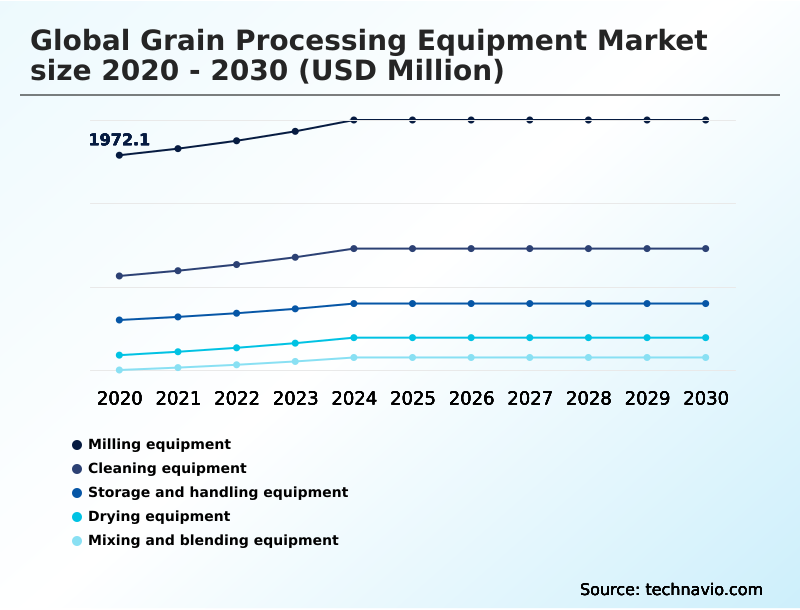
The Milling equipment segment was valued at USD 2.22 billion in 2024 and showed a gradual increase during the forecast period.
Request Free Sample

Regional Analysis

APAC is estimated to contribute 44.3% to the growth of the global market during the forecast period.Technavio’s analysts have elaborately explained the regional trends and drivers that shape the market during the forecast period.

See How Grain Processing Equipment Market Demand is Rising in APAC Request Free Sample

The geographic landscape of the grain processing equipment market is led by APAC, which accounts for over 44% of incremental growth, driven by government food security initiatives and the need to expand processing capacity.

In this region, investment focuses on foundational equipment like high-capacity storage silos, belt conveyors, and efficient grain cleaners to reduce post-harvest losses. In contrast, North America and Europe, while representing a significant share, are mature markets focused on technological upgrades.

Facilities there adopt advanced seed and grain cleaners and sophisticated color sorters, which can improve yield optimization by over 10%. The adoption of automated packaging and advanced impact screeners and gravity tables supports the trend toward value-added products.

This regional divergence highlights a global market balancing large-scale commodity handling infrastructure with precision-focused turnkey plant design for specialized facility management.

Market Dynamics

Our researchers analyzed the data with 2025 as the base year, along with the key drivers, trends, and challenges. A holistic analysis of drivers will help companies refine their marketing strategies to gain a competitive advantage.

  • The evolution of the grain processing equipment market is marked by a strategic focus on technology and efficiency. The adoption of automated grain sorting technology and optical sorters for quality control is becoming a standard for ensuring premium product output.
  • Concurrently, investments in high-capacity silo storage systems are crucial for reducing post-harvest grain losses, which can be twice as high in regions with underdeveloped infrastructure. A key trend is the move toward energy-efficient grain drying methods and multi-grain processing line flexibility to accommodate diverse crops and lower operational expenses.
  • Adherence to sanitary design for food safety is non-negotiable, driving innovation in equipment that is easier to clean and maintain. For businesses, understanding the total cost of grain processing equipment, not just the initial purchase price, is vital for long-term planning.
  • The impact of AI on milling is transforming the industry, with automation in flour milling plants leading to significant gains in improving milling extraction rates. While the maintenance of milling machinery remains a recurring cost, the ROI of automated grain systems is compelling. Many operators now prefer turnkey solutions for feed mills to streamline deployment.
  • The use of pneumatic systems for grain transport addresses challenges in grain handling. However, rising cybersecurity in automated mills and ensuring traceability in the grain supply chain are emerging concerns that require robust solutions. The adoption of modular grain processing units and a commitment to sustainable practices in grain processing are further shaping future investments.

What are the key market drivers leading to the rise in the adoption of Grain Processing Equipment Industry?

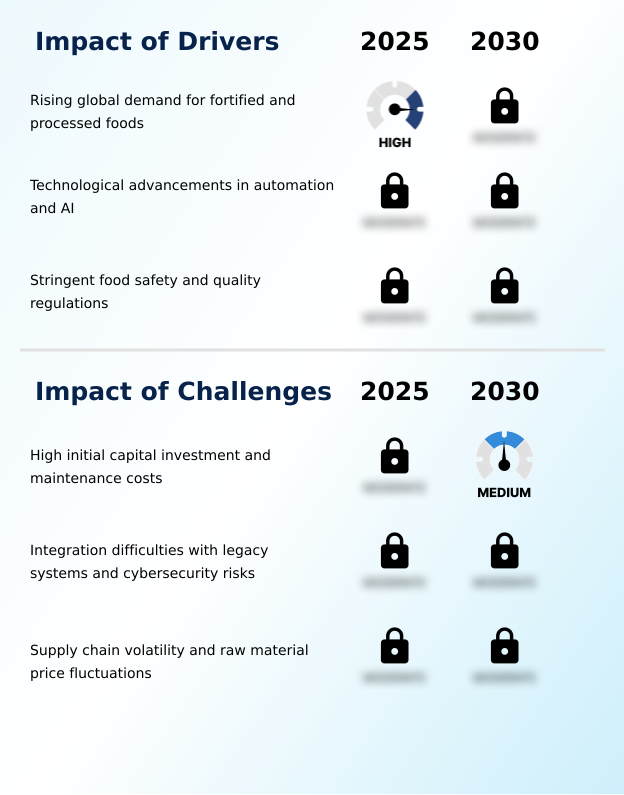
  • The rising global demand for fortified and processed foods, driven by urbanization and health-consciousness, is a key driver for the market.

  • Market growth is significantly driven by the integration of industrial automation and advanced technologies aimed at maximizing yield optimization. The adoption of automated systems, including pelleting presses and sophisticated batching systems, can increase plant throughput by over 25%.
  • This push for automation is a direct response to rising labor costs and the need for consistent quality in food production.
  • Another major driver is the implementation of stringent food safety regulations, which mandates the use of equipment with superior hygienic design and effective clean-in-place systems.
  • Advanced traceability systems, integrated into the machinery, provide complete data logging from raw material to finished product. Furthermore, the advent of predictive maintenance, powered by AI analytics, allows facilities to anticipate equipment failures, reducing unplanned downtime by up to 30%.
  • Technologies like automated dosing, efficient steam conditioning units, and versatile flaking mills are becoming essential for maintaining competitive advantage through superior resource management and streamlined supply chain logistics.

What are the market trends shaping the Grain Processing Equipment Industry?

  • A prominent trend shaping the market is the definitive shift toward energy-efficient and sustainable processing machinery, a move driven by both environmental mandates and the pursuit of lower operational expenditures.

  • Key trends are reshaping the grain processing equipment market, driven by demands for greater operational efficiency and sustainability. There is a definitive move toward sustainable processing, with new equipment designs reducing energy consumption by up to 20% compared to older models.
  • The emergence of modular and mobile turnkey milling plants offers flexibility, allowing for rapid deployment and scalability that can cut initial setup time by 40%. This trend is crucial for decentralized agriculture and niche product lines. Furthermore, the adoption of multi-grain processing capabilities, using equipment like advanced plansifters and gravity separators, is on the rise.
  • This flexibility enables facilities to switch between commodities like wheat and sorghum, minimizing downtime and maximizing asset utilization. Such innovations, including improved destoners, grain polishers, and degerminators, ensure food safety compliance while supporting fortified food production and boosting operational efficiency through better bulk material handling.

What challenges does the Grain Processing Equipment Industry face during its growth?

  • A key challenge affecting industry growth is the high initial capital investment and subsequent maintenance costs associated with advanced processing equipment.

  • The grain processing equipment market faces significant challenges, primarily the high capital expenditure required for modern machinery. The total cost of ownership for advanced systems, including commercial dryers and industrial milling machines, can be three times the initial purchase price over a 10-year period, straining budgets for many operators.
  • Integration with legacy systems presents another hurdle, with retrofitting projects often leading to budget overruns of 15% or more. As facilities become more interconnected, cybersecurity risks escalate, with cyber-attacks on industrial control systems increasing by over 20% annually. This forces companies to allocate more resources to digital defense rather than value-added processing.
  • Additionally, supply chain volatility and fluctuating raw material sourcing costs complicate financial planning, making it difficult to justify long-term investments in energy-efficient machinery or systems with interchangeable screening meshes and adjustable roller gaps, despite their long-term benefits for asset utilization and performance.

Exclusive Technavio Analysis on Customer Landscape

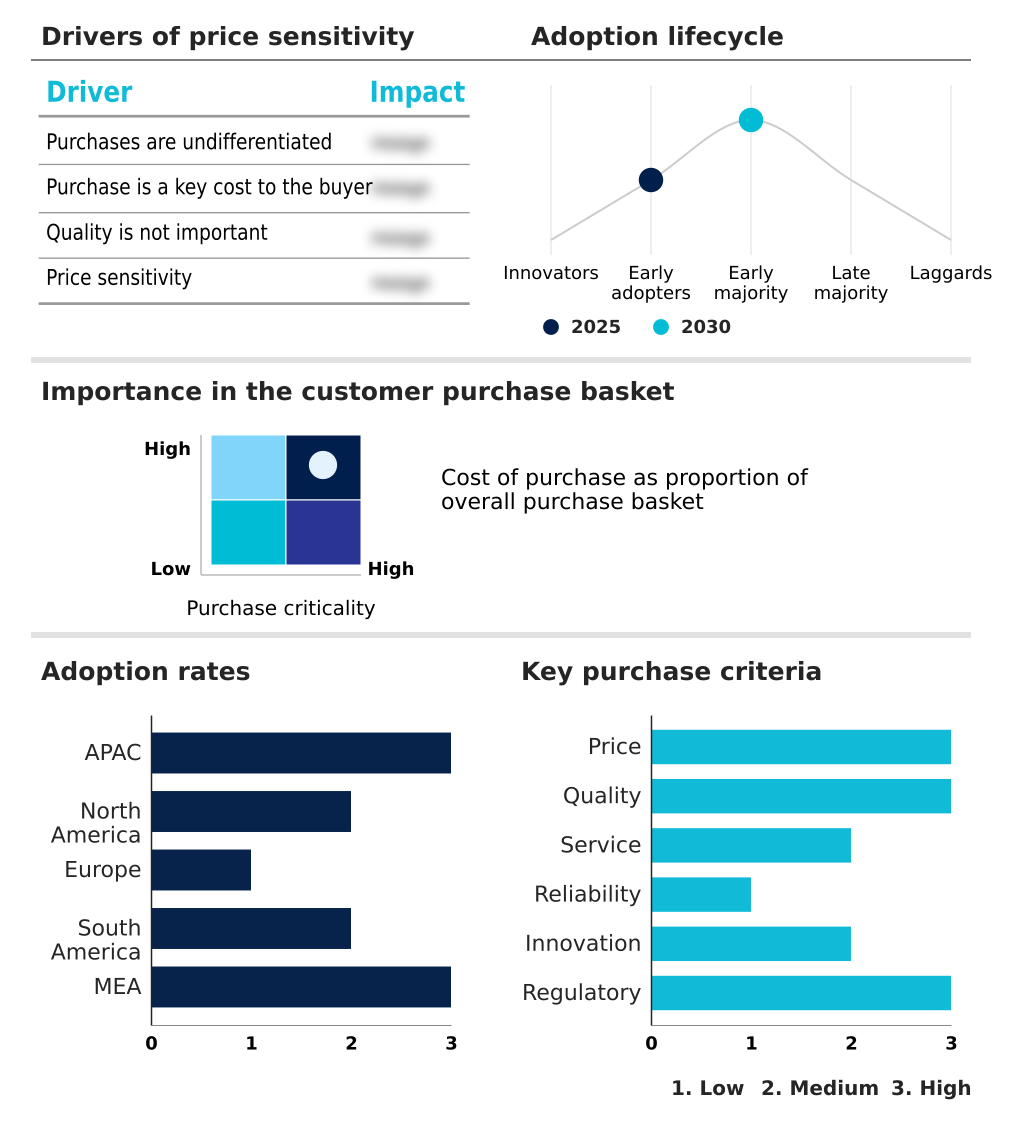
The grain processing equipment market forecasting report includes the adoption lifecycle of the market, covering from the innovator’s stage to the laggard’s stage. It focuses on adoption rates in different regions based on penetration. Furthermore, the grain processing equipment market report also includes key purchase criteria and drivers of price sensitivity to help companies evaluate and develop their market growth analysis strategies.
Customer Landscape of Grain Processing Equipment Industry

Competitive Landscape

Companies are implementing various strategies, such as strategic alliances, grain processing equipment market forecast, partnerships, mergers and acquisitions, geographical expansion, and product/service launches, to enhance their presence in the industry.

Ag Growth International Inc. - An integrated solutions provider offering advanced systems for grain milling and food processing, leveraging expertise in extrusion, optical sorting, and diverse material handling technologies.

The industry research and growth report includes detailed analyses of the competitive landscape of the market and information about key companies, including:

  • Ag Growth International Inc.
  • AGCO Corp.
  • Alvan Blanch Development Co.
  • Behlen Mfg Co.
  • Bratney
  • BROCK GRAIN SYSTEMS.
  • Buhler AG
  • Chief Agri Industrial Group
  • Cimbria
  • Duravant LLC
  • Forsbergs Inc.
  • GEA Group AG
  • Golfetto Sangati S.r.l.
  • Ocrim S.p.A
  • Ottevanger
  • PETKUS Technologie GmbH
  • Pfeuffer GmbH
  • Prater Industries Inc.
  • Sangati Berga S.A.
  • Satake Corp.

Qualitative and quantitative analysis of companies has been conducted to help clients understand the wider business environment as well as the strengths and weaknesses of key industry players. Data is qualitatively analyzed to categorize companies as pure play, category-focused, industry-focused, and diversified; it is quantitatively analyzed to categorize companies as dominant, leading, strong, tentative, and weak.

Recent Development and News in Grain processing equipment market

  • In September, 2024, Buhler AG announced the launch of its new AI-powered optical sorter, promising a 15% increase in defect detection accuracy for high-volume milling operations.
  • In November, 2024, GEA Group AG partnered with a leading software firm to integrate advanced predictive maintenance analytics into its line of grain dryers, aiming to reduce unplanned downtime by up to 25%.
  • In January, 2025, AGCO Corp. completed its acquisition of a smaller European firm specializing in modular and mobile grain processing units, expanding its portfolio for decentralized agriculture.
  • In April, 2025, Satake Corp. received a major contract to supply a complete turnkey rice milling plant to a government-backed food security initiative in a key Southeast Asian market, boosting regional processing capacity.

Dive into Technavio’s robust research methodology, blending expert interviews, extensive data synthesis, and validated models for unparalleled Grain Processing Equipment Market insights. See full methodology.

Market Scope
Page number 307
Base year 2025
Historic period 2020-2024
Forecast period 2026-2030
Growth momentum & CAGR Accelerate at a CAGR of 5.5%
Market growth 2026-2030 USD 1838.4 million
Market structure Fragmented
YoY growth 2025-2026(%) 5.2%
Key countries China, India, Japan, Australia, South Korea, Indonesia, US, Canada, Mexico, Germany, France, UK, Italy, Spain, The Netherlands, Brazil, Argentina, Colombia, South Africa, Turkey, Saudi Arabia, UAE and Israel
Competitive landscape Leading Companies, Market Positioning of Companies, Competitive Strategies, and Industry Risks

Request Free Sample

Research Analyst Overview

  • The grain processing equipment market is evolving beyond simple mechanization toward intelligent, integrated systems. Core technologies such as industrial milling machines, including advanced roller mills and hammer mills, are being enhanced with automation. The incorporation of clean-in-place systems demonstrates a critical boardroom-level focus on compliance, as these systems can reduce sanitation-related downtime by over 30%.
  • Facilities are adopting comprehensive solutions, from initial processing with destoners and gravity separators to advanced finishing with grain polishers and color sorters. Specialized equipment like degerminators for corn processing and machinery for the nixtamalization process cater to specific product demands. The use of solvent extraction in oilseed processing and pelleting presses in feed production highlights the market's diversity.
  • Modern plants rely on a network of bucket elevators, belt conveyors, and pneumatic conveying systems for efficient material handling. Technologies such as fluidized bed dryers, silo aeration systems, and continuous flow dryers are crucial for preservation, while plansifters, rotary sifters, and impact screeners ensure product refinement.
  • The emphasis is on creating hygienic designs and implementing automated dosing, batching systems, and quality control with gravity tables and seed and grain cleaners to guarantee consistency and safety across all operations.

What are the Key Data Covered in this Grain Processing Equipment Market Research and Growth Report?

  • What is the expected growth of the Grain Processing Equipment Market between 2026 and 2030?

    • USD 1.84 billion, at a CAGR of 5.5%

  • What segmentation does the market report cover?

    • The report is segmented by Product (Milling equipment, Cleaning equipment, Storage and handling equipment, Drying equipment, and Mixing and blending equipment), End-user (Food processing companies, Flour mills, Feed manufacturers, Grain mills, and Ethanol producers), Type (Automatic, and Semi-automatic) and Geography (APAC, North America, Europe, South America, Middle East and Africa)

  • Which regions are analyzed in the report?

    • APAC, North America, Europe, South America and Middle East and Africa

  • What are the key growth drivers and market challenges?

    • Rising global demand for fortified and processed foods, High initial capital investment and maintenance costs

  • Who are the major players in the Grain Processing Equipment Market?

    • Ag Growth International Inc., AGCO Corp., Alvan Blanch Development Co., Behlen Mfg Co., Bratney, BROCK GRAIN SYSTEMS., Buhler AG, Chief Agri Industrial Group, Cimbria, Duravant LLC, Forsbergs Inc., GEA Group AG, Golfetto Sangati S.r.l., Ocrim S.p.A, Ottevanger, PETKUS Technologie GmbH, Pfeuffer GmbH, Prater Industries Inc., Sangati Berga S.A. and Satake Corp.

Market Research Insights

  • The dynamics of the grain processing equipment market are shaped by a strong focus on enhancing operational efficiency and asset utilization. The adoption of modern agricultural processing technology and food processing machinery enables facilities to achieve significant performance gains. For example, integrating quality control sensors can reduce product rejection rates by over 15%, directly impacting profitability.
  • Likewise, the shift to energy-efficient machinery lowers operational costs by up to 20% compared to legacy systems, a crucial factor considering fluctuating raw material sourcing expenses. As a result, capital expenditure is increasingly directed toward sustainable processing solutions and turnkey plant design that promise better resource management and higher processing capacity.
  • Effective inventory management and commodity handling are also improved through advanced facility management systems, bolstering the entire supply chain.

We can help! Our analysts can customize this grain processing equipment market research report to meet your requirements.

Get in touch

1. Executive Summary

1.1 Market overview

Executive Summary - Chart on Market Overview
Executive Summary - Data Table on Market Overview
Executive Summary - Chart on Global Market Characteristics
Executive Summary - Chart on Market by Geography
Executive Summary - Chart on Market Segmentation by Product
Executive Summary - Chart on Market Segmentation by End-user
Executive Summary - Chart on Market Segmentation by Type
Executive Summary - Chart on Incremental Growth
Executive Summary - Data Table on Incremental Growth
Executive Summary - Chart on Company Market Positioning

2. Technavio Analysis

2.1 Analysis of price sensitivity, lifecycle, customer purchase basket, adoption rates, and purchase criteria

2.2 Criticality of inputs and Factors of differentiation

Chart on Overview on criticality of inputs and factors of differentiation

2.3 Factors of disruption

Chart on Overview on factors of disruption

2.4 Impact of drivers and challenges

Chart on Impact of drivers and challenges in 2025 and 2030

3. Market Landscape

3.1 Market ecosystem

Chart on Parent Market
Data Table on - Parent Market

3.2 Market characteristics

Chart on Market characteristics analysis

3.3 Value chain analysis

Chart on Value chain analysis

4. Market Sizing

4.1 Market definition

Data Table on Offerings of companies included in the market definition

4.2 Market segment analysis

Market segments

4.3 Market size 2025

4.4 Market outlook: Forecast for 2025-2030

Chart on Global - Market size and forecast 2025-2030 ($ million)
Data Table on Global - Market size and forecast 2025-2030 ($ million)
Chart on Global Market: Year-over-year growth 2025-2030 (%)
Data Table on Global Market: Year-over-year growth 2025-2030 (%)

5. Historic Market Size

5.1 Global Grain Processing Equipment Market 2020 - 2024

Historic Market Size - Data Table on Global Grain Processing Equipment Market 2020 - 2024 ($ million)

5.2 Product segment analysis 2020 - 2024

Historic Market Size - Product Segment 2020 - 2024 ($ million)

5.3 End-user segment analysis 2020 - 2024

Historic Market Size - End-user Segment 2020 - 2024 ($ million)

5.4 Type segment analysis 2020 - 2024

Historic Market Size - Type Segment 2020 - 2024 ($ million)

5.5 Geography segment analysis 2020 - 2024

Historic Market Size - Geography Segment 2020 - 2024 ($ million)

5.6 Country segment analysis 2020 - 2024

Historic Market Size - Country Segment 2020 - 2024 ($ million)

6. Qualitative Analysis

6.1 Impact of AI on Global Grain Processing Equipment Market

6.2 Impact of Geopolitical Conflicts on Global Grain Processing Equipment Market

7. Five Forces Analysis

7.1 Five forces summary

Five forces analysis - Comparison between 2025 and 2030

7.2 Bargaining power of buyers

Bargaining power of buyers - Impact of key factors 2025 and 2030

7.3 Bargaining power of suppliers

Bargaining power of suppliers - Impact of key factors in 2025 and 2030

7.4 Threat of new entrants

Threat of new entrants - Impact of key factors in 2025 and 2030

7.5 Threat of substitutes

Threat of substitutes - Impact of key factors in 2025 and 2030

7.6 Threat of rivalry

Threat of rivalry - Impact of key factors in 2025 and 2030

7.7 Market condition

Chart on Market condition - Five forces 2025 and 2030

8. Market Segmentation by Product

8.1 Market segments

Chart on Product - Market share 2025-2030 (%)
Data Table on Product - Market share 2025-2030 (%)

8.2 Comparison by Product

Chart on Comparison by Product
Data Table on Comparison by Product

8.3 Milling equipment - Market size and forecast 2025-2030

Chart on Milling equipment - Market size and forecast 2025-2030 ($ million)
Data Table on Milling equipment - Market size and forecast 2025-2030 ($ million)
Chart on Milling equipment - Year-over-year growth 2025-2030 (%)
Data Table on Milling equipment - Year-over-year growth 2025-2030 (%)

8.4 Cleaning equipment - Market size and forecast 2025-2030

Chart on Cleaning equipment - Market size and forecast 2025-2030 ($ million)
Data Table on Cleaning equipment - Market size and forecast 2025-2030 ($ million)
Chart on Cleaning equipment - Year-over-year growth 2025-2030 (%)
Data Table on Cleaning equipment - Year-over-year growth 2025-2030 (%)

8.5 Storage and handling equipment - Market size and forecast 2025-2030

Chart on Storage and handling equipment - Market size and forecast 2025-2030 ($ million)
Data Table on Storage and handling equipment - Market size and forecast 2025-2030 ($ million)
Chart on Storage and handling equipment - Year-over-year growth 2025-2030 (%)
Data Table on Storage and handling equipment - Year-over-year growth 2025-2030 (%)

8.6 Drying equipment - Market size and forecast 2025-2030

Chart on Drying equipment - Market size and forecast 2025-2030 ($ million)
Data Table on Drying equipment - Market size and forecast 2025-2030 ($ million)
Chart on Drying equipment - Year-over-year growth 2025-2030 (%)
Data Table on Drying equipment - Year-over-year growth 2025-2030 (%)

8.7 Mixing and blending equipment - Market size and forecast 2025-2030

Chart on Mixing and blending equipment - Market size and forecast 2025-2030 ($ million)
Data Table on Mixing and blending equipment - Market size and forecast 2025-2030 ($ million)
Chart on Mixing and blending equipment - Year-over-year growth 2025-2030 (%)
Data Table on Mixing and blending equipment - Year-over-year growth 2025-2030 (%)

8.8 Market opportunity by Product

Market opportunity by Product ($ million)
Data Table on Market opportunity by Product ($ million)

9. Market Segmentation by End-user

9.1 Market segments

Chart on End-user - Market share 2025-2030 (%)
Data Table on End-user - Market share 2025-2030 (%)

9.2 Comparison by End-user

Chart on Comparison by End-user
Data Table on Comparison by End-user

9.3 Food processing companies - Market size and forecast 2025-2030

Chart on Food processing companies - Market size and forecast 2025-2030 ($ million)
Data Table on Food processing companies - Market size and forecast 2025-2030 ($ million)
Chart on Food processing companies - Year-over-year growth 2025-2030 (%)
Data Table on Food processing companies - Year-over-year growth 2025-2030 (%)

9.4 Flour mills - Market size and forecast 2025-2030

Chart on Flour mills - Market size and forecast 2025-2030 ($ million)
Data Table on Flour mills - Market size and forecast 2025-2030 ($ million)
Chart on Flour mills - Year-over-year growth 2025-2030 (%)
Data Table on Flour mills - Year-over-year growth 2025-2030 (%)

9.5 Feed manufacturers - Market size and forecast 2025-2030

Chart on Feed manufacturers - Market size and forecast 2025-2030 ($ million)
Data Table on Feed manufacturers - Market size and forecast 2025-2030 ($ million)
Chart on Feed manufacturers - Year-over-year growth 2025-2030 (%)
Data Table on Feed manufacturers - Year-over-year growth 2025-2030 (%)

9.6 Grain mills - Market size and forecast 2025-2030

Chart on Grain mills - Market size and forecast 2025-2030 ($ million)
Data Table on Grain mills - Market size and forecast 2025-2030 ($ million)
Chart on Grain mills - Year-over-year growth 2025-2030 (%)
Data Table on Grain mills - Year-over-year growth 2025-2030 (%)

9.7 Ethanol producers - Market size and forecast 2025-2030

Chart on Ethanol producers - Market size and forecast 2025-2030 ($ million)
Data Table on Ethanol producers - Market size and forecast 2025-2030 ($ million)
Chart on Ethanol producers - Year-over-year growth 2025-2030 (%)
Data Table on Ethanol producers - Year-over-year growth 2025-2030 (%)

9.8 Market opportunity by End-user

Market opportunity by End-user ($ million)
Data Table on Market opportunity by End-user ($ million)

10. Market Segmentation by Type

10.1 Market segments

Chart on Type - Market share 2025-2030 (%)
Data Table on Type - Market share 2025-2030 (%)

10.2 Comparison by Type

Chart on Comparison by Type
Data Table on Comparison by Type

10.3 Automatic - Market size and forecast 2025-2030

Chart on Automatic - Market size and forecast 2025-2030 ($ million)
Data Table on Automatic - Market size and forecast 2025-2030 ($ million)
Chart on Automatic - Year-over-year growth 2025-2030 (%)
Data Table on Automatic - Year-over-year growth 2025-2030 (%)

10.4 Semi-automatic - Market size and forecast 2025-2030

Chart on Semi-automatic - Market size and forecast 2025-2030 ($ million)
Data Table on Semi-automatic - Market size and forecast 2025-2030 ($ million)
Chart on Semi-automatic - Year-over-year growth 2025-2030 (%)
Data Table on Semi-automatic - Year-over-year growth 2025-2030 (%)

10.5 Market opportunity by Type

Market opportunity by Type ($ million)
Data Table on Market opportunity by Type ($ million)

11. Customer Landscape

11.1 Customer landscape overview

Analysis of price sensitivity, lifecycle, customer purchase basket, adoption rates, and purchase criteria

12. Geographic Landscape

12.1 Geographic segmentation

Chart on Market share by geography 2025-2030 (%)
Data Table on Market share by geography 2025-2030 (%)

12.2 Geographic comparison

Chart on Geographic comparison
Data Table on Geographic comparison

12.3 APAC - Market size and forecast 2025-2030

Chart on APAC - Market size and forecast 2025-2030 ($ million)
Data Table on APAC - Market size and forecast 2025-2030 ($ million)
Chart on APAC - Year-over-year growth 2025-2030 (%)
Data Table on APAC - Year-over-year growth 2025-2030 (%)
Chart on Regional Comparison - APAC
Data Table on Regional Comparison - APAC

12.3.1 China - Market size and forecast 2025-2030

Chart on China - Market size and forecast 2025-2030 ($ million)
Data Table on China - Market size and forecast 2025-2030 ($ million)
Chart on China - Year-over-year growth 2025-2030 (%)
Data Table on China - Year-over-year growth 2025-2030 (%)

12.3.2 India - Market size and forecast 2025-2030

Chart on India - Market size and forecast 2025-2030 ($ million)
Data Table on India - Market size and forecast 2025-2030 ($ million)
Chart on India - Year-over-year growth 2025-2030 (%)
Data Table on India - Year-over-year growth 2025-2030 (%)

12.3.3 Japan - Market size and forecast 2025-2030

Chart on Japan - Market size and forecast 2025-2030 ($ million)
Data Table on Japan - Market size and forecast 2025-2030 ($ million)
Chart on Japan - Year-over-year growth 2025-2030 (%)
Data Table on Japan - Year-over-year growth 2025-2030 (%)

12.3.4 Australia - Market size and forecast 2025-2030

Chart on Australia - Market size and forecast 2025-2030 ($ million)
Data Table on Australia - Market size and forecast 2025-2030 ($ million)
Chart on Australia - Year-over-year growth 2025-2030 (%)
Data Table on Australia - Year-over-year growth 2025-2030 (%)

12.3.5 South Korea - Market size and forecast 2025-2030

Chart on South Korea - Market size and forecast 2025-2030 ($ million)
Data Table on South Korea - Market size and forecast 2025-2030 ($ million)
Chart on South Korea - Year-over-year growth 2025-2030 (%)
Data Table on South Korea - Year-over-year growth 2025-2030 (%)

12.3.6 Indonesia - Market size and forecast 2025-2030

Chart on Indonesia - Market size and forecast 2025-2030 ($ million)
Data Table on Indonesia - Market size and forecast 2025-2030 ($ million)
Chart on Indonesia - Year-over-year growth 2025-2030 (%)
Data Table on Indonesia - Year-over-year growth 2025-2030 (%)

12.4 North America - Market size and forecast 2025-2030

Chart on North America - Market size and forecast 2025-2030 ($ million)
Data Table on North America - Market size and forecast 2025-2030 ($ million)
Chart on North America - Year-over-year growth 2025-2030 (%)
Data Table on North America - Year-over-year growth 2025-2030 (%)
Chart on Regional Comparison - North America
Data Table on Regional Comparison - North America

12.4.1 US - Market size and forecast 2025-2030

Chart on US - Market size and forecast 2025-2030 ($ million)
Data Table on US - Market size and forecast 2025-2030 ($ million)
Chart on US - Year-over-year growth 2025-2030 (%)
Data Table on US - Year-over-year growth 2025-2030 (%)

12.4.2 Canada - Market size and forecast 2025-2030

Chart on Canada - Market size and forecast 2025-2030 ($ million)
Data Table on Canada - Market size and forecast 2025-2030 ($ million)
Chart on Canada - Year-over-year growth 2025-2030 (%)
Data Table on Canada - Year-over-year growth 2025-2030 (%)

12.4.3 Mexico - Market size and forecast 2025-2030

Chart on Mexico - Market size and forecast 2025-2030 ($ million)
Data Table on Mexico - Market size and forecast 2025-2030 ($ million)
Chart on Mexico - Year-over-year growth 2025-2030 (%)
Data Table on Mexico - Year-over-year growth 2025-2030 (%)

12.5 Europe - Market size and forecast 2025-2030

Chart on Europe - Market size and forecast 2025-2030 ($ million)
Data Table on Europe - Market size and forecast 2025-2030 ($ million)
Chart on Europe - Year-over-year growth 2025-2030 (%)
Data Table on Europe - Year-over-year growth 2025-2030 (%)
Chart on Regional Comparison - Europe
Data Table on Regional Comparison - Europe

12.5.1 Germany - Market size and forecast 2025-2030

Chart on Germany - Market size and forecast 2025-2030 ($ million)
Data Table on Germany - Market size and forecast 2025-2030 ($ million)
Chart on Germany - Year-over-year growth 2025-2030 (%)
Data Table on Germany - Year-over-year growth 2025-2030 (%)

12.5.2 France - Market size and forecast 2025-2030

Chart on France - Market size and forecast 2025-2030 ($ million)
Data Table on France - Market size and forecast 2025-2030 ($ million)
Chart on France - Year-over-year growth 2025-2030 (%)
Data Table on France - Year-over-year growth 2025-2030 (%)

12.5.3 UK - Market size and forecast 2025-2030

Chart on UK - Market size and forecast 2025-2030 ($ million)
Data Table on UK - Market size and forecast 2025-2030 ($ million)
Chart on UK - Year-over-year growth 2025-2030 (%)
Data Table on UK - Year-over-year growth 2025-2030 (%)

12.5.4 Italy - Market size and forecast 2025-2030

Chart on Italy - Market size and forecast 2025-2030 ($ million)
Data Table on Italy - Market size and forecast 2025-2030 ($ million)
Chart on Italy - Year-over-year growth 2025-2030 (%)
Data Table on Italy - Year-over-year growth 2025-2030 (%)

12.5.5 Spain - Market size and forecast 2025-2030

Chart on Spain - Market size and forecast 2025-2030 ($ million)
Data Table on Spain - Market size and forecast 2025-2030 ($ million)
Chart on Spain - Year-over-year growth 2025-2030 (%)
Data Table on Spain - Year-over-year growth 2025-2030 (%)

12.5.6 The Netherlands - Market size and forecast 2025-2030

Chart on The Netherlands - Market size and forecast 2025-2030 ($ million)
Data Table on The Netherlands - Market size and forecast 2025-2030 ($ million)
Chart on The Netherlands - Year-over-year growth 2025-2030 (%)
Data Table on The Netherlands - Year-over-year growth 2025-2030 (%)

12.6 South America - Market size and forecast 2025-2030

Chart on South America - Market size and forecast 2025-2030 ($ million)
Data Table on South America - Market size and forecast 2025-2030 ($ million)
Chart on South America - Year-over-year growth 2025-2030 (%)
Data Table on South America - Year-over-year growth 2025-2030 (%)
Chart on Regional Comparison - South America
Data Table on Regional Comparison - South America

12.6.1 Brazil - Market size and forecast 2025-2030

Chart on Brazil - Market size and forecast 2025-2030 ($ million)
Data Table on Brazil - Market size and forecast 2025-2030 ($ million)
Chart on Brazil - Year-over-year growth 2025-2030 (%)
Data Table on Brazil - Year-over-year growth 2025-2030 (%)

12.6.2 Argentina - Market size and forecast 2025-2030

Chart on Argentina - Market size and forecast 2025-2030 ($ million)
Data Table on Argentina - Market size and forecast 2025-2030 ($ million)
Chart on Argentina - Year-over-year growth 2025-2030 (%)
Data Table on Argentina - Year-over-year growth 2025-2030 (%)

12.6.3 Colombia - Market size and forecast 2025-2030

Chart on Colombia - Market size and forecast 2025-2030 ($ million)
Data Table on Colombia - Market size and forecast 2025-2030 ($ million)
Chart on Colombia - Year-over-year growth 2025-2030 (%)
Data Table on Colombia - Year-over-year growth 2025-2030 (%)

12.7 Middle East and Africa - Market size and forecast 2025-2030

Chart on Middle East and Africa - Market size and forecast 2025-2030 ($ million)
Data Table on Middle East and Africa - Market size and forecast 2025-2030 ($ million)
Chart on Middle East and Africa - Year-over-year growth 2025-2030 (%)
Data Table on Middle East and Africa - Year-over-year growth 2025-2030 (%)
Chart on Regional Comparison - Middle East and Africa
Data Table on Regional Comparison - Middle East and Africa

12.7.1 South Africa - Market size and forecast 2025-2030

Chart on South Africa - Market size and forecast 2025-2030 ($ million)
Data Table on South Africa - Market size and forecast 2025-2030 ($ million)
Chart on South Africa - Year-over-year growth 2025-2030 (%)
Data Table on South Africa - Year-over-year growth 2025-2030 (%)

12.7.2 Turkey - Market size and forecast 2025-2030

Chart on Turkey - Market size and forecast 2025-2030 ($ million)
Data Table on Turkey - Market size and forecast 2025-2030 ($ million)
Chart on Turkey - Year-over-year growth 2025-2030 (%)
Data Table on Turkey - Year-over-year growth 2025-2030 (%)

12.7.3 Saudi Arabia - Market size and forecast 2025-2030

Chart on Saudi Arabia - Market size and forecast 2025-2030 ($ million)
Data Table on Saudi Arabia - Market size and forecast 2025-2030 ($ million)
Chart on Saudi Arabia - Year-over-year growth 2025-2030 (%)
Data Table on Saudi Arabia - Year-over-year growth 2025-2030 (%)

12.7.4 UAE - Market size and forecast 2025-2030

Chart on UAE - Market size and forecast 2025-2030 ($ million)
Data Table on UAE - Market size and forecast 2025-2030 ($ million)
Chart on UAE - Year-over-year growth 2025-2030 (%)
Data Table on UAE - Year-over-year growth 2025-2030 (%)

12.7.5 Israel - Market size and forecast 2025-2030

Chart on Israel - Market size and forecast 2025-2030 ($ million)
Data Table on Israel - Market size and forecast 2025-2030 ($ million)
Chart on Israel - Year-over-year growth 2025-2030 (%)
Data Table on Israel - Year-over-year growth 2025-2030 (%)

12.8 Market opportunity by geography

Market opportunity by geography ($ million)
Data Tables on Market opportunity by geography ($ million)

13. Drivers, Challenges, and Opportunity

13.1 Market drivers

Rising global demand for fortified and processed foods
Technological advancements in automation and AI
Stringent food safety and quality regulations

13.2 Market challenges

High initial capital investment and maintenance costs
Integration difficulties with legacy systems and cybersecurity risks
Supply chain volatility and raw material price fluctuations

13.3 Impact of drivers and challenges

Impact of drivers and challenges in 2025 and 2030

13.4 Market opportunities

Shift toward energy-efficient and sustainable processing machinery
Emergence of modular and mobile grain processing units for decentralized agriculture
Adoption of multi-grain and flexible processing capabilities

14. Competitive Landscape

14.1 Overview

14.2

Overview on criticality of inputs and factors of differentiation

14.3 Landscape disruption

Overview on factors of disruption

14.4 Industry risks

Impact of key risks on business

15. Competitive Analysis

15.1 Companies profiled

Companies covered

15.2 Company ranking index

15.3 Market positioning of companies

Matrix on companies position and classification

15.4 Ag Growth International Inc.

Ag Growth International Inc. - Overview
Ag Growth International Inc. - Business segments
Ag Growth International Inc. - Key offerings
Ag Growth International Inc. - Segment focus
SWOT

15.5 AGCO Corp.

AGCO Corp. - Overview
AGCO Corp. - Product / Service
AGCO Corp. - Key offerings
SWOT

15.6 Alvan Blanch Development Co.

Alvan Blanch Development Co. - Overview
Alvan Blanch Development Co. - Product / Service
Alvan Blanch Development Co. - Key offerings
SWOT

15.7 Behlen Mfg Co.

Behlen Mfg Co. - Overview
Behlen Mfg Co. - Product / Service
Behlen Mfg Co. - Key offerings
SWOT

15.8 BROCK GRAIN SYSTEMS.

BROCK GRAIN SYSTEMS. - Overview
BROCK GRAIN SYSTEMS. - Product / Service
BROCK GRAIN SYSTEMS. - Key offerings
SWOT

15.9 Buhler AG

Buhler AG - Overview
Buhler AG - Product / Service
Buhler AG - Key offerings
SWOT

15.10 Chief Agri Industrial Group

Chief Agri Industrial Group - Overview
Chief Agri Industrial Group - Product / Service
Chief Agri Industrial Group - Key offerings
SWOT

15.11 Duravant LLC

Duravant LLC - Overview
Duravant LLC - Product / Service
Duravant LLC - Key offerings
SWOT

15.12 Forsbergs Inc.

Forsbergs Inc. - Overview
Forsbergs Inc. - Product / Service
Forsbergs Inc. - Key offerings
SWOT

15.13 GEA Group AG

GEA Group AG - Overview
GEA Group AG - Business segments
GEA Group AG - Key offerings
GEA Group AG - Segment focus
SWOT

15.14 Golfetto Sangati S.r.l.

Golfetto Sangati S.r.l. - Overview
Golfetto Sangati S.r.l. - Product / Service
Golfetto Sangati S.r.l. - Key offerings
SWOT

15.15 Ocrim S.p.A

Ocrim S.p.A - Overview
Ocrim S.p.A - Product / Service
Ocrim S.p.A - Key offerings
SWOT

15.16 PETKUS Technologie GmbH

PETKUS Technologie GmbH - Overview
PETKUS Technologie GmbH - Product / Service
PETKUS Technologie GmbH - Key offerings
SWOT

15.17 Sangati Berga S.A.

Sangati Berga S.A. - Overview
Sangati Berga S.A. - Product / Service
Sangati Berga S.A. - Key offerings
SWOT

15.18 Satake Corp.

Satake Corp. - Overview
Satake Corp. - Product / Service
Satake Corp. - Key offerings
SWOT

16. Appendix

16.1 Scope of the report

Market definition
Objectives
Notes and caveats

16.2 Inclusions and exclusions checklist

Inclusions checklist
Exclusions checklist

16.3 Currency conversion rates for US$

16.4 Research methodology

16.5 Data procurement

Information sources

16.6 Data validation

16.7 Validation techniques employed for market sizing

16.8 Data synthesis

16.9 360 degree market analysis

16.10 List of abbreviations

Research Methodology

Technavio presents a detailed picture of the market by way of study, synthesis, and summation of data from multiple sources. The analysts have presented the various facets of the market with a particular focus on identifying the key industry influencers. The data thus presented is comprehensive, reliable, and the result of extensive research, both primary and secondary.

INFORMATION SOURCES

Primary sources

  • Manufacturers and suppliers
  • Channel partners
  • Industry experts
  • Strategic decision makers

Secondary sources

  • Industry journals and periodicals
  • Government data
  • Financial reports of key industry players
  • Historical data
  • Press releases

DATA ANALYSIS

Data Synthesis

  • Collation of data
  • Estimation of key figures
  • Analysis of derived insights

Data Validation

  • Triangulation with data models
  • Reference against proprietary databases
  • Corroboration with industry experts

REPORT WRITING

Qualitative

  • Market drivers
  • Market challenges
  • Market trends
  • Five forces analysis

Quantitative

  • Market size and forecast
  • Market segmentation
  • Geographical insights
  • Competitive landscape

Interested in this report?

Get your sample now to see our research methodology and insights!

Download Now

Frequently Asked Questions

Grain Processing Equipment market growth will increase by USD 1838.4 million during 2026-2030.

The Grain Processing Equipment market is expected to grow at a CAGR of 5.5% during 2026-2030.

Grain Processing Equipment market is segmented by Product (Milling equipment, Cleaning equipment, Storage and handling equipment, Drying equipment, Mixing and blending equipment) End-user (Food processing companies, Flour mills, Feed manufacturers, Grain mills, Ethanol producers) Type (Automatic, Semi-automatic)

Ag Growth International Inc., AGCO Corp., Alvan Blanch Development Co., Behlen Mfg Co., Bratney, BROCK GRAIN SYSTEMS., Buhler AG, Chief Agri Industrial Group, Cimbria, Duravant LLC, Forsbergs Inc., GEA Group AG, Golfetto Sangati S.r.l., Ocrim S.p.A, Ottevanger, PETKUS Technologie GmbH, Pfeuffer GmbH, Prater Industries Inc., Sangati Berga S.A., Satake Corp. are a few of the key vendors in the Grain Processing Equipment market.

APAC will register the highest growth rate of 44.3% among the other regions. Therefore, the Grain Processing Equipment market in APAC is expected to garner significant business opportunities for the vendors during the forecast period.

China, India, Japan, Australia, South Korea, Indonesia, US, Canada, Mexico, Germany, France, UK, Italy, Spain, The Netherlands, Brazil, Argentina, Colombia, South Africa, Turkey, Saudi Arabia, UAE, Israel

  • Rising global demand for fortified and processed foods is the driving factor this market.

The Grain Processing Equipment market vendors should focus on grabbing business opportunities from the Product segment as it accounted for the largest market share in the base year.
RIA - Research AI Assistant
Ask RIA