



Gypsum Board Market Size 2024-2028
The gypsum board market size is forecast to increase by USD 17.02 billion, at a CAGR of 7.49% between 2023 and 2028.
- The market is experiencing significant growth, driven by the increasing number of infrastructural and construction activities worldwide. This trend is fueled by urbanization, industrialization, and infrastructure development in emerging economies, leading to a surge in demand for gypsum boards as a cost-effective and efficient building material. Furthermore, the market is witnessing an uptick in mergers and acquisitions (M&A) and strategic partnerships among key players, intensifying competition and innovation. However, the market faces a notable challenge in the form of the adverse environmental impact of gypsum board production.
- The extraction and processing of raw materials, as well as the energy-intensive manufacturing process, contribute to carbon emissions and other environmental concerns. Companies in the gypsum board industry must address these challenges through sustainable production methods, recycling initiatives, and the development of eco-friendly alternatives to mitigate the negative environmental impact and maintain market competitiveness.
What will be the Size of the Gypsum Board Market during the forecast period?
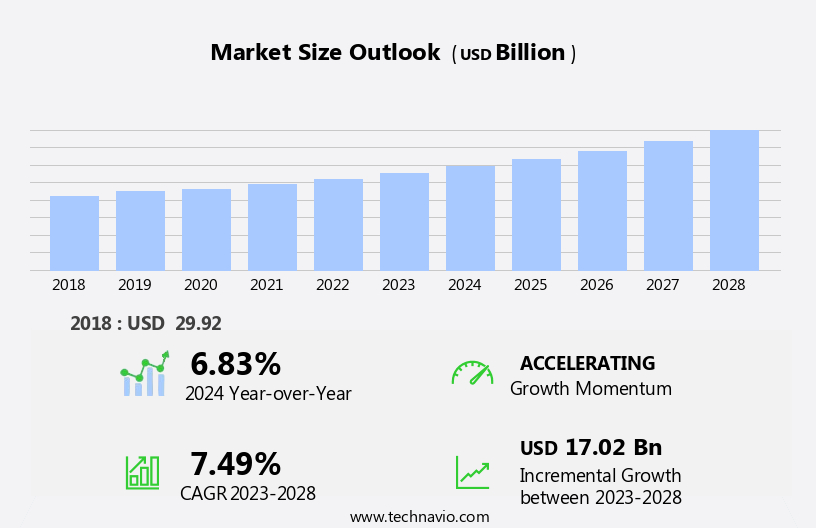
Explore in-depth regional segment analysis with market size data - historical 2018-2022 and forecasts 2024-2028 - in the full report.
Request Free Sample
The market continues to evolve, driven by the diverse applications across various sectors. Gypsum board, also known as drywall, is a versatile building material used extensively in residential and commercial construction for interior walls. Its dimensions are customizable to fit various project requirements, and it can be painted or finished to suit different design aesthetics. Gypsum board's impact resistance makes it an ideal choice for high-traffic areas, while innovations in gypsum board manufacturing include moisture-resistant, lightweight, and sound-dampening options. Gypsum board contractors play a crucial role in ensuring proper installation, which involves the use of gypsum board fasteners and taping techniques.
Fire resistance is another essential property of gypsum board, with fire-resistant gypsum board types available for enhanced safety. Gypsum board production adheres to stringent standards, such as ASTM C1396, and includes the use of calcium sulfate dihydrate and fiber reinforcement. Gypsum board's sustainability is a growing concern, with research focusing on the use of recycled gypsum board and water-resistant additives. Gypsum board patents and fire retardants are continually evolving to meet the changing needs of the market. Gypsum board wholesalers distribute these products to retailers, who stock a range of gypsum board types and thicknesses to cater to the demands of their customers.
In the ever-changing construction landscape, gypsum board continues to be a dynamic and essential building material, with ongoing research and innovation driving its applications and uses.
How is this Gypsum Board Industry segmented?
The gypsum board industry research report provides comprehensive data (region-wise segment analysis), with forecasts and estimates in "USD billion" for the period 2024-2028, as well as historical data from 2018-2022 for the following segments.
- Application
- Residential
- Commercial
- Industrial
- Institutional
- Product
- Wallboard
- Ceiling board
- Pre-decorated board
- Others
- Geography
- North America
- US
- Europe
- UK
- APAC
- China
- India
- Japan
- Rest of World (ROW)
- North America
.
By Application Insights
The residential segment is estimated to witness significant growth during the forecast period.
Gypsum boards, known for their lightweight properties, are extensively utilized in residential construction for ceilings, walls, and partitions. The growing infrastructure development in the residential sector, driven by urbanization, fuels the demand for gypsum boards. These boards offer desirable properties such as fire resistance, durability, sound isolation, and ease of installation, making them a preferred choice for interior applications. Additionally, governments worldwide promote homeownership through various incentives, further boosting the market. Gypsum board innovations include moisture-resistant, lightweight, fire-resistant, and high-performance options, catering to diverse construction needs. Gypsum board contractors ensure proper installation, while finishing and painting enhance the aesthetic appeal.
Manufacturers continue to invest in research and development, introducing fiber reinforcement, water-resistant additives, and gypsum board patents. Gypsum board production follows stringent standards, including ASTM C1396, to maintain quality. The market trends include gypsum board recycling and the use of sustainable gypsum board, contributing to environmental sustainability. Gypsum board wholesalers facilitate distribution, ensuring availability to retailers and end-users. Gypsum rock, a primary raw material, undergoes processing to produce gypsum boards. The market's future looks promising, with continued innovation and demand for gypsum boards in both residential and commercial construction.
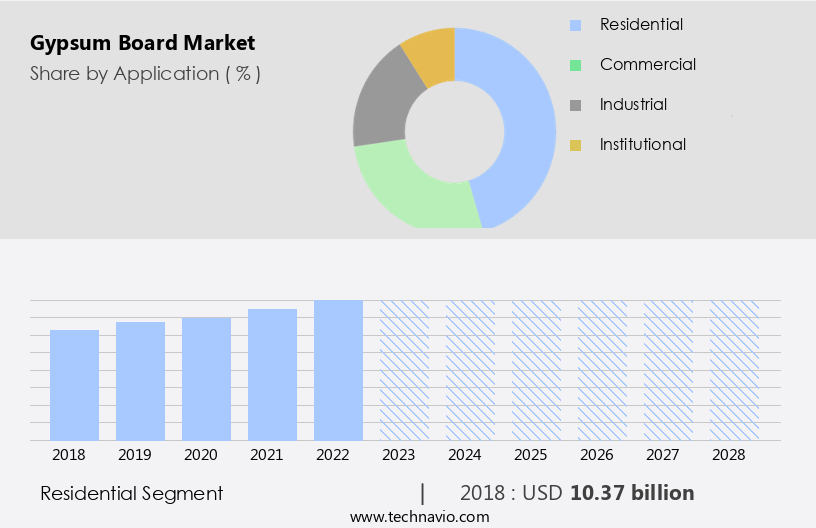
The Residential segment was valued at USD 10.37 billion in 2018 and showed a gradual increase during the forecast period.
Regional Analysis
APAC is estimated to contribute 56% to the growth of the global market during the forecast period.Technavio's analysts have elaborately explained the regional trends and drivers that shape the market during the forecast period.
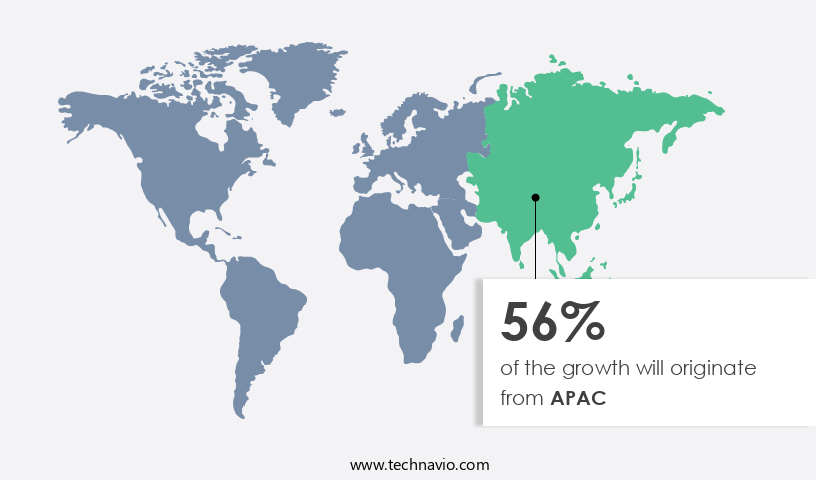
The market in APAC is experiencing significant growth due to the expanding construction industry and increasing demand for residential and commercial buildings. Gypsum boards, including ceiling and wallboards, are popular choices for interior upgrades. Urban migration and government investments in real estate development, particularly in countries like China, Japan, and India, are major drivers for market expansion. Additionally, the trend toward sustainable, cost-effective, and cost-saving construction materials is boosting the demand for gypsum boards. Innovations in gypsum board manufacturing, such as moisture-resistant, lightweight, fire-resistant, and high-performance options, cater to diverse applications and customer preferences. Gypsum board contractors and installers ensure proper installation and finishing, while research and development continue to yield advancements in gypsum board technology.
The market is also witnessing an increase in the use of recycled gypsum board and the incorporation of water-resistant additives and fiber reinforcement. ASTM C1396 standards ensure consistent product quality, and gypsum board wholesalers facilitate distribution and availability. The gypsum board industry's focus on sustainability and continuous innovation is expected to maintain its momentum in the forecast period.
Market Dynamics
Our researchers analyzed the data with 2023 as the base year, along with the key drivers, trends, and challenges. A holistic analysis of drivers will help companies refine their marketing strategies to gain a competitive advantage.
What are the key market drivers leading to the rise in the adoption of Gypsum Board Industry?
- The surge in infrastructure and construction projects serves as the primary catalyst for market growth.
- The market is experiencing significant growth due to the increasing construction activities in major economies, including the US, China, India, Russia, and others. The US Census Bureau's issuance of permits for new residential buildings is further fueling this growth. In addition, residential construction in countries like Mexico, Australia, and Canada is gaining momentum, driven by moderate economic growth. In developing countries such as India and Australia, the demand for residential accommodation is increasing due to population growth and urbanization, leading to an increase in residential construction. Gypsum board, a key building material, is widely used for interior wall partitions and ceilings due to its excellent properties such as moisture resistance, sound transmission, and fire retardancy.
- Manufacturers are incorporating gypsum board additives like water-resistant additives and fire retardants to enhance the product's performance. Gypsum board installers are in high demand due to the increasing construction activities. The market for gypsum board recycling is also gaining traction as an eco-friendly solution for reducing waste and conserving resources. The market is expected to continue its growth trajectory during the forecast period, driven by these factors.
What are the market trends shaping the Gypsum Board Industry?
- The current market trend indicates a growth in M&A activities and partnerships. It is essential for businesses to adapt and engage in these strategies to remain competitive.
- The market is experiencing significant growth due to its widespread usage in both residential and commercial construction projects. companies in this market are focusing on innovations to cater to diverse customer needs. For instance, gypsum board comes in various dimensions to suit different applications, and some are moisture-resistant or lightweight to address specific project requirements. Gypsum board installation is a straightforward process, and finishing involves sanding, taping, and painting. Impact resistance is another essential factor driving the market's growth, as gypsum board offers excellent resistance to impact and fire. To gain a competitive edge, companies are adopting strategies such as mergers and acquisitions and partnerships.
- For example, Compagnie de Saint Gobain SA recently acquired stakes in Livspace, a digital-first company in India and South-East Asia, and RABONI Normandie, a multi-specialist distributor in France. These moves expand their reach and offerings in the dynamic residential and renovation markets. In conclusion, the market is thriving due to its versatility, ease of installation, and various applications. Companies are investing in innovations and strategic partnerships to cater to diverse customer needs and maintain a competitive edge.
What challenges does the Gypsum Board Industry face during its growth?
- The industry's expansion is negatively influenced by the significant environmental consequences, which represents a major challenge that must be addressed.
- Gypsum board, also recognized as drywall or plasterboard, is a widely used construction material. However, the manufacturing process of gypsum board can have negative environmental impacts. The production releases gypsum powder particulates and harmful gases, such as sulfur dioxide, nitrous oxide, and carbon monoxide, into the environment. Additionally, the high energy cost for heating gypsum during production contributes to its carbon footprint. Another concern is the production of hydrogen sulfide gas when gypsum decomposes in landfills. This toxic gas can accumulate and lead to acid rain, which negatively affects the environment. Fire-resistant gypsum board, a popular type, offers improved safety and compliance with building codes.
- Gypsum board standards ensure consistent quality and performance. In terms of trends, sustainability is a growing concern in the construction industry, leading to the development of sustainable gypsum board. This eco-friendly alternative reduces the environmental impact of gypsum board production. Gypsum board distribution networks ensure the material's availability for interior wall construction projects. Fire resistance is a crucial factor in gypsum board's demand due to its ability to slow down or prevent the spread of fire. The market continues to evolve, with manufacturers focusing on innovation and sustainability to meet the changing needs of the construction industry.
Exclusive Customer Landscape
The gypsum board market forecasting report includes the adoption lifecycle of the market, covering from the innovator's stage to the laggard's stage. It focuses on adoption rates in different regions based on penetration. Furthermore, the gypsum board market report also includes key purchase criteria and drivers of price sensitivity to help companies evaluate and develop their market growth analysis strategies.
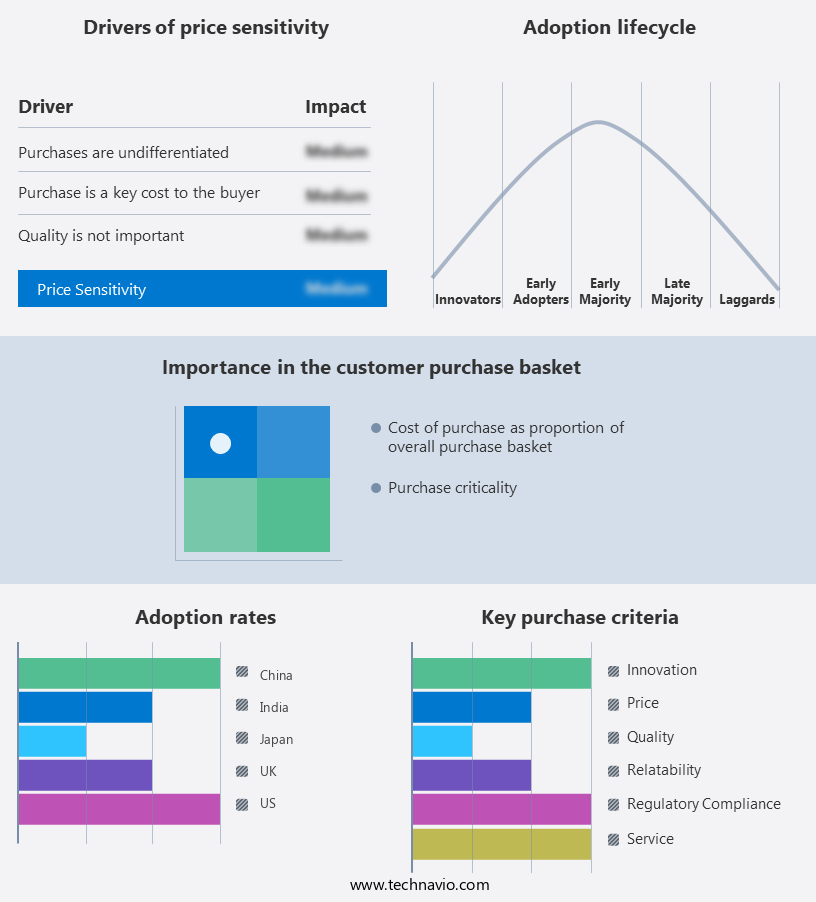
Customer Landscape
Key Companies & Market Insights
Companies are implementing various strategies, such as strategic alliances, gypsum board market forecast, partnerships, mergers and acquisitions, geographical expansion, and product/service launches, to enhance their presence in the industry.
Cabot Gypsum Co. - This company specializes in manufacturing gypsum boards, featuring noncombustible gypsum rock encased between face layers of 100% recycled ivory paper and brown back paper.
The industry research and growth report includes detailed analyses of the competitive landscape of the market and information about key companies, including:
- Cabot Gypsum Co.
- China National Building Material Co. Ltd.
- Compagnie de Saint Gobain
- Eagle Materials Inc
- Fletcher Building Ltd.
- Gypelite India Pvt. Ltd.
- India GYPSUM PVT. LTD.
- Khorasan Gypsum
- Knauf Digital GmbH
- Koch Industries Inc.
- KYIV PROFIL LLC
- National Gypsum Co.
- Osman Group
- PABCO Building Products LLC
- Shandong Baier Building Materials Co. Ltd.
- VANS Gypsum
- Volma
- Yoshino Gypsum Co. Ltd.
Qualitative and quantitative analysis of companies has been conducted to help clients understand the wider business environment as well as the strengths and weaknesses of key industry players. Data is qualitatively analyzed to categorize companies as pure play, category-focused, industry-focused, and diversified; it is quantitatively analyzed to categorize companies as dominant, leading, strong, tentative, and weak.
Recent Development and News in Gypsum Board Market
- In February 2023, USG Corporation, a leading gypsum board manufacturer, announced the launch of its new fire-resistant gypsum board product, Shaftliner XL. This innovative product is designed for use in tall buildings, offering enhanced fire protection and improved acoustical performance (USG Corporation Press Release, 2023).
- In April 2024, Saint-Gobain and Knauf, two major gypsum board producers, formed a strategic partnership to expand their presence in the European market. The collaboration aims to leverage their combined expertise and resources to enhance their product offerings and strengthen their market position (Saint-Gobain Press Release, 2024).
- In July 2024, Georgia-Pacific Gypsum completed the acquisition of National Gypsum Company, a significant player in the North American gypsum board industry. This deal is expected to boost Georgia-Pacific's market share and enhance its production capacity (Georgia-Pacific Gypsum Press Release, 2024).
- In November 2025, the European Union (EU) passed new regulations mandating the use of recycled content in gypsum board production. This policy change is expected to drive demand for eco-friendly gypsum board solutions and encourage innovation in the industry (European Commission Press Release, 2025).
Research Analyst Overview
- The market, a significant segment of the building materials industry, is subject to various regulations and trends. Fire codes and drywall regulations play a crucial role in ensuring safety and compliance. Cement board, a gypsum board alternative, offers enhanced durability and moisture resistance, making it suitable for high-moisture areas. Structural engineering considerations impact wall framing and the use of joist hangers and furring strips. Vapor barriers and energy efficiency standards influence ceiling framing and the adoption of LEED certification and green building standards.
- Acoustic panels, taping tools, drywall knives, and finishing tools are essential for drywall systems in interior design projects. Drywall contractors must navigate these regulations and trends while handling gypsum board and competing with alternatives like wood paneling and fiber cement board. Building codes continue to evolve, shaping the market dynamics.
Dive into Technavio's robust research methodology, blending expert interviews, extensive data synthesis, and validated models for unparalleled Gypsum Board Market insights. See full methodology.
|
Market Scope |
|
|
Report Coverage |
Details |
|
Page number |
169 |
|
Base year |
2023 |
|
Historic period |
2018-2022 |
|
Forecast period |
2024-2028 |
|
Growth momentum & CAGR |
Accelerate at a CAGR of 7.49% |
|
Market growth 2024-2028 |
USD 17.02 billion |
|
Market structure |
Fragmented |
|
YoY growth 2023-2024(%) |
6.83 |
|
Key countries |
China, US, Japan, India, and UK |
|
Competitive landscape |
Leading Companies, Market Positioning of Companies, Competitive Strategies, and Industry Risks |
What are the Key Data Covered in this Gypsum Board Market Research and Growth Report?
- CAGR of the Gypsum Board industry during the forecast period
- Detailed information on factors that will drive the growth and forecasting between 2024 and 2028
- Precise estimation of the size of the market and its contribution of the industry in focus to the parent market
- Accurate predictions about upcoming growth and trends and changes in consumer behaviour
- Growth of the market across APAC, North America, Europe, Middle East and Africa, and South America
- Thorough analysis of the market's competitive landscape and detailed information about companies
- Comprehensive analysis of factors that will challenge the gypsum board market growth of industry companies
We can help! Our analysts can customize this gypsum board market research report to meet your requirements.
 RIA -
RIA - 
