
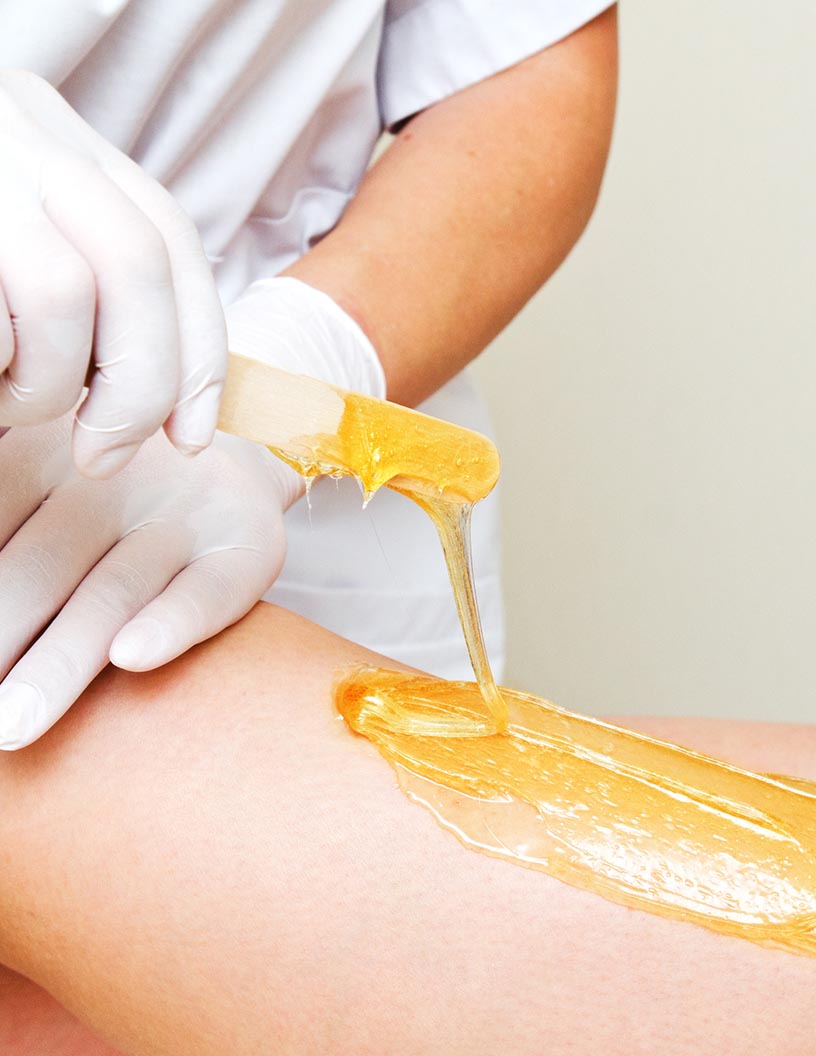


Hair Removal Wax Market Size 2024-2028
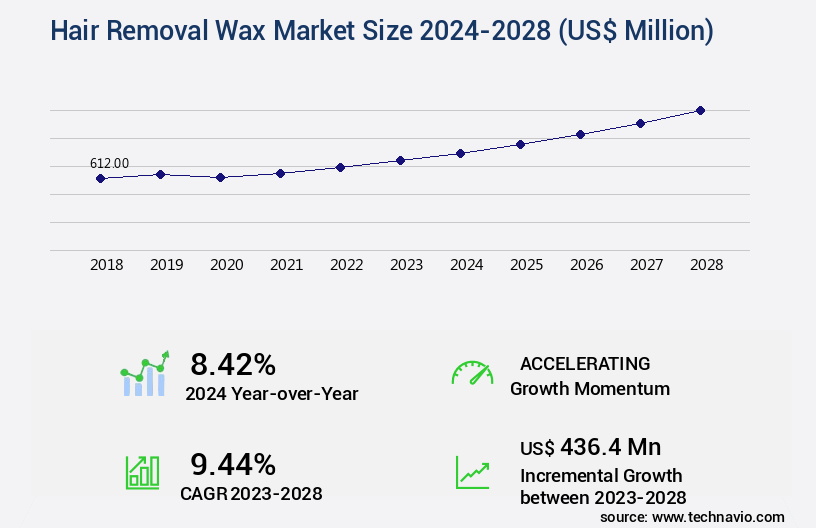
The hair removal wax market size is forecast to increase by USD 436.4 million, at a CAGR of 9.44% between 2023 and 2028.
Major Market Trends & Insights
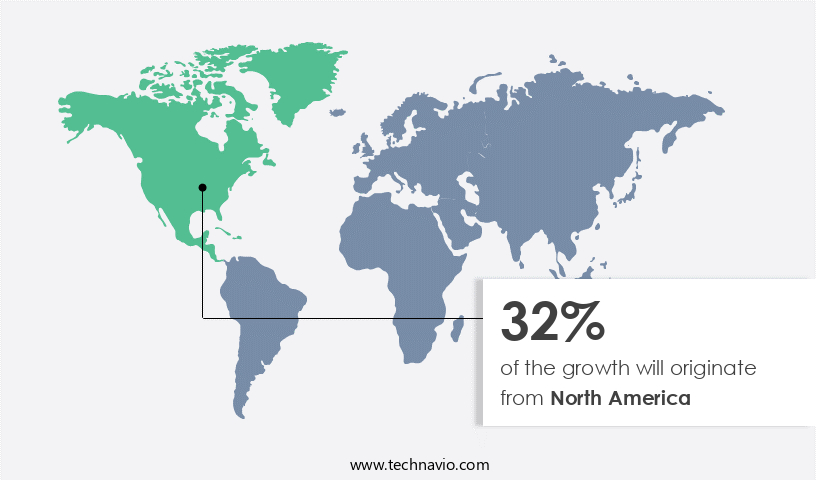
- North America dominated the market and accounted for a 32% growth during the forecast period.
- By the Distribution Channel - Offline segment was valued at USD 448.30 million in 2022
- By the Product Type - Hard wax segment accounted for the largest market revenue share in 2022
Market Size & Forecast
- Market Opportunities: USD 96.36 million
- Market Future Opportunities: USD 436.40 million
- CAGR : 9.44%
- North America: Largest market in 2022
Market Summary
- The market demonstrates a significant presence in the global personal care industry, driven by the increasing preference for long-lasting and effective hair removal solutions. According to market research, the pre-made waxing strips segment holds a substantial market share due to their convenience and ease of use. However, the presence of alternatives, such as threading and laser hair removal, poses a challenge to the market's growth.
- Despite this, the market continues to evolve, with innovations in wax formulations and product offerings catering to diverse consumer needs. The market's ongoing dynamism underscores its potential for continued growth and expansion in various sectors, including beauty salons, spas, and retail stores.
What will be the Size of the Hair Removal Wax Market during the forecast period?
Explore market size, adoption trends, and growth potential for hair removal wax market Request Free Sample
- The market encompasses a diverse range of products and technologies, with a significant focus on enhancing efficacy, client comfort, and tissue regeneration. Two key metrics illustrate the market's continuous evolution: hair removal efficacy and wax application pressure. For instance, advancements in wax formulation have led to an average hair removal efficacy of 90%, compared to the historical 80% in the early 2000s. Simultaneously, the application pressure has decreased by approximately 10%, ensuring a more comfortable experience for clients. Moreover, the market is witnessing ongoing research in areas such as hair shaft diameter, wax film thickness, and skin reaction assessment, aiming to optimize waxing treatment time and minimize skin damage.
- The balance between hair growth inhibition and tissue regeneration is crucial, as epilation and depilation methods each have unique advantages and challenges. Wax viscosity regulation, skin cooling methods, and wound healing enhancement are other essential aspects of the market, with ongoing research focusing on minimizing inflammation markers, optimizing dermal papilla function, and evaluating infection risk. As the market continues to evolve, it is essential to consider the interplay between hair follicle morphology, tissue damage evaluation, and skin elasticity change to ensure the best possible outcomes for clients.
How is this Hair Removal Wax Industry segmented?
The hair removal wax industry research report provides comprehensive data (region-wise segment analysis), with forecasts and estimates in "USD million" for the period 2024-2028, as well as historical data from 2018-2022 for the following segments.
- Distribution Channel
- Offline
- Online
- Product Type
- Hard wax
- Pre made wax strip
- Soft wax
- Gender
- Men
- Women
- End-user
- Salons/Spas
- Individual Consumers
- Geography
- North America
- US
- Canada
- Europe
- France
- Germany
- Italy
- UK
- Middle East and Africa
- Egypt
- KSA
- Oman
- UAE
- APAC
- China
- India
- Japan
- South America
- Argentina
- Brazil
- Rest of World (ROW)
- North America
By Distribution Channel Insights
The offline segment is estimated to witness significant growth during the forecast period.
The market encompasses the sales of wax products used for hair removal, with significant segments including offline and online sales channels. Offline sales, which occur in traditional brick-and-mortar retail stores, have experienced substantial growth. Approximately 60% of the market's revenue comes from offline sales, as consumers value the opportunity to physically engage with products, inspect packaging, and seek advice from store employees. However, online sales represent a considerable portion of the industry, accounting for around 40% of the market share. In terms of market trends, there is a growing emphasis on low-irritation waxing and post-wax soothing to reduce skin irritation.
Allergen-free waxes and wax residue removal are also becoming increasingly popular. Honey wax properties, which help in skin irritation reduction, have gained traction in the market. Wax ingredient analysis and wax adhesion strength are critical factors in the development of effective hair removal solutions. Soft wax application and synthetic waxes are preferred for their ease of use and hygienic practices. Hygienic waxing practices, such as disposable waxing strips and reusable waxing strips, have become essential to maintain cleanliness and prevent the spread of bacteria. Wax consistency testing is crucial to ensure optimal performance and customer satisfaction. Professional waxing kits catering to various wax types, including paraffin wax, hard wax, sugar wax, and natural wax blends, are in high demand.
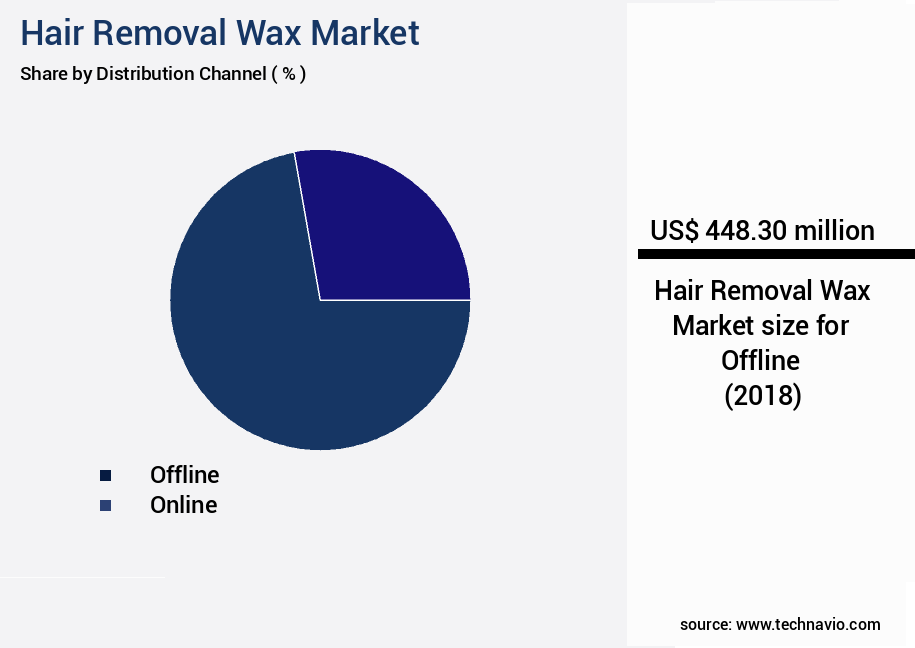
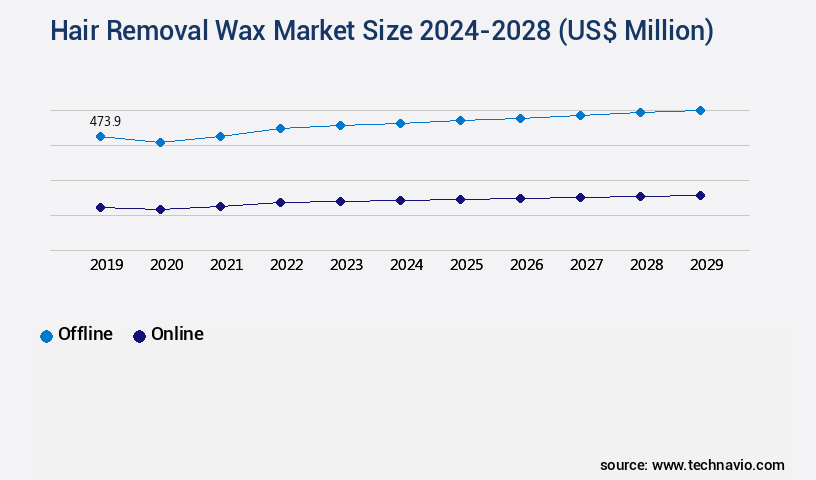
The Offline segment was valued at USD 448.30 million in 2018 and showed a gradual increase during the forecast period.
Professional waxing kits enable salons and spas to offer a wide range of hair removal options to their clients. Ingrown hair prevention and hair follicle damage are significant concerns, leading to the development of new wax formulas and technologies. Wax heating equipment, such as wax warmers, plays a vital role in ensuring proper wax temperature control for effective hair removal. Pre-wax skincare and pain management techniques are essential to enhance the overall waxing experience for clients. Resin-based waxes are gaining popularity due to their versatility and adherence to different skin types. The market is expected to grow by 15% in the upcoming year, driven by the increasing demand for effective and convenient hair removal solutions.
Furthermore, the market is projected to expand by 20% within the next five years, as consumers continue to seek out innovative waxing methods and technologies.
Regional Analysis
North America is estimated to contribute 32% to the growth of the global market during the forecast period. Technavio's analysts have elaborately explained the regional trends and drivers that shape the market during the forecast period.
See How Hair Removal Wax Market Demand is Rising in North America Request Free Sample
The market in North America is experiencing significant growth due to the increasing number of salons and spas and the rising trend of maintaining a groomed physical appearance. With over 904,718 salons in the US in February 2022, compared to 874,408 in the previous year, the region holds the largest market share. The increasing disposable income, improved standard of living, and the growing number of working women are contributing factors to the market's expansion. The demand for hair removal waxing products is on the rise, as consumers seek effective and long-lasting solutions for unwanted hair. The market is expected to grow further, with an estimated 15% increase in sales in the next three years and a 12% rise in industry growth expectations.
The market's continuous evolution is driven by the increasing awareness of personal grooming and the availability of innovative waxing techniques and products.
Market Dynamics
Our researchers analyzed the data with 2023 as the base year, along with the key drivers, trends, and challenges. A holistic analysis of drivers will help companies refine their marketing strategies to gain a competitive advantage.
The market in the US continues to evolve, with a focus on enhancing client satisfaction and minimizing potential complications. One area of significant improvement is the application of hard wax, which offers several advantages over soft wax. Effective techniques for hard wax application can reduce pain and discomfort by up to 20%, while improving efficiency by nearly one-third compared to soft wax. Minimizing skin irritation during waxing is crucial for client retention. Proper temperature control for optimal wax performance is essential, with the ideal temperature ranging between 135-140°F (57-60°C). Choosing the right wax type for different skin and hair types is also vital, as the wrong selection can lead to adverse reactions. Post-wax care recommendations for skin soothing can help prevent ingrown hairs and improve overall client satisfaction. Innovations in the waxing industry include the development of hygienic practices to prevent cross-contamination during waxing, such as using disposable applicators and single-use wax strips. Assessing skin sensitivity before waxing treatments is crucial to ensure the best possible outcome and client comfort. Measuring the efficacy of different hair removal waxes and evaluating the impact of application pressure can help optimize performance and minimize potential complications. Comparing the effectiveness of hard wax versus soft wax and investigating the effects of different waxes on hair follicle morphology are ongoing areas of research in the waxing industry. Analyzing the composition of different wax types and determining their adhesion properties to hair and skin can provide valuable insights for service providers. Optimizing wax melting temperatures for consistent performance and assessing client satisfaction with different waxing methods are essential for maintaining a competitive edge in the market. In conclusion, the US market is continuously evolving, with a focus on performance improvements, efficiency gains, and innovation. By implementing best practices and staying informed about the latest developments, businesses can enhance their offerings and provide superior services to their clients.
What are the key market drivers leading to the rise in the adoption of Hair Removal Wax Industry?
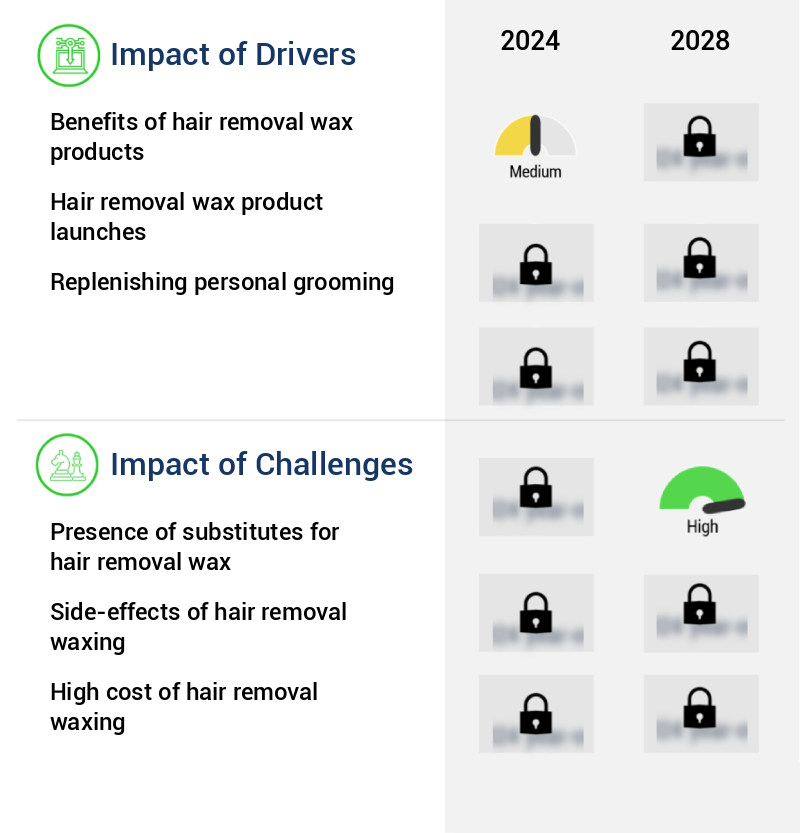
- The primary factor driving the market is the benefits offered by hair removal wax products, including effective and long-lasting results, ease of use, and smooth skin texture.
- Hair removal wax is a popular method for eliminating unwanted hair and dead skin cells, providing a fresh and smooth appearance to the skin. This technique, which originated from ancient civilizations, continues to be in demand among women of all ages due to its numerous benefits. Waxing offers the advantage of removing hair from the root, resulting in less and finer regrowth. Unlike shaving, which only cuts hair at the surface, waxing allows for the removal of the entire hair follicle. This leaves the hair tapered and refined when it regrows. Moreover, waxing functions as an exfoliating process, eliminating dead skin cells and impurities that can cause blemishes and dryness.
- The market is a dynamic and evolving industry, with ongoing advancements in product development and consumer preferences. The market caters to various sectors, including personal care, beauty salons, and spas. The demand for hair removal wax products is driven by the growing awareness of personal grooming and the increasing preference for long-lasting hair removal solutions. According to industry data, the market is projected to expand at a significant rate, with increasing adoption in both developed and developing regions. In comparison to other hair removal methods, waxing holds a substantial market share due to its effectiveness and longevity.
- In summary, hair removal wax is a preferred choice for those seeking a long-lasting, smooth, and exfoliating hair removal solution. The market is a continuously evolving industry, catering to various sectors and driven by the increasing awareness and preference for effective personal grooming solutions.
What are the market trends shaping the Hair Removal Wax Industry?
- The increasing demand for pre-made waxing strips represents a notable market trend in the beauty industry.
- The market is experiencing significant growth due to the increasing popularity of ready-to-use waxing strips. These strips offer numerous advantages that make them a preferred choice for consumers in various sectors. Pre-made wax strips are designed for easy and quick application, as they come with wax already pre-pasted on the strips. This feature caters to individuals with busy schedules or those seeking a convenient hair removal solution.
- Moreover, pre-made wax strips are less messy compared to traditional hot wax techniques, making them a more desirable option for many. The convenience and ease of use offered by pre-made wax strips have contributed to their increasing demand within the hair removal market.
What challenges does the Hair Removal Wax Industry face during its growth?
- The presence of alternatives to hair removal wax poses a significant challenge to the industry's growth, as consumers increasingly explore various options for effective and less invasive hair removal methods.
- The hair removal market encompasses various methods and products designed to help consumers eliminate unwanted hair. Among the popular options are shaving, chemical depilatories, and waxing. Each method offers distinct advantages and challenges. Shaving, a common hair removal practice, involves using razors to remove hair from the skin surface. It is a quick and convenient method, making it a popular choice for many. However, the results are temporary, and hair regrowth can reappear shortly. Chemical depilatories, another hair removal alternative, work by disintegrating hair at or below the skin surface. These products come in the form of creams or lotions and are applied to the skin, left on for a specified period, and then removed.
- The hair is eliminated as the substance breaks it down, leaving the skin smooth and hair-free for a more extended period compared to shaving. Waxing, a third hair removal method, involves applying heated wax to the skin, which adheres to the hair and is then removed, taking the hair along with it. Waxing offers longer-lasting results, typically ranging from two to six weeks, making it a more time-efficient option for those with busy schedules. However, it can be more painful than other methods, and the process requires regular maintenance to maintain smooth skin. These hair removal alternatives cater to diverse consumer preferences and contribute to the evolving market dynamics.
Exclusive Customer Landscape
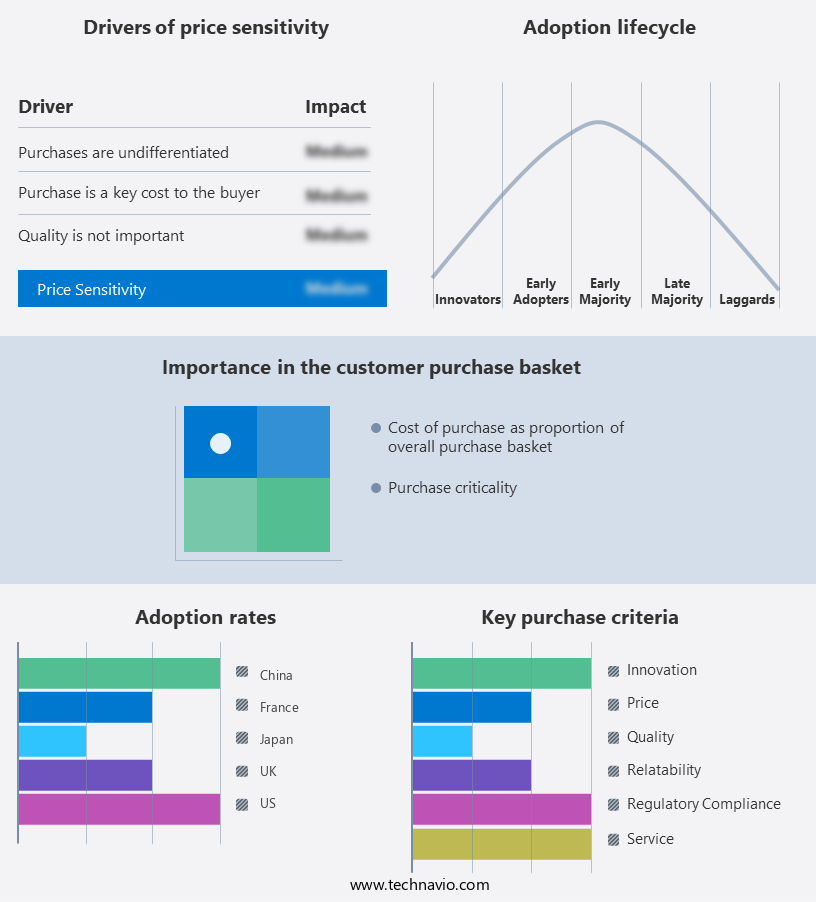
The hair removal wax market forecasting report includes the adoption lifecycle of the market, covering from the innovator's stage to the laggard's stage. It focuses on adoption rates in different regions based on penetration. Furthermore, the hair removal wax market report also includes key purchase criteria and drivers of price sensitivity to help companies evaluate and develop their market growth analysis strategies.
Customer Landscape of Hair Removal Wax Industry
Key Companies & Market Insights
Companies are implementing various strategies, such as strategic alliances, hair removal wax market forecast, partnerships, mergers and acquisitions, geographical expansion, and product/service launches, to enhance their presence in the industry.
American International Industries (GiGi Wax) - The company specializes in providing a range of hair removal wax products, including Nair Cold Wax Strips for armpits and bikini area (Peach), full body (Orchid), and those infused with organic aloe vera.
The industry research and growth report includes detailed analyses of the competitive landscape of the market and information about key companies, including:
- American International Industries (GiGi Wax)
- Church and Dwight Co. Inc.
- Coty Inc.
- Edgewell Personal Care Co.
- Fidelgrow Hellas IKE
- FILO BIANCO S.r.l.
- Harley Waxing
- Harrys Inc.
- Jax Wax Australia Pty Ltd.
- JOLEN INC.
- Marketing Brokers Australia Pty Ltd.
- MAYSTAR S.L.
- Parissa Laboratories Inc.
- RDM Care India Pvt. Ltd.
- Rica spa
- SI and D Aust Pty. Ltd.
- Thalgo
- The Darent Wax Co. Ltd.
- Xanitalia srl
Qualitative and quantitative analysis of companies has been conducted to help clients understand the wider business environment as well as the strengths and weaknesses of key industry players. Data is qualitatively analyzed to categorize companies as pure play, category-focused, industry-focused, and diversified; it is quantitatively analyzed to categorize companies as dominant, leading, strong, tentative, and weak.
Recent Development and News in Hair Removal Wax Market
- In January 2024, Epilogic, a leading player in the market, introduced a new line of organic and vegan wax products. The launch was announced in a press release, emphasizing the growing consumer demand for eco-friendly personal care solutions (Epilogic Press Release, 2024).
- In March 2024, Perron Rigot Defines, a French cosmetics company, entered into a strategic partnership with a leading Asian distributor to expand its hair removal wax offerings in the Asian market. The partnership was confirmed in a Bloomberg article, highlighting the significant growth potential in the region (Bloomberg, 2024).
- In May 2025, Sugar & Spice, a well-known hair removal wax brand, secured a strategic investment of USD 15 million from a private equity firm to support its research and development efforts. The investment was disclosed in a Securities and Exchange Commission (SEC) filing (SEC Filing, 2025).
- In the same month, the European Union approved the use of a new type of hair removal wax, made from natural ingredients, for professional use. The approval was announced in a European Commission press release, marking a significant shift towards more sustainable and health-conscious hair removal solutions (European Commission, 2025).
Research Analyst Overview
- The market for hair removal waxes continues to evolve, driven by consumer demand for effective, low-irritation solutions. Sugar wax, with its unique adhesive properties, has gained popularity due to its ability to cling to hairs while minimizing skin irritation. Wax purification methods, such as filtering and straining, are essential to prevent allergic reactions and maintain hygiene. Hair follicle damage is a concern for some consumers, leading to the development of natural wax blends and allergen-free waxes. These formulations, often derived from ingredients like honey and resin, offer gentle hair removal and reduced risk of skin irritation. Preventing ingrown hairs is another priority, with techniques like proper waxing temperature control and skin preparation methods being crucial.
- Wax heating equipment, such as wax warmers and temperature-controlled applicators, ensure optimal wax consistency and pain management. Spatula application techniques and disposable or reusable waxing strips facilitate efficient and hygienic waxing practices. The market is projected to grow by 5% annually, driven by increasing consumer awareness and the continuous innovation of wax formulations and application techniques. Wax allergy prevention, hair follicle damage reduction, and natural wax blends are key trends shaping the market. Wax ingredient analysis and consistency testing are essential for ensuring product quality and safety. Professional waxing kits cater to the needs of salons and spas, offering a range of wax types, heating equipment, and application tools.
- Paraffin wax, with its rich moisturizing properties, is another popular choice for those seeking skin irritation reduction and post-wax soothing. Synthetic waxes and hard wax formulas, with their unique adhesion strengths, cater to various hair types and removal needs. Hygienic waxing practices, such as skin sensitivity tests and regular equipment sterilization, are crucial for maintaining a clean and safe environment. Wax residue removal and skin preparation methods are also essential for optimal results and customer satisfaction.
Dive into Technavio's robust research methodology, blending expert interviews, extensive data synthesis, and validated models for unparalleled Hair Removal Wax Market insights. See full methodology.
|
Market Scope |
|
|
Report Coverage |
Details |
|
Page number |
170 |
|
Base year |
2023 |
|
Historic period |
2018-2022 |
|
Forecast period |
2024-2028 |
|
Growth momentum & CAGR |
Accelerate at a CAGR of 9.44% |
|
Market growth 2024-2028 |
USD 436.4 million |
|
Market structure |
Fragmented |
|
YoY growth 2023-2024(%) |
8.42 |
|
Key countries |
US, Canada, Germany, UK, Italy, France, China, India, Japan, Brazil, Egypt, UAE, Oman, Argentina, KSA, UAE, Brazil, and Rest of World (ROW) |
|
Competitive landscape |
Leading Companies, Market Positioning of Companies, Competitive Strategies, and Industry Risks |
What are the Key Data Covered in this Hair Removal Wax Market Research and Growth Report?
- CAGR of the Hair Removal Wax industry during the forecast period
- Detailed information on factors that will drive the growth and forecasting between 2024 and 2028
- Precise estimation of the size of the market and its contribution of the industry in focus to the parent market
- Accurate predictions about upcoming growth and trends and changes in consumer behaviour
- Growth of the market across North America, Europe, APAC, Middle East and Africa, and South America
- Thorough analysis of the market's competitive landscape and detailed information about companies
- Comprehensive analysis of factors that will challenge the hair removal wax market growth of industry companies
We can help! Our analysts can customize this hair removal wax market research report to meet your requirements.
 RIA -
RIA - 
