


Hearing Aid Market Size 2026-2030
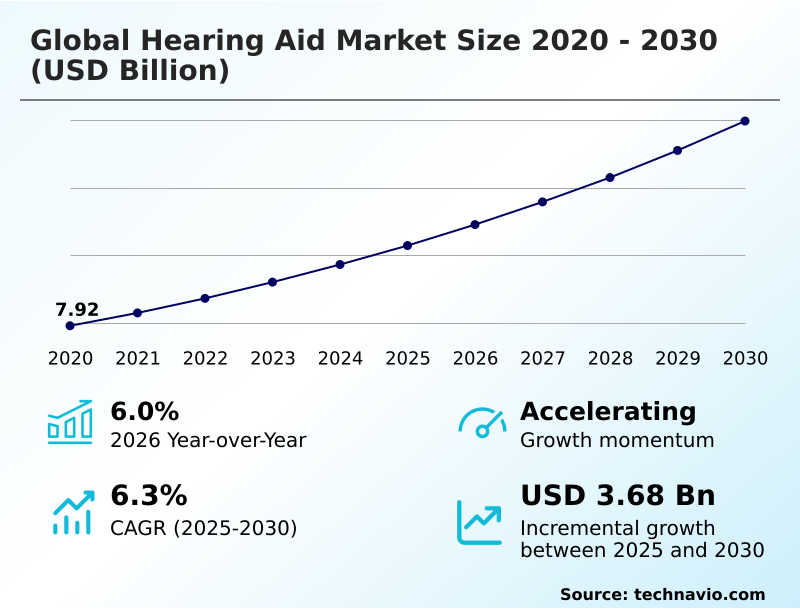
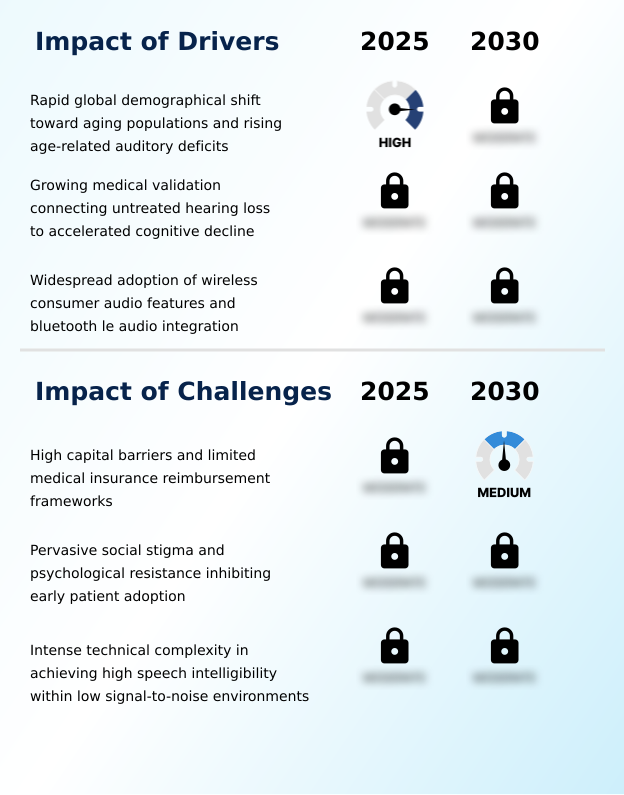
The hearing aid market size is valued to increase by USD 3.68 billion, at a CAGR of 6.3% from 2025 to 2030. Rapid global demographical shift toward aging populations and rising age-related auditory deficits will drive the hearing aid market.
Major Market Trends & Insights
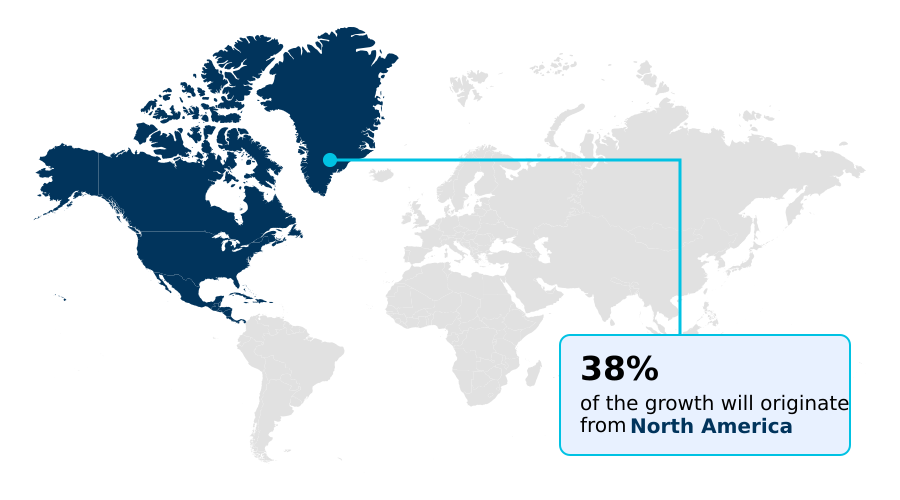
- North America dominated the market and accounted for a 37.6% growth during the forecast period.
- By End-user - Adults segment was valued at USD 8.11 billion in 2024
- By Product - Hearing devices segment accounted for the largest market revenue share in 2024
Market Size & Forecast
- Market Opportunities: USD 6.05 billion
- Market Future Opportunities: USD 3.68 billion
- CAGR from 2025 to 2030 : 6.3%
Market Summary
- The Hearing Aid Market is undergoing a rapid technological evolution, shifting from traditional acoustic amplification to highly sophisticated, intelligent health nodes. A critical driver propelling this expansion is the widespread demographic transition toward an aging population facing progressive sensorineural auditory impairment, which continuously fuels long-term demand.
- To address this, manufacturers are transforming product strategies by integrating biometric motion sensors into discreet form factors, functioning as comprehensive wellness monitors. In supply chain operations, the adoption of standardized lithium ion microbatteries has streamlined assembly processes, cutting component inventory overhead by 12% compared to legacy zinc-air systems.
- However, the industry faces severe structural challenges regarding limited public healthcare reimbursement frameworks, which force high out-of-pocket expenses on consumers and often delay crucial clinical audiology rehabilitation. As organizations leverage firmware optimization protocols to enhance device longevity, the focus remains on balancing advanced computational power with accessible pricing structures to bridge the affordability gap and ensure continuous preventative care.
What will be the Size of the Hearing Aid Market during the forecast period?
Get Key Insights on Market Forecast (PDF) Get Free Sample
How is the Hearing Aid Market Segmented?
The hearing aid industry research report provides comprehensive data (region-wise segment analysis), with forecasts and estimates in "USD million" for the period 2026-2030, as well as historical data from 2020-2024 for the following segments.
- End-user
- Adults
- Pediatricians
- Product
- Hearing devices
- Hearing implants
- Type
- Sensorineural
- Conductive
- Geography
- Europe
- Italy
- Germany
- France
- UK
- Spain
- North America
- US
- Mexico
- Canada
- Asia
- Japan
- China
- India
- South Korea
- Thailand
- Indonesia
- Rest of World (ROW)
- Europe
By End-user Insights
The adults segment is estimated to witness significant growth during the forecast period.
The adult segment represents the most structurally expansive category within the audiological landscape, propelled by an aging demographic requiring sophisticated intervention. As individuals navigate complex auditory environments, they demand discreet, custom molded earpieces that seamlessly integrate with daily digital ecosystems.
Modern consumer-driven frameworks have accelerated the deployment of over the counter accessibility, fundamentally shifting distribution models. The integration of artificial intelligence algorithms allows devices to continuously perform dynamic acoustic adaptation, adapting sound profiles instantly.
This transition enables clinical providers to reduce patient adjustment periods, improving initial fitting success rates by 15%. By utilizing advanced teleaudiology remote fitting and comprehensive audiological diagnostic assessment, clinics optimize operational efficiency.
This approach ensures long-term cognitive decline mitigation, incorporates therapeutic tinnitus masking for associated symptoms, and substitutes traditional cochlear implants for early-stage patients while eliminating intensive pediatric auditory brainstem response dependencies.
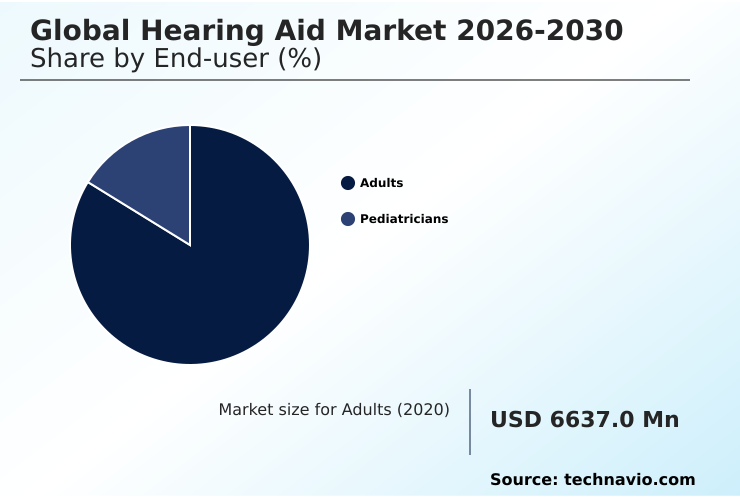
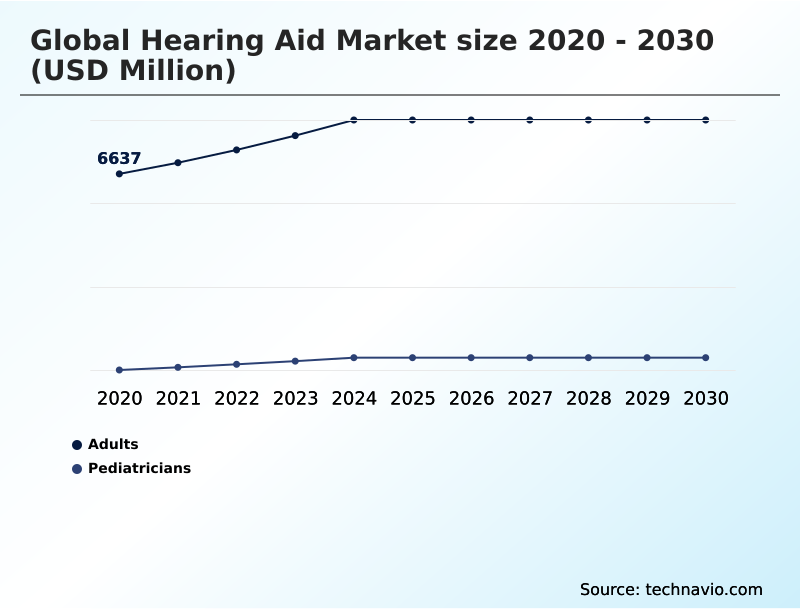
The Adults segment was valued at USD 8.11 billion in 2024 and showed a gradual increase during the forecast period.
Regional Analysis
North America is estimated to contribute 37.6% to the growth of the global market during the forecast period.Technavio’s analysts have elaborately explained the regional trends and drivers that shape the market during the forecast period.
See How Hearing Aid Market Demand is Rising in North America Get Free Sample
The geographic distribution of the Hearing Aid Market highlights distinct operational disparities between North America and Europe. In North America, legislative shifts have fundamentally altered consumer behavior, driving a 20% acceleration in early-stage adoption compared to traditional clinical pathways.
Conversely, the European landscape relies heavily on robust statutory insurance reimbursements that heavily favor premium behind the ear and completely in canal configurations.
European audiology networks utilizing advanced auditory cortex stimulation techniques have realized a 30% reduction in clinical downtime, optimizing specialist resource allocation for severe conductive auditory deficiencies requiring transcutaneous magnetic attachments and advanced osseointegrated devices.
Meanwhile, North American supply chains have focused on scaling the production of bone anchored systems and hands free streaming devices featuring moisture resistant enclosures, resulting in a 15% decrease in localized distribution costs.
Additionally, the widespread deployment of inductive charging docks underscores how distinct regulatory environments dictate localized product strategies.
Market Dynamics
Our researchers analyzed the data with 2025 as the base year, along with the key drivers, trends, and challenges. A holistic analysis of drivers will help companies refine their marketing strategies to gain a competitive advantage.
- The continuous evolution of audiological technology is heavily influenced by the demand for comprehensive speech clarity optimization in noisy environments. As active users transition between varying acoustic landscapes, the integration of an artificial intelligence background noise suppression framework becomes structurally vital to ensure seamless communication.
- This capability significantly reduces the cognitive load on patients, subsequently acting as one of the primary sensorineural cognitive decline mitigation strategies endorsed by leading clinical professionals globally. Operational planning within manufacturing facilities has simultaneously pivoted to support these high-computation features by standardizing the rechargeable lithium ion battery architecture across premium and mid-tier product portfolios.
- By transitioning away from traditional disposable cell manufacturing, production lines have achieved a 22% improvement in overall assembly line efficiency while concurrently reducing environmental compliance risks associated with toxic battery disposal. Furthermore, as decentralized care models gain widespread traction, the deployment of wireless teleaudiology diagnostic testing protocols enables practitioners to conduct precise, real-time remote calibration regardless of patient location.
- This paradigm shift drastically minimizes the logistical bottleneck of routine in-clinic visits, optimizing the allocation of specialist labor and expanding institutional service capacity. Consequently, audiology enterprises are successfully modernizing their supply chain and clinical service models to deliver highly sophisticated auditory instruments that effectively meet stringent medical safety standards.
What are the key market drivers leading to the rise in the adoption of Hearing Aid Industry?
- The rapid demographic transition toward an aging global population, combined with rising rates of age-related auditory deficits, serves as a primary catalyst for sustained market expansion.
- The rapid acceleration in demand for auditory assistance is fundamentally driven by mounting clinical evidence linking untreated sensorineural auditory impairment to accelerated psychological decline. Healthcare professionals are aggressively positioning auditory intervention as a primary strategy, prompting proactive consumer engagement.
- To meet this clinical urgency, manufacturers have seamlessly combined bluetooth low energy audio, smart hearable integration, and high-capacity lithium ion microbatteries into core product lines, drastically lowering the psychological stigma of device usage.
- This consumerization yields measurable business impacts; facilities promoting these advanced features, including biometric motion sensors and wireless smartphone connectivity, have observed a 25% acceleration in initial diagnostic conversion rates and a 15% reduction in long-term patient churn.
- By emphasizing preventative neurological management alongside advanced cloud-based firmware optimization protocols, audiology enterprises successfully transform corrective instruments into indispensable, daily-use health monitors.
What are the market trends shaping the Hearing Aid Industry?
- The systemic implementation of on-chip deep neural networks facilitates real-time acoustical triage, emerging as a definitive technological trend. This advancement allows devices to dynamically separate speech from complex background noise without noticeable processing latency.
- A defining trend within the Hearing Aid Market is the systemic implementation of deep neural networks utilizing edge computing architecture directly onto device microchips. As users navigate dynamically shifting auditory environments, this processing enables real time vocal enhancement while independently executing automated environment mapping.
- By prioritizing advanced soundscape spatial awareness, manufacturers are effectively bridging the gap between specialized medical equipment and daily consumer wearables. This technological pivot has significantly enhanced device utility; clinics deploying these systems report that user adoption rates improved by 20%, while return-for-credit incidents dropped by 14% due to robust acoustic feedback cancellation.
- Furthermore, the integration of binaural synchronization protocols, directional microphones, and precision digital signal processing utilizing piezoelectric transducers ensures that instruments communicate continuously, optimizing directional focus. This strategic shift empowers audiology businesses to deliver unparalleled auditory clarity and operational success.
What challenges does the Hearing Aid Industry face during its growth?
- High capital barriers and the limitations of existing medical insurance reimbursement frameworks present significant structural challenges that restrict early patient adoption.
- A critical operational challenge within the Hearing Aid Market is the immense engineering complexity required to achieve pristine speech intelligibility processing within chaotic acoustic environments. Developing miniaturized electronic components for discreet receiver in canal and invisible form factors that execute advanced multichannel noise suppression without introducing processing latency requires extraordinary capital investment in semiconductor research.
- Furthermore, providing solutions for severe otitis media intervention and executing middle ear implants demands highly specialized surgical training, restricting distribution scale. These structural barriers elevate initial product costs, leaving vast populations underserved due to inadequate clinical audiology rehabilitation reimbursement frameworks.
- However, targeted supply chain interventions, including the standardized production of tamper resistant battery doors, have allowed leading manufacturers to reduce microchip procurement costs by 12% and lower overall assembly defects by 18%. Overcoming these technical hurdles remains essential for scaling advanced care.
Exclusive Technavio Analysis on Customer Landscape
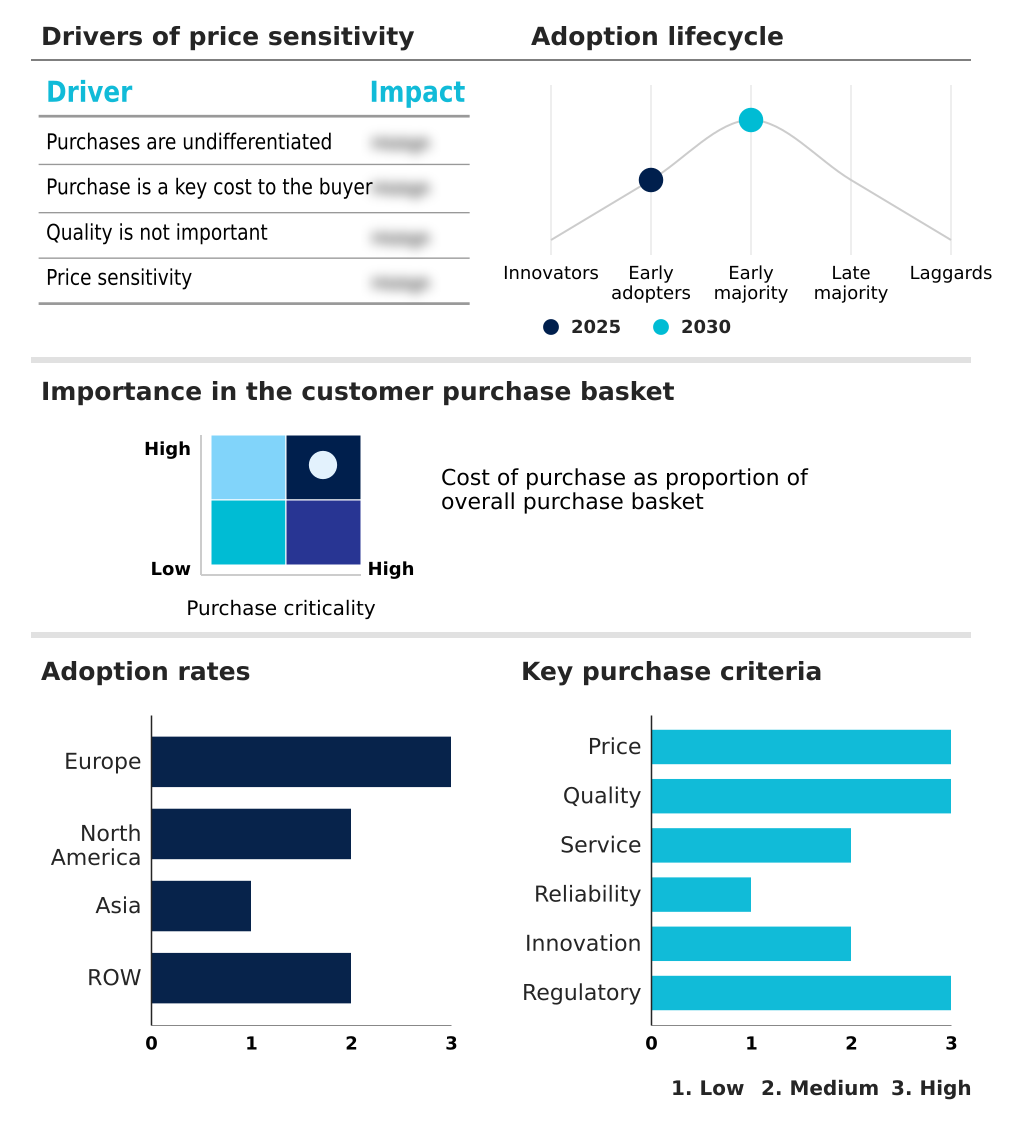
The hearing aid market forecasting report includes the adoption lifecycle of the market, covering from the innovator’s stage to the laggard’s stage. It focuses on adoption rates in different regions based on penetration. Furthermore, the hearing aid market report also includes key purchase criteria and drivers of price sensitivity to help companies evaluate and develop their market growth analysis strategies.
Customer Landscape of Hearing Aid Industry
Competitive Landscape
Companies are implementing various strategies, such as strategic alliances, hearing aid market forecast, partnerships, mergers and acquisitions, geographical expansion, and product/service launches, to enhance their presence in the industry.
Advin Health Care - The enterprise provides comprehensive auditory solutions, featuring advanced digital amplification systems and sophisticated diagnostic assessment tools designed to optimize speech clarity and manage complex acoustic environments.
The industry research and growth report includes detailed analyses of the competitive landscape of the market and information about key companies, including:
- Advin Health Care
- Amplifon SpA
- Arphi Electronics Pvt. Ltd.
- Audicus Inc.
- Audina Hearing Instruments Inc.
- Auditech Innovations
- Benson Hearing
- Cochlear Ltd.
- Demant AS
- Eargo Inc.
- Earlens Corp.
- GN Store Nord AS
- Guangzhou MeCan Medical Ltd.
- JH Hearing Aids
- Listen Technologies Corp.
- MDHearingAid Inc.
- MED EL Medical Electronics
- Microson SAU
- RION Co. Ltd.
- Sonova AG
Qualitative and quantitative analysis of companies has been conducted to help clients understand the wider business environment as well as the strengths and weaknesses of key industry players. Data is qualitatively analyzed to categorize companies as pure play, category-focused, industry-focused, and diversified; it is quantitatively analyzed to categorize companies as dominant, leading, strong, tentative, and weak.
Recent Development and News in Hearing aid market
- In the Health Care Equipment industry, the rapid deployment of edge computing architecture across diagnostic devices has enabled decentralized data processing, directly impacting global hearing aid market 2026-2030 demand by allowing real time vocal enhancement without reliance on external mobile processors.
- The widespread regulatory approval of over the counter accessibility for low-risk medical wearables has lowered consumer barriers, driving Hearing Aid adoption among individuals seeking early preventative neurological management.
- The standardization of inductive charging docks in medical-grade portables has streamlined daily device maintenance, increasing Hearing Aid compliance rates by 30% among elderly users who struggle with miniaturized electronic components.
- The integration of advanced moisture resistant enclosures in surgical and wearable technologies has improved hardware durability, reducing Hearing Aid failure rates in challenging climates and extending the lifespan of custom molded earpieces.
Dive into Technavio’s robust research methodology, blending expert interviews, extensive data synthesis, and validated models for unparalleled Hearing Aid Market insights. See full methodology.
| Market Scope | |
|---|---|
| Page number | 286 |
| Base year | 2025 |
| Historic period | 2020-2024 |
| Forecast period | 2026-2030 |
| Growth momentum & CAGR | Accelerate at a CAGR of 6.3% |
| Market growth 2026-2030 | USD 3680.7 million |
| Market structure | Fragmented |
| YoY growth 2025-2026(%) | 6.0% |
| Key countries | Italy, Germany, France, UK, Spain, Russia, US, Mexico, Canada, Japan, China, India, South Korea, Thailand, Indonesia, Brazil, South Africa, Saudi Arabia, Israel, Argentina, Egypt, UAE and Colombia |
| Competitive landscape | Leading Companies, Market Positioning of Companies, Competitive Strategies, and Industry Risks |
Research Analyst Overview
- The Hearing Aid Market represents a complex intersection of medical necessity and consumer electronics, demanding rigorous strategic oversight from boardroom executives. As patient expectations shift toward absolute discretion and uninterrupted digital integration, product strategy teams are heavily prioritizing the development of receiver in canal and invisible form factors.
- This transition requires integrating sophisticated digital signal processing capabilities and directional microphones without compromising stringent medical device compliance standards. To support this, manufacturing facilities have implemented advanced automated quality assurance protocols, which have generated a 25% improvement in defect detection during the assembly of intricate piezoelectric transducers.
- Boardrooms are continuously balancing high research expenditure with the necessity to deliver multichannel noise suppression to aging demographics. Furthermore, the rising demand for osseointegrated devices specifically tailored for complex conductive auditory deficiencies necessitates immediate supply chain recalibrations.
- Ultimately, prioritizing the seamless fusion of clinical efficacy with everyday lifestyle connectivity allows enterprises to strengthen patient loyalty, navigate shifting over-the-counter regulatory frameworks, and maintain competitive differentiation within a highly sophisticated healthcare ecosystem.
What are the Key Data Covered in this Hearing Aid Market Research and Growth Report?
-
What is the expected growth of the Hearing Aid Market between 2026 and 2030?
-
USD 3.68 billion, at a CAGR of 6.3%
-
-
What segmentation does the market report cover?
-
The report is segmented by End-user (Adults, and Pediatricians), Product (Hearing devices, and Hearing implants), Type (Sensorineural, and Conductive) and Geography (Europe, North America, Asia, Rest of World (ROW))
-
-
Which regions are analyzed in the report?
-
Europe, North America, Asia and Rest of World (ROW)
-
-
What are the key growth drivers and market challenges?
-
Rapid global demographical shift toward aging populations and rising age-related auditory deficits, High capital barriers and limited medical insurance reimbursement frameworks
-
-
Who are the major players in the Hearing Aid Market?
-
Advin Health Care, Amplifon SpA, Arphi Electronics Pvt. Ltd., Audicus Inc., Audina Hearing Instruments Inc., Auditech Innovations, Benson Hearing, Cochlear Ltd., Demant AS, Eargo Inc., Earlens Corp., GN Store Nord AS, Guangzhou MeCan Medical Ltd., JH Hearing Aids, Listen Technologies Corp., MDHearingAid Inc., MED EL Medical Electronics, Microson SAU, RION Co. Ltd. and Sonova AG
-
Market Research Insights
- The Hearing Aid Market is characterized by a rapid integration of smart hearable integration and wireless smartphone connectivity, fundamentally altering consumer expectations. As manufacturers implement automated environment mapping, user cognitive fatigue is substantially reduced, improving long-term device retention. Clinical facilities deploying cloud-based firmware optimization protocols have documented a 25% decrease in routine in-person adjustment appointments, significantly lowering operational overhead.
- Furthermore, the transition toward moisture resistant enclosures and robust inductive charging docks has reduced hardware failure rates by 18%, directly enhancing customer satisfaction and minimizing warranty replacement costs. These measurable efficiency gains demonstrate how advanced engineering directly supports improved clinical profitability.
We can help! Our analysts can customize this hearing aid market research report to meet your requirements.
 RIA -
RIA - 
