


Herbal Extract Market Size 2026-2030
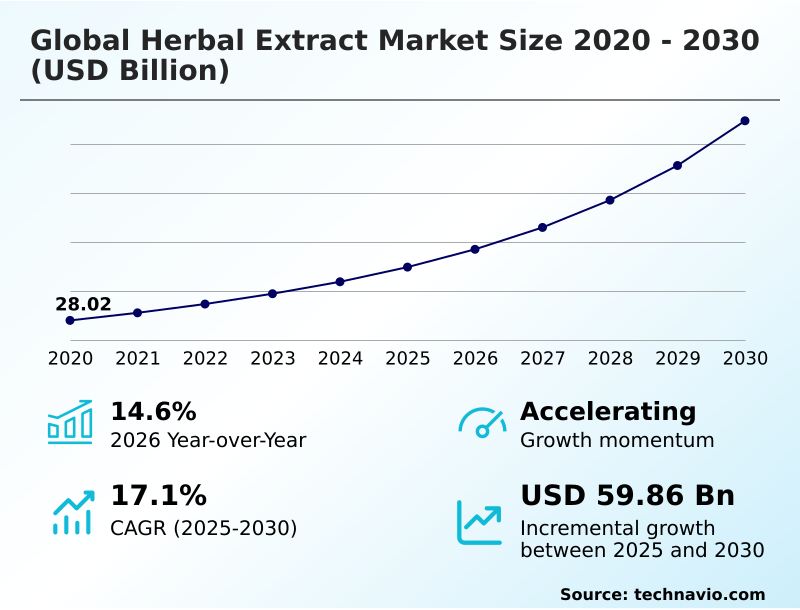
The herbal extract market size is valued to increase by USD 59.86 billion, at a CAGR of 17.1% from 2025 to 2030. Increasing demand for food and beverages with herbal ingredients will drive the herbal extract market.
Major Market Trends & Insights
- APAC dominated the market and accounted for a 34% growth during the forecast period.
- By Application - Pharmaceuticals segment was valued at USD 26.27 billion in 2024
- By Type - Liquid segment accounted for the largest market revenue share in 2024
Market Size & Forecast
- Market Opportunities: USD 81.66 billion
- Market Future Opportunities: USD 59.86 billion
- CAGR from 2025 to 2030 : 17.1%
Market Summary
- The herbal extract market is undergoing a significant transformation, driven by a global consumer shift toward natural wellness and preventative health. This evolution is moving beyond traditional applications into sophisticated sectors like pharmaceuticals and functional foods, where the demand for clean-label ingredients and scientifically validated plant-based remedies is paramount.
- Innovations in processing, such as supercritical fluid extraction, are enabling the production of highly pure phytochemicals and bioactive compounds, enhancing product efficacy. This technological progress supports the development of advanced phytopharmaceuticals and standardized extracts.
- For instance, a food and beverage manufacturer could leverage these advancements to optimize its supply chain for herbal raw material sourcing, ensuring traceability and adherence to good agricultural and collection practices (gacps). This strategy not only meets stringent gmp for herbal medicines but also satisfies consumer demand for transparently sourced botanical ingredients in products like adaptogenic herbs and herbal nutraceuticals.
- This focus on quality and efficacy, from medicinal plants to finished goods, is crucial for navigating the competitive landscape.
What will be the Size of the Herbal Extract Market during the forecast period?
Get Key Insights on Market Forecast (PDF) Get Free Sample
How is the Herbal Extract Market Segmented?
The herbal extract industry research report provides comprehensive data (region-wise segment analysis), with forecasts and estimates in "USD million" for the period 2026-2030, as well as historical data from 2020-2024 for the following segments.
- Application
- Pharmaceuticals
- Personal care
- Others
- Type
- Liquid
- Powder
- Product type
- Phytomedicines
- Essential oils
- Plant extracts and oleoresins
- Polyphenols
- Others
- Geography
- APAC
- China
- India
- Japan
- North America
- US
- Canada
- Mexico
- Europe
- Germany
- UK
- France
- Middle East and Africa
- Saudi Arabia
- UAE
- Turkey
- South America
- Brazil
- Argentina
- Rest of World (ROW)
- APAC
By Application Insights
The pharmaceuticals segment is estimated to witness significant growth during the forecast period.
The pharmaceutical segment is a cornerstone of the herbal extract market, driven by the integration of phytopharmaceuticals into mainstream healthcare. This shift is propelled by a growing preference for plant-based remedies and botanical drugs over synthetic alternatives.
The sector emphasizes the scientific validation of traditional knowledge, with a focus on isolating bioactive compounds from medicinal plants through rigorous clinical trials. Regulatory frameworks are evolving to accommodate this, creating clearer pathways for herbal medicinal products.
In some developed nations, consumer adoption of complementary medicines, a key end-user category, surpasses 70%.
This high acceptance rate underscores the demand for standardized extracts and phytotherapy solutions, compelling companies to invest in R&D and ensure their plant-derived compounds meet stringent quality and efficacy standards, driving innovation in phytomedicine clinical trials.
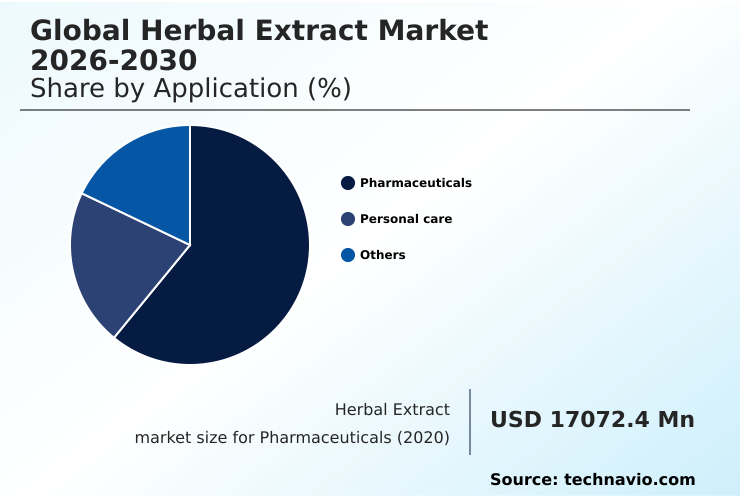
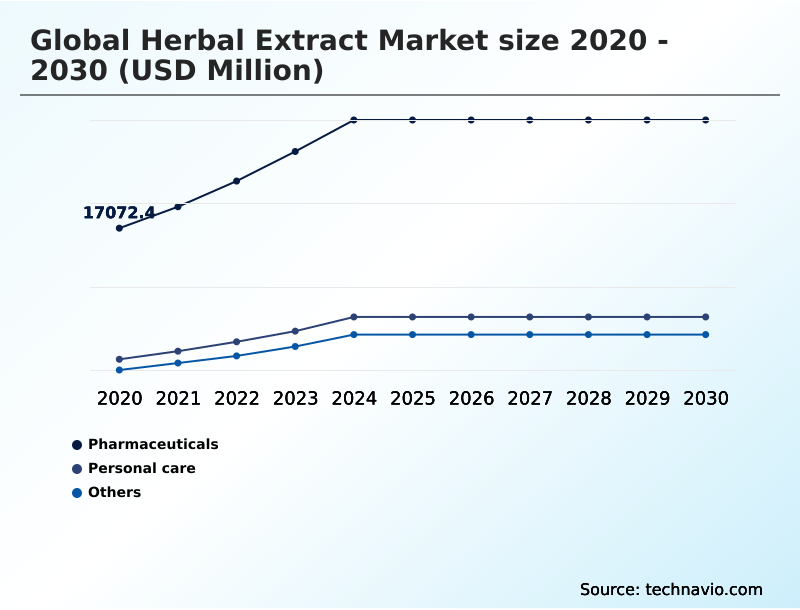
The Pharmaceuticals segment was valued at USD 26.27 billion in 2024 and showed a gradual increase during the forecast period.
Regional Analysis
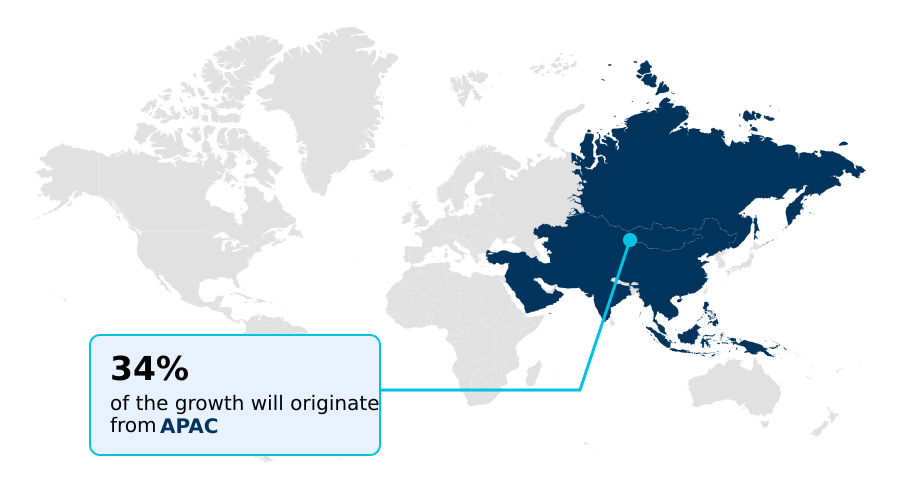
APAC is estimated to contribute 34% to the growth of the global market during the forecast period.Technavio’s analysts have elaborately explained the regional trends and drivers that shape the market during the forecast period.
See How Herbal Extract Market Demand is Rising in APAC Get Free Sample
The APAC region is the dominant force in the herbal extract market, accounting for over 34% of the industry's incremental growth.
This leadership is anchored in the deep-rooted cultural acceptance of traditional chinese medicine (tcm) and ayurveda, particularly in China and India, which drives substantial demand for medicinal plants and plant-derived compounds.
Regional governments are actively supporting the modernization of these practices by funding phytomedicine clinical trials and establishing clearer herbal product regulatory compliance frameworks. The emphasis on ethnobotanical research and natural cosmetic ingredients is also fueling innovation.
This unique combination of rich biodiversity, strong consumer preference for natural health products, and evolving regulatory support solidifies APAC's position as the central hub for herbal raw material sourcing and botanical drug development.
Market Dynamics
Our researchers analyzed the data with 2025 as the base year, along with the key drivers, trends, and challenges. A holistic analysis of drivers will help companies refine their marketing strategies to gain a competitive advantage.
- Strategic positioning in the herbal extract market requires a deep understanding of the technical nuances driving value, from sourcing to final product formulation. Advancements in herbal extraction techniques, particularly supercritical fluid extraction for turmeric, are unlocking new potential for bioactive compounds, significantly improving the bioavailability of encapsulated curcumin.
- This necessitates stringent GMP compliance for herbal supplements and a robust strategy for sourcing organic medicinal plants. The market applications of phytomedicines are expanding as companies master the standardization of ashwagandha extract and other botanicals, which is critical for formulating functional foods with botanicals and developing supplements for targeted benefits like ashwagandha for stress reduction.
- Companies focusing on standardizing extracts have seen a more than two-fold increase in product acceptance in regulated markets. Furthermore, understanding the challenges in herbal raw material supply and the complex regulatory pathways for botanical drugs is essential.
- The effective use of natural preservatives like rosemary extract and the analysis of polyphenol content in green tea extract demonstrate a commitment to quality. The industry is also seeing a convergence of traditional knowledge and modern science, with ayurvedic principles in product development and the integration of tcm in modern healthcare becoming key differentiators.
- This extends to analyzing terpenoid profiles in essential oils, alkaloid extraction from medicinal roots, and leveraging flavonoid benefits in skincare and carotenoid stability in food products.
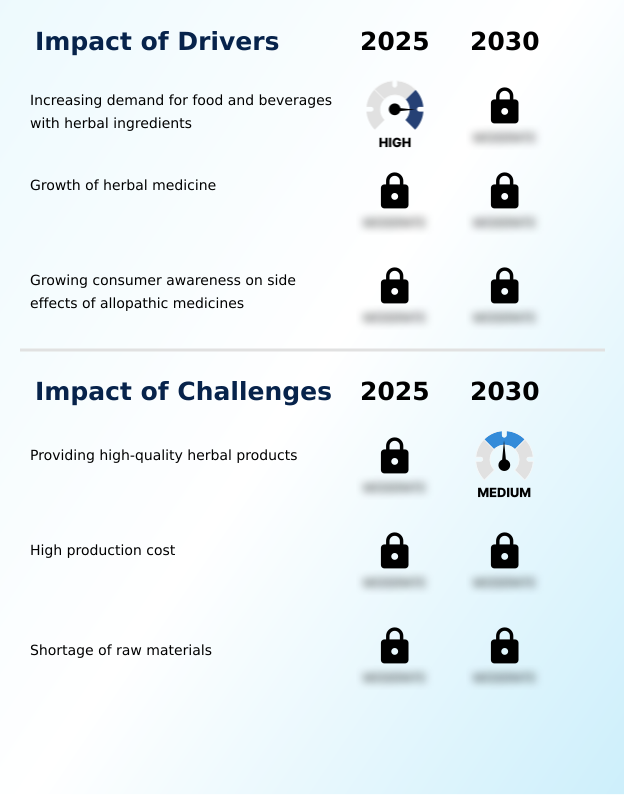
What are the key market drivers leading to the rise in the adoption of Herbal Extract Industry?
- The increasing demand for food and beverages that incorporate natural herbal ingredients stands as a key driver for the market's expansion.
- Market growth is fundamentally driven by a pronounced consumer shift toward natural and functional products, impacting purchasing decisions across multiple sectors.
- Products featuring clean-label ingredients are experiencing a 20% higher repeat purchase rate, compelling manufacturers to reformulate with plant-based flavor enhancers and natural colorants for food.
- The functional food sector, by incorporating validated phytopharmaceuticals and botanical antioxidant sources, has expanded its consumer base by 15% in recent years.
- This trend is amplified by a growing awareness of the benefits of plant-based api manufacturing and ayurvedic medicine formulation, with consumers actively seeking out functional food ingredients and immune support botanicals for preventative health.
- The demand for effective stress relief herbal remedies is also contributing significantly to market expansion.
What are the market trends shaping the Herbal Extract Industry?
- Significant advancements in extraction techniques represent a key market trend, as these innovations are enhancing the quality, consistency, and efficacy of herbal extracts.
- Key market trends are centered on technological innovation and digital transformation, creating new efficiency benchmarks. Advancements in extraction techniques, such as supercritical co2 extraction, are enabling firms to achieve up to a 40% higher yield of bioactive compounds compared to traditional solvent extraction methods. This enhances the quality of herbal supplement formulation and natural cosmetic ingredients.
- Concurrently, the industry is leveraging digital platforms for direct-to-consumer engagement, with brands utilizing e-commerce channels reporting customer interaction rates increasing by over 50%. This shift facilitates broader access to natural health products and allows for real-time feedback, influencing botanical drug development.
- The focus on plant extract standardization and distillation of essential oils ensures consistent product quality, meeting heightened consumer expectations for efficacy.
What challenges does the Herbal Extract Industry face during its growth?
- Ensuring the provision of consistently high-quality herbal products, from raw material sourcing to final formulation, poses a significant challenge to the industry's growth trajectory.
- Navigating operational and regulatory complexities presents significant challenges to market participants. Supply chain disruptions for essential medicinal plants have resulted in production delays of up to 30% for some manufacturers, highlighting vulnerabilities in herbal raw material sourcing and sustainable botanical harvesting.
- The financial burden of compliance is also substantial; the cost of implementing gmp for herbal medicines can increase initial production overhead by nearly 25%, creating a high barrier to entry. Ensuring consistent quality requires robust herbal product quality control and adherence to good agricultural and collection practices (gacps).
- These factors, combined with the technical demands of creating standardized extracts and anti-inflammatory plant extracts, demand significant capital and expertise, constraining scalability for many players.
Exclusive Technavio Analysis on Customer Landscape
The herbal extract market forecasting report includes the adoption lifecycle of the market, covering from the innovator’s stage to the laggard’s stage. It focuses on adoption rates in different regions based on penetration. Furthermore, the herbal extract market report also includes key purchase criteria and drivers of price sensitivity to help companies evaluate and develop their market growth analysis strategies.
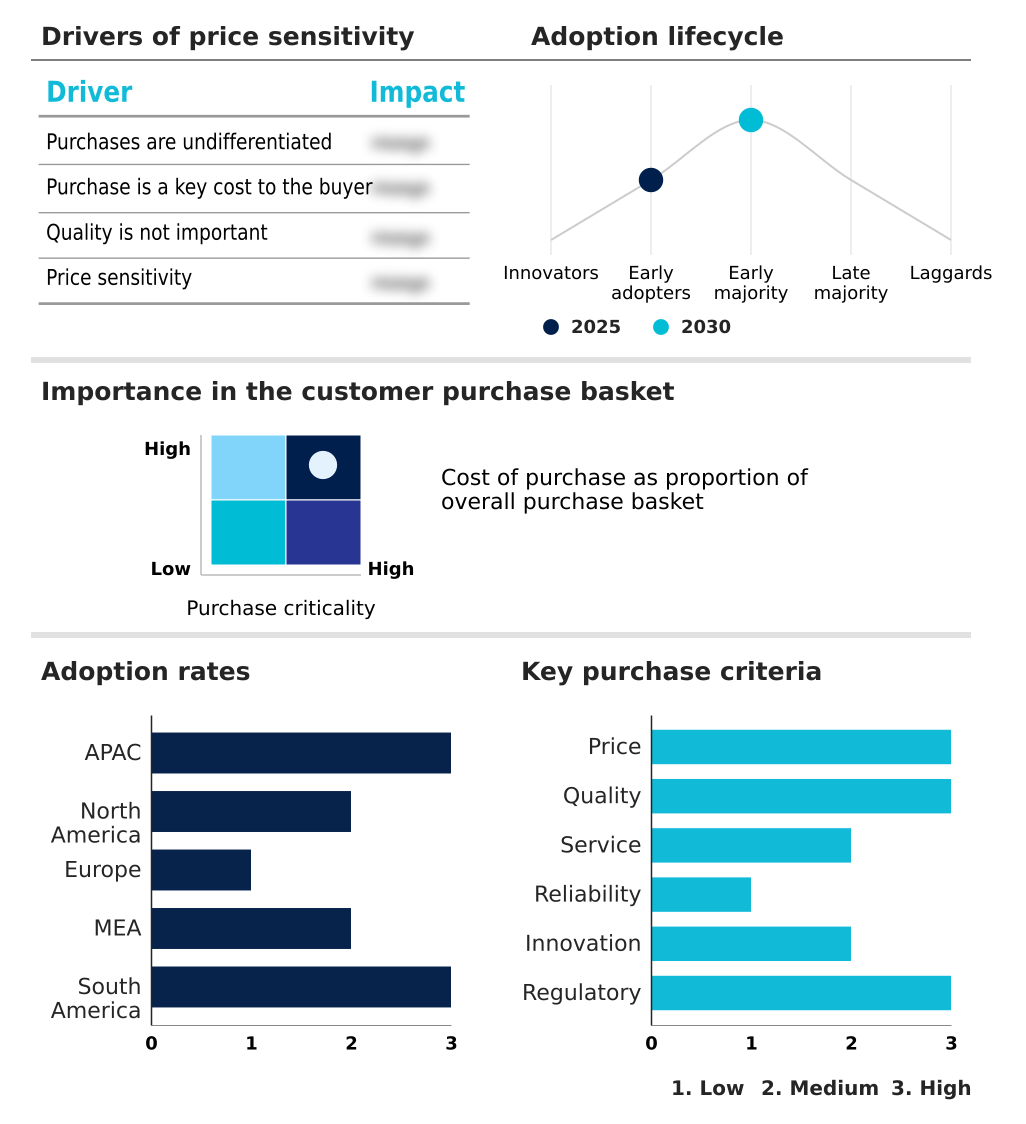
Customer Landscape of Herbal Extract Industry
Competitive Landscape
Companies are implementing various strategies, such as strategic alliances, herbal extract market forecast, partnerships, mergers and acquisitions, geographical expansion, and product/service launches, to enhance their presence in the industry.
Dohler GmbH - Specializes in technology-driven natural ingredient systems, delivering integrated botanical solutions like African extracts for diverse food, beverage, and pharmaceutical applications.
The industry research and growth report includes detailed analyses of the competitive landscape of the market and information about key companies, including:
- Dohler GmbH
- Herbal Creations
- Herbochem
- India Essential Oils
- K. Patel Phyto Extractions
- Kalsec Inc.
- MB Holding GmbH and Co. KG
- Mountain Rose Herbs
- Naturalin Bio Resources
- Natures Way Brands LLC
- Octavius Pharma Pvt. Ltd.
- Organic Herb Inc.
- Ransom Naturals Ltd.
- SA Herbal Bioactives LLP
- Sarv Biolabs Pvt. Ltd.
- Starwest Botanicals.com Inc.
- Synergy Flavors Inc.
- Synthite Industries Pvt. Ltd.
- Vidya Herbs Pvt. Ltd.
Qualitative and quantitative analysis of companies has been conducted to help clients understand the wider business environment as well as the strengths and weaknesses of key industry players. Data is qualitatively analyzed to categorize companies as pure play, category-focused, industry-focused, and diversified; it is quantitatively analyzed to categorize companies as dominant, leading, strong, tentative, and weak.
Recent Development and News in Herbal extract market
- In May 2025, Makers Nutrition launched a private-label gummy featuring shilajit and ashwagandha, adapting traditional powdered extracts into a more consumer-friendly format to meet rising demand.
- In April 2025, Symrise introduced its Mindera platform, a 100% plant-based solution for the natural preservation of cosmetic products, marking a significant advancement in clean-label formulations.
- In March 2025, Eisai, a major consumer brand in Japan, introduced Chocola BB Nightwell, a drinkable supplement incorporating herbal ingredients designed to support sleep and reduce fatigue.
- In January 2025, the Korea Ginseng Corp. launched new herbal supplements aimed at managing blood sugar and body fat, following approvals from the Korean Food and Drug Administration.
Dive into Technavio’s robust research methodology, blending expert interviews, extensive data synthesis, and validated models for unparalleled Herbal Extract Market insights. See full methodology.
| Market Scope | |
|---|---|
| Page number | 293 |
| Base year | 2025 |
| Historic period | 2020-2024 |
| Forecast period | 2026-2030 |
| Growth momentum & CAGR | Accelerate at a CAGR of 17.1% |
| Market growth 2026-2030 | USD 59861.9 million |
| Market structure | Fragmented |
| YoY growth 2025-2026(%) | 14.6% |
| Key countries | China, India, Japan, South Korea, Australia, Indonesia, US, Canada, Mexico, Germany, UK, France, Italy, Spain, The Netherlands, Saudi Arabia, UAE, Turkey, South Africa, Israel, Brazil, Argentina and Chile |
| Competitive landscape | Leading Companies, Market Positioning of Companies, Competitive Strategies, and Industry Risks |
Research Analyst Overview
- The herbal extract market's evolution is compelling a strategic shift in boardroom-level decision-making, moving from a focus on traditional plant-based remedies to high-value, science-backed applications. The core of this transition lies in the commercialization of phytochemicals and bioactive compounds for phytopharmaceuticals and sophisticated botanical ingredients. Innovations like supercritical fluid extraction are enabling the production of highly potent oleoresins and polyphenols.
- This technological advancement requires significant investment, and companies that adopt good agricultural and collection practices (gacps) have reported a 25% improvement in raw material traceability, directly impacting compliance and brand reputation. The industry is no longer just about sourcing medicinal plants but about mastering the science of flavonoids, carotenoids, alkaloids, and terpenoids.
- Integrating ayurveda and traditional chinese medicine (tcm) principles with modern phytotherapy through the use of standardized extracts is now a key differentiator. Developing effective herbal nutraceuticals and botanical drugs necessitates a deep commitment to quality, including adherence to gmp for herbal medicines.
What are the Key Data Covered in this Herbal Extract Market Research and Growth Report?
-
What is the expected growth of the Herbal Extract Market between 2026 and 2030?
-
USD 59.86 billion, at a CAGR of 17.1%
-
-
What segmentation does the market report cover?
-
The report is segmented by Application (Pharmaceuticals, Personal care, and Others), Type (Liquid, and Powder), Product Type (Phytomedicines, Essential oils, Plant extracts and oleoresins, Polyphenols, and Others) and Geography (APAC, North America, Europe, Middle East and Africa, South America)
-
-
Which regions are analyzed in the report?
-
APAC, North America, Europe, Middle East and Africa and South America
-
-
What are the key growth drivers and market challenges?
-
Increasing demand for food and beverages with herbal ingredients, Providing high-quality herbal products
-
-
Who are the major players in the Herbal Extract Market?
-
Dohler GmbH, Herbal Creations, Herbochem, India Essential Oils, K. Patel Phyto Extractions, Kalsec Inc., MB Holding GmbH and Co. KG, Mountain Rose Herbs, Naturalin Bio Resources, Natures Way Brands LLC, Octavius Pharma Pvt. Ltd., Organic Herb Inc., Ransom Naturals Ltd., SA Herbal Bioactives LLP, Sarv Biolabs Pvt. Ltd., Starwest Botanicals.com Inc., Synergy Flavors Inc., Synthite Industries Pvt. Ltd. and Vidya Herbs Pvt. Ltd.
-
Market Research Insights
- Market dynamics are increasingly shaped by the pursuit of efficacy and safety, with a focus on plant extract standardization and advanced extraction methods. Firms adopting supercritical CO2 extraction have reported a 20% reduction in solvent waste, aligning with sustainable botanical harvesting principles.
- The integration of sophisticated herbal product quality control analytics has concurrently lowered batch rejection rates by over 10%, enhancing operational efficiency in botanical drug development. Furthermore, innovations in the encapsulation of herbal extracts are improving bioavailability, a key factor in formulating effective natural health products and herbal supplement formulations.
- This emphasis on scientific validation and sustainable practices is redefining the competitive landscape for plant-derived compounds and functional food ingredients.
We can help! Our analysts can customize this herbal extract market research report to meet your requirements.
 RIA -
RIA - 
