


Hydraulic Seals Market Size 2026-2030
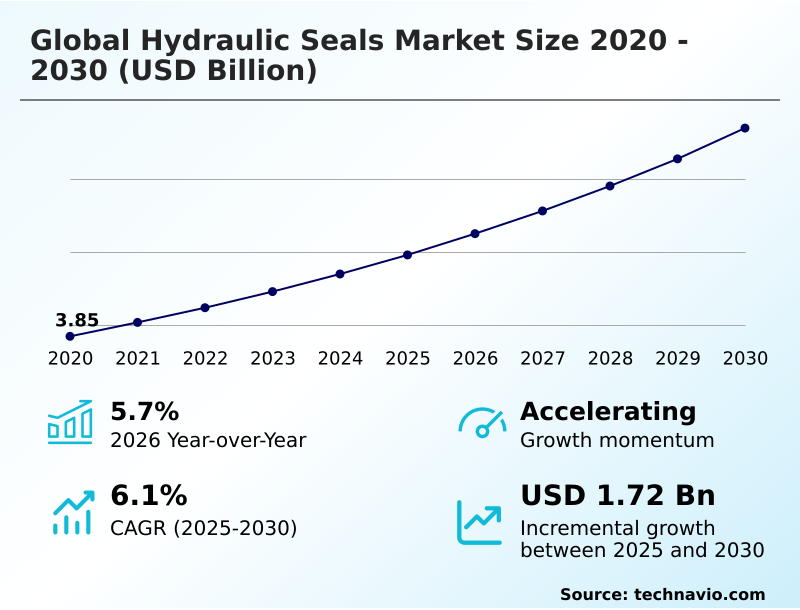
The hydraulic seals market size is valued to increase by USD 1.72 billion, at a CAGR of 6.1% from 2025 to 2030. Expansion of construction and mining industries will drive the hydraulic seals market.
Major Market Trends & Insights
- APAC dominated the market and accounted for a 43% growth during the forecast period.
- By Product Type - Rod seals segment was valued at USD 1.33 billion in 2024
- By End-user - Automotive and aerospace segment accounted for the largest market revenue share in 2024
Market Size & Forecast
- Market Opportunities: USD 2.84 billion
- Market Future Opportunities: USD 1.72 billion
- CAGR from 2025 to 2030 : 6.1%
Market Summary
- The hydraulic seals market is integral to the functioning of modern industrial and mobile equipment, ensuring fluid leakage prevention and contaminant exclusion to maintain system integrity. These components are critical for pressure maintenance in high-pressure hydraulic systems across sectors such as construction, mining, and aerospace.
- A key driver is the global expansion of heavy machinery operation and renewable energy infrastructure, which demand seals with superior wear resistance and extended service life. For instance, a fleet manager for a large-scale mining operation relies on high-performance seals to maximize equipment uptime and operational efficiency.
- A single seal failure can lead to catastrophic equipment damage and costly production halts. Consequently, manufacturers are focused on developing custom sealing solutions using advanced materials that can withstand extreme temperature applications and aggressive fluids, pushing the boundaries of performance and reliability to meet evolving industry requirements.
- The focus is shifting from reactive replacement to proactive management, leveraging seals that offer enhanced durability and contribute to the overall energy efficiency of hydraulic systems.
What will be the Size of the Hydraulic Seals Market during the forecast period?
Get Key Insights on Market Forecast (PDF) Request Free Sample
How is the Hydraulic Seals Market Segmented?
The hydraulic seals industry research report provides comprehensive data (region-wise segment analysis), with forecasts and estimates in "USD million" for the period 2026-2030, as well as historical data from 2020-2024 for the following segments.
- Product type
- Rod seals
- Piston seals
- Wiper seals
- Others
- End-user
- Automotive and aerospace
- Heavy industry
- Others
- Material type
- Rubber
- Polyurethane
- PTFE
- Geography
- APAC
- China
- Japan
- India
- North America
- US
- Canada
- Mexico
- Europe
- Germany
- UK
- France
- Middle East and Africa
- Saudi Arabia
- UAE
- South Africa
- South America
- Brazil
- Argentina
- Rest of World (ROW)
- APAC
By Product Type Insights
The rod seals segment is estimated to witness significant growth during the forecast period.
The market is segmented by product, end-user, and material, with product segments like rod seals being critical for system performance. The demand for enhanced operational efficiency in industrial automation systems and heavy machinery operation is driving innovation beyond basic sealing.
This has led to the development of custom sealing solutions that focus on superior wear resistance and support energy-efficient hydraulic design. Material science innovations are enabling advanced products such as the low-friction rod seal.
These designs, often featuring precision-trimmed sealing lips, provide a dry sealing solution that improves reliability and contributes to sustainability goals, demonstrating a shift toward holistic performance enhancement.
This evolution shows a market adapting to demands for higher efficiency, achieving up to 10% reduction in friction-related energy loss.
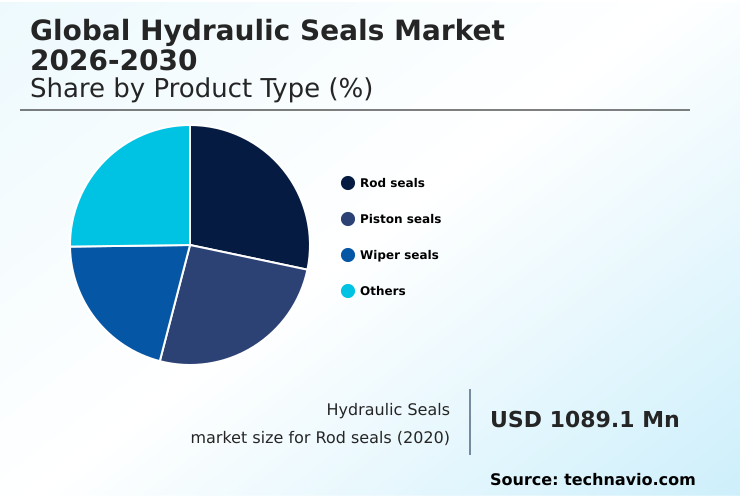
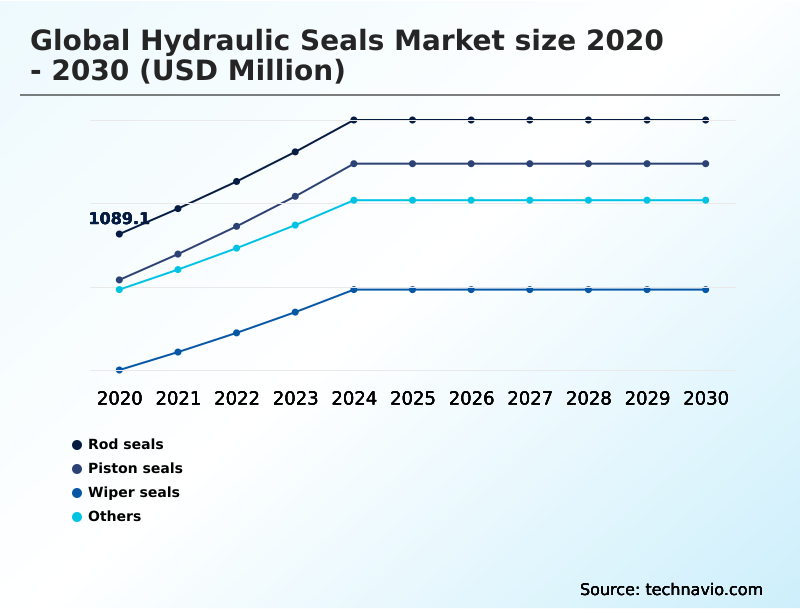
The Rod seals segment was valued at USD 1.33 billion in 2024 and showed a gradual increase during the forecast period.
Regional Analysis
APAC is estimated to contribute 43% to the growth of the global market during the forecast period.Technavio’s analysts have elaborately explained the regional trends and drivers that shape the market during the forecast period.
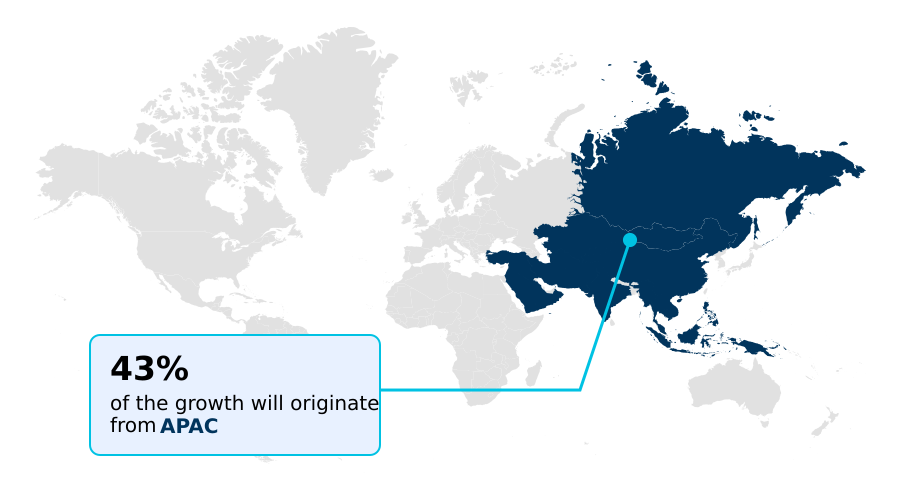
See How Hydraulic Seals Market Demand is Rising in APAC Request Free Sample
The geographic landscape reflects regional industrial priorities, creating diverse demand drivers across the globe. North America's robust aerospace hydraulic systems sector fuels innovation in high-performance polymers and components like spring-energized seals that offer superior temperature resistance.
The region's automotive industry also influences seal development for advanced automotive braking mechanisms.
In Europe and APAC, the focus is on high-pressure hydraulic systems for industrial and construction applications, where components such as the double-acting piston seal must perform reliably in extreme temperature applications.
These regional demands are converging around the need for seals that enhance equipment longevity, with some advanced seals demonstrating a 50% longer service life in high-cycle industrial settings, driving value for operators worldwide.
Market Dynamics
Our researchers analyzed the data with 2025 as the base year, along with the key drivers, trends, and challenges. A holistic analysis of drivers will help companies refine their marketing strategies to gain a competitive advantage.
- The market's evolution is evident in the increasing specialization of sealing solutions across industries. The demand for high-performance seals for industrial automation is driven by the need for precision and reliability in robotic systems.
- In parallel, the focus on durable sealing solutions for heavy machinery addresses the harsh operating conditions in construction and mining, where wear-resistant seals for construction machinery and extreme temperature seals for mining equipment are critical. The aerospace sector continues to push innovation in advanced polymer materials in aerospace hydraulics.
- A significant trend is the adoption of low-friction seals for energy-efficient systems, which contributes to sustainability goals alongside the development of eco-friendly materials for sustainable sealing. This is particularly relevant for applications like hydraulic seals for renewable energy turbines.
- The integration of technology is creating new value, with smart seals with predictive maintenance sensors enabling proactive maintenance strategies that reduce downtime by more than double the rate of traditional scheduled maintenance. Specific material choices like polyurethane seals for high-pressure applications and PTFE seals for chemical processing equipment highlight the move toward application-specific engineering.
- From sealing solutions for automotive EV thermal management to corrosion-resistant seals for marine applications, the industry relies on custom hydraulic seal design and manufacturing to meet unique challenges.
- Core components such as double-acting piston seals for hydraulic cylinders, rod seals for fluid power systems, wiper seals for contaminant protection, buffer seals for hydraulic pressure spikes, guide rings for preventing metal contact, and static seals for non-moving hydraulic joints are all undergoing continuous improvement to enhance overall system performance and longevity.
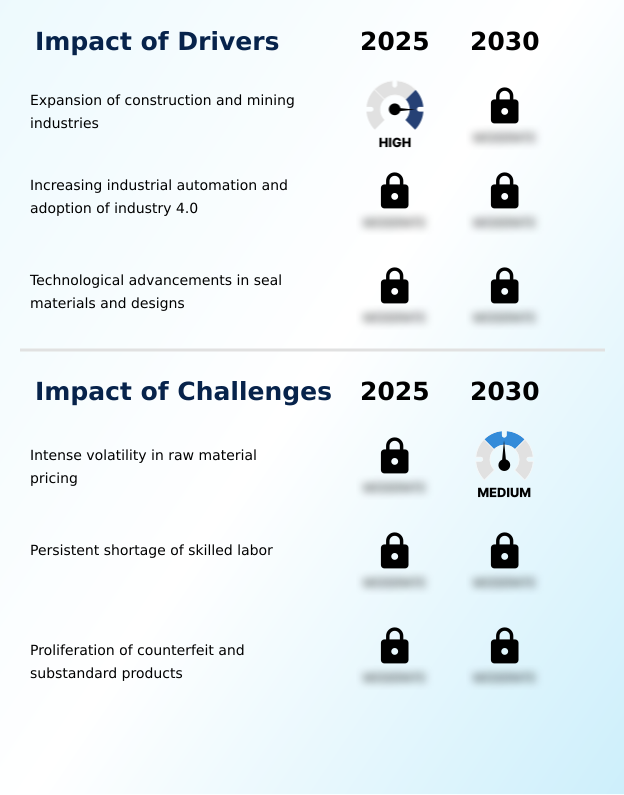
What are the key market drivers leading to the rise in the adoption of Hydraulic Seals Industry?
- The expansion of the construction and mining industries is a key driver for the market, increasing the demand for hydraulic-intensive heavy machinery.
- Market growth is strongly driven by the integration of digital technologies and the pursuit of higher operational efficiency. The adoption of smart manufacturing technology is creating demand for intelligent fluid power equipment solutions that ensure system integrity.
- A key driver is predictive maintenance integration, which utilizes sensors for condition monitoring and real-time performance monitoring, allowing businesses to reduce unplanned downtime by 30%.
- Innovations in component manufacturing, such as the use of precision molding techniques for single-acting piston seals, are delivering superior friction reduction.
- This focus on digitally enabled, high-performance components supports the goals of predictive maintenance, enhancing equipment reliability and boosting overall system productivity by as much as 20%.
What are the market trends shaping the Hydraulic Seals Industry?
- Accelerated industrialization and large-scale infrastructure development worldwide represent a key market trend. This is driving a significant increase in the use of heavy machinery across various sectors.
- A key market trend is the accelerated adoption of advanced materials and integrated designs to meet rising performance standards. The core functions of fluid leakage prevention and contaminant exclusion are being enhanced through the use of proprietary polymer materials and other advanced polymer materials.
- In demanding applications, ensuring consistent pressure maintenance is critical, with modern integrated sealing systems reducing leakage rates by over 40% compared to legacy components. Designs now incorporate features to improve extrusion resistance and hydrolysis resistance, extending component life.
- The use of double-lipped wiper designs is becoming more common in sectors like renewable energy infrastructure, where reliability in harsh environments is paramount, leading to maintenance interval extensions of up to 25%.
What challenges does the Hydraulic Seals Industry face during its growth?
- The intense volatility in raw material pricing poses a key challenge to the industry, impacting manufacturing costs and profit margins.
- The industry contends with challenges from raw material volatility and the need for greater sustainability. To combat performance issues in corrosive fluid environments, manufacturers are innovating with materials that offer enhanced chemical resistance. Developments in self-lubricating coatings and nanocomposite materials are improving durability.
- At the same time, there is a strong push toward eco-friendly sealing materials, with active research into thermoplastic composites and bio-based polymer development. These efforts are complemented by process innovations like additive manufacturing prototyping, which accelerates the creation of specialized components such as the asymmetric single-lipped seal.
- This approach reduces material waste during development by up to 60%, aligning with circular economy principles.
Exclusive Technavio Analysis on Customer Landscape
The hydraulic seals market forecasting report includes the adoption lifecycle of the market, covering from the innovator’s stage to the laggard’s stage. It focuses on adoption rates in different regions based on penetration. Furthermore, the hydraulic seals market report also includes key purchase criteria and drivers of price sensitivity to help companies evaluate and develop their market growth analysis strategies.
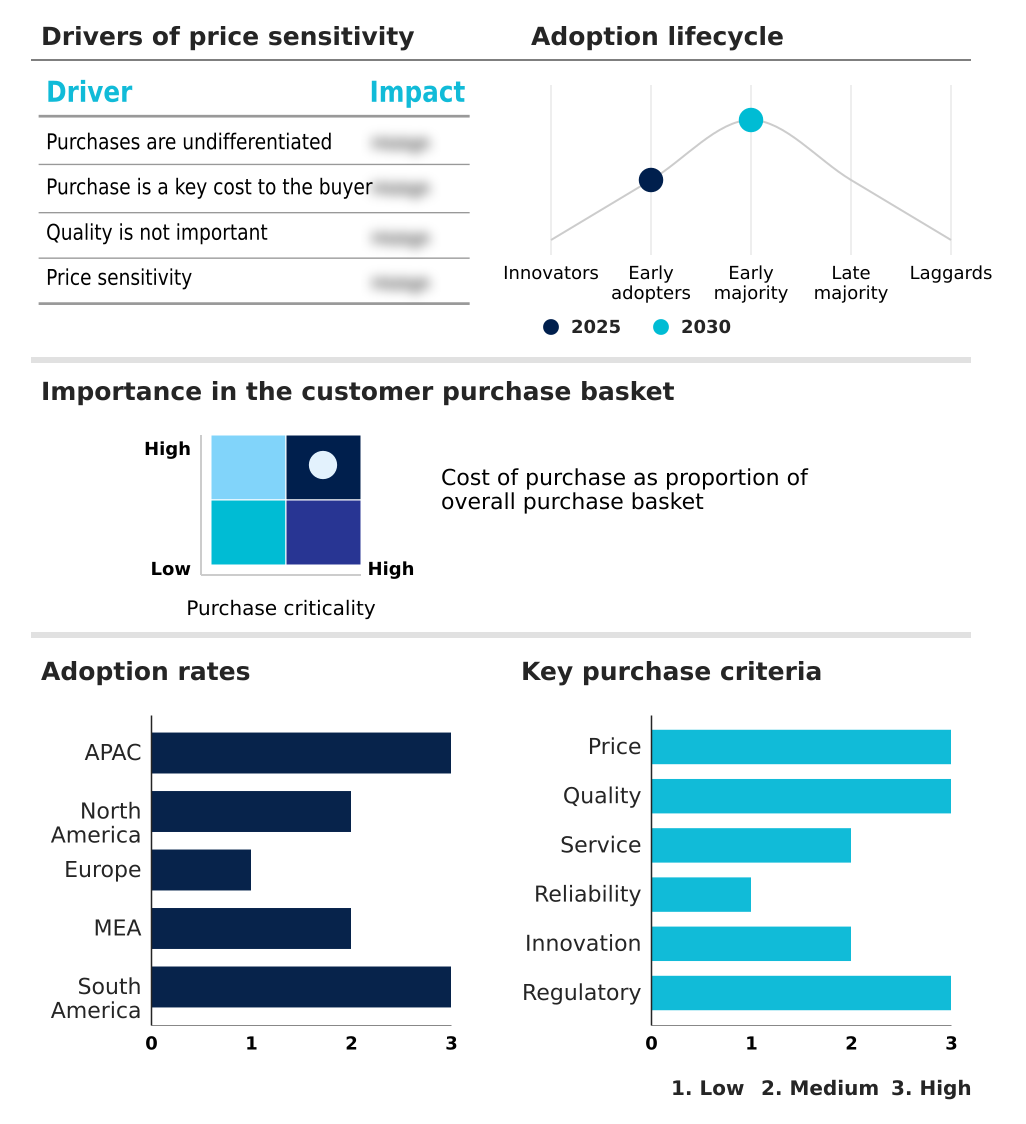
Customer Landscape of Hydraulic Seals Industry
Competitive Landscape
Companies are implementing various strategies, such as strategic alliances, hydraulic seals market forecast, partnerships, mergers and acquisitions, geographical expansion, and product/service launches, to enhance their presence in the industry.
A.W. Chesterton Co. - Specialized polymer hydraulic seals are engineered for demanding industrial applications, offering optimized equipment performance with virtually unlimited size customization.
The industry research and growth report includes detailed analyses of the competitive landscape of the market and information about key companies, including:
- A.W. Chesterton Co.
- AB SKF
- All Seals Inc.
- DingZing Advanced Materials Inc.
- Freudenberg and Co. KG
- Garlock Sealing Technologies LLC
- Greene Tweed and Co.
- Hallite Seals International Ltd.
- Hutchinson S.A.
- James Walker Group Ltd.
- Kastas Sealing Technology
- Max Spare Ltd.
- MAXX Hydraulics LLC
- NOK Corp.
- Parker Hannifin Corp.
- SealTeam Australia
- Spareage Sealing Solutions
- Trelleborg AB
- Unitech Products
Qualitative and quantitative analysis of companies has been conducted to help clients understand the wider business environment as well as the strengths and weaknesses of key industry players. Data is qualitatively analyzed to categorize companies as pure play, category-focused, industry-focused, and diversified; it is quantitatively analyzed to categorize companies as dominant, leading, strong, tentative, and weak.
Recent Development and News in Hydraulic seals market
- In September 2024, Freudenberg Sealing Technologies acquired the DMH Group to strengthen its service and distribution network for polymer sealing solutions.
- In November 2024, Hallite Seals International Ltd. expanded its European operations through the acquisition of Aston Seals S.p.A., a specialist in fluid power sealing solutions.
- In January 2025, Trelleborg Group finalized its acquisition of CRC Distribution, a US-based distributor of polymer sealing solutions, to expand its market reach and service capabilities.
- In April 2025, Greene, Tweed and Co. opened a new manufacturing facility in South Korea to enhance service to the semiconductor industry, a key end-user of precision seals.
Dive into Technavio’s robust research methodology, blending expert interviews, extensive data synthesis, and validated models for unparalleled Hydraulic Seals Market insights. See full methodology.
| Market Scope | |
|---|---|
| Page number | 297 |
| Base year | 2025 |
| Historic period | 2020-2024 |
| Forecast period | 2026-2030 |
| Growth momentum & CAGR | Accelerate at a CAGR of 6.1% |
| Market growth 2026-2030 | USD 1722.8 million |
| Market structure | Fragmented |
| YoY growth 2025-2026(%) | 5.7% |
| Key countries | China, Japan, India, South Korea, Australia, Indonesia, US, Canada, Mexico, Germany, UK, France, Italy, Spain, The Netherlands, Saudi Arabia, UAE, South Africa, Israel, Turkey, Brazil, Argentina and Chile |
| Competitive landscape | Leading Companies, Market Positioning of Companies, Competitive Strategies, and Industry Risks |
Research Analyst Overview
- The market is undergoing a significant transformation, moving beyond basic fluid leakage prevention to sophisticated system optimization. The core function of ensuring contaminant exclusion and pressure maintenance remains, but the emphasis is now on enhancing operational efficiency and overall system integrity.
- This shift is driving innovation in high-performance polymers and advanced elastomers, resulting in components with superior wear resistance, chemical resistance, and temperature resistance. Developments include self-lubricating coatings and nanocomposite materials that improve durability and achieve friction reduction. For boardroom decisions, the adoption of predictive maintenance, enabled by smart seals for condition monitoring, is paramount.
- This strategy can reduce critical failures by over 40% compared to reactive approaches, directly impacting budgeting and asset management. The market is also seeing specialized designs gain traction, such as spring-energized seals for extreme conditions, the double-acting piston seal, and single-acting piston seals for varied cylinder applications.
- Innovations like the low-friction rod seal, featuring an asymmetric single-lipped seal design with precision-trimmed sealing lips, offer a dry sealing solution, addressing both performance and environmental concerns by preventing extrusion resistance and hydrolysis resistance. This evolution underscores a strategic move toward intelligent, high-endurance sealing technologies.
What are the Key Data Covered in this Hydraulic Seals Market Research and Growth Report?
-
What is the expected growth of the Hydraulic Seals Market between 2026 and 2030?
-
USD 1.72 billion, at a CAGR of 6.1%
-
-
What segmentation does the market report cover?
-
The report is segmented by Product Type (Rod seals, Piston seals, Wiper seals, and Others), End-user (Automotive and aerospace, Heavy industry, and Others), Material Type (Rubber, Polyurethane, and PTFE) and Geography (APAC, North America, Europe, Middle East and Africa, South America)
-
-
Which regions are analyzed in the report?
-
APAC, North America, Europe, Middle East and Africa and South America
-
-
What are the key growth drivers and market challenges?
-
Expansion of construction and mining industries, Intense volatility in raw material pricing
-
-
Who are the major players in the Hydraulic Seals Market?
-
A.W. Chesterton Co., AB SKF, All Seals Inc., DingZing Advanced Materials Inc., Freudenberg and Co. KG, Garlock Sealing Technologies LLC, Greene Tweed and Co., Hallite Seals International Ltd., Hutchinson S.A., James Walker Group Ltd., Kastas Sealing Technology, Max Spare Ltd., MAXX Hydraulics LLC, NOK Corp., Parker Hannifin Corp., SealTeam Australia, Spareage Sealing Solutions, Trelleborg AB and Unitech Products
-
Market Research Insights
- Market dynamics are increasingly shaped by the push for greater efficiency and reliability in high-pressure hydraulic systems. The adoption of smart manufacturing technology is a key influence, with companies reporting up to a 15% reduction in unplanned downtime by integrating sensors into fluid power equipment solutions.
- In heavy machinery operation, advanced seals have demonstrated the ability to extend maintenance intervals by 20% compared to conventional components. Demand from renewable energy infrastructure and aerospace hydraulic systems is driving material innovation, while the evolution of automotive braking mechanisms in electric vehicles creates new requirements for performance and durability.
- These shifts underscore a market moving toward integrated, intelligent sealing solutions that deliver measurable improvements in operational performance and asset longevity across industrial automation systems.
We can help! Our analysts can customize this hydraulic seals market research report to meet your requirements.