


Industrial Automation Software Market Analysis APAC, North America, Europe, Middle East and Africa, South America - US, China, Germany, Japan, UK - Size and Forecast 2024-2028

Industrial Automation Software Market Analysis APAC, North America, Europe, Middle East and Africa, South America - US, China, Germany, Japan, UK - Size and Forecast 2024-2028

Published: Jun 2024 192 Pages SKU: IRTNTR45205

Market Overview at a Glance

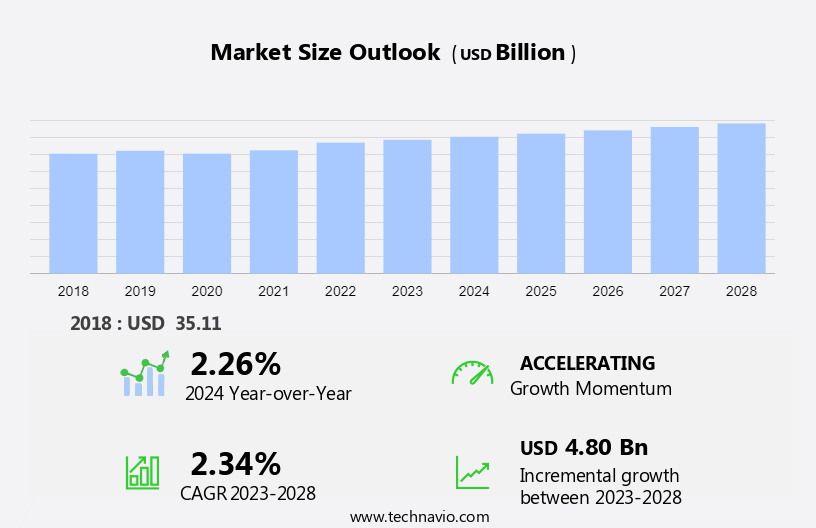
$4.8 B
Market Opportunity
2.34%
CAGR
2.26
YoY growth 2023-2024(%)

Industrial Automation Software Market Size 2024-2028 

The industrial automation software market size is forecast to increase by USD 4.80 billion at a CAGR of 2.34% between 2023 and 2028.

  • The market is experiencing significant growth due to the increasing need to reduce operational expenses in various industries. One trend driving market growth is the integration of Product Lifecycle Management (PLM) and Enterprise Resource Planning (ERP) systems into industrial automation software. This integration enables seamless data flow between departments, improving efficiency and productivity. However, the market also faces challenges, including the rising threat of cybersecurity attacks. As industries increasingly rely on digital technologies, securing these systems against cyber threats becomes crucial to prevent potential disruptions and data breaches. Companies must prioritize cybersecurity measures to mitigate risks and ensure business continuity.

What will be the Size of the Industrial Automation Software Market During the Forecast Period?
Industrial Automation Software Market Size

 Request Free Sample

  • The market in the US is experiencing significant growth, driven by the increasing adoption of Industry 4.0 and digital industrial technologies in automation-driven industries. Enterprise-level solutions, including Product Lifecycle Management (PLM) systems, Human Machine Interface (HMI) software, and Manufacturing Execution Systems (MES), are gaining popularity for enhancing work efficiency and reducing human errors. The cloud-based segment is also witnessing increased demand due to its flexibility and accessibility, enabling 24/7 operations and system integration capabilities.
  • Additionally, automation software processes are being adopted across various sectors, including automotive, chemicals and materials, oil and gas, and paper and pulp, to streamline automatic operations and optimize production. The trend towards on-cloud solutions and distributed control systems is expected to continue, addressing the need for skilled labor and time efficiency in the process and discrete industries.

How is this Industrial Automation Software Industry segmented and which is the largest segment?

The industry research report provides comprehensive data (region-wise segment analysis), with forecasts and estimates in "USD billion" for the period 2024-2028, as well as historical data from 2018-2022 for the following segments.

  • Product
    • SCADA software
    • MES
    • DCS software
    • HMI software
    • PLC software
  • End-user
    • Process industry
    • Discrete industry
  • Geography
    • APAC
      • China
      • Japan
    • North America
      • US
    • Europe
      • Germany
      • UK
    • Middle East and Africa
    • South America

By Product Insights

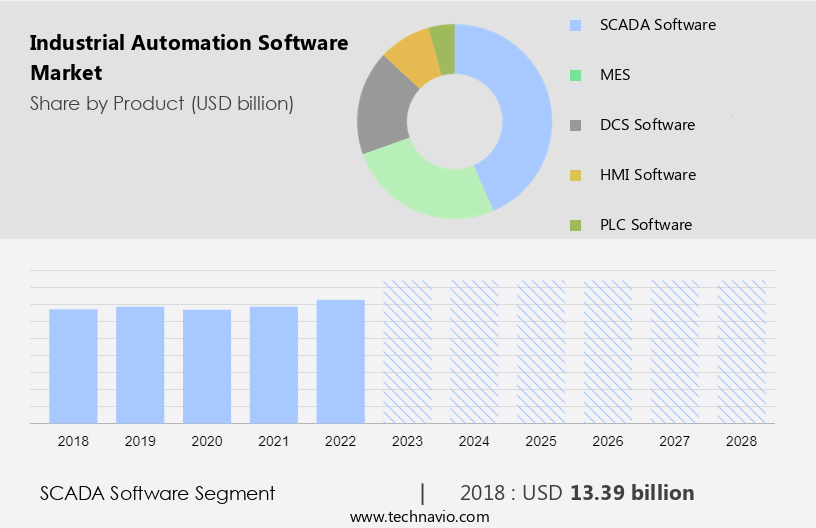
  • The SCADA software segment is estimated to witness significant growth during the forecast period.

SCADA systems play a crucial role in automating industrial processes by performing functions such as data acquisition, communication, presentation, and control. These systems are essential for monitoring and gathering real-time data from various industries, including mining and metals, food and beverages, and power. By interacting with devices such as sensors, pumps, valves, and other monitoring equipment, SCADA software enables remote process monitoring and optimization. The increasing demand for operational efficiency and cost optimization has led to the growing adoption of SCADA systems. However, with the rise of cyber threats such as Legal violations and Denial-of-Service Attacks, there is a growing need for advanced security features like Multi-Factor Authentication and Remote wipe technologies to ensure data security. SCADA systems are integral to industrial automation, enabling seamless communication between Programmable Logic Controllers (PLCs) and computers, ultimately optimizing industrial processes.
Industrial Automation Software Market Size

Get a glance at the Industry report of share of various segments Request Free Sample

The SCADA software segment was valued at USD 13.39 billion in 2018 and showed a gradual increase during the forecast period.

Regional Analysis

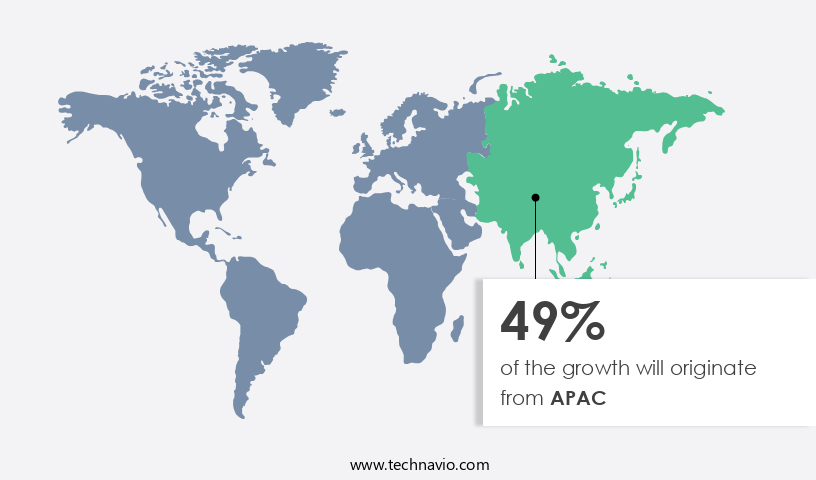
  • APAC is estimated to contribute 49% to the growth of the global market during the forecast period.

Technavio's analysts have elaborately explained the regional trends and drivers that shape the market during the forecast period.
Industrial Automation Software Market Share by Geography

For more insights on the market share of various regions, Request Free Sample

The market in APAC is anticipated to experience significant growth, particularly in sectors such as power, oil and gas, automotive, and pulp and paper. In the power industry, countries like Myanmar and Australia are investing heavily in power generation and distribution, with Myanmar aiming to electrify the entire country by 2030 through coal-fired power plants, and Australia generating over 17% of its power mix from renewable energy in 2016. Furthermore, investments in smart cities in India, Japan, South Korea, and Singapore are expected to drive substantial growth in the power industry during the forecast period. Product lifecycle management, enterprise-level solutions, human machine interface, and cloud-based segments are poised for growth in the market. Companies are focusing on offering advanced features and integrating Industry 4.0 technologies to cater to the evolving demands of automation-driven industries.

Market Dynamics

Our market researchers analyzed the data with 2023 as the base year, along with the key drivers, trends, and challenges. A holistic analysis of drivers will help companies refine their marketing strategies to gain a competitive advantage.

What are the key market drivers leading to the rise in the adoption of Industrial Automation Software Industry?

The need to reduce overall operational expenses is the key driver of the market.

  • The market: Enhancing Manufacturing Operations in Industry 4.0 Industrial automation software plays a pivotal role in enabling automation-driven industries to streamline their manufacturing processes and improve overall productivity. This software encompasses various technologies such as DCS, SCADA, PLCs, and automation-driven Industry 4.0 solutions. Product lifecycle management, including design specifications and in-process control, is crucial for industries like chemicals and materials, mining and metals, power, machine manufacturing, semiconductor and electronics, aerospace and defense, food and beverages, and pharmaceuticals. Enterprise-level solutions offer system integration capabilities, ensuring seamless communication between various automation technologies and IIoT devices. Human machine interface (HMI) and robotic solutions are essential components of these systems, providing 24/7 operations, dynamic schedules, and human-robot collaboration.
  • Additionally, Cloud-based automation offers advantages such as real-time data access, control framework leaks prevention, and denial-of-service attack protection through multi-factor authentication and remote wipe technologies. Industrial automation software processes contribute significantly to work efficiency, time efficiency, and productivity. They minimize human errors and the need for skilled labor, making them essential for various industries. The market is continually evolving, with advancements in machine vision, artificial intelligence, and the Internet of Things (IoT) shaping its future. The Manufacturing Technology Centre and other research organizations are at the forefront of these advancements, ensuring that industries remain competitive and compliant with regulatory requirements.

What are the market trends shaping the Industrial Automation Software Industry?

Integration of PLM and ERP in industrial automation software is the upcoming market trend.

  • Industrial automation software plays a crucial role in optimizing manufacturing processes in various industries, including automation-driven sectors such as chemicals and materials, mining and metals, food and beverages, power, machine manufacturing, semiconductor and electronics, aerospace and defense, and medical devices. The integration of product lifecycle management (PLM) and enterprise resource planning (ERP) systems has become a standard practice to streamline the development and launch of profitable products in discrete industries. Industrial automation software manages manufacturing information, including resource allocation, manufacturing planning, supply chain information, and quality inspection, while ERP systems integrate and store business operating information about human resources, customer relationship management, accounting, and other business financials. Cloud-based industrial automation software is gaining popularity due to its benefits such as time efficiency, reduced human errors, and accessibility from anywhere. The cloud-based segment is expected to grow significantly due to the increasing adoption of digital industrial technologies like the Internet of Things (IoT), artificial intelligence (AI), machine vision, and human-robot collaboration.
  • Additionally, on-premise solutions are still widely used in industries with stringent data security requirements. Automation technologies, including robotic solutions and machine vision, are essential components. These technologies enable automatic operations, in-process control, and human-robot collaboration, leading to increased productivity and work efficiency. System integration capabilities are also essential, allowing seamless integration with other systems, including MES, control frameworks, and virtual machine conditions. The adoption is driven by the need for 24/7 operations, dynamic schedules, and the ability to handle large volumes of data. However, challenges such as control framework leaks, legal violations, Denial-of-Service Attacks, and the need for multi-factor authentication and remote wipe technologies are also important considerations. The manufacturing technology center plays a vital role in implementing and optimizing the solutions.

What challenges does the Industrial Automation Software Industry face during its growth?

Cybersecurity threats are key challenges affecting the industry's growth.

  • Industrial automation is a critical aspect of Industry 4.0, with automation technologies such as Machine-to-Machine (M2M) communication, Human-Machine Interface (HMI), and robotic solutions becoming increasingly prevalent in automation-driven industries. Product lifecycle management (PLM) and Enterprise-level solutions are essential components, enabling seamless integration of design specifications, in-process control, and system integration capabilities. The market is segmented into on-premise and cloud-based solutions. The cloud-based segment is gaining popularity due to its flexibility, allowing for remote access and real-time data analysis. However, data security concerns remain a challenge, necessitating robust cloud automation, multi-factor authentication, and remote wipe technologies.
  • Industries such as chemicals and materials, mining and metals, food and beverages, power, machine manufacturing, semiconductor and electronics, aerospace and defense, medical devices, and others are adopting industrial automation solutions to enhance work efficiency, reduce human errors, and ensure 24/7 operations with dynamic schedules. Automation software processes include Human-Robot collaboration, Machine vision, the Internet of Things (IoT), Artificial Intelligence (AI), and others. IIoT and robotic solutions are transforming industries by enabling automatic operations, while MES and control frameworks ensure in-process control and system integration. Despite the benefits, they are vulnerable to cyber threats, including control framework leaks, virtual machine conditions, legal violations, Denial-of-Service Attacks, and others. Therefore, it is crucial to prioritize data security and implement robust cybersecurity measures to mitigate risks and ensure business continuity.

Exclusive Customer Landscape

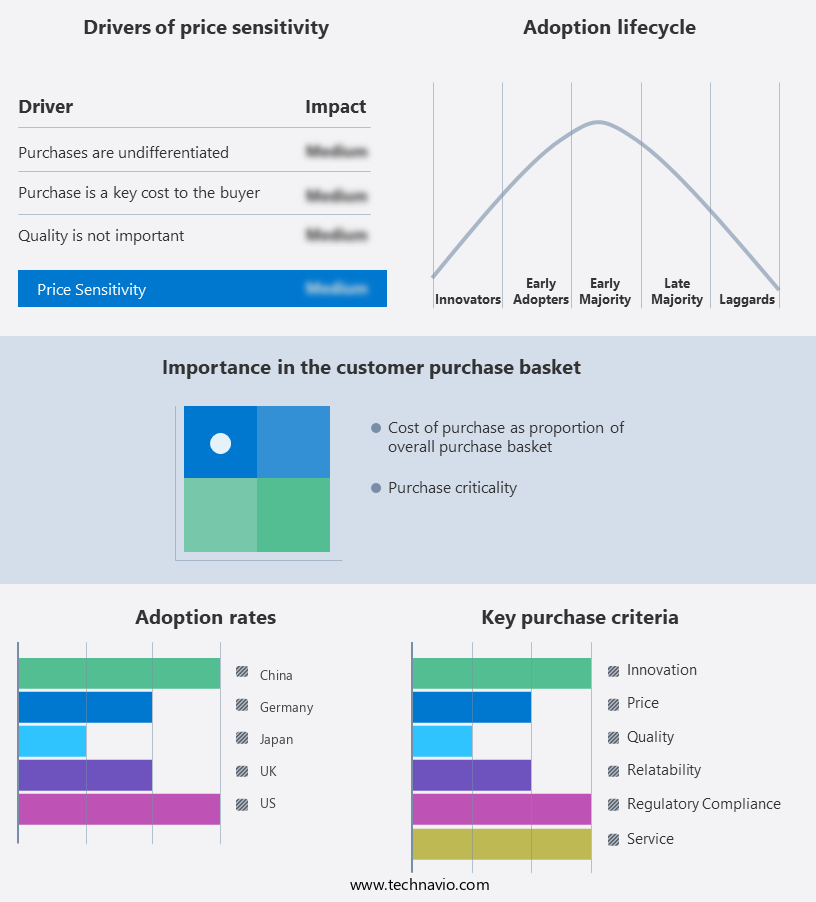
The market forecasting report includes the adoption lifecycle of the market, covering from the innovator's stage to the laggard's stage. It focuses on adoption rates in different regions based on penetration. Furthermore, the market report also includes key purchase criteria and drivers of price sensitivity to help companies evaluate and develop their market growth analysis strategies.
Industrial Automation Software Market Share by Geography

 Customer Landscape

Key Companies & Market Insights

Companies are implementing various strategies, such as strategic alliances, market forecast, partnerships, mergers and acquisitions, geographical expansion, and product/service launches, to enhance their presence in the industry. The industry research and growth report includes detailed analyses of the competitive landscape of the market and information about key companies, including:

  • ABB Ltd.
  • Advantech Co. Ltd.
  • AMETEK Inc.
  • Baosteel Group Corp.
  • Beckhoff Automation
  • Eaton Corp. Plc
  • Emerson Electric Co.
  • General Electric Co.
  • Hitachi Ltd.
  • Honeywell International Inc.
  • Mitsubishi Electric Corp.
  • OMRON Corp.
  • Oracle Corp.
  • Parsec Automation Corp.
  • Rockwell Automation Inc.
  • Schneider Electric SE
  • Siemens AG
  • Tata Consultancy Services Ltd.
  • Toshiba Corp.
  • Yokogawa Electric Corp.

Qualitative and quantitative analysis of companies has been conducted to help clients understand the wider business environment as well as the strengths and weaknesses of key industry players. Data is qualitatively analyzed to categorize companies as pure play, category-focused, industry-focused, and diversified; it is quantitatively analyzed to categorize companies as dominant, leading, strong, tentative, and weak.

Research Analyst Overview

Industrial automation software plays a pivotal role in the digital transformation of various industries, enabling enterprises to streamline their operations, enhance productivity, and reduce human errors. This market encompasses a broad spectrum of solutions designed to manage the product lifecycle, optimize human-machine interaction, and integrate various automation technologies. At the heart of industrial automation software are enterprise-level solutions that cater to the unique requirements of automation-driven industries. These solutions offer advanced human machine interfaces, allowing operators to interact seamlessly with machines and systems. They also provide cloud-based and on-premise deployment options, catering to the diverse needs of different organizations. It is increasingly being adopted across various sectors, including chemicals and materials, mining and metals, food and beverages, power, machine manufacturing, semiconductor and electronics, aerospace and defense, medical devices, and more. The primary drivers behind this trend include the need for time efficiency, skilled labor availability, and the integration of digital industrial technologies.

Additionally, the automation software market is characterized by the continuous evolution of automation technologies, such as machine vision, human-robot collaboration, and the Internet of Things (IoT). These technologies enable automatic operations, in-process control, and real-time data analysis, leading to increased productivity and improved design specifications. However, the adoption also presents challenges. Data security is a major concern, with potential threats such as control framework leaks, virtual machine conditions, and legal violations. To mitigate these risks, cloud automation solutions incorporate advanced security features, including multi-factor authentication, remote wipe technologies, and denial-of-service attack prevention. The market is dynamic, with constant shifts in technology trends and customer demands. Companies must adapt to these changes to remain competitive, focusing on system integration capabilities, 24/7 operations, and dynamic schedules. This requires a deep understanding of the market dynamics and the ability to provide customized solutions tailored to specific industry needs.

In summary, the market is a critical component of the digital industrial revolution, offering significant benefits in terms of productivity, efficiency, and safety. As the market continues to evolve, companies must stay abreast of the latest trends and technologies to meet the evolving needs of their customers and maintain a competitive edge.

Industrial Automation Software Market Scope

Report Coverage

Details

Page number

192

Base year

2023

Historic period

2018-2022

Forecast period

2024-2028

Growth momentum & CAGR

Accelerate at a CAGR of 2.34%

Market growth 2024-2028

USD 4.80 billion

Market structure

Fragmented

YoY growth 2023-2024(%)

2.26

Key countries

US, China, Germany, Japan, and UK

Competitive landscape

Leading Companies, Market Positioning of Companies, Competitive Strategies, and Industry Risks

Request Free Sample

What are the Key Data Covered in this Market Research and Growth Report?

  • CAGR of the industry during the forecast period
  • Detailed information on factors that will drive the growth and forecasting between 2024 and 2028
  • Precise estimation of the size of the market and its contribution of the industry in focus to the parent market
  • Accurate predictions about upcoming growth and trends and changes in consumer behaviour
  • Growth of the market across APAC, North America, Europe, Middle East and Africa, and South America
  • Thorough analysis of the market's competitive landscape and detailed information about companies
  • Comprehensive analysis of factors that will challenge the market growth of industry companies

We can help! Our analysts can customize this market research report to meet your requirements.

Get in touch

1 Executive Summary

  • 1.1 Market overview
    • Executive Summary - Chart on Market Overview
    • Executive Summary - Data Table on Market Overview
    • Executive Summary - Chart on Global Market Characteristics
    • Executive Summary - Chart on Market by Geography
    • Executive Summary - Chart on Market Segmentation by Product
    • Executive Summary - Chart on Market Segmentation by End-user
    • Executive Summary - Chart on Incremental Growth
    • Executive Summary - Data Table on Incremental Growth
    • Executive Summary - Chart on Company Market Positioning

2 Market Landscape

  • 2.1 Market ecosystem
    • Parent Market
    • Data Table on - Parent Market
  • 2.2 Market characteristics
    • Market characteristics analysis
  • 2.3 Value chain analysis
    • Value Chain Analysis

3 Market Sizing

  • 3.1 Market definition
    • Offerings of companies included in the market definition
  • 3.2 Market segment analysis
    • Market segments
  • 3.3 Market size 2023
    • 3.4 Market outlook: Forecast for 2023-2028
      • Chart on Global - Market size and forecast 2023-2028 ($ billion)
      • Data Table on Global - Market size and forecast 2023-2028 ($ billion)
      • Chart on Global Market: Year-over-year growth 2023-2028 (%)
      • Data Table on Global Market: Year-over-year growth 2023-2028 (%)

    4 Historic Market Size

    • 4.1 Global Industrial Automation Software Market 2018 - 2022
      • Historic Market Size - Data Table on Global Industrial Automation Software Market 2018 - 2022 ($ billion)
    • 4.2 Product segment analysis 2018 - 2022
      • Historic Market Size - Product Segment 2018 - 2022 ($ billion)
    • 4.3 End-user segment analysis 2018 - 2022
      • Historic Market Size - End-user Segment 2018 - 2022 ($ billion)
    • 4.4 Geography segment analysis 2018 - 2022
      • Historic Market Size - Geography Segment 2018 - 2022 ($ billion)
    • 4.5 Country segment analysis 2018 - 2022
      • Historic Market Size - Country Segment 2018 - 2022 ($ billion)

    5 Five Forces Analysis

    • 5.1 Five forces summary
      • Five forces analysis - Comparison between 2023 and 2028
    • 5.2 Bargaining power of buyers
      • Bargaining power of buyers - Impact of key factors 2023 and 2028
    • 5.3 Bargaining power of suppliers
      • Bargaining power of suppliers - Impact of key factors in 2023 and 2028
    • 5.4 Threat of new entrants
      • Threat of new entrants - Impact of key factors in 2023 and 2028
    • 5.5 Threat of substitutes
      • Threat of substitutes - Impact of key factors in 2023 and 2028
    • 5.6 Threat of rivalry
      • Threat of rivalry - Impact of key factors in 2023 and 2028
    • 5.7 Market condition
      • Chart on Market condition - Five forces 2023 and 2028

    6 Market Segmentation by Product

    • 6.1 Market segments
      • Chart on Product - Market share 2023-2028 (%)
      • Data Table on Product - Market share 2023-2028 (%)
    • 6.2 Comparison by Product
      • Chart on Comparison by Product
      • Data Table on Comparison by Product
    • 6.3 SCADA software - Market size and forecast 2023-2028
      • Chart on SCADA software - Market size and forecast 2023-2028 ($ billion)
      • Data Table on SCADA software - Market size and forecast 2023-2028 ($ billion)
      • Chart on SCADA software - Year-over-year growth 2023-2028 (%)
      • Data Table on SCADA software - Year-over-year growth 2023-2028 (%)
    • 6.4 MES - Market size and forecast 2023-2028
      • Chart on MES - Market size and forecast 2023-2028 ($ billion)
      • Data Table on MES - Market size and forecast 2023-2028 ($ billion)
      • Chart on MES - Year-over-year growth 2023-2028 (%)
      • Data Table on MES - Year-over-year growth 2023-2028 (%)
    • 6.5 DCS software - Market size and forecast 2023-2028
      • Chart on DCS software - Market size and forecast 2023-2028 ($ billion)
      • Data Table on DCS software - Market size and forecast 2023-2028 ($ billion)
      • Chart on DCS software - Year-over-year growth 2023-2028 (%)
      • Data Table on DCS software - Year-over-year growth 2023-2028 (%)
    • 6.6 HMI software - Market size and forecast 2023-2028
      • Chart on HMI software - Market size and forecast 2023-2028 ($ billion)
      • Data Table on HMI software - Market size and forecast 2023-2028 ($ billion)
      • Chart on HMI software - Year-over-year growth 2023-2028 (%)
      • Data Table on HMI software - Year-over-year growth 2023-2028 (%)
    • 6.7 PLC software - Market size and forecast 2023-2028
      • Chart on PLC software - Market size and forecast 2023-2028 ($ billion)
      • Data Table on PLC software - Market size and forecast 2023-2028 ($ billion)
      • Chart on PLC software - Year-over-year growth 2023-2028 (%)
      • Data Table on PLC software - Year-over-year growth 2023-2028 (%)
    • 6.8 Market opportunity by Product
      • Market opportunity by Product ($ billion)
      • Data Table on Market opportunity by Product ($ billion)

    7 Market Segmentation by End-user

    • 7.1 Market segments
      • Chart on End-user - Market share 2023-2028 (%)
      • Data Table on End-user - Market share 2023-2028 (%)
    • 7.2 Comparison by End-user
      • Chart on Comparison by End-user
      • Data Table on Comparison by End-user
    • 7.3 Process industry - Market size and forecast 2023-2028
      • Chart on Process industry - Market size and forecast 2023-2028 ($ billion)
      • Data Table on Process industry - Market size and forecast 2023-2028 ($ billion)
      • Chart on Process industry - Year-over-year growth 2023-2028 (%)
      • Data Table on Process industry - Year-over-year growth 2023-2028 (%)
    • 7.4 Discrete industry - Market size and forecast 2023-2028
      • Chart on Discrete industry - Market size and forecast 2023-2028 ($ billion)
      • Data Table on Discrete industry - Market size and forecast 2023-2028 ($ billion)
      • Chart on Discrete industry - Year-over-year growth 2023-2028 (%)
      • Data Table on Discrete industry - Year-over-year growth 2023-2028 (%)
    • 7.5 Market opportunity by End-user
      • Market opportunity by End-user ($ billion)
      • Data Table on Market opportunity by End-user ($ billion)

    8 Customer Landscape

    • 8.1 Customer landscape overview
      • Analysis of price sensitivity, lifecycle, customer purchase basket, adoption rates, and purchase criteria

    9 Geographic Landscape

    • 9.1 Geographic segmentation
      • Chart on Market share by geography 2023-2028 (%)
      • Data Table on Market share by geography 2023-2028 (%)
    • 9.2 Geographic comparison
      • Chart on Geographic comparison
      • Data Table on Geographic comparison
    • 9.3 APAC - Market size and forecast 2023-2028
      • Chart on APAC - Market size and forecast 2023-2028 ($ billion)
      • Data Table on APAC - Market size and forecast 2023-2028 ($ billion)
      • Chart on APAC - Year-over-year growth 2023-2028 (%)
      • Data Table on APAC - Year-over-year growth 2023-2028 (%)
    • 9.4 North America - Market size and forecast 2023-2028
      • Chart on North America - Market size and forecast 2023-2028 ($ billion)
      • Data Table on North America - Market size and forecast 2023-2028 ($ billion)
      • Chart on North America - Year-over-year growth 2023-2028 (%)
      • Data Table on North America - Year-over-year growth 2023-2028 (%)
    • 9.5 Europe - Market size and forecast 2023-2028
      • Chart on Europe - Market size and forecast 2023-2028 ($ billion)
      • Data Table on Europe - Market size and forecast 2023-2028 ($ billion)
      • Chart on Europe - Year-over-year growth 2023-2028 (%)
      • Data Table on Europe - Year-over-year growth 2023-2028 (%)
    • 9.6 Middle East and Africa - Market size and forecast 2023-2028
      • Chart on Middle East and Africa - Market size and forecast 2023-2028 ($ billion)
      • Data Table on Middle East and Africa - Market size and forecast 2023-2028 ($ billion)
      • Chart on Middle East and Africa - Year-over-year growth 2023-2028 (%)
      • Data Table on Middle East and Africa - Year-over-year growth 2023-2028 (%)
    • 9.7 South America - Market size and forecast 2023-2028
      • Chart on South America - Market size and forecast 2023-2028 ($ billion)
      • Data Table on South America - Market size and forecast 2023-2028 ($ billion)
      • Chart on South America - Year-over-year growth 2023-2028 (%)
      • Data Table on South America - Year-over-year growth 2023-2028 (%)
    • 9.8 China - Market size and forecast 2023-2028
      • Chart on China - Market size and forecast 2023-2028 ($ billion)
      • Data Table on China - Market size and forecast 2023-2028 ($ billion)
      • Chart on China - Year-over-year growth 2023-2028 (%)
      • Data Table on China - Year-over-year growth 2023-2028 (%)
    • 9.9 US - Market size and forecast 2023-2028
      • Chart on US - Market size and forecast 2023-2028 ($ billion)
      • Data Table on US - Market size and forecast 2023-2028 ($ billion)
      • Chart on US - Year-over-year growth 2023-2028 (%)
      • Data Table on US - Year-over-year growth 2023-2028 (%)
    • 9.10 Germany - Market size and forecast 2023-2028
      • Chart on Germany - Market size and forecast 2023-2028 ($ billion)
      • Data Table on Germany - Market size and forecast 2023-2028 ($ billion)
      • Chart on Germany - Year-over-year growth 2023-2028 (%)
      • Data Table on Germany - Year-over-year growth 2023-2028 (%)
    • 9.11 Japan - Market size and forecast 2023-2028
      • Chart on Japan - Market size and forecast 2023-2028 ($ billion)
      • Data Table on Japan - Market size and forecast 2023-2028 ($ billion)
      • Chart on Japan - Year-over-year growth 2023-2028 (%)
      • Data Table on Japan - Year-over-year growth 2023-2028 (%)
    • 9.12 UK - Market size and forecast 2023-2028
      • Chart on UK - Market size and forecast 2023-2028 ($ billion)
      • Data Table on UK - Market size and forecast 2023-2028 ($ billion)
      • Chart on UK - Year-over-year growth 2023-2028 (%)
      • Data Table on UK - Year-over-year growth 2023-2028 (%)
    • 9.13 Market opportunity by geography
      • Market opportunity by geography ($ billion)
      • Data Tables on Market opportunity by geography ($ billion)

    10 Drivers, Challenges, and Opportunity/Restraints

    • 10.1 Market drivers
      • 10.2 Market challenges
        • 10.3 Impact of drivers and challenges
          • Impact of drivers and challenges in 2023 and 2028
        • 10.4 Market opportunities/restraints

          11 Competitive Landscape

          • 11.1 Overview
            • 11.2 Competitive Landscape
              • Overview on criticality of inputs and factors of differentiation
            • 11.3 Landscape disruption
              • Overview on factors of disruption
            • 11.4 Industry risks
              • Impact of key risks on business

            12 Competitive Analysis

            • 12.1 Companies profiled
              • Companies covered
            • 12.2 Market positioning of companies
              • Matrix on companies position and classification
            • 12.3 ABB Ltd.
              • ABB Ltd. - Overview
              • ABB Ltd. - Business segments
              • ABB Ltd. - Key news
              • ABB Ltd. - Key offerings
              • ABB Ltd. - Segment focus
            • 12.4 Advantech Co. Ltd.
              • Advantech Co. Ltd. - Overview
              • Advantech Co. Ltd. - Business segments
              • Advantech Co. Ltd. - Key news
              • Advantech Co. Ltd. - Key offerings
              • Advantech Co. Ltd. - Segment focus
            • 12.5 AMETEK Inc.
              • AMETEK Inc. - Overview
              • AMETEK Inc. - Business segments
              • AMETEK Inc. - Key news
              • AMETEK Inc. - Key offerings
              • AMETEK Inc. - Segment focus
            • 12.6 Baosteel Group Corp.
              • Baosteel Group Corp. - Overview
              • Baosteel Group Corp. - Product / Service
              • Baosteel Group Corp. - Key offerings
            • 12.7 Beckhoff Automation GmbH and Co. KG
              • Beckhoff Automation GmbH and Co. KG - Overview
              • Beckhoff Automation GmbH and Co. KG - Product / Service
              • Beckhoff Automation GmbH and Co. KG - Key offerings
            • 12.8 Eaton Corp. Plc
              • Eaton Corp. Plc - Overview
              • Eaton Corp. Plc - Business segments
              • Eaton Corp. Plc - Key news
              • Eaton Corp. Plc - Key offerings
              • Eaton Corp. Plc - Segment focus
            • 12.9 Emerson Electric Co.
              • Emerson Electric Co. - Overview
              • Emerson Electric Co. - Business segments
              • Emerson Electric Co. - Key news
              • Emerson Electric Co. - Key offerings
              • Emerson Electric Co. - Segment focus
            • 12.10 General Electric Co.
              • General Electric Co. - Overview
              • General Electric Co. - Business segments
              • General Electric Co. - Key news
              • General Electric Co. - Key offerings
              • General Electric Co. - Segment focus
            • 12.11 Honeywell International Inc.
              • Honeywell International Inc. - Overview
              • Honeywell International Inc. - Business segments
              • Honeywell International Inc. - Key news
              • Honeywell International Inc. - Key offerings
              • Honeywell International Inc. - Segment focus
            • 12.12 Mitsubishi Electric Corp.
              • Mitsubishi Electric Corp. - Overview
              • Mitsubishi Electric Corp. - Business segments
              • Mitsubishi Electric Corp. - Key news
              • Mitsubishi Electric Corp. - Key offerings
              • Mitsubishi Electric Corp. - Segment focus
            • 12.13 OMRON Corp.
              • OMRON Corp. - Overview
              • OMRON Corp. - Business segments
              • OMRON Corp. - Key news
              • OMRON Corp. - Key offerings
              • OMRON Corp. - Segment focus
            • 12.14 Rockwell Automation Inc.
              • Rockwell Automation Inc. - Overview
              • Rockwell Automation Inc. - Business segments
              • Rockwell Automation Inc. - Key news
              • Rockwell Automation Inc. - Key offerings
              • Rockwell Automation Inc. - Segment focus
            • 12.15 Schneider Electric SE
              • Schneider Electric SE - Overview
              • Schneider Electric SE - Business segments
              • Schneider Electric SE - Key news
              • Schneider Electric SE - Key offerings
              • Schneider Electric SE - Segment focus
            • 12.16 Siemens AG
              • Siemens AG - Overview
              • Siemens AG - Business segments
              • Siemens AG - Key news
              • Siemens AG - Key offerings
              • Siemens AG - Segment focus
            • 12.17 Toshiba Corp.
              • Toshiba Corp. - Overview
              • Toshiba Corp. - Business segments
              • Toshiba Corp. - Key news
              • Toshiba Corp. - Key offerings
              • Toshiba Corp. - Segment focus

            13 Appendix

            • 13.1 Scope of the report
              • 13.2 Inclusions and exclusions checklist
                • Inclusions checklist
                • Exclusions checklist
              • 13.3 Currency conversion rates for US$
                • Currency conversion rates for US$
              • 13.4 Research methodology
                • Research methodology
              • 13.5 Data procurement
                • Information sources
              • 13.6 Data validation
                • Data validation
              • 13.7 Validation techniques employed for market sizing
                • Validation techniques employed for market sizing
              • 13.8 Data synthesis
                • Data synthesis
              • 13.9 360 degree market analysis
                • 360 degree market analysis
              • 13.10 List of abbreviations
                • List of abbreviations

              Research Methodology

              Technavio presents a detailed picture of the market by way of study, synthesis, and summation of data from multiple sources. The analysts have presented the various facets of the market with a particular focus on identifying the key industry influencers. The data thus presented is comprehensive, reliable, and the result of extensive research, both primary and secondary.

              INFORMATION SOURCES

              Primary sources

              • Manufacturers and suppliers
              • Channel partners
              • Industry experts
              • Strategic decision makers

              Secondary sources

              • Industry journals and periodicals
              • Government data
              • Financial reports of key industry players
              • Historical data
              • Press releases

              DATA ANALYSIS

              Data Synthesis

              • Collation of data
              • Estimation of key figures
              • Analysis of derived insights

              Data Validation

              • Triangulation with data models
              • Reference against proprietary databases
              • Corroboration with industry experts

              REPORT WRITING

              Qualitative

              • Market drivers
              • Market challenges
              • Market trends
              • Five forces analysis

              Quantitative

              • Market size and forecast
              • Market segmentation
              • Geographical insights
              • Competitive landscape

              Interested in this report?

              Get your sample now to see our research methodology and insights!

              Download Now

              Frequently Asked Questions

              Industrial Automation Software market growth will increase by $ 4.80 bn during 2024-2028.

              The Industrial Automation Software market is expected to grow at a CAGR of 2.34% during 2024-2028.

              Industrial Automation Software market is segmented by Product( SCADA software, MES, DCS software, HMI software, PLC software) End-user( Process industry, Discrete industry)

              ABB Ltd., Advantech Co. Ltd., AMETEK Inc., Baosteel Group Corp., Beckhoff Automation, Eaton Corp. Plc, Emerson Electric Co., General Electric Co., Hitachi Ltd., Honeywell International Inc., Mitsubishi Electric Corp., OMRON Corp., Oracle Corp., Parsec Automation Corp., Rockwell Automation Inc., Schneider Electric SE, Siemens AG, Tata Consultancy Services Ltd., Toshiba Corp., Yokogawa Electric Corp. are a few of the key vendors in the Industrial Automation Software market.

              APAC will register the highest growth rate of 49% among the other regions. Therefore, the Industrial Automation Software market in APAC is expected to garner significant business opportunities for the vendors during the forecast period.

              US, China, Germany, Japan, UK

              • Need to reduce overall operational expensesAutomation software helps end-user industries to control the overall manufacturing operations and deliver superior-quality products with high precision. The effective deployment of automation software such as DCS is the driving factor this market.
              • SCADA is the driving factor this market.
              • and PLCs minimizes process failures and reduces product failure costs and waste. These solutions ease many direct and indirect expenses for enterprises is the driving factor this market.
              • such as warranty costs is the driving factor this market.
              • product return costs is the driving factor this market.
              • and downtime losses. In March 2022 is the driving factor this market.
              • General Electric (GE Digital) announced upgrades to iFIX HMI/SCADA. It is the company high-performance automation software that delivers faster time to insight and greater efficiency for industrial operations. iFIX helps operators recognize with just a look which information requires their attention and what action needs to be taken by them. Thus is the driving factor this market.
              • owing to the demand for increasing efficiency augmented with updated software will drive the market during the forecast period.Besides is the driving factor this market.
              • these solutions minimize the number of employees and help enterprises to cut labor costs is the driving factor this market.
              • thereby reducing the overall product manufacturing costs and maintenance expenses. The increasing wage rate across emerging countries is the driving factor this market.
              • coupled with the growing rivalry is the driving factor this market.
              • has put extra pressure on operators to control the overall operational expenses. The adoption of automation software and solution has not only reduced the number of workers required per plant but also provided industrial operators with flexibility in product pricing. Thus is the driving factor this market.
              • all these factors will drive the market during the forecast period. is the driving factor this market.

              The Industrial Automation Software market vendors should focus on grabbing business opportunities from the SCADA software segment as it accounted for the largest market share in the base year.
