


Intraoral Camera Market Size 2024-2028
The intraoral camera market size is forecast to increase by USD 555.5 mn at a CAGR of 5.7% between 2023 and 2028.
What will be the Size of the Intraoral Camera Market During the Forecast Period?
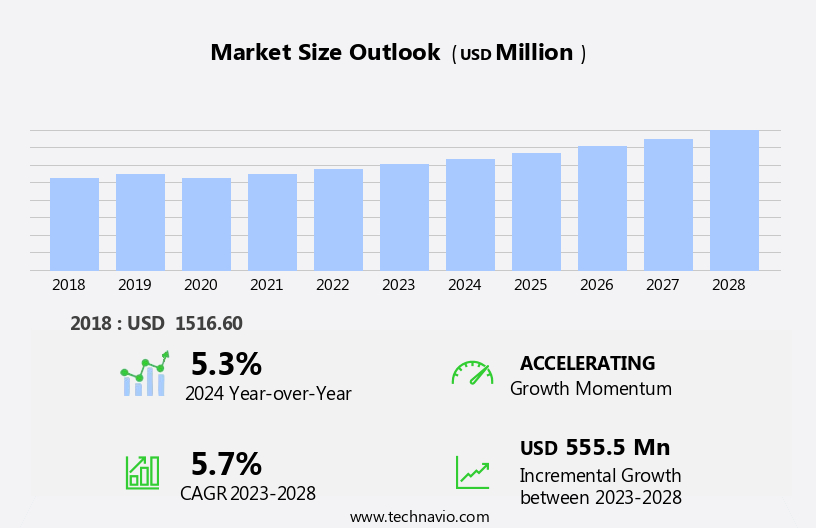
How is this Intraoral Camera Industry segmented and which is the largest segment?
The intraoral camera industry research report provides comprehensive data (region-wise segment analysis), with forecasts and estimates in "USD million" for the period 2024-2028, as well as historical data from 2018-2022 for the following segments.
- Product
- Wired intraoral camera
- Wireless intraoral camera
- Geography
- North America
- Canada
- US
- Europe
- Germany
- UK
- France
- Italy
- Asia
- China
- India
- Japan
- South Korea
- Rest of World (ROW)
- North America
By Product Insights
The wired intraoral camera segment is estimated to witness significant growth during the forecast period. Intraoral cameras are essential tools In the dental industry, offering advanced imaging capabilities for enhanced diagnostic accuracy and improved patient care. Lightweight devices, such as the OraCam Wired HD and MouthCAM, deliver high-quality images and videos of the oral cavity, enabling dentists to identify oral diseases like tooth decay and periodontal disease In their early stages. These wired cameras, which connect to computers and other devices via USB, provide stable data transmission and seamless integration into dental practices. Equipped with built-in LED lighting and autofocus capabilities, they ensure optimal illumination and precise focusing on various oral structures. Real-time image sharing and wireless connectivity facilitate efficient communication between dental professionals, while electronic health records enable comprehensive patient care.
Intraoral cameras support various dental procedures, including oral exams, cavities detection, cosmetic dentistry, and surgical services. By integrating with software such as X-ray software, button capture software, and integrated systems, these cameras streamline dental department workflows and contribute to accurate diagnoses and effective treatment planning. Intraoral cameras cater to the needs of dental clinics, hospitals, and comprehensive healthcare facilities, ultimately enhancing patient satisfaction and driving the growth of the market.
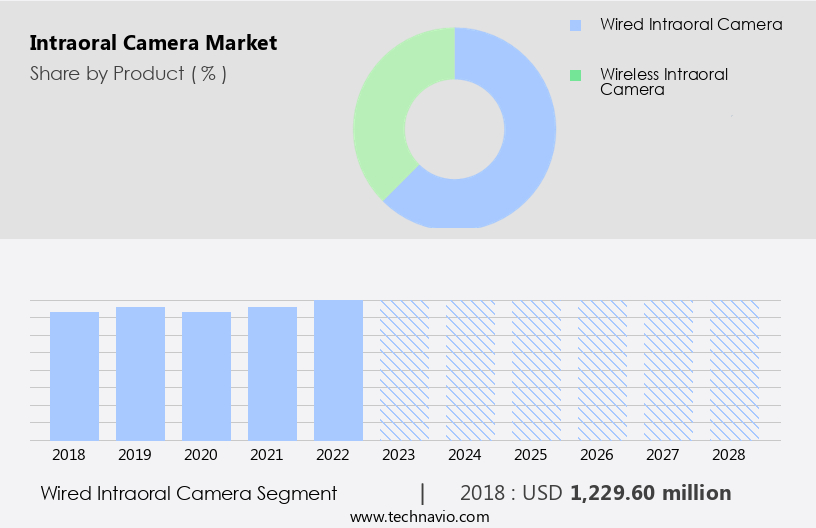
Get a glance at the Intraoral Camera Industry report of share of various segments Request Free Sample
The Wired intraoral camera segment was valued at USD 1229.60 mn in 2018 and showed a gradual increase during the forecast period.
Regional Analysis
North America is estimated to contribute 27% to the growth of the global market during the forecast period. Technavio’s analysts have elaborately explained the regional trends and drivers that shape the market during the forecast period.
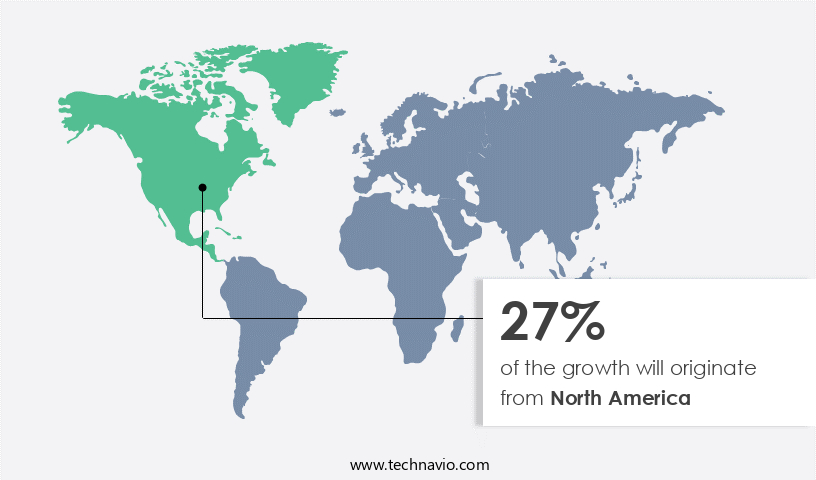
For more insights on the market share of various regions, Request Free Sample
The market in North America is poised for growth due to the region's advanced dental healthcare infrastructure and the persistent issue of untreated dental caries in adults and children. According to the Centers for Disease Control and Prevention (CDC), the number of untreated dental caries in adults In the US is significant. Intraoral cameras, such as lightweight devices with high-quality images, real-time image sharing, and wireless connectivity, play a crucial role in dental procedures, oral hygiene, and diagnostics for tooth decay and periodontal disease. These cameras also facilitate accurate diagnoses, patient communication, and treatment planning. Advanced dental equipment, including intraoral wands, single-lens reflex, fiber optic, and USB cameras, are integrated into dental departments in hospitals and comprehensive healthcare facilities.
The use of software, such as X-ray and button capture, enhances imaging capabilities and streamlines dental practices. The market growth is driven by the need to provide superior patient care, improve patient satisfaction, and support advanced dental procedures and healthcare services.
Market Dynamics
Our researchers analyzed the data with 2023 as the base year, along with the key drivers, trends, and challenges. A holistic analysis of drivers will help companies refine their marketing strategies to gain a competitive advantage.
What are the key market drivers leading to the rise In the adoption of Intraoral Camera Industry?
- Increasing demand for dental clinics is the key driver of the market.
- The market is experiencing significant growth due to the increasing demand for advanced dental equipment in dental clinics and hospitals. The rise in dental procedures, such as oral exams and periodontal disease diagnosis, is a key factor driving market expansion. Intraoral cameras, which offer superior image quality, have become essential tools for dental professionals, enabling accurate diagnoses and effective treatment planning. These lightweight devices offer wireless connectivity, enabling real-time image sharing and integration with electronic health records. Dental departments in comprehensive healthcare facilities are investing In these devices to improve patient care, communication, and overall dental health. Intraoral cameras are used for various dental treatments, including surgical services, cosmetic dentistry, and emergency care.
- With the ability to detect oral diseases, such as tooth decay, gum diseases, and oral lesions, these devices play a crucial role in maintaining oral hygiene and ensuring patient satisfaction. Intraoral wands, single-lens reflex, USB cameras, and fiber optic cameras are popular types of intraoral cameras used In the market. Software solutions, such as X-ray software and button capture software, are integrated into these systems to enhance functionality and streamline workflows.
What are the market trends shaping the Intraoral Camera Industry?
- Integration of intraoral cameras with digital dentistry tools is the upcoming market trend.
- Intraoral cameras play a pivotal role In the digital transformation of dental practices, enhancing diagnostic accuracy and improving patient care. These lightweight devices capture high-image quality images of the oral cavity, which can be seamlessly integrated with various digital platforms such as CAD/CAM systems and Electronic Health Records (EHR). Real-time image sharing and wireless connectivity enable immediate analysis and treatment planning, leading to advanced dental procedures and accurate diagnoses. The compatibility of intraoral cameras with dental management software streamlines workflows by facilitating easy storage, retrieval, and comparison of images across patient visits. Intraoral cameras are integral to dental departments in hospitals and comprehensive healthcare facilities, contributing to the growth of the market.
- Patient satisfaction is heightened through enhanced communication and visualization of dental conditions, while insurance claims are processed efficiently. Intraoral wands, fiber optic cameras, and USB cameras are popular options, catering to the diverse needs of dental treatments, surgical services, oral exams, cosmetic dentistry, and dental technology. Intraoral cameras are essential tools in addressing oral diseases, including cavities, gum diseases, and oral lesions, thereby improving dental health overall.
What challenges does the Intraoral Camera Industry face during its growth?
- High cost of intraoral cameras and dental procedures is a key challenge affecting the industry growth.
- Intraoral cameras, lightweight devices that enhance dental diagnostics and patient care, face a significant market challenge due to their high cost. Traditionally, these advanced imaging tools have been expensive, with prices reaching up to USD 40,000. However, recent technological advancements have resulted in more affordable options, such as those priced around USD 5,000. Regardless, the financial burden remains a barrier for many dental practices, particularly smaller clinics with limited budgets. The cost of dental procedures, including those requiring intraoral cameras, can deter patients from seeking necessary treatments. This, in turn, impacts the demand for intraoral cameras in dental clinics and hospitals, contributing to the comprehensive healthcare sector.
- Intraoral cameras are essential for accurate diagnoses of oral diseases, including tooth decay, periodontal disease, and oral lesions. They facilitate real-time image sharing and wireless connectivity, enabling efficient treatment planning and patient communication. Intraoral cameras are integral to advanced dental procedures, such as cosmetic dentistry and surgical services. These devices' integration with electronic health records and software, including X-ray software and button capture software, further enhances their utility. Intraoral wands, single-lens reflex, fiber optic cameras, and USB cameras are popular options In the market. Despite their benefits, the high cost of these devices and dental treatments continues to limit their widespread adoption.
Exclusive Customer Landscape
The intraoral camera market forecasting report includes the adoption lifecycle of the market, covering from the innovator’s stage to the laggard’s stage. It focuses on adoption rates in different regions based on penetration. Furthermore, the intraoral camera market report also includes key purchase criteria and drivers of price sensitivity to help companies evaluate and develop their market growth analysis strategies.
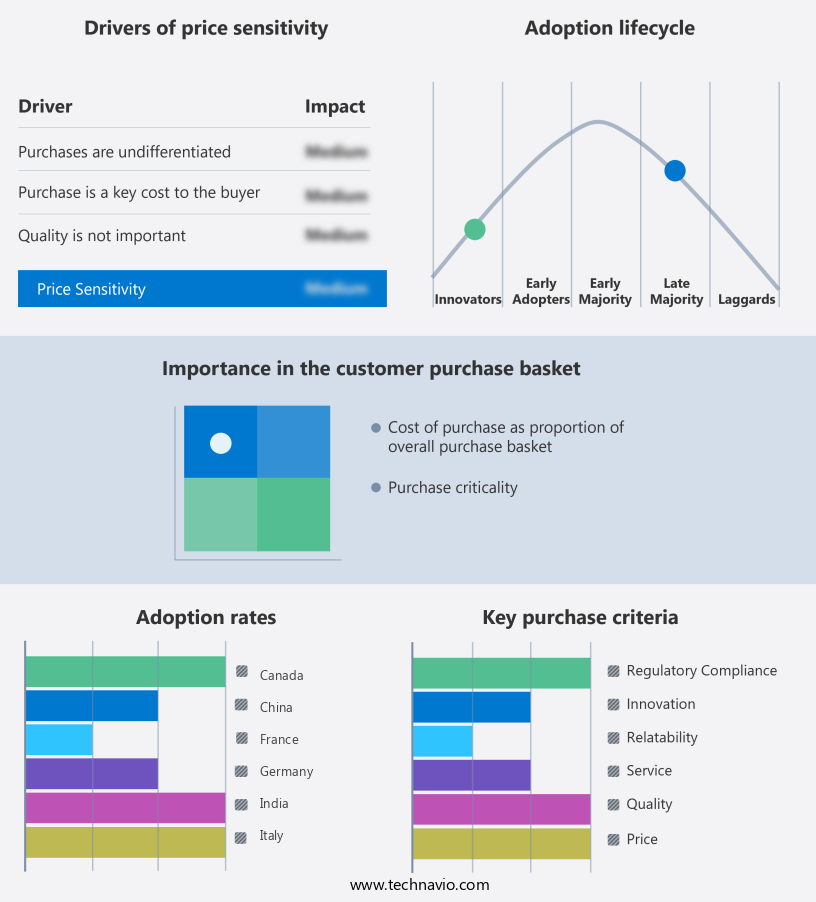
Customer Landscape
Key Companies & Market Insights
Companies are implementing various strategies, such as strategic alliances, intraoral camera market forecast, partnerships, mergers and acquisitions, geographical expansion, and product/service launches, to enhance their presence In the industry.
Advin Health Care - Intraoral cameras, offered by the company, incorporate sophisticated technologies to enhance image quality and reveal intricate anatomical details otherwise unseen. These innovative devices enable dental professionals to make more accurate diagnoses and deliver superior patient care.
The industry research and growth report includes detailed analyses of the competitive landscape of the market and information about key companies, including:
- Advin Health Care
- Ashtel Studios Inc.
- Baistra
- Carestream Dental LLC
- Dentsply Sirona Inc.
- Durr Dental
- Envista Holdings Corp.
- Equitech Engineers Pvt. Ltd.
- Finapoline SAS
- Flight Dental Systems
- Lensiora
- MouthWatch LLC
- Owandy Radiology
- Planmeca Oy
- Prodent
- TPC Advanced Technology
Qualitative and quantitative analysis of companies has been conducted to help clients understand the wider business environment as well as the strengths and weaknesses of key industry players. Data is qualitatively analyzed to categorize companies as pure play, category-focused, industry-focused, and diversified; it is quantitatively analyzed to categorize companies as dominant, leading, strong, tentative, and weak.
Research Analyst Overview
Intraoral cameras have emerged as a vital tool In the field of dental diagnostics and treatment planning. These lightweight devices enable dentists to capture high-resolution images of the oral cavity in real-time, facilitating accurate diagnoses and effective communication with patients. The integration of wireless connectivity and electronic health records further enhances the efficiency and accessibility of dental services. The adoption of intraoral cameras is driven by several factors. Image quality is a significant consideration, as these devices provide clear, detailed images that enable dentists to identify oral diseases and conditions, such as tooth decay and periodontal disease, at an early stage.
Real-time image sharing allows for immediate consultation with dental specialists and facilitates collaborative treatment planning. The compact size and wireless connectivity of intraoral cameras make them an essential component of comprehensive healthcare services. They are particularly valuable in dental clinics and hospitals, where advanced dental procedures and surgical services are performed. Patient satisfaction is a key priority in dental care, and the use of intraoral cameras enhances the patient experience by promoting transparency and enabling better communication between dentists and patients. Intraoral cameras come in various forms, including single-lens reflex, fiber optic, and USB models. Each type offers unique advantages, such as superior image quality or ease of use.
Regardless of the specific model, these devices have become an indispensable part of dental technology, enabling dentists to provide effective and efficient dental treatments. The integration of software solutions, such as x-ray software and button capture software, further enhances the functionality of intraoral cameras. These systems enable seamless integration with dental departments and allow for the efficient management of dental records and insurance claims. In emergency care situations, intraoral cameras enable dentists to make accurate diagnoses and develop effective treatment plans, ensuring the best possible patient outcomes. As dental practices continue to evolve, the demand for advanced dental equipment and technology, including intraoral cameras, is expected to grow.
Patient needs and expectations are driving this trend, as individuals increasingly seek high-quality, personalized dental care. The use of intraoral cameras is a clear reflection of this trend, as they enable dentists to provide accurate diagnoses, effective treatment planning, and improved patient communication. In conclusion, the market for intraoral cameras is poised for significant growth, driven by the increasing demand for advanced dental technology and the need for accurate diagnoses and effective treatment planning. These devices offer numerous benefits, including improved image quality, real-time image sharing, and wireless connectivity, making them an essential tool for dental professionals and a valuable asset for dental patients.
|
Market Scope |
|
|
Report Coverage |
Details |
|
Page number |
164 |
|
Base year |
2023 |
|
Historic period |
2018-2022 |
|
Forecast period |
2024-2028 |
|
Growth momentum & CAGR |
Accelerate at a CAGR of 5.7% |
|
Market growth 2024-2028 |
USD 555.5 million |
|
Market structure |
Fragmented |
|
YoY growth 2023-2024(%) |
5.3 |
|
Key countries |
US, Canada, China, Germany, Japan, UK, India, Italy, France, and South Korea |
|
Competitive landscape |
Leading Companies, Market Positioning of Companies, Competitive Strategies, and Industry Risks |
What are the Key Data Covered in this Intraoral Camera Market Research and Growth Report?
- CAGR of the Intraoral Camera industry during the forecast period
- Detailed information on factors that will drive the growth and forecasting between 2024 and 2028
- Precise estimation of the size of the market and its contribution of the industry in focus to the parent market
- Accurate predictions about upcoming growth and trends and changes in consumer behaviour
- Growth of the market across North America, Europe, Asia, and Rest of World (ROW)
- Thorough analysis of the market’s competitive landscape and detailed information about companies
- Comprehensive analysis of factors that will challenge the intraoral camera market growth of industry companies
We can help! Our analysts can customize this intraoral camera market research report to meet your requirements.
 RIA -
RIA - 
