



Kombucha Market Size 2026-2030
The kombucha market size is valued to increase by USD 7.65 billion, at a CAGR of 20% from 2025 to 2030. Rising awareness of gut health and probiotics will drive the kombucha market.
Major Market Trends & Insights
- North America dominated the market and accounted for a 34.9% growth during the forecast period.
- By Type - Organic segment was valued at USD 3.02 billion in 2024
- By Distribution Channel - Offline segment accounted for the largest market revenue share in 2024
Market Size & Forecast
- Market Opportunities: USD 10.65 billion
- Market Future Opportunities: USD 7.65 billion
- CAGR from 2025 to 2030 : 20%
Market Summary
- The kombucha market is characterized by a rapid transition from a niche health product to a mainstream functional beverage. This shift is propelled by increasing consumer education on gut health, the microbiome, and the desire for low-sugar, non-alcoholic alternatives.
- Key trends include the integration of adaptogens and superfoods for enhanced functionality, alongside a significant move toward sustainable packaging like aluminum cans and glass bottles. However, the industry grapples with challenges related to quality control, ensuring batch-to-batch consistency in taste and carbonation, and managing the complexities of cold chain logistics to preserve live cultures.
- For instance, a beverage company aiming to scale operations must invest in sophisticated fermentation monitoring systems and refrigerated transport, which can increase operational costs but is crucial for maintaining product integrity and meeting regulatory standards for alcohol content. This dynamic environment necessitates a balance between artisanal appeal and the industrial efficiency required for broad market penetration.
What will be the Size of the Kombucha Market during the forecast period?
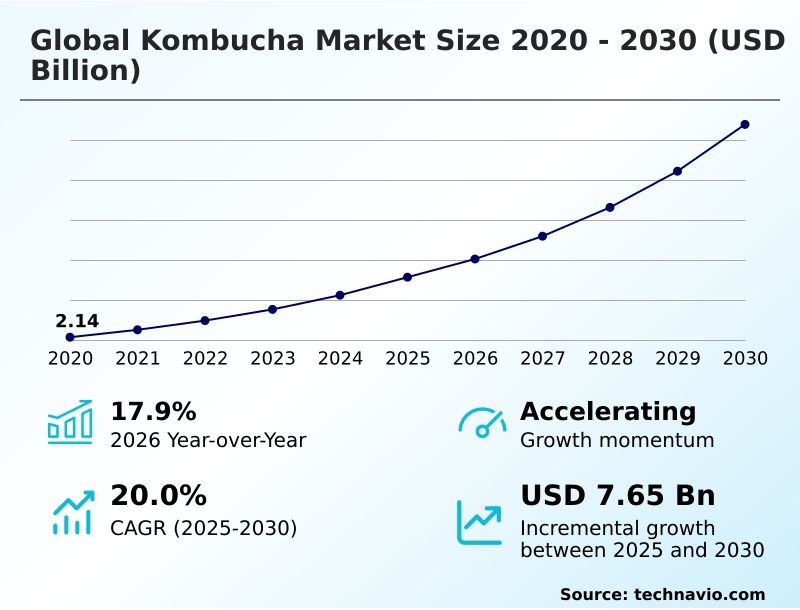
Get Key Insights on Market Forecast (PDF) Get Free Sample
How is the Kombucha Market Segmented?
The kombucha industry research report provides comprehensive data (region-wise segment analysis), with forecasts and estimates in "USD million" for the period 2026-2030, as well as historical data from 2020-2024 for the following segments.
- Type
- Organic
- Non-organic
- Distribution channel
- Offline
- Online
- Packaging
- Bottle
- Cans
- Others
- Geography
- North America
- US
- Canada
- Mexico
- Europe
- Germany
- UK
- France
- APAC
- China
- Japan
- India
- Middle East and Africa
- South Africa
- Saudi Arabia
- UAE
- South America
- Brazil
- Argentina
- Colombia
- Rest of World (ROW)
- North America
By Type Insights
The organic segment is estimated to witness significant growth during the forecast period.
The organic segment is defined by a commitment to premium probiotic beverage formulation, starting with certified organic tea leaf sourcing and precise cane sugar conversion.
This category emphasizes raw kombucha processing to deliver an unpasteurized functional beverage that maintains the integrity of the symbiotic culture of bacteria and yeast. Glass bottle fermentation remains a hallmark, reflecting artisanship and quality.
Demand is driven by calls for supply chain transparency and complete traceability in sourcing.
Leading producers leverage rigorous probiotic strain verification and guarantee a minimum colony forming unit (cfu) count, achieving over 95% consistency in the final organic acid profile analysis.
This focus on verifiable quality and a superior sensory profile evaluation solidifies the segment's premium positioning.
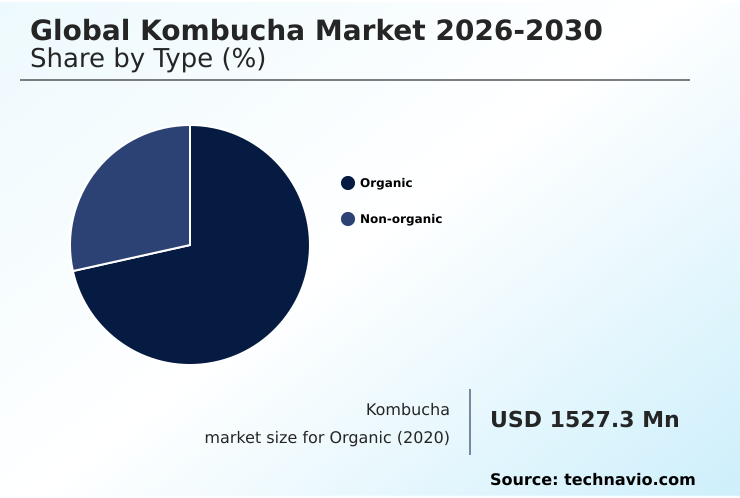
The Organic segment was valued at USD 3.02 billion in 2024 and showed a gradual increase during the forecast period.
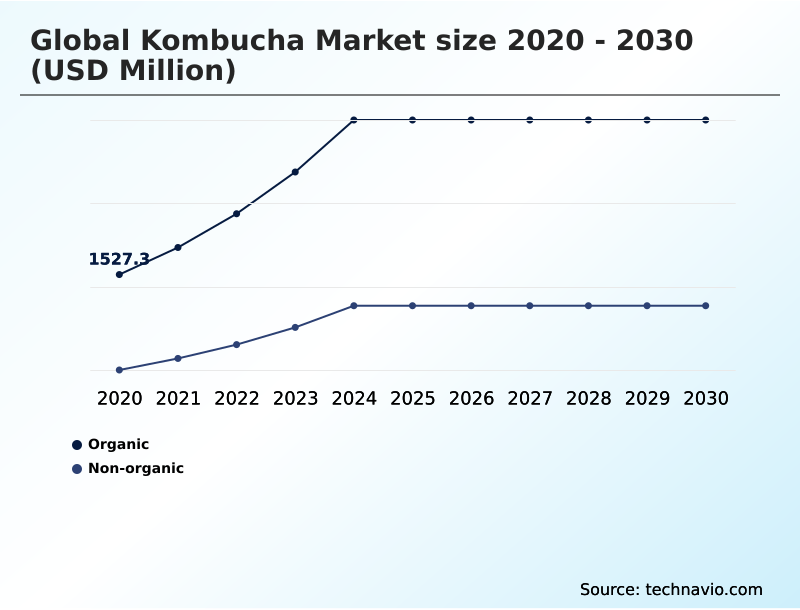
Regional Analysis
North America is estimated to contribute 34.9% to the growth of the global market during the forecast period.Technavio’s analysts have elaborately explained the regional trends and drivers that shape the market during the forecast period.
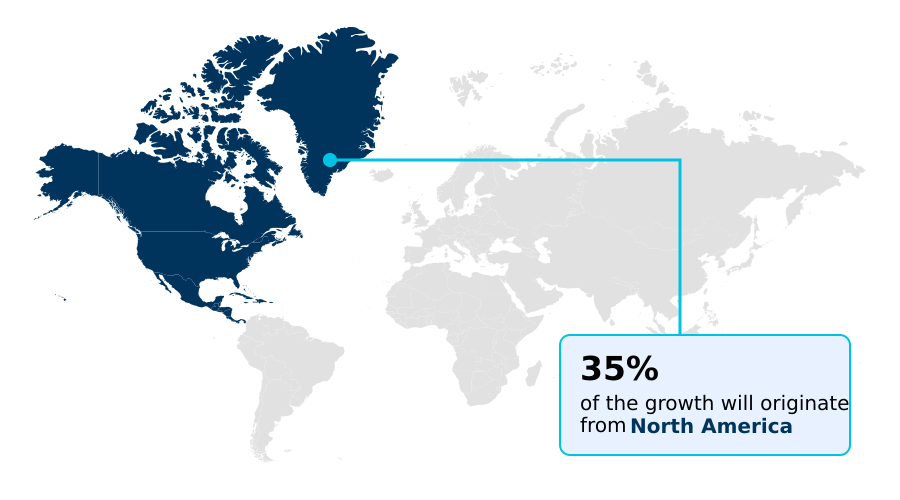
See How Kombucha Market Demand is Rising in North America Get Free Sample
The geographic landscape is defined by regional disparities in market maturity. North America leads with widespread retail penetration and sophisticated cold chain logistics management, while APAC emerges as a high-growth frontier.
In these developing markets, the adoption of sterile filtration methods is enabling the launch of shelf-stable products, reducing reliance on refrigeration and expanding reach.
Across Europe, the demand for non-alcoholic fermented beverage options in hospitality is driving growth in kegged kombucha systems and draft kombucha dispensing. Brands are leveraging unique botanical extract flavoring to appeal to local palates.
Regardless of region, ensuring supply chain transparency and adhering to strict food safety standards and regulatory compliance for abv are critical for building consumer trust and achieving scalable success, with advanced fermentation vessel design and automated systems improving output by over 25%.
Market Dynamics
Our researchers analyzed the data with 2025 as the base year, along with the key drivers, trends, and challenges. A holistic analysis of drivers will help companies refine their marketing strategies to gain a competitive advantage.
- A thorough review of the kombucha market competitive landscape reveals a dynamic interplay between large-scale producers and craft breweries, a key theme in any kombucha market regional analysis. Investors evaluating kombucha market investment opportunities must consider the industry's kombucha market future forecast, which is heavily influenced by functional drink market drivers like rising health consciousness.
- A deep dive into kombucha market segmentation insights shows the organic kombucha market growth continues to outpace conventional offerings. Hard kombucha market trends are reshaping social drinking occasions, while kombucha packaging innovation trends focus on sustainability. Understanding the kombucha distribution channel analysis is crucial, as is a probiotic beverage market comparison to identify differentiation.
- Navigating non-alcoholic beverage market challenges and specific kombucha regulatory hurdles explained in technical guides is vital for new entrants. Successful kombucha market entry strategies often depend on robust kombucha supply chain logistics and impeccable kombucha quality control standards. As for kombucha consumer purchasing behavior, authenticity and functional benefits are paramount.
- Businesses are developing kombucha flavor diversification strategies to capture new demographics, while also committing to sustainable practices in kombucha production.
- The impact of health trends on kombucha cannot be overstated; for example, brands that effectively communicate their products' health benefits through digital channels achieve customer engagement rates more than 30% higher than those that do not, underscoring the importance of marketing in this space.
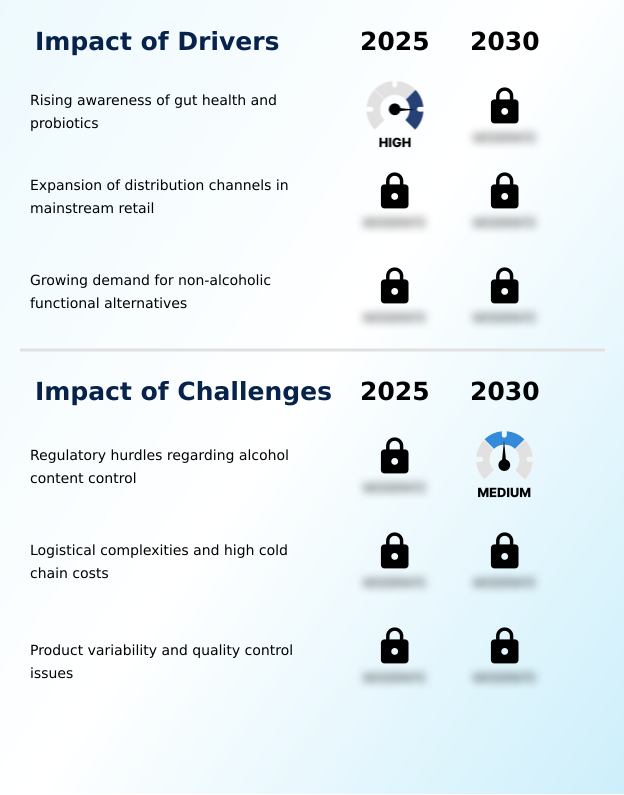
What are the key market drivers leading to the rise in the adoption of Kombucha Industry?
- The primary market driver is the rising consumer awareness regarding the importance of gut health and the benefits of probiotics.
- Market growth is fundamentally driven by a greater understanding of digestive wellness and the gut-brain axis support provided by probiotic microbial cultures.
- The meticulous scoby fermentation process, including secondary fermentation techniques, results in beneficial gluconic acid production and acetic acid fermentation, creating an antioxidant rich beverage.
- Consumers are now seeking products with probiotic strain verification, leading to a 40% higher retention rate for brands that provide this transparency.
- The demand for sophisticated, healthy alternatives to traditional social drinks has positioned kombucha as a leading functional social tonic, particularly with low-sugar fermentation methods that appeal to health-conscious demographics.
- Ensuring consistency and preventing flavor drift prevention are key to capitalizing on this trend, as the market for beverages offering immune system modulation and metabolic health benefits expands.
What are the market trends shaping the Kombucha Industry?
- The market is witnessing a significant trend toward the diversification of hard kombucha flavors. This evolution is blurring the lines between the functional wellness and alcoholic beverage industries.
- Key market trends are reshaping product development and consumer engagement. The rise of the sober curious beverage market has fueled innovation in hard kombucha brewing, with high-gravity fermentation techniques enabling producers to create better-for-you alcohol alternative options. These products now constitute over 15% of new launches in the category.
- Concurrently, hyper-functional beverages are gaining traction, integrating adaptogen infusion techniques and superfood ingredient integration to offer targeted health benefits. Nano-emulsification of extracts ensures the stability and bioavailability of these compounds. On the packaging front, a major shift towards sustainable packaging solutions is evident.
- The adoption of aluminum can packaging and biodegradable labeling materials has increased by 30%, driven by consumer demand for zero-waste brewing and environmentally responsible brands, with refillable growler systems emerging in urban retail.
What challenges does the Kombucha Industry face during its growth?
- A key challenge affecting industry growth involves navigating the regulatory hurdles associated with controlling alcohol content in fermented beverages.
- Navigating operational and regulatory complexities remains a primary challenge. Strict alcohol by volume (abv) control is critical, necessitating investment in fermented tea stabilization technologies to ensure compliance. While heat pasteurization process offers stability, it compromises the live culture preservation that core consumers demand, reducing the effective colony forming unit (cfu) count by up to 99%.
- Consequently, maintaining the delicate yeast and bacteria balance without pasteurization is a key differentiator. Microbial drift management and scoby genetics mapping are becoming essential for batch consistency control. Furthermore, logistical hurdles, including the need for packaging with superior packaging light protection, contribute significantly to costs.
- Producers are exploring ambient-stable formulation and advanced quality control protocols, including systems for spoilage microorganism detection, to mitigate these issues and ensure product integrity across the supply chain.
Exclusive Technavio Analysis on Customer Landscape
The kombucha market forecasting report includes the adoption lifecycle of the market, covering from the innovator’s stage to the laggard’s stage. It focuses on adoption rates in different regions based on penetration. Furthermore, the kombucha market report also includes key purchase criteria and drivers of price sensitivity to help companies evaluate and develop their market growth analysis strategies.
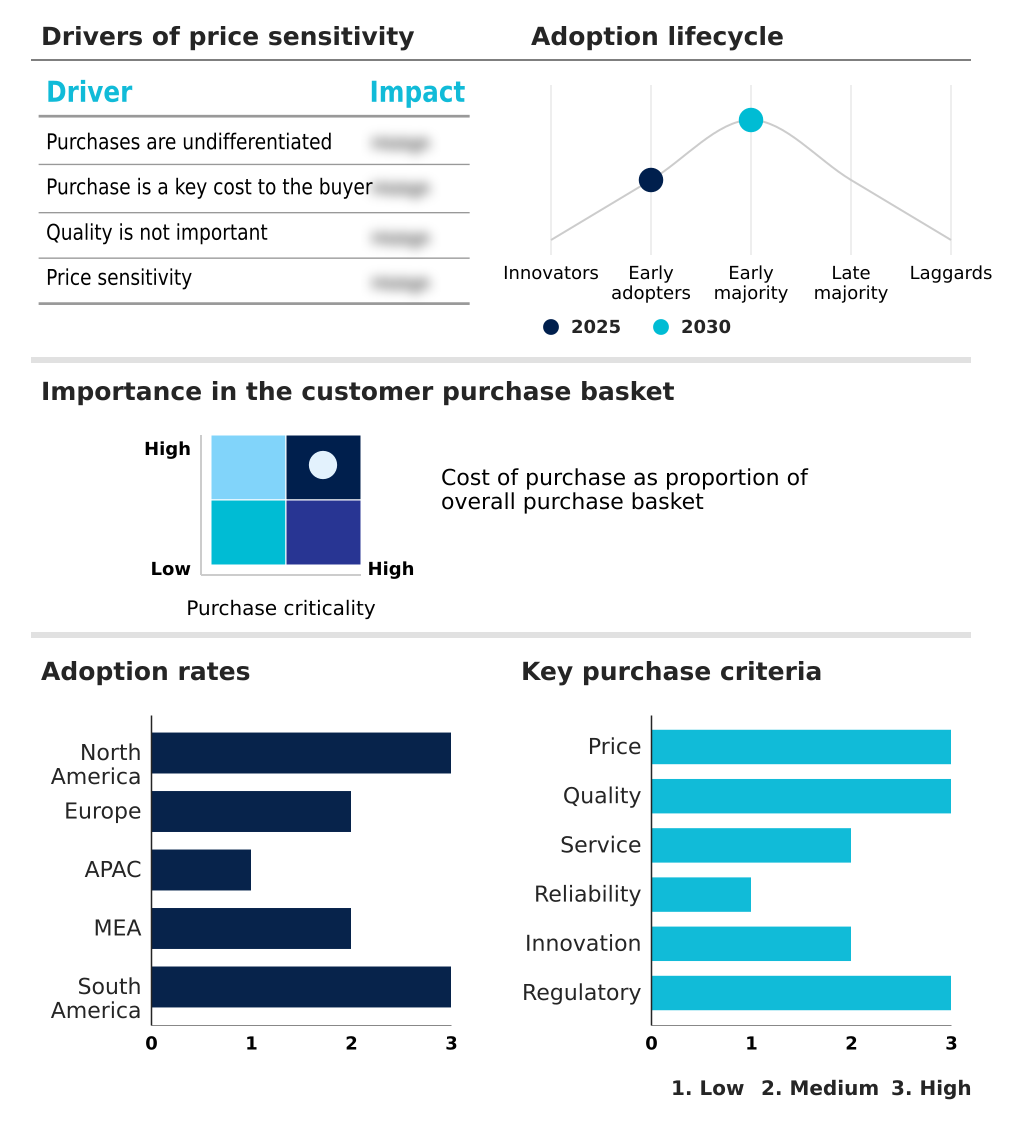
Customer Landscape of Kombucha Industry
Competitive Landscape
Companies are implementing various strategies, such as strategic alliances, kombucha market forecast, partnerships, mergers and acquisitions, geographical expansion, and product/service launches, to enhance their presence in the industry.
Better Booch - This entity pioneers fermented wellness beverages, specializing in raw, unpasteurized formulations designed to support digestive health through a diverse range of live and active probiotic cultures.
The industry research and growth report includes detailed analyses of the competitive landscape of the market and information about key companies, including:
- Better Booch
- Brew Dr Kombucha
- Fermented Sciences Inc.
- Flower of Life Ltd.
- GTs Living Foods
- Health Ade LLC
- Holy Kombucha
- Humm Kombucha LLC
- Jarr Kombucha
- JuneShine
- Koe Kombucha
- Lo Bros
- PepsiCo Inc.
- Remedy Drinks Pty Ltd.
- RISE Kombucha
- Tea Biotics Kombucha
- The Gutsy Captain Co.
- The Real Drinks Co.
- Wild Bay Kombucha
- World Kombucha
Qualitative and quantitative analysis of companies has been conducted to help clients understand the wider business environment as well as the strengths and weaknesses of key industry players. Data is qualitatively analyzed to categorize companies as pure play, category-focused, industry-focused, and diversified; it is quantitatively analyzed to categorize companies as dominant, leading, strong, tentative, and weak.
Recent Development and News in Kombucha market
- In January 2025, Health Ade LLC released a clinical white paper substantiating the specific digestive benefits of its proprietary fermentation process, significantly boosting consumer trust and category validation.
- In November 2024, PepsiCo Inc. launched a new line of its KeVita kombucha infused with adaptogens like ashwagandha, targeting the growing demand for beverages that support cognitive health and stress management.
- In March 2025, a leading retail analytics firm reported that dedicated shelf space for fermented functional drinks in major North American and European supermarkets increased by 20% in the first quarter, indicating strong retailer confidence.
- In May 2025, beverage industry publication BevNET released a strategic analysis highlighting the rise of functional social tonics, noting that nearly 30% of premium bar programs now feature kombucha on tap to meet evolving consumer demands.
Dive into Technavio’s robust research methodology, blending expert interviews, extensive data synthesis, and validated models for unparalleled Kombucha Market insights. See full methodology.
| Market Scope | |
|---|---|
| Page number | 288 |
| Base year | 2025 |
| Historic period | 2020-2024 |
| Forecast period | 2026-2030 |
| Growth momentum & CAGR | Accelerate at a CAGR of 20% |
| Market growth 2026-2030 | USD 7646.1 million |
| Market structure | Fragmented |
| YoY growth 2025-2026(%) | 17.9% |
| Key countries | US, Canada, Mexico, Germany, UK, France, Italy, Spain, Sweden, China, Japan, India, South Korea, Australia, Singapore, South Africa, Saudi Arabia, UAE, Egypt, Nigeria, Brazil, Argentina and Colombia |
| Competitive landscape | Leading Companies, Market Positioning of Companies, Competitive Strategies, and Industry Risks |
Research Analyst Overview
- The kombucha market's evolution hinges on mastering the core scoby fermentation process and the underlying symbiotic culture of bacteria and yeast. Success requires precise batch consistency control and real-time ph monitoring to manage gluconic acid production and acetic acid fermentation.
- A key boardroom decision involves choosing between an unpasteurized functional beverage, which necessitates costly cold chain logistics management for live culture preservation, versus a shelf-stable product using sterile filtration methods or heat pasteurization process. This choice impacts the final probiotic microbial cultures and the ability to market a raw kombucha processing benefit.
- Furthermore, alcohol by volume (abv) control is a critical compliance factor, leading to investment in fermented tea stabilization and microbial drift management, sometimes through scoby genetics mapping. Product innovation is centered on low-sugar fermentation methods, secondary fermentation techniques, and unique botanical extract flavoring. The growth of hard kombucha brewing relies on high-gravity fermentation to create a non-alcoholic fermented beverage alternative.
- The supply chain demands excellence in organic tea leaf sourcing and cane sugar conversion, while packaging strategy weighs glass bottle fermentation against aluminum can packaging or kegged kombucha systems for draft kombucha dispensing.
- Ultimately, sustainable packaging solutions and advanced probiotic beverage formulation, including adaptogen infusion techniques and superfood ingredient integration, are defining the competitive edge, with integrated producers achieving a 15% reduction in time-to-market.
What are the Key Data Covered in this Kombucha Market Research and Growth Report?
-
What is the expected growth of the Kombucha Market between 2026 and 2030?
-
USD 7.65 billion, at a CAGR of 20%
-
-
What segmentation does the market report cover?
-
The report is segmented by Type (Organic, and Non-organic), Distribution Channel (Offline, and Online), Packaging (Bottle, Cans, and Others) and Geography (North America, Europe, APAC, Middle East and Africa, South America)
-
-
Which regions are analyzed in the report?
-
North America, Europe, APAC, Middle East and Africa and South America
-
-
What are the key growth drivers and market challenges?
-
Rising awareness of gut health and probiotics, Regulatory hurdles regarding alcohol content control
-
-
Who are the major players in the Kombucha Market?
-
Better Booch, Brew Dr Kombucha, Fermented Sciences Inc., Flower of Life Ltd., GTs Living Foods, Health Ade LLC, Holy Kombucha, Humm Kombucha LLC, Jarr Kombucha, JuneShine, Koe Kombucha, Lo Bros, PepsiCo Inc., Remedy Drinks Pty Ltd., RISE Kombucha, Tea Biotics Kombucha, The Gutsy Captain Co., The Real Drinks Co., Wild Bay Kombucha and World Kombucha
-
Market Research Insights
- Market dynamics are increasingly shaped by sophisticated quality control protocols and consumer demand for supply chain transparency. Brands leveraging detailed organic acid profile analysis and probiotic strain verification are experiencing customer loyalty rates up to 25% higher than competitors.
- The move toward advanced brewing automation and improved fermentation vessel design has enabled producers to enhance consistency, reducing sensory profile evaluation failures by 18%. As the sober curious beverage market expands, a focus on beverage carbonation level and flavor drift prevention becomes critical.
- Furthermore, adherence to regulatory compliance for abv and robust food safety standards are non-negotiable for market access, driving investment in technologies that ensure product integrity from production to consumption.
We can help! Our analysts can customize this kombucha market research report to meet your requirements.
 RIA -
RIA - 
