



Legionella Testing Market Size 2024-2028
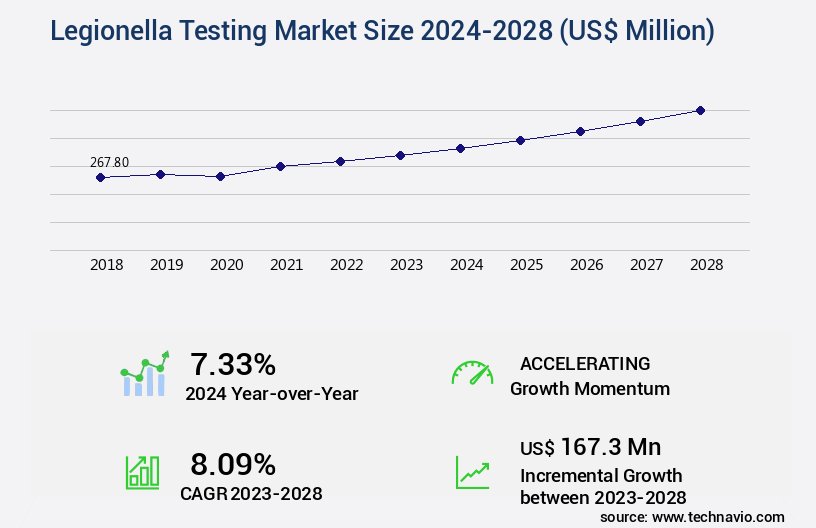
The legionella testing market size is valued to increase USD 167.3 million, at a CAGR of 8.09% from 2023 to 2028. Rise in geriatric population will drive the legionella testing market.
Major Market Trends & Insights
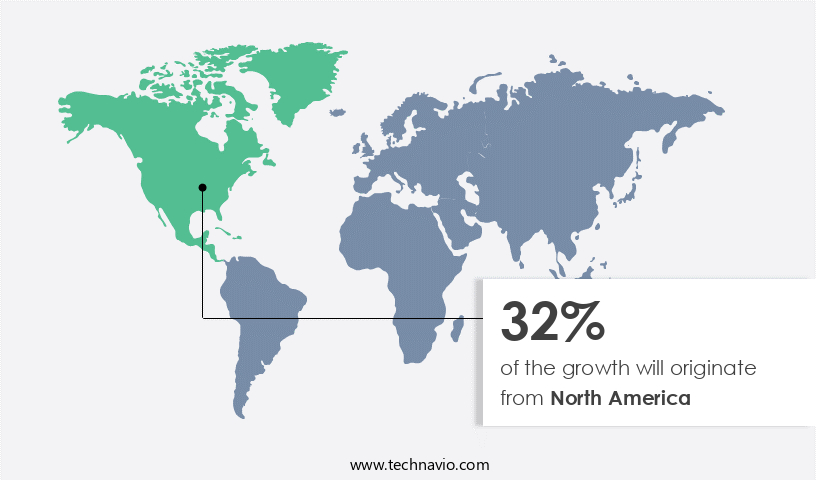
- North America dominated the market and accounted for a 32% growth during the forecast period.
- By Application - Clinical testing segment was valued at USD 166.10 million in 2022
- By End-user - Hospitals and clinics segment accounted for the largest market revenue share in 2022
Market Size & Forecast
- Market Opportunities: USD 93.91 million
- Market Future Opportunities: USD 167.30 million
- CAGR : 8.09%
- North America: Largest market in 2022
Market Summary
- The market encompasses the global industry dedicated to detecting and mitigating the presence of Legionella bacteria, a significant cause of waterborne diseases. This market is driven by several factors, including the rising geriatric population, the emergence of new infectious diseases, and the lack of skilled professionals in the field. Core technologies and applications, such as culture-based methods, PCR-based methods, and immunological methods, are continuously evolving to enhance the accuracy and efficiency of Legionella testing. Service types or product categories, including laboratory services, on-site testing, and kits and reagents, cater to diverse customer needs.
- Regulations, such as the US EPA's Legionellosis Prevention and Control Regulation, further shape market dynamics. According to a study, The market is projected to account for over 20% of the total water testing market by 2025.
What will be the Size of the Legionella Testing Market during the forecast period?
Get Key Insights on Market Forecast (PDF) Request Free Sample
How is the Legionella Testing Market Segmented and what are the key trends of market segmentation?
The legionella testing industry research report provides comprehensive data (region-wise segment analysis), with forecasts and estimates in "USD million" for the period 2024-2028, as well as historical data from 2018-2022 for the following segments.
- Application
- Clinical testing
- Environmental testing
- End-user
- Hospitals and clinics
- Diagnostic laboratories
- Geography
- North America
- US
- Europe
- France
- Germany
- UK
- APAC
- China
- Rest of World (ROW)
- North America
By Application Insights
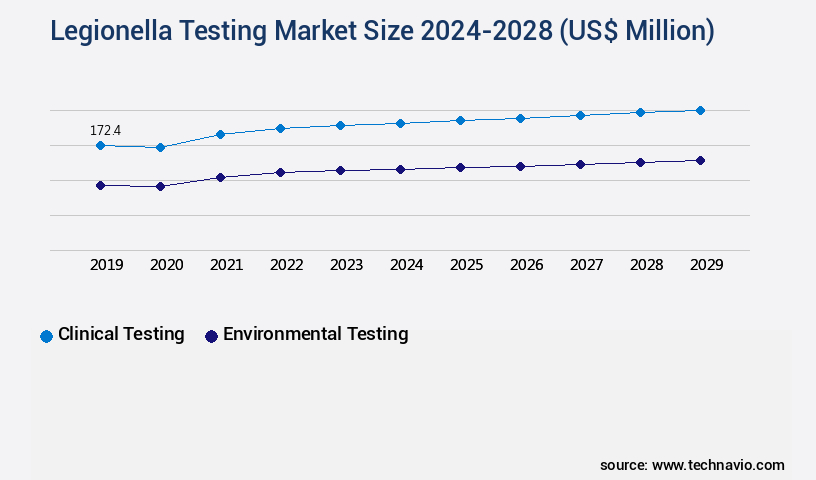
The clinical testing segment is estimated to witness significant growth during the forecast period.
In the realm of diagnostic microbiology, Legionella pneumophila serogroups continue to pose a significant challenge due to their ability to cause Legionnaires' disease, a severe form of pneumonia. Molecular diagnostics, such as Polymerase Chain Reaction (PCR) Legionella detection and ELISA Legionella assay, have emerged as essential tools for rapid and accurate identification. Threshold values for Legionella spp. Detection are crucial in water quality parameters assessment, ensuring infection control protocols and water treatment strategies are effective. The market for Legionella risk assessment and contamination control measures is expanding, driven by stringent public health regulations and environmental monitoring requirements. Direct fluorescent antibody (DFA) and immunofluorescence microscopy are commonly used for Legionella spp.
Detection. Biocide efficacy testing and membrane filtration technique are integral parts of water treatment strategies to mitigate microbial contamination. Quantitative PCR methods and serological testing methods, including antibody detection, are essential for monitoring Legionella infection rates and evaluating the effectiveness of disinfection protocols. Cooling tower analysis is a critical application area for Legionella testing, as these structures pose a significant risk for Legionella growth and transmission. According to recent studies, the market for Legionella testing is experiencing steady growth, with an estimated 20% of healthcare facilities reporting positive Legionella cultures in their water systems. Furthermore, the demand for Legionella testing is projected to increase by 25% in the next five years, as regulatory requirements become more stringent and awareness of the risks associated with Legionella infection grows.
In the realm of diagnostic microbiology, Legionella testing is a vital component of infection control and water quality management, ensuring the safety and health of individuals in various sectors, including healthcare facilities and industrial settings.
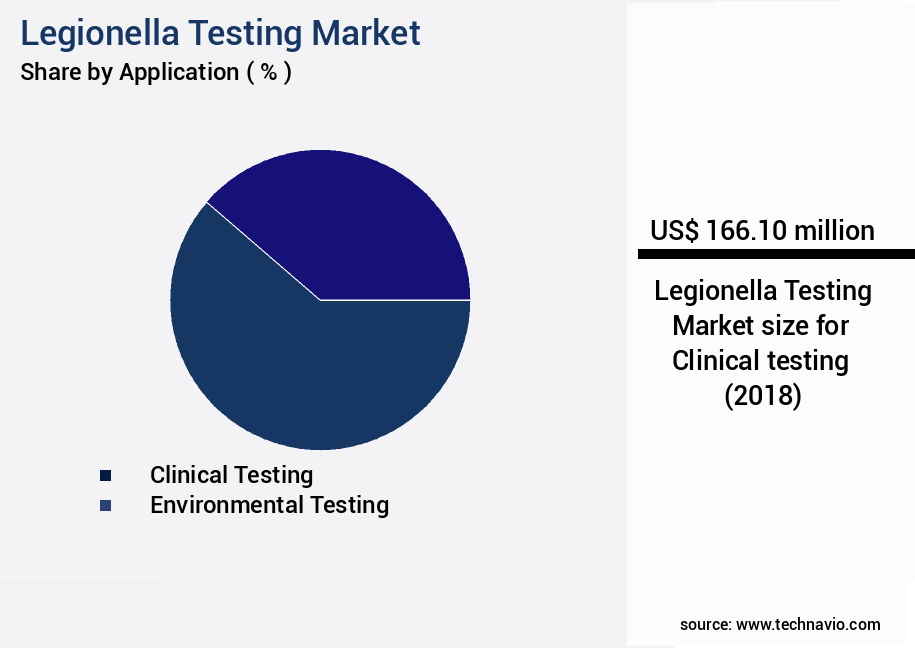
The Clinical testing segment was valued at USD 166.10 million in 2018 and showed a gradual increase during the forecast period.
Regional Analysis
North America is estimated to contribute 32% to the growth of the global market during the forecast period.Technavio's analysts have elaborately explained the regional trends and drivers that shape the market during the forecast period.
See How Legionella Testing Market Demand is Rising in North America Request Free Sample
The market in North America experienced significant growth in 2023, with the US and Canada being the major contributors. The market's expansion is driven by the increasing emphasis on drug and vaccine discovery and development, as well as advancements in biotechnology and pharmaceutical research. The US, in particular, hosts numerous pharmaceutical companies, including Novartis and Pfizer, which invest heavily in research and development, necessitating extensive legionella testing.
The market's growth is further fueled by the availability of a diverse range of legionella testing products from various companies in the region.
Market Dynamics
Our researchers analyzed the data with 2023 as the base year, along with the key drivers, trends, and challenges. A holistic analysis of drivers will help companies refine their marketing strategies to gain a competitive advantage.
The market encompasses a range of analytical techniques and technologies employed to detect and quantify Legionella bacteria in various water systems. This market witnesses continuous growth due to the increasing awareness of Legionnaires' disease and the need to ensure water safety. Key aspects of this market include legionella culture media preparation and optimization of legionella PCR assays for enhanced sensitivity. Water system biofilm analysis is another crucial area, as biofilms can harbor Legionella and contribute to disease outbreaks. Effectiveness of disinfection methods and validation of legionella testing protocols are essential considerations to prevent false positives and negatives. Microbial community profiling techniques and advanced molecular detection methods are increasingly employed to improve legionella detection in potable water.
Rapid detection methods comparison is a significant focus, as quick identification is essential for effective disease control. Legionella detection in potable water is a major application area, given the potential health risks associated with contaminated water. Interpreting legionella test results and comparing different testing methods are essential for accurate and reliable diagnosis. The impact of water temperature on Legionella prevalence and the effectiveness of water treatment chemicals are critical factors influencing the market. Prevalence of Legionella in various systems, from cooling towers to hot water systems, varies significantly, necessitating diverse testing approaches. Development of new testing technologies and techniques for detecting low levels of Legionella is a key trend, as is reducing false positive and negative rates to enhance test accuracy.
Improved legionella detection sensitivity and preventing Legionnaires' disease outbreaks are primary objectives for market participants. Legionella testing accreditation standards ensure the reliability and credibility of test results. Adoption of advanced technologies, such as real-time PCR and mass spectrometry, is driving market growth. For instance, real-time PCR can detect Legionella in less than 24 hours, significantly reducing the time required for conventional culture-based methods. Market players are investing in research and development to innovate and expand their product offerings, with a focus on enhancing test accuracy and sensitivity. In the industrial sector, the use of Legionella testing services is nearly double that in the residential sector, highlighting the increased regulatory scrutiny and safety concerns in industrial applications.
This trend is expected to continue, with the industrial segment accounting for a significantly larger share of the market.
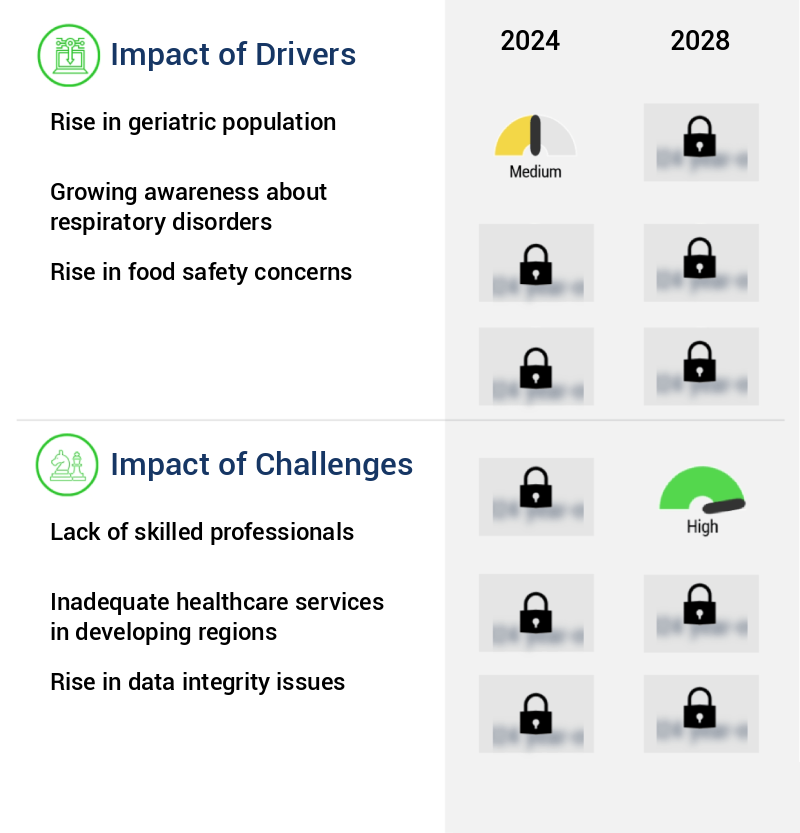
What are the key market drivers leading to the rise in the adoption of Legionella Testing Industry?
- The geriatric population's growth is the primary factor fueling market expansion.
- The global population is witnessing a significant demographic shift, with the geriatric segment experiencing the fastest growth. According to The World Bank Group and the National Institutes of Health (NIH), the geriatric population is projected to increase from 8.48% in 2016 to roughly 17% by 2050. This trend is driven by advancements in healthcare technology, leading to improved treatment options and increased life expectancy. The global average life expectancy is projected to rise from 68.6 years in 2015 to 76.2 years by 2050. In countries like Japan, this demographic shift is particularly pronounced. As a result, businesses and industries must adapt to cater to the unique needs of the aging population.
- This includes healthcare, technology, and various other sectors. The ongoing evolution of healthcare technology and the increasing life expectancy present significant opportunities for innovation and growth. However, it also necessitates a shift in business strategies and approaches to effectively serve this growing market segment.
What are the market trends shaping the Legionella Testing Industry?
- The emergence of new infectious diseases represents a significant market trend in the healthcare industry. A growing concern in the medical community, the emergence of new infectious diseases signifies a notable trend in the healthcare market.
- Infectious diseases continue to pose a significant threat to global health, with over ten million people falling ill in 2019 alone. These diseases, caused by pathogenic microorganisms such as viruses, bacteria, parasites, and fungi, can be transmitted through various means, including contaminated food, water, and air, as well as through animal and insect bites and sexual contact. The impact of infectious diseases is disproportionately felt in low- and middle-income countries, where nearly 95% of related deaths occur. In response to this ongoing health challenge, the market for infectious disease diagnostics has experienced steady growth.
- By providing accurate and timely diagnoses, these products play a crucial role in preventing the spread of diseases and saving lives. For instance, in 2019, Tuberculosis (TB) affected approximately 5.6 million men, 3.2 million women, and 1.2 million children, highlighting the need for effective diagnostic solutions.
What challenges does the Legionella Testing Industry face during its growth?
- The scarcity of proficient specialists poses a significant obstacle to the expansion and growth of the industry.
- The demand for Legionella testing is on the rise due to increasing disease prevalence and regulatory requirements. Laboratories face pressure to deliver results swiftly, potentially leading to compromised testing protocols and non-compliance with regulations. This non-compliance can result in significant financial losses for companies and the need to revise testing procedures. The root cause of this issue is a shortage of skilled professionals in the laboratory workforce.
- Ensuring proper handling of equipment and adherence to good manufacturing practices (GMP) is crucial to maintaining test quality and regulatory compliance. By investing in training and development programs, laboratories can improve their workforce's competencies and enhance their overall operational efficiency.
Exclusive Customer Landscape
The legionella testing market forecasting report includes the adoption lifecycle of the market, covering from the innovator's stage to the laggard's stage. It focuses on adoption rates in different regions based on penetration. Furthermore, the legionella testing market report also includes key purchase criteria and drivers of price sensitivity to help companies evaluate and develop their market growth analysis strategies.
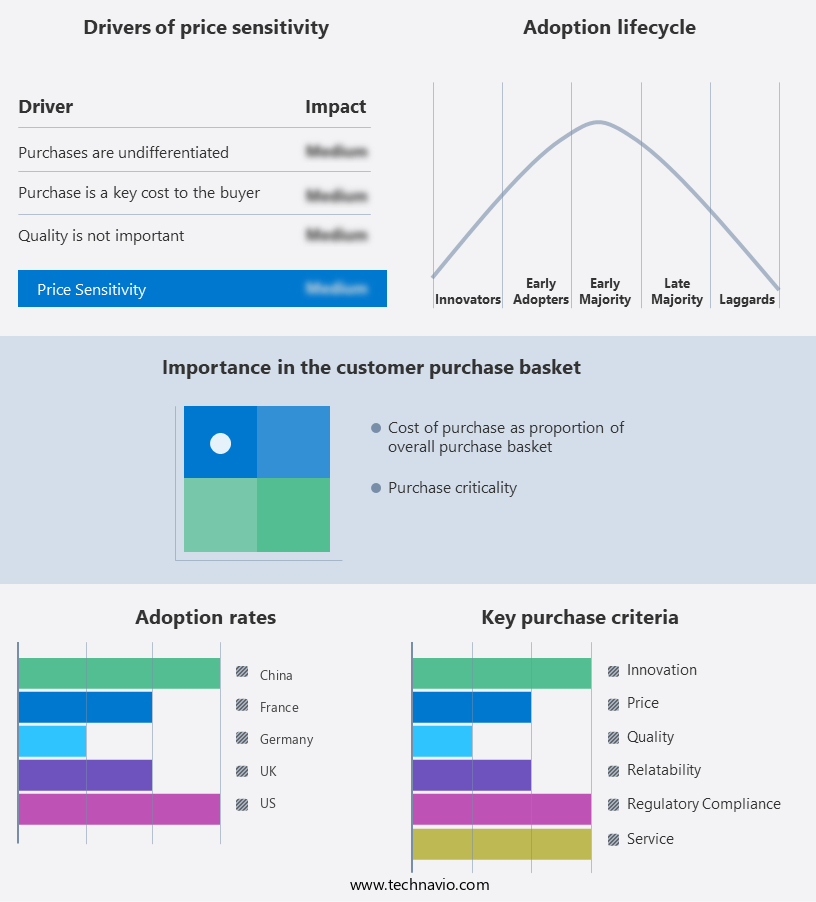
Customer Landscape of Legionella Testing Industry
Competitive Landscape & Market Insights
Companies are implementing various strategies, such as strategic alliances, legionella testing market forecast, partnerships, mergers and acquisitions, geographical expansion, and product/service launches, to enhance their presence in the industry.
AEMTEK Inc. - This company specializes in Legionella testing through its Legionella water test kit solution, ensuring compliance with health and safety regulations and protecting against potential bacterial contamination. The kit offers accurate and reliable results, contributing to maintaining optimal water quality and safeguarding public health.
The industry research and growth report includes detailed analyses of the competitive landscape of the market and information about key companies, including:
- AEMTEK Inc.
- Aerobiology Laboratory Associates Inc.
- Aquacert Ltd.
- Becton Dickinson and Co.
- Bio Rad Laboratories Inc.
- bioMerieux SA
- Eiken Chemical Co. Ltd.
- Element Materials Technology Group Ltd.
- EMSL Analytical Inc.
- Eurofins Scientific SE
- IDEXX LABORATORIES INC.
- Intertek Group Plc
- Pace Analytical Services LLC
- PDC Laboratories LLC
- Pro Lab Diagnostics Inc.
- Quidelortho Corp.
- SGS SA
- Thermo Fisher Scientific Inc.
- TUV NORD AG
- UL Solutions Inc.
Qualitative and quantitative analysis of companies has been conducted to help clients understand the wider business environment as well as the strengths and weaknesses of key industry players. Data is qualitatively analyzed to categorize companies as pure play, category-focused, industry-focused, and diversified; it is quantitatively analyzed to categorize companies as dominant, leading, strong, tentative, and weak.
Recent Development and News in Legionella Testing Market
- In January 2024, EcoWater Systems, a leading water treatment solutions provider, announced the launch of their new Legionella detection and control system, LEGIONGuard, at the ASHRAE Winter Conference (American Society of Heating, Refrigerating and Air-Conditioning Engineers). This innovative system combines advanced filtration technology with real-time Legionella monitoring and automated disinfection capabilities (EcoWater Systems press release).
- In March 2024, Veolia Water Technologies, a global leader in water and wastewater solutions, entered into a strategic partnership with BioLab, a leading provider of water treatment chemicals. This collaboration aimed to integrate BioLab's advanced Legionella testing and control solutions into Veolia's offerings, expanding their comprehensive water management services (Veolia Water Technologies press release).
- In May 2024, the European Union passed the new Water Framework Directive (WFD) update, which included stricter regulations on Legionella risk management in public water systems. This initiative is expected to increase the demand for Legionella testing and control services across Europe (European Parliament and Council of the European Union press release).
- In February 2025, 3M, a global science-based technology company, completed the acquisition of BioMonitor, a leading provider of rapid Legionella detection tests. This acquisition strengthened 3M's water safety portfolio and expanded their capabilities in the market (3M press release).
Dive into Technavio's robust research methodology, blending expert interviews, extensive data synthesis, and validated models for unparalleled Legionella Testing Market insights. See full methodology.
|
Market Scope |
|
|
Report Coverage |
Details |
|
Page number |
168 |
|
Base year |
2023 |
|
Historic period |
2018-2022 |
|
Forecast period |
2024-2028 |
|
Growth momentum & CAGR |
Accelerate at a CAGR of 8.09% |
|
Market growth 2024-2028 |
USD 167.3 million |
|
Market structure |
Fragmented |
|
YoY growth 2023-2024(%) |
7.33 |
|
Key countries |
US, UK, France, Germany, and China |
|
Competitive landscape |
Leading Companies, Market Positioning of Companies, Competitive Strategies, and Industry Risks |
Research Analyst Overview
- The market encompasses a diverse range of diagnostic techniques and water quality parameters to detect and mitigate the presence of legionella pneumophila serogroups in various environments. Molecular diagnostics, such as Polymerase Chain Reaction (PCR) legionella detection, have emerged as a popular choice due to their rapid results and high sensitivity. Threshold values for legionella spp. Detection have become increasingly important, with diagnostic microbiology laboratories utilizing advanced technologies like quantitative PCR methods to ensure accurate and timely identification. Legionella risk assessment plays a crucial role in infection control protocols and water treatment strategies. Direct fluorescent antibody (DFA) and immunofluorescence microscopy are traditional methods used for legionella detection, while ELISA legionella assays offer a more automated and standardized approach.
- Microbial contamination in cooling towers and healthcare facilities necessitates continuous environmental monitoring and rigorous disinfection protocols. Water quality parameters, such as temperature, pH, and nutrient levels, significantly impact the growth and proliferation of legionella bacteria. Biocide efficacy testing and membrane filtration techniques are essential components of water treatment strategies to minimize the risk of legionella contamination. Rapid legionella detection methods, like PCR, enable early intervention and effective infection control measures. Public health regulations mandate stringent legionella testing requirements for various industries, including healthcare, hospitality, and manufacturing. Serological testing methods and growth media requirements are essential for microbial identification and understanding the dynamics of legionella infection.
- The ongoing evolution of diagnostic technologies and regulatory frameworks underscores the importance of continuous monitoring and adaptation in the market.
What are the Key Data Covered in this Legionella Testing Market Research and Growth Report?
-
What is the expected growth of the Legionella Testing Market between 2024 and 2028?
-
USD 167.3 million, at a CAGR of 8.09%
-
-
What segmentation does the market report cover?
-
The report is segmented by Application (Clinical testing and Environmental testing), End-user (Hospitals and clinics and Diagnostic laboratories), and Geography (North America, Europe, Asia, and Rest of World (ROW))
-
-
Which regions are analyzed in the report?
-
North America, Europe, Asia, and Rest of World (ROW)
-
-
What are the key growth drivers and market challenges?
-
Rise in geriatric population, Lack of skilled professionals
-
-
Who are the major players in the Legionella Testing Market?
-
AEMTEK Inc., Aerobiology Laboratory Associates Inc., Aquacert Ltd., Becton Dickinson and Co., Bio Rad Laboratories Inc., bioMerieux SA, Eiken Chemical Co. Ltd., Element Materials Technology Group Ltd., EMSL Analytical Inc., Eurofins Scientific SE, IDEXX LABORATORIES INC., Intertek Group Plc, Pace Analytical Services LLC, PDC Laboratories LLC, Pro Lab Diagnostics Inc., Quidelortho Corp., SGS SA, Thermo Fisher Scientific Inc., TUV NORD AG, and UL Solutions Inc.
-
Market Research Insights
- The market encompasses a range of analytical services and methodologies used to ensure water hygiene management in building water systems. With increasing awareness of the health risks associated with Legionella bacteria, the demand for accurate and reliable testing solutions continues to grow. The market for Legionella testing is characterized by its focus on analytical sensitivity, data interpretation, and calibration verification. For instance, advanced testing methodologies can detect Legionella species at very low concentrations, enabling effective risk management protocols. Moreover, the importance of false positive and false negative rates in Legionella testing is paramount for infection control strategies.
- For example, a false negative result may lead to underestimated contamination levels, potentially endangering public health. Conversely, a false positive result could trigger unnecessary remediation efforts and associated costs. To mitigate these risks, laboratories employ rigorous quality control procedures, including method validation and equipment maintenance. In summary, the market is a dynamic and evolving landscape, driven by the need for precise microbial load assessment, contamination source identification, and diagnostic test accuracy in the realm of public health microbiology.
We can help! Our analysts can customize this legionella testing market research report to meet your requirements.
 RIA -
RIA - 
