


Luxury Perfume Market Analysis, Size, and Forecast 2026-2030: Europe (Germany, UK, and France), North America (US, Canada, and Mexico), APAC (China, Japan, and India), Middle East and Africa (Saudi Arabia, UAE, and South Africa), South America (Brazil, Argentina, and Colombia), and Rest of World (ROW)

Luxury Perfume Market Analysis, Size, and Forecast 2026-2030:
Europe (Germany, UK, and France), North America (US, Canada, and Mexico), APAC (China, Japan, and India), Middle East and Africa (Saudi Arabia, UAE, and South Africa), South America (Brazil, Argentina, and Colombia), and Rest of World (ROW)

Published: Dec 2025 282 Pages SKU: IRTNTR43395

Market Overview at a Glance

$6.78 B
Market Opportunity
7.1%
CAGR 2025 - 2030
37%
Europe Growth
$11.82 B
Offline segment 2024

Luxury Perfume Market Size 2026-2030

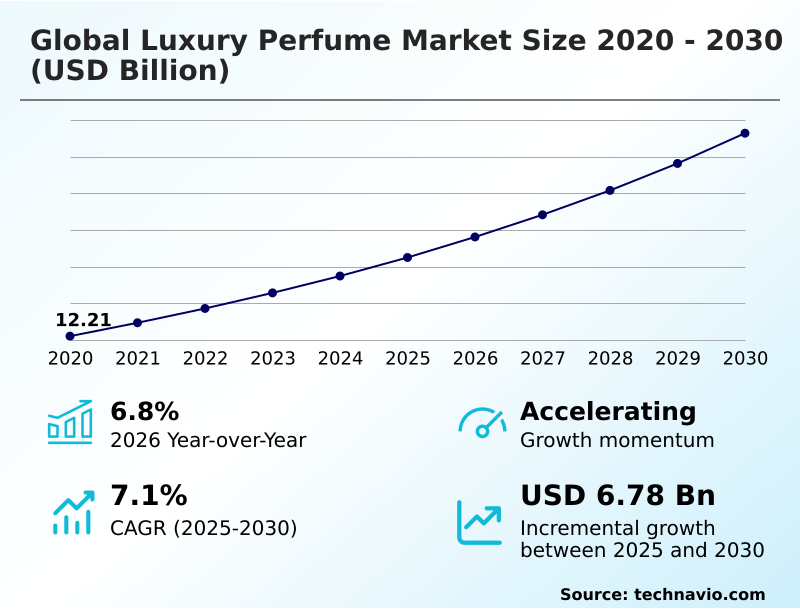
The luxury perfume market size is valued to increase by USD 6.78 billion, at a CAGR of 7.1% from 2025 to 2030. Increasing disposable income and consumer spending on luxury goods will drive the luxury perfume market.

Major Market Trends & Insights

  • Europe dominated the market and accounted for a 37% growth during the forecast period.
  • By Distribution Channel - Offline segment was valued at USD 11.82 billion in 2024
  • By End-user - Women segment accounted for the largest market revenue share in 2024

Market Size & Forecast

  • Market Opportunities: USD 11.07 billion
  • Market Future Opportunities: USD 6.78 billion
  • CAGR from 2025 to 2030 : 7.1%

Market Summary

  • The luxury perfume market is defined by a dynamic interplay of heritage and innovation, where consumer demand for exclusivity and personal expression fuels continuous evolution. Key drivers include a global rise in disposable income, making premium products more accessible, and a pronounced shift toward niche fragrances that offer unique olfactory experiences beyond mainstream offerings.
  • This trend is amplified by the power of digital marketing and social media, which shape preferences and create new avenues for brand discovery. Simultaneously, the market is navigating significant trends such as sustainability and personalization. Consumers increasingly favor brands that demonstrate ethical sourcing and offer customizable scents, pushing the industry toward greater transparency and innovation.
  • For instance, a luxury brand might implement a blockchain-based system to verify the provenance of its rare natural essences, addressing both the challenge of counterfeiting and the consumer demand for ethically produced ingredients. This not only protects brand integrity but also strengthens consumer trust and loyalty.
  • However, the industry grapples with challenges like complex international regulations on ingredients and the persistent threat of counterfeit goods, which demand constant vigilance and strategic adaptation from all market participants.

What will be the Size of the Luxury Perfume Market during the forecast period?
Get Key Insights on Market Forecast (PDF) Request Free Sample

How is the Luxury Perfume Market Segmented?

The luxury perfume industry research report provides comprehensive data (region-wise segment analysis), with forecasts and estimates in "USD million" for the period 2026-2030, as well as historical data from 2020-2024 for the following segments.

  • Distribution channel
    • Offline
    • Online
  • End-user
    • Women
    • Men
    • Unisex
  • Material
    • Synthetic
    • Natural
  • Geography
    • Europe
      • Germany
      • UK
      • France
    • North America
      • US
      • Canada
      • Mexico
    • APAC
      • China
      • Japan
      • India
    • Middle East and Africa
      • Saudi Arabia
      • UAE
      • South Africa
    • South America
      • Brazil
      • Argentina
      • Colombia
    • Rest of World (ROW)

By Distribution Channel Insights

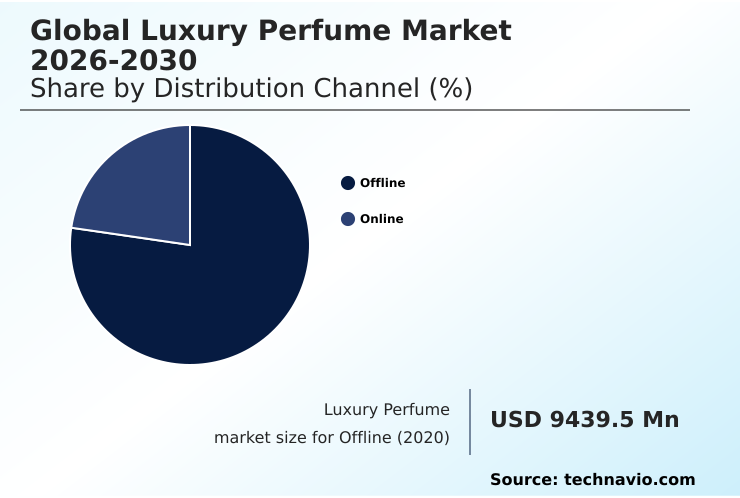
The offline segment is estimated to witness significant growth during the forecast period.

The offline segment is central to the global luxury perfume market, offering an essential tactile and immersive experience.

This channel, encompassing high-end department stores, exclusive brand boutiques, and specialized perfumeries, allows consumers to directly engage with complex formulations and appreciate their olfactive quality.

Expert guidance from sales personnel is critical, as they help customers navigate intricate scent profiles and understand the artisanal perfumery behind each product.

The physical retail environment reinforces brand prestige, with over 60% of consumers preferring to test fragrances in-store before a high-value purchase.

These settings provide unique bespoke fragrance services and showcase the craftsmanship of each item, creating a memorable journey that digital channels cannot fully replicate, particularly for exploring new scent compositions and olfactory journeys.
Request Free Sample

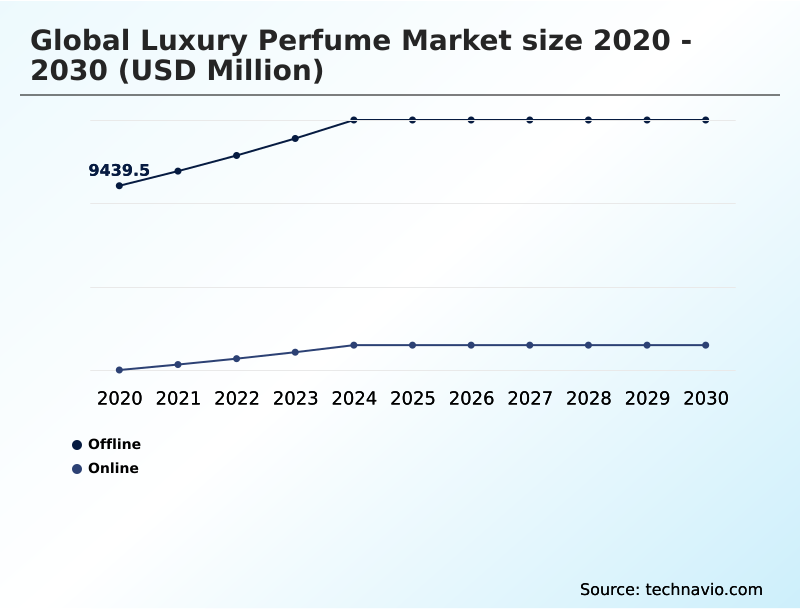
The Offline segment was valued at USD 11.82 billion in 2024 and showed a gradual increase during the forecast period.
Request Free Sample

Regional Analysis

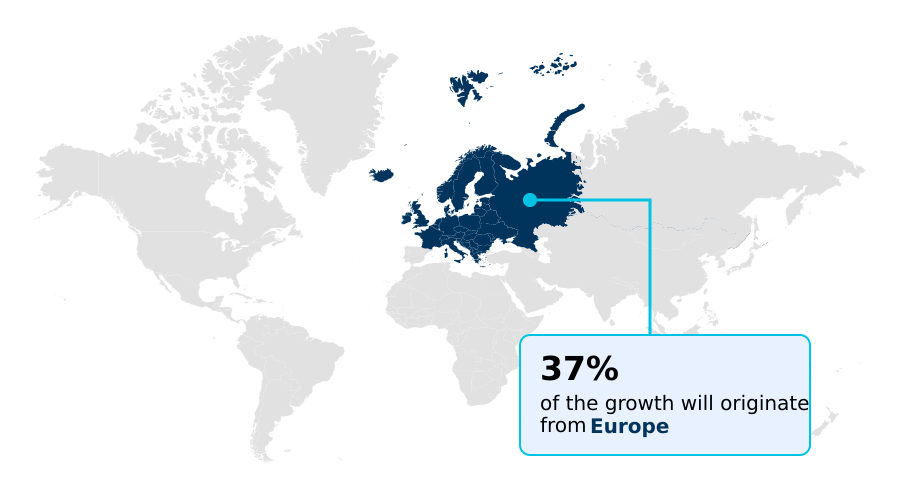
Europe is estimated to contribute 37% to the growth of the global market during the forecast period.Technavio’s analysts have elaborately explained the regional trends and drivers that shape the market during the forecast period.
See How Luxury Perfume Market Demand is Rising in Europe Request Free Sample

The geographic landscape of the luxury perfume market is characterized by mature, high-value regions and rapidly emerging growth centers.

Europe remains a dominant force, accounting for over 37% of the market, driven by its rich heritage in perfumery and a sophisticated consumer base in countries like France and Italy.

North America follows, with a strong appetite for both established luxury brands and innovative niche fragrances.

However, the most dynamic growth is occurring in APAC, which is projected to expand at a rate of 7.9%, fueled by rising disposable incomes and a growing middle class in China and India.

The Middle East and Africa also represent a vital market, where a deep cultural affinity for opulent scents and high per-capita spending contribute significantly.

This regional diversification requires brands to employ localized strategies, balancing global brand identity with regional scent preferences and marketing approaches.

Market Dynamics

Our researchers analyzed the data with 2025 as the base year, along with the key drivers, trends, and challenges. A holistic analysis of drivers will help companies refine their marketing strategies to gain a competitive advantage.

  • The future of the global luxury perfume market 2026-2030 is increasingly shaped by technological integration and evolving consumer ethics. The impact of AI on luxury perfume development is becoming profound, moving beyond data analysis to assist in the creation of novel scent profiles.
  • Simultaneously, the role of blockchain in fragrance authenticity is gaining traction as a tool against counterfeit luxury perfumes and brand protection. This technology supports the growing consumer demand for ethical sourcing of rare perfume ingredients. In parallel, sustainability in luxury perfume packaging is a key focus, with innovations in refillable luxury perfume bottles becoming a competitive differentiator.
  • The use of green chemistry in luxury fragrance is also expanding, addressing the advantages of synthetic vs. natural perfume ingredients debate by offering eco-conscious alternatives. Digital marketing strategies for niche perfumes are crucial for reaching discerning consumers, with platforms showcasing the bespoke perfume creation process for clients.
  • These strategies are particularly effective in niche fragrance marketing to younger demographics, who are also driving the growth of the unisex luxury perfume market. Firms that successfully navigate regulatory complexities in fragrance formulation and the impact of ingredient restrictions on classic perfumes, while leveraging trends like virtual try-on experiences for luxury scents, are poised for success.
  • Companies focusing on the influence of social media on fragrance trends report engagement rates that are more than double those of traditional campaigns, highlighting the importance of a sophisticated digital presence that showcases a brand's commitment to both innovation and the importance of olfactory signature in branding.
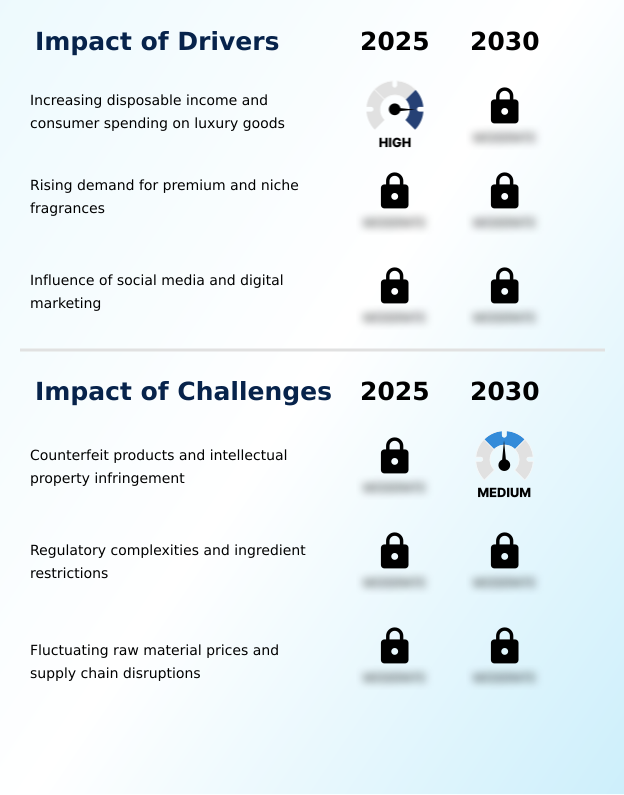
What are the key market drivers leading to the rise in the adoption of Luxury Perfume Industry?

  • The primary market driver is the global increase in disposable income and subsequent consumer spending on luxury goods, which enhances affordability and demand for premium products.

  • The growth of the global luxury perfume market 2026-2030 is primarily fueled by rising disposable incomes and a growing consumer appetite for the premium fragrance segment.
  • The desire for exclusivity has led to a surge in demand for niche fragrances and limited-edition collections, which now account for nearly 15% of total market sales.
  • Digital innovation is another significant driver, with social media and influencer marketing amplifying brand reach. Campaigns featuring bespoke consultations have been shown to increase customer loyalty by up to 30%.
  • The integration of blockchain for supply chain transparency and AI-driven platforms for personalized experiences is enhancing consumer trust and engagement, making luxury fragrances more accessible and desirable to a global audience.

What are the market trends shaping the Luxury Perfume Industry?

  • A defining market trend is the rising consumer demand for personalized and customized fragrances. This shift reflects a growing desire for unique scent experiences that align with individual identity.

  • Key trends reshaping the global luxury perfume market 2026-2030 are personalization and sustainability. Consumers are increasingly seeking gender-neutral scents and personalized scent recommendations, a demand that has spurred a 40% increase in the adoption of AI-driven platforms by niche brands. These platforms offer virtual fragrance consultations and digital scent descriptions to enhance the online shopping experience.
  • Furthermore, sustainability is now a core expectation, with a focus on cruelty-free practices and refillable bottle designs. The demand for ethically produced ingredients has led to a 25% rise in brands investing in transparent supply chains. This shift toward conscious consumption is redefining product development and marketing, with olfactory science playing a key role in creating eco-friendly yet sophisticated fragrances.

What challenges does the Luxury Perfume Industry face during its growth?

  • A key challenge impeding market growth is the proliferation of counterfeit products and persistent intellectual property infringement, which erodes brand value and consumer trust.

  • The global luxury perfume market 2026-2030 faces significant challenges that temper its growth trajectory. Intellectual property infringement and counterfeit products remain a primary concern, with estimates suggesting that brands lose up to 20% of their potential revenue in certain online marketplaces. This necessitates continuous investment in anti-counterfeiting technologies.
  • Additionally, navigating complex ingredient restrictions and regulatory changes is a constant hurdle, increasing reformulation costs by an average of 15% for established products. Volatile raw material prices and supply chain disruptions, particularly for rare natural essences, add another layer of complexity, impacting production schedules and profit margins across the industry.

Exclusive Technavio Analysis on Customer Landscape

The luxury perfume market forecasting report includes the adoption lifecycle of the market, covering from the innovator’s stage to the laggard’s stage. It focuses on adoption rates in different regions based on penetration. Furthermore, the luxury perfume market report also includes key purchase criteria and drivers of price sensitivity to help companies evaluate and develop their market growth analysis strategies.
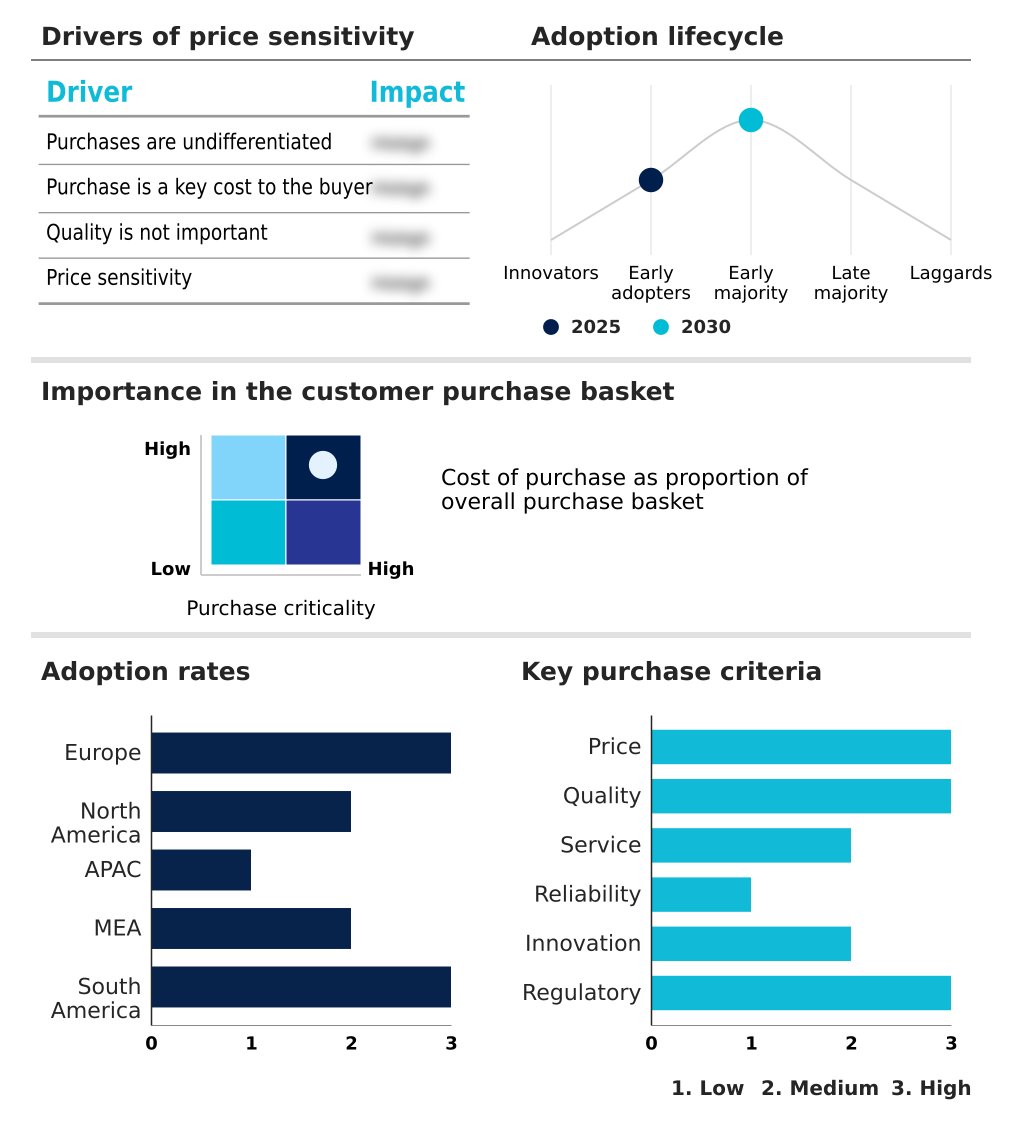
Customer Landscape of Luxury Perfume Industry

Competitive Landscape

Companies are implementing various strategies, such as strategic alliances, luxury perfume market forecast, partnerships, mergers and acquisitions, geographical expansion, and product/service launches, to enhance their presence in the industry.

Al Haramain perfumes - Offerings center on luxury perfumes, featuring exclusive collections with unique scent profiles and artisanal craftsmanship, including niche and bespoke fragrances for a discerning global clientele.

The industry research and growth report includes detailed analyses of the competitive landscape of the market and information about key companies, including:

  • Al Haramain perfumes
  • Clive Christian Ltd.
  • Escentric Molecules Ltd.
  • Ex Nihilo Paris
  • Fragrance Du Bois
  • House of Amouage
  • Imaginary Authors
  • Juliette has a gun
  • Krigler Inc.
  • Maison Crivelli
  • Mancera Parfums
  • Memo Paris
  • Miller Harris Ltd.
  • Nasomatto
  • Ormonde Jayne
  • Parfums de Marly
  • Roja Parfums Ltd.
  • Sarah baker perfumes
  • Stora Skuggan
  • Xerjoff S.P.A.

Qualitative and quantitative analysis of companies has been conducted to help clients understand the wider business environment as well as the strengths and weaknesses of key industry players. Data is qualitatively analyzed to categorize companies as pure play, category-focused, industry-focused, and diversified; it is quantitatively analyzed to categorize companies as dominant, leading, strong, tentative, and weak.

Recent Development and News in Luxury perfume market

  • In May 2025, a leading luxury goods conglomerate announced a strategic partnership with a material science startup to develop and implement 100% biodegradable packaging for its entire fragrance portfolio, responding to increased consumer demand for sustainability.
  • In March 2025, a prominent fragrance house launched an innovative AI-driven platform that uses biometric data to offer hyper-personalized scent recommendations, achieving a 40% higher user engagement rate than previous digital tools.
  • In January 2025, the European Chemicals Agency (ECHA) officially added two common synthetic musks to its list of restricted substances, forcing widespread reformulation of classic perfumes and increasing R&D costs for manufacturers by an estimated 15-20%.
  • In November 2024, a major beauty retailer acquired a fast-growing niche fragrance brand for approximately $150 million, a move aimed at capturing the millennial and Gen Z markets who increasingly favor unique, artisanal scents over mass-market products.

Dive into Technavio’s robust research methodology, blending expert interviews, extensive data synthesis, and validated models for unparalleled Luxury Perfume Market insights. See full methodology.

Market Scope
Page number 282
Base year 2025
Historic period 2020-2024
Forecast period 2026-2030
Growth momentum & CAGR Accelerate at a CAGR of 7.1%
Market growth 2026-2030 USD 6779.8 million
Market structure Fragmented
YoY growth 2025-2026(%) 6.8%
Key countries Germany, UK, France, The Netherlands, Italy, Spain, US, Canada, Mexico, China, Japan, India, South Korea, Australia, Indonesia, Saudi Arabia, UAE, South Africa, Israel, Turkey, Brazil, Argentina and Colombia
Competitive landscape Leading Companies, Market Positioning of Companies, Competitive Strategies, and Industry Risks

Request Free Sample

Research Analyst Overview

  • The luxury perfume market operates on a sophisticated balance of artisanal tradition and forward-thinking strategy, where a brand’s olfactive signature is its core asset. The creation of haute perfume relies on complex formulations and olfactive quality, often utilizing rare natural essences sourced globally.
  • Artisanal perfumery is gaining prominence as consumers seek unique olfactory experiences and bespoke fragrance services that stand apart from mass-produced scents. This trend is compelling major houses to innovate with new scent profiles and compositions. A key boardroom consideration is the pivot to sustainability, not just as a marketing claim but as an operational directive.
  • Brands adopting green chemistry and bio-based ingredients are not merely meeting regulatory pressures but are also aligning with consumer values, with some achieving a 20% improvement in customer retention after introducing refillable bottle designs.
  • The industry is also defined by a variety of product types, from eau de toilette to the more concentrated extrait de parfum, each requiring different considerations for fragrance longevity. The exploration of single-molecule perfumes and unique olfactory journeys, leveraging both traditional attars and modern olfactory science, demonstrates the sector's commitment to innovation.
  • Success hinges on a brand's ability to manage its portfolio of oriental perfumes, sustainable oud oil, and other specialized offerings while ensuring consistent quality through methods like enfleurage and distillation.

What are the Key Data Covered in this Luxury Perfume Market Research and Growth Report?

  • What is the expected growth of the Luxury Perfume Market between 2026 and 2030?

    • USD 6.78 billion, at a CAGR of 7.1%

  • What segmentation does the market report cover?

    • The report is segmented by Distribution Channel (Offline, and Online), End-user (Women, Men, and Unisex), Material (Synthetic, and Natural) and Geography (Europe, North America, APAC, Middle East and Africa, South America)

  • Which regions are analyzed in the report?

    • Europe, North America, APAC, Middle East and Africa and South America

  • What are the key growth drivers and market challenges?

    • Increasing disposable income and consumer spending on luxury goods, Counterfeit products and intellectual property infringement

  • Who are the major players in the Luxury Perfume Market?

    • Al Haramain perfumes, Clive Christian Ltd., Escentric Molecules Ltd., Ex Nihilo Paris, Fragrance Du Bois, House of Amouage, Imaginary Authors, Juliette has a gun, Krigler Inc., Maison Crivelli, Mancera Parfums, Memo Paris, Miller Harris Ltd., Nasomatto, Ormonde Jayne, Parfums de Marly, Roja Parfums Ltd., Sarah baker perfumes, Stora Skuggan and Xerjoff S.P.A.

Market Research Insights

  • The luxury perfume market is shaped by a confluence of evolving consumer values and technological advancements. The demand for ethically produced ingredients and transparent supply chains is a significant factor, with studies showing that approximately 65% of luxury consumers are willing to pay more for sustainable products.
  • This has prompted brands to adopt cruelty-free practices and invest in sustainable ingredient sourcing. Concurrently, the rise of digital platforms has revolutionized customer engagement. Brands leveraging AI for personalized scent recommendations report up to a 30% increase in online conversion rates compared to static browsing experiences.
  • These AI-driven platforms, along with virtual fragrance consultations, are becoming standard tools for reaching a global audience. Furthermore, the threat of intellectual property infringement remains a persistent issue, driving investment in anti-counterfeiting technologies to protect brand equity and ensure product authenticity, which is a key consideration for 80% of buyers in the premium fragrance segment.

We can help! Our analysts can customize this luxury perfume market research report to meet your requirements.

Get in touch

1. Executive Summary

1.1 Market overview

Executive Summary - Chart on Market Overview
Executive Summary - Data Table on Market Overview
Executive Summary - Chart on Global Market Characteristics
Executive Summary - Chart on Market by Geography
Executive Summary - Chart on Market Segmentation by Distribution Channel
Executive Summary - Chart on Market Segmentation by End-user
Executive Summary - Chart on Market Segmentation by Material
Executive Summary - Chart on Incremental Growth
Executive Summary - Data Table on Incremental Growth
Executive Summary - Chart on Company Market Positioning

2. Technavio Analysis

2.1 Analysis of price sensitivity, lifecycle, customer purchase basket, adoption rates, and purchase criteria

2.2 Criticality of inputs and Factors of differentiation

Chart on Overview on criticality of inputs and factors of differentiation

2.3 Factors of disruption

Chart on Overview on factors of disruption

2.4 Impact of drivers and challenges

Chart on Impact of drivers and challenges in 2025 and 2030

3. Market Landscape

3.1 Market ecosystem

Chart on Parent Market
Data Table on - Parent Market

3.2 Market characteristics

Chart on Market characteristics analysis

3.3 Value chain analysis

Chart on Value chain analysis

4. Market Sizing

4.1 Market definition

Data Table on Offerings of companies included in the market definition

4.2 Market segment analysis

Market segments

4.3 Market size 2025

4.4 Market outlook: Forecast for 2025-2030

Chart on Global - Market size and forecast 2025-2030 ($ million)
Data Table on Global - Market size and forecast 2025-2030 ($ million)
Chart on Global Market: Year-over-year growth 2025-2030 (%)
Data Table on Global Market: Year-over-year growth 2025-2030 (%)

5. Historic Market Size

5.1 Global Luxury Perfume Market 2020 - 2024

Historic Market Size - Data Table on Global Luxury Perfume Market 2020 - 2024 ($ million)

5.2 Distribution Channel segment analysis 2020 - 2024

Historic Market Size - Distribution Channel Segment 2020 - 2024 ($ million)

5.3 End-user segment analysis 2020 - 2024

Historic Market Size - End-user Segment 2020 - 2024 ($ million)

5.4 Material segment analysis 2020 - 2024

Historic Market Size - Material Segment 2020 - 2024 ($ million)

5.5 Geography segment analysis 2020 - 2024

Historic Market Size - Geography Segment 2020 - 2024 ($ million)

5.6 Country segment analysis 2020 - 2024

Historic Market Size - Country Segment 2020 - 2024 ($ million)

6. Qualitative Analysis

6.1 Impact of AI on global luxury perfume market

7. Five Forces Analysis

7.1 Five forces summary

Five forces analysis - Comparison between 2025 and 2030

7.2 Bargaining power of buyers

Bargaining power of buyers - Impact of key factors 2025 and 2030

7.3 Bargaining power of suppliers

Bargaining power of suppliers - Impact of key factors in 2025 and 2030

7.4 Threat of new entrants

Threat of new entrants - Impact of key factors in 2025 and 2030

7.5 Threat of substitutes

Threat of substitutes - Impact of key factors in 2025 and 2030

7.6 Threat of rivalry

Threat of rivalry - Impact of key factors in 2025 and 2030

7.7 Market condition

Chart on Market condition - Five forces 2025 and 2030

8. Market Segmentation by Distribution Channel

8.1 Market segments

Chart on Distribution Channel - Market share 2025-2030 (%)
Data Table on Distribution Channel - Market share 2025-2030 (%)

8.2 Comparison by Distribution Channel

Chart on Comparison by Distribution Channel
Data Table on Comparison by Distribution Channel

8.3 Offline - Market size and forecast 2025-2030

Chart on Offline - Market size and forecast 2025-2030 ($ million)
Data Table on Offline - Market size and forecast 2025-2030 ($ million)
Chart on Offline - Year-over-year growth 2025-2030 (%)
Data Table on Offline - Year-over-year growth 2025-2030 (%)

8.4 Online - Market size and forecast 2025-2030

Chart on Online - Market size and forecast 2025-2030 ($ million)
Data Table on Online - Market size and forecast 2025-2030 ($ million)
Chart on Online - Year-over-year growth 2025-2030 (%)
Data Table on Online - Year-over-year growth 2025-2030 (%)

8.5 Market opportunity by Distribution Channel

Market opportunity by Distribution Channel ($ million)
Data Table on Market opportunity by Distribution Channel ($ million)

9. Market Segmentation by End-user

9.1 Market segments

Chart on End-user - Market share 2025-2030 (%)
Data Table on End-user - Market share 2025-2030 (%)

9.2 Comparison by End-user

Chart on Comparison by End-user
Data Table on Comparison by End-user

9.3 Women - Market size and forecast 2025-2030

Chart on Women - Market size and forecast 2025-2030 ($ million)
Data Table on Women - Market size and forecast 2025-2030 ($ million)
Chart on Women - Year-over-year growth 2025-2030 (%)
Data Table on Women - Year-over-year growth 2025-2030 (%)

9.4 Men - Market size and forecast 2025-2030

Chart on Men - Market size and forecast 2025-2030 ($ million)
Data Table on Men - Market size and forecast 2025-2030 ($ million)
Chart on Men - Year-over-year growth 2025-2030 (%)
Data Table on Men - Year-over-year growth 2025-2030 (%)

9.5 Unisex - Market size and forecast 2025-2030

Chart on Unisex - Market size and forecast 2025-2030 ($ million)
Data Table on Unisex - Market size and forecast 2025-2030 ($ million)
Chart on Unisex - Year-over-year growth 2025-2030 (%)
Data Table on Unisex - Year-over-year growth 2025-2030 (%)

9.6 Market opportunity by End-user

Market opportunity by End-user ($ million)
Data Table on Market opportunity by End-user ($ million)

10. Market Segmentation by Material

10.1 Market segments

Chart on Material - Market share 2025-2030 (%)
Data Table on Material - Market share 2025-2030 (%)

10.2 Comparison by Material

Chart on Comparison by Material
Data Table on Comparison by Material

10.3 Synthetic - Market size and forecast 2025-2030

Chart on Synthetic - Market size and forecast 2025-2030 ($ million)
Data Table on Synthetic - Market size and forecast 2025-2030 ($ million)
Chart on Synthetic - Year-over-year growth 2025-2030 (%)
Data Table on Synthetic - Year-over-year growth 2025-2030 (%)

10.4 Natural - Market size and forecast 2025-2030

Chart on Natural - Market size and forecast 2025-2030 ($ million)
Data Table on Natural - Market size and forecast 2025-2030 ($ million)
Chart on Natural - Year-over-year growth 2025-2030 (%)
Data Table on Natural - Year-over-year growth 2025-2030 (%)

10.5 Market opportunity by Material

Market opportunity by Material ($ million)
Data Table on Market opportunity by Material ($ million)

11. Customer Landscape

11.1 Customer landscape overview

Analysis of price sensitivity, lifecycle, customer purchase basket, adoption rates, and purchase criteria

12. Geographic Landscape

12.1 Geographic segmentation

Chart on Market share by geography 2025-2030 (%)
Data Table on Market share by geography 2025-2030 (%)

12.2 Geographic comparison

Chart on Geographic comparison
Data Table on Geographic comparison

12.3 Europe - Market size and forecast 2025-2030

Chart on Europe - Market size and forecast 2025-2030 ($ million)
Data Table on Europe - Market size and forecast 2025-2030 ($ million)
Chart on Europe - Year-over-year growth 2025-2030 (%)
Data Table on Europe - Year-over-year growth 2025-2030 (%)
Chart on Regional Comparison - Europe
Data Table on Regional Comparison - Europe

12.3.1 Germany - Market size and forecast 2025-2030

Chart on Germany - Market size and forecast 2025-2030 ($ million)
Data Table on Germany - Market size and forecast 2025-2030 ($ million)
Chart on Germany - Year-over-year growth 2025-2030 (%)
Data Table on Germany - Year-over-year growth 2025-2030 (%)

12.3.2 UK - Market size and forecast 2025-2030

Chart on UK - Market size and forecast 2025-2030 ($ million)
Data Table on UK - Market size and forecast 2025-2030 ($ million)
Chart on UK - Year-over-year growth 2025-2030 (%)
Data Table on UK - Year-over-year growth 2025-2030 (%)

12.3.3 France - Market size and forecast 2025-2030

Chart on France - Market size and forecast 2025-2030 ($ million)
Data Table on France - Market size and forecast 2025-2030 ($ million)
Chart on France - Year-over-year growth 2025-2030 (%)
Data Table on France - Year-over-year growth 2025-2030 (%)

12.3.4 The Netherlands - Market size and forecast 2025-2030

Chart on The Netherlands - Market size and forecast 2025-2030 ($ million)
Data Table on The Netherlands - Market size and forecast 2025-2030 ($ million)
Chart on The Netherlands - Year-over-year growth 2025-2030 (%)
Data Table on The Netherlands - Year-over-year growth 2025-2030 (%)

12.3.5 Italy - Market size and forecast 2025-2030

Chart on Italy - Market size and forecast 2025-2030 ($ million)
Data Table on Italy - Market size and forecast 2025-2030 ($ million)
Chart on Italy - Year-over-year growth 2025-2030 (%)
Data Table on Italy - Year-over-year growth 2025-2030 (%)

12.3.6 Spain - Market size and forecast 2025-2030

Chart on Spain - Market size and forecast 2025-2030 ($ million)
Data Table on Spain - Market size and forecast 2025-2030 ($ million)
Chart on Spain - Year-over-year growth 2025-2030 (%)
Data Table on Spain - Year-over-year growth 2025-2030 (%)

12.4 North America - Market size and forecast 2025-2030

Chart on North America - Market size and forecast 2025-2030 ($ million)
Data Table on North America - Market size and forecast 2025-2030 ($ million)
Chart on North America - Year-over-year growth 2025-2030 (%)
Data Table on North America - Year-over-year growth 2025-2030 (%)
Chart on Regional Comparison - North America
Data Table on Regional Comparison - North America

12.4.1 US - Market size and forecast 2025-2030

Chart on US - Market size and forecast 2025-2030 ($ million)
Data Table on US - Market size and forecast 2025-2030 ($ million)
Chart on US - Year-over-year growth 2025-2030 (%)
Data Table on US - Year-over-year growth 2025-2030 (%)

12.4.2 Canada - Market size and forecast 2025-2030

Chart on Canada - Market size and forecast 2025-2030 ($ million)
Data Table on Canada - Market size and forecast 2025-2030 ($ million)
Chart on Canada - Year-over-year growth 2025-2030 (%)
Data Table on Canada - Year-over-year growth 2025-2030 (%)

12.4.3 Mexico - Market size and forecast 2025-2030

Chart on Mexico - Market size and forecast 2025-2030 ($ million)
Data Table on Mexico - Market size and forecast 2025-2030 ($ million)
Chart on Mexico - Year-over-year growth 2025-2030 (%)
Data Table on Mexico - Year-over-year growth 2025-2030 (%)

12.5 APAC - Market size and forecast 2025-2030

Chart on APAC - Market size and forecast 2025-2030 ($ million)
Data Table on APAC - Market size and forecast 2025-2030 ($ million)
Chart on APAC - Year-over-year growth 2025-2030 (%)
Data Table on APAC - Year-over-year growth 2025-2030 (%)
Chart on Regional Comparison - APAC
Data Table on Regional Comparison - APAC

12.5.1 China - Market size and forecast 2025-2030

Chart on China - Market size and forecast 2025-2030 ($ million)
Data Table on China - Market size and forecast 2025-2030 ($ million)
Chart on China - Year-over-year growth 2025-2030 (%)
Data Table on China - Year-over-year growth 2025-2030 (%)

12.5.2 Japan - Market size and forecast 2025-2030

Chart on Japan - Market size and forecast 2025-2030 ($ million)
Data Table on Japan - Market size and forecast 2025-2030 ($ million)
Chart on Japan - Year-over-year growth 2025-2030 (%)
Data Table on Japan - Year-over-year growth 2025-2030 (%)

12.5.3 India - Market size and forecast 2025-2030

Chart on India - Market size and forecast 2025-2030 ($ million)
Data Table on India - Market size and forecast 2025-2030 ($ million)
Chart on India - Year-over-year growth 2025-2030 (%)
Data Table on India - Year-over-year growth 2025-2030 (%)

12.5.4 South Korea - Market size and forecast 2025-2030

Chart on South Korea - Market size and forecast 2025-2030 ($ million)
Data Table on South Korea - Market size and forecast 2025-2030 ($ million)
Chart on South Korea - Year-over-year growth 2025-2030 (%)
Data Table on South Korea - Year-over-year growth 2025-2030 (%)

12.5.5 Australia - Market size and forecast 2025-2030

Chart on Australia - Market size and forecast 2025-2030 ($ million)
Data Table on Australia - Market size and forecast 2025-2030 ($ million)
Chart on Australia - Year-over-year growth 2025-2030 (%)
Data Table on Australia - Year-over-year growth 2025-2030 (%)

12.5.6 Indonesia - Market size and forecast 2025-2030

Chart on Indonesia - Market size and forecast 2025-2030 ($ million)
Data Table on Indonesia - Market size and forecast 2025-2030 ($ million)
Chart on Indonesia - Year-over-year growth 2025-2030 (%)
Data Table on Indonesia - Year-over-year growth 2025-2030 (%)

12.6 Middle East and Africa - Market size and forecast 2025-2030

Chart on Middle East and Africa - Market size and forecast 2025-2030 ($ million)
Data Table on Middle East and Africa - Market size and forecast 2025-2030 ($ million)
Chart on Middle East and Africa - Year-over-year growth 2025-2030 (%)
Data Table on Middle East and Africa - Year-over-year growth 2025-2030 (%)
Chart on Regional Comparison - Middle East and Africa
Data Table on Regional Comparison - Middle East and Africa

12.6.1 Saudi Arabia - Market size and forecast 2025-2030

Chart on Saudi Arabia - Market size and forecast 2025-2030 ($ million)
Data Table on Saudi Arabia - Market size and forecast 2025-2030 ($ million)
Chart on Saudi Arabia - Year-over-year growth 2025-2030 (%)
Data Table on Saudi Arabia - Year-over-year growth 2025-2030 (%)

12.6.2 UAE - Market size and forecast 2025-2030

Chart on UAE - Market size and forecast 2025-2030 ($ million)
Data Table on UAE - Market size and forecast 2025-2030 ($ million)
Chart on UAE - Year-over-year growth 2025-2030 (%)
Data Table on UAE - Year-over-year growth 2025-2030 (%)

12.6.3 South Africa - Market size and forecast 2025-2030

Chart on South Africa - Market size and forecast 2025-2030 ($ million)
Data Table on South Africa - Market size and forecast 2025-2030 ($ million)
Chart on South Africa - Year-over-year growth 2025-2030 (%)
Data Table on South Africa - Year-over-year growth 2025-2030 (%)

12.6.4 Israel - Market size and forecast 2025-2030

Chart on Israel - Market size and forecast 2025-2030 ($ million)
Data Table on Israel - Market size and forecast 2025-2030 ($ million)
Chart on Israel - Year-over-year growth 2025-2030 (%)
Data Table on Israel - Year-over-year growth 2025-2030 (%)

12.6.5 Turkey - Market size and forecast 2025-2030

Chart on Turkey - Market size and forecast 2025-2030 ($ million)
Data Table on Turkey - Market size and forecast 2025-2030 ($ million)
Chart on Turkey - Year-over-year growth 2025-2030 (%)
Data Table on Turkey - Year-over-year growth 2025-2030 (%)

12.7 South America - Market size and forecast 2025-2030

Chart on South America - Market size and forecast 2025-2030 ($ million)
Data Table on South America - Market size and forecast 2025-2030 ($ million)
Chart on South America - Year-over-year growth 2025-2030 (%)
Data Table on South America - Year-over-year growth 2025-2030 (%)
Chart on Regional Comparison - South America
Data Table on Regional Comparison - South America

12.7.1 Brazil - Market size and forecast 2025-2030

Chart on Brazil - Market size and forecast 2025-2030 ($ million)
Data Table on Brazil - Market size and forecast 2025-2030 ($ million)
Chart on Brazil - Year-over-year growth 2025-2030 (%)
Data Table on Brazil - Year-over-year growth 2025-2030 (%)

12.7.2 Argentina - Market size and forecast 2025-2030

Chart on Argentina - Market size and forecast 2025-2030 ($ million)
Data Table on Argentina - Market size and forecast 2025-2030 ($ million)
Chart on Argentina - Year-over-year growth 2025-2030 (%)
Data Table on Argentina - Year-over-year growth 2025-2030 (%)

12.7.3 Colombia - Market size and forecast 2025-2030

Chart on Colombia - Market size and forecast 2025-2030 ($ million)
Data Table on Colombia - Market size and forecast 2025-2030 ($ million)
Chart on Colombia - Year-over-year growth 2025-2030 (%)
Data Table on Colombia - Year-over-year growth 2025-2030 (%)

12.8 Market opportunity by geography

Market opportunity by geography ($ million)
Data Tables on Market opportunity by geography ($ million)

13. Drivers, Challenges, and Opportunity

13.1 Market drivers

Increasing disposable income and consumer spending on luxury goods
Rising demand for premium and niche fragrances
Influence of social media and digital marketing

13.2 Market challenges

Counterfeit products and intellectual property infringement
Regulatory complexities and ingredient restrictions
Fluctuating raw material prices and supply chain disruptions

13.3 Impact of drivers and challenges

Impact of drivers and challenges in 2025 and 2030

13.4 Market opportunities

Personalization and customization of fragrances
Sustainability and ethical sourcing
Rise of AI and digital innovation in fragrance development and marketing

14. Competitive Landscape

14.1 Overview

14.2

Overview on criticality of inputs and factors of differentiation

14.3 Landscape disruption

Overview on factors of disruption

14.4 Industry risks

Impact of key risks on business

15. Competitive Analysis

15.1 Companies profiled

Companies covered

15.2 Company ranking index

15.3 Market positioning of companies

Matrix on companies position and classification

15.4 Al Haramain perfumes

Al Haramain perfumes - Overview
Al Haramain perfumes - Product / Service
Al Haramain perfumes - Key offerings
SWOT

15.5 Clive Christian Ltd.

Clive Christian Ltd. - Overview
Clive Christian Ltd. - Product / Service
Clive Christian Ltd. - Key offerings
SWOT

15.6 Escentric Molecules Ltd.

Escentric Molecules Ltd. - Overview
Escentric Molecules Ltd. - Product / Service
Escentric Molecules Ltd. - Key offerings
SWOT

15.7 Ex Nihilo Paris

Ex Nihilo Paris - Overview
Ex Nihilo Paris - Product / Service
Ex Nihilo Paris - Key offerings
SWOT

15.8 Fragrance Du Bois

Fragrance Du Bois - Overview
Fragrance Du Bois - Product / Service
Fragrance Du Bois - Key offerings
SWOT

15.9 House of Amouage

House of Amouage - Overview
House of Amouage - Product / Service
House of Amouage - Key offerings
SWOT

15.10 Juliette has a gun

Juliette has a gun - Overview
Juliette has a gun - Product / Service
Juliette has a gun - Key offerings
SWOT

15.11 Krigler Inc.

Krigler Inc. - Overview
Krigler Inc. - Product / Service
Krigler Inc. - Key offerings
SWOT

15.12 Maison Crivelli

Maison Crivelli - Overview
Maison Crivelli - Product / Service
Maison Crivelli - Key offerings
SWOT

15.13 Mancera Parfums

Mancera Parfums - Overview
Mancera Parfums - Product / Service
Mancera Parfums - Key offerings
SWOT

15.14 Memo Paris

Memo Paris - Overview
Memo Paris - Product / Service
Memo Paris - Key offerings
SWOT

15.15 Miller Harris Ltd.

Miller Harris Ltd. - Overview
Miller Harris Ltd. - Product / Service
Miller Harris Ltd. - Key offerings
SWOT

15.16 Parfums de Marly

Parfums de Marly - Overview
Parfums de Marly - Product / Service
Parfums de Marly - Key offerings
SWOT

15.17 Roja Parfums Ltd.

Roja Parfums Ltd. - Overview
Roja Parfums Ltd. - Product / Service
Roja Parfums Ltd. - Key offerings
SWOT

15.18 Xerjoff S.P.A.

Xerjoff S.P.A. - Overview
Xerjoff S.P.A. - Product / Service
Xerjoff S.P.A. - Key offerings
SWOT

16. Appendix

16.1 Scope of the report

Market definition
Objectives
Notes and caveats

16.2 Inclusions and exclusions checklist

Inclusions checklist
Exclusions checklist

16.3 Currency conversion rates for US$

16.4 Research methodology

16.5 Data procurement

Information sources

16.6 Data validation

16.7 Validation techniques employed for market sizing

16.8 Data synthesis

16.9 360 degree market analysis

16.10 List of abbreviations

Research Methodology

Technavio presents a detailed picture of the market by way of study, synthesis, and summation of data from multiple sources. The analysts have presented the various facets of the market with a particular focus on identifying the key industry influencers. The data thus presented is comprehensive, reliable, and the result of extensive research, both primary and secondary.

INFORMATION SOURCES

Primary sources

  • Manufacturers and suppliers
  • Channel partners
  • Industry experts
  • Strategic decision makers

Secondary sources

  • Industry journals and periodicals
  • Government data
  • Financial reports of key industry players
  • Historical data
  • Press releases

DATA ANALYSIS

Data Synthesis

  • Collation of data
  • Estimation of key figures
  • Analysis of derived insights

Data Validation

  • Triangulation with data models
  • Reference against proprietary databases
  • Corroboration with industry experts

REPORT WRITING

Qualitative

  • Market drivers
  • Market challenges
  • Market trends
  • Five forces analysis

Quantitative

  • Market size and forecast
  • Market segmentation
  • Geographical insights
  • Competitive landscape

Interested in this report?

Get your sample now to see our research methodology and insights!

Download Now

Frequently Asked Questions

Luxury Perfume market growth will increase by USD 6779.8 million during 2026-2030 .

The Luxury Perfume market is expected to grow at a CAGR of 7.1% during 2026-2030 .

Luxury Perfume market is segmented by Distribution channel (Offline, Online) End-user (Women, Men, Unisex) Material (Synthetic, Natural)

Al Haramain perfumes, Clive Christian Ltd., Escentric Molecules Ltd., Ex Nihilo Paris, Fragrance Du Bois, House of Amouage, Imaginary Authors, Juliette has a gun, Krigler Inc., Maison Crivelli, Mancera Parfums, Memo Paris, Miller Harris Ltd., Nasomatto, Ormonde Jayne, Parfums de Marly, Roja Parfums Ltd., Sarah baker perfumes, Stora Skuggan, Xerjoff S.P.A. are a few of the key vendors in the Luxury Perfume market.

Europe will register the highest growth rate of 37% among the other regions. Therefore, the Luxury Perfume market in Europe is expected to garner significant business opportunities for the vendors during the forecast period.

Germany, UK, France, The Netherlands, Italy, Spain, US, Canada, Mexico, China, Japan, India, South Korea, Australia, Indonesia, Saudi Arabia, UAE, South Africa, Israel, Turkey, Brazil, Argentina, Colombia

  • Increasing disposable income and consumer spending on luxury goods is the driving factor this market.

The Luxury Perfume market vendors should focus on grabbing business opportunities from the Distribution channel segment as it accounted for the largest market share in the base year.
