
Marketing Cloud Platform Market Analysis, Size, and Forecast 2026-2030: North America (US, Canada, and Mexico), Europe (UK, Germany, and France), APAC (China, Japan, and India), South America (Brazil, Argentina, and Colombia), Middle East and Africa (Saudi Arabia, UAE, and South Africa), and Rest of World (ROW)

Marketing Cloud Platform Market Analysis, Size, and Forecast 2026-2030:
North America (US, Canada, and Mexico), Europe (UK, Germany, and France), APAC (China, Japan, and India), South America (Brazil, Argentina, and Colombia), Middle East and Africa (Saudi Arabia, UAE, and South Africa), and Rest of World (ROW)

Published: Nov 2026 308 Pages SKU: IRTNTR81677

Market Overview at a Glance

$8.65 B
Market Opportunity
9%
CAGR 2025 - 2030
40.6%
North America Growth
$12.26 B
Software segment 2024

Marketing Cloud Platform Market Size 2026-2030

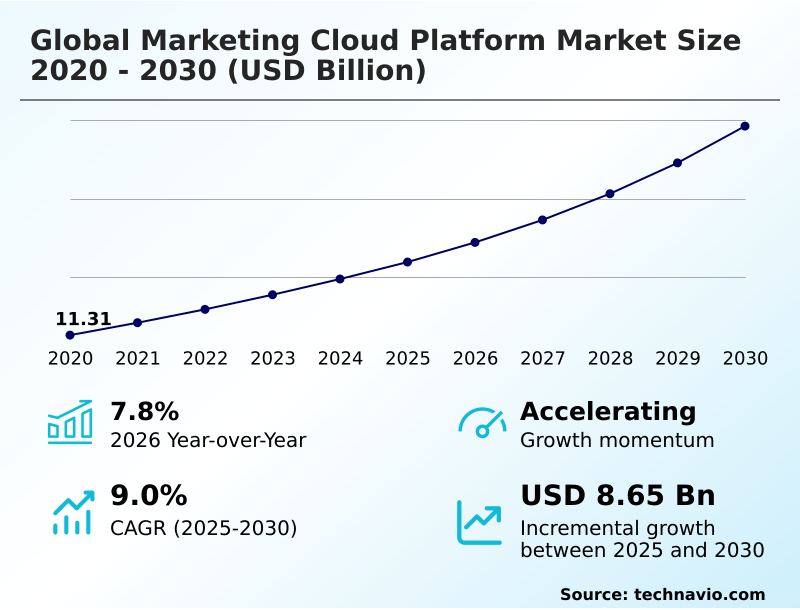
The marketing cloud platform market size is valued to increase by USD 8.65 billion, at a CAGR of 9% from 2025 to 2030. Integration of generative AI and autonomous orchestration will drive the marketing cloud platform market.

Major Market Trends & Insights

  • North America dominated the market and accounted for a 40.6% growth during the forecast period.
  • By Component - Software segment was valued at USD 12.26 billion in 2024
  • By Deployment - Public cloud segment accounted for the largest market revenue share in 2024

Market Size & Forecast

  • Market Opportunities: USD 13.30 billion
  • Market Future Opportunities: USD 8.65 billion
  • CAGR from 2025 to 2030 : 9%

Market Summary

  • The Marketing Cloud Platform operates as a critical infrastructure layer enabling enterprises to centralize fragmented consumer data into cohesive, actionable intelligence. Organizations increasingly utilize these platforms to synchronize complex supply chain inventory levels with real-time digital advertising, ensuring promotional campaigns only feature in-stock products.
  • This operational alignment yields significant advantages; enterprises connecting inventory data with marketing automation achieve a 28% improvement in marketing return on investment compared to disconnected systems. The integration of generative artificial intelligence acts as a primary catalyst for this adoption, automating the creation of targeted assets and drastically reducing manual workflow bottlenecks.
  • Conversely, the escalating fragmentation of jurisdictional privacy regulations acts as a major structural constraint. Businesses must deploy regionalized data architectures to ensure localized compliance, which inherently fragments global campaign visibility and increases infrastructure overhead. As data deprecation forces reliance on first-party collection, the capacity to balance robust identity resolution with strict regulatory adherence dictates successful enterprise deployment.

What will be the Size of the Marketing Cloud Platform Market during the forecast period?
Get Key Insights on Market Forecast (PDF) Get Free Sample

How is the Marketing Cloud Platform Market Segmented?

The marketing cloud platform industry research report provides comprehensive data (region-wise segment analysis), with forecasts and estimates in "USD million" for the period 2026-2030, as well as historical data from 2020-2024 for the following segments.

  • Component
    • Software
    • Services
  • Deployment
    • Public cloud
    • Hybrid cloud
    • Private cloud
  • End-user
    • Retail and e-commerce
    • BFSI
    • IT and telecom
    • Healthcare and life sciences
    • Others
  • Geography
    • North America
      • US
      • Canada
      • Mexico
    • Europe
      • UK
      • Germany
      • France
      • Italy
      • Spain
      • The Netherlands
    • APAC
      • China
      • Japan
      • India
      • South Korea
      • Australia
      • Singapore
    • South America
      • Brazil
      • Argentina
      • Colombia
    • Middle East and Africa
      • Saudi Arabia
      • UAE
      • South Africa
      • Israel
      • Turkey

By Component Insights

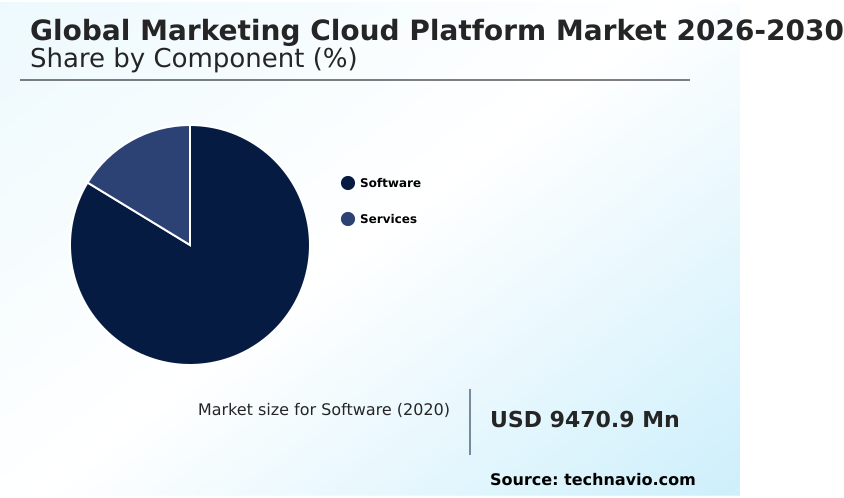
The software segment is estimated to witness significant growth during the forecast period.

Software forms the foundational engine of the Marketing Cloud Platform, coordinating omnichannel campaign orchestration and dynamic profile unification across disparate digital touchpoints.

Modern digital transformation infrastructure demands advanced automated workflow engines that shift operations from rigid manual design to autonomous marketing agents. This transition enables organizations to leverage real-time stream processing and hyper-personalization engines to instantly align messaging with consumer behavior.

By integrating cross-channel customer engagement models and intelligent customer orchestration, enterprises can optimize audience segmentation models without increasing overhead.

Operational implementation of these technologies demonstrates substantial efficiency gains; for instance, campaign execution latency is reduced by 35% compared to legacy architectures.

Furthermore, dynamic content delivery efficiency improved by 25%, establishing software as the critical component for continuous customer lifecycle management and robust privacy compliance auditing.
Get Free Sample

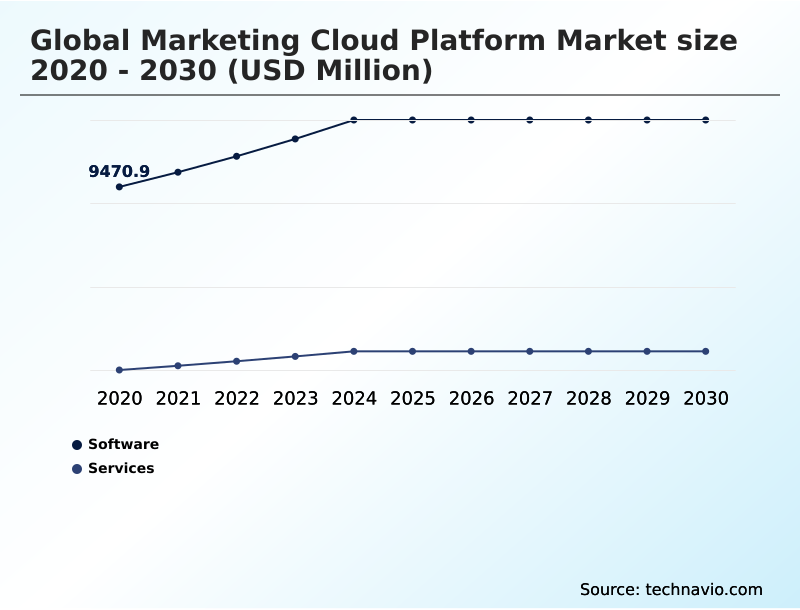
The Software segment was valued at USD 12.26 billion in 2024 and showed a gradual increase during the forecast period.
Get Free Sample

Regional Analysis

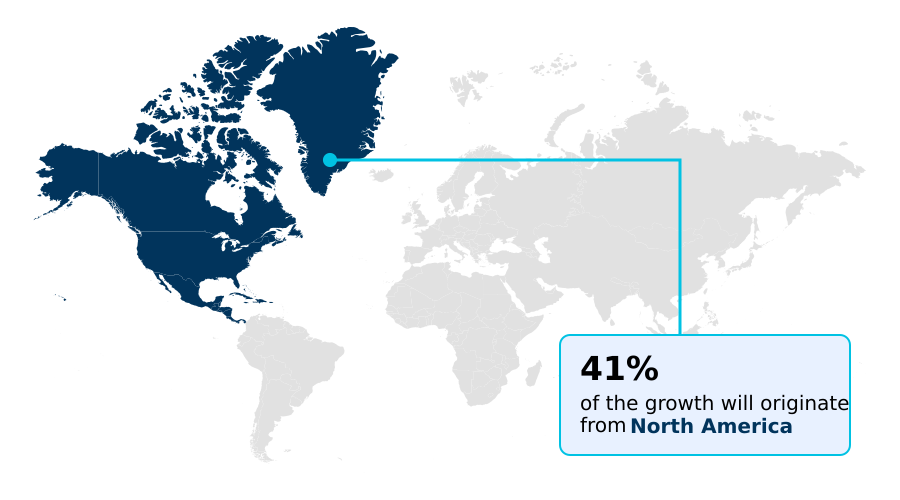
North America is estimated to contribute 40.6% to the growth of the global market during the forecast period.Technavio’s analysts have elaborately explained the regional trends and drivers that shape the market during the forecast period.
See How Marketing Cloud Platform Market Demand is Rising in North America Get Free Sample

The geographic adoption of the Marketing Cloud Platform reveals distinct strategic priorities driven by regulatory frameworks and consumer digitalization.

North America demonstrates advanced maturity in predictive churn modeling and conversational artificial intelligence, where enterprises have reduced customer acquisition costs by 32% through sophisticated identity resolution framework implementations.

In contrast, the APAC region exhibits a 45% faster adoption rate of mobile-first edge computing architectures, driven by massive social commerce penetration. This structural difference requires APAC businesses to prioritize real-time stream processing over traditional email batching.

Furthermore, European markets heavily prioritize first-party data architectures and consent management features to align with stringent data sovereignty mandates, improving compliance audit efficiency by 28%.

These regional divergences force multinational organizations to deploy highly localized digital commerce integration strategies to optimize omnichannel inventory promotions and secure sustainable operational efficiencies.

Market Dynamics

Our researchers analyzed the data with 2025 as the base year, along with the key drivers, trends, and challenges. A holistic analysis of drivers will help companies refine their marketing strategies to gain a competitive advantage.

  • The evolution of the Marketing Cloud Platform illustrates a fundamental shift in how enterprises manage digital interactions and data governance. Modern consumer engagement requires highly sophisticated operational planning, moving away from fragmented marketing silos toward autonomous customer journey orchestration. By implementing these centralized systems, organizations effectively eliminate manual bottlenecks and align their communication strategies with rapid behavioral shifts.
  • This transition is heavily supported by real-time predictive content generation, which allows marketing departments to synthesize vast datasets into customized assets instantaneously. Organizations leveraging these integrated environments consistently record a 40% improvement in cross-departmental workflow efficiency compared to those utilizing disconnected legacy point solutions.
  • Furthermore, the necessity for low-latency engagement has elevated the importance of edge-based data processing personalization, ensuring that localized promotional offers are delivered without processing delays. As privacy regulations tighten globally, businesses must rebuild their data architectures around zero-party data conversational collection, establishing direct and transparent dialogues with consumers to capture preferences accurately.
  • This proactive data acquisition seamlessly feeds into robust first-party data identity resolution frameworks, ensuring that compliance requirements are met without sacrificing audience targeting precision. By prioritizing these strategic implementations, enterprises enhance their operational agility, ensuring marketing expenditures yield measurable business impact while maintaining strict adherence to evolving digital privacy mandates.
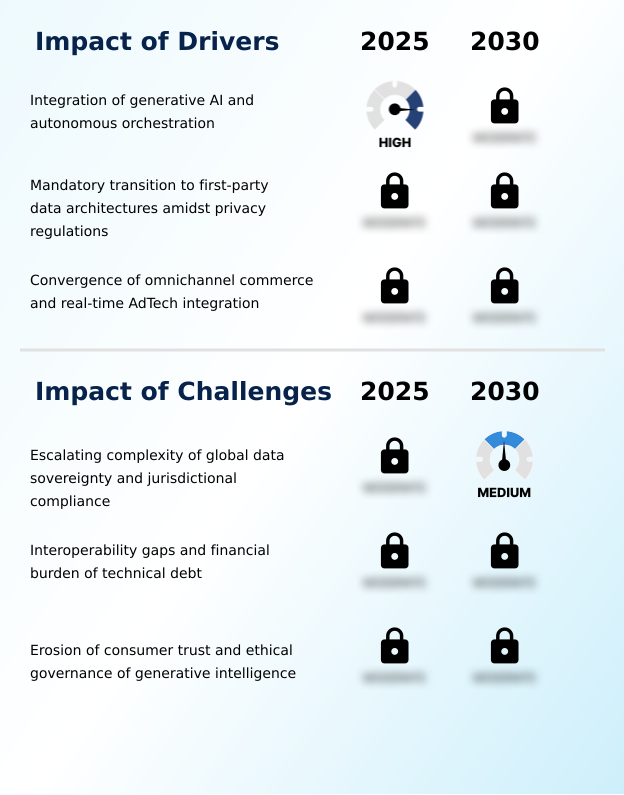
What are the key market drivers leading to the rise in the adoption of Marketing Cloud Platform Industry?

  • The integration of generative AI and autonomous orchestration serves as a primary driver propelling market expansion.

  • The imperative transition toward first-party data architectures serves as a critical catalyst accelerating Marketing Cloud Platform utilization across global enterprises.
  • Stringent privacy regulations and third-party cookie deprecation force organizations to embed robust consent management features and secure data sharing protocols directly into their engagement workflows. This fundamental structural change compels businesses to prioritize zero-party data collection through authenticated digital interactions.
  • Organizations adopting these privacy-first customer data platforms report a 35% improvement in targeting accuracy and a 25% reduction in compliance-related penalties compared to relying on outdated third-party data aggregators.
  • By facilitating seamless identity synchronization protocols, these integrated platforms ensure that brands can execute hyper-personalization engines efficiently. This data sovereignty governance directly impacts business continuity, establishing a sustainable foundation for continuous cross-channel customer engagement without violating evolving consumer privacy rights.

What are the market trends shaping the Marketing Cloud Platform Industry?

  • The transition toward edge-based personalization and real-time stream processing represents a defining market trend. This shift significantly enhances operational responsiveness and localized consumer engagement.

  • The transition from centralized data processing to localized edge computing architectures represents a profound behavioral shift within the Marketing Cloud Platform landscape. Enterprises increasingly prioritize latency minimization frameworks to process massive volumes of consumer telemetry at the point of origin. This operational pivot enables real-time behavioral targeting and accelerates dynamic profile unification, allowing marketing departments to instantly adjust promotional messaging.
  • By executing algorithm execution frameworks closer to the end user, organizations have successfully reduced content rendering latency by 45% and improved mobile engagement rates by 28%. This architectural change directly impacts operational efficiency, as decentralized marketing protocols alleviate central server loads and reduce cloud computing expenses by 20%.
  • Consequently, businesses can seamlessly execute edge-based personalization, ensuring that time-sensitive promotional offers align precisely with immediate consumer actions while enhancing overall digital resilience.

What challenges does the Marketing Cloud Platform Industry face during its growth?

  • The escalating complexity of global data sovereignty and jurisdictional compliance constitutes a significant challenge constraining industry expansion.

  • The persistent interoperability gap between modern unified marketing ecosystems and rigid legacy databases constitutes a severe structural limitation within the Marketing Cloud Platform environment. Large manufacturing and financial enterprises frequently struggle with legacy system migration, creating isolated information silos that obstruct autonomous marketing agents from accessing holistic consumer profiles.
  • This technical debt directly restricts cross-channel customer engagement and forces organizations to maintain redundant IT infrastructure. Consequently, businesses failing to establish standardized identity resolution framework protocols experience a 40% increase in integration costs and a 30% reduction in automated campaign deployment speed. Overcoming this fragmentation requires significant capital investment in middleware and marketing resource management tools to bridge architectural divides.
  • Without seamless cross-border algorithmic auditing and unified data pathways, enterprises remain incapable of maximizing the return on their advanced marketing technology investments.

Exclusive Technavio Analysis on Customer Landscape

The marketing cloud platform market forecasting report includes the adoption lifecycle of the market, covering from the innovator’s stage to the laggard’s stage. It focuses on adoption rates in different regions based on penetration. Furthermore, the marketing cloud platform market report also includes key purchase criteria and drivers of price sensitivity to help companies evaluate and develop their market growth analysis strategies.
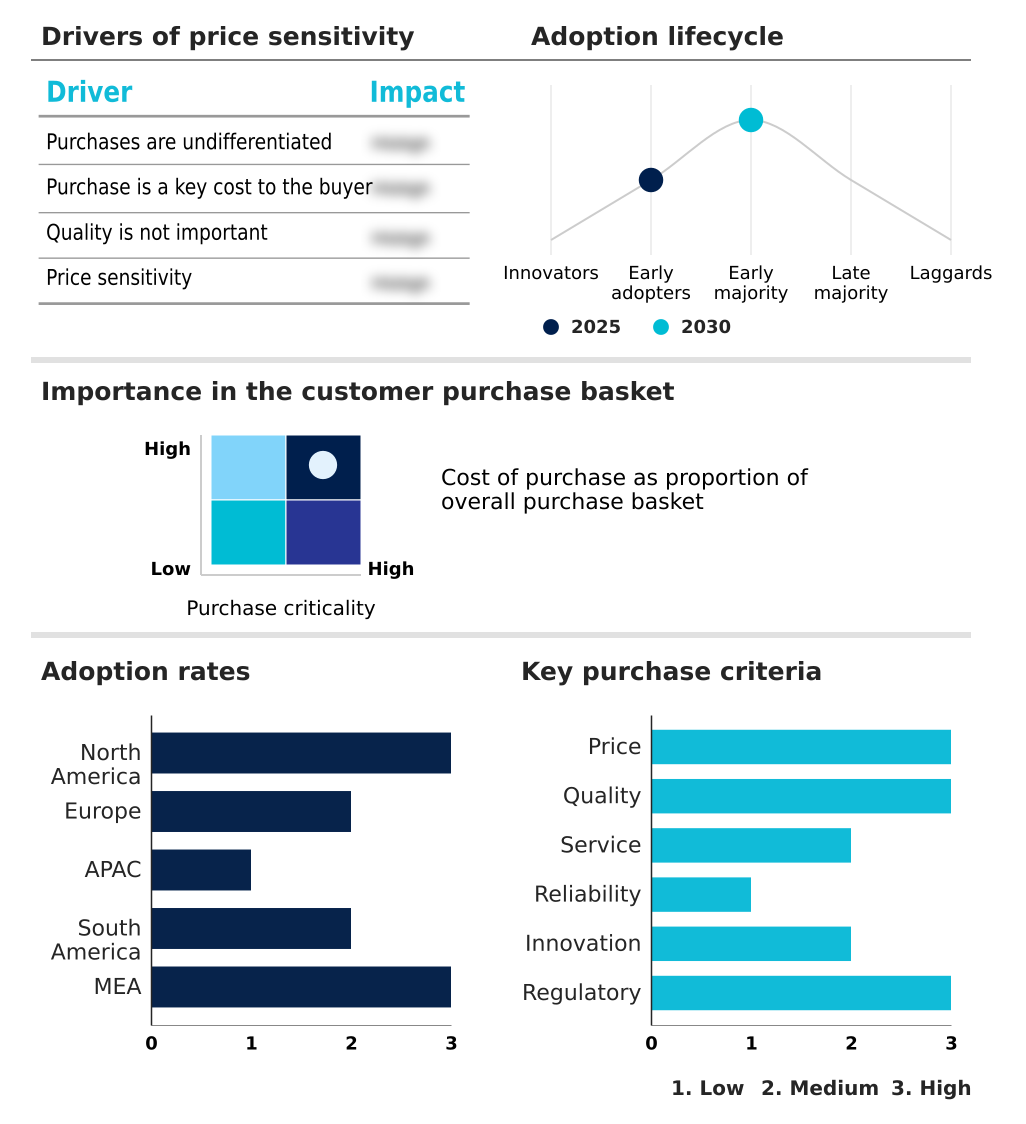
Customer Landscape of Marketing Cloud Platform Industry

Competitive Landscape

Companies are implementing various strategies, such as strategic alliances, marketing cloud platform market forecast, partnerships, mergers and acquisitions, geographical expansion, and product/service launches, to enhance their presence in the industry.

Acoustic LP - Provides comprehensive marketing cloud platforms focusing on customer engagement, campaign management, and marketing automation to optimize digital interactions and streamline omnichannel communication workflows effectively.

The industry research and growth report includes detailed analyses of the competitive landscape of the market and information about key companies, including:

  • Acoustic LP
  • Acquia Inc.
  • ActiveCampaign LLC
  • BloomReach Inc.
  • Braze Inc.
  • CleverTap
  • Constant Contact Inc.
  • Freshworks Inc.
  • HubSpot Inc.
  • Insider Inc.
  • Iterable Inc.
  • Klaviyo Inc.
  • Marigold Group Inc.
  • Microsoft Corp.
  • MoEngage Inc.
  • Oracle Corp.
  • Salesforce Inc.
  • SAP SE
  • Sitecore Holding Ltd.
  • Zeta Global Holdings Corp.

Qualitative and quantitative analysis of companies has been conducted to help clients understand the wider business environment as well as the strengths and weaknesses of key industry players. Data is qualitatively analyzed to categorize companies as pure play, category-focused, industry-focused, and diversified; it is quantitatively analyzed to categorize companies as dominant, leading, strong, tentative, and weak.

Recent Development and News in Marketing cloud platform market

  • In the Application Software industry, the rapid deployment of decentralized marketing protocols and digital commerce integration altered enterprise software procurement, directly impacting Marketing Cloud Platform demand by accelerating the need for unified marketing ecosystems that process decentralized inputs with a 40% reduction in data silos.
  • The global transition toward multi-tenant software delivery and hybrid cloud deployments streamlined IT infrastructure management, enhancing Marketing Cloud Platform adoption by allowing marketing departments to scale audience segmentation models and achieve a 30% increase in campaign deployment speed.
  • Stricter regulatory mandates surrounding cross-border algorithmic auditing and data sovereignty governance forced software developers to localize data processing, pulling Marketing Cloud Platform demand toward solutions offering secure data sharing and privacy compliance auditing that ensure 100% jurisdictional adherence.
  • The widespread adoption of legacy system migration strategies alongside programmatic media buying integration optimized operational advertising workflows, directly driving Marketing Cloud Platform utilization as enterprises sought latency minimization frameworks capable of boosting real-time bidding algorithms efficiency by over 25%.

Dive into Technavio’s robust research methodology, blending expert interviews, extensive data synthesis, and validated models for unparalleled Marketing Cloud Platform Market insights. See full methodology.

Market Scope
Page number 308
Base year 2025
Historic period 2020-2024
Forecast period 2026-2030
Growth momentum & CAGR Accelerate at a CAGR of 9%
Market growth 2026-2030 USD 8645.6 million
Market structure Fragmented
YoY growth 2025-2026(%) 7.8%
Key countries US, Canada, Mexico, UK, Germany, France, Italy, Spain, The Netherlands, China, Japan, India, South Korea, Australia, Singapore, Brazil, Argentina, Colombia, Saudi Arabia, UAE, South Africa, Israel and Turkey
Competitive landscape Leading Companies, Market Positioning of Companies, Competitive Strategies, and Industry Risks

Request Free Sample

Research Analyst Overview

  • The Marketing Cloud Platform serves as the indispensable operational backbone for digital-first enterprises, replacing fragmented point solutions with centralized data orchestration. Modern organizations continuously evolve their marketing strategies to prioritize generative content generation and contextualized brand experiences, ensuring communications align precisely with real-time consumer intent.
  • The transition toward robust customer data platforms directly supports boardroom-level compliance and risk management decisions, ensuring all promotional outreach adheres strictly to jurisdictional privacy mandates. By integrating predictive analytics algorithms and automated campaign journeys, enterprises eliminate redundant marketing expenditures and streamline resource allocation.
  • Operational deployments reveal substantial efficiency gains; organizations utilizing centralized data clean rooms and intelligent customer orchestration have achieved a 30% reduction in data processing latency compared to legacy infrastructure. The strategic integration of programmatic advertising integration and real-time behavioral targeting further enhances campaign agility, allowing marketing departments to adjust messaging dynamically based on live performance metrics.
  • These integrated frameworks optimize omnichannel campaign orchestration, ensuring sustained operational resilience and measurable business impact across highly competitive digital ecosystems.

What are the Key Data Covered in this Marketing Cloud Platform Market Research and Growth Report?

  • What is the expected growth of the Marketing Cloud Platform Market between 2026 and 2030?

    • USD 8.65 billion, at a CAGR of 9%

  • What segmentation does the market report cover?

    • The report is segmented by Component (Software, and Services), Deployment (Public cloud, Hybrid cloud, and Private cloud), End-user (Retail and e-commerce, BFSI, IT and telecom, Healthcare and life sciences, and Others) and Geography (North America, Europe, APAC, South America, Middle East and Africa)

  • Which regions are analyzed in the report?

    • North America, Europe, APAC, South America and Middle East and Africa

  • What are the key growth drivers and market challenges?

    • Integration of generative AI and autonomous orchestration, Escalating complexity of global data sovereignty and jurisdictional compliance

  • Who are the major players in the Marketing Cloud Platform Market?

    • Acoustic LP, Acquia Inc., ActiveCampaign LLC, BloomReach Inc., Braze Inc., CleverTap, Constant Contact Inc., Freshworks Inc., HubSpot Inc., Insider Inc., Iterable Inc., Klaviyo Inc., Marigold Group Inc., Microsoft Corp., MoEngage Inc., Oracle Corp., Salesforce Inc., SAP SE, Sitecore Holding Ltd. and Zeta Global Holdings Corp.

Market Research Insights

  • The Marketing Cloud Platform functions as the strategic nerve center for modern enterprise customer engagement, facilitating unified marketing ecosystems and dynamic content delivery. By integrating programmatic media buying and event-triggered marketing campaigns, organizations optimize their digital interactions. Enterprises leveraging advanced audience segmentation models report a 35% improvement in conversion rates due to highly contextual messaging.
  • Furthermore, the adoption of automated workflow engines alongside lifecycle marketing automation has successfully reduced campaign deployment times by 40%. These platforms empower organizations to navigate complex regulatory landscapes by embedding secure data sharing protocols, ultimately improving customer retention rates by 22% through the precise execution of personalized, privacy-compliant communications.

We can help! Our analysts can customize this marketing cloud platform market research report to meet your requirements.

Get in touch

1. Executive Summary

1.1 Market overview

Executive Summary - Chart on Market Overview
Executive Summary - Data Table on Market Overview
Executive Summary - Chart on Global Market Characteristics
Executive Summary - Chart on Market by Geography
Executive Summary - Chart on Market Segmentation by Component
Executive Summary - Chart on Market Segmentation by Deployment
Executive Summary - Chart on Market Segmentation by End-user
Executive Summary - Chart on Incremental Growth
Executive Summary - Data Table on Incremental Growth
Executive Summary - Chart on Company Market Positioning

2. Technavio Analysis

2.1 Analysis of price sensitivity, lifecycle, customer purchase basket, adoption rates, and purchase criteria

2.2 Criticality of inputs and Factors of differentiation

Chart on Overview on criticality of inputs and factors of differentiation

2.3 Factors of disruption

Chart on Overview on factors of disruption

2.4 Impact of drivers and challenges

Chart on Impact of drivers and challenges in 2025 and 2030

3. Market Landscape

3.1 Market ecosystem

Chart on Parent Market
Data Table on - Parent Market

3.2 Market characteristics

Chart on Market characteristics analysis

3.3 Value chain analysis

Chart on Value chain analysis

4. Market Sizing

4.1 Market definition

Data Table on Offerings of companies included in the market definition

4.2 Market segment analysis

Market segments

4.3 Market size 2025

4.4 Market outlook: Forecast for 2025-2030

Chart on Global - Market size and forecast 2025-2030 ($ million)
Data Table on Global - Market size and forecast 2025-2030 ($ million)
Chart on Global Market: Year-over-year growth 2025-2030 (%)
Data Table on Global Market: Year-over-year growth 2025-2030 (%)

5. Historic Market Size

5.1 Global Marketing Cloud Platform Market 2020 - 2024

Historic Market Size - Data Table on Global Marketing Cloud Platform Market 2020 - 2024 ($ million)

5.2 Component segment analysis 2020 - 2024

Historic Market Size - Component Segment 2020 - 2024 ($ million)

5.3 Deployment segment analysis 2020 - 2024

Historic Market Size - Deployment Segment 2020 - 2024 ($ million)

5.4 End-user segment analysis 2020 - 2024

Historic Market Size - End-user Segment 2020 - 2024 ($ million)

5.5 Geography segment analysis 2020 - 2024

Historic Market Size - Geography Segment 2020 - 2024 ($ million)

5.6 Country segment analysis 2020 - 2024

Historic Market Size - Country Segment 2020 - 2024 ($ million)

6. Qualitative Analysis

6.1 Impact of AI on Global Marketing Cloud Platform Market

6.2 Impact of geopolitical conflicts on Global Marketing Cloud Platform Market

7. Five Forces Analysis

7.1 Five forces summary

Five forces analysis - Comparison between 2025 and 2030

7.2 Bargaining power of buyers

Bargaining power of buyers - Impact of key factors 2025 and 2030

7.3 Bargaining power of suppliers

Bargaining power of suppliers - Impact of key factors in 2025 and 2030

7.4 Threat of new entrants

Threat of new entrants - Impact of key factors in 2025 and 2030

7.5 Threat of substitutes

Threat of substitutes - Impact of key factors in 2025 and 2030

7.6 Threat of rivalry

Threat of rivalry - Impact of key factors in 2025 and 2030

7.7 Market condition

Chart on Market condition - Five forces 2025 and 2030

8. Market Segmentation by Component

8.1 Market segments

Chart on Component - Market share 2025-2030 (%)
Data Table on Component - Market share 2025-2030 (%)

8.2 Comparison by Component

Chart on Comparison by Component
Data Table on Comparison by Component

8.3 Software - Market size and forecast 2025-2030

Chart on Software - Market size and forecast 2025-2030 ($ million)
Data Table on Software - Market size and forecast 2025-2030 ($ million)
Chart on Software - Year-over-year growth 2025-2030 (%)
Data Table on Software - Year-over-year growth 2025-2030 (%)

8.4 Services - Market size and forecast 2025-2030

Chart on Services - Market size and forecast 2025-2030 ($ million)
Data Table on Services - Market size and forecast 2025-2030 ($ million)
Chart on Services - Year-over-year growth 2025-2030 (%)
Data Table on Services - Year-over-year growth 2025-2030 (%)

8.5 Market opportunity by Component

Market opportunity by Component ($ million)
Data Table on Market opportunity by Component ($ million)

9. Market Segmentation by Deployment

9.1 Market segments

Chart on Deployment - Market share 2025-2030 (%)
Data Table on Deployment - Market share 2025-2030 (%)

9.2 Comparison by Deployment

Chart on Comparison by Deployment
Data Table on Comparison by Deployment

9.3 Public cloud - Market size and forecast 2025-2030

Chart on Public cloud - Market size and forecast 2025-2030 ($ million)
Data Table on Public cloud - Market size and forecast 2025-2030 ($ million)
Chart on Public cloud - Year-over-year growth 2025-2030 (%)
Data Table on Public cloud - Year-over-year growth 2025-2030 (%)

9.4 Hybrid cloud - Market size and forecast 2025-2030

Chart on Hybrid cloud - Market size and forecast 2025-2030 ($ million)
Data Table on Hybrid cloud - Market size and forecast 2025-2030 ($ million)
Chart on Hybrid cloud - Year-over-year growth 2025-2030 (%)
Data Table on Hybrid cloud - Year-over-year growth 2025-2030 (%)

9.5 Private cloud - Market size and forecast 2025-2030

Chart on Private cloud - Market size and forecast 2025-2030 ($ million)
Data Table on Private cloud - Market size and forecast 2025-2030 ($ million)
Chart on Private cloud - Year-over-year growth 2025-2030 (%)
Data Table on Private cloud - Year-over-year growth 2025-2030 (%)

9.6 Market opportunity by Deployment

Market opportunity by Deployment ($ million)
Data Table on Market opportunity by Deployment ($ million)

10. Market Segmentation by End-user

10.1 Market segments

Chart on End-user - Market share 2025-2030 (%)
Data Table on End-user - Market share 2025-2030 (%)

10.2 Comparison by End-user

Chart on Comparison by End-user
Data Table on Comparison by End-user

10.3 Retail and e-commerce - Market size and forecast 2025-2030

Chart on Retail and e-commerce - Market size and forecast 2025-2030 ($ million)
Data Table on Retail and e-commerce - Market size and forecast 2025-2030 ($ million)
Chart on Retail and e-commerce - Year-over-year growth 2025-2030 (%)
Data Table on Retail and e-commerce - Year-over-year growth 2025-2030 (%)

10.4 BFSI - Market size and forecast 2025-2030

Chart on BFSI - Market size and forecast 2025-2030 ($ million)
Data Table on BFSI - Market size and forecast 2025-2030 ($ million)
Chart on BFSI - Year-over-year growth 2025-2030 (%)
Data Table on BFSI - Year-over-year growth 2025-2030 (%)

10.5 IT and telecom - Market size and forecast 2025-2030

Chart on IT and telecom - Market size and forecast 2025-2030 ($ million)
Data Table on IT and telecom - Market size and forecast 2025-2030 ($ million)
Chart on IT and telecom - Year-over-year growth 2025-2030 (%)
Data Table on IT and telecom - Year-over-year growth 2025-2030 (%)

10.6 Healthcare and life sciences - Market size and forecast 2025-2030

Chart on Healthcare and life sciences - Market size and forecast 2025-2030 ($ million)
Data Table on Healthcare and life sciences - Market size and forecast 2025-2030 ($ million)
Chart on Healthcare and life sciences - Year-over-year growth 2025-2030 (%)
Data Table on Healthcare and life sciences - Year-over-year growth 2025-2030 (%)

10.7 Others - Market size and forecast 2025-2030

Chart on Others - Market size and forecast 2025-2030 ($ million)
Data Table on Others - Market size and forecast 2025-2030 ($ million)
Chart on Others - Year-over-year growth 2025-2030 (%)
Data Table on Others - Year-over-year growth 2025-2030 (%)

10.8 Market opportunity by End-user

Market opportunity by End-user ($ million)
Data Table on Market opportunity by End-user ($ million)

11. Customer Landscape

11.1 Customer landscape overview

Analysis of price sensitivity, lifecycle, customer purchase basket, adoption rates, and purchase criteria

12. Geographic Landscape

12.1 Geographic segmentation

Chart on Market share by geography 2025-2030 (%)
Data Table on Market share by geography 2025-2030 (%)

12.2 Geographic comparison

Chart on Geographic comparison
Data Table on Geographic comparison

12.3 North America - Market size and forecast 2025-2030

Chart on North America - Market size and forecast 2025-2030 ($ million)
Data Table on North America - Market size and forecast 2025-2030 ($ million)
Chart on North America - Year-over-year growth 2025-2030 (%)
Data Table on North America - Year-over-year growth 2025-2030 (%)
Chart on Regional Comparison - North America
Data Table on Regional Comparison - North America

12.3.1 US - Market size and forecast 2025-2030

Chart on US - Market size and forecast 2025-2030 ($ million)
Data Table on US - Market size and forecast 2025-2030 ($ million)
Chart on US - Year-over-year growth 2025-2030 (%)
Data Table on US - Year-over-year growth 2025-2030 (%)

12.3.2 Canada - Market size and forecast 2025-2030

Chart on Canada - Market size and forecast 2025-2030 ($ million)
Data Table on Canada - Market size and forecast 2025-2030 ($ million)
Chart on Canada - Year-over-year growth 2025-2030 (%)
Data Table on Canada - Year-over-year growth 2025-2030 (%)

12.3.3 Mexico - Market size and forecast 2025-2030

Chart on Mexico - Market size and forecast 2025-2030 ($ million)
Data Table on Mexico - Market size and forecast 2025-2030 ($ million)
Chart on Mexico - Year-over-year growth 2025-2030 (%)
Data Table on Mexico - Year-over-year growth 2025-2030 (%)

12.4 Europe - Market size and forecast 2025-2030

Chart on Europe - Market size and forecast 2025-2030 ($ million)
Data Table on Europe - Market size and forecast 2025-2030 ($ million)
Chart on Europe - Year-over-year growth 2025-2030 (%)
Data Table on Europe - Year-over-year growth 2025-2030 (%)
Chart on Regional Comparison - Europe
Data Table on Regional Comparison - Europe

12.4.1 UK - Market size and forecast 2025-2030

Chart on UK - Market size and forecast 2025-2030 ($ million)
Data Table on UK - Market size and forecast 2025-2030 ($ million)
Chart on UK - Year-over-year growth 2025-2030 (%)
Data Table on UK - Year-over-year growth 2025-2030 (%)

12.4.2 Germany - Market size and forecast 2025-2030

Chart on Germany - Market size and forecast 2025-2030 ($ million)
Data Table on Germany - Market size and forecast 2025-2030 ($ million)
Chart on Germany - Year-over-year growth 2025-2030 (%)
Data Table on Germany - Year-over-year growth 2025-2030 (%)

12.4.3 France - Market size and forecast 2025-2030

Chart on France - Market size and forecast 2025-2030 ($ million)
Data Table on France - Market size and forecast 2025-2030 ($ million)
Chart on France - Year-over-year growth 2025-2030 (%)
Data Table on France - Year-over-year growth 2025-2030 (%)

12.4.4 Italy - Market size and forecast 2025-2030

Chart on Italy - Market size and forecast 2025-2030 ($ million)
Data Table on Italy - Market size and forecast 2025-2030 ($ million)
Chart on Italy - Year-over-year growth 2025-2030 (%)
Data Table on Italy - Year-over-year growth 2025-2030 (%)

12.4.5 Spain - Market size and forecast 2025-2030

Chart on Spain - Market size and forecast 2025-2030 ($ million)
Data Table on Spain - Market size and forecast 2025-2030 ($ million)
Chart on Spain - Year-over-year growth 2025-2030 (%)
Data Table on Spain - Year-over-year growth 2025-2030 (%)

12.4.6 The Netherlands - Market size and forecast 2025-2030

Chart on The Netherlands - Market size and forecast 2025-2030 ($ million)
Data Table on The Netherlands - Market size and forecast 2025-2030 ($ million)
Chart on The Netherlands - Year-over-year growth 2025-2030 (%)
Data Table on The Netherlands - Year-over-year growth 2025-2030 (%)

12.5 APAC - Market size and forecast 2025-2030

Chart on APAC - Market size and forecast 2025-2030 ($ million)
Data Table on APAC - Market size and forecast 2025-2030 ($ million)
Chart on APAC - Year-over-year growth 2025-2030 (%)
Data Table on APAC - Year-over-year growth 2025-2030 (%)
Chart on Regional Comparison - APAC
Data Table on Regional Comparison - APAC

12.5.1 China - Market size and forecast 2025-2030

Chart on China - Market size and forecast 2025-2030 ($ million)
Data Table on China - Market size and forecast 2025-2030 ($ million)
Chart on China - Year-over-year growth 2025-2030 (%)
Data Table on China - Year-over-year growth 2025-2030 (%)

12.5.2 Japan - Market size and forecast 2025-2030

Chart on Japan - Market size and forecast 2025-2030 ($ million)
Data Table on Japan - Market size and forecast 2025-2030 ($ million)
Chart on Japan - Year-over-year growth 2025-2030 (%)
Data Table on Japan - Year-over-year growth 2025-2030 (%)

12.5.3 India - Market size and forecast 2025-2030

Chart on India - Market size and forecast 2025-2030 ($ million)
Data Table on India - Market size and forecast 2025-2030 ($ million)
Chart on India - Year-over-year growth 2025-2030 (%)
Data Table on India - Year-over-year growth 2025-2030 (%)

12.5.4 South Korea - Market size and forecast 2025-2030

Chart on South Korea - Market size and forecast 2025-2030 ($ million)
Data Table on South Korea - Market size and forecast 2025-2030 ($ million)
Chart on South Korea - Year-over-year growth 2025-2030 (%)
Data Table on South Korea - Year-over-year growth 2025-2030 (%)

12.5.5 Australia - Market size and forecast 2025-2030

Chart on Australia - Market size and forecast 2025-2030 ($ million)
Data Table on Australia - Market size and forecast 2025-2030 ($ million)
Chart on Australia - Year-over-year growth 2025-2030 (%)
Data Table on Australia - Year-over-year growth 2025-2030 (%)

12.5.6 Singapore - Market size and forecast 2025-2030

Chart on Singapore - Market size and forecast 2025-2030 ($ million)
Data Table on Singapore - Market size and forecast 2025-2030 ($ million)
Chart on Singapore - Year-over-year growth 2025-2030 (%)
Data Table on Singapore - Year-over-year growth 2025-2030 (%)

12.6 South America - Market size and forecast 2025-2030

Chart on South America - Market size and forecast 2025-2030 ($ million)
Data Table on South America - Market size and forecast 2025-2030 ($ million)
Chart on South America - Year-over-year growth 2025-2030 (%)
Data Table on South America - Year-over-year growth 2025-2030 (%)
Chart on Regional Comparison - South America
Data Table on Regional Comparison - South America

12.6.1 Brazil - Market size and forecast 2025-2030

Chart on Brazil - Market size and forecast 2025-2030 ($ million)
Data Table on Brazil - Market size and forecast 2025-2030 ($ million)
Chart on Brazil - Year-over-year growth 2025-2030 (%)
Data Table on Brazil - Year-over-year growth 2025-2030 (%)

12.6.2 Argentina - Market size and forecast 2025-2030

Chart on Argentina - Market size and forecast 2025-2030 ($ million)
Data Table on Argentina - Market size and forecast 2025-2030 ($ million)
Chart on Argentina - Year-over-year growth 2025-2030 (%)
Data Table on Argentina - Year-over-year growth 2025-2030 (%)

12.6.3 Colombia - Market size and forecast 2025-2030

Chart on Colombia - Market size and forecast 2025-2030 ($ million)
Data Table on Colombia - Market size and forecast 2025-2030 ($ million)
Chart on Colombia - Year-over-year growth 2025-2030 (%)
Data Table on Colombia - Year-over-year growth 2025-2030 (%)

12.7 Middle East and Africa - Market size and forecast 2025-2030

Chart on Middle East and Africa - Market size and forecast 2025-2030 ($ million)
Data Table on Middle East and Africa - Market size and forecast 2025-2030 ($ million)
Chart on Middle East and Africa - Year-over-year growth 2025-2030 (%)
Data Table on Middle East and Africa - Year-over-year growth 2025-2030 (%)
Chart on Regional Comparison - Middle East and Africa
Data Table on Regional Comparison - Middle East and Africa

12.7.1 Saudi Arabia - Market size and forecast 2025-2030

Chart on Saudi Arabia - Market size and forecast 2025-2030 ($ million)
Data Table on Saudi Arabia - Market size and forecast 2025-2030 ($ million)
Chart on Saudi Arabia - Year-over-year growth 2025-2030 (%)
Data Table on Saudi Arabia - Year-over-year growth 2025-2030 (%)

12.7.2 UAE - Market size and forecast 2025-2030

Chart on UAE - Market size and forecast 2025-2030 ($ million)
Data Table on UAE - Market size and forecast 2025-2030 ($ million)
Chart on UAE - Year-over-year growth 2025-2030 (%)
Data Table on UAE - Year-over-year growth 2025-2030 (%)

12.7.3 South Africa - Market size and forecast 2025-2030

Chart on South Africa - Market size and forecast 2025-2030 ($ million)
Data Table on South Africa - Market size and forecast 2025-2030 ($ million)
Chart on South Africa - Year-over-year growth 2025-2030 (%)
Data Table on South Africa - Year-over-year growth 2025-2030 (%)

12.7.4 Israel - Market size and forecast 2025-2030

Chart on Israel - Market size and forecast 2025-2030 ($ million)
Data Table on Israel - Market size and forecast 2025-2030 ($ million)
Chart on Israel - Year-over-year growth 2025-2030 (%)
Data Table on Israel - Year-over-year growth 2025-2030 (%)

12.7.5 Turkey - Market size and forecast 2025-2030

Chart on Turkey - Market size and forecast 2025-2030 ($ million)
Data Table on Turkey - Market size and forecast 2025-2030 ($ million)
Chart on Turkey - Year-over-year growth 2025-2030 (%)
Data Table on Turkey - Year-over-year growth 2025-2030 (%)

12.8 Market opportunity by geography

Market opportunity by geography ($ million)
Data Tables on Market opportunity by geography ($ million)

13. Drivers, Challenges, and Opportunity

13.1 Market drivers

Integration of generative AI and autonomous orchestration
Mandatory transition to first-party data architectures amidst privacy regulations
Convergence of omnichannel commerce and real-time AdTech integration

13.2 Market challenges

Escalating complexity of global data sovereignty and jurisdictional compliance
Interoperability gaps and financial burden of technical debt
Erosion of consumer trust and ethical governance of generative intelligence

13.3 Impact of drivers and challenges

Impact of drivers and challenges in 2025 and 2030

13.4 Market opportunities

Shift toward Edge-based personalization and real-time stream processing
Proliferation of zero-party data strategies through conversational AI
Integration of sustainability metrics and green computing into marketing operations

14. Competitive Landscape

14.1 Overview

14.2

Overview on criticality of inputs and factors of differentiation

14.3 Landscape disruption

Overview on factors of disruption

14.4 Industry risks

Impact of key risks on business

15. Competitive Analysis

15.1 Companies profiled

Companies covered

15.2 Company ranking index

15.3 Market positioning of companies

Matrix on companies position and classification

15.4 Acoustic LP

Acoustic LP - Overview
Acoustic LP - Product / Service
Acoustic LP - Key offerings
SWOT

15.5 ActiveCampaign LLC

ActiveCampaign LLC - Overview
ActiveCampaign LLC - Product / Service
ActiveCampaign LLC - Key offerings
SWOT

15.6 BloomReach Inc.

BloomReach Inc. - Overview
BloomReach Inc. - Product / Service
BloomReach Inc. - Key offerings
SWOT

15.7 Constant Contact Inc.

Constant Contact Inc. - Overview
Constant Contact Inc. - Product / Service
Constant Contact Inc. - Key offerings
SWOT

15.8 Freshworks Inc.

Freshworks Inc. - Overview
Freshworks Inc. - Business segments
Freshworks Inc. - Key news
Freshworks Inc. - Key offerings
Freshworks Inc. - Segment focus
SWOT

15.9 HubSpot Inc.

HubSpot Inc. - Overview
HubSpot Inc. - Business segments
HubSpot Inc. - Key offerings
HubSpot Inc. - Segment focus
SWOT

15.10 Insider Inc.

Insider Inc. - Overview
Insider Inc. - Product / Service
Insider Inc. - Key offerings
SWOT

15.11 Iterable Inc.

Iterable Inc. - Overview
Iterable Inc. - Product / Service
Iterable Inc. - Key offerings
SWOT

15.12 Microsoft Corp.

Microsoft Corp. - Overview
Microsoft Corp. - Business segments
Microsoft Corp. - Key news
Microsoft Corp. - Key offerings
Microsoft Corp. - Segment focus
SWOT

15.13 MoEngage Inc.

MoEngage Inc. - Overview
MoEngage Inc. - Product / Service
MoEngage Inc. - Key offerings
SWOT

15.14 Oracle Corp.

Oracle Corp. - Overview
Oracle Corp. - Business segments
Oracle Corp. - Key news
Oracle Corp. - Key offerings
Oracle Corp. - Segment focus
SWOT

15.15 Salesforce Inc.

Salesforce Inc. - Overview
Salesforce Inc. - Business segments
Salesforce Inc. - Key news
Salesforce Inc. - Key offerings
Salesforce Inc. - Segment focus
SWOT

15.16 SAP SE

SAP SE - Overview
SAP SE - Business segments
SAP SE - Key news
SAP SE - Key offerings
SAP SE - Segment focus
SWOT

15.17 Sitecore Holding Ltd.

Sitecore Holding Ltd. - Overview
Sitecore Holding Ltd. - Product / Service
Sitecore Holding Ltd. - Key offerings
SWOT

15.18 Zeta Global Holdings Corp.

Zeta Global Holdings Corp. - Overview
Zeta Global Holdings Corp. - Product / Service
Zeta Global Holdings Corp. - Key offerings
SWOT

16. Appendix

16.1 Scope of the report

Market definition
Objectives
Notes and caveats

16.2 Inclusions and exclusions checklist

Inclusions checklist
Exclusions checklist

16.3 Currency conversion rates for US$

16.4 Research methodology

16.5 Data procurement

Information sources

16.6 Data validation

16.7 Validation techniques employed for market sizing

16.8 Data synthesis

16.9 360 degree market analysis

16.10 List of abbreviations

Research Methodology

Technavio presents a detailed picture of the market by way of study, synthesis, and summation of data from multiple sources. The analysts have presented the various facets of the market with a particular focus on identifying the key industry influencers. The data thus presented is comprehensive, reliable, and the result of extensive research, both primary and secondary.

INFORMATION SOURCES

Primary sources

  • Manufacturers and suppliers
  • Channel partners
  • Industry experts
  • Strategic decision makers

Secondary sources

  • Industry journals and periodicals
  • Government data
  • Financial reports of key industry players
  • Historical data
  • Press releases

DATA ANALYSIS

Data Synthesis

  • Collation of data
  • Estimation of key figures
  • Analysis of derived insights

Data Validation

  • Triangulation with data models
  • Reference against proprietary databases
  • Corroboration with industry experts

REPORT WRITING

Qualitative

  • Market drivers
  • Market challenges
  • Market trends
  • Five forces analysis

Quantitative

  • Market size and forecast
  • Market segmentation
  • Geographical insights
  • Competitive landscape

Interested in this report?

Get your sample now to see our research methodology and insights!

Download Now

Frequently Asked Questions

Marketing Cloud Platform market growth will increase by USD 8645.6 million during 2026-2030.

The Marketing Cloud Platform market is expected to grow at a CAGR of 9% during 2026-2030.

Marketing Cloud Platform market is segmented by Component (Software, Services) Deployment (Public cloud, Hybrid cloud, Private cloud) End-user (Retail and e-commerce, BFSI, IT and telecom, Healthcare and life sciences, Others)

Acoustic LP, Acquia Inc., ActiveCampaign LLC, BloomReach Inc., Braze Inc., CleverTap, Constant Contact Inc., Freshworks Inc., HubSpot Inc., Insider Inc., Iterable Inc., Klaviyo Inc., Marigold Group Inc., Microsoft Corp., MoEngage Inc., Oracle Corp., Salesforce Inc., SAP SE, Sitecore Holding Ltd., Zeta Global Holdings Corp. are a few of the key vendors in the Marketing Cloud Platform market.

North America will register the highest growth rate of 40.6% among the other regions. Therefore, the Marketing Cloud Platform market in North America is expected to garner significant business opportunities for the vendors during the forecast period.

US, Canada, Mexico, UK, Germany, France, Italy, Spain, The Netherlands, China, Japan, India, South Korea, Australia, Singapore, Brazil, Argentina, Colombia, Saudi Arabia, UAE, South Africa, Israel, Turkey

  • Integration of generative AI and autonomous orchestration is the driving factor this market.

The Marketing Cloud Platform market vendors should focus on grabbing business opportunities from the Component segment as it accounted for the largest market share in the base year.
RIA - Research AI Assistant
Ask RIA
