



Music Market Size 2026-2030
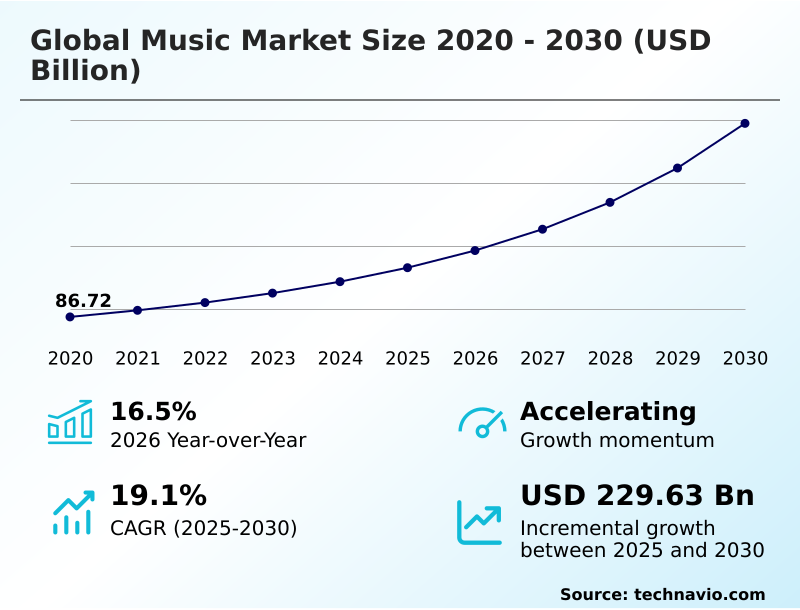
The music market size is valued to increase by USD 229.63 billion, at a CAGR of 19.1% from 2025 to 2030. Strategic integration of machine learning and licensing innovation will drive the music market.
Major Market Trends & Insights
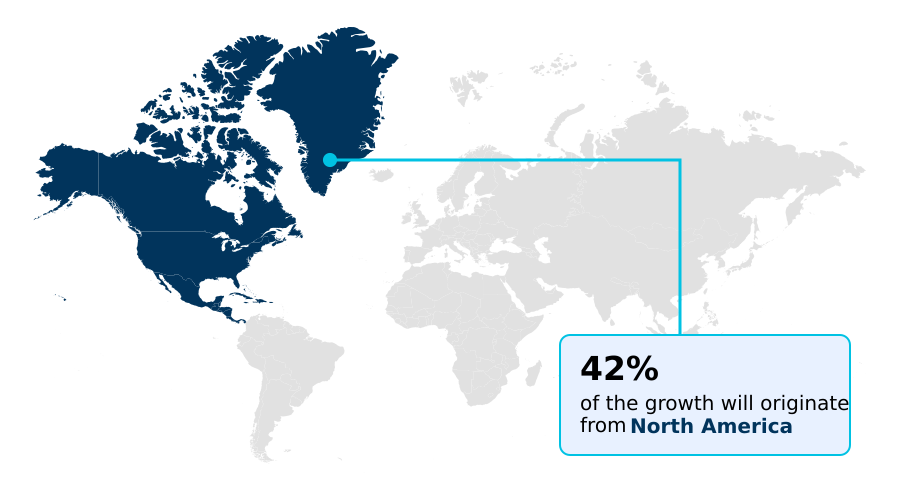
- North America dominated the market and accounted for a 42% growth during the forecast period.
- By End-user - Individual segment was valued at USD 106.67 billion in 2024
- By Source - Recording segment accounted for the largest market revenue share in 2024
Market Size & Forecast
- Market Opportunities: USD 307.93 billion
- Market Future Opportunities: USD 229.63 billion
- CAGR from 2025 to 2030 : 19.1%
Market Summary
- The Music market is undergoing a significant structural transformation, driven by the dominance of digital consumption and technological innovation. The industry's value chain, once centered on physical media, now revolves around digital streaming platforms, sophisticated intellectual property rights management, and the global scale of live performance production.
- A key trend is the integration of advanced analytics and AI, not just for music discovery algorithms but also for optimizing operational workflows. For instance, a major record label can now use predictive models to forecast an emerging artist's potential in niche global markets, allowing for a 30% more efficient allocation of marketing budgets compared to traditional methods.
- This data-driven approach, combined with the development of new high-fidelity audio formats and immersive fan experiences, defines the market's current trajectory. However, this evolution also introduces challenges, particularly in ensuring fair streaming royalty distribution and protecting artists' digital likeness in an era of synthetic media.
What will be the Size of the Music Market during the forecast period?
Get Key Insights on Market Forecast (PDF) Get Free Sample
How is the Music Market Segmented?
The music industry research report provides comprehensive data (region-wise segment analysis), with forecasts and estimates in "USD million" for the period 2026-2030, as well as historical data from 2020-2024 for the following segments.
- End-user
- Individual
- Commercial
- Source
- Recording
- Live
- Others
- Type
- Digital
- Physical formats
- Geography
- North America
- US
- Canada
- Mexico
- Europe
- Germany
- UK
- France
- APAC
- China
- Japan
- India
- South America
- Brazil
- Argentina
- Middle East and Africa
- South Africa
- Saudi Arabia
- UAE
- Rest of World (ROW)
- North America
By End-user Insights
The individual segment is estimated to witness significant growth during the forecast period.
The individual consumer segment is defined by high digital engagement, where streaming accounts for over 67% of total music consumption. This category is evolving beyond simple access to encompass superfan monetization and immersive fan experiences.
The integration of generative AI music and high-fidelity audio formats is reshaping listener expectations, placing new demands on streaming royalty distribution models. As the artist career trajectory becomes more complex, intellectual property rights management is crucial for protecting value.
Simultaneously, a renewed interest in live performance production demonstrates a balanced demand for both digital convenience and tangible, high-value cultural events, including a growing appetite for non-english language content.
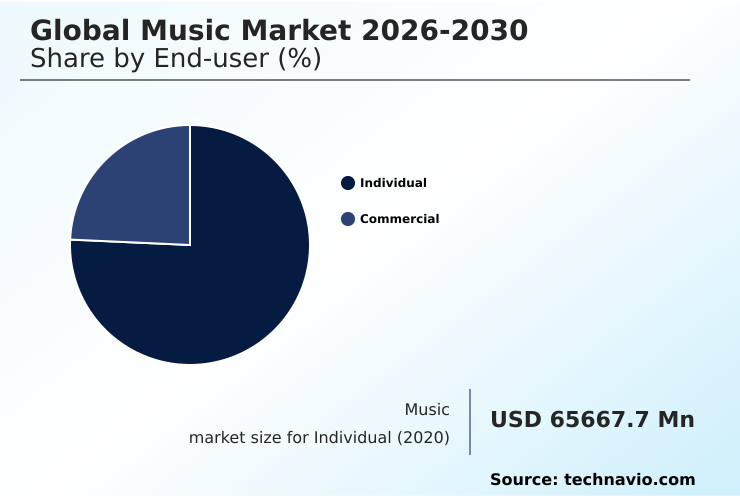
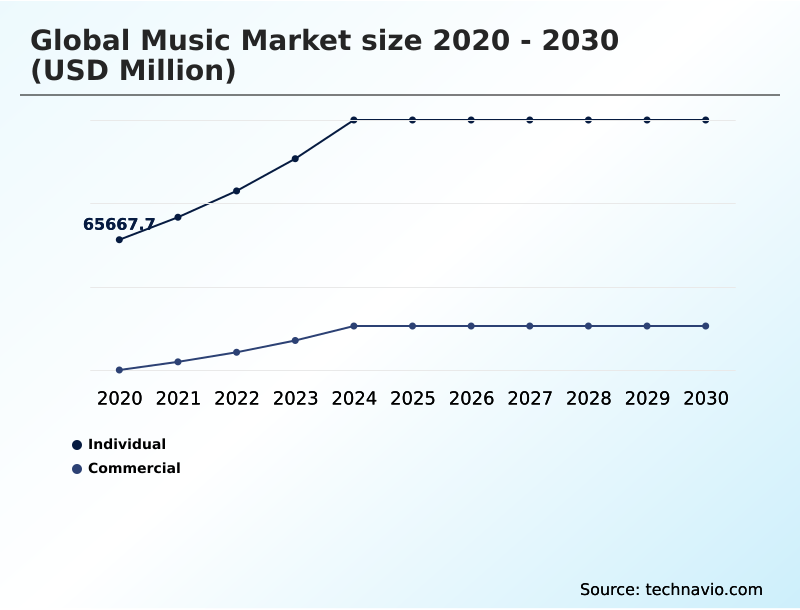
The Individual segment was valued at USD 106.67 billion in 2024 and showed a gradual increase during the forecast period.
Regional Analysis
North America is estimated to contribute 42% to the growth of the global market during the forecast period.Technavio’s analysts have elaborately explained the regional trends and drivers that shape the market during the forecast period.
See How Music Market Demand is Rising in North America Get Free Sample
The geographic landscape of the music market is characterized by mature, high-value regions and rapidly expanding growth territories.
North America remains the largest market, contributing over 41% of the global opportunity, driven by high streaming penetration and a robust live event ecosystem.
Meanwhile, the APAC region is the fastest-growing market, with China recently becoming the world's fourth-largest market, showing a 20.1% revenue surge.
South America demonstrates the highest growth momentum, with a regional CAGR of 20.8%, fueled by the cultural content export of Latin music.
Success in this fragmented environment requires strategies that support direct-to-fan models and robust music publishing administration to capitalize on global touring circuits.
Technologies like blockchain royalty tracking are also being explored to manage complex international rights and payments in this diverse landscape.
Market Dynamics
Our researchers analyzed the data with 2025 as the base year, along with the key drivers, trends, and challenges. A holistic analysis of drivers will help companies refine their marketing strategies to gain a competitive advantage.
- The global music market is navigating a complex period of innovation and adaptation, with its future trajectory being shaped by several interconnected long-tail developments. The impact of generative AI on music composition is a primary focus, forcing the industry to address profound questions about creativity, ownership, and value.
- This technological shift directly influences the evolution of music streaming ecosystems, where the debate over fair compensation and transparent royalty frameworks continues to intensify. As artists seek greater control, monetization strategies for independent artists are becoming more sophisticated, moving beyond simple streaming payouts to include direct-to-fan subscriptions, digital collectibles, and tiered content access.
- Concurrently, the challenges in digital music copyright protection are escalating, requiring constant legal and technological vigilance to combat piracy and unauthorized use in the digital age. The growth of immersive live music experiences is providing a powerful, high-margin counterbalance to digital consumption, reaffirming the unique value of physical presence and communal engagement.
- Furthermore, the future of music publishing and sync licensing is being redefined by the insatiable demand for content from streaming video services and gaming platforms, creating new revenue opportunities. For instance, companies that leverage AI-driven analytics to identify sync licensing opportunities have reported a 25% increase in placement speed compared to manual methods, highlighting a key area for operational advantage.
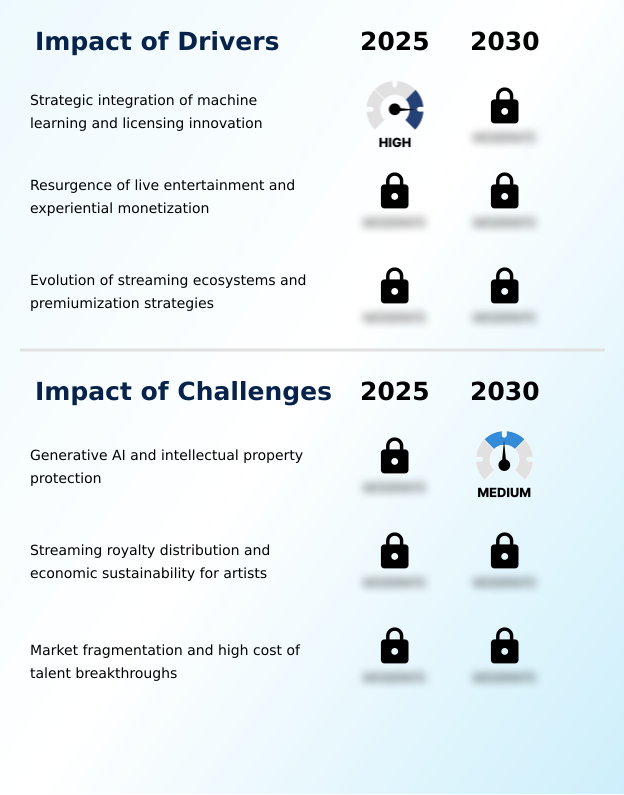
What are the key market drivers leading to the rise in the adoption of Music Industry?
- The strategic integration of machine learning alongside innovations in licensing frameworks is a key driver propelling market growth.
- Market growth is propelled by sophisticated premiumization strategies and the maturation of digital services. A primary driver is the focus on high-value subscriber retention, with platforms introducing tiered subscription models that include exclusive content offerings.
- These premium subscription models have proven effective, contributing to a 10% year-on-year increase in a leading platform's premium user base. The strategic use of audio branding strategy is also growing, enhancing brand identity in commercial settings.
- In parallel, advancements in technology enable the creation of synthetic media and require robust digital likeness protection for artists, which in turn drives new licensing opportunities and affects music catalog valuation.
What are the market trends shaping the Music Industry?
- The exponential integration of generative AI in music composition and production is emerging as a transformative market trend. This development is reshaping creative workflows and industry value chains.
- Key trends are reshaping the music market, driven by technological innovation and evolving consumption habits. The adoption of an artist-centric model on digital streaming platforms is gaining momentum, aiming to create more equitable payout structures, with some platforms increasing payouts by over USD 1 billion annually.
- This shift is complemented by the rise of spatial audio engineering and virtual reality components, which create the immersive fan experiences now central to experiential spending trends. These technologies require high-production touring setups and sophisticated fan engagement platforms.
- Furthermore, synchronization licensing for media is expanding, creating significant new revenue streams, as evidenced by a 15% growth in sync revenues for major publishers.
What challenges does the Music Industry face during its growth?
- The rapid advancement of generative AI presents a significant challenge to intellectual property protection, affecting the industry's growth trajectory.
- The music market faces significant challenges related to technological disruption and market saturation. The proliferation of accessible music composition tools and the rise of short-form video content have led to an unprecedented volume of uploads, making music discovery algorithms a critical but contested battleground.
- This saturation is exacerbated by the threat of audio deepfake detection becoming a necessary operational cost, with early systems showing a 25% false positive rate that could impact legitimate artists. To stand out, influencer-led campaigns and viral content strategies are essential but costly.
- Additionally, while lossless streaming quality is demanded by audiophiles, the mass market's preference for convenience means that achieving profitability on lossless quality audio tiers, which require 50% more bandwidth, remains a considerable challenge.
Exclusive Technavio Analysis on Customer Landscape
The music market forecasting report includes the adoption lifecycle of the market, covering from the innovator’s stage to the laggard’s stage. It focuses on adoption rates in different regions based on penetration. Furthermore, the music market report also includes key purchase criteria and drivers of price sensitivity to help companies evaluate and develop their market growth analysis strategies.
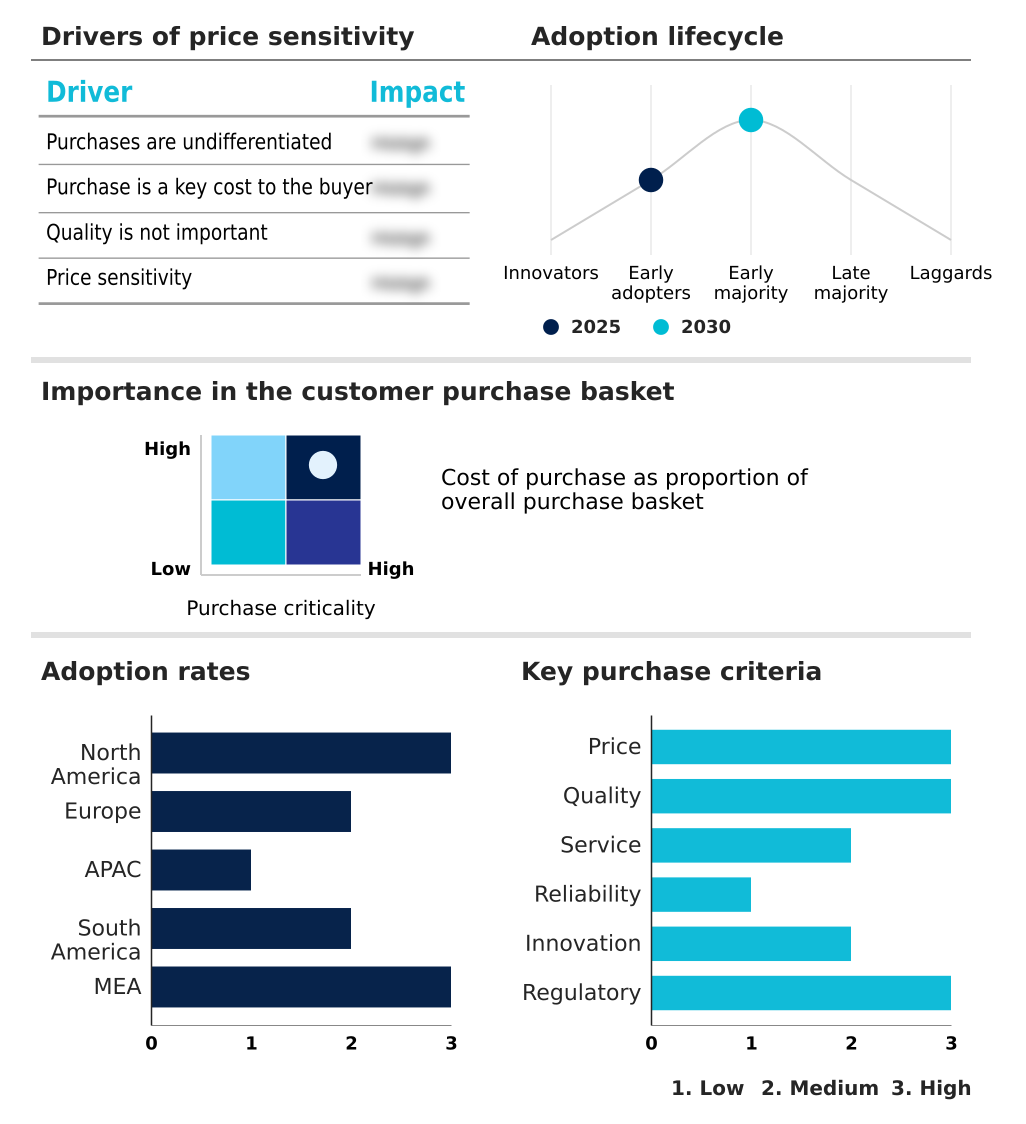
Customer Landscape of Music Industry
Competitive Landscape
Companies are implementing various strategies, such as strategic alliances, music market forecast, partnerships, mergers and acquisitions, geographical expansion, and product/service launches, to enhance their presence in the industry.
Amazon.com Inc. - Analyzes the ecosystem for creating, distributing, and monetizing auditory art forms through advanced digital and physical channels.
The industry research and growth report includes detailed analyses of the competitive landscape of the market and information about key companies, including:
- Amazon.com Inc.
- Apple Inc.
- Beggars Group
- Deezer SA
- Fender Musical Instruments
- Gibson Brands Inc.
- HYBE Co. Ltd.
- Live Nation Entertainment Inc.
- Roland Corp.
- Shure Inc.
- Sony Music Entertainment
- Spotify Technology SA
- Steinway and Sons
- Tencent Music Entertainment
- TIDAL Music AS
- Universal Music Group N.V.
- Warner Music Group Corp.
- Yamaha Corp.
- YouTube
- Zee Entertainment Ltd.
Qualitative and quantitative analysis of companies has been conducted to help clients understand the wider business environment as well as the strengths and weaknesses of key industry players. Data is qualitatively analyzed to categorize companies as pure play, category-focused, industry-focused, and diversified; it is quantitatively analyzed to categorize companies as dominant, leading, strong, tentative, and weak.
Recent Development and News in Music market
- In March 2025, The Recording Industry Association of America reported that vinyl record sales in the United States achieved their seventeenth consecutive year of growth, highlighting expanded domestic pressing capacity to meet surging demand.
- In February 2025, Spotify announced a major expansion of its localized editorial teams in West Africa to support the discovery and promotion of emerging regional artists to a global audience.
- In January 2025, The European Union Intellectual Property Office announced a pan-European initiative to implement standardized metadata protocols for digital music distribution, aiming to reduce royalty inaccuracies.
- In October 2024, Universal Music Group announced a strategic alliance with Stability AI to co-develop professional-grade music creation tools, ensuring generative technology is trained responsibly while supporting human artistry.
Dive into Technavio’s robust research methodology, blending expert interviews, extensive data synthesis, and validated models for unparalleled Music Market insights. See full methodology.
| Market Scope | |
|---|---|
| Page number | 291 |
| Base year | 2025 |
| Historic period | 2020-2024 |
| Forecast period | 2026-2030 |
| Growth momentum & CAGR | Accelerate at a CAGR of 19.1% |
| Market growth 2026-2030 | USD 229628.7 million |
| Market structure | Fragmented |
| YoY growth 2025-2026(%) | 16.5% |
| Key countries | US, Canada, Mexico, Germany, UK, France, Italy, Spain, The Netherlands, China, Japan, India, South Korea, Australia, Indonesia, Brazil, Argentina, Chile, South Africa, Saudi Arabia, UAE, Turkey and Israel |
| Competitive landscape | Leading Companies, Market Positioning of Companies, Competitive Strategies, and Industry Risks |
Research Analyst Overview
- The music market is undergoing a structural evolution, driven by the convergence of advanced technology and shifting consumer preferences. The integration of high-fidelity audio and spatial audio engineering is no longer a niche feature but a central element of premium subscription models, compelling boardroom-level decisions on platform infrastructure investment.
- This push for quality is mirrored in the creative space, where generative AI music tools are becoming standard, necessitating robust frameworks for intellectual property rights management. The industry's value chain is also diversifying, with a strong emphasis on live performance production and direct-to-fan models that foster deeper engagement.
- As digital streaming platforms mature, the focus shifts to a more sustainable artist-centric model, supported by innovative synchronization licensing deals. The effectiveness of these strategies is evident, with leading platforms successfully increasing payouts to the industry by over 10% annually, reflecting a healthier, more collaborative ecosystem built on technological advancement and strategic partnerships in music publishing administration.
What are the Key Data Covered in this Music Market Research and Growth Report?
-
What is the expected growth of the Music Market between 2026 and 2030?
-
USD 229.63 billion, at a CAGR of 19.1%
-
-
What segmentation does the market report cover?
-
The report is segmented by End-user (Individual, and Commercial), Source (Recording, Live, and Others), Type (Digital, and Physical formats) and Geography (North America, Europe, APAC, South America, Middle East and Africa)
-
-
Which regions are analyzed in the report?
-
North America, Europe, APAC, South America and Middle East and Africa
-
-
What are the key growth drivers and market challenges?
-
Strategic integration of machine learning and licensing innovation, Generative AI and intellectual property protection
-
-
Who are the major players in the Music Market?
-
Amazon.com Inc., Apple Inc., Beggars Group, Deezer SA, Fender Musical Instruments, Gibson Brands Inc., HYBE Co. Ltd., Live Nation Entertainment Inc., Roland Corp., Shure Inc., Sony Music Entertainment, Spotify Technology SA, Steinway and Sons, Tencent Music Entertainment, TIDAL Music AS, Universal Music Group N.V., Warner Music Group Corp., Yamaha Corp., YouTube and Zee Entertainment Ltd.
-
Market Research Insights
- The music market's dynamics are increasingly shaped by premiumization strategies and evolving consumer behaviors. Platforms are shifting focus toward high-value subscriber retention, with some achieving a 10% year-on-year increase in premium subscribers.
- This is complemented by a surge in non-english language content, which has more than doubled its presence in global top 50 charts since 2020, reshaping the artist career trajectory. As experiential spending trends upward, the demand for immersive fan experiences is pushing the boundaries of live entertainment.
- This has led to a diversification of monetization streams, including exclusive content offerings and advanced superfan monetization models that deepen artist-fan relationships and drive new revenue.
We can help! Our analysts can customize this music market research report to meet your requirements.
 RIA -
RIA - 
