



Myanmar Residential Real Estate Market Size 2025-2029
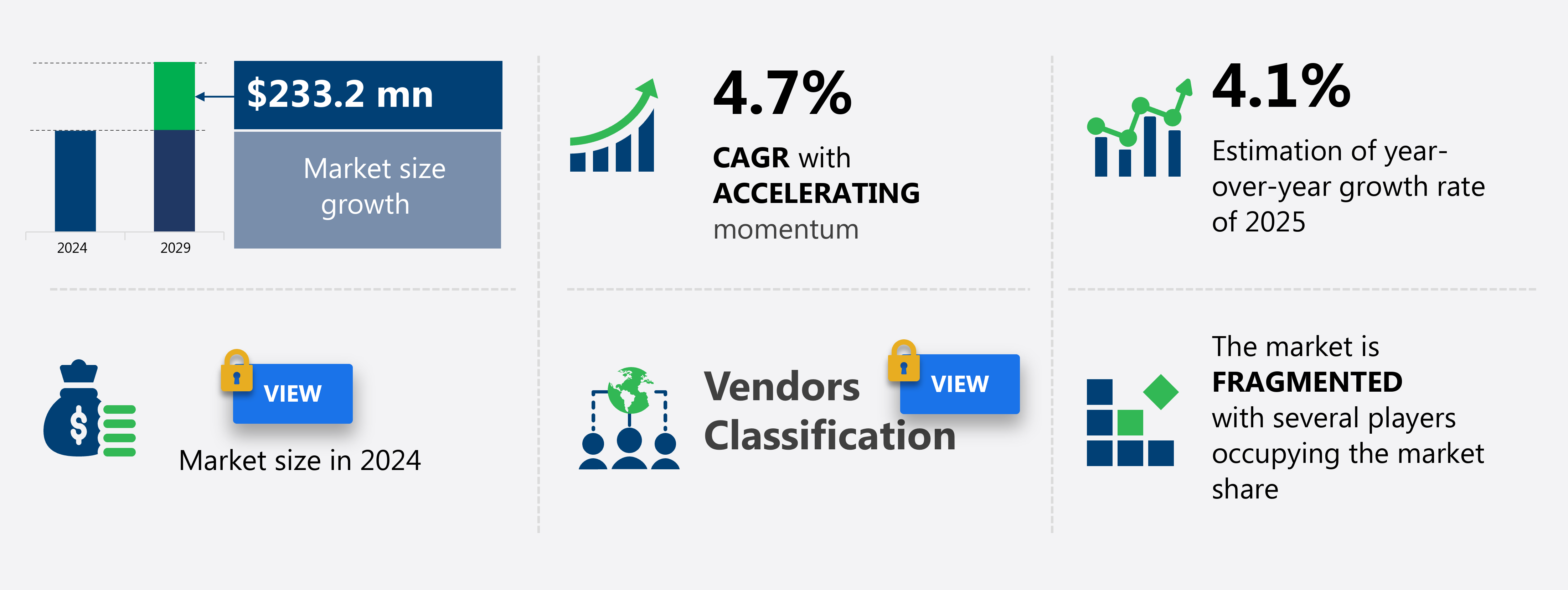
The Myanmar residential real estate market size is forecast to increase by USD 233.2 million at a CAGR of 4.7% between 2024 and 2029.
- The market is experiencing significant growth, driven by increasing urbanization and a burgeoning middle class population. Technological advancements are transforming the residential real estate industry, with digital platforms and mobile applications becoming essential tools for property listings, transactions, and customer engagement. However, regulatory uncertainty remains a major challenge, as the government implements new policies and regulations to govern the sector. This instability can impact investor confidence and hinder market growth. To capitalize on opportunities and navigate these challenges effectively, companies should closely monitor regulatory developments and adapt their strategies accordingly.
- Additionally, leveraging technology to streamline operations and enhance customer experience will be crucial in a competitive market. Overall, the market presents both risks and rewards for investors and industry players, requiring a strategic and agile approach to succeed.
What will be the size of the Myanmar Residential Real Estate Market during the forecast period?
- The residential real estate market continues to evolve, shaped by various factors influencing urban areas worldwide. Essential services and infrastructure, including transportation systems and functional infrastructure, remain crucial elements driving demand for urban living. Urban sustainability and the development of new metropolises and cities are gaining momentum, with a focus on tall structures and affordable housing solutions. Economic growth and living levels are key factors influencing the market's size and direction. Despite the overall positive trend, economic headwinds and poor management in some areas can lead to imbalances in the demand-supply equation. First-time buyers face challenges in securing real estate loans due to rising mortgage rates and transactional taxes.
- Central banks and governments implement measures to stabilize the market, including adjusting mortgage interest rates and promoting inexpensive housing schemes. The industrial regions' growth and the establishment of new urban areas contribute to increasing transaction volumes, with a growing emphasis on urban planning and efficient decision-making processes. However, the market's dynamics are complex, with various factors influencing property values and the homeownership rate. Informal settlements and poor management in some areas can hinder the market's growth and stability.
How is this market segmented?
The market research report provides comprehensive data (region-wise segment analysis), with forecasts and estimates in "USD million" for the period 2025-2029, as well as historical data from 2019-2023 for the following segments.
- Type
- Landed houses and villas
- Apartments and condominiums
- Mode Of Booking
- Sales
- Rental/Lease
- Geography
- Myanmar
By Type Insights
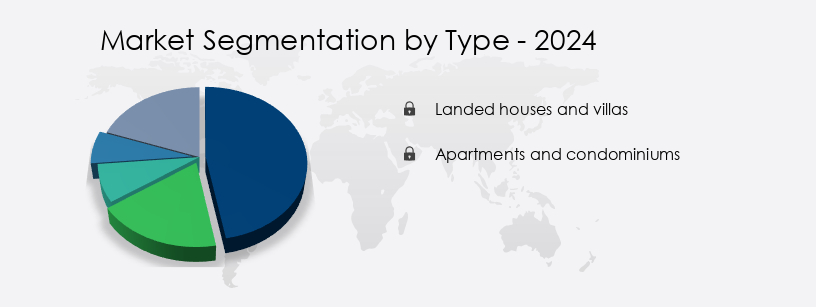
The landed houses and villas segment is estimated to witness significant growth during the forecast period.
The market is primarily driven by the demand for landed houses and villas. These properties, which accounted for the largest market share in 2024, offer a unique blend of community and privacy. Villas, specifically, are standalone houses with a veranda or yard, typically located in exclusive areas. They provide a sense of community while maintaining privacy, distinguishing them from flats. In contrast, landed houses are stand-alone dwellings that can be constructed on any type of land. Property tax implications, investor confidence, and housing affordability significantly impact the residential real estate market. Property value fluctuations, home sellers, and housing supply also play crucial roles.
Urban planning strategies, such as sustainable housing development and urban regeneration, are essential to address affordability and urban mobility concerns. Real estate investment trends, including home renovation, property management services, and data analysis, are shaping the market. Smart home technology and urban design are also influencing housing demand. City branding, competitiveness, and resilience are key factors in urban development and planning. Infrastructure development, sustainable urbanism, and economic diversification are essential for creating smart cities and addressing urban sprawl.
Get a glance at the market report of share of various segments Request Free Sample
The Landed houses and villas segment was valued at USD 566.90 million in 2019 and showed a gradual increase during the forecast period.
Market Dynamics
Our researchers analyzed the data with 2024 as the base year, along with the key drivers, trends, and challenges. A holistic analysis of drivers will help companies refine their marketing strategies to gain a competitive advantage.
What are the key market drivers leading to the rise in adoption of Myanmar Residential Real Estate Market?
- Growing residential sector in Myanmar is the key driver of the market.
- The market is experiencing significant growth, fueled by an increase in the construction of various residential buildings. This includes single-family homes, condos, cooperatives, duplexes, townhouses, and multifamily residences. The residential construction industry is anticipated to expand substantially during the forecast period, primarily due to the ongoing urbanization and rising living standards in Myanmar. Furthermore, the trend of integrated living is gaining traction, with homebuyers showing preference towards residential projects that offer modern amenities.
- These amenities encompass shopping malls with cinemas, schools, hospitals, recreational clubs, office complexes, and parks. The market dynamics in Myanmar's residential real estate sector are driven by these factors, leading to a promising future for this industry.
What are the market trends shaping the Myanmar Residential Real Estate Market?
- Technological adoption in real estate industry is the upcoming trend in the market.
- In Myanmar's residential real estate sector, technology adoption is a significant trend transforming the market. This shift brings about productivity gains and cost savings for various stakeholders, including agents, property managers, developers, and tenants. Two emerging technologies in this domain are smart sensor technology and cloud technology. Smart sensor technology is gaining traction as a valuable selling feature for residential properties. It contributes to properties becoming more energy-efficient and eco-friendly. By integrating sensors into homes, energy usage can be monitored and optimized, leading to substantial savings.
- Cloud technology is another trend in the residential real estate sector. Cloud-based platforms enable the collection and storage of leasing data across property portfolios in a centralized, cloud-hosted database. This streamlines data management, making it more accessible and efficient for stakeholders to analyze and make informed decisions.
What challenges does Myanmar Residential Real Estate Market face during the growth?
- Regulatory uncertainty associated with residential real estate is a key challenge affecting the market growth.
- The Myanmar real estate market experiences regulatory uncertainty at the federal, state, and local levels, posing challenges for development projects. This ambiguity increases costs, prolongs timelines, and introduces operational restrictions on existing properties. In 2024, the government intensified its focus on environmental, social, and governance (ESG) criteria for real estate assets. Real estate investors must now measure and disclose water usage, energy consumption, waste generation, carbon emissions, and climate change risks associated with their properties.
- Companies are required to report on carbon footprint reduction efforts and demonstrate commitments to biodiversity conservation. These regulations add complexity to the real estate sector in Myanmar, necessitating careful consideration and adaptation for investors and developers.
Exclusive Myanmar Residential Real Estate Market Customer Landscape
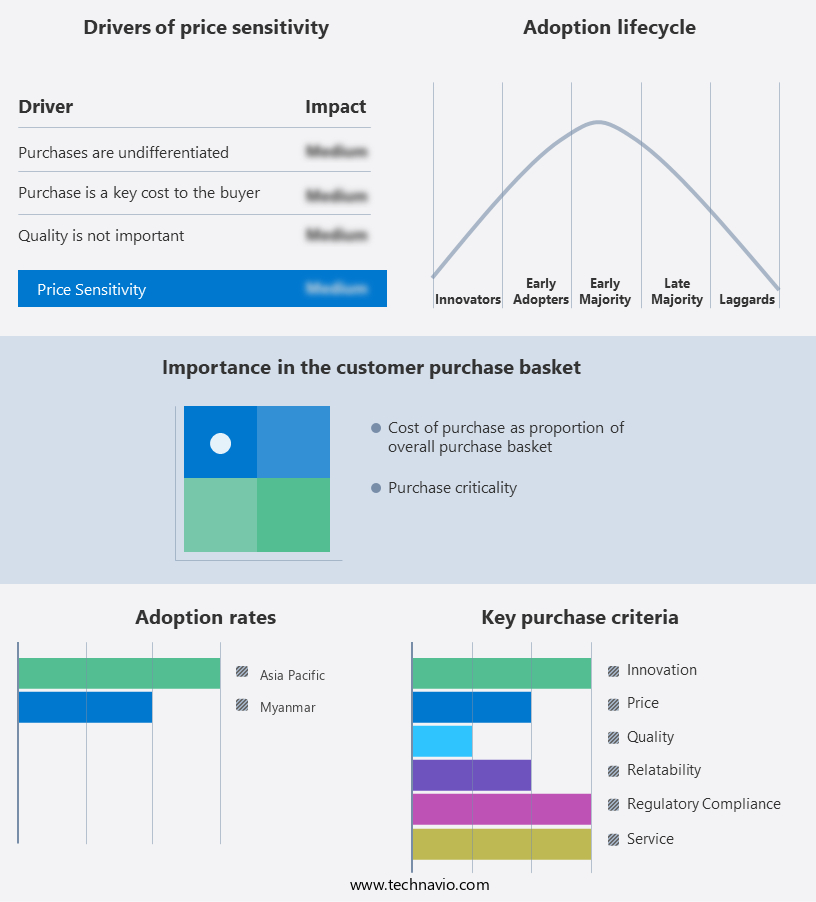
The market forecasting report includes the adoption lifecycle of the market, covering from the innovator's stage to the laggard's stage. It focuses on adoption rates in different regions based on penetration. Furthermore, the report also includes key purchase criteria and drivers of price sensitivity to help companies evaluate and develop their market growth analysis strategies.
Customer Landscape
Key Companies & Market Insights
Companies are implementing various strategies, such as strategic alliances, market forecast partnerships, mergers and acquisitions, geographical expansion, and product/service launches, to enhance their presence in the market.
The market research and growth report includes detailed analyses of the competitive landscape of the market and information about key companies, including:
- Aung Myin Pyae Sone Co. Ltd.
- Ayeryar Hinthar Holdings Co. Ltd.
- Beaver Concrete Construction Co. Inc.
- Capital Diamond Star Group Ltd.
- Dagon Group
- Eden Group
- Ever Seiko Co. Ltd.
- Excellent Fortune Development Group
- IME Group
- Keppel Corp. Ltd.
- Marga 23 Investment Ltd.
- Max Myanmar Group
- Myanmar Seilone Group
- Shwe Taung Development Co. Ltd.
- Yoma Strategic Holdings Ltd.
Qualitative and quantitative analysis of companies has been conducted to help clients understand the wider business environment as well as the strengths and weaknesses of key market players. Data is qualitatively analyzed to categorize companies as pure play, category-focused, industry-focused, and diversified; it is quantitatively analyzed to categorize companies as dominant, leading, strong, tentative, and weak.
Research Analyst Overview
The residential real estate market is a dynamic and intricate ecosystem, influenced by various factors that shape the landscape of property values, investor confidence, and housing affordability. One significant aspect of this market involves the implications of property taxes on transactions. As property values fluctuate, home sellers may face varying tax liabilities, which can impact their decision-making process. Investor confidence plays a crucial role in the residential sector. Economic indicators, housing supply, and urban planning strategies all contribute to investor sentiment. For instance, the availability of veterans subsidies can attract investors to specific markets, while home renovation trends can impact housing demand.
Real estate statistics provide valuable insights into the market's health and trends. Data analysis reveals patterns in home sales, homeownership rates, and luxury homes, among other categories. These statistics can inform urban planning strategies, infrastructure development, and smart city branding efforts. Urban development and urban regeneration are essential components of a thriving residential real estate market. Sustainable housing development, smart home technology, and property management services are key areas of focus for urban planners. City competitiveness, city resilience, and living standards are all influenced by these initiatives. Urban mobility and economic diversification are also critical factors in the residential real estate market.
Smart cities, sustainable urbanism, and infrastructure development contribute to an efficient and attractive urban environment, which can boost property values and investor confidence. Urban planning strategies, such as urban design and city planning, play a significant role in shaping the residential real estate market. These strategies aim to create livable, sustainable, and resilient cities, which can positively impact property values and living standards. The housing supply and demand balance is another crucial factor in the residential real estate market. Home prices and lease agreements are influenced by this balance, as are home sales and affordability. Real estate investment trusts (REITs) and real estate crowdfunding platforms offer alternative investment opportunities in the residential sector.
In , the residential real estate market is a complex and ever-evolving ecosystem. Factors such as property tax implications, investor confidence, housing affordability, urban planning strategies, and housing supply and demand all contribute to its dynamics. these factors can help stakeholders make informed decisions and navigate the market effectively.
|
Market Scope |
|
|
Report Coverage |
Details |
|
Page number |
138 |
|
Base year |
2024 |
|
Historic period |
2019-2023 |
|
Forecast period |
2025-2029 |
|
Growth momentum & CAGR |
Accelerate at a CAGR of 4.7% |
|
Market growth 2025-2029 |
USD 233.2 million |
|
Market structure |
Fragmented |
|
YoY growth 2024-2025(%) |
4.1 |
|
Competitive landscape |
Leading Companies, Market Positioning of Companies, Competitive Strategies, and Industry Risks |
What are the Key Data Covered in this Market Research Report?
- CAGR of the market during the forecast period
- Detailed information on factors that will drive the market growth and forecasting between 2025 and 2029
- Precise estimation of the size of the market and its contribution of the market in focus to the parent market
- Accurate predictions about upcoming market growth and trends and changes in consumer behaviour
- Growth of the market across Myanmar
- Thorough analysis of the market's competitive landscape and detailed information about companies
- Comprehensive analysis of factors that will challenge the growth of market companies
We can help! Our analysts can customize this market research report to meet your requirements Get in touch
 RIA -
RIA - 
