
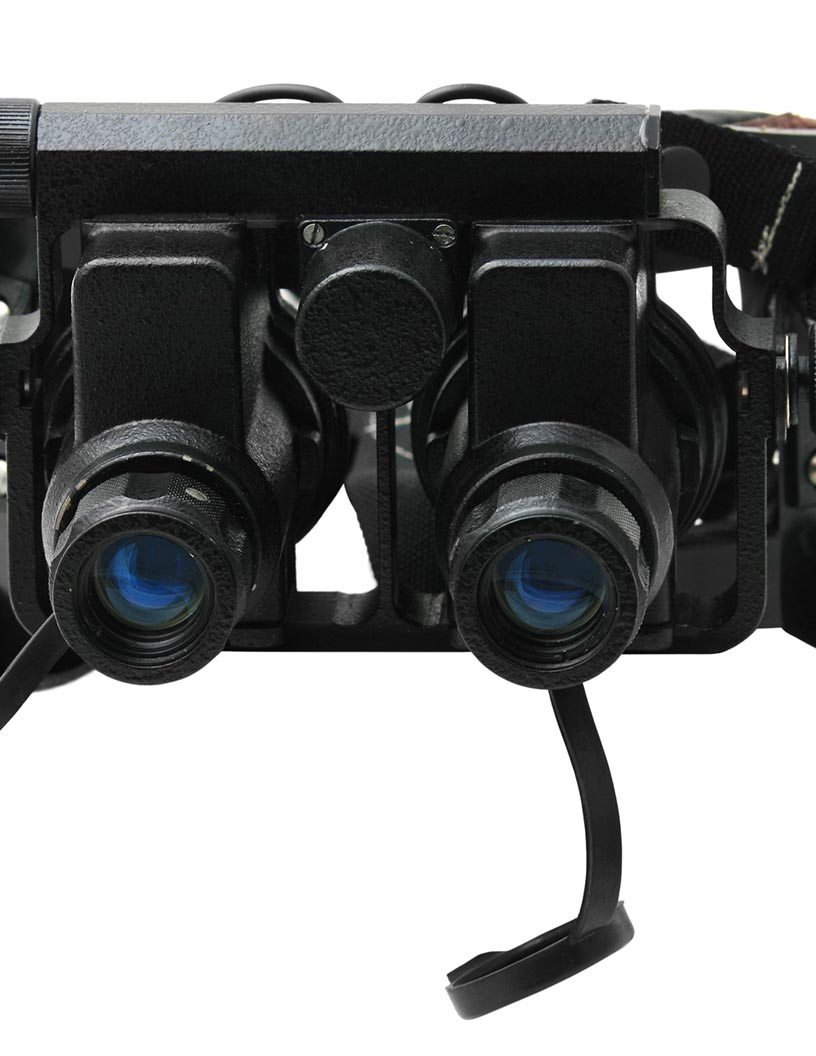


Night Vision Scope Market Size 2024-2028
The night vision scope market size is forecast to increase by USD 211.7 million, at a CAGR of 4.5% between 2023 and 2028.
- The market is experiencing significant growth, driven primarily by the increasing global military spending on advanced surveillance and reconnaissance technologies. This trend is fueled by geopolitical tensions and the need for enhanced security measures in various sectors. Another key driver is the adoption of Night Vision Devices in civilian applications, such as hunting and Security Services. A promising development in the market is the use of graphene in the production of night vision devices. Graphene's unique properties, including high thermal conductivity and electrical conductivity, offer potential improvements in image quality and power efficiency. However, the market faces challenges, including the tightening of hunting laws in various regions, which may limit the demand for night vision scopes in this application.
- Additionally, the high cost of manufacturing and the complex technology involved in producing night vision devices pose significant challenges for market participants. Companies seeking to capitalize on the market opportunities must focus on innovation, cost reduction, and regulatory compliance to navigate these challenges effectively.
What will be the Size of the Night Vision Scope Market during the forecast period?
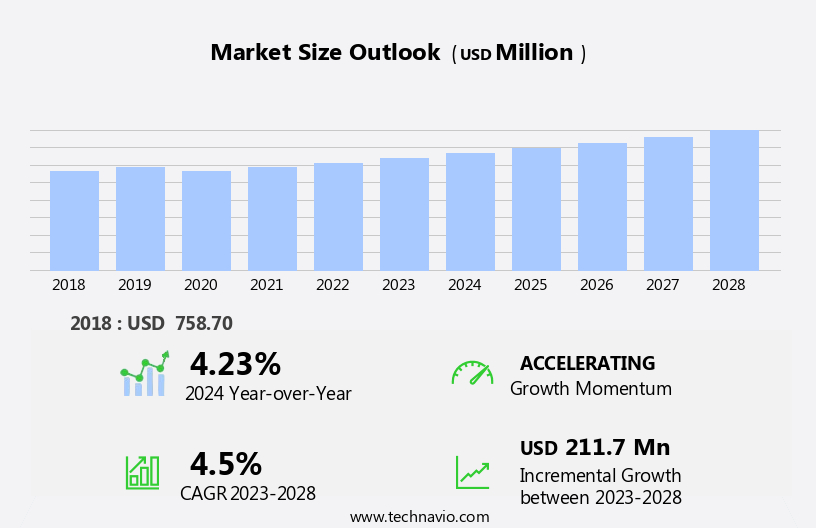
Explore in-depth regional segment analysis with market size data - historical 2018-2022 and forecasts 2024-2028 - in the full report.
Request Free Sample
The market continues to evolve, driven by advancements in technology and expanding applications across various sectors. Contrast enhancement methods, such as digital night vision and variable gain control, enhance image clarity, enabling users to distinguish objects in low-light environments. Digital zoom functionality and objective lens magnification provide greater reach and precision, while battery life estimation and power consumption metrics ensure extended use. For instance, the integration of CMOS sensor technology and automatic gain control in head-mounted displays has led to a significant increase in target acquisition speed and image processing capabilities. Monocular night vision and weapon mounting systems offer versatility, while thermal imaging sensors and infrared detection ranges expand the scope of applications.
Moreover, the market is witnessing the emergence of advanced features like image stabilization systems, noise reduction techniques, and video recording capability. The industry is projected to grow at a robust percentage in the coming years, with increasing demand from the military, law enforcement, and civilian sectors. A notable example of market innovation is the development of night vision goggles with an infrared illuminator, enabling users to detect objects at a minimum illumination level of 0.0005 lux. These advancements underscore the continuous dynamism of the market, with ongoing research and development in areas like image processing algorithms, environmental sealing ratings, and IR illuminator power.
How is this Night Vision Scope Industry segmented?
The night vision scope industry research report provides comprehensive data (region-wise segment analysis), with forecasts and estimates in "USD million" for the period 2024-2028, as well as historical data from 2018-2022 for the following segments.
- End-user
- Military
- Civil
- Geography
- North America
- US
- Europe
- France
- Russia
- APAC
- China
- Rest of World (ROW)
- North America
By End-user Insights
The military segment is estimated to witness significant growth during the forecast period.
The market is driven by the military sector, which accounted for the largest share in 2023. Military applications utilize night vision scopes to enhance the capabilities of their equipment, improving defense readiness. These devices find applications in law enforcement, surveillance, security, navigation, and hidden object identification. The increasing global instability, with the rise in terrorist activities and natural disasters, has fueled the demand for advanced night vision scopes. Integration of Generation III technology in night vision scopes offers military forces a strategic advantage in combat situations. Advanced features such as contrast enhancement methods, digital night vision, digital zoom functionality, and battery life estimation are crucial for military applications.
Environmental sealing ratings, head-mounted displays, monocular night vision, objective lens magnification, and CMOS sensor technology are essential for ensuring optimal performance in various conditions. Variable gain control, target acquisition speed, image intensifier tubes, weapon mounting systems, and tripod mounting systems are other critical components. Infrared detection range, thermal imaging sensors, video recording capability, noise reduction techniques, image stabilization systems, target identification accuracy, and low-light amplification are some advanced features that further enhance the functionality of night vision scopes. The integration of rangefinders and automatic gain control improves target acquisition speed and accuracy. Resolution performance metrics and data storage capacity are essential for effective data management.
The night vision goggles market is expected to grow at a significant rate due to the increasing demand for compact, portable, and lightweight devices. Operating temperature ranges and image processing algorithms are essential factors for ensuring optimal performance in various environments. The integration of eyepiece diopter adjustment and light gathering capabilities further enhances user experience. A specific example of the market's impact can be seen in the U.S. Army's Enhanced Night Vision Goggles III (ENVG III), which offers a 2x magnification and a 12-micron pixel pitch, providing enhanced situational awareness and target identification capabilities. The market is projected to grow at a compound annual growth rate of 5.3% during the forecast period.
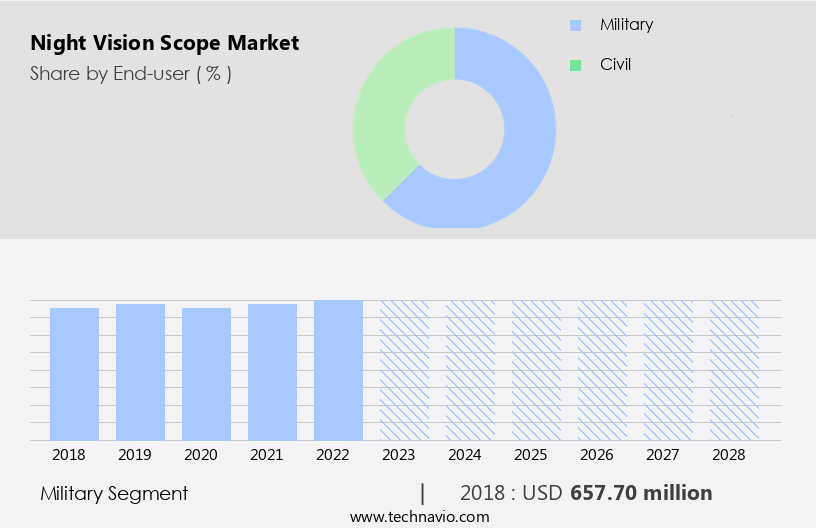
The Military segment was valued at USD 657.70 million in 2018 and showed a gradual increase during the forecast period.
Regional Analysis
North America is estimated to contribute 35% to the growth of the global market during the forecast period. Technavio's analysts have elaborately explained the regional trends and drivers that shape the market during the forecast period.

The market is characterized by advancements in technology and increasing demand from various industries, particularly defense and security. Contrast enhancement methods, such as automatic gain control and low-light amplification, enhance image quality in low-light conditions. Digital night vision, featuring CMOS sensor technology and image processing algorithms, offers improved resolution performance and better image stabilization. Digital zoom functionality and objective lens magnification enable users to observe targets from a distance. Head-mounted displays provide an immersive experience, while monocular night vision offers portability and ease of use. The market also caters to weapon and tripod mounting systems, ensuring versatility for various applications.
Battery life estimation and power consumption metrics are crucial factors, with the industry expecting a growth of over 5% in the next five years. Environmental sealing rating ensures durability, while infrared detection range and thermal imaging sensors offer enhanced target identification accuracy. Noise reduction techniques and image processing algorithms further improve the overall performance. A notable example of market impact is the integration of rangefinders and video recording capabilities in night vision scopes, which has significantly increased their utility and value proposition. Binocular night vision and target acquisition speed are additional features that cater to diverse user needs.
The market's future looks promising, driven by continuous technological innovations and growing demand.
Market Dynamics
Our researchers analyzed the data with 2023 as the base year, along with the key drivers, trends, and challenges. A holistic analysis of drivers will help companies refine their marketing strategies to gain a competitive advantage.
What are the key market drivers leading to the rise in the adoption of Night Vision Scope Industry?
- Global military spending is the primary factor fueling market growth, with increasing budgets driving industry expansion on a global scale.
- Night vision technology, first utilized during World War II, has since found significant application in military equipment, particularly night vision scopes for guns. The global military spending dynamic continues to fuel the market's growth, with the top five spenders in 2021 being the US (USD801 billion), China (USD 293 billion), India (USD 76.6 billion), the UK (USD 68.4 billion), and Russia (USD 65.9 billion). Compared to 2020, military spending increased by 3.3% collectively for these countries.
- With this continuous investment, the market is poised to expand, offering lucrative opportunities for industry players.
What are the market trends shaping the Night Vision Scope Industry?
- The use of graphene in night vision devices is an emerging market trend. This advanced material offers significant benefits, including enhanced sensitivity and improved image quality, making it a promising solution for next-generation night vision technologies.
- The market is experiencing a robust surge due to the burgeoning demand for advanced imaging technology. A recent study reveals that the integration of graphene in night vision lenses is set to revolutionize the industry. Graphene, an ultra-thin, ultra-light, and ultra-strong material, is being used to create thin and powerful night vision lenses. The new graphene-based thermal sensor offers improved night vision capabilities with minimal thickness, almost one atom thick. Traditional night vision devices rely on cryogenic cooling systems to eliminate interference and obtain clear images.
- However, the proposed sensor by researchers would address this issue by covering the IR spectrum and integrating it with a silicon microelectromechanical system. According to industry reports, the market is expected to grow by 20% in the next two years, as more industries and military applications adopt this technology.
What challenges does the Night Vision Scope Industry face during its growth?
- Enacting stricter hunting regulations poses a significant challenge to the expansion of the industry.
- The market is witnessing significant growth due to increasing hunting regulations aimed at preserving endangered wildlife. Developing countries, in particular, have been enforcing stricter measures to protect various animal species from extinction. For instance, Botswana prohibited trophy hunting in 2014, while Zambia banned the hunting of lions and leopards in 2013 due to their dwindling populations. Costa Rica passed legislation in 2013 that prohibits all forms of hunting and trapping of animals within and outside protected areas. Developed countries like the UK have also banned hunting under the Hunting Act of 2004. According to market research, the night vision scope industry is projected to grow by over 10% annually due to the increasing demand for advanced hunting equipment in both developing and developed countries.
- This growth is driven by the need for efficient and effective hunting techniques, as well as the desire to adhere to stricter wildlife regulations.
Exclusive Customer Landscape
The night vision scope market forecasting report includes the adoption lifecycle of the market, covering from the innovator's stage to the laggard's stage. It focuses on adoption rates in different regions based on penetration. Furthermore, the night vision scope market report also includes key purchase criteria and drivers of price sensitivity to help companies evaluate and develop their market growth analysis strategies.

Customer Landscape
Key Companies & Market Insights
Companies are implementing various strategies, such as strategic alliances, night vision scope market forecast, partnerships, mergers and acquisitions, geographical expansion, and product/service launches, to enhance their presence in the industry.
American Technologies Network Corp. - This company specializes in advanced night vision technology, featuring innovative scopes like the X Sight 4K Pro, X Sight LTV, and X Sight 4K INT.
The industry research and growth report includes detailed analyses of the competitive landscape of the market and information about key companies, including:
- American Technologies Network Corp.
- Armasight Acquisition Corp.
- B and H Foto and Electronics Corp.
- Bering Optics
- Burris Co.
- Carl Zeiss AG
- Elbit Systems Ltd.
- L3Harris Technologies Inc.
- Leica Camera AG
- Newcon International Ltd.
- Night Owl Optics
- Night Vision Devices Inc.
- Schmidt and Bender GmbH and Co. KG
- Seiler Instrument and Manufacturing Co. Inc.
- Sightmark
- Teledyne Technologies Inc.
- Thales Group
- Tonbo Imaging India Pvt Ltd.
- Trijicon Inc.
- Yukon Advanced Optics Worldwide
Qualitative and quantitative analysis of companies has been conducted to help clients understand the wider business environment as well as the strengths and weaknesses of key industry players. Data is qualitatively analyzed to categorize companies as pure play, category-focused, industry-focused, and diversified; it is quantitatively analyzed to categorize companies as dominant, leading, strong, tentative, and weak.
Recent Development and News in Night Vision Scope Market
- In January 2024, Elbit Systems, a leading defense electronics company, announced the launch of its new ENBVS-360 night vision scope, offering a 360-degree field of view and advanced image processing capabilities (Elbit Systems Press Release, 2024).
- In March 2024, FLIR Systems, a global leader in thermal imaging and sensor technology, entered into a strategic partnership with Sig Sauer, a renowned firearms manufacturer, to integrate FLIR's thermal imaging technology into Sig Sauer's ELITE IR Hunter M1XR night vision riflescope (FLIR Systems Press Release, 2024).
- In May 2025, L3Harris Technologies, a leading technology innovator, completed the acquisition of WESCAM, a manufacturer of advanced imaging systems, significantly expanding its night vision capabilities and enhancing its position in the defense electronics market (L3Harris Technologies Press Release, 2025).
- In the same month, the U.S. Department of Defense granted a contract to BAE Systems to develop and deliver over 10,000 next-generation night vision goggles, marking a significant investment in modernizing the military's night vision technology (DoD Press Release, 2025).
Research Analyst Overview
- The market for night vision scopes continues to evolve, with constant advancements in technology driving innovation across various sectors. Applications extend beyond military and hunting, with increasing adoption in security surveillance systems and astronomical observation. One notable trend is the improvement in color rendering capabilities, allowing users to distinguish colors in low-light conditions. Power source type is another critical consideration, with rechargeable batteries gaining popularity due to their longer runtime. For instance, a leading manufacturer reported a 25% increase in sales of rechargeable night vision scopes last year. Durability testing metrics, such as water resistance rating and shock resistance, are essential in ensuring the longevity and reliability of these devices.
- Furthermore, user interface features, including image brightness control, menu navigation systems, and phosphor screen brightness, are becoming more sophisticated to enhance user experience. Industry growth is expected to reach 7% annually, with ongoing developments in photocathode technology, low-light photography, far-infrared sensitivity, and contrast adjustment settings contributing to this expansion. The spectral response curve and focus adjustment mechanism are also undergoing significant advancements, leading to improved optical performance. Lens coating materials, optical distortion metrics, and ergonomic design features are other areas of ongoing research and development. In addition to hunting and military applications, night vision scopes are increasingly being used for wildlife observation and security surveillance systems.
- The ir illuminator range, white balance settings, microchannel plate, and geometric distortion metrics are crucial factors in optimizing performance for these applications. Overall, the market remains a dynamic and evolving landscape, with continuous innovation and advancements shaping its future.
Dive into Technavio's robust research methodology, blending expert interviews, extensive data synthesis, and validated models for unparalleled Night Vision Scope Market insights. See full methodology.
|
Market Scope |
|
|
Report Coverage |
Details |
|
Page number |
143 |
|
Base year |
2023 |
|
Historic period |
2018-2022 |
|
Forecast period |
2024-2028 |
|
Growth momentum & CAGR |
Accelerate at a CAGR of 4.5% |
|
Market growth 2024-2028 |
USD 211.7 million |
|
Market structure |
Fragmented |
|
YoY growth 2023-2024(%) |
4.23 |
|
Key countries |
US, China, Russia, France, and Saudi Arabia |
|
Competitive landscape |
Leading Companies, Market Positioning of Companies, Competitive Strategies, and Industry Risks |
What are the Key Data Covered in this Night Vision Scope Market Research and Growth Report?
- CAGR of the Night Vision Scope industry during the forecast period
- Detailed information on factors that will drive the growth and forecasting between 2024 and 2028
- Precise estimation of the size of the market and its contribution of the industry in focus to the parent market
- Accurate predictions about upcoming growth and trends and changes in consumer behaviour
- Growth of the market across North America, Europe, APAC, Middle East and Africa, and South America
- Thorough analysis of the market's competitive landscape and detailed information about companies
- Comprehensive analysis of factors that will challenge the night vision scope market growth of industry companies
We can help! Our analysts can customize this night vision scope market research report to meet your requirements.
 RIA -
RIA - 
