
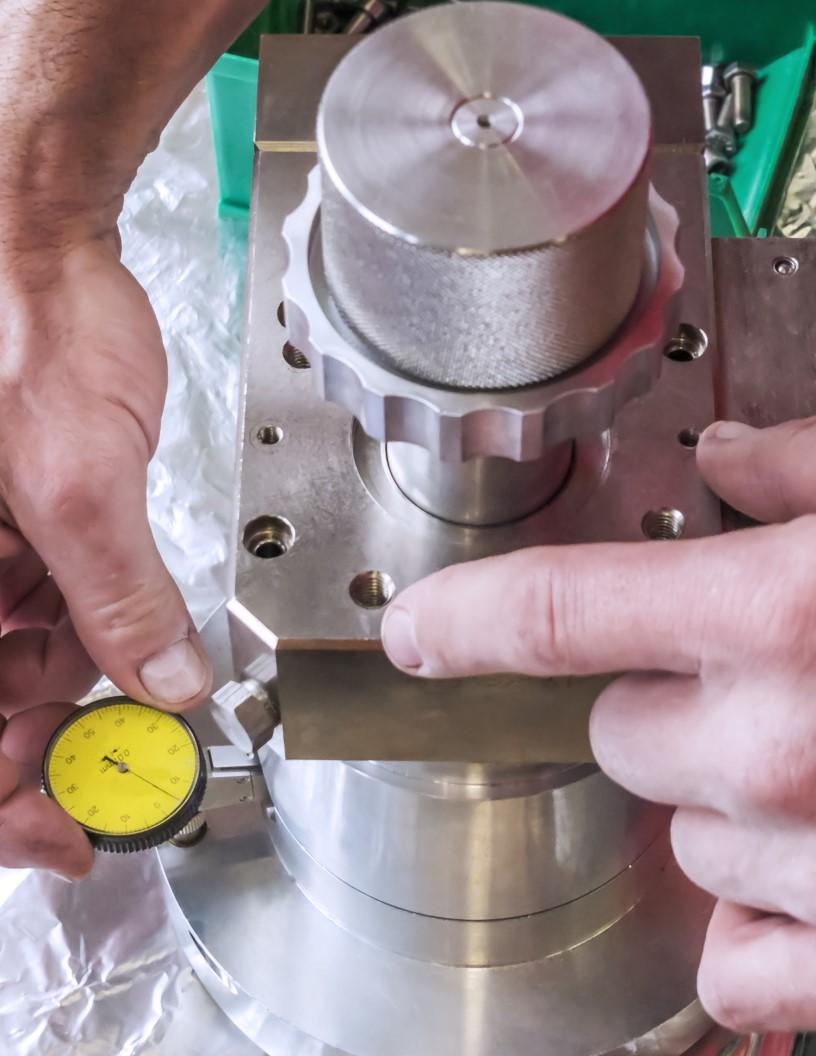


Non-Destructive Testing And Inspection Market Size 2024-2028
The non-destructive testing and inspection market size is forecast to increase by USD 5.96 billion at a CAGR of 7.1% between 2023 and 2028. The Non-Destructive Testing (NDT) and Inspection market is experiencing significant growth due to the increasing importance of material integrity and defect detection in various industries, particularly in oil and gas. Advanced NDT techniques are increasingly being adopted to identify internal defects in components and structures, ensuring their continued safety and efficiency. This trend is driven by the stringent regulations and standards related to NDT, which require regular inspections to maintain the integrity of critical infrastructure. Additionally, the focus on reducing energy consumption and minimizing downtime in industrial processes further emphasizes the importance of accurate and efficient NDT methods. The market is expected to continue growing as industries seek to enhance their operational excellence and ensure the safety and reliability of their assets. NDT equipment includes portable devices and drones for remote inspection and volumetric inspection techniques like ultrasonic testing. Non-Destructive Testing (NDT) is a critical inspection methodology used to ensure structural integrity and material integrity in various industries, including aerospace, oil and gas, construction, and power generation.
What will be the Size of the Market During the Forecast Period?

Non-destructive testing (NDT) and inspection are essential methodologies for maintaining the structural integrity of various industries' assets. These techniques enable the detection of surface and subsurface defects without damaging the tested components. This approach is crucial for quality control in industries such as aerospace, oil and gas, construction, power generation, and the defense sector. NDT inspection techniques include visual testing (VT), eddy-current testing (ECT), ultrasonic testing (UT), and radiographic testing (RT). Each methodology offers unique advantages in detecting different types of defects. For instance, VT is suitable for the detection of surface defects, while UT and ECT are effective in identifying subsurface defects.
Additionally, radiographic testing, on the other hand, can detect both surface and subsurface defects using electromagnetic radiation. The importance of NDT in ensuring material integrity extends beyond quality control. It plays a vital role in safety detection and fault detection. In the aerospace sector, NDT is used to ensure the safety of aircraft components by detecting cracks, corrosion, and other defects that could compromise the structural integrity of the aircraft. In the oil and gas industry, NDT is used to ensure the safety and efficiency of pipelines and tanks by detecting corrosion and other defects that could lead to leaks or explosions.
Also, advanced NDT processes, such as industrial CT scanners, offer enhanced capabilities in detecting internal defects. These technologies provide detailed, three-dimensional images of the inspected components, enabling the detection of defects that may be difficult or impossible to identify using traditional NDT methods. NDT is an essential component of quality control in various industries. Its ability to detect defects without damaging the tested components makes it a cost-effective and efficient solution for maintaining the structural integrity of critical assets. The use of NDT in industries such as aerospace, oil and gas, construction, power generation, and the defense sector is expected to continue growing as the importance of ensuring material integrity and safety detection becomes increasingly recognized.
In conclusion, non-destructive testing and inspection are vital methodologies for maintaining structural integrity and ensuring the safety of various industries' assets. The use of NDT techniques, including visual testing, eddy-current testing, ultrasonic testing, and radiographic testing, enables the detection of surface and subsurface defects without damaging the tested components. Advanced NDT processes, such as industrial CT scanners, offer enhanced capabilities in detecting internal defects. The importance of NDT in industries such as aerospace, oil and gas, construction, power generation, and the defense sector is expected to continue growing as the need for material integrity and safety detection becomes increasingly recognized.
Market Segmentation
The market research report provides comprehensive data (region-wise segment analysis), with forecasts and estimates in "USD billion" for the period 2024-2028, as well as historical data from 2018-2022 for the following segments.
- Method
- Traditional methods
- Advanced methods
- Industry Application
- Oil and gas
- Manufacturing
- Power generation
- Construction
- Others
- Geography
- North America
- US
- APAC
- China
- India
- Europe
- Germany
- UK
- Middle East and Africa
- South America
- North America
By Method Insights
The traditional methods segment is estimated to witness significant growth during the forecast period. The Non-Destructive Testing and Inspection (NDT) market plays a crucial role in ensuring the safety and integrity of structures and materials in the construction industry. Traditional NDT methods, such as Penetrant Testing (PT), continue to be popular due to their cost-effectiveness, efficiency, and ease of use. PT, also known as Liquid Penetrant Inspection (LPI), is a technique used to detect surface-breaking discontinuities on nonporous surfaces. This method relies on capillary action, where a penetrant liquid seeps into surface defects. After removing excess penetrant and applying a developer, any remaining penetrant that indicates a flaw becomes visible to a trained inspector.
Additionally, PT is particularly effective for identifying surface anomalies in non-ferrous materials, including metals, composites, and ceramics. In addition to traditional methods, the NDT market is also adopting advanced technologies such as Virtual Training, Remote Inspection Technologies, Portable NDT Devices, Drone Inspection, and Volumetric Inspection. These technologies offer increased efficiency, accuracy, and safety. Virtual training enables inspectors to learn NDT techniques from anywhere, while remote inspection technologies allow for real-time monitoring and analysis of structures and materials from a distance. Portable NDT devices offer the flexibility to perform inspections on-site, reducing downtime and travel costs. Drone inspections provide a bird's-eye view of large structures, making it easier to identify defects, and volumetric inspection uses advanced imaging technologies to inspect the internal structure of materials.
Also, the NDT market is expected to grow significantly due to the increasing demand for non-destructive testing in various industries, including construction, oil and gas, power generation, and aerospace. The market is also driven by the need for cost-effective and efficient inspection methods, as well as the increasing focus on safety and regulatory compliance. In conclusion, the market offers a range of methods to ensure the safety and integrity of structures and materials. Traditional methods such as PT continue to be popular, while advanced technologies such as Virtual Training, Remote Inspection Technologies, Portable NDT Devices, Drone Inspection, and Volumetric Inspection offer increased efficiency, accuracy, and safety. The market is expected to grow significantly due to the increasing demand for non-destructive testing in various industries and the need for cost-effective and efficient inspection methods.

Get a glance at the market share of various segments Request Free Sample
The traditional methods segment accounted for USD 8.74 billion in 2018 and showed a gradual increase during the forecast period.
Regional Insights
APAC is estimated to contribute 34% to the growth of the global market during the forecast period. Technavio's analysts have elaborately explained the regional trends and drivers that shape the market during the forecast period.

For more insights on the market share of various regions Request Free Sample
The Non-Destructive Testing (NDT) and Inspection market in North America is witnessing significant growth due to technological advancements and increasing demand from various industries. The US is a key contributor to this market, given its extensive industrial sector and stringent safety regulations. In April 2024, SOCOTEC made strategic acquisitions of Future Tech Consultants and DnA Controlled Inspection, expanding their offerings in specialized inspection and testing services. This strengthens SOCOTEC's position in providing comprehensive testing, inspection, and certification services, particularly in building construction and infrastructure sectors. The aerospace industry in the US significantly influences the regional NDT and Inspection market, with its focus on maintaining structural integrity and ensuring quality control. These industries rely heavily on NDT methodologies to detect both surface and subsurface defects, ensuring the safety and reliability of their assets.
Our researchers analyzed the data with 2023 as the base year, along with the key drivers, trends, and challenges. A holistic analysis of drivers will help companies refine their marketing strategies to gain a competitive advantage.
Market Driver
Increasing non-destructive testing and inspection training initiatives is the key driver of the market. The market in the US is experiencing notable growth due to increasing efforts to enhance skills and certification in various industries. One significant development is the collaboration between industry organizations, such as The American Society for Non-Destructive Testing (ASNT) and the American Welding Society (AWS), and government bodies to improve the training of professionals in Non-Destructive Testing (NDT) and related fields. In September 2024, ASNT and AWS partnered with the Indian Railway Ministry to establish comprehensive training programs for railway personnel in Non-Destructive Testing and welding.
Also, this initiative aims to bolster the safety and efficiency of the railway system by equipping professionals with advanced testing techniques and certification processes. The creation of a dedicated training center for NDT professionals in India is a crucial step towards achieving these goals. This collaboration underscores the importance of continuous learning and expertise in Non-Destructive Testing and Inspection methods, including Visual Testing (VT), Eddy-Current Testing (ECT), Ultrasonic Testing (UT), and Radiographic Testing (RT), in power generation, aerospace, and other industries.
Market Trends
Rising demand for advanced non-destructive testing and inspection is the upcoming trend in the market. The Non-Destructive Testing (NDT) and inspection market is experiencing a notable evolution due to the increasing demand for efficient and precise defect detection techniques. This trend is particularly prominent in sectors with a strong focus on material integrity, such as oil and gas, where the identification of internal defects is crucial for ensuring safety and productivity. Advanced NDT inspection techniques, like those employing terahertz waves and sophisticated algorithms, are gaining popularity. For instance, Volkswagen Group's implementation of the Irys system for measuring car body coating thickness is an illustrative example. Traditionally, coating thickness measurement methods have limitations, which the Irys system effectively overcomes through its non-contact, non-destructive approach.
By utilizing terahertz waves and proprietary algorithms, the Irys system delivers highly accurate results, making it an indispensable tool for maintaining quality control in the automotive industry. In summary, the global market for NDT and inspection is witnessing a shift towards advanced technologies that offer improved defect detection capabilities, increased energy efficiency, and enhanced material integrity.
Market Challenge
Stringent regulations and standards related to non-destructive testing is a key challenge affecting market growth. Non-destructive testing and inspection plays a crucial role in ensuring the structural integrity of various industries' infrastructure, including aerospace, oil and gas, and manufacturing. Regulatory compliance is a significant challenge in this market, with different regulatory bodies enforcing guidelines to mitigate risks and enhance operational safety. For instance, the American Society for Nondestructive Testing (ASNT) sets standards for personnel qualification, ensuring that technicians are proficient in various non-destructive testing methods. In the aerospace sector, the Federal Aviation Administration (FAA) mandates strict adherence to non-destructive testing standards outlined in the Federal Aviation Regulations (FAR) to ensure aircraft safety. Similarly, in Europe, the European Union has established directives, such as the Pressure Equipment Directive (PED), which requires stringent inspection protocols for pressure vessels and piping systems.
The renewable energy sector also relies heavily on non-destructive testing for the inspection of turbomachinery and carbon fiber-reinforced plastic (CFRP) components. Financial barriers may hinder the adoption of non-destructive testing in some industries, but the long-term benefits of early detection and prevention of potential failures outweigh the initial investment. Infrastructure owners and operators must prioritize the implementation of non-destructive testing and inspection to maintain the structural health monitoring of their assets and ensure safety and reliability.
Exclusive Customer Landscape
The market forecasting report includes the adoption lifecycle of the market, covering from the innovator's stage to the laggard's stage. It focuses on adoption rates in different regions based on penetration. Furthermore, the report also includes key purchase criteria and drivers of price sensitivity to help companies evaluate and develop their market growth analysis strategies.

Customer Landscape
Key Companies & Market Insights
Companies are implementing various strategies, such as strategic alliances, partnerships, mergers and acquisitions, geographical expansion, and product/service launches, to enhance their presence in the market.
Acuren Corp. - The company offers non-destructive testing and inspection services which includes Liquid Penetrant Testing, Ground Penetrating Radar and others.
The market research and growth report includes detailed analyses of the competitive landscape of the market and information about key companies, including:
- Axess Group
- Baker Hughes Co.
- Bureau Veritas
- Creaform Inc.
- Evident Corp
- IRC Engineering Services Pvt. Ltd.
- Mistras Group Inc.
- MME Group
- Nikon Corp.
- NTS Unitek
- OKOndt Group
- Previan Technologies Inc.
- SGS SA
- TCR Engineering Services Private Ltd.
- Trinity NDT WeldSolutions Pvt. Ltd.
- TWI Ltd.
- Vertech Group
- Vibrant NDT Services
- Zetec Inc.
Qualitative and quantitative analysis of companies has been conducted to help clients understand the wider business environment as well as the strengths and weaknesses of key market players. Data is qualitatively analyzed to categorize companies as pure play, category-focused, industry-focused, and diversified; it is quantitatively analyzed to categorize companies as dominant, leading, strong, tentative, and weak.
Research Analyst Overview
Non-destructive testing (NDT) and inspection play a crucial role in ensuring the structural integrity and material integrity of various industries, including power generation, aerospace, infrastructure, and renewable energy. NDT inspection methodologies are essential for detecting surface and subsurface defects that could compromise the safety and performance of critical components. NDT techniques, such as visual testing (VT), eddy-current testing (ECT), ultrasonic testing (UT), and radiographic testing (RT), have become indispensable for quality control and non-destructive examination (NDE) in these sectors. Power generation, for instance, relies on NDT to maintain the safety and efficiency of turbomachinery, while the aerospace industry uses NDT to detect defects in carbon fiber-reinforced plastic (CFRP) components.
In summary, the adoption of NDT is driven by the need for safety detection, fault detection, and maintenance and repair in various industries. However, financial barriers, such as high energy consumption and the cost of NDT equipment, can hinder the widespread implementation of these techniques. To address these challenges, remote inspection technologies, virtual training, and portable NDT devices have gained popularity. Drone inspection, volumetric inspection, industrial CT scanners, robotics, automated crawlers, and component testing are some of the advanced NDT technologies that are transforming the industry. NDT inspection services, training services, and calibration services also play a vital role in ensuring the effectiveness and accuracy of NDT techniques.
|
Market Scope |
|
|
Report Coverage |
Details |
|
Page number |
213 |
|
Base year |
2023 |
|
Historic period |
2018-2022 |
|
Forecast period |
2024-2028 |
|
Growth momentum & CAGR |
Accelerate at a CAGR of 7.1% |
|
Market Growth 2024-2028 |
USD 5.96 billion |
|
Market structure |
Fragmented |
|
YoY growth 2023-2024(%) |
6.6 |
|
Regional analysis |
North America, APAC, Europe, Middle East and Africa, and South America |
|
Performing market contribution |
APAC at 34% |
|
Key countries |
US, China, India, Germany, and UK |
|
Competitive landscape |
Leading Companies, Market Positioning of Companies, Competitive Strategies, and Industry Risks |
|
Key companies profiled |
Acuren Corp., Axess Group, Baker Hughes Co., Bureau Veritas, Creaform Inc., Evident Corp, IRC Engineering Services Pvt. Ltd., Mistras Group Inc., MME Group, Nikon Corp., NTS Unitek, OKOndt Group, Previan Technologies Inc., SGS SA, TCR Engineering Services Private Ltd., Trinity NDT WeldSolutions Pvt. Ltd., TWI Ltd., Vertech Group, Vibrant NDT Services, and Zetec Inc. |
|
Market dynamics |
Parent market analysis, market growth inducers and obstacles, market forecast, fast-growing and slow-growing segment analysis, COVID-19 impact and recovery analysis and future consumer dynamics, market condition analysis for the forecast period |
|
Customization purview |
If our market report has not included the data that you are looking for, you can reach out to our analysts and get segments customized. |
What are the Key Data Covered in this Market Research and Growth Report?
- CAGR of the market during the forecast period
- Detailed information on factors that will drive the market growth and forecasting between 2024 and 2028
- Precise estimation of the size of the market and its contribution of the market in focus to the parent market
- Accurate predictions about upcoming market growth and trends and changes in consumer behaviour
- Growth of the market across North America, APAC, Europe, Middle East and Africa, and South America
- Thorough analysis of the market's competitive landscape and detailed information about companies
- Comprehensive analysis of factors that will challenge the growth of market companies
We can help! Our analysts can customize this market research report to meet your requirements. Get in touch
 RIA -
RIA - 
