


Online Jewelry Market Size 2026-2030
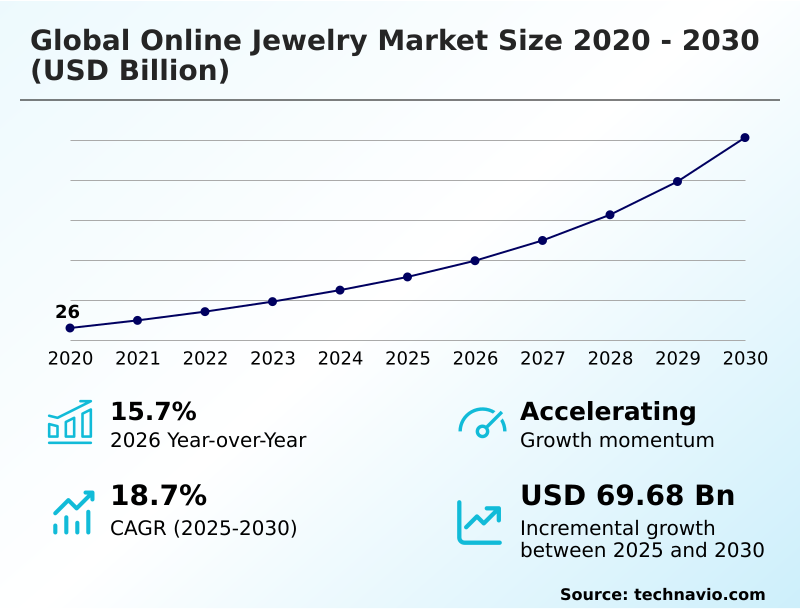
The online jewelry market size is valued to increase by USD 69.68 billion, at a CAGR of 18.7% from 2025 to 2030. Strong growth in digital payment adoption will drive the online jewelry market.
Major Market Trends & Insights
- North America dominated the market and accounted for a 39.7% growth during the forecast period.
- By Type - Fine jewelry segment was valued at USD 32.80 billion in 2024
- By Product Type - Rings segment accounted for the largest market revenue share in 2024
Market Size & Forecast
- Market Opportunities: USD 95.21 billion
- Market Future Opportunities: USD 69.68 billion
- CAGR from 2025 to 2030 : 18.7%
Market Summary
- The online jewelry market continues its dynamic evolution, driven by technological advancements and shifting consumer behaviors. The integration of digital tools has become standard, moving beyond simple e-commerce to create immersive and trustworthy shopping experiences. Key trends include the widespread adoption of omnichannel strategies that blend online convenience with offline services and the increasing demand for personalized products.
- This is facilitated by interactive design interfaces and on-demand manufacturing processes. A major driver is the growth of secure digital payment ecosystems, which reduce friction for high-value transactions. However, the industry grapples with challenges such as complex logistics for secure delivery and the persistent threat of counterfeit products, which erodes consumer confidence.
- For instance, a direct-to-consumer brand must implement a sophisticated supply chain with real-time tracking and tamper-evident packaging to ensure a million-dollar necklace reaches its destination securely, a process that relies on both advanced logistics and digital verification to maintain brand integrity.
What will be the Size of the Online Jewelry Market during the forecast period?
Get Key Insights on Market Forecast (PDF) Get Free Sample
How is the Online Jewelry Market Segmented?
The online jewelry industry research report provides comprehensive data (region-wise segment analysis), with forecasts and estimates in "USD million" for the period 2026-2030, as well as historical data from 2020-2024 for the following segments.
- Type
- Fine jewelry
- Fashion jewelry
- Product type
- Rings
- Earrings
- Necklaces
- Bangles
- Others
- Price range
- Luxury
- Premium
- Mid-range
- Economical
- Geography
- North America
- US
- Canada
- Mexico
- Europe
- Germany
- UK
- France
- APAC
- China
- India
- Japan
- Middle East and Africa
- UAE
- Saudi Arabia
- South Africa
- South America
- Brazil
- Argentina
- Rest of World (ROW)
- North America
By Type Insights
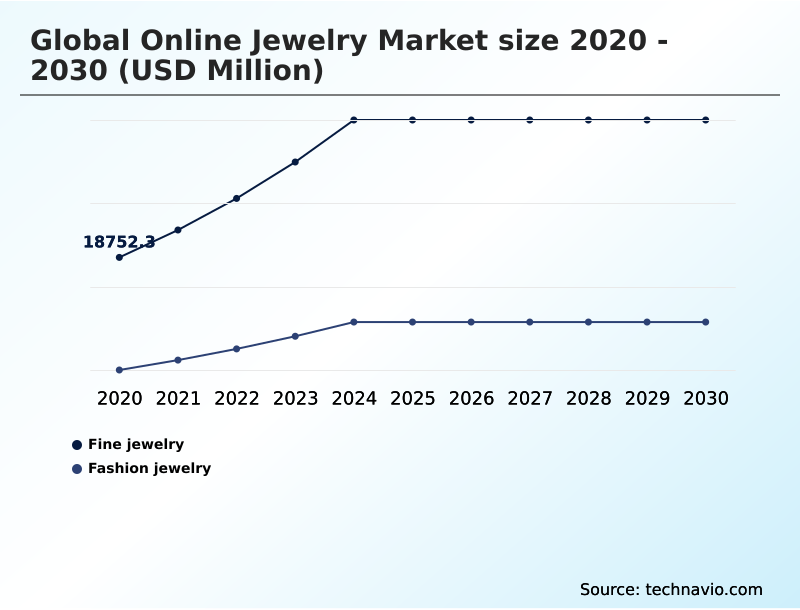
The fine jewelry segment is estimated to witness significant growth during the forecast period.
The fine jewelry segment is undergoing a significant transformation, with online platforms leveraging advanced technologies to build consumer trust.
The implementation of a digital verification protocol and blockchain-based tracing provides transparent histories for provenance, while tools like a smart-sizing tool address fit concerns.
The rise of on-demand manufacturing and 3D modeling enables deep personalization, further enhanced by innovations like a generative design platform. A growing focus on sustainability is evident through offerings like recycled gold jewelry and carbon-neutral mining partnerships.
Brands are refining the user experience design and conducting continuous A/B testing for conversion, with some achieving a 25% increase in repeat purchases through effective loyalty program management.
This focus on technology and sustainability is reshaping how high-value assets are sold online.
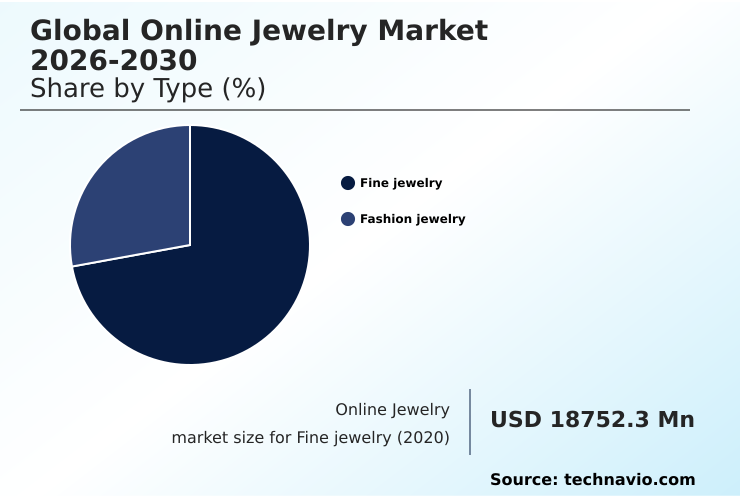
The Fine jewelry segment was valued at USD 32.80 billion in 2024 and showed a gradual increase during the forecast period.
Regional Analysis
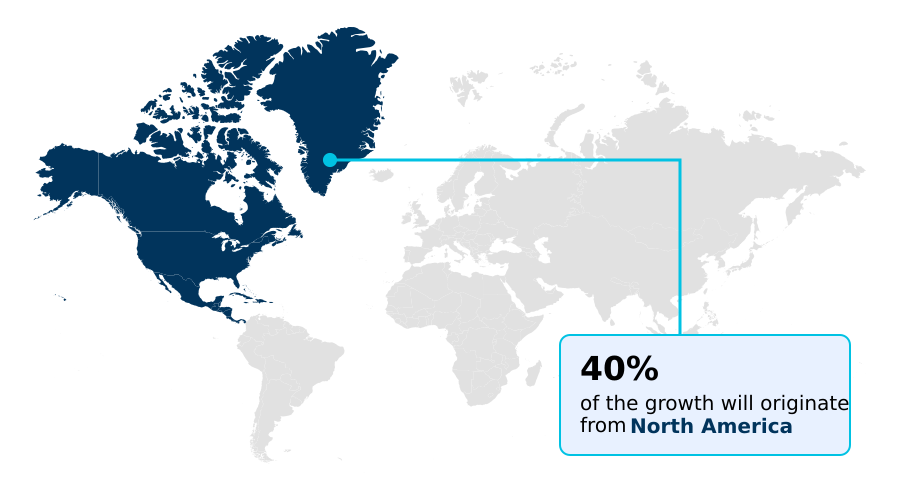
North America is estimated to contribute 39.7% to the growth of the global market during the forecast period.Technavio’s analysts have elaborately explained the regional trends and drivers that shape the market during the forecast period.
See How Online Jewelry Market Demand is Rising in North America Get Free Sample
The geographic landscape of the online jewelry market is diverse, with North America expected to contribute nearly 39.7% of the total incremental growth.
This region's maturity is characterized by the rapid adoption of virtual try-on technology and mobile commerce optimization, with some retailers reporting a 30% uplift in engagement from mobile-first designs.
Europe is defined by a demand for precious metal traceability and heritage, while APAC is the most dynamic region, driven by mobile-first economies in China and India.
In the Middle East, a focus on luxury and bespoke services is transitioning online.
Across all regions, a successful approach requires localized strategies that consider cultural preferences, logistical infrastructure, and the growing demand for sustainable jewelry manufacturing and lab-grown diamond certification.
Market Dynamics
Our researchers analyzed the data with 2025 as the base year, along with the key drivers, trends, and challenges. A holistic analysis of drivers will help companies refine their marketing strategies to gain a competitive advantage.
- The strategic focus in the online jewelry market is shifting toward sophisticated, niche applications of technology. For instance, the use of augmented reality try-on for engagement rings is becoming a standard feature to reduce purchase hesitation. To address authenticity concerns, blockchain for gemstone provenance tracking provides an immutable record of an item's history.
- On the front end, AI-powered personalized jewelry recommendations and generative AI for custom jewelry design are creating highly engaging customer experiences. Operationally, ensuring secure logistics for high-value jewelry delivery is paramount. The successful implementation of an omnichannel strategy for luxury jewelry retail requires seamless integration of online and offline touchpoints.
- Debates around lab-grown versus natural diamond analytics are influencing product assortments. A growing number of firms are highlighting sustainable practices in fine jewelry e-commerce and using a digital passport for authenticating vintage jewelry. Marketing efforts increasingly depend on analyzing the impact of influencer marketing on fashion jewelry and leveraging social commerce integration for impulse buys.
- The effectiveness of virtual try-on reducing online jewelry returns is a key metric, with some platforms reporting a reduction of over 30% in return rates, directly improving operational efficiency. Firms are also using data analytics for jewelry trend forecasting and executing campaigns based on hyper-personalization in D2C jewelry marketing.
- Proactively managing counterfeit products in online marketplaces and optimizing mobile commerce for jewelry sales are critical for sustained growth. The backend is powered by 3D modeling for bespoke jewelry manufacturing, while customer sentiment analysis for jewelry brands informs strategy.
- Ultimately, demonstrating ethical sourcing transparency in supply chains and exploring circular economy models for jewelry brands are becoming essential for long-term brand value.
What are the key market drivers leading to the rise in the adoption of Online Jewelry Industry?
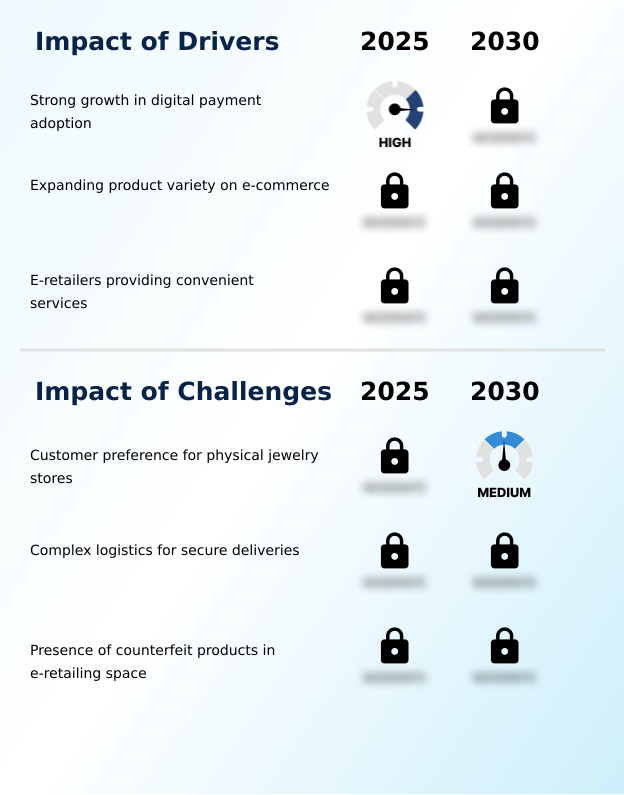
- The strong growth in digital payment adoption is a key driver accelerating market expansion by enhancing transaction security, convenience, and accessibility for a global consumer base.
- A key driver for the online jewelry market is the expanding product variety, enhanced by visual search algorithms that improve product discovery success rates by 40%. This vast selection, managed through effective product information management, attracts diverse demographics.
- The growth in digital payment adoption, underpinned by AI-driven fraud protection, has also been pivotal, with buy now, pay later integration increasing average order values by over 15% for some retailers.
- E-retailers providing convenient services, including virtual consultation services and high-resolution product visuals, build consumer confidence for high-value purchases.
- Furthermore, the integration of a dynamic pricing engine and customer feedback analysis allows platforms to offer competitive pricing and continually refine the shopping experience, ensuring long-term customer loyalty.
What are the market trends shaping the Online Jewelry Industry?
- The increasing adoption of omnichannel strategies is a significant market trend, compelling retailers to integrate physical and digital touchpoints to deliver a seamless and consistent customer journey.
- The online jewelry market is increasingly shaped by the adoption of an omnichannel retail strategy, which has been shown to improve customer retention by up to 20% compared to single-channel approaches. This integration creates a seamless customer journey mapping experience across digital and physical touchpoints.
- Personalization is another key trend, with platforms offering a custom engagement ring configurator and leveraging AI-based recommendations to drive sales. Brands utilizing augmented reality try-on features have reported a 35% reduction in product returns.
- Furthermore, the rise of social commerce integration and shoppertainment platform integration allows brands to engage consumers directly, turning inspiration into immediate transactions through compelling visual content and influencer collaborations, optimizing the digital storefront optimization. This dynamic environment prioritizes both technological innovation and personalized customer engagement.
What challenges does the Online Jewelry Industry face during its growth?
- The persistent customer preference for the tangible experience offered by physical jewelry stores remains a key challenge, limiting the full growth potential of the online retail channel.
- Despite growth, the market faces challenges from customer preference for physical stores, where perceived trust is higher. Logistical complexities for high-value logistics coordination also present hurdles, with secure, tamper-evident packaging and insured shipping increasing operational costs by as much as 18% per order.
- The presence of counterfeit products erodes trust, requiring significant investment in digital identity verification and user-generated content moderation. This can increase customer acquisition costs by 25% as brands work to rebuild confidence. Managing these issues demands robust cyber-security for e-commerce, effective returns management software, and sophisticated last-mile delivery optimization.
- Overcoming these challenges is essential for ensuring the credibility and scalability of online jewelry retail.
Exclusive Technavio Analysis on Customer Landscape
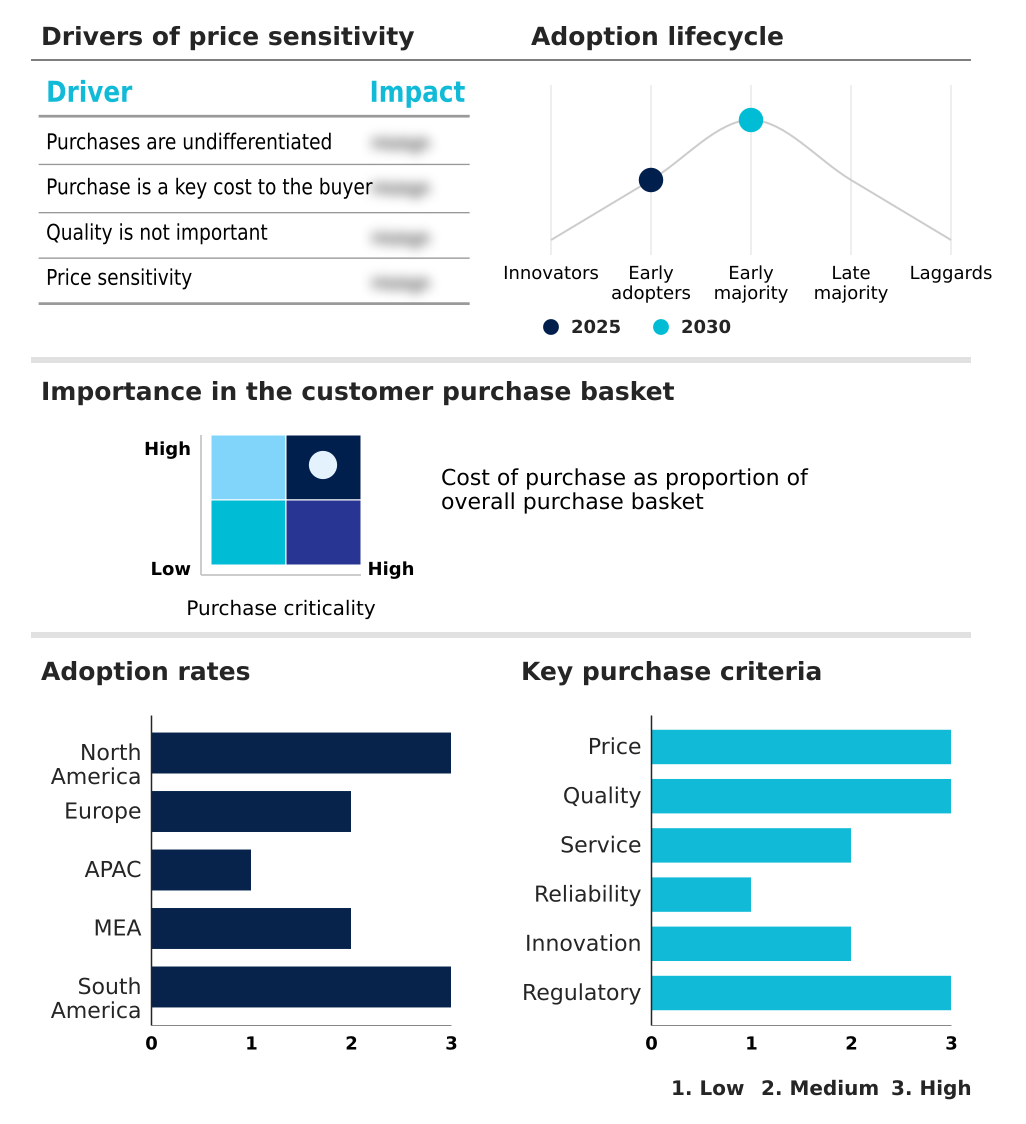
The online jewelry market forecasting report includes the adoption lifecycle of the market, covering from the innovator’s stage to the laggard’s stage. It focuses on adoption rates in different regions based on penetration. Furthermore, the online jewelry market report also includes key purchase criteria and drivers of price sensitivity to help companies evaluate and develop their market growth analysis strategies.
Customer Landscape of Online Jewelry Industry
Competitive Landscape
Companies are implementing various strategies, such as strategic alliances, online jewelry market forecast, partnerships, mergers and acquisitions, geographical expansion, and product/service launches, to enhance their presence in the industry.
AUrate New York - Specializes in ethically sourced precious metal jewelry, utilizing a direct-to-consumer model focused on sustainability and accessible luxury within the digital marketplace.
The industry research and growth report includes detailed analyses of the competitive landscape of the market and information about key companies, including:
- AUrate New York
- Boucheron Holding SAS
- Buccellati
- Bulgari S.p.A
- Cartier SA
- Catbird LLC
- Chopard Group
- Chow Sang Sang Holdings
- David Yurman Enterprises LLC
- Graff Diamonds Ltd.
- Harry Winston Inc.
- K. Mikimoto and Co. Ltd.
- Kendra Scott LLC
- Mejuri Inc
- Monica Vinader Ltd.
- Pandora Jewelry LLC
- Swarovski AG
- Tiffany and Co.
- Van Cleef and Arpels
- VRAI
Qualitative and quantitative analysis of companies has been conducted to help clients understand the wider business environment as well as the strengths and weaknesses of key industry players. Data is qualitatively analyzed to categorize companies as pure play, category-focused, industry-focused, and diversified; it is quantitatively analyzed to categorize companies as dominant, leading, strong, tentative, and weak.
Recent Development and News in Online jewelry market
- In August, 2025, Tiffany and Co. and Rio Tinto launched the 'Earth-First Elegance' initiative, a limited-edition necklace collection sold exclusively online to highlight a shared commitment to environmental responsibility and supply chain transparency.
- In December, 2025, Apple Inc. released a specialized software update for its spatial computing hardware, enhancing the visual fidelity of precious minerals and metals to create a more realistic virtual shopping experience.
- In February, 2025, De Beers introduced an innovative generative design platform, enabling users to create bespoke ring settings through voice commands, bridging the gap between traditional craftsmanship and digital convenience.
- In May, 2025, Malca-Amit implemented an advanced real-time tracking system integrated with decentralized ledgers to verify the provenance and chain of custody for every gemstone in transit, enhancing security for online purchases.
Dive into Technavio’s robust research methodology, blending expert interviews, extensive data synthesis, and validated models for unparalleled Online Jewelry Market insights. See full methodology.
| Market Scope | |
|---|---|
| Page number | 298 |
| Base year | 2025 |
| Historic period | 2020-2024 |
| Forecast period | 2026-2030 |
| Growth momentum & CAGR | Accelerate at a CAGR of 18.7% |
| Market growth 2026-2030 | USD 69679.4 million |
| Market structure | Fragmented |
| YoY growth 2025-2026(%) | 15.7% |
| Key countries | US, Canada, Mexico, Germany, UK, France, Italy, Spain, The Netherlands, China, India, Japan, South Korea, Australia, Indonesia, UAE, Saudi Arabia, South Africa, Turkey, Israel, Brazil, Argentina and Chile |
| Competitive landscape | Leading Companies, Market Positioning of Companies, Competitive Strategies, and Industry Risks |
Research Analyst Overview
- The online jewelry market's evolution is defined by rapid technological integration. Boardroom decisions now center on implementing an omnichannel retail strategy, supported by virtual showroom technology and mobile commerce optimization. Building trust is paramount, addressed through a digital product passport using decentralized ledger technology and digital identity verification.
- The customer experience is enhanced with augmented reality try-on and virtual try-on technology, alongside AI-based recommendations and an AI concierge. Customization is enabled by a generative design platform, interactive design interfaces, 3D modeling, and on-demand manufacturing. Retailers are leveraging social commerce integration and a visual search algorithm for discovery.
- Operationally, efficiency is gained through an automated fulfillment center, last-mile delivery optimization, and a smart-sizing tool. Investment in predictive analytics tools for trend-spotting, influencer marketing analytics, and data analytics for customer relationship management is critical. Security is handled by AI-driven fraud protection and secure payment gateways, while logistics depend on secure packaging solutions and tamper-evident packaging.
- Implementing these technologies, such as a digital verification protocol for authenticity, can improve compliance reporting speed by 40%.
What are the Key Data Covered in this Online Jewelry Market Research and Growth Report?
-
What is the expected growth of the Online Jewelry Market between 2026 and 2030?
-
USD 69.68 billion, at a CAGR of 18.7%
-
-
What segmentation does the market report cover?
-
The report is segmented by Type (Fine jewelry, and Fashion jewelry), Product Type (Rings, Earrings, Necklaces, Bangles, and Others), Price Range (Luxury, Premium, Mid-range, and Economical) and Geography (North America, Europe, APAC, Middle East and Africa, South America)
-
-
Which regions are analyzed in the report?
-
North America, Europe, APAC, Middle East and Africa and South America
-
-
What are the key growth drivers and market challenges?
-
Strong growth in digital payment adoption, Customer preference for physical jewelry stores
-
-
Who are the major players in the Online Jewelry Market?
-
AUrate New York, Boucheron Holding SAS, Buccellati, Bulgari S.p.A, Cartier SA, Catbird LLC, Chopard Group, Chow Sang Sang Holdings, David Yurman Enterprises LLC, Graff Diamonds Ltd., Harry Winston Inc., K. Mikimoto and Co. Ltd., Kendra Scott LLC, Mejuri Inc, Monica Vinader Ltd., Pandora Jewelry LLC, Swarovski AG, Tiffany and Co., Van Cleef and Arpels and VRAI
-
Market Research Insights
- The market's dynamism is driven by a focus on ethical sourcing verification and lab-grown diamond certification, with precious metal traceability becoming a key differentiator. Brands are adopting sustainable jewelry manufacturing using recycled gold jewelry and forming carbon-neutral mining partnerships. A superior customer journey mapping is achieved through a custom engagement ring configurator and virtual consultation services.
- Platforms are leveraging shoppertainment platform integration and AI-powered styling tools, leading to a 25% increase in user engagement. Behind the scenes, headless commerce architecture allows for flexible digital storefront optimization and better loyalty program management. Integrating buy now, pay later options can lift conversion rates by 15%.
- Success also hinges on cross-border e-commerce logistics, efficient returns management software, and customer feedback analysis to refine strategies and ensure a seamless experience.
We can help! Our analysts can customize this online jewelry market research report to meet your requirements.
 RIA -
RIA - 
