
Operational Resilience Management Platforms Market Analysis, Size, and Forecast 2026-2030: North America (US, Canada, and Mexico), Europe (Germany, UK, and France), APAC (China, India, and Japan), South America (Brazil, Argentina, and Colombia), Middle East and Africa (Saudi Arabia, UAE, and South Africa), and Rest of World (ROW)

Operational Resilience Management Platforms Market Analysis, Size, and Forecast 2026-2030:
North America (US, Canada, and Mexico), Europe (Germany, UK, and France), APAC (China, India, and Japan), South America (Brazil, Argentina, and Colombia), Middle East and Africa (Saudi Arabia, UAE, and South Africa), and Rest of World (ROW)

Published: Mar 2026 285 Pages SKU: IRTNTR81336

Market Overview at a Glance

$3.75 B
Market Opportunity
15.3%
CAGR 2025 - 2030
41.7%
North America Growth
$2.08 B
Software segment 2024

Operational Resilience Management Platforms Market Size 2026-2030

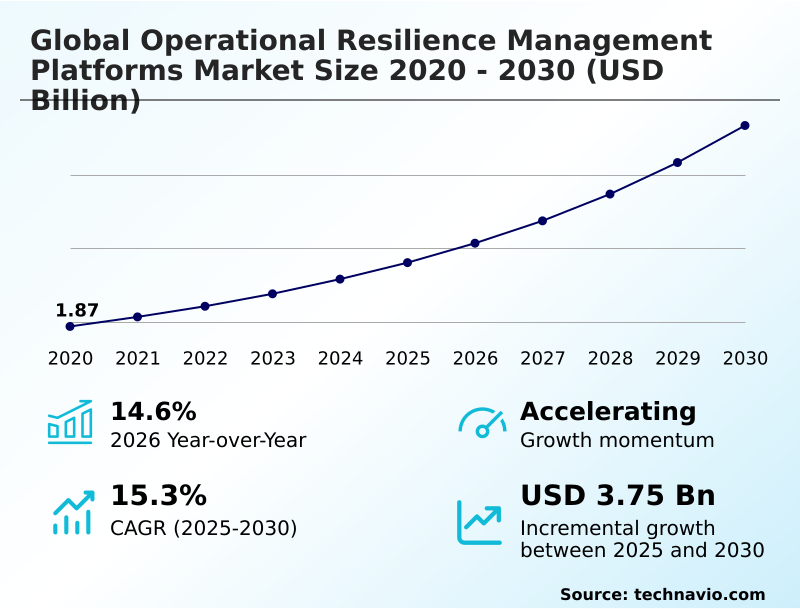
The operational resilience management platforms market size is valued to increase by USD 3.75 billion, at a CAGR of 15.3% from 2025 to 2030. Escalating regulatory compliance requirements will drive the operational resilience management platforms market.

Major Market Trends & Insights

  • North America dominated the market and accounted for a 41.7% growth during the forecast period.
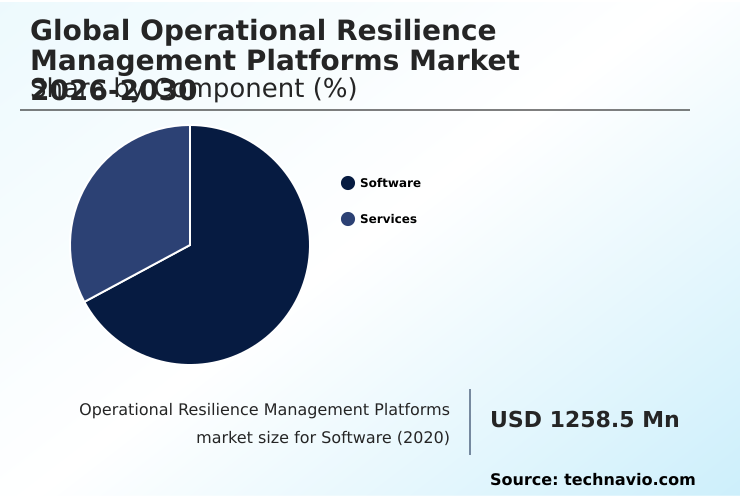
  • By Component - Software segment was valued at USD 2.08 billion in 2024
  • By Deployment - Cloud based segment accounted for the largest market revenue share in 2024

Market Size & Forecast

  • Market Opportunities: USD 5.48 billion
  • Market Future Opportunities: USD 3.75 billion
  • CAGR from 2025 to 2030 : 15.3%

Market Summary

  • The operational resilience management platforms market is defined by a strategic shift from traditional disaster recovery to proactive, continuous operational integrity. This evolution is driven by escalating regulatory demands and the increasing frequency of sophisticated cyber threats that blur the lines between IT security and business continuity.
  • Key trends include the integration of generative AI for predictive stress testing, which allows for more dynamic and realistic scenario modeling. For instance, a financial services firm can simulate a sudden third-party cloud provider failure, using the platform to analyze cascading impacts on payment processing and automatically trigger pre-defined recovery workflows.
  • This ensures the firm stays within its impact tolerance levels, demonstrating compliance to regulators. However, the market faces challenges such as data fragmentation within legacy systems and a scarcity of skilled personnel with the multidisciplinary expertise required to manage these advanced platforms.
  • The convergence of cybersecurity frameworks and business continuity planning into unified platforms is a critical development, enabling organizations to maintain essential functions even during a systemic attack and solidifying resilience as a competitive advantage.

What will be the Size of the Operational Resilience Management Platforms Market during the forecast period?

Get Key Insights on Market Forecast (PDF) Request Free Sample

How is the Operational Resilience Management Platforms Market Segmented?

The operational resilience management platforms industry research report provides comprehensive data (region-wise segment analysis), with forecasts and estimates in "USD million" for the period 2026-2030, as well as historical data from 2020-2024 for the following segments.

  • Component
    • Software
    • Services
  • Deployment
    • Cloud based
    • On premises
  • Business segment
    • Large enterprises
    • Small and medium enterprises
  • Geography
    • North America
      • US
      • Canada
      • Mexico
    • Europe
      • Germany
      • UK
      • France
    • APAC
      • China
      • India
      • Japan
    • South America
      • Brazil
      • Argentina
      • Colombia
    • Middle East and Africa
      • Saudi Arabia
      • UAE
      • South Africa
    • Rest of World (ROW)

By Component Insights

The software segment is estimated to witness significant growth during the forecast period.

The software segment is the primary engine of the operational resilience management platforms market, providing integrated digital solutions for risk monitoring and mitigation. These platforms utilize dependency mapping and real-time telemetry to offer a centralized view of vulnerabilities.

The architecture incorporates modules for business continuity management (bcm), automated recovery orchestration, and regulatory compliance automation, enabling a shift from reactive to proactive resilience.

With automated workflows, firms maintain critical business services during disruptions, with some achieving a 15% reduction in incident response times. Modular software design supports scalability for multinational corporations navigating diverse regulatory jurisdictions.

Interoperability with existing enterprise systems is key, reducing data fragmentation and creating a unified view of organizational health, which is essential for managing supply chain vulnerability and ensuring a unified resilience posture.

Request Free Sample

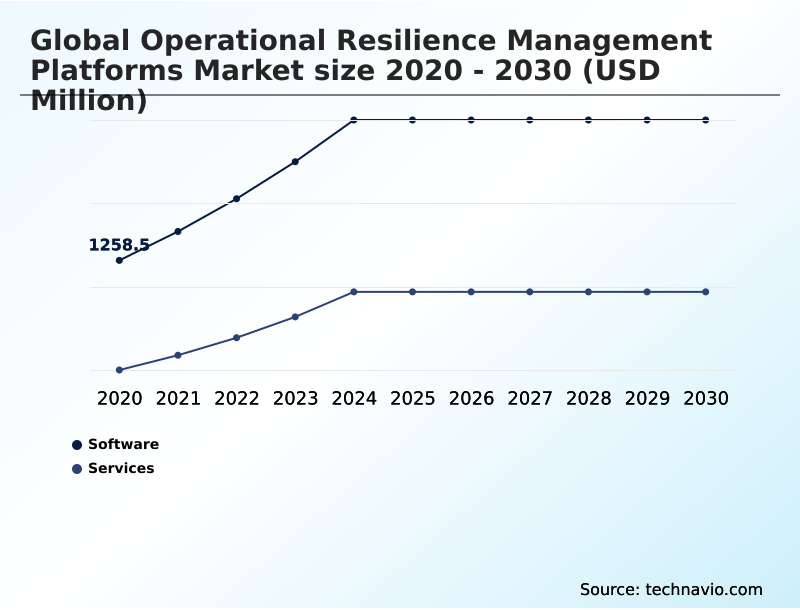
The Software segment was valued at USD 2.08 billion in 2024 and showed a gradual increase during the forecast period.
Request Free Sample

Regional Analysis

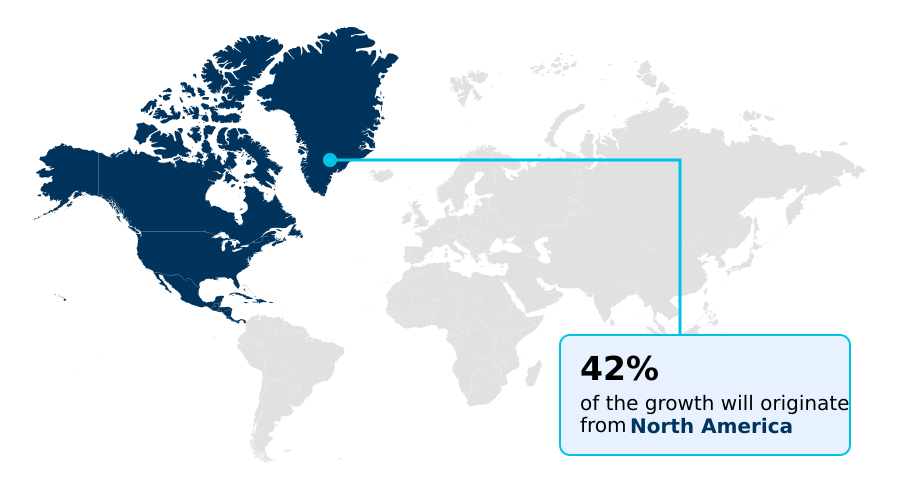
North America is estimated to contribute 41.7% to the growth of the global market during the forecast period.Technavio’s analysts have elaborately explained the regional trends and drivers that shape the market during the forecast period.

See How Operational Resilience Management Platforms Market Demand is Rising in North America Request Free Sample

The geographic landscape of the operational resilience management platforms market is led by North America, which is projected to contribute over 41% of the market's incremental growth, driven by stringent regulatory mandates and high digital maturity.

Europe follows, with the enforcement of the Digital Operational Resilience Act (DORA) accelerating platform adoption for tasks like crisis management orchestration.

In these mature regions, automated regulatory reporting modules have been shown to reduce compliance-related administrative overhead by up to 25%.

The APAC region is emerging as a high-growth area, fueled by rapid digital transformation and a focus on mitigating supply chain disruptions.

Key trends across all regions include the integration of ESG risk integration and the use of technologies for predictive stress testing, ensuring firms can manage everything from cyber intrusion response to systemic risk mitigation.

Market Dynamics

Our researchers analyzed the data with 2025 as the base year, along with the key drivers, trends, and challenges. A holistic analysis of drivers will help companies refine their marketing strategies to gain a competitive advantage.

  • The strategic value of the global operational resilience management platforms market 2026-2030 is increasingly tied to its ability to provide predictive insights and automated control over complex operational ecosystems. Organizations are moving beyond traditional business continuity planning for smes and large enterprises alike, focusing on the nuances of cyber resilience vs business continuity.
  • A key development is the use of generative ai for operational resilience, which allows for sophisticated scenario modeling that was previously impractical. The challenge of measuring roi of resilience platforms is being addressed through clearer metrics, such as demonstrating how real-time supply chain disruption monitoring can identify vulnerabilities nearly twice as fast as annual assessments.
  • Managing operational technology (ot) risk and understanding third-party risk in cloud services have become central to modern resilience frameworks. In the financial services sector, automating dora compliance reporting is a major driver for adoption, as platforms must now manage intricate dependencies and provide evidence of stability.
  • This shift solidifies the role of operational resilience in financial services as a cornerstone of regulatory compliance and competitive differentiation, pushing firms to integrate esg into risk management frameworks for a truly holistic view of potential disruptions.

What are the key market drivers leading to the rise in the adoption of Operational Resilience Management Platforms Industry?

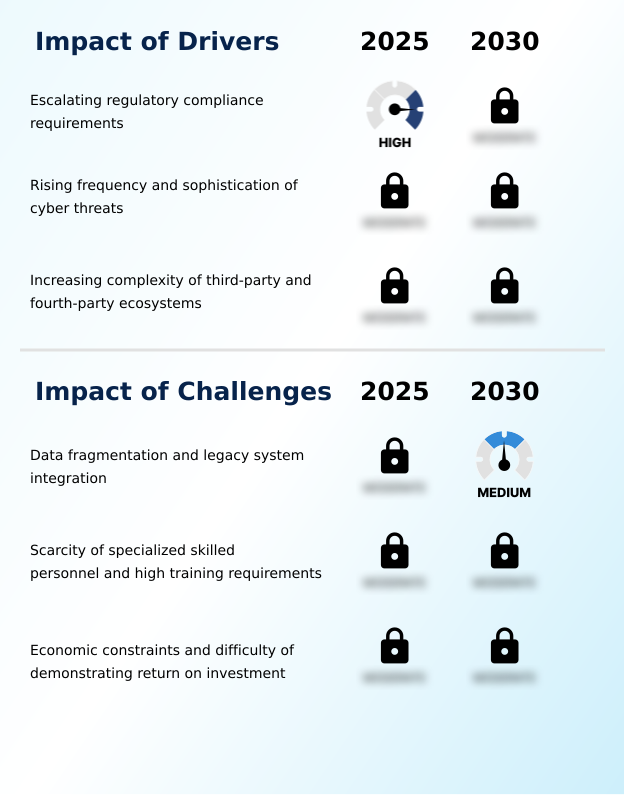
  • Escalating regulatory compliance requirements are a key driver for the operational resilience management platforms market.

  • Market growth is primarily fueled by three critical drivers. First, escalating regulatory demands, such as the Digital Operational Resilience Act (DORA), mandate rigorous operational risk framework adherence, forcing organizations to adopt platforms with automated regulatory reporting modules.
  • These tools have been proven to reduce audit preparation times by over 50%. Second, the rising frequency of sophisticated cyber threats necessitates platforms that offer proactive threat detection and advanced vulnerability management lifecycle capabilities.
  • Firms using integrated systems report a 35% lower financial impact from cyber events due to faster crisis management orchestration. Third, the increasing complexity of third-party ecosystems demands robust third-party risk management (tprm) and concentration risk identification.
  • The ability to visualize these dependencies provides holistic risk visibility and is crucial for maintaining operational stability.

What are the market trends shaping the Operational Resilience Management Platforms Industry?

  • The proliferation of generative AI in predictive stress testing is emerging as a significant market trend. This technology is enhancing scenario modeling capabilities for enterprises.

  • Key trends are reshaping the market, with a focus on intelligent and integrated solutions. The integration of generative AI for predictive stress testing and scenario testing is a primary development, enabling firms to identify 20% more hidden vulnerabilities compared to manual exercises. This allows for more effective cascading failure analysis.
  • A second major trend is the convergence of cybersecurity frameworks and business continuity planning into a unified resilience posture. This holistic approach provides a single source of truth for risk data, enhancing incident response coordination. Finally, the expansion of resilience frameworks to include environmental, social, and governance (ESG) factors is gaining traction.
  • Organizations integrating ESG risk integration into their platforms have reported a 15% reduction in supply chain disruptions linked to climate and social instability events.

What challenges does the Operational Resilience Management Platforms Industry face during its growth?

  • Data fragmentation and the challenge of legacy system integration represent a key restraint on industry growth.

  • Despite strong growth drivers, the market faces significant challenges that can impede adoption. The primary obstacle is data fragmentation within disparate legacy systems, which complicates the integration of modern cloud-native resilience tools. Projects involving legacy system integration experience budget overruns of up to 40% on average, hindering the creation of an effective operational risk framework.
  • Another key challenge is the scarcity of specialized personnel with the multidisciplinary skills required for business impact analysis (bia) and recovery time objective (rto) planning, which can delay platform deployment by 6 to 9 months. Finally, demonstrating a clear return on investment (roi) remains difficult, as the value is most apparent during a crisis.
  • This makes it challenging to secure funding, especially for small and medium enterprises.

Exclusive Technavio Analysis on Customer Landscape

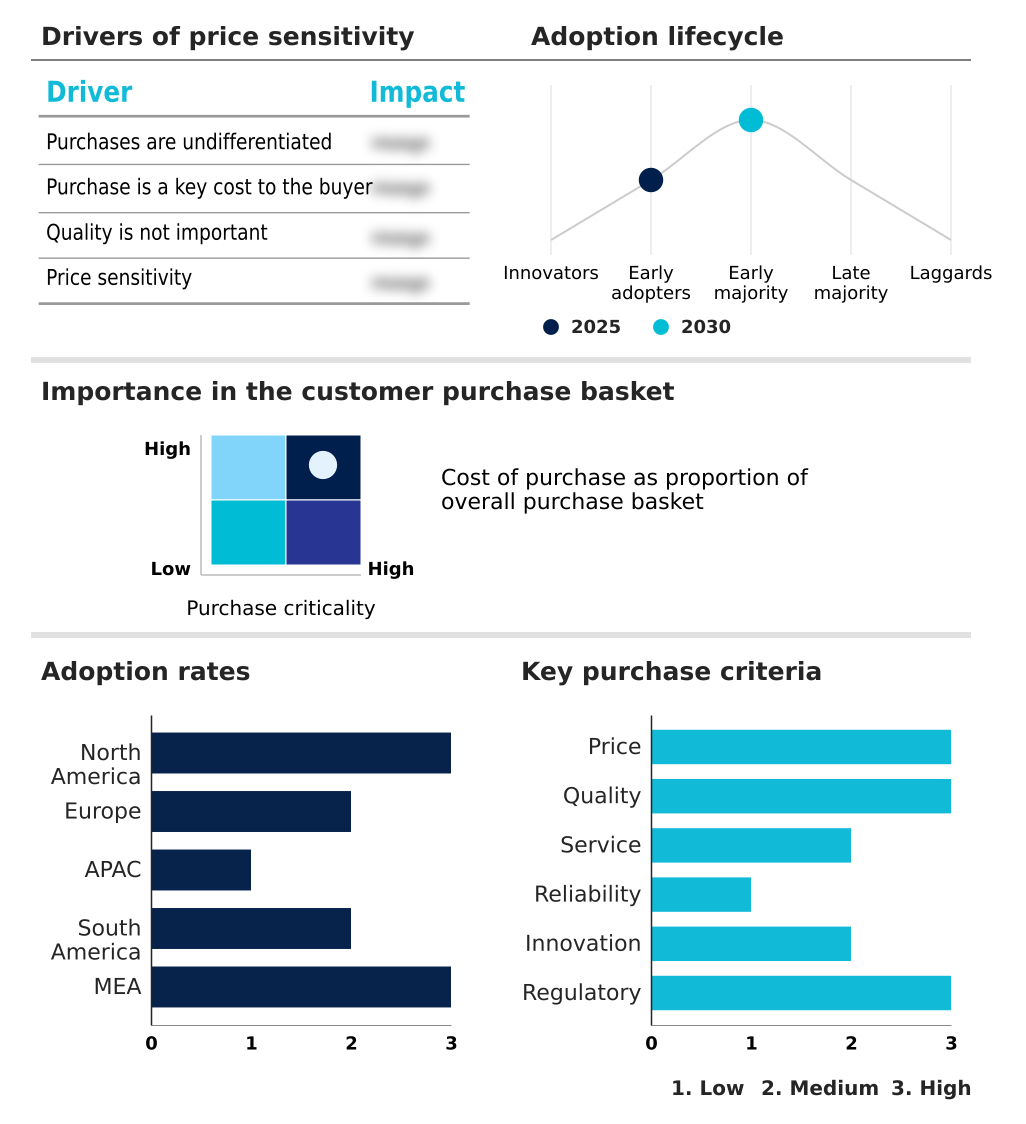
The operational resilience management platforms market forecasting report includes the adoption lifecycle of the market, covering from the innovator’s stage to the laggard’s stage. It focuses on adoption rates in different regions based on penetration. Furthermore, the operational resilience management platforms market report also includes key purchase criteria and drivers of price sensitivity to help companies evaluate and develop their market growth analysis strategies.
Customer Landscape of Operational Resilience Management Platforms Industry

Competitive Landscape

Companies are implementing various strategies, such as strategic alliances, operational resilience management platforms market forecast, partnerships, mergers and acquisitions, geographical expansion, and product/service launches, to enhance their presence in the industry.

AuditBoard Inc. - Provides an AI-enhanced, connected risk platform for enterprise-wide risk management, featuring operational risk identification, mitigation, and real-time oversight to build resilience.

The industry research and growth report includes detailed analyses of the competitive landscape of the market and information about key companies, including:

  • AuditBoard Inc.
  • Cutover Ltd.
  • Diligent Corp.
  • Everbridge Inc.
  • F24 AG.
  • Fusion Risk Management Inc.
  • IBM Corp.
  • LogicManager Inc.
  • MetricStream Inc.
  • Noggin Corp.
  • OneTrust LLC.
  • Origami Risk LLC.
  • Premier Continuum Inc.
  • Protecht Group.
  • Quantivate LLC.
  • Resilinc Corp.
  • Riskonnect Inc.
  • SAI360 Inc.
  • ServiceNow Inc.
  • Wolters Kluwer NV

Qualitative and quantitative analysis of companies has been conducted to help clients understand the wider business environment as well as the strengths and weaknesses of key industry players. Data is qualitatively analyzed to categorize companies as pure play, category-focused, industry-focused, and diversified; it is quantitatively analyzed to categorize companies as dominant, leading, strong, tentative, and weak.

Recent Development and News in Operational resilience management platforms market

  • In March 2025, Archer Integrated Risk Management introduced an advanced generative AI engine to its platform, enabling automated creation of detailed operational resilience scenarios based on specific company risk profiles and global threat intelligence.
  • In May 2025, the Australian Prudential Regulation Authority finalized its comprehensive operational resilience standard, CPS 230, mandating that financial entities define and maintain clear tolerance levels for disruptions to critical services.
  • In January 2025, the European Union commenced the full enforcement of the Digital Operational Resilience Act (DORA), compelling financial institutions and their critical third-party providers to implement rigorous testing, reporting, and risk management protocols.
  • In April 2025, the US Cybersecurity and Infrastructure Security Agency initiated a resilience enhancement program to secure operational technology in municipal water systems, driving demand for platforms that offer real-time infrastructure health monitoring.

Dive into Technavio’s robust research methodology, blending expert interviews, extensive data synthesis, and validated models for unparalleled Operational Resilience Management Platforms Market insights. See full methodology.

Market Scope
Page number 285
Base year 2025
Historic period 2020-2024
Forecast period 2026-2030
Growth momentum & CAGR Accelerate at a CAGR of 15.3%
Market growth 2026-2030 USD 3745.7 million
Market structure Fragmented
YoY growth 2025-2026(%) 14.6%
Key countries US, Canada, Mexico, Germany, UK, France, Italy, Spain, The Netherlands, China, India, Japan, Australia, South Korea, Indonesia, Brazil, Argentina, Colombia, Saudi Arabia, UAE, South Africa, Israel and Turkey
Competitive landscape Leading Companies, Market Positioning of Companies, Competitive Strategies, and Industry Risks

Request Free Sample

Research Analyst Overview

  • The operational resilience management platforms market is evolving from a compliance-driven necessity to a strategic enabler of business continuity management (bcm). The core function has shifted from simple IT disaster recovery (itdr) to a comprehensive governance risk and compliance (grc) framework that includes third-party risk management (tprm).
  • Platforms now focus on identifying critical business services and defining clear impact tolerance levels. This is achieved through advanced scenario testing and dependency mapping, providing real-time telemetry on operational health. The trend of generative ai modeling is directly influencing boardroom decisions on capital allocation, as it allows for more accurate predictive stress testing.
  • For example, platforms that integrate BCM with ITDR have demonstrated a 40% improvement in coordinating responses during simulated cyber intrusion response drills. This capability is crucial for managing advanced persistent threats (apts) and ensuring a unified resilience posture.
  • Key challenges such as data fragmentation and legacy system integration are being addressed through more sophisticated integration tools, but demonstrating a clear return on investment (roi) calculation remains a priority. Ultimately, these platforms are essential for managing everything from fourth-party risk monitoring and supply chain vulnerability to regulatory compliance automation under frameworks like the digital operational resilience act (dora).

What are the Key Data Covered in this Operational Resilience Management Platforms Market Research and Growth Report?

  • What is the expected growth of the Operational Resilience Management Platforms Market between 2026 and 2030?

    • USD 3.75 billion, at a CAGR of 15.3%

  • What segmentation does the market report cover?

    • The report is segmented by Component (Software, and Services), Deployment (Cloud based, and On premises), Business Segment (Large enterprises, and Small and medium enterprises) and Geography (North America, Europe, APAC, South America, Middle East and Africa)

  • Which regions are analyzed in the report?

    • North America, Europe, APAC, South America and Middle East and Africa

  • What are the key growth drivers and market challenges?

    • Escalating regulatory compliance requirements, Data fragmentation and legacy system integration

  • Who are the major players in the Operational Resilience Management Platforms Market?

    • AuditBoard Inc., Cutover Ltd., Diligent Corp., Everbridge Inc., F24 AG., Fusion Risk Management Inc., IBM Corp., LogicManager Inc., MetricStream Inc., Noggin Corp., OneTrust LLC., Origami Risk LLC., Premier Continuum Inc., Protecht Group., Quantivate LLC., Resilinc Corp., Riskonnect Inc., SAI360 Inc., ServiceNow Inc. and Wolters Kluwer NV

Market Research Insights

  • The market dynamic is shifting toward a proactive, integrated approach to resilience, providing holistic risk visibility across the enterprise. Adopting platforms with executable recovery plans and runbook automation has enabled organizations to reduce mean-time-to-recovery (MTTR) by up to 35% during critical events.
  • Furthermore, the use of automated service resilience testing has led to a 25% improvement in identifying system weaknesses before they cause disruptions. This move toward a unified resilience posture is driven by the need for a single source of truth for risk data. Through real-time threat intelligence and vulnerability management lifecycle tools, firms are achieving systemic risk mitigation.
  • The focus on crisis management orchestration ensures that communication and response are streamlined, allowing for more effective incident response coordination and cyber risk quantification.

We can help! Our analysts can customize this operational resilience management platforms market research report to meet your requirements.

Get in touch

1. Executive Summary

1.1 Market overview

Executive Summary - Chart on Market Overview
Executive Summary - Data Table on Market Overview
Executive Summary - Chart on Global Market Characteristics
Executive Summary - Chart on Market by Geography
Executive Summary - Chart on Market Segmentation by Component
Executive Summary - Chart on Market Segmentation by Deployment
Executive Summary - Chart on Market Segmentation by Business Segment
Executive Summary - Chart on Incremental Growth
Executive Summary - Data Table on Incremental Growth
Executive Summary - Chart on Company Market Positioning

2. Technavio Analysis

2.1 Analysis of price sensitivity, lifecycle, customer purchase basket, adoption rates, and purchase criteria

2.2 Criticality of inputs and Factors of differentiation

Chart on Overview on criticality of inputs and factors of differentiation

2.3 Factors of disruption

Chart on Overview on factors of disruption

2.4 Impact of drivers and challenges

Chart on Impact of drivers and challenges in 2025 and 2030

3. Market Landscape

3.1 Market ecosystem

Chart on Parent Market
Data Table on - Parent Market

3.2 Market characteristics

Chart on Market characteristics analysis

3.3 Value chain analysis

Chart on Value chain analysis

4. Market Sizing

4.1 Market definition

Data Table on Offerings of companies included in the market definition

4.2 Market segment analysis

Market segments

4.3 Market size 2025

4.4 Market outlook: Forecast for 2025-2030

Chart on Global - Market size and forecast 2025-2030 ($ million)
Data Table on Global - Market size and forecast 2025-2030 ($ million)
Chart on Global Market: Year-over-year growth 2025-2030 (%)
Data Table on Global Market: Year-over-year growth 2025-2030 (%)

5. Historic Market Size

5.1 Global Operational Resilience Management Platforms Market 2020 - 2024

Historic Market Size - Data Table on Global Operational Resilience Management Platforms Market 2020 - 2024 ($ million)

5.2 Component segment analysis 2020 - 2024

Historic Market Size - Component Segment 2020 - 2024 ($ million)

5.3 Deployment segment analysis 2020 - 2024

Historic Market Size - Deployment Segment 2020 - 2024 ($ million)

5.4 Business segment analysis 2020 - 2024

Historic Market Size - Business Segment 2020 - 2024 ($ million)

5.5 Geography segment analysis 2020 - 2024

Historic Market Size - Geography Segment 2020 - 2024 ($ million)

5.6 Country segment analysis 2020 - 2024

Historic Market Size - Country Segment 2020 - 2024 ($ million)

6. Qualitative Analysis

6.1 The AI impact on Global Operational Resilience Management Platforms Market

7. Five Forces Analysis

7.1 Five forces summary

Five forces analysis - Comparison between 2025 and 2030

7.2 Bargaining power of buyers

Bargaining power of buyers - Impact of key factors 2025 and 2030

7.3 Bargaining power of suppliers

Bargaining power of suppliers - Impact of key factors in 2025 and 2030

7.4 Threat of new entrants

Threat of new entrants - Impact of key factors in 2025 and 2030

7.5 Threat of substitutes

Threat of substitutes - Impact of key factors in 2025 and 2030

7.6 Threat of rivalry

Threat of rivalry - Impact of key factors in 2025 and 2030

7.7 Market condition

Chart on Market condition - Five forces 2025 and 2030

8. Market Segmentation by Component

8.1 Market segments

Chart on Component - Market share 2025-2030 (%)
Data Table on Component - Market share 2025-2030 (%)

8.2 Comparison by Component

Chart on Comparison by Component
Data Table on Comparison by Component

8.3 Software - Market size and forecast 2025-2030

Chart on Software - Market size and forecast 2025-2030 ($ million)
Data Table on Software - Market size and forecast 2025-2030 ($ million)
Chart on Software - Year-over-year growth 2025-2030 (%)
Data Table on Software - Year-over-year growth 2025-2030 (%)

8.4 Services - Market size and forecast 2025-2030

Chart on Services - Market size and forecast 2025-2030 ($ million)
Data Table on Services - Market size and forecast 2025-2030 ($ million)
Chart on Services - Year-over-year growth 2025-2030 (%)
Data Table on Services - Year-over-year growth 2025-2030 (%)

8.5 Market opportunity by Component

Market opportunity by Component ($ million)
Data Table on Market opportunity by Component ($ million)

9. Market Segmentation by Deployment

9.1 Market segments

Chart on Deployment - Market share 2025-2030 (%)
Data Table on Deployment - Market share 2025-2030 (%)

9.2 Comparison by Deployment

Chart on Comparison by Deployment
Data Table on Comparison by Deployment

9.3 Cloud based - Market size and forecast 2025-2030

Chart on Cloud based - Market size and forecast 2025-2030 ($ million)
Data Table on Cloud based - Market size and forecast 2025-2030 ($ million)
Chart on Cloud based - Year-over-year growth 2025-2030 (%)
Data Table on Cloud based - Year-over-year growth 2025-2030 (%)

9.4 On premises - Market size and forecast 2025-2030

Chart on On premises - Market size and forecast 2025-2030 ($ million)
Data Table on On premises - Market size and forecast 2025-2030 ($ million)
Chart on On premises - Year-over-year growth 2025-2030 (%)
Data Table on On premises - Year-over-year growth 2025-2030 (%)

9.5 Market opportunity by Deployment

Market opportunity by Deployment ($ million)
Data Table on Market opportunity by Deployment ($ million)

10. Market Segmentation by Business Segment

10.1 Market segments

Chart on Market Segmentation by Business Segment - Market share 2025-2030 (%)
Data Table on Market Segmentation by Business Segment - Market share 2025-2030 (%)

10.2 Comparison by Market Segmentation by Business Segment

Chart on Comparison by Market Segmentation by Business Segment
Data Table on Comparison by Market Segmentation by Business Segment

10.3 Large enterprises - Market size and forecast 2025-2030

Chart on Large enterprises - Market size and forecast 2025-2030 ($ million)
Data Table on Large enterprises - Market size and forecast 2025-2030 ($ million)
Chart on Large enterprises - Year-over-year growth 2025-2030 (%)
Data Table on Large enterprises - Year-over-year growth 2025-2030 (%)

10.4 Small and medium enterprises - Market size and forecast 2025-2030

Chart on Small and medium enterprises - Market size and forecast 2025-2030 ($ million)
Data Table on Small and medium enterprises - Market size and forecast 2025-2030 ($ million)
Chart on Small and medium enterprises - Year-over-year growth 2025-2030 (%)
Data Table on Small and medium enterprises - Year-over-year growth 2025-2030 (%)

10.5 Market opportunity by Market Segmentation by Business Segment

Market opportunity by Market Segmentation by Business Segment ($ million)
Data Table on Market opportunity by Market Segmentation by Business Segment ($ million)

11. Customer Landscape

11.1 Customer landscape overview

Analysis of price sensitivity, lifecycle, customer purchase basket, adoption rates, and purchase criteria

12. Geographic Landscape

12.1 Geographic segmentation

Chart on Market share by geography 2025-2030 (%)
Data Table on Market share by geography 2025-2030 (%)

12.2 Geographic comparison

Chart on Geographic comparison
Data Table on Geographic comparison

12.3 North America - Market size and forecast 2025-2030

Chart on North America - Market size and forecast 2025-2030 ($ million)
Data Table on North America - Market size and forecast 2025-2030 ($ million)
Chart on North America - Year-over-year growth 2025-2030 (%)
Data Table on North America - Year-over-year growth 2025-2030 (%)
Chart on Regional Comparison - North America
Data Table on Regional Comparison - North America

12.3.1 US - Market size and forecast 2025-2030

Chart on US - Market size and forecast 2025-2030 ($ million)
Data Table on US - Market size and forecast 2025-2030 ($ million)
Chart on US - Year-over-year growth 2025-2030 (%)
Data Table on US - Year-over-year growth 2025-2030 (%)

12.3.2 Canada - Market size and forecast 2025-2030

Chart on Canada - Market size and forecast 2025-2030 ($ million)
Data Table on Canada - Market size and forecast 2025-2030 ($ million)
Chart on Canada - Year-over-year growth 2025-2030 (%)
Data Table on Canada - Year-over-year growth 2025-2030 (%)

12.3.3 Mexico - Market size and forecast 2025-2030

Chart on Mexico - Market size and forecast 2025-2030 ($ million)
Data Table on Mexico - Market size and forecast 2025-2030 ($ million)
Chart on Mexico - Year-over-year growth 2025-2030 (%)
Data Table on Mexico - Year-over-year growth 2025-2030 (%)

12.4 Europe - Market size and forecast 2025-2030

Chart on Europe - Market size and forecast 2025-2030 ($ million)
Data Table on Europe - Market size and forecast 2025-2030 ($ million)
Chart on Europe - Year-over-year growth 2025-2030 (%)
Data Table on Europe - Year-over-year growth 2025-2030 (%)
Chart on Regional Comparison - Europe
Data Table on Regional Comparison - Europe

12.4.1 Germany - Market size and forecast 2025-2030

Chart on Germany - Market size and forecast 2025-2030 ($ million)
Data Table on Germany - Market size and forecast 2025-2030 ($ million)
Chart on Germany - Year-over-year growth 2025-2030 (%)
Data Table on Germany - Year-over-year growth 2025-2030 (%)

12.4.2 UK - Market size and forecast 2025-2030

Chart on UK - Market size and forecast 2025-2030 ($ million)
Data Table on UK - Market size and forecast 2025-2030 ($ million)
Chart on UK - Year-over-year growth 2025-2030 (%)
Data Table on UK - Year-over-year growth 2025-2030 (%)

12.4.3 France - Market size and forecast 2025-2030

Chart on France - Market size and forecast 2025-2030 ($ million)
Data Table on France - Market size and forecast 2025-2030 ($ million)
Chart on France - Year-over-year growth 2025-2030 (%)
Data Table on France - Year-over-year growth 2025-2030 (%)

12.4.4 Italy - Market size and forecast 2025-2030

Chart on Italy - Market size and forecast 2025-2030 ($ million)
Data Table on Italy - Market size and forecast 2025-2030 ($ million)
Chart on Italy - Year-over-year growth 2025-2030 (%)
Data Table on Italy - Year-over-year growth 2025-2030 (%)

12.4.5 Spain - Market size and forecast 2025-2030

Chart on Spain - Market size and forecast 2025-2030 ($ million)
Data Table on Spain - Market size and forecast 2025-2030 ($ million)
Chart on Spain - Year-over-year growth 2025-2030 (%)
Data Table on Spain - Year-over-year growth 2025-2030 (%)

12.4.6 The Netherlands - Market size and forecast 2025-2030

Chart on The Netherlands - Market size and forecast 2025-2030 ($ million)
Data Table on The Netherlands - Market size and forecast 2025-2030 ($ million)
Chart on The Netherlands - Year-over-year growth 2025-2030 (%)
Data Table on The Netherlands - Year-over-year growth 2025-2030 (%)

12.5 APAC - Market size and forecast 2025-2030

Chart on APAC - Market size and forecast 2025-2030 ($ million)
Data Table on APAC - Market size and forecast 2025-2030 ($ million)
Chart on APAC - Year-over-year growth 2025-2030 (%)
Data Table on APAC - Year-over-year growth 2025-2030 (%)
Chart on Regional Comparison - APAC
Data Table on Regional Comparison - APAC

12.5.1 China - Market size and forecast 2025-2030

Chart on China - Market size and forecast 2025-2030 ($ million)
Data Table on China - Market size and forecast 2025-2030 ($ million)
Chart on China - Year-over-year growth 2025-2030 (%)
Data Table on China - Year-over-year growth 2025-2030 (%)

12.5.2 India - Market size and forecast 2025-2030

Chart on India - Market size and forecast 2025-2030 ($ million)
Data Table on India - Market size and forecast 2025-2030 ($ million)
Chart on India - Year-over-year growth 2025-2030 (%)
Data Table on India - Year-over-year growth 2025-2030 (%)

12.5.3 Japan - Market size and forecast 2025-2030

Chart on Japan - Market size and forecast 2025-2030 ($ million)
Data Table on Japan - Market size and forecast 2025-2030 ($ million)
Chart on Japan - Year-over-year growth 2025-2030 (%)
Data Table on Japan - Year-over-year growth 2025-2030 (%)

12.5.4 Australia - Market size and forecast 2025-2030

Chart on Australia - Market size and forecast 2025-2030 ($ million)
Data Table on Australia - Market size and forecast 2025-2030 ($ million)
Chart on Australia - Year-over-year growth 2025-2030 (%)
Data Table on Australia - Year-over-year growth 2025-2030 (%)

12.5.5 South Korea - Market size and forecast 2025-2030

Chart on South Korea - Market size and forecast 2025-2030 ($ million)
Data Table on South Korea - Market size and forecast 2025-2030 ($ million)
Chart on South Korea - Year-over-year growth 2025-2030 (%)
Data Table on South Korea - Year-over-year growth 2025-2030 (%)

12.5.6 Indonesia - Market size and forecast 2025-2030

Chart on Indonesia - Market size and forecast 2025-2030 ($ million)
Data Table on Indonesia - Market size and forecast 2025-2030 ($ million)
Chart on Indonesia - Year-over-year growth 2025-2030 (%)
Data Table on Indonesia - Year-over-year growth 2025-2030 (%)

12.6 South America - Market size and forecast 2025-2030

Chart on South America - Market size and forecast 2025-2030 ($ million)
Data Table on South America - Market size and forecast 2025-2030 ($ million)
Chart on South America - Year-over-year growth 2025-2030 (%)
Data Table on South America - Year-over-year growth 2025-2030 (%)
Chart on Regional Comparison - South America
Data Table on Regional Comparison - South America

12.6.1 Brazil - Market size and forecast 2025-2030

Chart on Brazil - Market size and forecast 2025-2030 ($ million)
Data Table on Brazil - Market size and forecast 2025-2030 ($ million)
Chart on Brazil - Year-over-year growth 2025-2030 (%)
Data Table on Brazil - Year-over-year growth 2025-2030 (%)

12.6.2 Argentina - Market size and forecast 2025-2030

Chart on Argentina - Market size and forecast 2025-2030 ($ million)
Data Table on Argentina - Market size and forecast 2025-2030 ($ million)
Chart on Argentina - Year-over-year growth 2025-2030 (%)
Data Table on Argentina - Year-over-year growth 2025-2030 (%)

12.6.3 Colombia - Market size and forecast 2025-2030

Chart on Colombia - Market size and forecast 2025-2030 ($ million)
Data Table on Colombia - Market size and forecast 2025-2030 ($ million)
Chart on Colombia - Year-over-year growth 2025-2030 (%)
Data Table on Colombia - Year-over-year growth 2025-2030 (%)

12.7 Middle East and Africa - Market size and forecast 2025-2030

Chart on Middle East and Africa - Market size and forecast 2025-2030 ($ million)
Data Table on Middle East and Africa - Market size and forecast 2025-2030 ($ million)
Chart on Middle East and Africa - Year-over-year growth 2025-2030 (%)
Data Table on Middle East and Africa - Year-over-year growth 2025-2030 (%)
Chart on Regional Comparison - Middle East and Africa
Data Table on Regional Comparison - Middle East and Africa

12.7.1 Saudi Arabia - Market size and forecast 2025-2030

Chart on Saudi Arabia - Market size and forecast 2025-2030 ($ million)
Data Table on Saudi Arabia - Market size and forecast 2025-2030 ($ million)
Chart on Saudi Arabia - Year-over-year growth 2025-2030 (%)
Data Table on Saudi Arabia - Year-over-year growth 2025-2030 (%)

12.7.2 UAE - Market size and forecast 2025-2030

Chart on UAE - Market size and forecast 2025-2030 ($ million)
Data Table on UAE - Market size and forecast 2025-2030 ($ million)
Chart on UAE - Year-over-year growth 2025-2030 (%)
Data Table on UAE - Year-over-year growth 2025-2030 (%)

12.7.3 South Africa - Market size and forecast 2025-2030

Chart on South Africa - Market size and forecast 2025-2030 ($ million)
Data Table on South Africa - Market size and forecast 2025-2030 ($ million)
Chart on South Africa - Year-over-year growth 2025-2030 (%)
Data Table on South Africa - Year-over-year growth 2025-2030 (%)

12.7.4 Israel - Market size and forecast 2025-2030

Chart on Israel - Market size and forecast 2025-2030 ($ million)
Data Table on Israel - Market size and forecast 2025-2030 ($ million)
Chart on Israel - Year-over-year growth 2025-2030 (%)
Data Table on Israel - Year-over-year growth 2025-2030 (%)

12.7.5 Turkey - Market size and forecast 2025-2030

Chart on Turkey - Market size and forecast 2025-2030 ($ million)
Data Table on Turkey - Market size and forecast 2025-2030 ($ million)
Chart on Turkey - Year-over-year growth 2025-2030 (%)
Data Table on Turkey - Year-over-year growth 2025-2030 (%)

12.8 Market opportunity by geography

Market opportunity by geography ($ million)
Data Tables on Market opportunity by geography ($ million)

13. Drivers, Challenges, and Opportunity

13.1 Market drivers

Escalating regulatory compliance requirements
Rising frequency and sophistication of cyber threats
Increasing complexity of third-party and fourth-party ecosystems

13.2 Market challenges

Data fragmentation and legacy system integration
Scarcity of specialized skilled personnel and high training requirements
Economic constraints and difficulty of demonstrating return on investment

13.3 Impact of drivers and challenges

Impact of drivers and challenges in 2025 and 2030

13.4 Market opportunities

Proliferation of generative AI in predictive stress testing
Strategic convergence of cybersecurity frameworks and business continuity planning
Expansion of resilience ecosystems to include environmental and social governance factors

14. Competitive Landscape

14.1 Overview

14.2

Overview on criticality of inputs and factors of differentiation

14.3 Landscape disruption

Overview on factors of disruption

14.4 Industry risks

Impact of key risks on business

15. Competitive Analysis

15.1 Companies profiled

Companies covered

15.2 Company ranking index

15.3 Market positioning of companies

Matrix on companies position and classification

15.4 AuditBoard Inc.

AuditBoard Inc. - Overview
AuditBoard Inc. - Product / Service
AuditBoard Inc. - Key offerings
SWOT

15.5 Cutover Ltd.

Cutover Ltd. - Overview
Cutover Ltd. - Product / Service
Cutover Ltd. - Key offerings
SWOT

15.6 Diligent Corp.

Diligent Corp. - Overview
Diligent Corp. - Product / Service
Diligent Corp. - Key offerings
SWOT

15.7 Everbridge Inc.

Everbridge Inc. - Overview
Everbridge Inc. - Product / Service
Everbridge Inc. - Key offerings
SWOT

15.8 F24 AG.

F24 AG. - Overview
F24 AG. - Product / Service
F24 AG. - Key offerings
SWOT

15.9 Fusion Risk Management Inc.

Fusion Risk Management Inc. - Overview
Fusion Risk Management Inc. - Product / Service
Fusion Risk Management Inc. - Key offerings
SWOT

15.10 IBM Corp.

IBM Corp. - Overview
IBM Corp. - Business segments
IBM Corp. - Key news
IBM Corp. - Key offerings
IBM Corp. - Segment focus
SWOT

15.11 LogicManager Inc.

LogicManager Inc. - Overview
LogicManager Inc. - Product / Service
LogicManager Inc. - Key offerings
SWOT

15.12 MetricStream Inc.

MetricStream Inc. - Overview
MetricStream Inc. - Product / Service
MetricStream Inc. - Key offerings
SWOT

15.13 Noggin Corp.

Noggin Corp. - Overview
Noggin Corp. - Product / Service
Noggin Corp. - Key offerings
SWOT

15.14 OneTrust LLC.

OneTrust LLC. - Overview
OneTrust LLC. - Product / Service
OneTrust LLC. - Key offerings
SWOT

15.15 Origami Risk LLC.

Origami Risk LLC. - Overview
Origami Risk LLC. - Product / Service
Origami Risk LLC. - Key offerings
SWOT

15.16 Premier Continuum Inc.

Premier Continuum Inc. - Overview
Premier Continuum Inc. - Product / Service
Premier Continuum Inc. - Key offerings
SWOT

15.17 Protecht Group.

Protecht Group. - Overview
Protecht Group. - Product / Service
Protecht Group. - Key offerings
SWOT

15.18 Quantivate LLC.

Quantivate LLC. - Overview
Quantivate LLC. - Product / Service
Quantivate LLC. - Key offerings
SWOT

16. Appendix

16.1 Scope of the report

Market definition
Objectives
Notes and caveats

16.2 Inclusions and exclusions checklist

Inclusions checklist
Exclusions checklist

16.3 Currency conversion rates for US$

16.4 Research methodology

16.5 Data procurement

Information sources

16.6 Data validation

16.7 Validation techniques employed for market sizing

16.8 Data synthesis

16.9 360 degree market analysis

16.10 List of abbreviations

Research Methodology

Technavio presents a detailed picture of the market by way of study, synthesis, and summation of data from multiple sources. The analysts have presented the various facets of the market with a particular focus on identifying the key industry influencers. The data thus presented is comprehensive, reliable, and the result of extensive research, both primary and secondary.

INFORMATION SOURCES

Primary sources

  • Manufacturers and suppliers
  • Channel partners
  • Industry experts
  • Strategic decision makers

Secondary sources

  • Industry journals and periodicals
  • Government data
  • Financial reports of key industry players
  • Historical data
  • Press releases

DATA ANALYSIS

Data Synthesis

  • Collation of data
  • Estimation of key figures
  • Analysis of derived insights

Data Validation

  • Triangulation with data models
  • Reference against proprietary databases
  • Corroboration with industry experts

REPORT WRITING

Qualitative

  • Market drivers
  • Market challenges
  • Market trends
  • Five forces analysis

Quantitative

  • Market size and forecast
  • Market segmentation
  • Geographical insights
  • Competitive landscape

Interested in this report?

Get your sample now to see our research methodology and insights!

Download Now

Frequently Asked Questions

Operational Resilience Management Platforms market growth will increase by USD 3745.7 million during 2026-2030.

The Operational Resilience Management Platforms market is expected to grow at a CAGR of 15.3% during 2026-2030.

Operational Resilience Management Platforms market is segmented by Component (Software, Services) Deployment (Cloud based, On premises) Business segment (Large enterprises, Small and medium enterprises)

AuditBoard Inc., Cutover Ltd., Diligent Corp., Everbridge Inc., F24 AG., Fusion Risk Management Inc., IBM Corp., LogicManager Inc., MetricStream Inc., Noggin Corp., OneTrust LLC., Origami Risk LLC., Premier Continuum Inc., Protecht Group., Quantivate LLC., Resilinc Corp., Riskonnect Inc., SAI360 Inc., ServiceNow Inc., Wolters Kluwer NV are a few of the key vendors in the Operational Resilience Management Platforms market.

North America will register the highest growth rate of 41.7% among the other regions. Therefore, the Operational Resilience Management Platforms market in North America is expected to garner significant business opportunities for the vendors during the forecast period.

US, Canada, Mexico, Germany, UK, France, Italy, Spain, The Netherlands, China, India, Japan, Australia, South Korea, Indonesia, Brazil, Argentina, Colombia, Saudi Arabia, UAE, South Africa, Israel, Turkey

  • Escalating regulatory compliance requirements is the driving factor this market.

The Operational Resilience Management Platforms market vendors should focus on grabbing business opportunities from the Component segment as it accounted for the largest market share in the base year.
RIA - Research AI Assistant
Ask RIA