

Organic Solvents Market Analysis APAC, North America, Europe, South America, Middle East and Africa - China, US, Germany, India, UK, Japan - Size and Forecast 2024-2028

Organic Solvents Market Analysis APAC, North America, Europe, South America, Middle East and Africa - China, US, Germany, India, UK, Japan - Size and Forecast 2024-2028

Published: Aug 2024 224 Pages SKU: IRTNTR80075

Market Overview at a Glance

$4.38 B
Market Opportunity
5.24%
CAGR
4.31
YoY growth 2023-2024(%)

Organic Solvents Market Size 2024-2028

The organic solvents market size is forecast to increase by USD 4.38 billion at a CAGR of 5.24% between 2023 and 2028.

  • Organic solvents are essential ingredients in various industries, including coatings, pharmaceuticals, and agriculture. The market is experiencing significant growth due to increasing demand for durable and high-performance coatings, paints and coatings, and textiles, all of which rely on these solvents for enhanced quality and performance. Additionally, the rise of digitalization and automation in organic solvent manufacturing is driving market expansion. However, the high manufacturing cost of green and bio-based organic solvents poses a challenge to market growth. Producers are investing in research and development to create cost-effective and eco-friendly alternatives. The market is expected to witness steady growth in the coming years, with a focus on sustainability and innovation. Organic solvents play a crucial role in enhancing product quality and efficiency across multiple industries, making them an indispensable component in the global chemical market.

What will be the Size of the Organic Solvents Market During the Forecast Period?
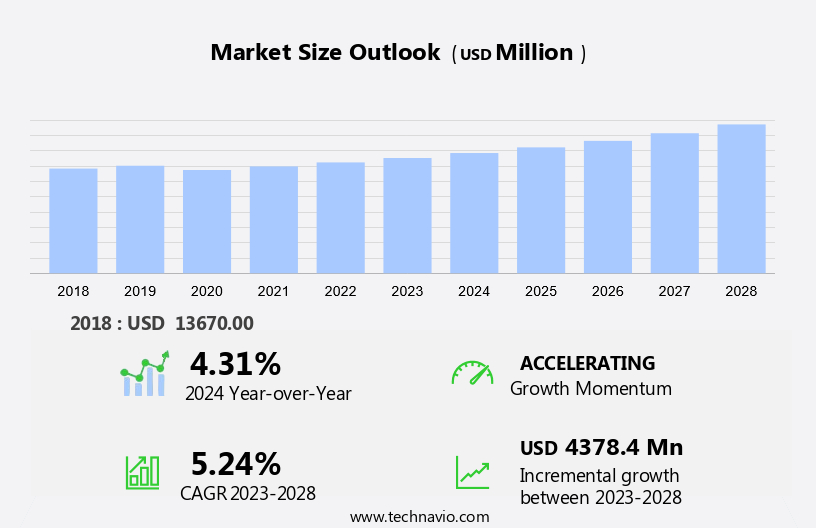
Organic Solvents Market Size

 Request Free Sample

  • The market encompasses the production and supply of various chemical compounds used as solvents in diverse industries. Key end-use sectors include pharmaceuticals, construction, and personal care, with solvents playing essential roles in processing technologies such as membrane systems for solvent dehydration and heat and pressure-driven reactions. Eco-friendly solvents, like Daxsol dimethyl carbonate, are gaining traction due to increasing emphasis on environmental sustainability.
  • Moreover, these solvents are integral to the production of specialty chemicals, materials, and solutes, with carbon-based solvents derived from living organisms and synthetic solvents made from carbon atoms being commonly used. Industries such as pharmaceuticals, cosmetics, and construction rely on these solvents for their unique properties in chemical reactions. Organic solvent suppliers cater to the needs of these sectors, offering a range of offerings from styrene and trichlorethylene to ethylene glycol ether.

How is this Organic Solvents Industry segmented and which is the largest segment?

The industry research report provides comprehensive data (region-wise segment analysis), with forecasts and estimates in "USD billion" for the period 2024-2028, as well as historical data from 2018-2022 for the following segments.

  • Type
    • Aromatic hydrocarbons
    • Aliphatic hydrocarbons
    • Alcohols
    • Ketones
    • Others
  • End-user
    • Paints and Coatings
    • Pharmaceuticals
    • Adhesives
    • Printing Inks
    • Others
  • Geography
    • APAC
      • China
      • India
      • Japan
    • North America
      • US
    • Europe
      • Germany
      • UK
    • South America
    • Middle East and Africa

By Type Insights

  • The aromatic hydrocarbons segment is estimated to witness significant growth during the forecast period.

Organic solvents, including aromatic hydrocarbons like benzene, toluene, and xylene, are integral to the chemical industry as feedstocks for producing various chemicals and products. These solvents are used in the production of ethylbenzene, which is further processed into styrene for polystyrene and polyethylene terephthalate (PET), extensively utilized in packaging, automotive, and consumer goods. Aromatic hydrocarbons contribute to the production of high-octane fuels and fuel additives, with demand influenced by gasoline and diesel consumption. In the manufacturing sector, they are used for producing automotive parts, such as synthetic rubber for tires and plastic components. The pharmaceutical sector relies on these solvents for various applications, including solvent production, membrane systems, dehydrating organic solvents, and precision cleaning.
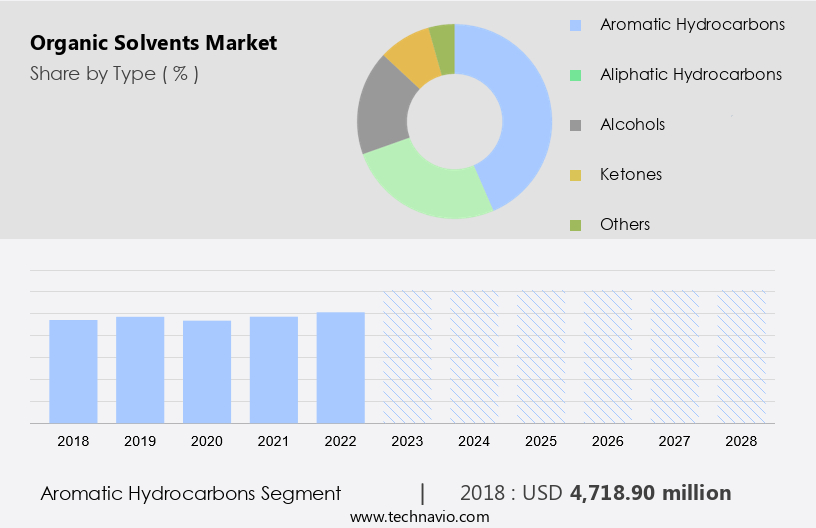
Organic Solvents Market Size

Get a glance at the Industry report of share of various segments Request Free Sample

The aromatic hydrocarbons segment was valued at USD 4.72 billion in 2018 and showed a gradual increase during the forecast period.

Regional Analysis

  • APAC is estimated to contribute 38% to the growth of the global market during the forecast period.

Technavio's analysts have elaborately explained the regional trends and drivers that shape the market during the forecast period.
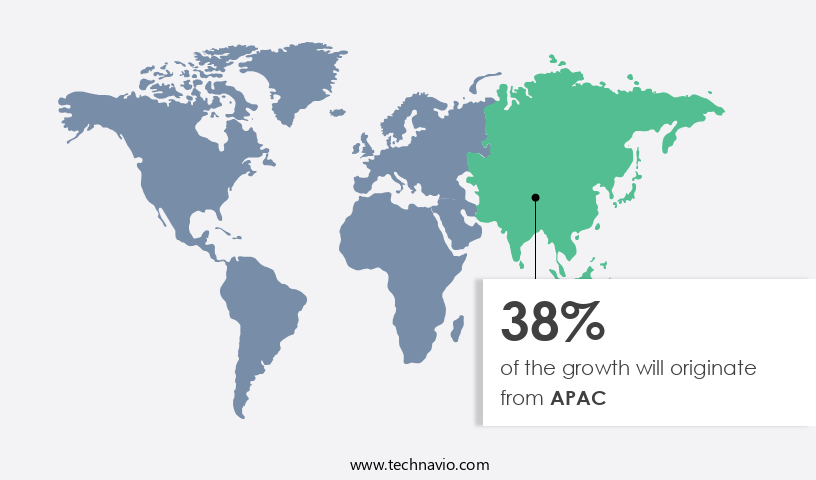
Organic Solvents Market Share by Geography

For more insights on the market share of various regions, Request Free Sample

Organic solvents are essential ingredients in various industries across Asia Pacific (APAC), including automotive, electronics, chemicals, textiles, and construction. The region's industrial growth, driven by countries like China, India, Japan, and South Korea, fuels the demand for these solvents. Rapid urbanization and infrastructure development in APAC nations are increasing the usage of paints, coatings, and adhesives, which heavily rely on these solvents. Moreover, economic growth in countries such as India, Japan, and Australia is leading to increased industrial activity and consumption of solvent-based products. The expanding middle class in APAC is also driving higher demand for consumer goods, personal care products, and pharmaceuticals, all of which utilize these solvents in their manufacturing processes.

Market Dynamics

Our researchers analyzed the data with 2023 as the base year, along with the key drivers, trends, and challenges. A holistic analysis of drivers will help companies refine their marketing strategies to gain a competitive advantage.

What are the key market drivers leading to the rise in the adoption of Organic Solvents Industry?

Growing demand for durable and high-performance coatings is the key driver of the market.

  • The growing demand for durable and high-performance coatings is influenced by industries requiring advanced coatings that offer superior protection and aesthetic appeal. The construction sector extensively uses high-performance coatings to protect buildings and infrastructure from environmental damage, corrosion, and wear. These solvents are crucial in formulating these coatings, ensuring proper application and performance. Automotive manufacturers require durable coatings for vehicles to enhance appearance, provide corrosion resistance, and ensure longevity.
  • Moreover, these solvents help in achieving the desired finish and durability in automotive coatings. High-performance coatings are essential in the aerospace industry to protect aircraft from extreme conditions, corrosion, and wear. These solvents play a key role in formulating these specialized coatings. Additionally, industries such as oil and gas, marine, and industrial manufacturing rely on coatings that protect equipment and structures from corrosion. Organic solvents are used to dissolve and blend the components of these protective coatings. High-performance coatings that withstand high temperatures and chemical exposure are in demand across various industries. Organic solvents ensure the proper mixing and application of these coatings.

What are the market trends shaping the Organic Solvents Industry?

The rise of digitalization and automation in organic solvent manufacturing is the upcoming market trend.

  • Automation in manufacturing processes allows for continuous production with minimal human intervention. This leads to consistent product quality, increased production speed, and reduced labor costs. The use of robotic systems for handling and packaging solvents ensures precision and safety, reducing the risk of contamination and human error.
  • Moreover, digital sensors and Internet of Things (IoT) devices enable real-time monitoring of production parameters such as temperature, pressure, and chemical concentrations. This allows for immediate adjustments to maintain optimal conditions. Data analytics and machine learning algorithms predict equipment failures before they occur, reducing downtime and maintenance costs. Additionally, automated systems optimize energy use in manufacturing processes, reducing operational costs and the environmental footprint. Precise control of manufacturing processes minimizes waste generation, contributing to sustainability and cost savings.

What challenges does the Organic Solvents Industry face during its growth?

The high manufacturing cost of green and bio-based organic solvents is a key challenge affecting the industry growth.

  • The relatively higher price of bio-based organic solvents, when compared with petroleum-based conventional chemicals, is a challenge faced by the global organic solvents market. The lack of feedstock increases the prices of green and bio-based organic solvents. Usually, green and bio-based organic solvents are more expensive than traditional organic solvents, which makes the recycling of these alternatives highly important.
  • Moreover, prices of green and bio-based organic solvents can be 3-5 times higher than alcohol, acetate, ketone, and other organic solvents due to the limited availability of feedstock for green and bio-based organic solvents. Green and bio solvents are manufactured from plant and animal sources, such as carbohydrates, carbohydrate polymers, proteins, alkaloids, plant oils, and animal fats, along with cornstarch, vegetable fats, oils, straw, food waste, and woodchips. Moreover, the price of plant oils and animal fats is increasing. Increased competition for animal fats from other end-use sectors also contributes to higher prices.

Exclusive Customer Landscape

The solvents market forecasting report includes the adoption lifecycle of the market, covering from the innovator's stage to the laggard's stage. It focuses on adoption rates in different regions based on penetration. Furthermore, the solvents market report also includes key purchase criteria and drivers of price sensitivity to help companies evaluate and develop their market growth analysis strategies.

Organic Solvents Market Share by Geography

 Customer Landscape

Key Companies & Market Insights

Companies are implementing various strategies, such as strategic alliances, solvents market forecast, partnerships, mergers and acquisitions, geographical expansion, and product/service launches, to enhance their presence in the industry.

The industry research and growth report includes detailed analyses of the competitive landscape of the market and information about key companies, including:

  • Albemarle Corp.
  • Arkema SA
  • Ashland Inc.
  • BASF SE
  • Celanese Corp.
  • Central Drug House Pvt. Ltd.
  • Clariant AG
  • Covestro AG
  • Dow Inc.
  • Eastman Chemical Co.
  • Exxon Mobil Corp.
  • Honeywell International Inc.
  • Huntsman Corp.
  • INEOS AG
  • Johnson Matthey Plc
  • LyondellBasell Industries N.V.
  • Sasol Ltd.
  • Shell plc
  • Solvay SA
  • Synthomer Plc

Qualitative and quantitative analysis of companies has been conducted to help clients understand the wider business environment as well as the strengths and weaknesses of key industry players. Data is qualitatively analyzed to categorize companies as pure play, category-focused, industry-focused, and diversified; it is quantitatively analyzed to categorize companies as dominant, leading, strong, tentative, and weak.

Research Analyst Overview

Organic solvents play a significant role in various industries, particularly in processing technologies for the pharmaceutical sector. The production of these solvents involves intricate processes, which often include the application of heat and pressure to transform chemical compounds. Membrane systems are increasingly being adopted for the dehydration of these solvents due to their energy efficiency and ability to produce high-purity products. These solvents are widely used in manufacturing processes, including the production of eco-friendly solvents. These solvents, such as dimethyl carbonate, are gaining popularity due to their environmental sustainability. Polar solvents, including ketones and esters, are commonly used in specialty applications, while glycerol carbonate is utilized in the production of certain polymers.

Furthermore, the demand for these solvents is driven by their versatility and applicability in various industries. They are used in precision cleaning processes, manufacturing equipment, and as raw materials in the production of various products. However, the use of these solvents is not without risks. Health risks associated with their use include exposure to toxic fumes and potential fire hazards. As the world moves towards carbon neutrality goals, there is a growing focus on the use of renewable resources for solvent production. Natural solvents, such as those derived from plants, are gaining popularity due to their eco-friendly nature. Synthetic solvents, on the other hand, continue to dominate the market due to their high performance and cost-effectiveness.

In addition, organic solvents are used extensively in the petrochemical industries, particularly in the production of aromatic hydrocarbons. They are also used in the production of gasoline, lacquers, and rubber manufacturing. In the paints and thinners industry, aliphatic organic solvents are commonly used for degreasing and cleaning applications. The cosmetic industry is another major consumer of organic solvents. They are used in the production of cleaning products, personal care products, and cosmetics. In the construction sector, organic solvents are used in the production of adhesives, sealants, and coatings. These solvents are also used in the pharmaceutical industry for the production of various drugs and medical products.

Furthermore, they are used as solvents in chemical reactions and as intermediates in the synthesis of complex molecules. In the electronics industry, these solvents are used as cleaning agents and in the production of certain polymers. The organic solvent market is diverse and dynamic, with various players offering a range of products and services. Organic solvent suppliers cater to the needs of various industries, providing specialized solvents for specific applications. Specialty chemicals and diversified materials companies also offer organic solvents as part of their product portfolio. Despite the benefits of these solvents, there are environmental concerns associated with their use.

Market Scope

Report Coverage

Details

Page number

224

Base year

2023

Historic period

2018-2022

Forecast period

2024-2028

Growth momentum & CAGR

Accelerate at a CAGR of 5.24%

Market Growth 2024-2028

USD 4.38 billion

Market structure

Fragmented

YoY growth 2023-2024(%)

4.31

Key countries

China, US, Germany, India, UK, and Japan

Competitive landscape

Leading Companies, Market Positioning of Companies, Competitive Strategies, and Industry Risks

Request Free Sample

What are the Key Data Covered in this Market Research and Growth Report?

  • CAGR of the industry during the forecast period
  • Detailed information on factors that will drive the market growth and forecasting between 2024 and 2028
  • Precise estimation of the size of the market and its contribution of the industry in focus to the parent market
  • Accurate predictions about upcoming growth and trends and changes in consumer behaviour
  • Growth of the market across APAC, North America, Europe, South America, and Middle East and Africa
  • Thorough analysis of the market's competitive landscape and detailed information about companies
  • Comprehensive analysis of factors that will challenge the market growth of industry companies

We can help! Our analysts can customize this market research report to meet your requirements.

Get in touch

1 Executive Summary

  • 1.1 Market overview
    • Executive Summary - Chart on Market Overview
    • Executive Summary - Data Table on Market Overview
    • Executive Summary - Chart on Global Market Characteristics
    • Executive Summary - Chart on Market by Geography
    • Executive Summary - Chart on Market Segmentation by Type
    • Executive Summary - Chart on Market Segmentation by End-user
    • Executive Summary - Chart on Incremental Growth
    • Executive Summary - Data Table on Incremental Growth
    • Executive Summary - Chart on Company Market Positioning

2 Technavio Analysis

  • 2.1 Analysis of price sensitivity, lifecycle, customer purchase basket, adoption rates, and purchase criteria
    • Analysis of price sensitivity, lifecycle, customer purchase basket, adoption rates, and purchase criteria
  • 2.2 Criticality of inputs and Factors of differentiation
    • Overview on criticality of inputs and factors of differentiation
  • 2.3 Factors of disruption
    • Overview on factors of disruption
  • 2.4 Impact of drivers and challenges
    • Impact of drivers and challenges in 2023 and 2028

3 Market Landscape

  • 3.1 Market ecosystem
    • Parent Market
    • Data Table on - Parent Market
  • 3.2 Market characteristics
    • Market characteristics analysis
  • 3.3 Value chain analysis
    • Value Chain Analysis

4 Market Sizing

  • 4.1 Market definition
    • Offerings of companies included in the market definition
  • 4.2 Market segment analysis
    • Market segments
  • 4.3 Market size 2023
    • 4.4 Market outlook: Forecast for 2023-2028
      • Chart on Global - Market size and forecast 2023-2028 ($ million)
      • Data Table on Global - Market size and forecast 2023-2028 ($ million)
      • Chart on Global Market: Year-over-year growth 2023-2028 (%)
      • Data Table on Global Market: Year-over-year growth 2023-2028 (%)

    5 Historic Market Size

    • 5.1 Global Organic Solvents Market 2018 - 2022
      • Historic Market Size - Data Table on Global Organic Solvents Market 2018 - 2022 ($ million)
    • 5.2 Type segment analysis 2018 - 2022
      • Historic Market Size - Type Segment 2018 - 2022 ($ million)
    • 5.3 End-user segment analysis 2018 - 2022
      • Historic Market Size - End-user Segment 2018 - 2022 ($ million)
    • 5.4 Geography segment analysis 2018 - 2022
      • Historic Market Size - Geography Segment 2018 - 2022 ($ million)
    • 5.5 Country segment analysis 2018 - 2022
      • Historic Market Size - Country Segment 2018 - 2022 ($ million)

    6 Additional Value/Volume Data

    • 6.1 Global organic solvents market by country 2023 - 2028 ($ million)
      • Market Size (value) - Data Table on Global organic solvents market by Country 2023 - 2028 ($ million)

    7 Five Forces Analysis

    • 7.1 Five forces summary
      • Five forces analysis - Comparison between 2023 and 2028
    • 7.2 Bargaining power of buyers
      • Bargaining power of buyers - Impact of key factors 2023 and 2028
    • 7.3 Bargaining power of suppliers
      • Bargaining power of suppliers - Impact of key factors in 2023 and 2028
    • 7.4 Threat of new entrants
      • Threat of new entrants - Impact of key factors in 2023 and 2028
    • 7.5 Threat of substitutes
      • Threat of substitutes - Impact of key factors in 2023 and 2028
    • 7.6 Threat of rivalry
      • Threat of rivalry - Impact of key factors in 2023 and 2028
    • 7.7 Market condition
      • Chart on Market condition - Five forces 2023 and 2028

    8 Market Segmentation by Type

    • 8.1 Market segments
      • Chart on Type - Market share 2023-2028 (%)
      • Data Table on Type - Market share 2023-2028 (%)
    • 8.2 Comparison by Type
      • Chart on Comparison by Type
      • Data Table on Comparison by Type
    • 8.3 Aromatic hydrocarbons - Market size and forecast 2023-2028
      • Chart on Aromatic hydrocarbons - Market size and forecast 2023-2028 ($ million)
      • Data Table on Aromatic hydrocarbons - Market size and forecast 2023-2028 ($ million)
      • Chart on Aromatic hydrocarbons - Year-over-year growth 2023-2028 (%)
      • Data Table on Aromatic hydrocarbons - Year-over-year growth 2023-2028 (%)
    • 8.4 Aliphatic hydrocarbons - Market size and forecast 2023-2028
      • Chart on Aliphatic hydrocarbons - Market size and forecast 2023-2028 ($ million)
      • Data Table on Aliphatic hydrocarbons - Market size and forecast 2023-2028 ($ million)
      • Chart on Aliphatic hydrocarbons - Year-over-year growth 2023-2028 (%)
      • Data Table on Aliphatic hydrocarbons - Year-over-year growth 2023-2028 (%)
    • 8.5 Alcohols - Market size and forecast 2023-2028
      • Chart on Alcohols - Market size and forecast 2023-2028 ($ million)
      • Data Table on Alcohols - Market size and forecast 2023-2028 ($ million)
      • Chart on Alcohols - Year-over-year growth 2023-2028 (%)
      • Data Table on Alcohols - Year-over-year growth 2023-2028 (%)
    • 8.6 Ketones - Market size and forecast 2023-2028
      • Chart on Ketones - Market size and forecast 2023-2028 ($ million)
      • Data Table on Ketones - Market size and forecast 2023-2028 ($ million)
      • Chart on Ketones - Year-over-year growth 2023-2028 (%)
      • Data Table on Ketones - Year-over-year growth 2023-2028 (%)
    • 8.7 Others - Market size and forecast 2023-2028
      • Chart on Others - Market size and forecast 2023-2028 ($ million)
      • Data Table on Others - Market size and forecast 2023-2028 ($ million)
      • Chart on Others - Year-over-year growth 2023-2028 (%)
      • Data Table on Others - Year-over-year growth 2023-2028 (%)
    • 8.8 Market opportunity by Type
      • Market opportunity by Type ($ million)
      • Data Table on Market opportunity by Type ($ million)

    9 Market Segmentation by End-user

    • 9.1 Market segments
      • Chart on End-user - Market share 2023-2028 (%)
      • Data Table on End-user - Market share 2023-2028 (%)
    • 9.2 Comparison by End-user
      • Chart on Comparison by End-user
      • Data Table on Comparison by End-user
    • 9.3 Paints and Coatings - Market size and forecast 2023-2028
      • Chart on Paints and Coatings - Market size and forecast 2023-2028 ($ million)
      • Data Table on Paints and Coatings - Market size and forecast 2023-2028 ($ million)
      • Chart on Paints and Coatings - Year-over-year growth 2023-2028 (%)
      • Data Table on Paints and Coatings - Year-over-year growth 2023-2028 (%)
    • 9.4 Pharmaceuticals - Market size and forecast 2023-2028
      • Chart on Pharmaceuticals - Market size and forecast 2023-2028 ($ million)
      • Data Table on Pharmaceuticals - Market size and forecast 2023-2028 ($ million)
      • Chart on Pharmaceuticals - Year-over-year growth 2023-2028 (%)
      • Data Table on Pharmaceuticals - Year-over-year growth 2023-2028 (%)
    • 9.5 Adhesives - Market size and forecast 2023-2028
      • Chart on Adhesives - Market size and forecast 2023-2028 ($ million)
      • Data Table on Adhesives - Market size and forecast 2023-2028 ($ million)
      • Chart on Adhesives - Year-over-year growth 2023-2028 (%)
      • Data Table on Adhesives - Year-over-year growth 2023-2028 (%)
    • 9.6 Printing Inks - Market size and forecast 2023-2028
      • Chart on Printing Inks - Market size and forecast 2023-2028 ($ million)
      • Data Table on Printing Inks - Market size and forecast 2023-2028 ($ million)
      • Chart on Printing Inks - Year-over-year growth 2023-2028 (%)
      • Data Table on Printing Inks - Year-over-year growth 2023-2028 (%)
    • 9.7 Others - Market size and forecast 2023-2028
      • Chart on Others - Market size and forecast 2023-2028 ($ million)
      • Data Table on Others - Market size and forecast 2023-2028 ($ million)
      • Chart on Others - Year-over-year growth 2023-2028 (%)
      • Data Table on Others - Year-over-year growth 2023-2028 (%)
    • 9.8 Market opportunity by End-user
      • Market opportunity by End-user ($ million)
      • Data Table on Market opportunity by End-user ($ million)

    10 Customer Landscape

    • 10.1 Customer landscape overview
      • Analysis of price sensitivity, lifecycle, customer purchase basket, adoption rates, and purchase criteria

    11 Geographic Landscape

    • 11.1 Geographic segmentation
      • Chart on Market share by geography 2023-2028 (%)
      • Data Table on Market share by geography 2023-2028 (%)
    • 11.2 Geographic comparison
      • Chart on Geographic comparison
      • Data Table on Geographic comparison
    • 11.3 APAC - Market size and forecast 2023-2028
      • Chart on APAC - Market size and forecast 2023-2028 ($ million)
      • Data Table on APAC - Market size and forecast 2023-2028 ($ million)
      • Chart on APAC - Year-over-year growth 2023-2028 (%)
      • Data Table on APAC - Year-over-year growth 2023-2028 (%)
    • 11.4 North America - Market size and forecast 2023-2028
      • Chart on North America - Market size and forecast 2023-2028 ($ million)
      • Data Table on North America - Market size and forecast 2023-2028 ($ million)
      • Chart on North America - Year-over-year growth 2023-2028 (%)
      • Data Table on North America - Year-over-year growth 2023-2028 (%)
    • 11.5 Europe - Market size and forecast 2023-2028
      • Chart on Europe - Market size and forecast 2023-2028 ($ million)
      • Data Table on Europe - Market size and forecast 2023-2028 ($ million)
      • Chart on Europe - Year-over-year growth 2023-2028 (%)
      • Data Table on Europe - Year-over-year growth 2023-2028 (%)
    • 11.6 South America - Market size and forecast 2023-2028
      • Chart on South America - Market size and forecast 2023-2028 ($ million)
      • Data Table on South America - Market size and forecast 2023-2028 ($ million)
      • Chart on South America - Year-over-year growth 2023-2028 (%)
      • Data Table on South America - Year-over-year growth 2023-2028 (%)
    • 11.7 Middle East and Africa - Market size and forecast 2023-2028
      • Chart on Middle East and Africa - Market size and forecast 2023-2028 ($ million)
      • Data Table on Middle East and Africa - Market size and forecast 2023-2028 ($ million)
      • Chart on Middle East and Africa - Year-over-year growth 2023-2028 (%)
      • Data Table on Middle East and Africa - Year-over-year growth 2023-2028 (%)
    • 11.8 China - Market size and forecast 2023-2028
      • Chart on China - Market size and forecast 2023-2028 ($ million)
      • Data Table on China - Market size and forecast 2023-2028 ($ million)
      • Chart on China - Year-over-year growth 2023-2028 (%)
      • Data Table on China - Year-over-year growth 2023-2028 (%)
    • 11.9 US - Market size and forecast 2023-2028
      • Chart on US - Market size and forecast 2023-2028 ($ million)
      • Data Table on US - Market size and forecast 2023-2028 ($ million)
      • Chart on US - Year-over-year growth 2023-2028 (%)
      • Data Table on US - Year-over-year growth 2023-2028 (%)
    • 11.10 Germany - Market size and forecast 2023-2028
      • Chart on Germany - Market size and forecast 2023-2028 ($ million)
      • Data Table on Germany - Market size and forecast 2023-2028 ($ million)
      • Chart on Germany - Year-over-year growth 2023-2028 (%)
      • Data Table on Germany - Year-over-year growth 2023-2028 (%)
    • 11.11 India - Market size and forecast 2023-2028
      • Chart on India - Market size and forecast 2023-2028 ($ million)
      • Data Table on India - Market size and forecast 2023-2028 ($ million)
      • Chart on India - Year-over-year growth 2023-2028 (%)
      • Data Table on India - Year-over-year growth 2023-2028 (%)
    • 11.12 UK - Market size and forecast 2023-2028
      • Chart on UK - Market size and forecast 2023-2028 ($ million)
      • Data Table on UK - Market size and forecast 2023-2028 ($ million)
      • Chart on UK - Year-over-year growth 2023-2028 (%)
      • Data Table on UK - Year-over-year growth 2023-2028 (%)
    • 11.13 Japan - Market size and forecast 2023-2028
      • Chart on Japan - Market size and forecast 2023-2028 ($ million)
      • Data Table on Japan - Market size and forecast 2023-2028 ($ million)
      • Chart on Japan - Year-over-year growth 2023-2028 (%)
      • Data Table on Japan - Year-over-year growth 2023-2028 (%)
    • 11.14 Market opportunity by geography
      • Market opportunity by geography ($ million)
      • Data Tables on Market opportunity by geography ($ million)

    12 Drivers, Challenges, and Opportunity/Restraints

    • 12.1 Market drivers
      • 12.2 Market challenges
        • 12.3 Impact of drivers and challenges
          • Impact of drivers and challenges in 2023 and 2028
        • 12.4 Market opportunities/restraints

          13 Competitive Landscape

          • 13.1 Overview
            • 13.2 Competitive Landscape
              • Overview on criticality of inputs and factors of differentiation
            • 13.3 Landscape disruption
              • Overview on factors of disruption
            • 13.4 Industry risks
              • Impact of key risks on business

            14 Competitive Analysis

            • 14.1 Companies profiled
              • Companies covered
            • 14.2 Company ranking index
              • Company ranking index
            • 14.3 Market positioning of companies
              • Matrix on companies position and classification
            • 14.4 Arkema SA
              • Arkema SA - Overview
              • Arkema SA - Business segments
              • Arkema SA - Key news
              • Arkema SA - Key offerings
              • Arkema SA - Segment focus
              • SWOT
            • 14.5 Ashland Inc.
              • Ashland Inc. - Overview
              • Ashland Inc. - Business segments
              • Ashland Inc. - Key news
              • Ashland Inc. - Key offerings
              • Ashland Inc. - Segment focus
              • SWOT
            • 14.6 BASF SE
              • BASF SE - Overview
              • BASF SE - Business segments
              • BASF SE - Key news
              • BASF SE - Key offerings
              • BASF SE - Segment focus
              • SWOT
            • 14.7 Clariant AG
              • Clariant AG - Overview
              • Clariant AG - Business segments
              • Clariant AG - Key news
              • Clariant AG - Key offerings
              • Clariant AG - Segment focus
              • SWOT
            • 14.8 Covestro AG
              • Covestro AG - Overview
              • Covestro AG - Business segments
              • Covestro AG - Key news
              • Covestro AG - Key offerings
              • Covestro AG - Segment focus
              • SWOT
            • 14.9 Dow Inc.
              • Dow Inc. - Overview
              • Dow Inc. - Business segments
              • Dow Inc. - Key news
              • Dow Inc. - Key offerings
              • Dow Inc. - Segment focus
              • SWOT
            • 14.10 Eastman Chemical Co.
              • Eastman Chemical Co. - Overview
              • Eastman Chemical Co. - Business segments
              • Eastman Chemical Co. - Key news
              • Eastman Chemical Co. - Key offerings
              • Eastman Chemical Co. - Segment focus
              • SWOT
            • 14.11 Exxon Mobil Corp.
              • Exxon Mobil Corp. - Overview
              • Exxon Mobil Corp. - Product / Service
              • Exxon Mobil Corp. - Key offerings
              • SWOT
            • 14.12 Honeywell International Inc.
              • Honeywell International Inc. - Overview
              • Honeywell International Inc. - Business segments
              • Honeywell International Inc. - Key news
              • Honeywell International Inc. - Key offerings
              • Honeywell International Inc. - Segment focus
              • SWOT
            • 14.13 Huntsman Corp.
              • Huntsman Corp. - Overview
              • Huntsman Corp. - Business segments
              • Huntsman Corp. - Key news
              • Huntsman Corp. - Key offerings
              • Huntsman Corp. - Segment focus
              • SWOT
            • 14.14 INEOS AG
              • INEOS AG - Overview
              • INEOS AG - Product / Service
              • INEOS AG - Key news
              • INEOS AG - Key offerings
              • SWOT
            • 14.15 Johnson Matthey Plc
              • Johnson Matthey Plc - Overview
              • Johnson Matthey Plc - Business segments
              • Johnson Matthey Plc - Key news
              • Johnson Matthey Plc - Key offerings
              • Johnson Matthey Plc - Segment focus
              • SWOT
            • 14.16 LyondellBasell Industries N.V.
              • LyondellBasell Industries N.V. - Overview
              • LyondellBasell Industries N.V. - Business segments
              • LyondellBasell Industries N.V. - Key news
              • LyondellBasell Industries N.V. - Key offerings
              • LyondellBasell Industries N.V. - Segment focus
              • SWOT
            • 14.17 Shell plc
              • Shell plc - Overview
              • Shell plc - Business segments
              • Shell plc - Key news
              • Shell plc - Key offerings
              • Shell plc - Segment focus
              • SWOT
            • 14.18 Solvay SA
              • Solvay SA - Overview
              • Solvay SA - Business segments
              • Solvay SA - Key news
              • Solvay SA - Key offerings
              • Solvay SA - Segment focus
              • SWOT

            15 Appendix

            • 15.1 Scope of the report
              • 15.2 Inclusions and exclusions checklist
                • Inclusions checklist
                • Exclusions checklist
              • 15.3 Currency conversion rates for US$
                • Currency conversion rates for US$
              • 15.4 Research methodology
                • Research methodology
              • 15.5 Data procurement
                • Information sources
              • 15.6 Data validation
                • Data validation
              • 15.7 Validation techniques employed for market sizing
                • Validation techniques employed for market sizing
              • 15.8 Data synthesis
                • Data synthesis
              • 15.9 360 degree market analysis
                • 360 degree market analysis
              • 15.10 List of abbreviations
                • List of abbreviations
                • o Stable customer base

              Research Methodology

              Technavio presents a detailed picture of the market by way of study, synthesis, and summation of data from multiple sources. The analysts have presented the various facets of the market with a particular focus on identifying the key industry influencers. The data thus presented is comprehensive, reliable, and the result of extensive research, both primary and secondary.

              INFORMATION SOURCES

              Primary sources

              • Manufacturers and suppliers
              • Channel partners
              • Industry experts
              • Strategic decision makers

              Secondary sources

              • Industry journals and periodicals
              • Government data
              • Financial reports of key industry players
              • Historical data
              • Press releases

              DATA ANALYSIS

              Data Synthesis

              • Collation of data
              • Estimation of key figures
              • Analysis of derived insights

              Data Validation

              • Triangulation with data models
              • Reference against proprietary databases
              • Corroboration with industry experts

              REPORT WRITING

              Qualitative

              • Market drivers
              • Market challenges
              • Market trends
              • Five forces analysis

              Quantitative

              • Market size and forecast
              • Market segmentation
              • Geographical insights
              • Competitive landscape

              Interested in this report?

              Get your sample now to see our research methodology and insights!

              Download Now

              Frequently Asked Questions

              Organic Solvents market growth will increase by $ 4378.4 mn during 2024-2028 .

              The Organic Solvents market is expected to grow at a CAGR of 5.24% during 2024-2028 .

              Organic Solvents market is segmented by Type( Aromatic hydrocarbons, Aliphatic hydrocarbons, Alcohols, Ketones, Others) End-user( Paints and Coatings, Pharmaceuticals, Adhesives, Printing Inks, Others)

              Albemarle Corp., Arkema SA, Ashland Inc., BASF SE, Celanese Corp., Central Drug House Pvt. Ltd., Clariant AG, Covestro AG, Dow Inc., Eastman Chemical Co., Exxon Mobil Corp., Honeywell International Inc., Huntsman Corp., INEOS AG, Johnson Matthey Plc, LyondellBasell Industries N.V., Sasol Ltd., Shell plc, Solvay SA, Synthomer Plc are a few of the key vendors in the Organic Solvents market.

              APAC will register the highest growth rate of 38% among the other regions. Therefore, the Organic Solvents market in APAC is expected to garner significant business opportunities for the vendors during the forecast period.

              China, US, Germany, India, UK, Japan

              • Growing demand for durable and high-performance coatings is the driving factor this market.

              The Organic Solvents market vendors should focus on grabbing business opportunities from the Aromatic hydrocarbons segment as it accounted for the largest market share in the base year.
