



Personal Care Ingredients Market Size 2026-2030
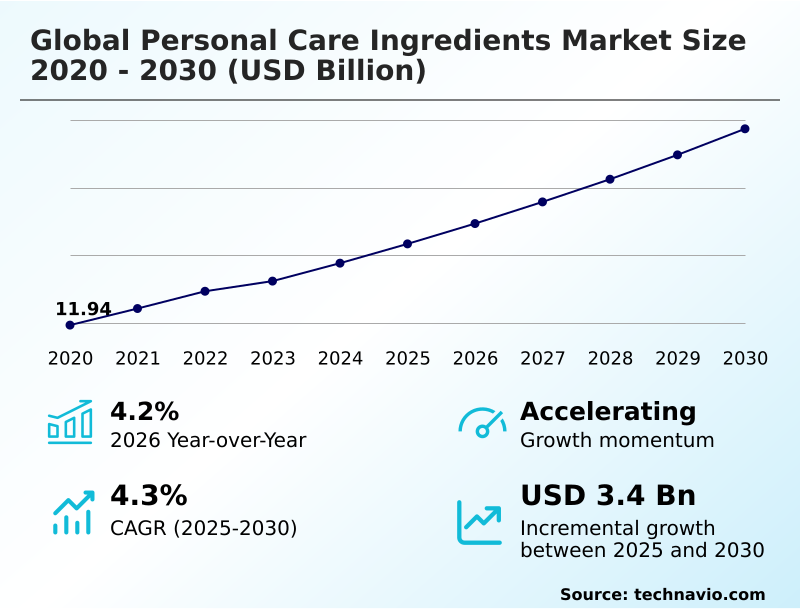
The personal care ingredients market size is valued to increase by USD 3.40 billion, at a CAGR of 4.3% from 2025 to 2030. Mainstreaming of biotechnology and precision fermentation will drive the personal care ingredients market.
Major Market Trends & Insights
- APAC dominated the market and accounted for a 41.1% growth during the forecast period.
- By Product - Surfactants segment was valued at USD 4.07 billion in 2024
- By Application - Skin care segment accounted for the largest market revenue share in 2024
Market Size & Forecast
- Market Opportunities: USD 5.79 billion
- Market Future Opportunities: USD 3.40 billion
- CAGR from 2025 to 2030 : 4.3%
Market Summary
- The personal care ingredients market is undergoing a significant transformation, moving beyond basic components to embrace high-efficacy, science-backed solutions. This evolution is driven by a convergence of consumer demand for clean beauty, sustainable sourcing, and clinically proven results.
- Key trends include the rise of biotechnology, enabling the production of nature-identical molecules through precision fermentation, and the shift from anti-aging to the broader concept of skin longevity. Innovations in neuro-cosmetics are addressing the skin-brain connection, creating products that offer both physiological and psychological benefits.
- A core challenge lies in the complex and fragmented global regulatory landscape, which demands rigorous safety substantiation and transparent supply chains. For instance, a formulator developing a new facial serum must balance the use of novel bio-actives with varying international compliance standards, requiring significant investment in testing and documentation.
- This dynamic pushes the industry toward ingredients that are not only effective and sustainable but also backed by robust scientific data to meet both consumer expectations and regulatory requirements. The market is also seeing a push towards upcycled ingredients and biodegradable polymers as part of a larger circular economy movement.
What will be the Size of the Personal Care Ingredients Market during the forecast period?
Get Key Insights on Market Forecast (PDF) Get Free Sample
How is the Personal Care Ingredients Market Segmented?
The personal care ingredients industry research report provides comprehensive data (region-wise segment analysis), with forecasts and estimates in "USD million" for the period 2026-2030, as well as historical data from 2020-2024 for the following segments.
- Product
- Surfactants
- Conditioning agents
- Emollients
- Control agents
- Others
- Application
- Skin care
- Cosmetics
- Hair care
- Oral care
- Others
- Product type
- Synthetic
- Natural
- Geography
- APAC
- China
- Japan
- India
- Europe
- Germany
- France
- UK
- North America
- US
- Canada
- Mexico
- South America
- Brazil
- Argentina
- Colombia
- Middle East and Africa
- South Africa
- Saudi Arabia
- UAE
- Rest of World (ROW)
- APAC
By Product Insights
The surfactants segment is estimated to witness significant growth during the forecast period.
The personal care ingredients market segmentation reflects a foundational shift beyond basic functionality, particularly in the surfactants category. The industry is rapidly moving toward chemistries that are not only effective but also aligned with sustainability and wellness mandates.
This evolution is driven by advances in green chemistry, enabling the development of biodegradable polymers and microbiome-friendly alternatives. Formulators are increasingly adopting natural alternatives to traditional texture enhancers, even in sectors like oral care.
This transition is complex, involving technologies like cell-free glycosylation to create high-performance molecules.
The market continues to show consistent momentum, with year-over-year growth standing at 4.2%, indicating robust demand for innovative solutions that combine performance with ecological responsibility, a trend influenced by principles of psychodermatology and holistic health.
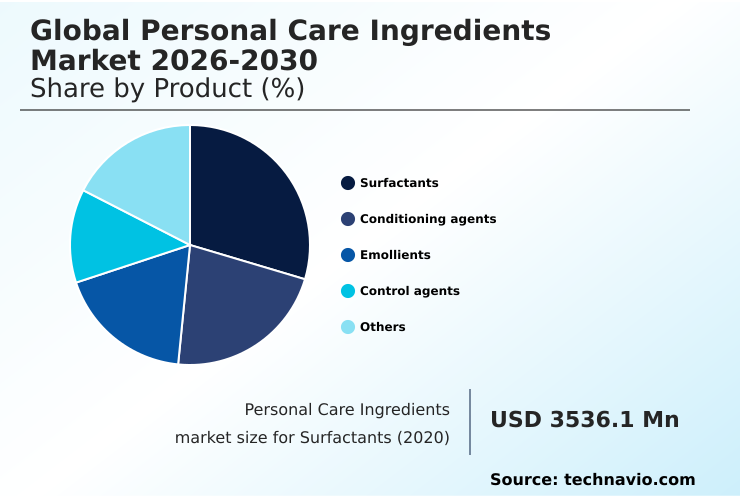
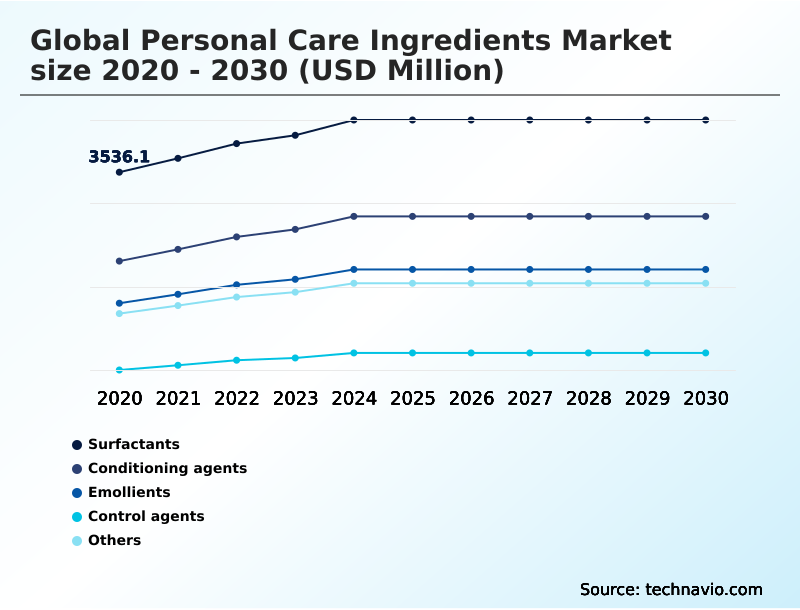
The Surfactants segment was valued at USD 4.07 billion in 2024 and showed a gradual increase during the forecast period.
Regional Analysis
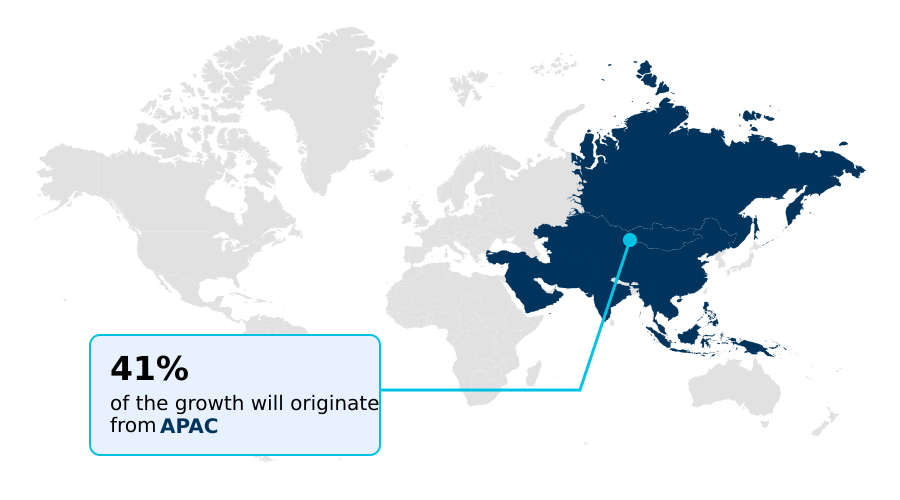
APAC is estimated to contribute 41.1% to the growth of the global market during the forecast period.Technavio’s analysts have elaborately explained the regional trends and drivers that shape the market during the forecast period.
See How Personal Care Ingredients Market Demand is Rising in APAC Get Free Sample
The geographic landscape of the personal care ingredients market is led by the APAC region, which accounts for 41.1% of the industry's incremental growth, driven by sophisticated demand for innovative skin care in markets like South Korea and Japan.
North America follows, contributing 26.19% to the growth, with a strong focus on clinical-grade and biotech-derived ingredients. European markets are defined by stringent regulatory standards, pushing innovation in green chemistry and sustainable sourcing.
Across these regions, there's a unifying demand for effective sun protection, driving development of advanced UV filters that combat photoaging and inflammaging. This has led to a 15% increase in R&D spending on broad-spectrum technologies.
The trend of biomimetic restructuring, using ingredients that mimic the skin's natural composition, is gaining traction globally, improving the efficacy of cosmetics and barrier repair formulations.
Market Dynamics
Our researchers analyzed the data with 2025 as the base year, along with the key drivers, trends, and challenges. A holistic analysis of drivers will help companies refine their marketing strategies to gain a competitive advantage.
- Strategic planning in the personal care ingredients market requires a deep understanding of several interconnected dynamics. The role of biotechnology in personal care ingredients is expanding, with precision fermentation for active ingredients becoming a cornerstone of innovation.
- This pivot addresses the challenges of green claims substantiation, as lab-grown molecules offer greater consistency and a verifiable environmental footprint compared to traditional methods. Concurrently, the impact of stress on skin health has spurred growth in psychodermatology and cosmetic formulation, where companies that master this niche see a twofold increase in formulation requests from premium brands.
- Developing sustainable alternatives to synthetic polymers, particularly biodegradable polymers in hair care and natural rheology modifiers for cosmetics, is critical for meeting regulatory demands. Key growth areas include advancements in UV filter technology and halal-certified cosmetic ingredient development, which open access to previously untapped markets.
- Understanding the role of microbiome in skin care is no longer optional, and advanced delivery systems for actives are essential for proving efficacy. Formulators are also tackling complex concepts like senolytic actives for anti-aging formulations and bio-electronic ingredients for skin rejuvenation.
- These initiatives are shaped by overarching factors such as the climate impact on botanical sourcing, which reinforces the value of controlled-environment agriculture.
- As the industry moves forward, trends like waterless formulation ingredient trends, the use of upcycled materials in cosmetic production, and the refinement of plant-based surfactants in personal care will define the next generation of products focused on skin longevity and cellular health.
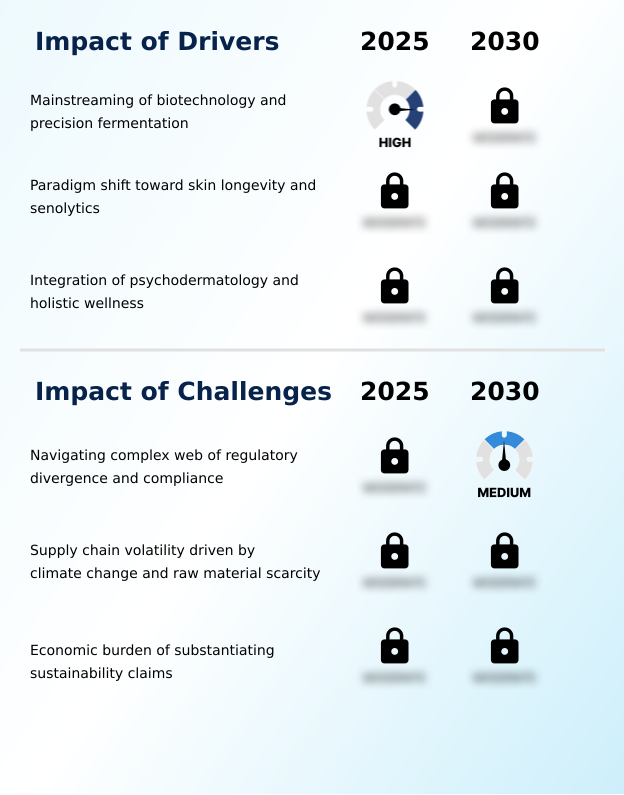
What are the key market drivers leading to the rise in the adoption of Personal Care Ingredients Industry?
- The mainstreaming of biotechnology and precision fermentation is a key driver propelling growth in the personal care ingredients market.
- Market growth is fundamentally driven by the industrialization of biotechnology and a scientific pivot toward cellular longevity.
- The adoption of precision fermentation allows for the creation of high-purity bio-actives and other active ingredients with a consistent efficacy profile, reducing batch-to-batch variability by over 90% compared to traditional botanical extracts.
- This technological shift supports the growing demand for anti-aging solutions focused on cellular rejuvenation.
- The development of advanced biotech ingredients, including novel senolytic ingredients that target aging at its source, has been shown in vitro to extend cellular healthspan by up to 30%.
- This focus on validated, science-backed solutions is redefining performance standards across the industry.
What are the market trends shaping the Personal Care Ingredients Industry?
- The mainstreaming of neuro-cosmetics represents a significant upcoming market trend, linking dermatological science with mental well-being to address the skin-brain axis.
- Key trends in the personal care ingredients market are centered on the convergence of technology and wellness. The rise of neuro-cosmetics is moving beyond concept to commercial reality, with new ingredients clinically shown to improve skin appearance by mitigating stress-induced damage. Formulations incorporating these actives have demonstrated a 15% reduction in visible signs of fatigue.
- Concurrently, the field of bioelectronics is introducing novel electrogenic actives that enhance the skin's natural energy, improving antioxidant efficiency by up to 20%. This trend towards holistic wellness is reshaping product development, with a focus on aesthetic modifiers that deliver both instant visual benefits and long-term skin health, significantly boosting product performance and consumer satisfaction.
What challenges does the Personal Care Ingredients Industry face during its growth?
- Navigating the complex web of regulatory divergence and compliance presents a key challenge affecting the industry's growth trajectory.
- Navigating operational hurdles is a primary focus for suppliers in the personal care ingredients market. The fragmented landscape of regulatory compliance across geographies can increase time-to-market for new ingredients by up to 40%, demanding significant investment in documentation and testing.
- Furthermore, supply chain transparency remains a critical challenge, as climate-induced volatility has caused price fluctuations of over 50% for key natural emollients and surfactants used in skin and hair care. This uncertainty pressures formulators to secure alternative sustainable sourcing routes or innovate with versatile rheology modifiers.
- The push for clean beauty also intensifies scrutiny, requiring robust data to support claims and avoid the risks associated with unsubstantiated marketing.
Exclusive Technavio Analysis on Customer Landscape
The personal care ingredients market forecasting report includes the adoption lifecycle of the market, covering from the innovator’s stage to the laggard’s stage. It focuses on adoption rates in different regions based on penetration. Furthermore, the personal care ingredients market report also includes key purchase criteria and drivers of price sensitivity to help companies evaluate and develop their market growth analysis strategies.
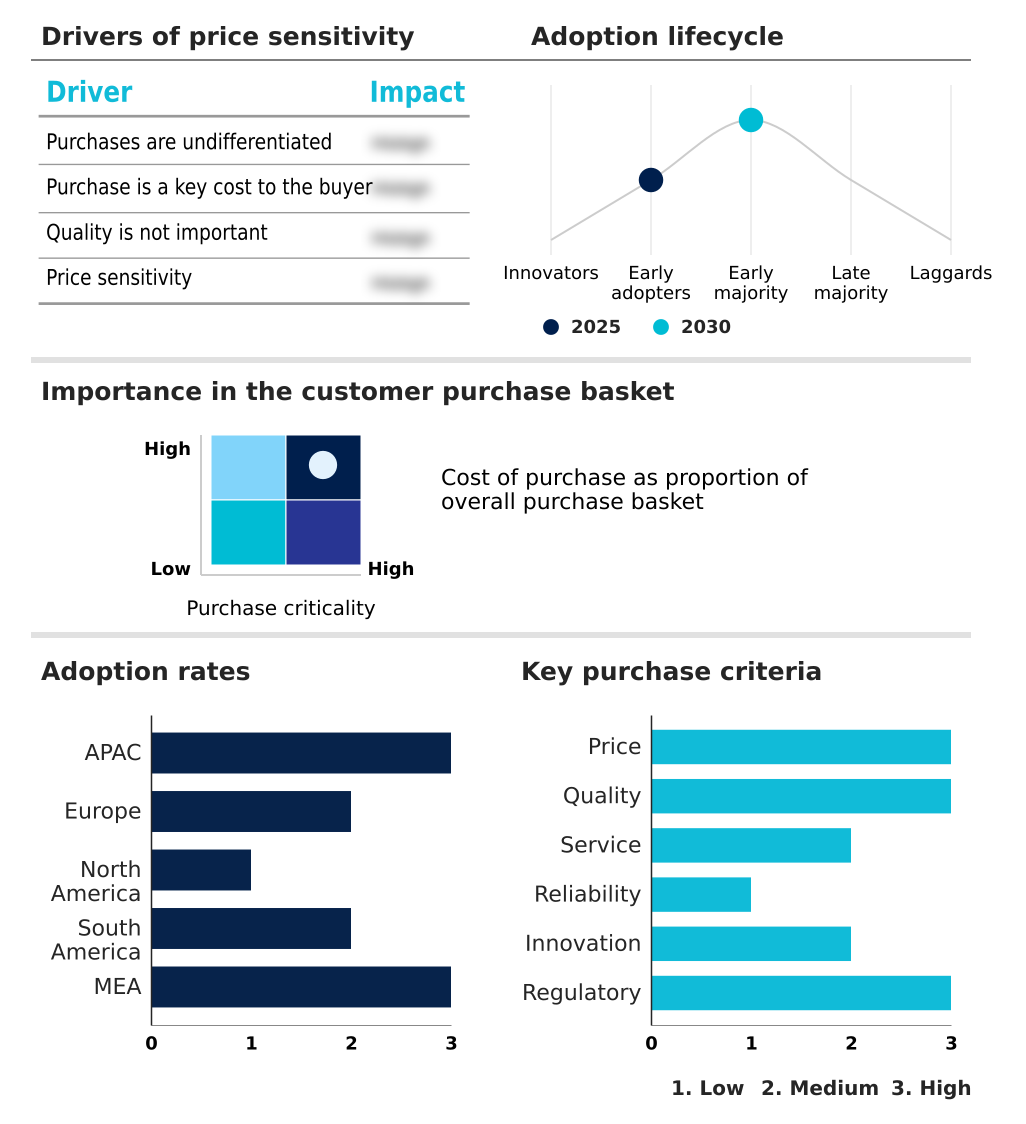
Customer Landscape of Personal Care Ingredients Industry
Competitive Landscape
Companies are implementing various strategies, such as strategic alliances, personal care ingredients market forecast, partnerships, mergers and acquisitions, geographical expansion, and product/service launches, to enhance their presence in the industry.
Ashland Inc. - The company provides a specialized portfolio of ingredients, including high-performance rheology modifiers, advanced bio-actives, and sustainably sourced plant-derived extracts for the personal care industry.
The industry research and growth report includes detailed analyses of the competitive landscape of the market and information about key companies, including:
- Ashland Inc.
- BASF SE
- Clariant International Ltd.
- Croda International Plc
- Dow Chemical Co.
- DSM Firmenich AG
- Evonik Industries AG
- Givaudan SA
- ICHIMARU PHARCOS Co. Ltd.
- Innospec Inc.
- Kobo Products Inc.
- Kraton Corp.
- Merck KGaA
- Nouryon Chemicals Holding
- SEPPIC SA
- Solvay SA
- Stepan Co.
- Symrise Group
- The Lubrizol Corp.
- Vantage Specialty Chemicals
Qualitative and quantitative analysis of companies has been conducted to help clients understand the wider business environment as well as the strengths and weaknesses of key industry players. Data is qualitatively analyzed to categorize companies as pure play, category-focused, industry-focused, and diversified; it is quantitatively analyzed to categorize companies as dominant, leading, strong, tentative, and weak.
Recent Development and News in Personal care ingredients market
- In September 2024, Evonik launched CapilAcid and Oleobiota, two new natural active ingredients sourced from the Maqui fruit and the Misiones rainforest, aimed at hair protection and skin sebum regulation.
- In January 2025, the Personal Care business of BASF launched VitaGuard A, a new ingredient featuring encapsulated retinol using solid lipid particles to improve stability and reduce skin irritation.
- In April 2025, Ashland unveiled Collapeptyl Biofunctional, a hyalupeptide hybrid designed using AI-driven molecular modeling to mimic and boost various collagen types in the skin.
- In April 2025, Givaudan Active Beauty launched PrimalHyal UltraReverse, an intracellular hyaluronic acid designed to penetrate the cell membrane and protect the proteome and mitochondrial function.
Dive into Technavio’s robust research methodology, blending expert interviews, extensive data synthesis, and validated models for unparalleled Personal Care Ingredients Market insights. See full methodology.
| Market Scope | |
|---|---|
| Page number | 317 |
| Base year | 2025 |
| Historic period | 2020-2024 |
| Forecast period | 2026-2030 |
| Growth momentum & CAGR | Accelerate at a CAGR of 4.3% |
| Market growth 2026-2030 | USD 3397.1 million |
| Market structure | Fragmented |
| YoY growth 2025-2026(%) | 4.2% |
| Key countries | China, Japan, India, South Korea, Australia, Indonesia, Germany, France, UK, Italy, Spain, The Netherlands, US, Canada, Mexico, Brazil, Argentina, Colombia, South Africa, Saudi Arabia, UAE, Egypt and Turkey |
| Competitive landscape | Leading Companies, Market Positioning of Companies, Competitive Strategies, and Industry Risks |
Research Analyst Overview
- The personal care ingredients market is increasingly driven by scientific rigor, where the value of an ingredient is measured by its biological impact. A key theme is the shift toward cellular longevity, moving beyond surface-level treatments to target the mechanisms of aging itself. This includes the development of senolytic ingredients designed to clear damaged cells and combat inflammaging.
- Innovation is powered by biotechnology, with precision fermentation and cell-free glycosylation enabling the creation of novel bio-actives. We are also seeing the rise of neuro-cosmetics and psychodermatology, where active ingredients are engineered to mitigate the effects of stress on the skin. The industry is also exploring bioelectronics, utilizing electrogenic actives to enhance skin's natural functions.
- This scientific pivot demands sophisticated functional components, from advanced rheology modifiers and aesthetic modifiers to high-performance conditioning agents, emollients, surfactants, and next-generation UV filters. Formulations incorporating ingredients backed by clinical data on cellular health have shown a 20% higher consumer retention rate.
- This focus on provable efficacy, sustainable sourcing, upcycled ingredients, and microbiome-friendly solutions, all while adhering to the principles of green chemistry and developing biodegradable polymers, defines the competitive landscape.
What are the Key Data Covered in this Personal Care Ingredients Market Research and Growth Report?
-
What is the expected growth of the Personal Care Ingredients Market between 2026 and 2030?
-
USD 3.40 billion, at a CAGR of 4.3%
-
-
What segmentation does the market report cover?
-
The report is segmented by Product (Surfactants, Conditioning agents, Emollients, Control agents, and Others), Application (Skin care, Cosmetics, Hair care, Oral care, and Others), Product Type (Synthetic, and Natural) and Geography (APAC, Europe, North America, South America, Middle East and Africa)
-
-
Which regions are analyzed in the report?
-
APAC, Europe, North America, South America and Middle East and Africa
-
-
What are the key growth drivers and market challenges?
-
Mainstreaming of biotechnology and precision fermentation, Navigating complex web of regulatory divergence and compliance
-
-
Who are the major players in the Personal Care Ingredients Market?
-
Ashland Inc., BASF SE, Clariant International Ltd., Croda International Plc, Dow Chemical Co., DSM Firmenich AG, Evonik Industries AG, Givaudan SA, ICHIMARU PHARCOS Co. Ltd., Innospec Inc., Kobo Products Inc., Kraton Corp., Merck KGaA, Nouryon Chemicals Holding, SEPPIC SA, Solvay SA, Stepan Co., Symrise Group, The Lubrizol Corp. and Vantage Specialty Chemicals
-
Market Research Insights
- The dynamics of the personal care ingredients market are shaped by a strategic pivot towards high-performance, sustainable solutions, a shift validated by key operational metrics. For example, the adoption of biotech ingredients has accelerated new product development cycles by up to 25%, enabling faster responses to emerging consumer needs.
- In parallel, a focus on supply chain transparency and regulatory compliance has become paramount, with platforms offering digital traceability reducing documentation errors by 30%. This emphasis on data-driven formulation and clean beauty principles directly impacts product performance.
- The evolution away from traditional anti-aging narratives toward holistic wellness and skin barrier repair reflects a more sophisticated consumer understanding of skin care and its connection to overall health.
We can help! Our analysts can customize this personal care ingredients market research report to meet your requirements.
 RIA -
RIA - 
