


Pickup Truck Market Size 2025-2029
The pickup truck market size is forecast to increase by USD 112.9 billion at a CAGR of 5.2% between 2024 and 2029.
- The market is experiencing significant growth, driven by the increasing utility of these vehicles in various sectors, including construction, agriculture, and transportation. This trend is particularly prominent in regions with large economies and a strong focus on infrastructure development, such as North America and Asia-Pacific. Another key driver is the ongoing shift towards the use of lighter materials in pickup truck manufacturing, which helps improve fuel efficiency and reduce emissions, making these vehicles more environmentally friendly and cost-effective to operate.
- However, the market also faces challenges, with increasing stringency of fuel efficiency and emission standards posing significant hurdles for manufacturers. To capitalize on market opportunities and navigate these challenges effectively, companies must stay abreast of technological advancements and regulatory requirements, and explore innovative solutions to enhance the functionality and sustainability of pickup trucks.
What will be the Size of the Pickup Truck Market during the forecast period?

- The market encompasses a significant segment of the commercial vehicle industry, with these versatile vehicles catering to various sectors, including construction and infrastructure, logistics, and recreational use. Pickup trucks, as light-duty vehicles known for their cargo carrying capacity, continue to gain popularity due to their applicability to commercial purposes. The market's size and direction are influenced by several predefined factors, such as rapid economic growth, rising disposable incomes, and the increasing demand for B2C enterprises to streamline their operations. Vehicle registries and car dealers serve as essential touchpoints for consumers, providing access to specifications and base models tailored to their needs.
- Automobile manufacturers continually innovate, integrating safety features, connectivity options, and environmental consciousness into their offerings. The complexity of pickup trucks, which can serve both on-road and off-road functions, adds to their appeal. As the logistics industry and environment agencies increasingly prioritize sustainability, pickup trucks are evolving to meet these demands while maintaining their rugged and reliable nature.
How is this Pickup Truck Industry segmented?
The pickup truck industry research report provides comprehensive data (region-wise segment analysis), with forecasts and estimates in "USD billion" for the period 2025-2029, as well as historical data from 2019-2023 for the following segments.
- Type
- ECCC
- Regular cab
- Product
- Full-size pickup truck
- Small-size and mid-size pickup truck
- Geography
- North America
- US
- Canada
- APAC
- Australia
- China
- India
- Japan
- Europe
- France
- Germany
- UK
- South America
- Brazil
- Middle East and Africa
- North America
By Type Insights
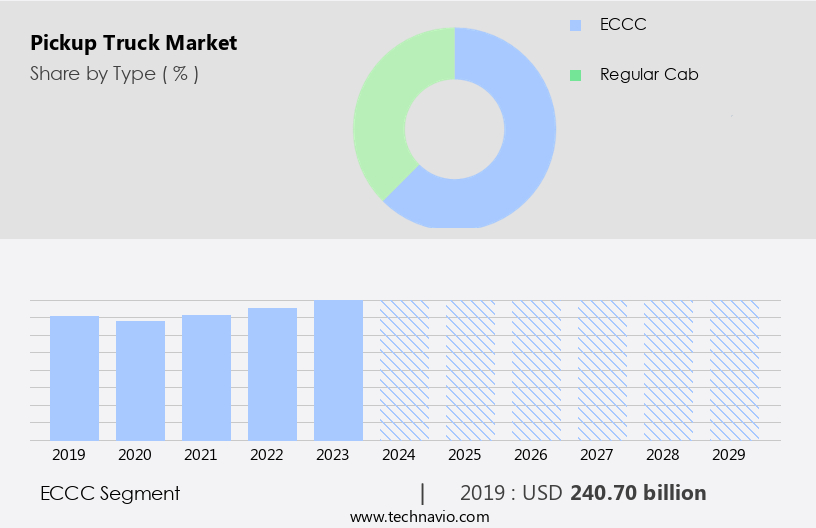
The eccc segment is estimated to witness significant growth during the forecast period.
Pickup trucks, as commercial vehicles, continue to gain popularity in various industries due to their cargo carrying capacity and versatility. Extended cab and crew cab models cater to different customer preferences, with extended cabs offering smaller rear seats and access doors, and crew cabs providing two rows of seats and full-size doors. These vehicles serve commercial purposes, such as logistics and construction, as well as individual use for recreational activities. New passenger cars and base models face intense competition from pickup trucks in the market. Predefined factors, including vehicle registries, car dealers, and environmental agencies, influence consumer spending trends.
The E-commerce sector's rapid economic growth and industrialization contribute to the increasing demand for pickup trucks. Fuel efficiency and propulsion type are essential considerations for pickup trucks. Diesel, gasoline, hybrid, and electric pickup trucks cater to various customer preferences and environmental consciousness. The diesel engine segment and electric propulsion systems are key areas of product innovation. Factors like fuel prices, economic conditions, and safety features also impact the market. Battery technology advancements and compact models are emerging trends. The light-duty vehicles' cargo capacity and commercial use, whether for heavy-duty applications or individual use, remain significant factors. In , pickup trucks' versatility, practicality, and cargo carrying capacity make them indispensable for various industries and individual use.
Factors like fuel efficiency, propulsion type, and environmental concerns continue to shape the market.
Get a glance at the market report of share of various segments Request Free Sample
The ECCC segment was valued at USD 240.70 billion in 2019 and showed a gradual increase during the forecast period.
Regional Analysis
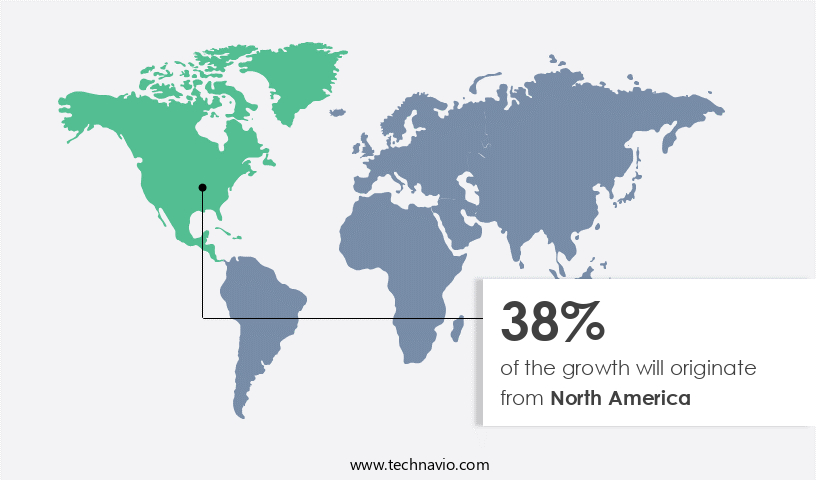
North America is estimated to contribute 38% to the growth of the global market during the forecast period.Technavio’s analysts have elaborately explained the regional trends and drivers that shape the market during the forecast period.
For more insights on the market size of various regions, Request Free Sample
The North American the market has witnessed significant growth in recent years, with a shift towards technologically advanced models. Modern pickups offer advanced features such as driver-assistance systems, infotainment advancements, and connectivity options, while retaining their traditional strong towing and payload capabilities. This trend reflects the increasing consumer preference for vehicles that combine workhorse characteristics with comfort and convenience. Automakers like Ford and General Motors have responded by equipping pickups with advanced technologies, including coil-spring rear suspensions and turbocharged V6 engines, catering to both personal and commercial usage. The market in North America is influenced by various predefined factors, including consumer spending, environmental concerns, and rapid economic growth.
The E-commerce sector and logistics industry's increasing demand for light-duty commercial vehicles with high cargo carrying capacity further boosts the market. The market is highly competitive, with intense product innovation, fuel prices, and economic conditions shaping the landscape. Fuel efficiency, propulsion type, and vehicle size continue to be critical factors for buyers, with diesel, gasoline, hybrid, and electric pickup trucks catering to diverse customer needs. The market's future growth is expected to be driven by factors such as rising disposable incomes, environmental consciousness, safety features, and advancements in battery technology.
Market Dynamics
Our researchers analyzed the data with 2024 as the base year, along with the key drivers, trends, and challenges. A holistic analysis of drivers will help companies refine their marketing strategies to gain a competitive advantage.
What are the key market drivers leading to the rise in the adoption of Pickup Truck Industry?
Increased utility of pickup trucks is the key driver of the market.
- Pickup trucks have gained significant popularity over sedans, hatchbacks, and SUVs due to their enhanced value proposition. With increased trunk capacity and superior towing capability, pickup trucks cater to both commercial and non-commercial needs. Unlike sedans, hatchbacks, or crossovers, pickup trucks can transport larger cargo loads and accommodate a family of five comfortably. Manufacturers offer various trims to accommodate additional passengers without compromising cargo space, such as the extended cab trim.
- In response to the growing demand for fuel efficiency, vehicle makers are innovating to improve pickup trucks' fuel efficiency. These vehicles' versatility and utility make them an attractive choice for consumers worldwide.
What are the market trends shaping the Pickup Truck Industry?
Increasing incorporation of lighter materials in pickup truck manufacturing is the upcoming market trend.
- Pickup trucks continue to be a significant market segment in the automotive industry, with manufacturers focusing on enhancing their fuel efficiency. The use of alternative materials, such as aluminum, in pickup truck manufacturing is gaining popularity due to its potential to increase fuel efficiency and reduce emissions. For instance, Ford Motor's aluminum F-150 pickup truck is about 700 lb. Lighter than its steel counterpart, leading to improved mileage. Additionally, the lighter weight allows for more engine power to be allocated to pulling or towing capabilities, enabling the use of a V6 engine instead of a V8 engine for greater towing capacity.
- This shift towards lighter materials in pickup truck manufacturing is a strategic move to meet fuel efficiency standards while maintaining the necessary power and functionality.
What challenges does the Pickup Truck Industry face during its growth?
Increasing stringency of fuel efficiency and emission standards is a key challenge affecting the industry growth.
- The market is experiencing significant growth due to increasing environmental concerns and government regulations. Air pollution, caused in part by vehicular emissions from pickup trucks, has become a major issue. The US Environmental Protection Agency (EPA) and other environmental organizations worldwide have enacted regulations to restrict emissions. Global warming is also a pressing concern, leading to temperature fluctuations, rising sea levels, droughts, and floods.
- To mitigate these effects, governments have implemented fuel efficiency standards, encouraging the production and adoption of fuel-efficient pickup trucks. These vehicles consume less petroleum fuel and produce fewer emissions, making them a more eco-friendly alternative. The market is expected to continue growing as consumers and governments prioritize sustainability and environmental responsibility.
Exclusive Customer Landscape
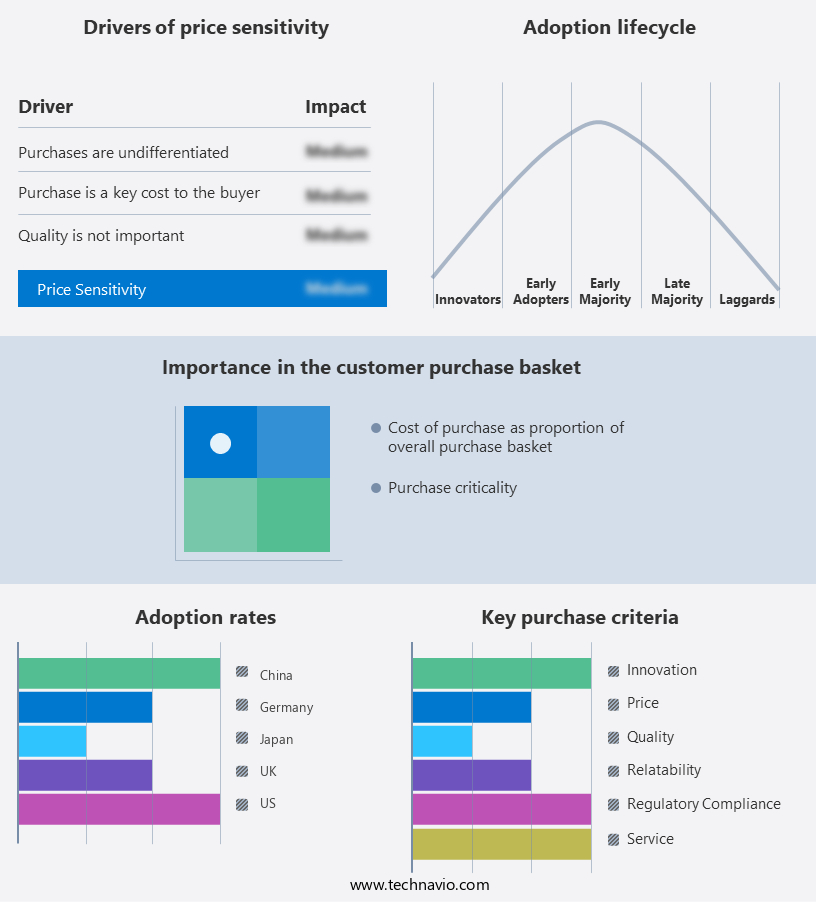
The pickup truck market forecasting report includes the adoption lifecycle of the market, covering from the innovator’s stage to the laggard’s stage. It focuses on adoption rates in different regions based on penetration. Furthermore, the pickup truck market report also includes key purchase criteria and drivers of price sensitivity to help companies evaluate and develop their market growth analysis strategies.
Customer Landscape
Key Companies & Market Insights
Companies are implementing various strategies, such as strategic alliances, pickup truck market forecast, partnerships, mergers and acquisitions, geographical expansion, and product/service launches, to enhance their presence in the industry.
Ashok Leyland Ltd. - The company provides a range of heavy-duty pickup trucks, including the Dost model, to accommodate increased workloads. This selection caters to the demands of businesses seeking efficient transportation solutions. By offering such vehicles, the company enhances its offerings to meet the diverse needs of its clientele.
The industry research and growth report includes detailed analyses of the competitive landscape of the market and information about key companies, including:
- Ashok Leyland Ltd.
- Beijing Automotive Group Co. Ltd.
- Dr. Ing. h.c. F. Porsche AG
- Ford Motor Co.
- General Electric Co.
- Great Wall Motor Co. Ltd.
- Honda Motor Co. Ltd.
- Hyundai Motor Co.
- Isuzu Motors Ltd.
- Jiangling Motors Corp. Ltd.
- KG Mobility
- Mahindra and Mahindra Ltd.
- Mercedes Benz Group AG
- Mitsubishi Motors Corp.
- Renault SAS
- Rivian Automotive LLC
- Stellantis NV
- Suzuki Motor Corp.
- Tata Motors Ltd.
- Toyota Motor Corp.
Qualitative and quantitative analysis of companies has been conducted to help clients understand the wider business environment as well as the strengths and weaknesses of key industry players. Data is qualitatively analyzed to categorize companies as pure play, category-focused, industry-focused, and diversified; it is quantitatively analyzed to categorize companies as dominant, leading, strong, tentative, and weak.
Research Analyst Overview
The market continues to be a significant segment within the broader automotive industry, catering to the demands of various sectors, including commercial vehicles and individual use. This market is driven by several predefined factors, including the need for cargo carrying capacity, versatility, and fuel efficiency. A bottom-up approach to analyzing this market reveals the critical role of B2C enterprises, car dealers, and vehicle registries in shaping its dynamics. These entities serve as crucial intermediaries, connecting manufacturers with consumers and providing valuable insights into consumer preferences and trends. Environment agencies and industrialization play a pivotal role in influencing the market, with increasing environmental concerns leading to a shift towards electric propulsion systems and a reduction in carbon emissions.
The logistics industry, in particular, is embracing this transition, as electric pickup trucks offer improved fuel efficiency and lower operating costs. The e-commerce sector has also emerged as a significant growth driver, with the rise of online shopping leading to an increase in demand for light-duty vehicles with cargo carrying capacity and versatility. This trend is further fueled by rapid economic growth and rising disposable incomes in various regions. Customer preference for multi-purpose vehicles, capable of serving both commercial and individual purposes, is another critical factor shaping the market. The intense competition among manufacturers has led to significant product innovation, with companies introducing new features, such as advanced safety systems and improved battery technology, to cater to this demand.
Fuel prices and economic conditions continue to impact the market, with diesel engine segment still dominating the market due to its affordability and efficiency. However, the trend towards electric propulsion systems is expected to gain momentum as battery technology advances and fuel prices continue to rise. The market encompasses a wide range of vehicles, from compact models suitable for individual use to heavy-duty trucks designed for commercial purposes. The market caters to various industries, including construction and infrastructure, off-road, and recreational vehicles. In , the market is a dynamic and evolving landscape, shaped by various factors, including consumer preferences, environmental concerns, industrial trends, and economic conditions.
Manufacturers must continually innovate and adapt to meet the changing demands of this market, while B2C enterprises, car dealers, and vehicle registries play a crucial role in facilitating the connection between manufacturers and consumers.
|
Market Scope |
|
|
Report Coverage |
Details |
|
Page number |
188 |
|
Base year |
2024 |
|
Historic period |
2019-2023 |
|
Forecast period |
2025-2029 |
|
Growth momentum & CAGR |
Accelerate at a CAGR of 5.2% |
|
Market growth 2025-2029 |
USD 112.9 billion |
|
Market structure |
Fragmented |
|
YoY growth 2024-2025(%) |
4.8 |
|
Key countries |
US, China, Canada, UK, Brazil, Germany, Australia, India, Japan, and France |
|
Competitive landscape |
Leading Companies, Market Positioning of Companies, Competitive Strategies, and Industry Risks |
What are the Key Data Covered in this Pickup Truck Market Research and Growth Report?
- CAGR of the Pickup Truck industry during the forecast period
- Detailed information on factors that will drive the growth and forecasting between 2025 and 2029
- Precise estimation of the size of the market and its contribution of the industry in focus to the parent market
- Accurate predictions about upcoming growth and trends and changes in consumer behaviour
- Growth of the market across North America, APAC, Europe, South America, and Middle East and Africa
- Thorough analysis of the market’s competitive landscape and detailed information about companies
- Comprehensive analysis of factors that will challenge the pickup truck market growth of industry companies
We can help! Our analysts can customize this pickup truck market research report to meet your requirements.
 RIA -
RIA - 
