


Platform-As-A-Service (PaaS) Market Analysis, Size, and Forecast 2025-2029: North America (US, Canada, and Mexico), Europe (France, Germany, The Netherlands, and UK), APAC (China, India, and Japan), and Rest of World (ROW)

Platform-As-A-Service (PaaS) Market Analysis, Size, and Forecast 2025-2029:
North America (US, Canada, and Mexico), Europe (France, Germany, The Netherlands, and UK), APAC (China, India, and Japan), and Rest of World (ROW)

Published: Jul 2025 221 Pages SKU: IRTNTR72089

Market Overview at a Glance

$193.22 B
Market Opportunity
34.7%
CAGR
27.2
YoY growth 2024-2025(%)

Platform-As-A-Service Market Size 2025-2029

The platform-as-a-service (PaaS) market size is forecast to increase by USD 193.22 billion, at a CAGR of 34.7% between 2024 and 2029.

  • The market is experiencing significant growth, driven by the reduction in cost and time associated with application development. This cost savings comes from the elimination of the need for organizations to purchase and maintain their own infrastructure. Instead, they can leverage PaaS providers' resources, enabling them to focus on their core competencies. A second key trend is the shift toward cloud solutions. PaaS offerings, which allow users to develop, run, and manage applications in the cloud, are particularly attractive due to their ease of use and ability to integrate with various services.
  • However, the market is not without challenges. Security concerns related to public cloud deployments persist, with many organizations expressing apprehension about the potential risks of storing sensitive data offsite. Addressing these concerns through robust security measures and transparent data handling practices will be crucial for PaaS providers seeking to win over skeptical customers. Businesses are increasingly recognizing the benefits of cloud computing, including scalability, flexibility, and accessibility. 

What will be the Size of the Platform-As-A-Service (PaaS) Market during the forecast period?
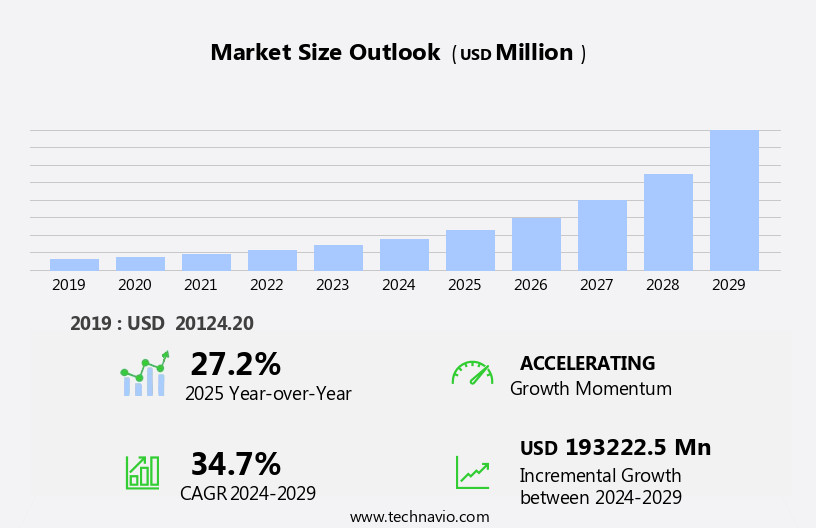
Platform-As-A-Service (PaaS) Market Size

Explore in-depth regional segment analysis with market size data - historical 2019-2023 and forecasts 2025-2029 - in the full report.  
Request Free Sample

The market continues to evolve, with dynamic market activities shaping its landscape. PaaS solutions are increasingly being adopted across various sectors due to their flexibility and ability to seamlessly integrate essential features such as load balancing, access control, and software testing. These solutions are also enhancing network security through microservices architecture and database management systems. The Software Development Lifecycle (SDLC) is being revolutionized with the integration of PaaS, enabling continuous integration and delivery, and the implementation of agile development methodologies. Furthermore, PaaS is facilitating cost optimization through serverless computing and virtual machines, while ensuring business continuity and high availability.

Machine learning and data analytics are also being integrated into PaaS offerings, enabling organizations to gain valuable insights from their data. NoSQL databases and fault tolerance are essential components of PaaS, ensuring the handling of large volumes of data and maintaining system reliability. User experience is a key focus, with PaaS solutions providing intuitive interfaces and performance monitoring tools. The ongoing integration of artificial intelligence and machine learning into PaaS is revolutionizing application development and management, enabling predictive analytics and automation.

PaaS is also facilitating disaster recovery and data warehousing, ensuring business continuity in the event of unforeseen circumstances. In summary, the PaaS market is a continuously evolving landscape, with essential features such as load balancing, access control, software testing, network security, and database management systems being seamlessly integrated into complete solutions. The integration of advanced technologies such as machine learning, data analytics, and artificial intelligence is further enhancing the value proposition of PaaS solutions.

How is this Platform-As-A-Service (PaaS) Industry segmented?

The platform-as-a-service (PaaS) industry research report provides comprehensive data (region-wise segment analysis), with forecasts and estimates in "USD million" for the period 2025-2029, as well as historical data from 2019-2023 for the following segments.

  • Product
    • Public cloud
    • Private cloud
    • Hybrid cloud
  • Type
    • Application PaaS
    • Integration PaaS
    • Database PaaS
  • End-user
    • Large enterprises
    • SMEs
  • Geography
    • North America
      • US
      • Canada
      • Mexico
    • Europe
      • France
      • Germany
      • The Netherlands
      • UK
    • APAC
      • China
      • India
      • Japan
    • Rest of World (ROW)

By Product Insights

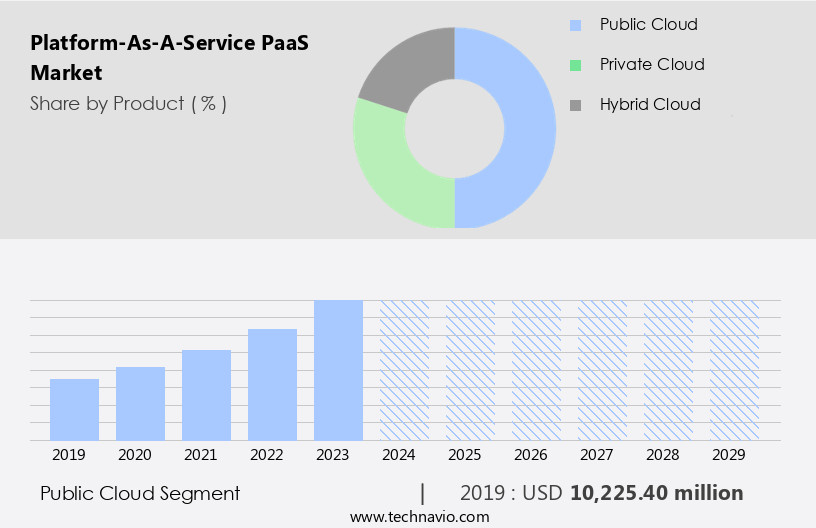
The Public cloud segment is estimated to witness significant growth during the forecast period. Public cloud Platform-as-a-Service (PaaS) refers to the delivery of solutions through a shared pool of computing resources in a public cloud infrastructure. Providers offer virtual machines, storage, and networking accessible to multiple customers over the Internet, enabling cost savings by eliminating the need for upfront investment in IT infrastructure. PaaS offerings provide pre-built application frameworks, development tools, and runtime environments, supporting popular programming languages and platforms. Key benefits include cost optimization through shared resources, agile development with continuous integration and delivery, enhanced security through access control and network protections, and improved performance with load balancing and monitoring.

Microservices architecture and serverless computing enable scalability and fault tolerance, while database management systems ensure data security and encryption. Artificial intelligence and machine learning facilitate data analytics, and API management streamlines application integration. Business continuity and disaster recovery are essential components, ensuring high availability and data warehousing. Relational and NoSQL databases cater to various data requirements, and waterfall and agile development methodologies are supported. Furthermore, PaaS solutions offer identity management, application security, and continuous delivery, ensuring a seamless user experience and data analytics capabilities. Performance monitoring, data encryption, and user interface design contribute to the overall quality assurance of applications.

Cloud computing's flexibility and scalability enable businesses to adapt to changing demands and focus on their core competencies.
Platform-As-A-Service (PaaS) Market Size

Request Free Sample

The Public cloud segment was valued at USD 10.23 billion in 2019 and showed a gradual increase during the forecast period.

The Platform-as-a-Service (PaaS) Market is growing as enterprises seek scalable, flexible solutions to modernize legacy systems. Providers offer support for transitioning from on-premise to cloud native architectures, enhancing agility and performance. Developers benefit from integrated tools like API gateway and content delivery network services for streamlined application delivery. Integration with the Internet of Things is fueling innovation across sectors, while proprietary software support allows seamless migration of custom applications. Powerful data visualization tools embedded in PaaS platforms help users interpret analytics in real time. Robust knowledge base resources and automation features are empowering developers and IT teams to innovate faster and reduce time-to-market.

Regional Analysis

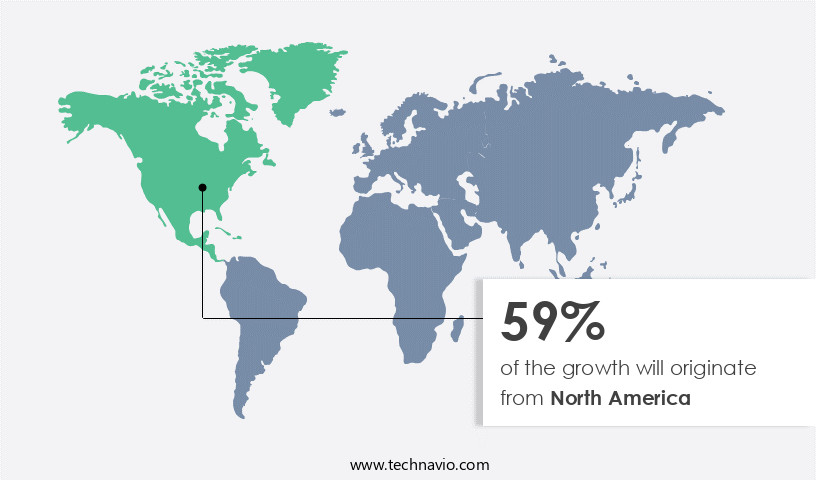
North America is estimated to contribute 59% to the growth of the global market during the forecast period. Technavio's analysts have elaborately explained the regional trends and drivers that shape the market during the forecast period.
Platform-As-A-Service (PaaS) Market Share by Geography

 Request Free Sample

The market in the US has experienced significant growth due to the increasing adoption of cloud computing. Established PaaS providers, including AWS, Microsoft, Google, and Oracle, based primarily in the US, have seen increased demand for their services. PaaS solutions offer scalability, allowing users to allocate resources as needed, making it an attractive option for startups and small to medium enterprises. Developers can create applications using a web browser and one-click functionality, streamlining the software development lifecycle. PaaS solutions provide essential features such as load balancing, access control, software testing, network security, and microservices architecture, enhancing application functionality and security. Data security and encryption are paramount in today's digital world, and PaaS solutions are delivering with advanced encryption techniques and API management.

Database management systems, including relational and NoSQL databases, are integrated into PaaS offerings, simplifying data management. Continuous integration, delivery, and deployment are facilitated through PaaS, ensuring quality assurance and reducing time-to-market. Advanced features like artificial intelligence, machine learning, data analytics, and data security are also incorporated, enabling businesses to gain valuable insights and protect sensitive information. PaaS providers offer various deployment models, including serverless computing, virtual machines, and containerization, catering to diverse business needs. Fault tolerance and high availability ensure business continuity, while disaster recovery and data warehousing capabilities provide an additional layer of protection for critical data. In summary, the PaaS market in the US is driven by the adoption of cloud computing, offering businesses scalability, security, and advanced features, ultimately enhancing their digital transformation journey.

Market Dynamics

Our researchers analyzed the data with 2024 as the base year, along with the key drivers, trends, and challenges. A holistic analysis of drivers will help companies refine their marketing strategies to gain a competitive advantage.

What are the key market drivers leading to the rise in the adoption of Platform-As-A-Service (PaaS) Industry?

  • The significant decrease in both cost and development time is the primary market motivator for application development projects. Platform-as-a-Service (PaaS) has emerged as a cost-effective solution for enterprises seeking to optimize their capital expenditures (CAPEX). Traditional on-premises applications necessitate significant investments in hardware, software, operating systems, middleware, servers, and databases. Small and medium-sized enterprises (SMEs) are increasingly turning to PaaS to access these resources on-demand, eliminating the need for large upfront investments. PaaS solutions offer more than just cost savings. They enable continuous integration and delivery, ensuring that applications are always up-to-date and free from errors.
  • Data analytics tools are integrated into these platforms, enabling organizations to gain valuable insights from their data in real-time. API management is another essential feature of PaaS, allowing for seamless integration with various applications and services. Cloud computing is the backbone of PaaS, providing scalability, reliability, and flexibility. With continuous integration and delivery, applications are always up-to-date, ensuring that businesses stay competitive in the market. Artificial intelligence and machine learning capabilities are also integrated into many PaaS offerings, enhancing application functionality and user experience. Data security is a top priority for businesses, and PaaS solutions provide robust security features.

What are the market trends shaping the Platform-As-A-Service (PaaS) Industry?

  • The trend in the market is moving towards cloud solutions. Platform-as-a-Service (PaaS) is a cloud computing model that enables organizations to develop, run, and manage applications without the complexity of building and maintaining the infrastructure. PaaS solutions offer several benefits, including performance monitoring, user experience enhancement, and integration with big data, machine learning, NoSQL databases, and agile development tools. Moreover, PaaS solutions prioritize data security with data encryption and fault tolerance, ensuring business continuity and data protection.
  • PaaS solutions' flexibility allows organizations to change cloud service providers according to their requirements, eliminating company lock-in and ensuring cost savings. This agility is crucial in today's rapidly evolving business landscape. In summary, PaaS solutions offer organizations the flexibility, security, and performance required to innovate and compete effectively in the digital economy. Machine learning algorithms and advanced analytics capabilities offer actionable insights, enabling data-driven decision-making.

What challenges does the Platform-As-A-Service (PaaS) Industry face during its growth?

  • The growth of the industry is being significantly impacted by security concerns related to public cloud adoption. This challenge, which is of great importance, necessitates the development and implementation of robust security solutions to mitigate potential risks and ensure the confidentiality, integrity, and availability of data in public cloud environments. Platform-as-a-Service (PaaS) is a cloud computing model where providers manage infrastructure, operating systems, middleware, and preinstalled software packages for businesses to develop, run, and manage applications. PaaS offers numerous benefits, such as high availability, disaster recovery, and business continuity. However, security and compliance remain significant concerns, particularly in a public cloud environment.
  • Relational databases and data warehousing are also crucial aspects of PaaS, ensuring the integrity and accessibility of business-critical data. Despite these concerns, the market for PaaS continues to grow, driven by the need for agility, scalability, and cost savings. Organizations must prioritize application security, ensuring that their PaaS provider implements robust security measures and best practices. Additionally, the use of waterfall development methodologies and high availability infrastructure can mitigate risks and enhance the overall value of PaaS solutions. With applications from multiple customers typically run on the same OS, customers face vulnerabilities such as lax default application configurations and holes in the Secure Sockets Layer (SSL) protocols.

Exclusive Customer Landscape

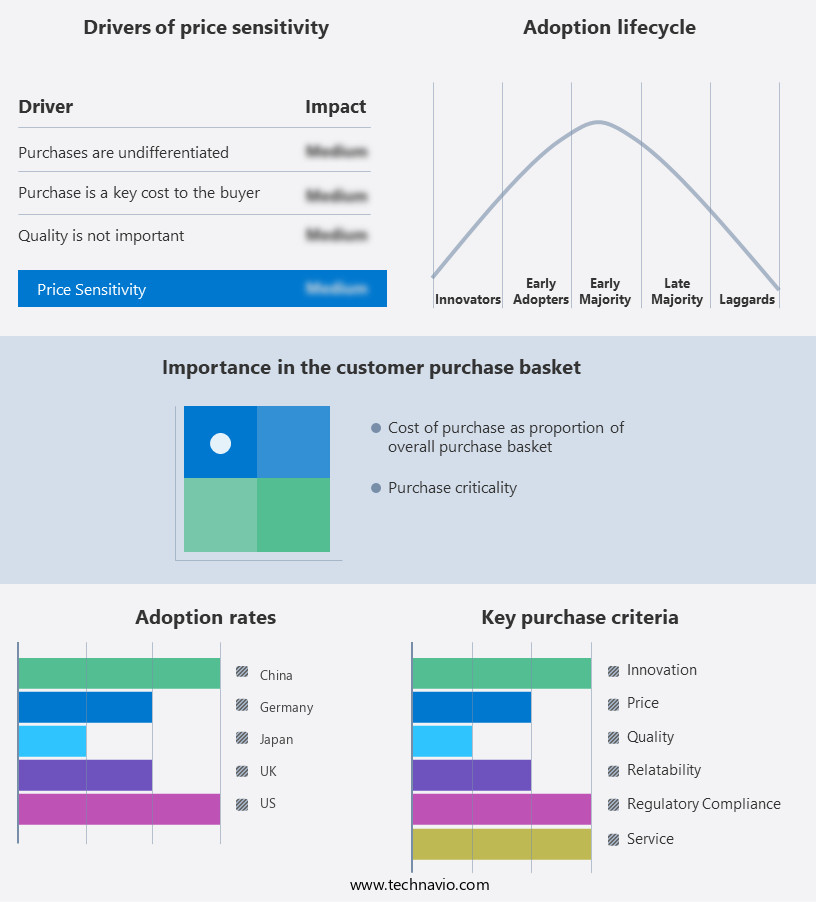
The platform-as-a-service (PaaS) market forecasting report includes the adoption lifecycle of the market, covering from the innovator's stage to the laggard's stage. It focuses on adoption rates in different regions based on penetration. Furthermore, the platform-as-a-service (PaaS) market report also includes key purchase criteria and drivers of price sensitivity to help companies evaluate and develop their market growth analysis strategies.
Platform-As-A-Service (PaaS) Market Share by Geography

 Customer Landscape

Key Companies & Market Insights

Companies are implementing various strategies, such as strategic alliances, platform-as-a-service (PaaS) market forecast, partnerships, mergers and acquisitions, geographical expansion, and product/service launches, to enhance their presence in the industry.

Amazon.com Inc. - The company delivers Platform-as-a-Service (PaaS) solutions via Amazon Web Services (AWS), featuring Elastic Beanstalk for versatile application hosting and Lambda for serverless computing, ensuring scalability and efficiency for businesses.

The industry research and growth report includes detailed analyses of the competitive landscape of the market and information about key companies, including:

  • Amazon.com Inc.
  • Atos SE
  • CloudBees Inc.
  • Dell Technologies Inc.
  • DigitalOcean Holdings Inc.
  • Google LLC
  • Heroku Inc.
  • International Business Machines Corp.
  • Mendix Technology BV
  • Microsoft Corp.
  • Oracle Corp.
  • Platform.sh SAS
  • Progress Software Corp.
  • SAP SE
  • Software GmbH
  • Tata Sons Pvt. Ltd.
  • Virtuozzo International GmbH
  • VMware Inc.
  • Zoho Corp. Pvt. Ltd.

Qualitative and quantitative analysis of companies has been conducted to help clients understand the wider business environment as well as the strengths and weaknesses of key industry players. Data is qualitatively analyzed to categorize companies as pure play, category-focused, industry-focused, and diversified; it is quantitatively analyzed to categorize companies as dominant, leading, strong, tentative, and weak.

Recent Development and News in Platform-As-A-Service (PaaS) Market

  • In January 2024, Microsoft announced the general availability of Azure Synapse Analytics, an integrated data platform in its Azure Platform-as-a-Service (PaaS) offering (Microsoft Press Release). This expansion enables users to query data and build and manage big data pipelines at scale, marking a significant advancement in Microsoft's data services.
  • In March 2024, IBM and Google Cloud formed a strategic partnership to offer a new PaaS solution, IBM Watson on Google Cloud, which combines IBM's AI and machine learning capabilities with Google Cloud's infrastructure (IBM Press Release). This collaboration aims to provide businesses with advanced AI services and seamless integration with Google Cloud's infrastructure.
  • In May 2024, Salesforce completed its acquisition of Slack Technologies, a leading communication and collaboration platform, for approximately USD 27.7 billion (Salesforce Press Release). This acquisition expanded Salesforce's offerings in the PaaS market, allowing it to provide a more comprehensive suite of business solutions to its customers.
  • In April 2025, Google Cloud Platform announced the launch of Anthos, a hybrid and multi-cloud management solution, which allows businesses to manage their workloads across multiple environments, including on-premises and public clouds (Google Cloud Blog). This development signifies a significant step forward in Google Cloud's efforts to provide businesses with flexible and scalable PaaS solutions.

Research Analyst Overview

In the market, API gateways have emerged as crucial components for managing and securing application access. Support channels, such as knowledge bases and incident response systems, ensure seamless user experiences. Computer vision and natural language processing are transforming industries through PaaS offerings, enabling advanced data analysis. Compliance frameworks and data governance are essential for businesses navigating the complexities of open source software and proprietary solutions. Edge computing and cloud migration are driving the adoption of PaaS for IoT applications and digital transformation initiatives. Data modeling, capacity planning, and application modernization are critical aspects of PaaS, enabling businesses to optimize resource management and serverless functions.

Prescriptive analytics and predictive analytics offer valuable insights, while message queues facilitate efficient communication between services. Vulnerability management and penetration testing are essential for maintaining security in a cloud-native environment. Service level agreements, managed services, virtual private cloud, and hybrid cloud solutions cater to diverse business needs. Professional services and content delivery networks provide additional value, ensuring optimal performance and reliability for PaaS users. Overall, the PaaS market continues to evolve, offering innovative solutions for businesses seeking to leverage technology for growth and efficiency.

Dive into Technavio's robust research methodology, blending expert interviews, extensive data synthesis, and validated models for unparalleled Platform-As-A-Service (PaaS) Market insights. See full methodology.

Market Scope

Report Coverage

Details

Page number

221

Base year

2024

Historic period

2019-2023

Forecast period

2025-2029

Growth momentum & CAGR

Accelerate at a CAGR of 34.7%

Market growth 2025-2029

USD 193.22 billion

Market structure

Fragmented

YoY growth 2024-2025(%)

27.2

Key countries

US, Canada, China, UK, Germany, India, Mexico, France, Japan, and The Netherlands

Competitive landscape

Leading Companies, Market Positioning of Companies, Competitive Strategies, and Industry Risks

Request Free Sample

What are the Key Data Covered in this Platform-As-A-Service (PaaS) Market Research and Growth Report?

  • CAGR of the Platform-As-A-Service (PaaS) industry during the forecast period
  • Detailed information on factors that will drive the growth and forecasting between 2025 and 2029
  • Precise estimation of the size of the market and its contribution of the industry in focus to the parent market
  • Accurate predictions about upcoming growth and trends and changes in consumer behaviour
  • Growth of the market across North America, Europe, APAC, South America, and Middle East and Africa
  • Thorough analysis of the market's competitive landscape and detailed information about companies
  • Comprehensive analysis of factors that will challenge the platform-as-a-service (PaaS) market growth of industry companies

We can help! Our analysts can customize this platform-as-a-service (PaaS) market research report to meet your requirements.

Get in touch

1 Executive Summary

  • 1.1 Market overview
    • Executive Summary - Chart on Market Overview
    • Executive Summary - Data Table on Market Overview
    • Executive Summary - Chart on Global Market Characteristics
    • Executive Summary - Chart on Market by Geography
    • Executive Summary - Chart on Market Segmentation by Product
    • Executive Summary - Chart on Market Segmentation by Type
    • Executive Summary - Chart on Market Segmentation by End-user
    • Executive Summary - Chart on Incremental Growth
    • Executive Summary - Data Table on Incremental Growth
    • Executive Summary - Chart on Company Market Positioning

2 Technavio Analysis

  • 2.1 Analysis of price sensitivity, lifecycle, customer purchase basket, adoption rates, and purchase criteria
    • Analysis of price sensitivity, lifecycle, customer purchase basket, adoption rates, and purchase criteria
  • 2.2 Criticality of inputs and Factors of differentiation
    • Overview on criticality of inputs and factors of differentiation
  • 2.3 Factors of disruption
    • Overview on factors of disruption
  • 2.4 Impact of drivers and challenges
    • Impact of drivers and challenges in 2024 and 2029

3 Market Landscape

  • 3.1 Market ecosystem
    • Parent Market
    • Data Table on - Parent Market
  • 3.2 Market characteristics
    • Market characteristics analysis
  • 3.3 Value chain analysis
    • Value chain analysis

4 Market Sizing

  • 4.1 Market definition
    • Offerings of companies included in the market definition
  • 4.2 Market segment analysis
    • Market segments
  • 4.3 Market size 2024
    • 4.4 Market outlook: Forecast for 2024-2029
      • Chart on Global - Market size and forecast 2024-2029 ($ million)
      • Data Table on Global - Market size and forecast 2024-2029 ($ million)
      • Chart on Global Market: Year-over-year growth 2024-2029 (%)
      • Data Table on Global Market: Year-over-year growth 2024-2029 (%)

    5 Historic Market Size

    • 5.1 Global Platform-As-A-Service (PaaS) Market 2019 - 2023
      • Historic Market Size - Data Table on Global Platform-As-A-Service (PaaS) Market 2019 - 2023 ($ million)
    • 5.2 Product segment analysis 2019 - 2023
      • Historic Market Size - Product Segment 2019 - 2023 ($ million)
    • 5.3 Type segment analysis 2019 - 2023
      • Historic Market Size - Type Segment 2019 - 2023 ($ million)
    • 5.4 End-user segment analysis 2019 - 2023
      • Historic Market Size - End-user Segment 2019 - 2023 ($ million)
    • 5.5 Geography segment analysis 2019 - 2023
      • Historic Market Size - Geography Segment 2019 - 2023 ($ million)
    • 5.6 Country segment analysis 2019 - 2023
      • Historic Market Size - Country Segment 2019 - 2023 ($ million)

    6 Qualitative Analysis

    • 6.1 Impact of AI on Global Platform-as-a-Service (PaaS) Market

      7 Five Forces Analysis

      • 7.1 Five forces summary
        • Five forces analysis - Comparison between 2024 and 2029
      • 7.2 Bargaining power of buyers
        • Bargaining power of buyers - Impact of key factors 2024 and 2029
      • 7.3 Bargaining power of suppliers
        • Bargaining power of suppliers - Impact of key factors in 2024 and 2029
      • 7.4 Threat of new entrants
        • Threat of new entrants - Impact of key factors in 2024 and 2029
      • 7.5 Threat of substitutes
        • Threat of substitutes - Impact of key factors in 2024 and 2029
      • 7.6 Threat of rivalry
        • Threat of rivalry - Impact of key factors in 2024 and 2029
      • 7.7 Market condition
        • Chart on Market condition - Five forces 2024 and 2029

      8 Market Segmentation by Product

      • 8.1 Market segments
        • Chart on Product - Market share 2024-2029 (%)
        • Data Table on Product - Market share 2024-2029 (%)
      • 8.2 Comparison by Product
        • Chart on Comparison by Product
        • Data Table on Comparison by Product
      • 8.3 Public cloud - Market size and forecast 2024-2029
        • Chart on Public cloud - Market size and forecast 2024-2029 ($ million)
        • Data Table on Public cloud - Market size and forecast 2024-2029 ($ million)
        • Chart on Public cloud - Year-over-year growth 2024-2029 (%)
        • Data Table on Public cloud - Year-over-year growth 2024-2029 (%)
      • 8.4 Private cloud - Market size and forecast 2024-2029
        • Chart on Private cloud - Market size and forecast 2024-2029 ($ million)
        • Data Table on Private cloud - Market size and forecast 2024-2029 ($ million)
        • Chart on Private cloud - Year-over-year growth 2024-2029 (%)
        • Data Table on Private cloud - Year-over-year growth 2024-2029 (%)
      • 8.5 Hybrid cloud - Market size and forecast 2024-2029
        • Chart on Hybrid cloud - Market size and forecast 2024-2029 ($ million)
        • Data Table on Hybrid cloud - Market size and forecast 2024-2029 ($ million)
        • Chart on Hybrid cloud - Year-over-year growth 2024-2029 (%)
        • Data Table on Hybrid cloud - Year-over-year growth 2024-2029 (%)
      • 8.6 Market opportunity by Product
        • Market opportunity by Product ($ million)
        • Data Table on Market opportunity by Product ($ million)

      9 Market Segmentation by Type

      • 9.1 Market segments
        • Chart on Type - Market share 2024-2029 (%)
        • Data Table on Type - Market share 2024-2029 (%)
      • 9.2 Comparison by Type
        • Chart on Comparison by Type
        • Data Table on Comparison by Type
      • 9.3 Application PaaS - Market size and forecast 2024-2029
        • Chart on Application PaaS - Market size and forecast 2024-2029 ($ million)
        • Data Table on Application PaaS - Market size and forecast 2024-2029 ($ million)
        • Chart on Application PaaS - Year-over-year growth 2024-2029 (%)
        • Data Table on Application PaaS - Year-over-year growth 2024-2029 (%)
      • 9.4 Integration PaaS - Market size and forecast 2024-2029
        • Chart on Integration PaaS - Market size and forecast 2024-2029 ($ million)
        • Data Table on Integration PaaS - Market size and forecast 2024-2029 ($ million)
        • Chart on Integration PaaS - Year-over-year growth 2024-2029 (%)
        • Data Table on Integration PaaS - Year-over-year growth 2024-2029 (%)
      • 9.5 Database PaaS - Market size and forecast 2024-2029
        • Chart on Database PaaS - Market size and forecast 2024-2029 ($ million)
        • Data Table on Database PaaS - Market size and forecast 2024-2029 ($ million)
        • Chart on Database PaaS - Year-over-year growth 2024-2029 (%)
        • Data Table on Database PaaS - Year-over-year growth 2024-2029 (%)
      • 9.6 Market opportunity by Type
        • Market opportunity by Type ($ million)
        • Data Table on Market opportunity by Type ($ million)

      10 Market Segmentation by End-user

      • 10.1 Market segments
        • Chart on End-user - Market share 2024-2029 (%)
        • Data Table on End-user - Market share 2024-2029 (%)
      • 10.2 Comparison by End-user
        • Chart on Comparison by End-user
        • Data Table on Comparison by End-user
      • 10.3 Large enterprises - Market size and forecast 2024-2029
        • Chart on Large enterprises - Market size and forecast 2024-2029 ($ million)
        • Data Table on Large enterprises - Market size and forecast 2024-2029 ($ million)
        • Chart on Large enterprises - Year-over-year growth 2024-2029 (%)
        • Data Table on Large enterprises - Year-over-year growth 2024-2029 (%)
      • 10.4 SMEs - Market size and forecast 2024-2029
        • Chart on SMEs - Market size and forecast 2024-2029 ($ million)
        • Data Table on SMEs - Market size and forecast 2024-2029 ($ million)
        • Chart on SMEs - Year-over-year growth 2024-2029 (%)
        • Data Table on SMEs - Year-over-year growth 2024-2029 (%)
      • 10.5 Market opportunity by End-user
        • Market opportunity by End-user ($ million)
        • Data Table on Market opportunity by End-user ($ million)

      11 Customer Landscape

      • 11.1 Customer landscape overview
        • Analysis of price sensitivity, lifecycle, customer purchase basket, adoption rates, and purchase criteria

      12 Geographic Landscape

      • 12.1 Geographic segmentation
        • Chart on Market share by geography 2024-2029 (%)
        • Data Table on Market share by geography 2024-2029 (%)
      • 12.2 Geographic comparison
        • Chart on Geographic comparison
        • Data Table on Geographic comparison
      • 12.3 North America - Market size and forecast 2024-2029
        • Chart on North America - Market size and forecast 2024-2029 ($ million)
        • Data Table on North America - Market size and forecast 2024-2029 ($ million)
        • Chart on North America - Year-over-year growth 2024-2029 (%)
        • Data Table on North America - Year-over-year growth 2024-2029 (%)
      • 12.4 Europe - Market size and forecast 2024-2029
        • Chart on Europe - Market size and forecast 2024-2029 ($ million)
        • Data Table on Europe - Market size and forecast 2024-2029 ($ million)
        • Chart on Europe - Year-over-year growth 2024-2029 (%)
        • Data Table on Europe - Year-over-year growth 2024-2029 (%)
      • 12.5 APAC - Market size and forecast 2024-2029
        • Chart on APAC - Market size and forecast 2024-2029 ($ million)
        • Data Table on APAC - Market size and forecast 2024-2029 ($ million)
        • Chart on APAC - Year-over-year growth 2024-2029 (%)
        • Data Table on APAC - Year-over-year growth 2024-2029 (%)
      • 12.6 South America - Market size and forecast 2024-2029
        • Chart on South America - Market size and forecast 2024-2029 ($ million)
        • Data Table on South America - Market size and forecast 2024-2029 ($ million)
        • Chart on South America - Year-over-year growth 2024-2029 (%)
        • Data Table on South America - Year-over-year growth 2024-2029 (%)
      • 12.7 Middle East and Africa - Market size and forecast 2024-2029
        • Chart on Middle East and Africa - Market size and forecast 2024-2029 ($ million)
        • Data Table on Middle East and Africa - Market size and forecast 2024-2029 ($ million)
        • Chart on Middle East and Africa - Year-over-year growth 2024-2029 (%)
        • Data Table on Middle East and Africa - Year-over-year growth 2024-2029 (%)
      • 12.8 US - Market size and forecast 2024-2029
        • Chart on US - Market size and forecast 2024-2029 ($ million)
        • Data Table on US - Market size and forecast 2024-2029 ($ million)
        • Chart on US - Year-over-year growth 2024-2029 (%)
        • Data Table on US - Year-over-year growth 2024-2029 (%)
      • 12.9 Canada - Market size and forecast 2024-2029
        • Chart on Canada - Market size and forecast 2024-2029 ($ million)
        • Data Table on Canada - Market size and forecast 2024-2029 ($ million)
        • Chart on Canada - Year-over-year growth 2024-2029 (%)
        • Data Table on Canada - Year-over-year growth 2024-2029 (%)
      • 12.10 China - Market size and forecast 2024-2029
        • Chart on China - Market size and forecast 2024-2029 ($ million)
        • Data Table on China - Market size and forecast 2024-2029 ($ million)
        • Chart on China - Year-over-year growth 2024-2029 (%)
        • Data Table on China - Year-over-year growth 2024-2029 (%)
      • 12.11 UK - Market size and forecast 2024-2029
        • Chart on UK - Market size and forecast 2024-2029 ($ million)
        • Data Table on UK - Market size and forecast 2024-2029 ($ million)
        • Chart on UK - Year-over-year growth 2024-2029 (%)
        • Data Table on UK - Year-over-year growth 2024-2029 (%)
      • 12.12 Germany - Market size and forecast 2024-2029
        • Chart on Germany - Market size and forecast 2024-2029 ($ million)
        • Data Table on Germany - Market size and forecast 2024-2029 ($ million)
        • Chart on Germany - Year-over-year growth 2024-2029 (%)
        • Data Table on Germany - Year-over-year growth 2024-2029 (%)
      • 12.13 Mexico - Market size and forecast 2024-2029
        • Chart on Mexico - Market size and forecast 2024-2029 ($ million)
        • Data Table on Mexico - Market size and forecast 2024-2029 ($ million)
        • Chart on Mexico - Year-over-year growth 2024-2029 (%)
        • Data Table on Mexico - Year-over-year growth 2024-2029 (%)
      • 12.14 India - Market size and forecast 2024-2029
        • Chart on India - Market size and forecast 2024-2029 ($ million)
        • Data Table on India - Market size and forecast 2024-2029 ($ million)
        • Chart on India - Year-over-year growth 2024-2029 (%)
        • Data Table on India - Year-over-year growth 2024-2029 (%)
      • 12.15 France - Market size and forecast 2024-2029
        • Chart on France - Market size and forecast 2024-2029 ($ million)
        • Data Table on France - Market size and forecast 2024-2029 ($ million)
        • Chart on France - Year-over-year growth 2024-2029 (%)
        • Data Table on France - Year-over-year growth 2024-2029 (%)
      • 12.16 Japan - Market size and forecast 2024-2029
        • Chart on Japan - Market size and forecast 2024-2029 ($ million)
        • Data Table on Japan - Market size and forecast 2024-2029 ($ million)
        • Chart on Japan - Year-over-year growth 2024-2029 (%)
        • Data Table on Japan - Year-over-year growth 2024-2029 (%)
      • 12.17 The Netherlands - Market size and forecast 2024-2029
        • Chart on The Netherlands - Market size and forecast 2024-2029 ($ million)
        • Data Table on The Netherlands - Market size and forecast 2024-2029 ($ million)
        • Chart on The Netherlands - Year-over-year growth 2024-2029 (%)
        • Data Table on The Netherlands - Year-over-year growth 2024-2029 (%)
      • 12.18 Market opportunity by geography
        • Market opportunity by geography ($ million)
        • Data Tables on Market opportunity by geography ($ million)

      13 Drivers, Challenges, and Opportunity/Restraints

      • 13.1 Market drivers
        • 13.2 Market challenges
          • 13.3 Impact of drivers and challenges
            • Impact of drivers and challenges in 2024 and 2029
          • 13.4 Market opportunities/restraints

            14 Competitive Landscape

            • 14.1 Overview
              • 14.2 Competitive Landscape
                • Overview on criticality of inputs and factors of differentiation
              • 14.3 Landscape disruption
                • Overview on factors of disruption
              • 14.4 Industry risks
                • Impact of key risks on business

              15 Competitive Analysis

              • 15.1 Companies profiled
                • Companies covered
              • 15.2 Company ranking index
                • Company ranking index
              • 15.3 Market positioning of companies
                • Matrix on companies position and classification
              • 15.4 Amazon.com Inc.
                • Amazon.com Inc. - Overview
                • Amazon.com Inc. - Business segments
                • Amazon.com Inc. - Key news
                • Amazon.com Inc. - Key offerings
                • Amazon.com Inc. - Segment focus
                • SWOT
              • 15.5 CloudBees Inc.
                • CloudBees Inc. - Overview
                • CloudBees Inc. - Product / Service
                • CloudBees Inc. - Key offerings
                • SWOT
              • 15.6 DigitalOcean Holdings Inc.
                • DigitalOcean Holdings Inc. - Overview
                • DigitalOcean Holdings Inc. - Business segments
                • DigitalOcean Holdings Inc. - Key offerings
                • DigitalOcean Holdings Inc. - Segment focus
                • SWOT
              • 15.7 Google LLC
                • Google LLC - Overview
                • Google LLC - Product / Service
                • Google LLC - Key news
                • Google LLC - Key offerings
                • SWOT
              • 15.8 Heroku Inc.
                • Heroku Inc. - Overview
                • Heroku Inc. - Product / Service
                • Heroku Inc. - Key offerings
                • SWOT
              • 15.9 International Business Machines Corp.
                • International Business Machines Corp. - Overview
                • International Business Machines Corp. - Business segments
                • International Business Machines Corp. - Key news
                • International Business Machines Corp. - Key offerings
                • International Business Machines Corp. - Segment focus
                • SWOT
              • 15.10 Mendix Technology BV
                • Mendix Technology BV - Overview
                • Mendix Technology BV - Product / Service
                • Mendix Technology BV - Key offerings
                • SWOT
              • 15.11 Microsoft Corp.
                • Microsoft Corp. - Overview
                • Microsoft Corp. - Business segments
                • Microsoft Corp. - Key news
                • Microsoft Corp. - Key offerings
                • Microsoft Corp. - Segment focus
                • SWOT
              • 15.12 Oracle Corp.
                • Oracle Corp. - Overview
                • Oracle Corp. - Business segments
                • Oracle Corp. - Key news
                • Oracle Corp. - Key offerings
                • Oracle Corp. - Segment focus
                • SWOT
              • 15.13 Platform.sh SAS
                • Platform.sh SAS - Overview
                • Platform.sh SAS - Product / Service
                • Platform.sh SAS - Key offerings
                • SWOT
              • 15.14 Progress Software Corp.
                • Progress Software Corp. - Overview
                • Progress Software Corp. - Product / Service
                • Progress Software Corp. - Key offerings
                • SWOT
              • 15.15 SAP SE
                • SAP SE - Overview
                • SAP SE - Business segments
                • SAP SE - Key news
                • SAP SE - Key offerings
                • SAP SE - Segment focus
                • SWOT
              • 15.16 Software GmbH
                • Software GmbH - Overview
                • Software GmbH - Product / Service
                • Software GmbH - Key news
                • Software GmbH - Key offerings
                • SWOT
              • 15.17 Tata Sons Pvt. Ltd.
                • Tata Sons Pvt. Ltd. - Overview
                • Tata Sons Pvt. Ltd. - Product / Service
                • Tata Sons Pvt. Ltd. - Key news
                • Tata Sons Pvt. Ltd. - Key offerings
                • SWOT
              • 15.18 Virtuozzo International GmbH
                • Virtuozzo International GmbH - Overview
                • Virtuozzo International GmbH - Product / Service
                • Virtuozzo International GmbH - Key offerings
                • SWOT

              16 Appendix

              • 16.1 Scope of the report
                • 16.2 Inclusions and exclusions checklist
                  • Inclusions checklist
                  • Exclusions checklist
                • 16.3 Currency conversion rates for US$
                  • Currency conversion rates for US$
                • 16.4 Research methodology
                  • Research methodology
                • 16.5 Data procurement
                  • Information sources
                • 16.6 Data validation
                  • Data validation
                • 16.7 Validation techniques employed for market sizing
                  • Validation techniques employed for market sizing
                • 16.8 Data synthesis
                  • Data synthesis
                • 16.9 360 degree market analysis
                  • 360 degree market analysis
                • 16.10 List of abbreviations
                  • List of abbreviations

                Research Methodology

                Technavio presents a detailed picture of the market by way of study, synthesis, and summation of data from multiple sources. The analysts have presented the various facets of the market with a particular focus on identifying the key industry influencers. The data thus presented is comprehensive, reliable, and the result of extensive research, both primary and secondary.

                INFORMATION SOURCES

                Primary sources

                • Manufacturers and suppliers
                • Channel partners
                • Industry experts
                • Strategic decision makers

                Secondary sources

                • Industry journals and periodicals
                • Government data
                • Financial reports of key industry players
                • Historical data
                • Press releases

                DATA ANALYSIS

                Data Synthesis

                • Collation of data
                • Estimation of key figures
                • Analysis of derived insights

                Data Validation

                • Triangulation with data models
                • Reference against proprietary databases
                • Corroboration with industry experts

                REPORT WRITING

                Qualitative

                • Market drivers
                • Market challenges
                • Market trends
                • Five forces analysis

                Quantitative

                • Market size and forecast
                • Market segmentation
                • Geographical insights
                • Competitive landscape

                Interested in this report?

                Get your sample now to see our research methodology and insights!

                Download Now

                Frequently Asked Questions

                Platform-As-A-Service (Paas) market growth will increase by $ 193222.5 mn during 2025-2029.

                The Platform-As-A-Service (Paas) market is expected to grow at a CAGR of 34.7% during 2025-2029.

                Platform-As-A-Service (Paas) market is segmented by Product( Public cloud, Private cloud, Hybrid cloud) Type( Application PaaS, Integration PaaS, Database PaaS, South America, MEA) End-user( Large enterprises, SMEs, APAC, South America, Middle East and Africa)

                Amazon.com Inc., Atos SE, CloudBees Inc., Dell Technologies Inc., DigitalOcean Holdings Inc., Google LLC, Heroku Inc., International Business Machines Corp., Mendix Technology BV, Microsoft Corp., Oracle Corp., Platform.sh SAS, Progress Software Corp., SAP SE, Software GmbH, Tata Sons Pvt. Ltd., Virtuozzo International GmbH, VMware Inc., Zoho Corp. Pvt. Ltd. are a few of the key vendors in the Platform-As-A-Service (Paas) market.

                North America will register the highest growth rate of 59% among the other regions. Therefore, the Platform-As-A-Service (Paas) market in North America is expected to garner significant business opportunities for the vendors during the forecast period.

                US, Canada, China, UK, Germany, India, Mexico, France, Japan, The Netherlands

                • Reduction in cost of application development and timeGlobally is the driving factor this market.
                • enterprises are focusing on reducing their overall CAPEX by adopting new technologies. Building and running on-premises applications is a complex is the driving factor this market.
                • expensive is the driving factor this market.
                • and time-consuming task. Traditionally is the driving factor this market.
                • each on-premises application requires hardware is the driving factor this market.
                • OS is the driving factor this market.
                • a database is the driving factor this market.
                • middleware is the driving factor this market.
                • servers is the driving factor this market.
                • and software. SMEs are adopting PaaS solutions as they can help them adopt hardware is the driving factor this market.
                • middleware is the driving factor this market.
                • OS is the driving factor this market.
                • software is the driving factor this market.
                • and resources as and when required. To purchase and maintain the required hardware is the driving factor this market.
                • software is the driving factor this market.
                • OS is the driving factor this market.
                • and servers and to establish their own data center is the driving factor this market.
                • organizations need a high CAPEX.Also is the driving factor this market.
                • PaaS provides ease of integration with any data is the driving factor this market.
                • allowing for the creation of data-centric apps. This offers a whole new level of connected experience to app users is the driving factor this market.
                • giving them relevant is the driving factor this market.
                • contextual information in real-time. Thus is the driving factor this market.
                • rather than depending on a specific web application development framework is the driving factor this market.
                • PaaS helps enterprises use a single all-purpose development framework. Enterprises can use a single development platform as per their need and pay as they go is the driving factor this market.
                • which helps reduce the extra cost needed to build different platforms. All these characteristics of Paas help organizations to introduce applications and products in less time. Owing to these advantages is the driving factor this market.
                • the adoption of PaaS is expected to grow is the driving factor this market.
                • which in turn is the driving factor this market.
                • is expected to drive the growth of the market in focus during the forecast period. is the driving factor this market.

                The Platform-As-A-Service (Paas) market vendors should focus on grabbing business opportunities from the Public cloud segment as it accounted for the largest market share in the base year.
                RIA - Research AI Assistant
                Ask RIA
