

Prefabricated Construction Market Analysis, Size, and Forecast 2025-2029: North America (US), Europe (France, Germany, Italy, The Netherlands, and UK), APAC (China, India, Japan, and South Korea), and Rest of World (ROW)

Prefabricated Construction Market Analysis, Size, and Forecast 2025-2029:
North America (US), Europe (France, Germany, Italy, The Netherlands, and UK), APAC (China, India, Japan, and South Korea), and Rest of World (ROW)

Published: May 2025 204 Pages SKU: IRTNTR77537

Market Overview at a Glance

$74 B
Market Opportunity
8.9%
CAGR
8.4
YoY growth 2024-2025(%)

Prefabricated Construction Market Size 2025-2029

The prefabricated construction market size is forecast to increase by USD 74 billion at a CAGR of 8.9% between 2024 and 2029.

  • The market is experiencing significant growth, driven by the increasing demand for efficient and cost-effective building solutions, particularly in the healthcare sector. The healthcare industry's focus on reducing construction time and costs, while maintaining high standards of quality and sustainability, is propelling the adoption of prefabricated construction methods. However, the market faces challenges that could hinder its growth potential. Regulatory hurdles impact adoption as stringent building codes and standards require compliance, which can add to the cost and complexity of prefabricated construction projects. Additionally, supply chain inconsistencies can pose challenges, as the availability and reliability of raw materials and components can impact production schedules and project timelines. There is an increasing demand for prefabricated solutions in smart healthcare, as these offer efficiency and cost-effectiveness. These structures offer numerous advantages, such as faster construction times and improved quality control, making them an attractive option for healthcare facilities. The growing preference for lightweight construction materials is also contributing, as these materials offer easier handling and faster construction.
  • The shortage of skilled labor further complicates matters, as the industry requires a workforce with the expertise to design, manufacture, and install prefabricated components efficiently. To capitalize on the market opportunities and navigate these challenges effectively, companies must focus on innovation and collaboration. Investing in research and development to create advanced prefabricated construction technologies and solutions can help overcome regulatory and supply chain challenges. Building strategic partnerships with suppliers, contractors, and regulatory bodies can also help streamline operations and ensure compliance. Moreover, companies can address the labor shortage by investing in training programs and offering competitive compensation packages to attract and retain skilled workers.

What will be the Size of the Prefabricated Construction Market during the forecast period?
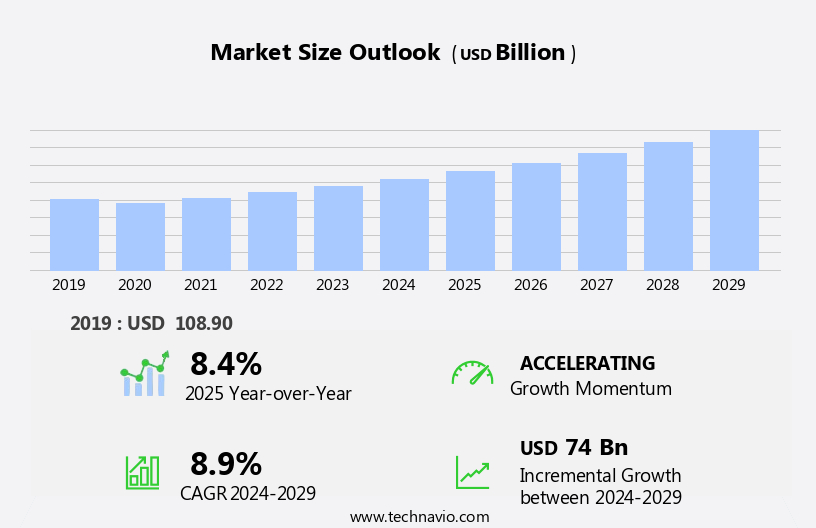
Prefabricated Construction Market Size

 Request Free Sample

  • The market is experiencing significant growth, driven by the adoption of innovative solutions such as composite panels, modular furniture, and prefabricated bathrooms. These products offer emissions reduction benefits, aligning with the passive house and LEED certification standards. Construction risk management and life cycle assessment are essential considerations in this sector, with supply chain management playing a crucial role in optimizing costs and reducing carbon footprint. Precast concrete and cross-laminated timber (CLT) are popular materials in prefabricated construction, offering sustainability and efficiency advantages. Green building certifications, such as LEED and the Well Building Standard, are increasingly sought after, driving demand for smart homes and net-zero energy buildings.
  • Construction data analytics, project planning tools, and BIM software enable more efficient design and planning processes. Building codes compliance, zoning approvals, and circular economy principles are essential for sustainable and cost-effective construction projects. Construction software, building automation, and digital twins facilitate streamlined construction processes, ensuring compliance with regulations and reducing waste. The market is also witnessing the integration of passive house, LEED certification, and net-zero energy standards into building codes, further driving demand for prefabricated construction solutions.

How is this Prefabricated Construction Industry segmented?

The prefabricated construction industry research report provides comprehensive data (region-wise segment analysis), with forecasts and estimates in "USD billion" for the period 2025-2029, as well as historical data from 2019-2023 for the following segments.

  • Application
    • Non-residential
    • Residential
  • Material
    • Steel
    • Concrete
    • Wood
    • Others
  • Type
    • Four sided
    • Open sided
    • Partially open sided
    • Others
  • Geography
    • North America
      • US
    • Europe
      • France
      • Germany
      • Italy
      • The Netherlands
      • UK
    • APAC
      • China
      • India
      • Japan
      • South Korea
    • Rest of World (ROW)

By Application Insights

The non-residential segment is estimated to witness significant growth during the forecast period.

Prefabricated construction is experiencing significant growth in the US market, particularly in commercial and industrial sectors. This trend is driven by the efficiency and cost savings offered by prefabricated methods, which enable faster construction timelines and reduced labor costs. Industrial facilities such as office buildings, retail spaces, warehouses, and factories are increasingly adopting prefabricated construction for these reasons. Advanced technologies, including building information modeling (BIM), robotics, and automation, are often integrated into these projects, enhancing precision and efficiency. Sustainable construction practices, such as the use of recycled materials and energy efficiency, are also becoming more common in prefabricated construction.

Modular and panelized construction methods, as well as engineered systems, are popular choices for projects requiring design flexibility and time savings. Urban renewal projects, disaster relief efforts, and infrastructure projects also benefit from prefabricated construction due to its reduced waste and ability to be easily transported and assembled on-site. Zoning regulations and building codes are being updated to accommodate prefabricated construction, further fueling its growth. Additionally, prefabricated construction is being used for single-family homes, temporary housing, and multi-family housing to address housing affordability concerns. Lean construction principles and digital fabrication are also being employed to increase efficiency and reduce costs.

The adoption of 3D printing technology is an emerging trend in prefabricated construction, offering even greater time and cost savings, as well as increased design flexibility. Overall, prefabricated construction is transforming the US construction industry with its innovative methods, cost savings, and increased efficiency.
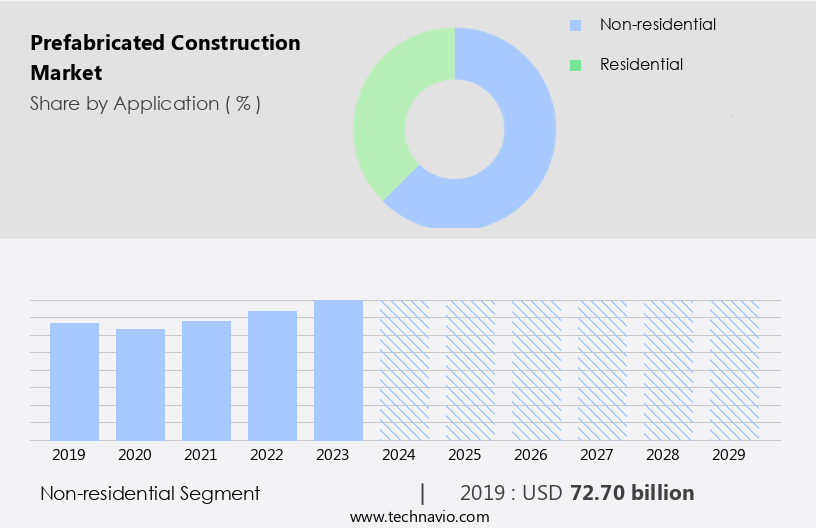
Prefabricated Construction Market Size

Request Free Sample

The Non-residential segment was valued at USD 72.70 billion in 2019 and showed a gradual increase during the forecast period.

Regional Analysis

APAC is estimated to contribute 38% to the growth of the global market during the forecast period. Technavio's analysts have elaborately explained the regional trends and drivers that shape the market during the forecast period.
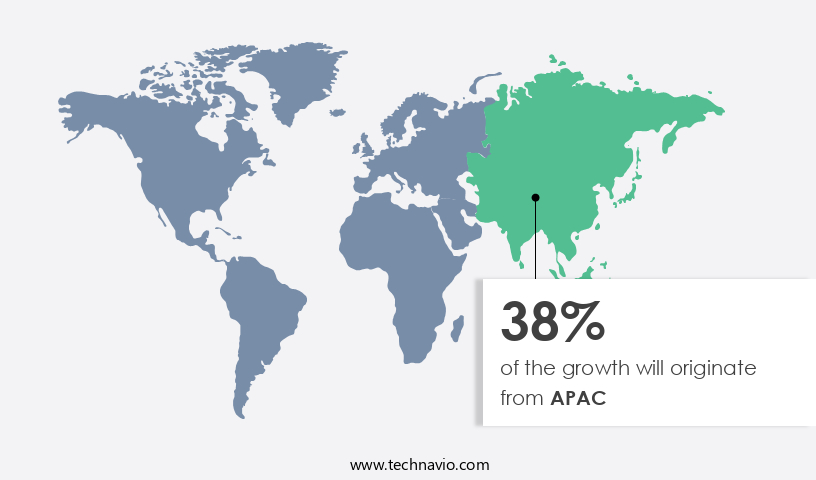
Prefabricated Construction Market Share by Geography

Download Free Sample Report

In Asia Pacific (APAC), urbanization is accelerating with millions of people relocating to cities, leading to a surge in demand for infrastructure development, housing, and commercial buildings. To meet this demand efficiently and cost-effectively, prefabrication is gaining popularity as a construction method. Industrialized construction, including modular and panelized methods, is being adopted for large-scale infrastructure projects, such as transportation networks and public facilities. Prefabrication offers time savings, reduced waste, and improved quality through controlled factory conditions and enhanced quality control. Sustainable construction practices, like the use of recycled materials and energy-efficient systems, are also being integrated into prefabricated solutions.

Single-family homes and multi-family housing are in high demand due to population growth and changing lifestyles, driving the need for factory-built housing and prefabricated units. Prefabrication is also being used for temporary housing and disaster relief structures, providing quick and cost-effective solutions. In the commercial sector, prefabricated construction is being used for office buildings, retail stores, and even industrial facilities. Lean construction principles and digital fabrication technologies, such as Augmented Reality (AR) and virtual reality (VR), are being employed to streamline the design and construction process. Prefabricated construction is subject to zoning regulations and building codes, ensuring structural integrity and safety.

Engineered systems, including HVAC and electrical wiring, are being integrated into prefabricated units for increased efficiency and reduced costs. Prefabricated construction is also being used for urban renewal projects and mass customization, offering design flexibility and cost savings. Construction management and project management are essential components of prefabricated construction, ensuring efficient site assembly and building permit acquisition. In the industrial and military sectors, prefabricated construction is being used for infrastructure projects, including 3D-printed structures and engineered systems. The trend towards green building and housing affordability is also driving the adoption of prefabricated construction, as it offers a more sustainable and cost-effective alternative to traditional construction methods.

Overall, prefabricated construction is a dynamic and evolving market, responding to the changing needs of the APAC region.

Market Dynamics

Our researchers analyzed the data with 2024 as the base year, along with the key drivers, trends, and challenges. A holistic analysis of drivers will help companies refine their marketing strategies to gain a competitive advantage.

What are the Prefabricated Construction market drivers leading to the rise in the adoption of Industry?

  • The significant demand for prefabricated construction in the healthcare sector serves as the primary market driver.  Prefabricated construction plays a significant role in the rapid deployment of essential facilities, particularly in healthcare, during times of increased demand or emergencies. modular construction, a type of prefabricated construction, enables faster project delivery compared to traditional methods. This is crucial for healthcare providers to address urgent needs promptly. Prefabricated construction is ideal for the deployment of temporary healthcare facilities, such as field hospitals, mobile medical units, or quarantine facilities. These structures can be erected quickly and efficiently, providing essential medical services during emergencies or surge capacity needs. Moreover, prefabricated construction overcomes logistical challenges associated with building healthcare facilities in remote or challenging locations.
  • Engineered systems, including electrical wiring and plumbing, are prefabricated off-site and transported to the construction site for installation. This process saves time and resources, allowing for faster completion of projects. Modern technology, such as augmented reality (AR), is increasingly being integrated into prefabricated construction. AR technology enables architects and engineers to visualize and plan construction projects in a more immersive and harmonious manner, leading to improved efficiency and accuracy. Water conservation is another essential consideration in modern construction, and prefabricated construction offers solutions through the use of concrete panels and other engineered systems. These systems help reduce water usage during the construction process and contribute to overall sustainability efforts.
  • Zoning regulations and other permitting requirements can also be addressed more efficiently through prefabricated construction. Factory-built housing and office buildings can be constructed off-site and transported to the final location for assembly, bypassing lengthy permitting processes and saving valuable time.

What are the Prefabricated Construction market trends shaping the Industry?

  • The construction industry is experiencing a significant shift towards sustainability, which is now a prominent market trend. Sustainability in construction refers to the use of materials, designs, and practices that minimize environmental impact and promote long-term efficiency. Prefabricated construction is a sustainable building solution that offers numerous benefits for the US commercial market. By reducing waste through efficient material usage and the controlled factory environment, prefabrication minimizes environmental impact. Reusable and recyclable materials enable the dismantling and relocation of structures, further promoting sustainability. Prefabrication also lowers raw material transportation and on-site construction activities, decreasing greenhouse gas emissions. Urban renewal projects can significantly benefit from prefabricated construction due to its site assembly capabilities, which streamline the building process in densely populated areas. Building codes are easily met with prefabricated construction, as modules are manufactured to meet specific standards. Additionally, steel structures can accommodate green building features such as solar panels and energy-efficient insulation systems.
  • Virtual reality (VR) and 3D printing technologies are increasingly being integrated into prefabricated construction, enhancing the design process and enabling more precise construction. Lean construction principles are also embraced, ensuring increased efficiency and cost savings. Retail stores are among the commercial sectors that can benefit from prefabricated construction's flexibility, speed, and cost-effectiveness. The industry's focus on green building and sustainability aligns with the growing consumer demand for eco-friendly practices. Overall, prefabricated construction offers a harmonious blend of innovation, efficiency, and sustainability for the US commercial market.

How does Prefabricated Construction market faces challenges during its growth?

  • The shortage of skilled labor poses a significant challenge to the industry's growth trajectory. With a dearth of adequately trained workers, businesses in this sector face increased production costs, longer lead times, and decreased competitiveness. To mitigate this issue, companies must invest in workforce development programs, collaborate with educational institutions, and explore alternative staffing solutions.  Prefabricated construction, which involves the manufacturing of building components off-site and assembling them on-site, offers solutions to housing affordability and infrastructure development. However, the industry faces a significant challenge in the form of a skilled labor shortage. This issue can lead to reduced productivity in prefabricated factories, resulting in longer lead times and project delays. Skilled workers are essential in ensuring quality standards during the fabrication process, and their absence can result in inconsistencies or defects in the manufactured units. These issues can impact the final product's integrity and limit the production capacity of modular fabrication facilities. Consequently, delays in prefabricated construction projects can hinder overall productivity.
  • Additionally, prefabricated construction is increasingly being adopted for multi-family housing, infrastructure projects, military bases, and residential construction. Digital fabrication and mass customization through panelized and offsite construction methods are also gaining popularity. Building permits and construction management are crucial aspects of prefabricated construction projects, requiring careful planning and execution. Despite these challenges, prefabricated construction continues to offer significant benefits, including cost savings, time efficiency, and reduced environmental impact.

Exclusive Customer Landscape

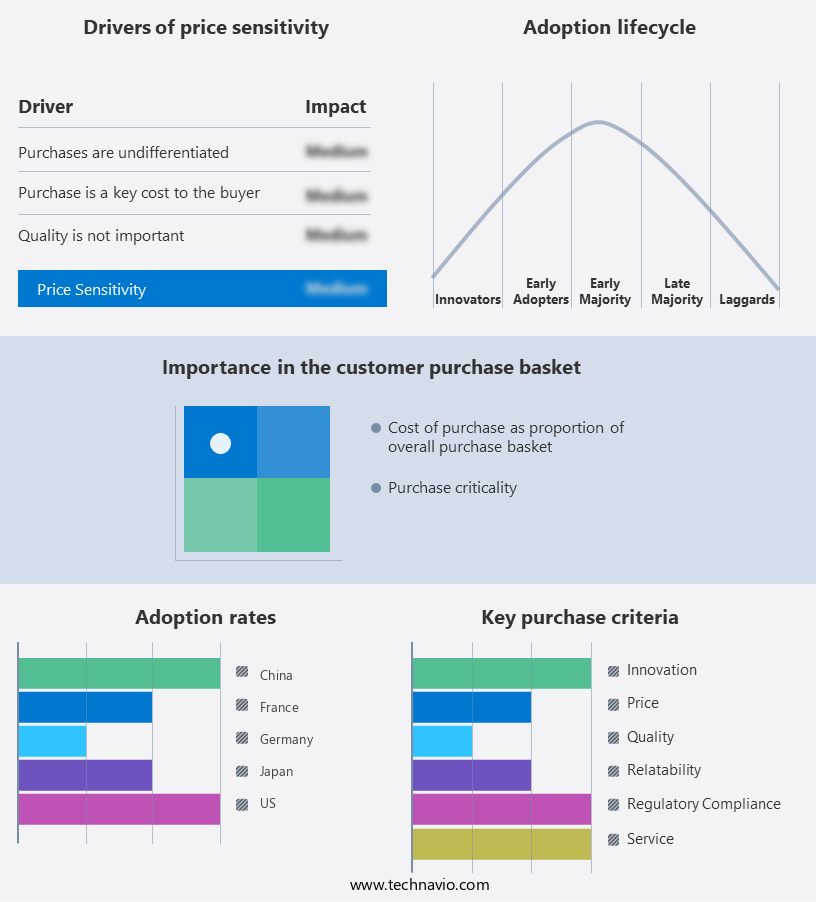
The prefabricated construction market forecasting report includes the adoption lifecycle of the market, covering from the innovator's stage to the laggard's stage. It focuses on adoption rates in different regions based on penetration. Furthermore, the prefabricated construction market report also includes key purchase criteria and drivers of price sensitivity to help companies evaluate and develop their market growth analysis strategies.
Prefabricated Construction Market Share by Geography

 Customer Landscape

Key Companies & Market Insights

Companies are implementing various strategies, such as strategic alliances, prefabricated construction market forecast, partnerships, mergers and acquisitions, geographical expansion, and product/service launches, to enhance their presence in the industry.

Abtech Inc. - The company offers prefabricated construction solutions that involves constructing individual parts of a building at a factory and then transporting those parts, either fully assembled or in sections, to the construction site.

The industry research and growth report includes detailed analyses of the competitive landscape of the market and information about key companies, including:

  • Abtech Inc.
  • Asian Prefab Construction Co.
  • Black Diamond Group Ltd.
  • Easiset Worldwide
  • Everest Industries Ltd.
  • Henan KHome Steel Structure Co. Ltd.
  • M. A. Mortenson Co.
  • Modular Genius
  • Morgan USA
  • Nadler Modular
  • NELSON Worldwide LLC
  • Panel Built Inc.
  • Parkut International Inc.
  • Plant Prefab Inc.
  • Satellite Shelters Inc.
  • Specialty Modular
  • The Boldt Co.
  • United Partition Systems Inc.
  • United Rentals Inc.
  • VESTA MODULAR

Qualitative and quantitative analysis of companies has been conducted to help clients understand the wider business environment as well as the strengths and weaknesses of key industry players. Data is qualitatively analyzed to categorize companies as pure play, category-focused, industry-focused, and diversified; it is quantitatively analyzed to categorize companies as dominant, leading, strong, tentative, and weak.

Recent Development and News in Prefabricated Construction Market

  • In February 2024, leading prefabricated construction company, XYZ Corporation, announced the launch of its new product line, GreenBuild, which incorporates advanced insulation materials and renewable energy systems, aiming to reduce the carbon footprint of prefabricated structures by up to 50% (XYZ Corporation Press Release, 2024).
  • In May 2025, industry giants, ABC Industries and LMN Construction, formed a strategic partnership to integrate ABC Industries' prefabricated components into LMN Construction's building projects, expanding their market reach and enhancing their competitive edge (ABC Industries and LMN Construction Joint Press Release, 2025).
  • In September 2024, prefabricated construction technology innovator, PQR Tech, secured a USD50 million series C funding round, enabling the company to expand its production capacity and accelerate the commercialization of its 3D-printed modular housing solutions (PQR Tech Press Release, 2024).

Research Analyst Overview

The market continues to evolve, driven by dynamic market forces and advancements in technology. Prefabricated units, a key component of this market, are finding applications across various sectors, including housing affordability, construction management, and infrastructure projects. Digital fabrication and mass customization are revolutionizing the production process, enabling the creation of high-quality, energy-efficient units. Multi-family housing and industrial facilities are benefiting from the time savings and reduced waste offered by panelized and offsite construction methods. Sustainable construction practices, such as the use of recycled materials and engineered systems, are gaining traction in this market. Building permits and zoning regulations are evolving to accommodate the unique needs of prefabricated construction. Prefabricated construction offers a viable solution by reducing material waste and enabling the reuse of components, making it an attractive option for developers and builders.

Construction management is streamlined through the use of digital tools, including augmented reality (AR) and virtual reality (VR), allowing for increased efficiency and cost savings in commercial construction. Prefabricated units are also being used in temporary housing, disaster relief, and urban renewal projects. The ongoing unfolding of market activities is shaping the prefabricated construction landscape, with continuous innovations in design flexibility, HVAC systems, electrical wiring, and building codes. The integration of lean construction principles and 3D printing technology is further pushing the boundaries of what is possible in this market. In the realm of residential construction, prefabricated units offer a cost-effective solution for single-family homes, while maintaining high construction quality and adhering to sustainable building practices.

The use of prefabricated units in military bases and infrastructure projects ensures efficient and effective construction, with the added benefit of reduced environmental impact. The market is a constantly evolving landscape, with ongoing advancements in technology, design, and construction practices shaping its future applications. The integration of digital fabrication, mass customization, and sustainable construction practices is driving innovation and pushing the boundaries of what is possible in this dynamic market.

Dive into Technavio's strong research methodology, blending expert interviews, extensive data synthesis, and validated models for unparalleled Prefabricated Construction Market insights. See full methodology.

Market Scope

Report Coverage

Details

Page number

204

Base year

2024

Historic period

2019-2023

Forecast period

2025-2029

Growth momentum & CAGR

Accelerate at a CAGR of 8.9%

Market growth 2025-2029

USD 74 billion

Market structure

Fragmented

YoY growth 2024-2025(%)

8.4

Key countries

US, China, Japan, Germany, France, UK, Italy, India, The Netherlands, and South Korea

Competitive landscape

Leading Companies, Market Positioning of Companies, Competitive Strategies, and Industry Risks

Request Free Sample

What are the Key Data Covered in this Prefabricated Construction Market Research and Growth Report?

  • CAGR of the Prefabricated Construction industry during the forecast period
  • Detailed information on factors that will drive the growth and forecasting between 2025 and 2029
  • Precise estimation of the size of the market and its contribution of the industry in focus to the parent market
  • Accurate predictions about upcoming growth and trends and changes in consumer behaviour
  • Growth of the market across APAC, Europe, North America, Middle East and Africa, and South America
  • Thorough analysis of the market's competitive landscape and detailed information about companies
  • Comprehensive analysis of factors that will challenge the prefabricated construction market growth of industry companies

We can help! Our analysts can customize this prefabricated construction market research report to meet your requirements.

Get in touch

1 Executive Summary

  • 1.1 Market overview
    • Executive Summary - Chart on Market Overview
    • Executive Summary - Data Table on Market Overview
    • Executive Summary - Chart on Global Market Characteristics
    • Executive Summary - Chart on Market by Geography
    • Executive Summary - Chart on Market Segmentation by Application
    • Executive Summary - Chart on Market Segmentation by Material
    • Executive Summary - Chart on Market Segmentation by Type
    • Executive Summary - Chart on Incremental Growth
    • Executive Summary - Data Table on Incremental Growth
    • Executive Summary - Chart on Company Market Positioning

2 Technavio Analysis

  • 2.1 Analysis of price sensitivity, lifecycle, customer purchase basket, adoption rates, and purchase criteria
    • Analysis of price sensitivity, lifecycle, customer purchase basket, adoption rates, and purchase criteria
  • 2.2 Criticality of inputs and Factors of differentiation
    • Overview on criticality of inputs and factors of differentiation
  • 2.3 Factors of disruption
    • Overview on factors of disruption
  • 2.4 Impact of drivers and challenges
    • Impact of drivers and challenges in 2024 and 2029

3 Market Landscape

  • 3.1 Market ecosystem
    • Parent Market
    • Data Table on - Parent Market
  • 3.2 Market characteristics
    • Market characteristics analysis
  • 3.3 Value chain analysis
    • Value chain analysis

4 Market Sizing

  • 4.1 Market definition
    • Offerings of companies included in the market definition
  • 4.2 Market segment analysis
    • Market segments
  • 4.3 Market size 2024
    • 4.4 Market outlook: Forecast for 2024-2029
      • Chart on Global - Market size and forecast 2024-2029 ($ billion)
      • Data Table on Global - Market size and forecast 2024-2029 ($ billion)
      • Chart on Global Market: Year-over-year growth 2024-2029 (%)
      • Data Table on Global Market: Year-over-year growth 2024-2029 (%)

    5 Historic Market Size

    • 5.1 Global Prefabricated Construction Market 2019 - 2023
      • Historic Market Size - Data Table on Global Prefabricated Construction Market 2019 - 2023 ($ billion)
    • 5.2 Application segment analysis 2019 - 2023
      • Historic Market Size - Application Segment 2019 - 2023 ($ billion)
    • 5.3 Material segment analysis 2019 - 2023
      • Historic Market Size - Material Segment 2019 - 2023 ($ billion)
    • 5.4 Type segment analysis 2019 - 2023
      • Historic Market Size - Type Segment 2019 - 2023 ($ billion)
    • 5.5 Geography segment analysis 2019 - 2023
      • Historic Market Size - Geography Segment 2019 - 2023 ($ billion)
    • 5.6 Country segment analysis 2019 - 2023
      • Historic Market Size - Country Segment 2019 - 2023 ($ billion)

    6 Qualitative Analysis

    • 6.1 Impact of AI on Global Prefabricated Construction Market

      7 Five Forces Analysis

      • 7.1 Five forces summary
        • Five forces analysis - Comparison between 2024 and 2029
      • 7.2 Bargaining power of buyers
        • Bargaining power of buyers - Impact of key factors 2024 and 2029
      • 7.3 Bargaining power of suppliers
        • Bargaining power of suppliers - Impact of key factors in 2024 and 2029
      • 7.4 Threat of new entrants
        • Threat of new entrants - Impact of key factors in 2024 and 2029
      • 7.5 Threat of substitutes
        • Threat of substitutes - Impact of key factors in 2024 and 2029
      • 7.6 Threat of rivalry
        • Threat of rivalry - Impact of key factors in 2024 and 2029
      • 7.7 Market condition
        • Chart on Market condition - Five forces 2024 and 2029

      8 Market Segmentation by Application

      • 8.1 Market segments
        • Chart on Application - Market share 2024-2029 (%)
        • Data Table on Application - Market share 2024-2029 (%)
      • 8.2 Comparison by Application
        • Chart on Comparison by Application
        • Data Table on Comparison by Application
      • 8.3 Non-residential - Market size and forecast 2024-2029
        • Chart on Non-residential - Market size and forecast 2024-2029 ($ billion)
        • Data Table on Non-residential - Market size and forecast 2024-2029 ($ billion)
        • Chart on Non-residential - Year-over-year growth 2024-2029 (%)
        • Data Table on Non-residential - Year-over-year growth 2024-2029 (%)
      • 8.4 Residential - Market size and forecast 2024-2029
        • Chart on Residential - Market size and forecast 2024-2029 ($ billion)
        • Data Table on Residential - Market size and forecast 2024-2029 ($ billion)
        • Chart on Residential - Year-over-year growth 2024-2029 (%)
        • Data Table on Residential - Year-over-year growth 2024-2029 (%)
      • 8.5 Market opportunity by Application
        • Market opportunity by Application ($ billion)
        • Data Table on Market opportunity by Application ($ billion)

      9 Market Segmentation by Material

      • 9.1 Market segments
        • Chart on Material - Market share 2024-2029 (%)
        • Data Table on Material - Market share 2024-2029 (%)
      • 9.2 Comparison by Material
        • Chart on Comparison by Material
        • Data Table on Comparison by Material
      • 9.3 Steel - Market size and forecast 2024-2029
        • Chart on Steel - Market size and forecast 2024-2029 ($ billion)
        • Data Table on Steel - Market size and forecast 2024-2029 ($ billion)
        • Chart on Steel - Year-over-year growth 2024-2029 (%)
        • Data Table on Steel - Year-over-year growth 2024-2029 (%)
      • 9.4 Concrete - Market size and forecast 2024-2029
        • Chart on Concrete - Market size and forecast 2024-2029 ($ billion)
        • Data Table on Concrete - Market size and forecast 2024-2029 ($ billion)
        • Chart on Concrete - Year-over-year growth 2024-2029 (%)
        • Data Table on Concrete - Year-over-year growth 2024-2029 (%)
      • 9.5 Wood - Market size and forecast 2024-2029
        • Chart on Wood - Market size and forecast 2024-2029 ($ billion)
        • Data Table on Wood - Market size and forecast 2024-2029 ($ billion)
        • Chart on Wood - Year-over-year growth 2024-2029 (%)
        • Data Table on Wood - Year-over-year growth 2024-2029 (%)
      • 9.6 Others - Market size and forecast 2024-2029
        • Chart on Others - Market size and forecast 2024-2029 ($ billion)
        • Data Table on Others - Market size and forecast 2024-2029 ($ billion)
        • Chart on Others - Year-over-year growth 2024-2029 (%)
        • Data Table on Others - Year-over-year growth 2024-2029 (%)
      • 9.7 Market opportunity by Material
        • Market opportunity by Material ($ billion)
        • Data Table on Market opportunity by Material ($ billion)

      10 Market Segmentation by Type

      • 10.1 Market segments
        • Chart on Type - Market share 2024-2029 (%)
        • Data Table on Type - Market share 2024-2029 (%)
      • 10.2 Comparison by Type
        • Chart on Comparison by Type
        • Data Table on Comparison by Type
      • 10.3 Four sided - Market size and forecast 2024-2029
        • Chart on Four sided - Market size and forecast 2024-2029 ($ billion)
        • Data Table on Four sided - Market size and forecast 2024-2029 ($ billion)
        • Chart on Four sided - Year-over-year growth 2024-2029 (%)
        • Data Table on Four sided - Year-over-year growth 2024-2029 (%)
      • 10.4 Open sided - Market size and forecast 2024-2029
        • Chart on Open sided - Market size and forecast 2024-2029 ($ billion)
        • Data Table on Open sided - Market size and forecast 2024-2029 ($ billion)
        • Chart on Open sided - Year-over-year growth 2024-2029 (%)
        • Data Table on Open sided - Year-over-year growth 2024-2029 (%)
      • 10.5 Partially open sided - Market size and forecast 2024-2029
        • Chart on Partially open sided - Market size and forecast 2024-2029 ($ billion)
        • Data Table on Partially open sided - Market size and forecast 2024-2029 ($ billion)
        • Chart on Partially open sided - Year-over-year growth 2024-2029 (%)
        • Data Table on Partially open sided - Year-over-year growth 2024-2029 (%)
      • 10.6 Others - Market size and forecast 2024-2029
        • Chart on Others - Market size and forecast 2024-2029 ($ billion)
        • Data Table on Others - Market size and forecast 2024-2029 ($ billion)
        • Chart on Others - Year-over-year growth 2024-2029 (%)
        • Data Table on Others - Year-over-year growth 2024-2029 (%)
      • 10.7 Market opportunity by Type
        • Market opportunity by Type ($ billion)
        • Data Table on Market opportunity by Type ($ billion)

      11 Customer Landscape

      • 11.1 Customer landscape overview
        • Analysis of price sensitivity, lifecycle, customer purchase basket, adoption rates, and purchase criteria

      12 Geographic Landscape

      • 12.1 Geographic segmentation
        • Chart on Market share by geography 2024-2029 (%)
        • Data Table on Market share by geography 2024-2029 (%)
      • 12.2 Geographic comparison
        • Chart on Geographic comparison
        • Data Table on Geographic comparison
      • 12.3 APAC - Market size and forecast 2024-2029
        • Chart on APAC - Market size and forecast 2024-2029 ($ billion)
        • Data Table on APAC - Market size and forecast 2024-2029 ($ billion)
        • Chart on APAC - Year-over-year growth 2024-2029 (%)
        • Data Table on APAC - Year-over-year growth 2024-2029 (%)
      • 12.4 Europe - Market size and forecast 2024-2029
        • Chart on Europe - Market size and forecast 2024-2029 ($ billion)
        • Data Table on Europe - Market size and forecast 2024-2029 ($ billion)
        • Chart on Europe - Year-over-year growth 2024-2029 (%)
        • Data Table on Europe - Year-over-year growth 2024-2029 (%)
      • 12.5 North America - Market size and forecast 2024-2029
        • Chart on North America - Market size and forecast 2024-2029 ($ billion)
        • Data Table on North America - Market size and forecast 2024-2029 ($ billion)
        • Chart on North America - Year-over-year growth 2024-2029 (%)
        • Data Table on North America - Year-over-year growth 2024-2029 (%)
      • 12.6 Middle East and Africa - Market size and forecast 2024-2029
        • Chart on Middle East and Africa - Market size and forecast 2024-2029 ($ billion)
        • Data Table on Middle East and Africa - Market size and forecast 2024-2029 ($ billion)
        • Chart on Middle East and Africa - Year-over-year growth 2024-2029 (%)
        • Data Table on Middle East and Africa - Year-over-year growth 2024-2029 (%)
      • 12.7 South America - Market size and forecast 2024-2029
        • Chart on South America - Market size and forecast 2024-2029 ($ billion)
        • Data Table on South America - Market size and forecast 2024-2029 ($ billion)
        • Chart on South America - Year-over-year growth 2024-2029 (%)
        • Data Table on South America - Year-over-year growth 2024-2029 (%)
      • 12.8 US - Market size and forecast 2024-2029
        • Chart on US - Market size and forecast 2024-2029 ($ billion)
        • Data Table on US - Market size and forecast 2024-2029 ($ billion)
        • Chart on US - Year-over-year growth 2024-2029 (%)
        • Data Table on US - Year-over-year growth 2024-2029 (%)
      • 12.9 China - Market size and forecast 2024-2029
        • Chart on China - Market size and forecast 2024-2029 ($ billion)
        • Data Table on China - Market size and forecast 2024-2029 ($ billion)
        • Chart on China - Year-over-year growth 2024-2029 (%)
        • Data Table on China - Year-over-year growth 2024-2029 (%)
      • 12.10 Japan - Market size and forecast 2024-2029
        • Chart on Japan - Market size and forecast 2024-2029 ($ billion)
        • Data Table on Japan - Market size and forecast 2024-2029 ($ billion)
        • Chart on Japan - Year-over-year growth 2024-2029 (%)
        • Data Table on Japan - Year-over-year growth 2024-2029 (%)
      • 12.11 Germany - Market size and forecast 2024-2029
        • Chart on Germany - Market size and forecast 2024-2029 ($ billion)
        • Data Table on Germany - Market size and forecast 2024-2029 ($ billion)
        • Chart on Germany - Year-over-year growth 2024-2029 (%)
        • Data Table on Germany - Year-over-year growth 2024-2029 (%)
      • 12.12 France - Market size and forecast 2024-2029
        • Chart on France - Market size and forecast 2024-2029 ($ billion)
        • Data Table on France - Market size and forecast 2024-2029 ($ billion)
        • Chart on France - Year-over-year growth 2024-2029 (%)
        • Data Table on France - Year-over-year growth 2024-2029 (%)
      • 12.13 UK - Market size and forecast 2024-2029
        • Chart on UK - Market size and forecast 2024-2029 ($ billion)
        • Data Table on UK - Market size and forecast 2024-2029 ($ billion)
        • Chart on UK - Year-over-year growth 2024-2029 (%)
        • Data Table on UK - Year-over-year growth 2024-2029 (%)
      • 12.14 India - Market size and forecast 2024-2029
        • Chart on India - Market size and forecast 2024-2029 ($ billion)
        • Data Table on India - Market size and forecast 2024-2029 ($ billion)
        • Chart on India - Year-over-year growth 2024-2029 (%)
        • Data Table on India - Year-over-year growth 2024-2029 (%)
      • 12.15 Italy - Market size and forecast 2024-2029
        • Chart on Italy - Market size and forecast 2024-2029 ($ billion)
        • Data Table on Italy - Market size and forecast 2024-2029 ($ billion)
        • Chart on Italy - Year-over-year growth 2024-2029 (%)
        • Data Table on Italy - Year-over-year growth 2024-2029 (%)
      • 12.16 South Korea - Market size and forecast 2024-2029
        • Chart on South Korea - Market size and forecast 2024-2029 ($ billion)
        • Data Table on South Korea - Market size and forecast 2024-2029 ($ billion)
        • Chart on South Korea - Year-over-year growth 2024-2029 (%)
        • Data Table on South Korea - Year-over-year growth 2024-2029 (%)
      • 12.17 The Netherlands - Market size and forecast 2024-2029
        • Chart on The Netherlands - Market size and forecast 2024-2029 ($ billion)
        • Data Table on The Netherlands - Market size and forecast 2024-2029 ($ billion)
        • Chart on The Netherlands - Year-over-year growth 2024-2029 (%)
        • Data Table on The Netherlands - Year-over-year growth 2024-2029 (%)
      • 12.18 Market opportunity by geography
        • Market opportunity by geography ($ billion)
        • Data Tables on Market opportunity by geography ($ billion)

      13 Drivers, Challenges, and Opportunity/Restraints

      • 13.1 Market drivers
        • 13.2 Market challenges
          • 13.3 Impact of drivers and challenges
            • Impact of drivers and challenges in 2024 and 2029
          • 13.4 Market opportunities/restraints

            14 Competitive Landscape

            • 14.1 Overview
              • 14.2 Competitive Landscape
                • Overview on criticality of inputs and factors of differentiation
              • 14.3 Landscape disruption
                • Overview on factors of disruption
              • 14.4 Industry risks
                • Impact of key risks on business

              15 Competitive Analysis

              • 15.1 Companies profiled
                • Companies covered
              • 15.2 Company ranking index
                • Company ranking index
              • 15.3 Market positioning of companies
                • Matrix on companies position and classification
              • 15.4 Abtech Inc.
                • Abtech Inc. - Overview
                • Abtech Inc. - Product / Service
                • Abtech Inc. - Key offerings
                • SWOT
              • 15.5 Asian Prefab Construction Co.
                • Asian Prefab Construction Co. - Overview
                • Asian Prefab Construction Co. - Product / Service
                • Asian Prefab Construction Co. - Key offerings
                • SWOT
              • 15.6 Black Diamond Group Ltd.
                • Black Diamond Group Ltd. - Overview
                • Black Diamond Group Ltd. - Product / Service
                • Black Diamond Group Ltd. - Key offerings
                • SWOT
              • 15.7 Easiset Worldwide
                • Easiset Worldwide - Overview
                • Easiset Worldwide - Product / Service
                • Easiset Worldwide - Key offerings
                • SWOT
              • 15.8 Henan KHome Steel Structure Co. Ltd.
                • Henan KHome Steel Structure Co. Ltd. - Overview
                • Henan KHome Steel Structure Co. Ltd. - Product / Service
                • Henan KHome Steel Structure Co. Ltd. - Key offerings
                • SWOT
              • 15.9 M. A. Mortenson Co.
                • M. A. Mortenson Co. - Overview
                • M. A. Mortenson Co. - Product / Service
                • M. A. Mortenson Co. - Key offerings
                • SWOT
              • 15.10 Morgan USA
                • Morgan USA - Overview
                • Morgan USA - Product / Service
                • Morgan USA - Key offerings
                • SWOT
              • 15.11 NELSON Worldwide LLC
                • NELSON Worldwide LLC - Overview
                • NELSON Worldwide LLC - Product / Service
                • NELSON Worldwide LLC - Key offerings
                • SWOT
              • 15.12 Panel Built Inc.
                • Panel Built Inc. - Overview
                • Panel Built Inc. - Product / Service
                • Panel Built Inc. - Key offerings
                • SWOT
              • 15.13 Parkut International Inc.
                • Parkut International Inc. - Overview
                • Parkut International Inc. - Product / Service
                • Parkut International Inc. - Key offerings
                • SWOT
              • 15.14 Plant Prefab Inc.
                • Plant Prefab Inc. - Overview
                • Plant Prefab Inc. - Product / Service
                • Plant Prefab Inc. - Key offerings
                • SWOT
              • 15.15 Satellite Shelters Inc.
                • Satellite Shelters Inc. - Overview
                • Satellite Shelters Inc. - Product / Service
                • Satellite Shelters Inc. - Key offerings
                • SWOT
              • 15.16 The Boldt Co.
                • The Boldt Co. - Overview
                • The Boldt Co. - Product / Service
                • The Boldt Co. - Key offerings
                • SWOT
              • 15.17 United Partition Systems Inc.
                • United Partition Systems Inc. - Overview
                • United Partition Systems Inc. - Product / Service
                • United Partition Systems Inc. - Key offerings
                • SWOT
              • 15.18 United Rentals Inc.
                • United Rentals Inc. - Overview
                • United Rentals Inc. - Business segments
                • United Rentals Inc. - Key news
                • United Rentals Inc. - Key offerings
                • United Rentals Inc. - Segment focus
                • SWOT

              16 Appendix

              • 16.1 Scope of the report
                • 16.2 Inclusions and exclusions checklist
                  • Inclusions checklist
                  • Exclusions checklist
                • 16.3 Currency conversion rates for US$
                  • Currency conversion rates for US$
                • 16.4 Research methodology
                  • Research methodology
                • 16.5 Data procurement
                  • Information sources
                • 16.6 Data validation
                  • Data validation
                • 16.7 Validation techniques employed for market sizing
                  • Validation techniques employed for market sizing
                • 16.8 Data synthesis
                  • Data synthesis
                • 16.9 360 degree market analysis
                  • 360 degree market analysis
                • 16.10 List of abbreviations
                  • List of abbreviations

                Research Methodology

                Technavio presents a detailed picture of the market by way of study, synthesis, and summation of data from multiple sources. The analysts have presented the various facets of the market with a particular focus on identifying the key industry influencers. The data thus presented is comprehensive, reliable, and the result of extensive research, both primary and secondary.

                INFORMATION SOURCES

                Primary sources

                • Manufacturers and suppliers
                • Channel partners
                • Industry experts
                • Strategic decision makers

                Secondary sources

                • Industry journals and periodicals
                • Government data
                • Financial reports of key industry players
                • Historical data
                • Press releases

                DATA ANALYSIS

                Data Synthesis

                • Collation of data
                • Estimation of key figures
                • Analysis of derived insights

                Data Validation

                • Triangulation with data models
                • Reference against proprietary databases
                • Corroboration with industry experts

                REPORT WRITING

                Qualitative

                • Market drivers
                • Market challenges
                • Market trends
                • Five forces analysis

                Quantitative

                • Market size and forecast
                • Market segmentation
                • Geographical insights
                • Competitive landscape

                Interested in this report?

                Get your sample now to see our research methodology and insights!

                Download Now

                Frequently Asked Questions

                Prefabricated Construction market growth will increase by $ 74 bn during 2025-2029 .

                The Prefabricated Construction market is expected to grow at a CAGR of 8.9% during 2025-2029 .

                Prefabricated Construction market is segmented by Application( Non-residential, Residential) Material( Steel, Concrete, Wood, Others) Type( Four sided, Open sided, Partially open sided, Others, South America)

                Abtech Inc., Asian Prefab Construction Co., Black Diamond Group Ltd., Easiset Worldwide, Everest Industries Ltd., Henan KHome Steel Structure Co. Ltd., M. A. Mortenson Co., Modular Genius, Morgan USA, Nadler Modular, NELSON Worldwide LLC, Panel Built Inc., Parkut International Inc., Plant Prefab Inc., Satellite Shelters Inc., Specialty Modular, The Boldt Co., United Partition Systems Inc., United Rentals Inc., VESTA MODULAR are a few of the key vendors in the Prefabricated Construction market.

                APAC will register the highest growth rate of 38% among the other regions. Therefore, the Prefabricated Construction market in APAC is expected to garner significant business opportunities for the vendors during the forecast period.

                US, China, Japan, Germany, France, UK, Italy, India, The Netherlands, South Korea

                • High demand for prefabricated construction in healthcareHealthcare facilities often need to be built or expanded rapidly to meet growing demand or respond to emergencies such as pandemics or natural disasters. Modular construction allows for faster project delivery compared to traditional construction methods is the driving factor this market.
                • enabling healthcare providers to address urgent needs more quickly. Prefabricated construction is well-suited for the rapid deployment of temporary healthcare facilities is the driving factor this market.
                • such as field hospitals is the driving factor this market.
                • mobile medical units is the driving factor this market.
                • or temporary quarantine facilities. These prefabricated facilities can provide essential medical services quickly and efficiently in response to emergencies or surge capacity needs. Prefabricated construction can overcome logistical challenges associated with building healthcare facilities in remote or challenging locations. Prefabricated components can be manufactured off-site and transported to the site is the driving factor this market.
                • allowing healthcare providers to deliver critical services to underserved communities or areas with limited infrastructure. The demand for prefabricated construction in healthcare is driven by the need for speed is the driving factor this market.
                • flexibility is the driving factor this market.
                • quality is the driving factor this market.
                • infection control is the driving factor this market.
                • cost-effectiveness is the driving factor this market.
                • adaptability is the driving factor this market.
                • and sustainability. As healthcare systems continue to evolve and face new challenges is the driving factor this market.
                • prefabricated construction offers a modern and adaptable solution to meet the demands of patients is the driving factor this market.
                • providers is the driving factor this market.
                • and communities is the driving factor this market.
                • which may have a positive impact on the growth of the global prefabricated construction market during the forecast period. is the driving factor this market.

                The Prefabricated Construction market vendors should focus on grabbing business opportunities from the Non-residential segment as it accounted for the largest market share in the base year.
