



Pup Joint Market Size 2026-2030
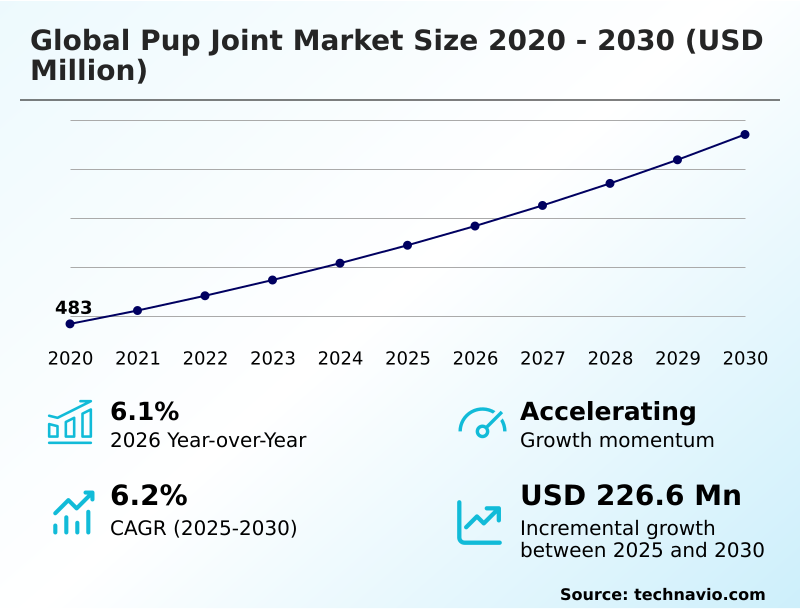
The pup joint market size is valued to increase by USD 226.6 million, at a CAGR of 6.2% from 2025 to 2030. Increasing oil and gas exploration and production activities will drive the pup joint market.
Major Market Trends & Insights
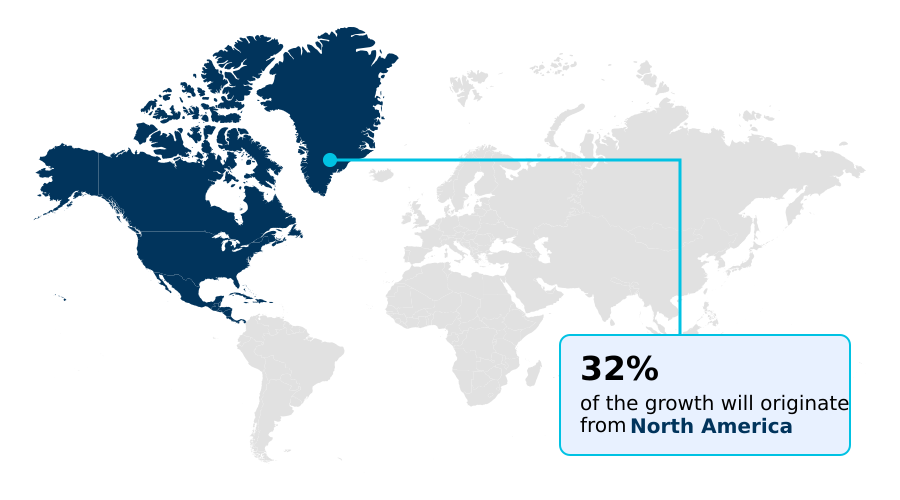
- North America dominated the market and accounted for a 32.3% growth during the forecast period.
- By Technology - Hot Rolled segment was valued at in 2024
- By Application - Oil and gas segment accounted for the largest market revenue share in 2024
Market Size & Forecast
- Market Opportunities: USD 387.4 million
- Market Future Opportunities: USD 226.6 million
- CAGR from 2025 to 2030 : 6.2%
Market Summary
- The pup joint market is integral to the efficiency and safety of the oil and gas sector. These non-standard length tubulars are essential for the precise construction of drill and production strings, enabling operators to achieve exact depth requirements for downhole equipment.
- Growth is underpinned by relentless deepwater exploration and the industrial-scale development of unconventional resources, which demand sophisticated well completion operations and high-integrity components. For instance, in a complex horizontal drilling campaign, achieving optimal spacing for hydraulic fracturing stages relies on the accurate placement of packers and sleeves, a task facilitated by a specific sequence of pup joints.
- This precision directly impacts reservoir contact and production outcomes. Concurrently, the industry is navigating the challenge of volatile raw material pricing while embracing technological advancements in materials science, such as high-strength alloys and corrosion-resistant coatings. These innovations are critical for extending component life in high-pressure, high-temperature (HPHT) environments, ensuring the market's alignment with the industry's evolving technical demands.
- The market's trajectory is therefore a balance of robust upstream activity, infrastructural expansion, and continuous product innovation to meet increasingly rigorous operational standards.
What will be the Size of the Pup Joint Market during the forecast period?
Get Key Insights on Market Forecast (PDF) Get Free Sample
How is the Pup Joint Market Segmented?
The pup joint industry research report provides comprehensive data (region-wise segment analysis), with forecasts and estimates in "USD million" for the period 2026-2030, as well as historical data from 2020-2024 for the following segments.
- Technology
- Hot rolled
- Cold rolled
- Application
- Oil and gas
- Chemical industry
- Mining
- Construction
- Others
- Type
- Tubing pup joint
- Drill pipe pup joint
- Crossover pup joint
- Casing pup joint
- Geography
- North America
- US
- Canada
- Mexico
- Middle East and Africa
- Saudi Arabia
- UAE
- South Africa
- APAC
- China
- India
- Japan
- Europe
- Germany
- UK
- France
- South America
- Brazil
- Argentina
- Colombia
- Rest of World (ROW)
- North America
By Technology Insights
The hot rolled segment is estimated to witness significant growth during the forecast period.
The hot rolled segment is foundational to the pup joint market, valued for its cost efficiency and mechanical resilience in many oil and gas applications.
The manufacturing process, which involves shaping steel above its recrystallization temperature, yields products with high tensile strength and ductility. This makes hot rolled steel ideal for downhole environments where impact resistance is critical.
These components are integral to building casing and tubing strings, supporting overall wellbore integrity during upstream exploration and production. While the process results in less precise dimensional tolerances compared to cold rolling, its economic advantage is a significant factor.
The inherent toughness of the material, which can enhance impact resistance by up to 15% in certain applications, ensures sustained demand for drilling and completion operations, promoting greater operational efficiency.
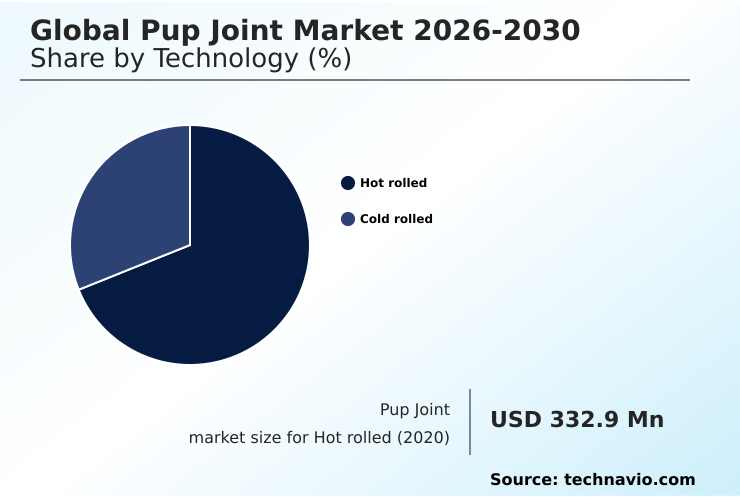
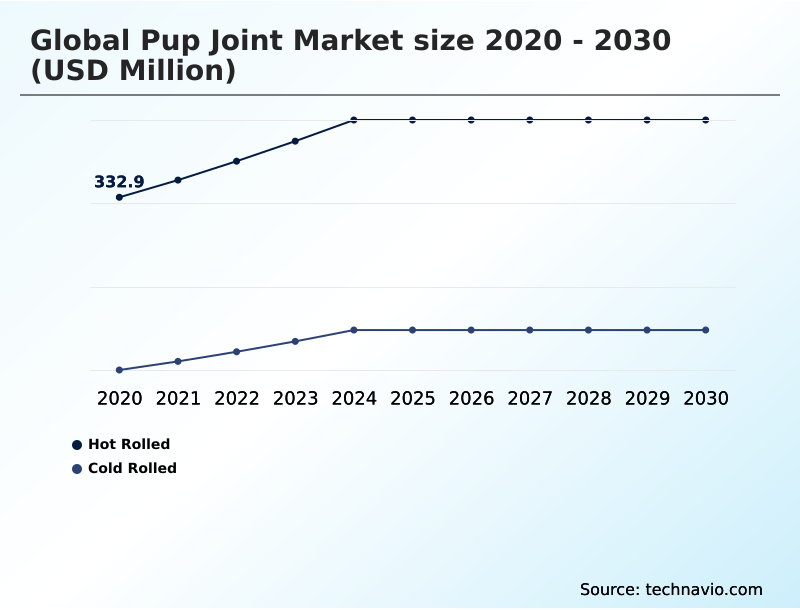
The Hot rolled segment was valued at in 2024 and showed a gradual increase during the forecast period.
Regional Analysis
North America is estimated to contribute 32.3% to the growth of the global market during the forecast period.Technavio’s analysts have elaborately explained the regional trends and drivers that shape the market during the forecast period.
See How Pup Joint Market Demand is Rising in North America Get Free Sample
The geographic landscape of the pup joint market is dominated by regions with intensive upstream activity, with North America, the Middle East, and APAC being key centers of demand.
North America leads, accounting for over 32% of the market opportunity, driven by relentless hydraulic fracturing operations and deepwater projects.
In these areas, the use of precision-machined drill pipe components has contributed to drilling efficiency gains, reducing well completion times by up to 20%.
The Middle East is characterized by large-scale, long-term investments in both conventional and unconventional gas fields, requiring a steady supply of oil country tubular goods (OCTG) for its energy infrastructure expansion.
Meanwhile, the APAC region is a significant growth frontier, where deepwater exploration and a focus on energy security are fueling investments in subsea well construction and pipeline network construction.
Market Dynamics
Our researchers analyzed the data with 2025 as the base year, along with the key drivers, trends, and challenges. A holistic analysis of drivers will help companies refine their marketing strategies to gain a competitive advantage.
- Strategic decision-making in the pup joint market hinges on a granular understanding of technical requirements and operational contexts. The pup joint selection for HPPT wells, for example, is a critical process where engineering teams must balance cost with performance, as the material specifications for sour gas pup joints differ significantly from those for standard service.
- Innovations in pup joint material science are providing new options, with corrosion-resistant alloys for pup joints becoming a key focus for extending asset life in harsh environments. The pup joint role in managed pressure drilling is also expanding, demanding higher-grade components. The debate over hot rolled vs.
- cold rolled pup joint performance continues, with the choice depending on the specific application, whether it is for geothermal drilling or unconventional plays. In modern operations, using pup joints for downhole tool spacing is a fundamental aspect of optimizing well completions.
- The impact of pup joints on operational efficiency is significant; firms that optimize their supply chain for high-strength pup joints report component failure rates that are two-thirds lower than industry averages. As the industry moves toward digitalization, integrating smart pup joints in digital oilfields is the next frontier, promising real-time data on string integrity.
- This complexity underscores the importance of a nuanced approach, from understanding premium threaded pup joint applications to mastering the use of casing pup joints for wellbore integrity in deepwater completion design.
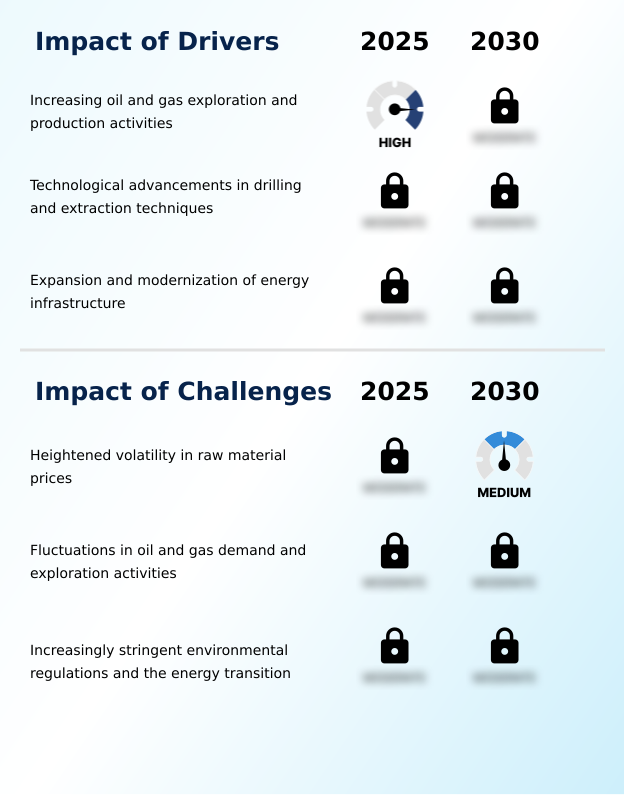
What are the key market drivers leading to the rise in the adoption of Pup Joint Industry?
- The market is fundamentally driven by the sustained level of global oil and gas exploration and production activities.
- Market growth is fundamentally propelled by increasing oil and gas sector investment and the corresponding expansion of energy infrastructure. Sustained upstream exploration and production activities, especially in deepwater and unconventional fields, directly fuel demand.
- As drilling programs become more ambitious, projects now require tubulars rated for 20% higher pressures, driving a 10% increase in demand for premium grade tubulars.
- This necessity for high-performance oil country tubular goods (OCTG) and casing and tubing strings is a direct result of the industry's need to access more complex reservoirs.
- Furthermore, the global build-out of pipeline networks requires vast quantities of components for precise connections, supporting the market's expansion across the entire energy value chain. The investment in drilling and extraction technologies underpins the consistent need for these critical components.
What are the market trends shaping the Pup Joint Industry?
- The market is shaped by surging demand from the expansion of unconventional resource plays and deepwater drilling operations.
- Key trends are being dictated by the industry's push into more challenging frontiers, particularly unconventional drilling and deepwater exploration. These environments, characterized by extreme downhole conditions, are fueling the demand for high-strength alloys and corrosion-resistant materials. The complexity of these operations can increase drilling program requirements by over 25%, making wellbore integrity a paramount concern.
- Consequently, the use of advanced drill pipe components and seamless tubular products is no longer optional but essential. Proper selection and deployment of these specialized parts for downhole tool adjustment can improve string integrity by 15%, ensuring safer and more reliable production.
- This trend is driving innovation in manufacturing, with a focus on producing components that meet stringent performance standards for sour gas service and other demanding applications.
What challenges does the Pup Joint Industry face during its growth?
- A key challenge restraining market growth is the heightened volatility in the prices of essential raw materials.
- The primary challenge facing the market is the inherent volatility of the global oil and gas industry, coupled with supply chain pressures. Fluctuations in raw material costs, particularly for high-grade steel, have been shown to impact production costs by as much as 18%, creating significant margin pressure for manufacturers. This uncertainty complicates financial planning for both suppliers and end-users.
- Additionally, increasingly strict environmental regulations and the push for non-productive time reduction are forcing operators to invest in higher-specification equipment. Complying with new standards can increase operational overhead by 5-8%. Navigating this environment requires a focus on operational efficiency and the adoption of well intervention techniques and tubular running services that optimize resource use while ensuring well integrity assurance.
Exclusive Technavio Analysis on Customer Landscape
The pup joint market forecasting report includes the adoption lifecycle of the market, covering from the innovator’s stage to the laggard’s stage. It focuses on adoption rates in different regions based on penetration. Furthermore, the pup joint market report also includes key purchase criteria and drivers of price sensitivity to help companies evaluate and develop their market growth analysis strategies.
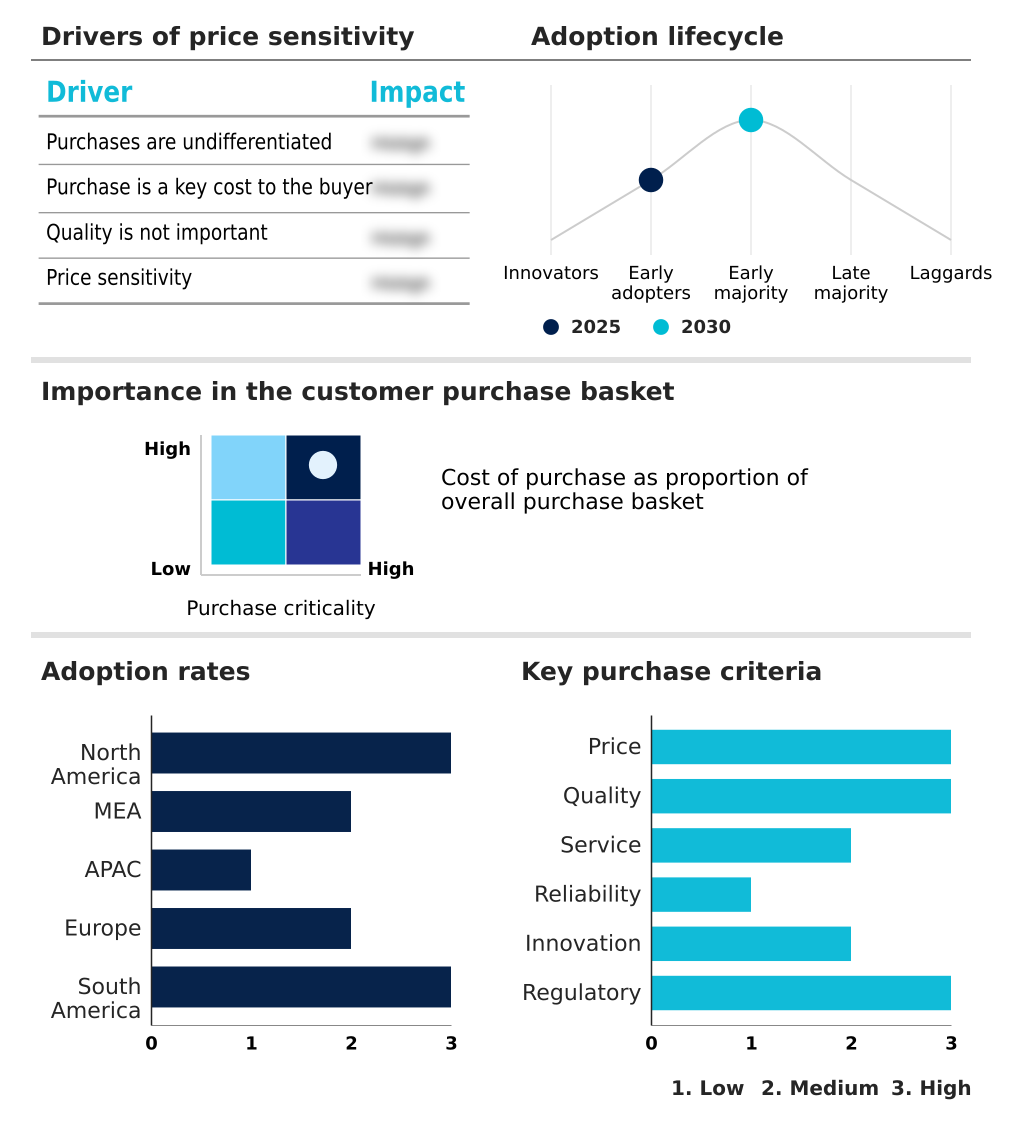
Customer Landscape of Pup Joint Industry
Competitive Landscape
Companies are implementing various strategies, such as strategic alliances, pup joint market forecast, partnerships, mergers and acquisitions, geographical expansion, and product/service launches, to enhance their presence in the industry.
ASC Engineered Solutions - Providing API-compliant tubing pup joints with advanced external coatings, engineered for diverse downhole applications and enhanced material integrity.
The industry research and growth report includes detailed analyses of the competitive landscape of the market and information about key companies, including:
- ASC Engineered Solutions
- AZZ Inc.
- Baker Hughes Co.
- Forum Energy Technologies Inc.
- Mid-Continent Equipment Group Pte Ltd.
- NOV Inc.
- Oil Country Tubular Ltd.
- Schlumberger Ltd.
- Sledgehammer Oil Tools Pvt. Ltd.
- Stewart Tubular Products LLC
- Tejas Tebular Products Inc.
- Tenaris SA
- Texas Pipe Works Inc.
- TPS Technitube Rohrenwerke GmbH
- Vallourec SA
- Weatherford International Plc
- Weijia Petroleum
- WestCan Oilfield Supply Ltd.
Qualitative and quantitative analysis of companies has been conducted to help clients understand the wider business environment as well as the strengths and weaknesses of key industry players. Data is qualitatively analyzed to categorize companies as pure play, category-focused, industry-focused, and diversified; it is quantitatively analyzed to categorize companies as dominant, leading, strong, tentative, and weak.
Recent Development and News in Pup joint market
- In August 2024, Chevron announced the commencement of oil and natural gas production from the Anchor project in the deepwater U.S. Gulf of Mexico, a development notable for its use of high-pressure technology rated to 20,000 psi.
- In September 2024, DCL Technology Group announced the development of a new Houston facility to expand its production of clean energy and emissions reduction technologies.
- In November 2024, Sunlit Chemical inaugurated its first U.S. manufacturing facility, a $100 million, 900,000-square-foot plant in Phoenix, Arizona, to supply the semiconductor industry.
- In May 2025, a report noted a significant surge in capital deployment into the global water sector, with 72% of organizations expecting to increase their investment to improve water and wastewater infrastructure.
Dive into Technavio’s robust research methodology, blending expert interviews, extensive data synthesis, and validated models for unparalleled Pup Joint Market insights. See full methodology.
| Market Scope | |
|---|---|
| Page number | 301 |
| Base year | 2025 |
| Historic period | 2020-2024 |
| Forecast period | 2026-2030 |
| Growth momentum & CAGR | Accelerate at a CAGR of 6.2% |
| Market growth 2026-2030 | USD 226.6 million |
| Market structure | Fragmented |
| YoY growth 2025-2026(%) | 6.1% |
| Key countries | US, Canada, Mexico, Saudi Arabia, UAE, South Africa, Turkey, Israel, China, India, Japan, Australia, South Korea, Indonesia, Germany, UK, France, Italy, Spain, The Netherlands, Brazil, Argentina and Colombia |
| Competitive landscape | Leading Companies, Market Positioning of Companies, Competitive Strategies, and Industry Risks |
Research Analyst Overview
- The pup joint market is defined by a dynamic interplay between technological advancement and rigorous operational demands. Its evolution is evident in the shift toward high-strength alloys and corrosion-resistant materials, which are becoming standard for deepwater exploration and high-pressure, high-temperature (HPPT) fields. The use of these advanced materials extends component lifecycles by over 40% in harsh downhole environments.
- For boardroom consideration, this trend directly impacts capital expenditure planning, favoring investments in premium, durable components to ensure long-term wellbore integrity and mitigate operational risks. The market's core function remains the precise downhole equipment spacing and adjustment of casing and tubing strings, a necessity in both conventional and unconventional drilling.
- Innovations in precision machining and proprietary thread designs are key differentiators, enhancing the reliability of oil country tubular goods (OCTG).
- The expansion into sour gas service and complex well completion operations, facilitated by managed pressure drilling and hydraulic fracturing, continues to fuel demand for specialized drill pipe components and production tubing strings, underpinning the market's critical role in global energy extraction.
What are the Key Data Covered in this Pup Joint Market Research and Growth Report?
-
What is the expected growth of the Pup Joint Market between 2026 and 2030?
-
USD 226.6 million, at a CAGR of 6.2%
-
-
What segmentation does the market report cover?
-
The report is segmented by Technology (Hot Rolled, and Cold Rolled), Application (Oil and gas, Chemical industry, Mining, Construction, and Others), Type (Tubing pup joint, Drill pipe pup joint, Crossover pup joint, and Casing pup joint ) and Geography (North America, Middle East and Africa, APAC, Europe, South America)
-
-
Which regions are analyzed in the report?
-
North America, Middle East and Africa, APAC, Europe and South America
-
-
What are the key growth drivers and market challenges?
-
Increasing oil and gas exploration and production activities, Heightened volatility in raw material prices
-
-
Who are the major players in the Pup Joint Market?
-
ASC Engineered Solutions, AZZ Inc., Baker Hughes Co., Forum Energy Technologies Inc., Mid-Continent Equipment Group Pte Ltd., NOV Inc., Oil Country Tubular Ltd., Schlumberger Ltd., Sledgehammer Oil Tools Pvt. Ltd., Stewart Tubular Products LLC, Tejas Tebular Products Inc., Tenaris SA, Texas Pipe Works Inc., TPS Technitube Rohrenwerke GmbH, Vallourec SA, Weatherford International Plc, Weijia Petroleum and WestCan Oilfield Supply Ltd.
-
Market Research Insights
- Market dynamics are increasingly shaped by the pursuit of enhanced operational efficiency and asset longevity. The adoption of premium grade tubulars for string length adjustment in complex wellbores is directly linked to non-productive time reduction, with some operations reporting efficiency gains of over 12%.
- As operators push the boundaries of extended reach drilling, the need for precise downhole tool adjustment intensifies. Utilizing advanced components for casing string alignment can improve placement accuracy by up to 15% in deepwater well designs. This focus on performance minimizes costly interventions and supports well integrity assurance.
- The strategic use of pup joints in bottom hole assembly (BHA) configurations is pivotal, enabling more flexible and cost-effective drilling campaigns that contribute to longer asset life and improved returns on investment.
We can help! Our analysts can customize this pup joint market research report to meet your requirements.
 RIA -
RIA - 
