


Radiotherapy Monitoring Devices Market Size 2026-2030
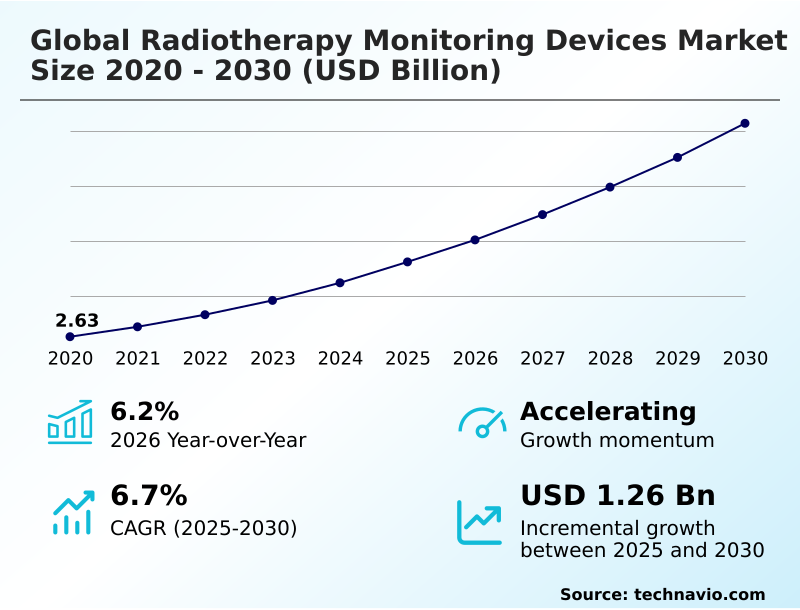
The radiotherapy monitoring devices market size is valued to increase by USD 1.26 billion, at a CAGR of 6.7% from 2025 to 2030. Technological advancements in real-time adaptive radiotherapy and AI Integration will drive the radiotherapy monitoring devices market.
Major Market Trends & Insights
- North America dominated the market and accounted for a 33.1% growth during the forecast period.
- By Device - Imaging devices segment was valued at USD 1.39 billion in 2024
- By End-user - Hospitals segment accounted for the largest market revenue share in 2024
Market Size & Forecast
- Market Opportunities: USD 1.93 billion
- Market Future Opportunities: USD 1.26 billion
- CAGR from 2025 to 2030 : 6.7%
Market Summary
- The radiotherapy monitoring devices market is defined by a fundamental shift toward precision oncology, where ensuring treatment accuracy is paramount. This evolution is propelled by the clinical need for advanced modalities that minimize toxicity while maximizing therapeutic outcomes.
- Key drivers include the rising global incidence of cancer, which pressures healthcare systems to adopt efficient and safe treatment solutions, and increasingly stringent regulatory standards that mandate comprehensive quality assurance. A primary trend is the integration of artificial intelligence into monitoring workflows, enabling real-time adaptive radiotherapy and automating error detection.
- For instance, a hospital network standardizing its quality assurance protocols can leverage AI-driven platforms to analyze performance data across multiple sites, identifying anomalies and predicting equipment maintenance needs, thereby increasing patient throughput and enhancing safety.
- However, the market faces challenges from the high capital cost of these sophisticated systems and the technical complexity of integrating disparate devices, which can create data silos and operational inefficiencies. The continuous development of non-invasive tracking technologies and software-based verification tools is shaping the competitive landscape, pushing the industry toward more integrated, intelligent, and patient-centric monitoring ecosystems.
What will be the Size of the Radiotherapy Monitoring Devices Market during the forecast period?
Get Key Insights on Market Forecast (PDF) Get Free Sample
How is the Radiotherapy Monitoring Devices Market Segmented?
The radiotherapy monitoring devices industry research report provides comprehensive data (region-wise segment analysis), with forecasts and estimates in "USD million" for the period 2026-2030, as well as historical data from 2020-2024 for the following segments.
- Device
- Imaging devices
- Sensors and detectors
- Treatment planning systems
- End-user
- Hospitals
- Diagnostic centers
- Cancer research institutes
- Component
- Hardware
- Software
- Geography
- North America
- US
- Canada
- Mexico
- Europe
- Germany
- UK
- France
- Asia
- Rest of World (ROW)
- North America
By Device Insights
The imaging devices segment is estimated to witness significant growth during the forecast period.
The imaging devices segment is foundational to the radiotherapy monitoring devices market, providing the visual guidance systems for modern oncology.
This category includes technologies like cone beam computed tomography (CBCT) and integrated magnetic resonance imaging, which are critical for image-guided radiation therapy (IGRT) and achieving sub-millimeter treatment accuracy.
The evolution to volumetric 4D imaging for motion analysis allows clinicians to observe tumor motion for real-time tumor tracking. A pivotal driver is the MRI-Linac, providing superior soft-tissue contrast for online adaptive replanning.
These systems are now active delivery components, with enhancements reducing daily acquisition time by 30%, directly improving patient throughput and streamlining clinical workflows.
This is supported by robust dosimetric verification tools, automated error detection algorithms, and patient-specific quality assurance, which are vital for machine performance metrics and ensuring compliance with regulatory standards.
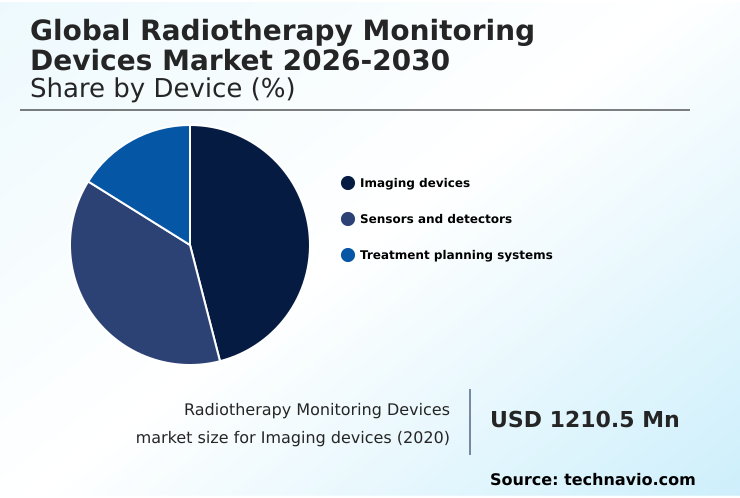
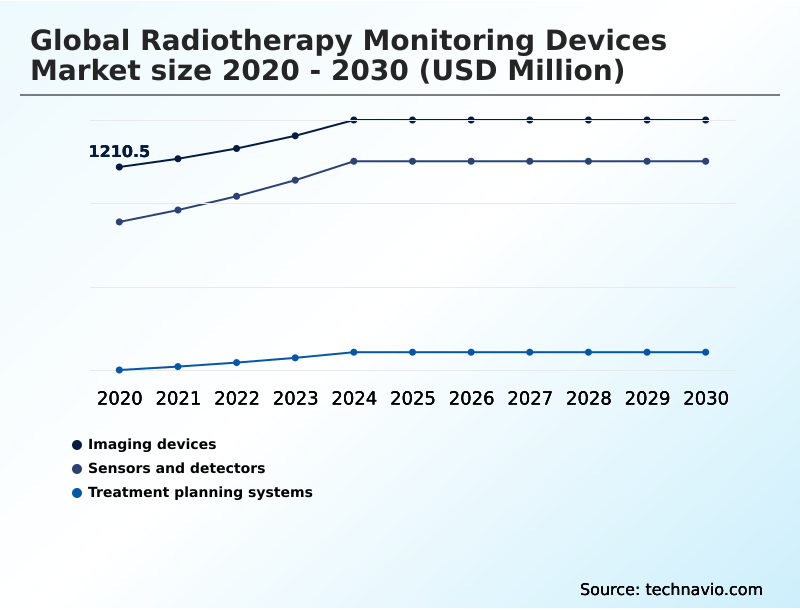
The Imaging devices segment was valued at USD 1.39 billion in 2024 and showed a gradual increase during the forecast period.
Regional Analysis
North America is estimated to contribute 33.1% to the growth of the global market during the forecast period.Technavio’s analysts have elaborately explained the regional trends and drivers that shape the market during the forecast period.
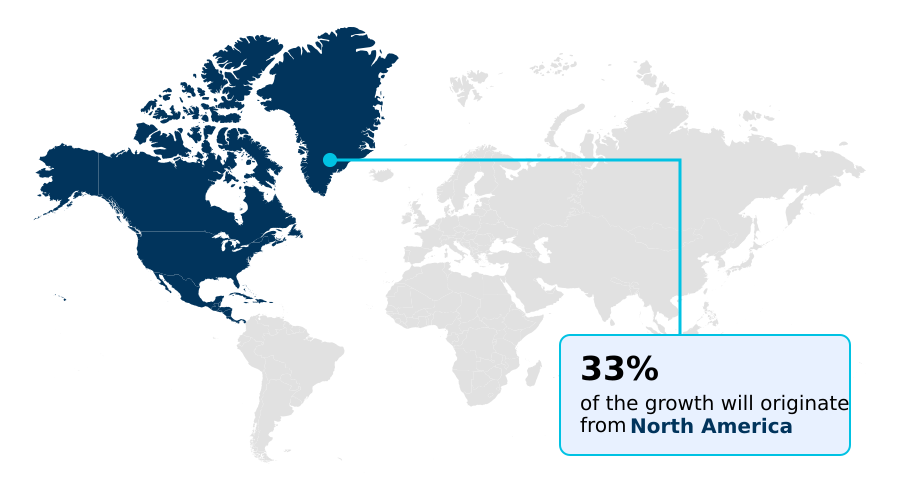
See How Radiotherapy Monitoring Devices Market Demand is Rising in North America Get Free Sample
The global market exhibits distinct regional dynamics, with North America holding a significant share due to its advanced healthcare infrastructure and high adoption rates of adaptive radiotherapy (ART).
In contrast, Asia is the fastest-growing region, with its market expansion outpacing North America's by more than two percentage points, fueled by infrastructure development and a rising focus on reducing treatment toxicity.
Europe's market is shaped by stringent regulations and a focus on standardizing care through technologies such as advanced respiratory gating techniques.
Innovations in remote dosimetry auditing are bridging geographical gaps, particularly in Australia, while the use of monte carlo dose calculation and auto-contouring in treatment planning is becoming a global standard for minimizing radiation exposure.
Efficient 4D dose calculation methods and automated linac warm-up procedures are key priorities worldwide, supporting complex treatments like stereotactic radiosurgery (SRS) and requiring enhanced interoperability with linear accelerators.
Market Dynamics
Our researchers analyzed the data with 2025 as the base year, along with the key drivers, trends, and challenges. A holistic analysis of drivers will help companies refine their marketing strategies to gain a competitive advantage.
- The future of the radiotherapy monitoring devices market hinges on the sophisticated interplay of emerging technologies and the resolution of persistent operational challenges. The impact of AI on quality assurance workflows is transformative, serving as the backbone for advancements in real-time adaptive radiotherapy.
- This allows for dynamic treatment adjustments, a critical need supported by the ongoing standardization of surface guided radiation therapy (SGRT) in the pursuit of tattoo-less cancer treatments. Concurrently, the expansion of cloud-based centralized dosimetry management addresses the operational needs of multi-site clinics, enabling them to standardize protocols and benchmark performance.
- The cost-effectiveness of these automated QA tools provides a compelling argument for adoption. However, these opportunities are tempered by the challenges of high capital expenditure and a pronounced shortage of qualified medical physicists, which can limit the uptake of advanced systems. Furthermore, overcoming interoperability issues with legacy systems remains a critical hurdle.
- For example, facilities that successfully integrate SGRT with their existing linear accelerators have reported setup time reductions that are substantially greater than those using fragmented systems. This demonstrates that realizing the full clinical and economic benefits of innovations like in-vivo dosimetry for dose verification and motion management for hypofractionated radiotherapy depends on creating a cohesive technological ecosystem.
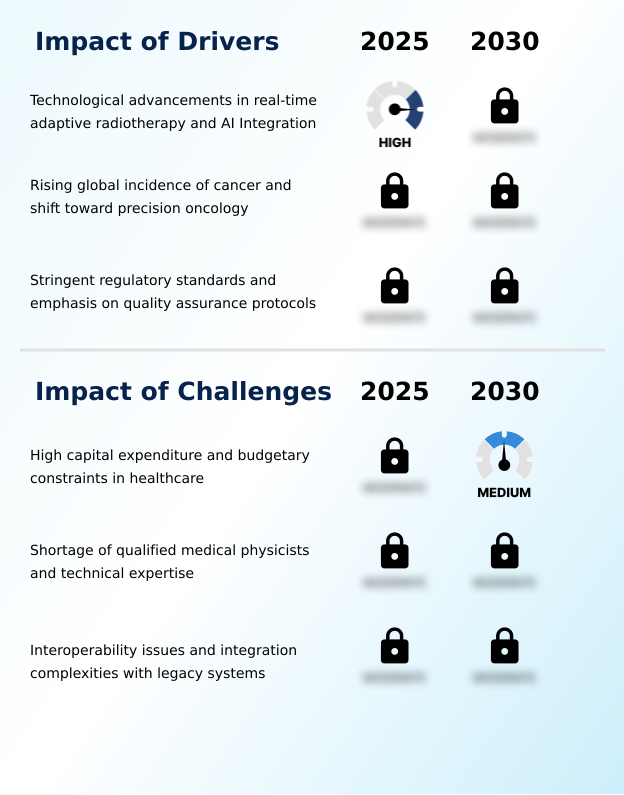
What are the key market drivers leading to the rise in the adoption of Radiotherapy Monitoring Devices Industry?
- Technological advancements, particularly in real-time adaptive radiotherapy and AI integration, are a key driver of market growth.
- Market growth is fundamentally driven by the rising global cancer incidence and the clinical shift toward precision oncology.
- The increasing use of hypofractionated treatment protocols, including stereotactic body radiation therapy (SBRT) and volumetric modulated arc therapy (VMAT), demands sophisticated monitoring to ensure organ at risk (OAR) sparing.
- This has fueled demand for advanced patient positioning systems and dosimetric verification tools that support complex techniques like deep inspiration breath hold (DIBH).
- Stringent regulatory standards mandating end-to-end radiotherapy testing and accurate dose accumulation monitoring are also compelling investment in technologies that enhance patient safety protocols.
- Motion management for SBRT and dosimetry for small field radiotherapy have become critical, with a clear focus on verifying dose delivery accuracy for every treatment fraction, including specialized modalities like proton therapy beam monitoring.
What are the market trends shaping the Radiotherapy Monitoring Devices Industry?
- The integration of artificial intelligence for real-time adaptive quality assurance is an emerging market trend. This development signifies a shift toward dynamic, data-driven verification processes in radiation oncology.
- Key trends are reshaping the market, led by the integration of AI for real-time adaptive quality assurance and innovations in software-as-a-medical-device (SaMD). This technological shift enables dynamic capabilities like real-time dose reconstruction and supports the daily QA checks automation, with some platforms capable of predicting linac magnetron failure.
- The adoption of surface guided radiation therapy (SGRT) is accelerating, driven by clinical demand for tattoo-less radiation therapy and its ability to enable bi-directional linac communication for motion management. Validating AI-based software is becoming a key focus, as AI in radiotherapy quality assurance is proven to reduce QA times by 40%.
- Concurrently, the expansion of cloud-based dosimetry management is helping healthcare networks in standardizing QA across clinics, moving the industry toward software-based dose calculation and greater operational efficiency.
What challenges does the Radiotherapy Monitoring Devices Industry face during its growth?
- High capital expenditure and budgetary constraints within healthcare represent a key challenge affecting industry growth.
- Significant challenges constrain market adoption, primarily stemming from high capital expenditure for systems like MR-compatible dosimetry hardware and the global shortage of qualified medical physicists. This skills gap is compounded by persistent interoperability issues with legacy systems, which leads to data fragmentation in oncology and discourages investment in third-party devices.
- Facilities often favor integrated monitoring suites from a single provider to avoid the complexities of managing high dose rate treatments with incompatible tools. The technical demands of emerging modalities, such as flash radiotherapy dosimetry and heavy ion therapy monitoring, require specialized expertise for calibrating radiation detection instruments.
- While innovations like robotic patient positioning and non-invasive patient monitoring offer solutions, the complexity of multileaf collimator (MLC) tracking and data integration remains a considerable hurdle for many institutions.
Exclusive Technavio Analysis on Customer Landscape
The radiotherapy monitoring devices market forecasting report includes the adoption lifecycle of the market, covering from the innovator’s stage to the laggard’s stage. It focuses on adoption rates in different regions based on penetration. Furthermore, the radiotherapy monitoring devices market report also includes key purchase criteria and drivers of price sensitivity to help companies evaluate and develop their market growth analysis strategies.
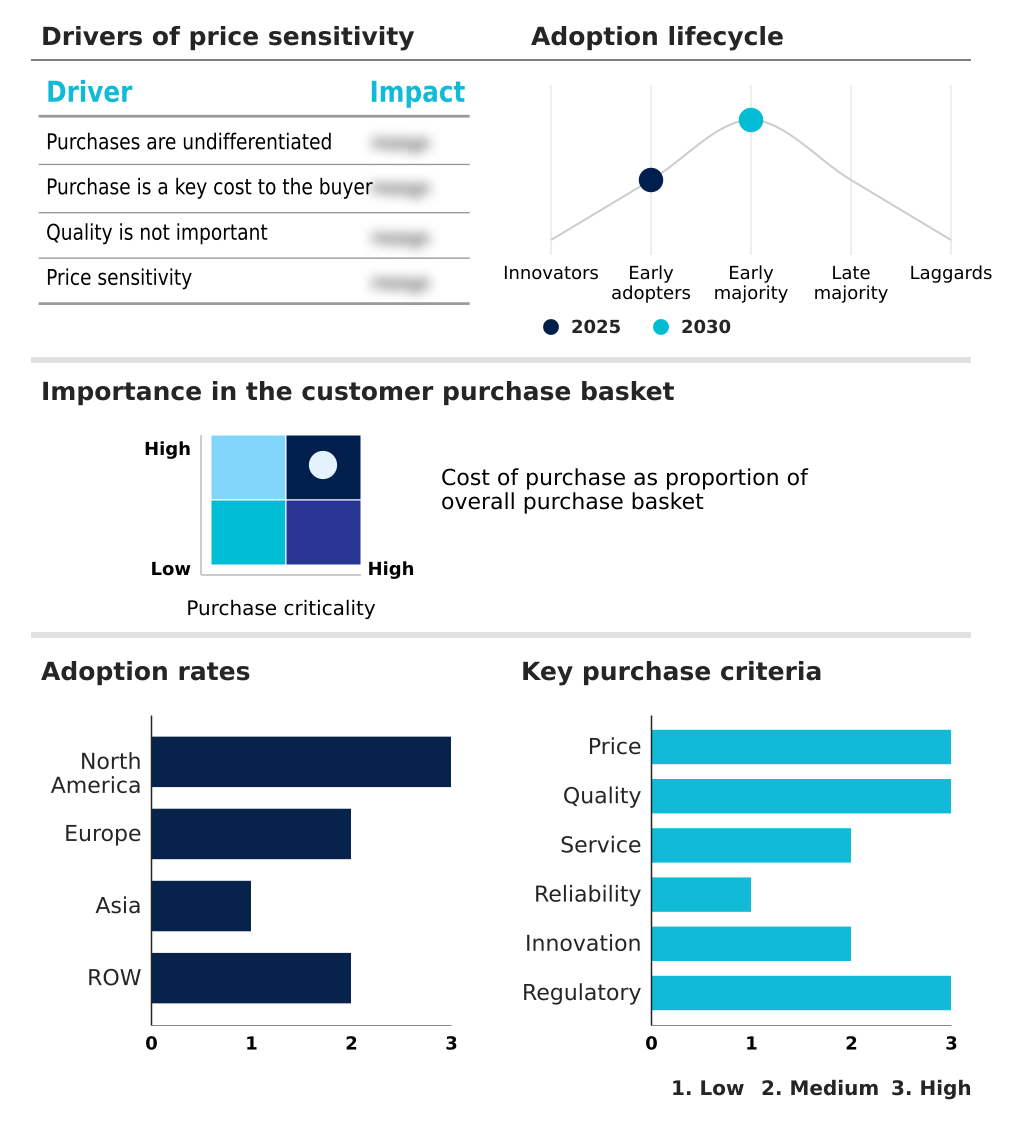
Customer Landscape of Radiotherapy Monitoring Devices Industry
Competitive Landscape
Companies are implementing various strategies, such as strategic alliances, radiotherapy monitoring devices market forecast, partnerships, mergers and acquisitions, geographical expansion, and product/service launches, to enhance their presence in the industry.
Accuray Inc. - Focus is centered on delivering real-time motion synchronization and advanced target tracking capabilities integral to precision radiation therapy delivery platforms.
The industry research and growth report includes detailed analyses of the competitive landscape of the market and information about key companies, including:
- Accuray Inc.
- Best Medical International Inc.
- Brainlab AG
- C RAD AB
- Elekta AB
- Fluke Corp.
- GE Healthcare Technologies
- Koninklijke Philips NV
- LAP GmbH
- Modus Medical Devices Inc.
- Orfit Industries NV
- RaySearch Laboratories
- ScandiDos AB
- Siemens Healthineers AG
- Thermo Fisher Scientific Inc.
- Varian Medical Systems Inc.
- Vision RT Ltd.
Qualitative and quantitative analysis of companies has been conducted to help clients understand the wider business environment as well as the strengths and weaknesses of key industry players. Data is qualitatively analyzed to categorize companies as pure play, category-focused, industry-focused, and diversified; it is quantitatively analyzed to categorize companies as dominant, leading, strong, tentative, and weak.
Recent Development and News in Radiotherapy monitoring devices market
- In August 2024, Sun Nuclear released a new patient QA platform that utilizes deep learning to identify potential errors in dose delivery before treatment commences.
- In September 2024, the European Society for Radiotherapy and Oncology updated its guidelines for surface guided radiation therapy, recommending continuous monitoring for all patients undergoing stereotactic procedures.
- In January 2025, HCA Healthcare reported a substantial expansion of its oncology services, incorporating state-of-the-art dosimetry and patient positioning systems across fifty of its locations.
- In April 2025, the US Food and Drug Administration issued a safety communication urging healthcare providers to adopt enhanced verification systems for radiation treatment planning and delivery software to mitigate risks from interoperability issues.
Dive into Technavio’s robust research methodology, blending expert interviews, extensive data synthesis, and validated models for unparalleled Radiotherapy Monitoring Devices Market insights. See full methodology.
| Market Scope | |
|---|---|
| Page number | 292 |
| Base year | 2025 |
| Historic period | 2020-2024 |
| Forecast period | 2026-2030 |
| Growth momentum & CAGR | Accelerate at a CAGR of 6.7% |
| Market growth 2026-2030 | USD 1259.3 million |
| Market structure | Fragmented |
| YoY growth 2025-2026(%) | 6.2% |
| Key countries | US, Canada, Mexico, Germany, UK, France, Italy, The Netherlands, Spain, Russia, China, Japan, India, South Korea, Indonesia, Thailand, Singapore, Brazil, Australia, UAE, Saudi Arabia, South Africa and Turkey |
| Competitive landscape | Leading Companies, Market Positioning of Companies, Competitive Strategies, and Industry Risks |
Research Analyst Overview
- The competitive landscape of the radiotherapy monitoring devices market is increasingly defined by the integration of hardware and intelligent software, compelling providers to make critical boardroom decisions on technology strategy. The convergence of image-guided radiation therapy (IGRT) and real-time motion management has shifted the focus toward comprehensive, end-to-end radiotherapy testing solutions.
- This trend pressures companies to offer integrated platforms that can reduce setup times by over 25% compared to disjointed, multi-vendor systems. A key strategic consideration is whether to invest heavily in developing proprietary technologies, such as MR-compatible dosimetry hardware and tools for proton therapy beam monitoring, or to form partnerships that accelerate time-to-market.
- The industry-wide push for higher precision in modalities like stereotactic body radiation therapy (SBRT) and deep inspiration breath hold (DIBH) techniques necessitates robust patient positioning systems and advanced dosimetric verification tools.
- Ultimately, market leadership will depend on a company’s ability to deliver a seamless, automated workflow that enhances both safety and operational efficiency through technologies like VMAT and dose accumulation monitoring.
What are the Key Data Covered in this Radiotherapy Monitoring Devices Market Research and Growth Report?
-
What is the expected growth of the Radiotherapy Monitoring Devices Market between 2026 and 2030?
-
USD 1.26 billion, at a CAGR of 6.7%
-
-
What segmentation does the market report cover?
-
The report is segmented by Device (Imaging devices, Sensors and detectors, and Treatment planning systems), End-user (Hospitals, Diagnostic centers, and Cancer research institutes), Component (Hardware, and Software) and Geography (North America, Europe, Asia, Rest of World (ROW))
-
-
Which regions are analyzed in the report?
-
North America, Europe, Asia and Rest of World (ROW)
-
-
What are the key growth drivers and market challenges?
-
Technological advancements in real-time adaptive radiotherapy and AI Integration, High capital expenditure and budgetary constraints in healthcare
-
-
Who are the major players in the Radiotherapy Monitoring Devices Market?
-
Accuray Inc., Best Medical International Inc., Brainlab AG, C RAD AB, Elekta AB, Fluke Corp., GE Healthcare Technologies, Koninklijke Philips NV, LAP GmbH, Modus Medical Devices Inc., Orfit Industries NV, RaySearch Laboratories, ScandiDos AB, Siemens Healthineers AG, Thermo Fisher Scientific Inc., Varian Medical Systems Inc. and Vision RT Ltd.
-
Market Research Insights
- The market is advancing toward sub-millimeter treatment accuracy, largely driven by patient demand for tattoo-less radiation therapy and protocols aimed at reducing treatment toxicity. This shift necessitates improved interoperability with linear accelerators and the adoption of AI in radiotherapy quality assurance. The clinical and financial benefits are significant; facilities using AI-enhanced monitoring have reported treatment time reductions of approximately 20%.
- Furthermore, the move toward automated and software-based dose calculation is streamlining workflows, with some institutions achieving a 15% reduction in annual quality assurance labor costs. This focus on efficiency and safety is creating a competitive environment where integrated monitoring suites that can verify dose delivery accuracy in real time are becoming the industry standard, moving beyond basic non-invasive patient monitoring.
We can help! Our analysts can customize this radiotherapy monitoring devices market research report to meet your requirements.
 RIA -
RIA - 
