


Reach Stacker Market Size and Growth Forecast 2026-2030
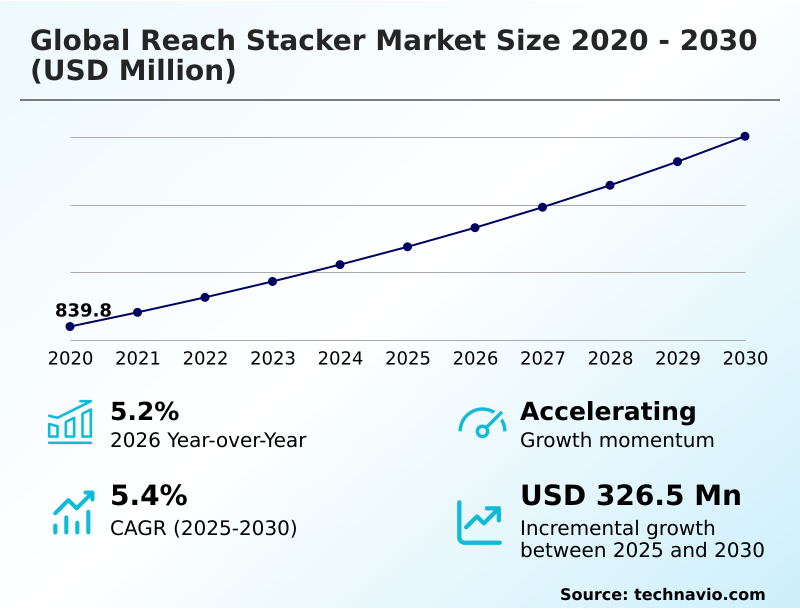
The Reach Stacker Market size was valued at USD 1.08 billion in 2025 growing at a CAGR of 5.4% during the forecast period 2026-2030.
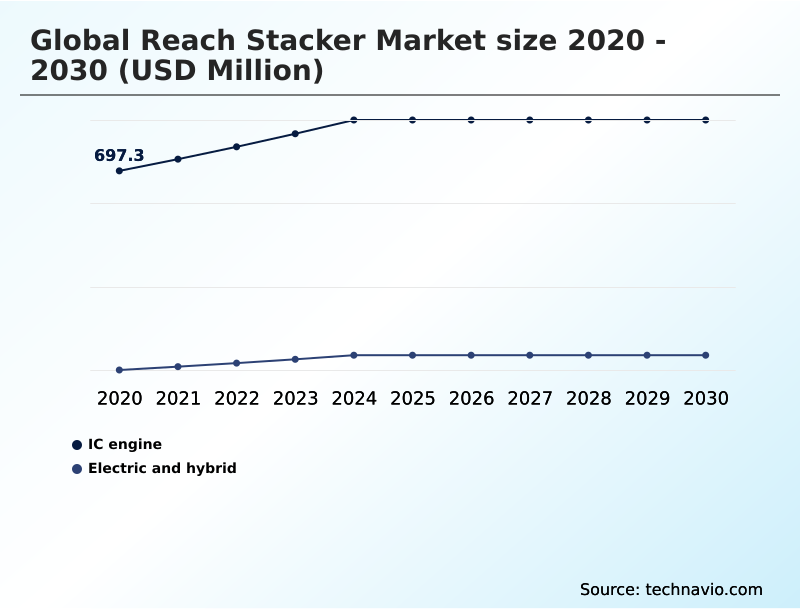
APAC accounts for 50.3% of incremental growth during the forecast period. The IC engine segment by Type was valued at USD 839 million in 2024, while the Sea port segment holds the largest revenue share by Application.
The market is projected to grow by USD 562.1 million from 2020 to 2030, with USD 326.5 million of the growth expected during the forecast period of 2025 to 2030.
Get Key Insights on Market Forecast (PDF) Request Free Sample
Reach Stacker Market Overview
The reach stacker market is integral to global logistics, characterized by a persistent year-over-year growth of 5.2% driven by expanding port infrastructure and the demands of intermodal freight. At its core, the market revolves around equipment defined by its telescopic boom and specialized spreader attachment, designed for high-density container stacking. A key trend is the integration of fleet management software and telematics to enhance container handling efficiency, a direct response to the pressures of the e-commerce boom. For instance, a modern intermodal terminal deploying a network of reach stackers linked to a central terminal operating system can optimize container movements in real-time, reducing idle time and improving overall yard productivity. This digital transformation is critical for maintaining supply chain resilience, especially as the APAC region, which accounts for over 50% of the market's incremental growth, continues to modernize its port operations. The industry's evolution is shaped by the dual needs for higher throughput and sustainable, zero-emission port solutions.
Drivers, Trends, and Challenges in the Reach Stacker Market
Strategic decisions in the reach stacker market are increasingly influenced by a complex interplay of operational economics and regulatory compliance. The impact of Stage V emissions on reach stacker design, for example, has forced OEMs to innovate, leading to a critical debate around electric reach stacker TCO vs diesel models.
While electric variants offer lower operating expenses and align with corporate sustainability goals, the upfront investment and charging infrastructure requirements remain significant considerations for procurement managers. In practice, a high-throughput port facility implementing reach stacker automation in high-throughput ports leverages telematics data for optimizing container handling, which can improve cycle times by over 15% compared to manual dispatching.
These systems provide the granular data needed to justify investments in automation and electrification. Beyond maritime terminals, the demand for heavy-duty reach stackers for industrial applications, such as in steel mills and manufacturing plants, is creating new growth avenues.
This diversification underscores a market where incremental growth, valued at over USD 326 million, is driven by both technological advancement and expansion into adjacent industrial segments.
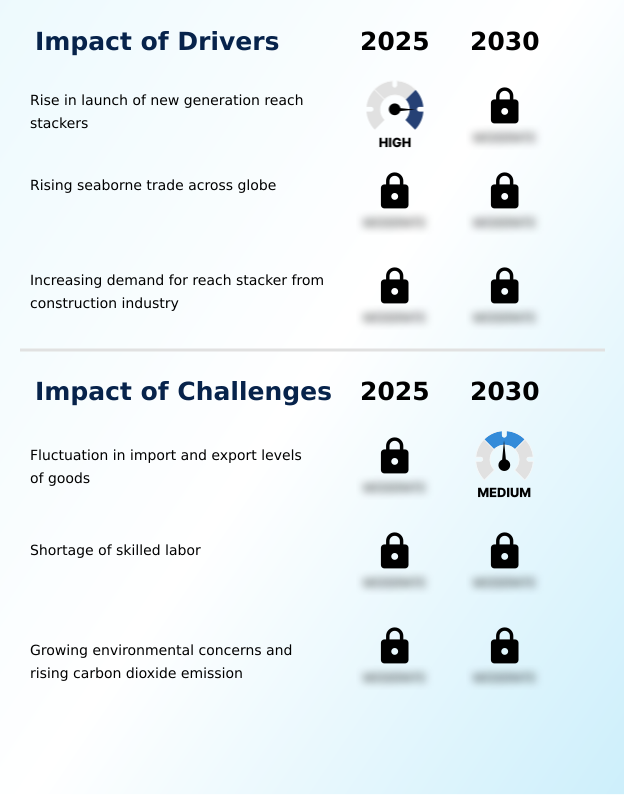
Primary Growth Driver: The market's growth is primarily driven by the continuous launch of new-generation reach stackers equipped with advanced technologies, higher lifting capacities, and eco-efficient power systems.
A key market driver is the continuous innovation in reach stacker design, particularly the launch of next-generation models with advanced power systems.
The industry is seeing a pronounced shift toward equipment featuring an electric powertrain or a hybrid drivetrain, responding to global pressures for decarbonization.
These new machines incorporate sophisticated features like energy recovery modules, which capture and reuse energy during braking and lowering operations, significantly improving efficiency.
Furthermore, the integration of digital monitoring systems and intelligent control systems enhances performance for critical tasks like laden container handling.
This technological evolution provides a compelling value proposition for operators, as it promises not only compliance with stricter emissions regulations but also lower operational costs and improved uptime, accelerating fleet replacement cycles.
Emerging Market Trend: The market's trajectory is significantly influenced by the growth of the e-commerce industry. This trend is compelling a redesign of logistics hubs to meet escalating demands for faster delivery and near-zero latency in container sorting.
The rapid expansion of e-commerce is fundamentally reshaping port and terminal logistics, creating a primary market trend centered on speed and efficiency. This shift is compelling operators to move beyond traditional manual processes toward automated, data-driven workflows to achieve higher yard productivity.
The integration of reach stackers with terminal operating systems is becoming critical for cargo management optimization, allowing for real-time dispatching and minimized container search times. To support this, new equipment is increasingly outfitted with automated positioning sensors that enable precise, semi-autonomous movements.
This trend is not just about speed but also about maximizing spatial efficiency, as e-commerce fulfillment centers and inland depots require solutions for high-density stacking to manage fluctuating inventory levels with precision.
Key Industry Challenge: Fluctuations in global import and export levels for goods present a key challenge, directly impacting equipment procurement cycles and overall market stability.
A primary market challenge stems from the inherent volatility in global trade, which creates uncertainty in equipment demand and complicates capital expenditure planning for port operators. These fluctuations directly impact procurement cycles for high-value assets like reach stackers.
In response, many operators are shifting their focus from new acquisitions to extending the life of their existing fleets, intensifying the need for effective fleet management software and robust predictive maintenance schedules. This cautious investment climate puts pressure on manufacturers, who must contend with unpredictable order volumes.
The challenge is to offer flexible financing or service models that help customers manage economic downturns while ensuring long-term supply chain resilience and managing the total cost of ownership of their material handling assets.
Explore Full Market Dynamics Analysis Request Free Sample
Reach Stacker Market Segmentation
The reach stacker industry research report provides comprehensive data including region-wise segment analysis, with forecasts and analysis for the period 2026-2030, as well as historical data from 2020-2024 for the following segments.
Type Segment Analysis
The ic engine segment is estimated to witness significant growth during the forecast period.
The Internal Combustion (IC) engine segment remains the foundation of the reach stacker market, prized for its reliability in 24/7 terminal operations.
This dominance is rooted in superior power density for laden container handling and operational flexibility in areas lacking charging infrastructure.
However, the segment is evolving; to comply with EU Stage V and Tier 4 Final emissions standards, new models integrate IC engine technology with selective catalytic reduction and diesel particulate filters.
Procurement decisions now evaluate how advanced hydraulic systems and variable displacement hydraulics contribute to fuel efficiency.
Representing a market size of over USD 879 million in 2025, these advanced IC-powered machines, featuring sophisticated energy recovery modules, offer a compelling total cost of ownership for operators balancing performance with tightening environmental mandates.
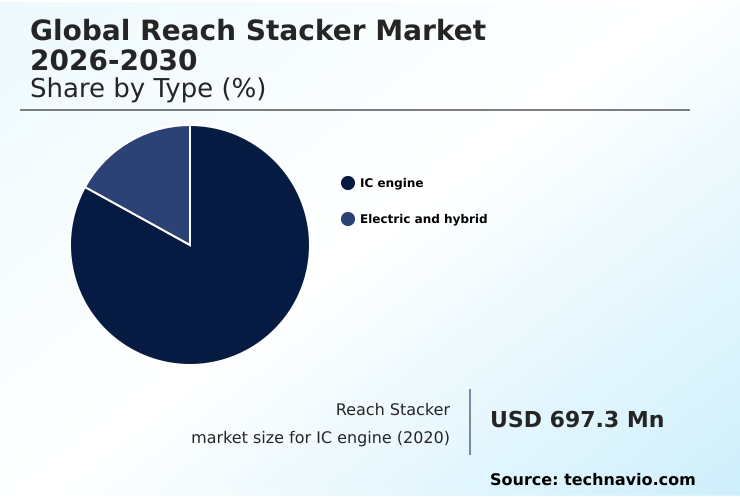
The IC engine segment was valued at USD 839 million in 2024 and showed a gradual increase during the forecast period.
Reach Stacker Market by Region: APAC Leads with 50.3% Growth Share
APAC is estimated to contribute 50.3% to the growth of the global market during the forecast period.
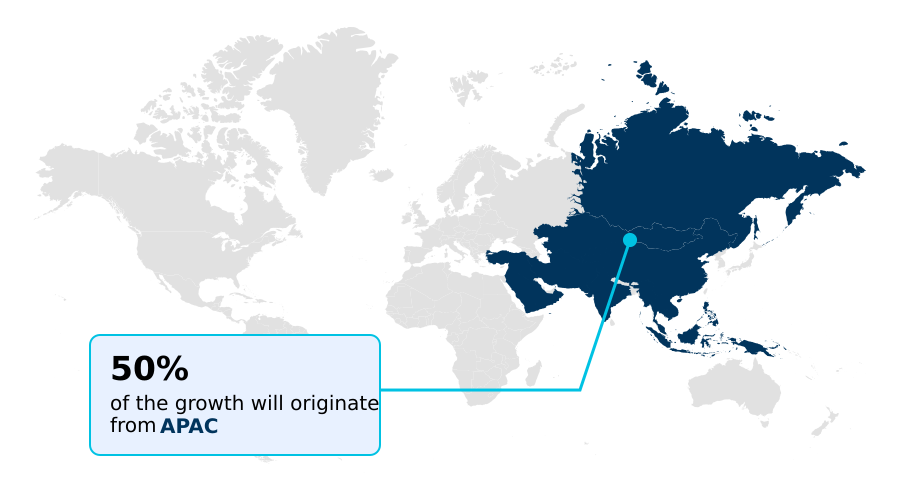
The geographic landscape of the reach stacker market is dominated by APAC, which is projected to grow at a CAGR of 6.7% and contribute approximately 50.32% of the total market's incremental growth.
This expansion is fueled by massive investments in port infrastructure and intermodal freight logistics across the region.
Countries like China, with a market value of around USD 114.9 million in 2025, are at the forefront of adopting technologies for high-density stacking and automated yard operations to manage immense trade volumes.
The region is also a key battleground for decarbonization goals, with a visible shift toward zero-emission port solutions and electric-powered equipment in nations with stringent urban pollution regulations, solidifying APAC's role as a benchmark for innovation in the sector.
Customer Landscape Analysis for the Reach Stacker Market
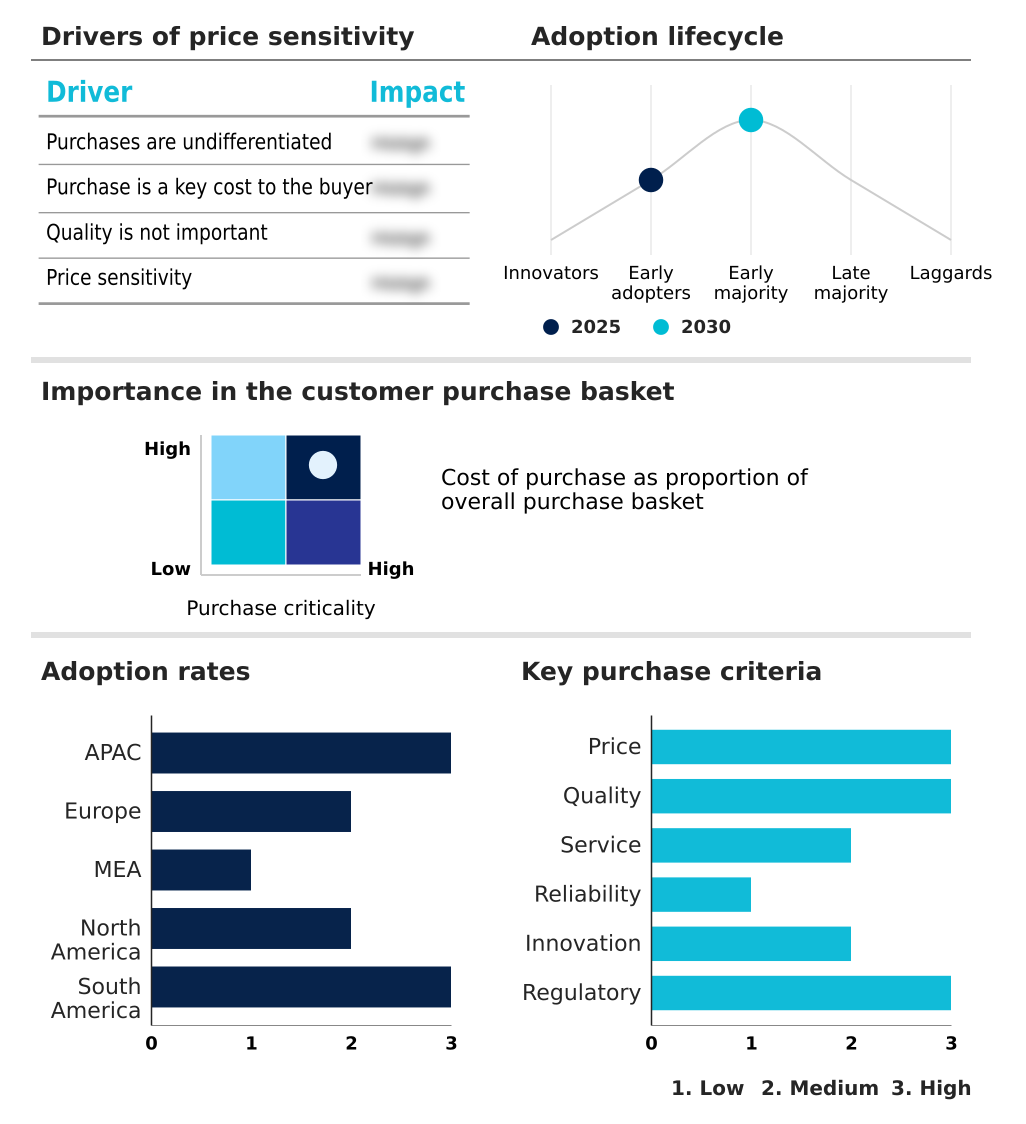
The reach stacker market forecasting report includes the adoption lifecycle of the market, covering from the innovator’s stage to the laggard’s stage. It focuses on adoption rates in different regions based on penetration. Furthermore, the reach stacker market report also includes key purchase criteria and drivers of price sensitivity to help companies evaluate and develop their market growth analysis strategies.
Competitive Landscape of the Reach Stacker Market
Companies are implementing various strategies, such as strategic alliances, partnerships, mergers and acquisitions, geographical expansion, and product/service launches, to enhance their presence in the reach stacker market industry.
Anhui Heli Co. Ltd. - Offerings include high-performance reach stackers and heavy-duty forklifts, engineered for demanding container handling and material transport applications in port and industrial environments.
The industry research and growth report includes detailed analyses of the competitive landscape of the market and information about key companies, including:
- Anhui Heli Co. Ltd.
- CVS Ferrari SpA
- Dalian Forklift Co. Ltd.
- Hangcha Group Co. Ltd.
- Hyster Yale Materials Handling
- Kalmar Corp.
- KION Group AG
- Konecranes plc
- Liebherr International AG
- Liugong Machinery Co. Ltd.
- Lonking Holdings Ltd.
- Meclift Oy
- Sany Heavy Industry Co. Ltd.
- Svetruck AB
- Taylor Machine Works Inc.
- Toyota Motor Corp.
- XCMG Group
- Zhenhua Heavy Industries Co.
- Zoomlion Industry Co. Ltd.
Qualitative and quantitative analysis of companies has been conducted to help clients understand the wider business environment as well as the strengths and weaknesses of key industry players. Data is qualitatively analyzed to categorize companies as pure play, category-focused, industry-focused, and diversified; it is quantitatively analyzed to categorize companies as dominant, leading, strong, tentative, and weak.
Recent Developments in the Reach Stacker Market
- In February 2025, Kalmar Corp. confirmed in a strategic market update that fluctuating global trade patterns are leading major terminal operators to prioritize equipment life extension and more selective procurement over new acquisitions.
- In August 2025, Sany Heavy Industry Co. Ltd. unveiled its 50-ton Energy Storage Reach Stacker, designed with integrated energy storage technology to support high-throughput e-commerce fulfillment centers by enabling longer operational hours with reduced emissions.
- In November 2025, Konecranes plc introduced its upgraded E-Ver electric reach stacker, which features fast charging capabilities and smart digital controls to enhance operational efficiency and support decarbonization goals in environmentally sensitive ports.
- In December 2025, Ashok Leyland debuted its next-generation H6 engines at EXCON 2025, engineered with advanced combustion systems and improved turbocharging to deliver higher fuel efficiency and lower emissions for construction machinery.
Research Analyst Overview: Reach Stacker Market
The operational value of reach stackers is evolving beyond mere lifting capacity, with a decisive shift towards intelligent, connected machinery. Boardroom decisions on fleet acquisition now center on the integration of advanced technologies like telematics integration and automated positioning sensors, which are becoming standard.
While IC engine technology, now enhanced with diesel particulate filters and selective catalytic reduction systems, still commands the majority of the market, the business case for models with an electric powertrain or hybrid drivetrain is strengthening. The debate weighs the long-term benefits of lithium-ion battery technology against the proven durability of conventional engines.
Core components such as the telescopic boom, spreader attachment, and advanced hydraulic systems are being optimized for efficiency, governed by intelligent control systems. This technological layer, which includes variable displacement hydraulics and energy recovery modules, is crucial for reducing fuel consumption and is managed through sophisticated fleet management software.
The strategic focus is on leveraging these advancements to improve productivity and comply with emissions standards like EU Stage V.
Dive into Technavio’s robust research methodology, blending expert interviews, extensive data synthesis, and validated models for unparalleled Reach Stacker Market insights. See full methodology.
| Market Scope | |
|---|---|
| Page number | 283 |
| Base year | 2025 |
| Historic period | 2020-2024 |
| Forecast period | 2026-2030 |
| Growth momentum & CAGR | Accelerate at a CAGR of 5.4% |
| Market growth 2026-2030 | USD 326.5 million |
| Market structure | Fragmented |
| YoY growth 2025-2026(%) | 5.2% |
| Key countries | China, Japan, India, South Korea, Australia, Indonesia, Germany, UK, France, Italy, Spain, The Netherlands, Saudi Arabia, UAE, South Africa, Israel, Turkey, US, Canada, Mexico, Brazil, Argentina and Chile |
| Competitive landscape | Leading Companies, Market Positioning of Companies, Competitive Strategies, and Industry Risks |
Reach Stacker Market: Key Questions Answered in This Report
-
What is the expected growth of the Reach Stacker Market between 2026 and 2030?
-
The Reach Stacker Market is expected to grow by USD 326.5 million during 2026-2030, registering a CAGR of 5.4%. Year-over-year growth in 2026 is estimated at 5.2%%. This acceleration is shaped by rise in launch of new generation reach stackers, which is intensifying demand across multiple end-use verticals covered in the report.
-
-
What segmentation does the market report cover?
-
The report is segmented by Type (IC engine, and Electric and hybrid), Application (Sea port, and Industrial), Capacity (Between 30 - 45 tons, Above 45 tons, and Below 30 tons) and Geography (APAC, Europe, Middle East and Africa, North America, South America). Among these, the IC engine segment is estimated to witness significant growth during the forecast period, driven by rising adoption across key application areas. Each segment includes detailed qualitative and quantitative analysis, along with historical data from 2020-2024 and forecasts through 2030 with year-over-year growth rates.
-
-
Which regions are analyzed in the report?
-
The report covers APAC, Europe, Middle East and Africa, North America and South America. APAC is estimated to contribute 50.3% to market growth during the forecast period. Country-level analysis includes China, Japan, India, South Korea, Australia, Indonesia, Germany, UK, France, Italy, Spain, The Netherlands, Saudi Arabia, UAE, South Africa, Israel, Turkey, US, Canada, Mexico, Brazil, Argentina and Chile, with dedicated market size tables and year-over-year growth for each.
-
-
What are the key growth drivers and market challenges?
-
The primary driver is rise in launch of new generation reach stackers, which is accelerating investment and industry demand. The main challenge is fluctuation in import and export levels of goods, creating operational barriers for key market participants. The report quantifies the impact of each driver and challenge across 2026 and 2030 with comparative analysis.
-
-
Who are the major players in the Reach Stacker Market?
-
Key vendors include Anhui Heli Co. Ltd., CVS Ferrari SpA, Dalian Forklift Co. Ltd., Hangcha Group Co. Ltd., Hyster Yale Materials Handling, Kalmar Corp., KION Group AG, Konecranes plc, Liebherr International AG, Liugong Machinery Co. Ltd., Lonking Holdings Ltd., Meclift Oy, Sany Heavy Industry Co. Ltd., Svetruck AB, Taylor Machine Works Inc., Toyota Motor Corp., XCMG Group, Zhenhua Heavy Industries Co. and Zoomlion Industry Co. Ltd.. The report provides qualitative and quantitative analysis categorizing companies as dominant, leading, strong, tentative, and weak based on their market positioning. Company profiles include business segment analysis, SWOT assessment, key offerings, and recent strategic developments.
-
Reach Stacker Market Research Insights
Market dynamics are increasingly shaped by sustainability mandates and the focus on total cost of ownership. While conventional diesel models remain prevalent, the push toward decarbonization goals, guided by regulations like the EU Stage V emission standards, is accelerating the adoption of zero-emission port solutions.
Port operators are meticulously evaluating the long-term operational savings of electric models against the initial capital outlay. This strategic shift involves integrating equipment with terminal operating systems for enhanced cargo management optimization.
The adoption of predictive maintenance schedules, informed by real-time data from digital monitoring systems, is becoming standard practice to maximize uptime and extend asset life, reflecting a more sophisticated approach to fleet investment and operational efficiency in a competitive global trade environment.
We can help! Our analysts can customize this reach stacker market research report to meet your requirements.
 RIA -
RIA - 
