


Rechargeable Batteries Market Size 2026-2030
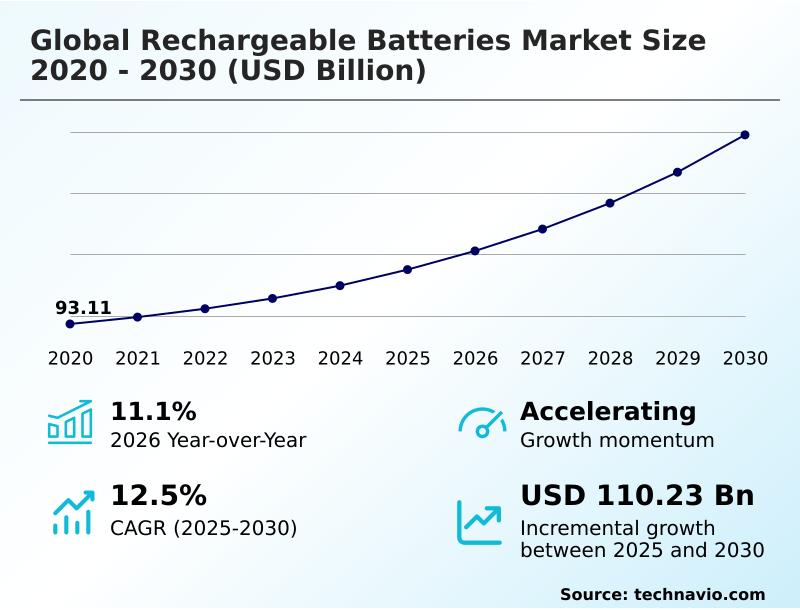
The rechargeable batteries market size is valued to increase by USD 110.23 billion, at a CAGR of 12.5% from 2025 to 2030. Rapid expansion of electric vehicle sector across major regions will drive the rechargeable batteries market.
Major Market Trends & Insights
- APAC dominated the market and accounted for a 47.1% growth during the forecast period.
- By Type - Lithium ion batteries segment was valued at USD 72.82 billion in 2024
- By End-user - Automotive segment accounted for the largest market revenue share in 2024
Market Size & Forecast
- Market Opportunities: USD 154.71 billion
- Market Future Opportunities: USD 110.23 billion
- CAGR from 2025 to 2030 : 12.5%
Market Summary
- The rechargeable batteries market is undergoing robust expansion, driven by the global shift toward sustainable energy and the electrification of transportation. This transition is underpinned by advancements in material science, which are enhancing energy density, reducing charging times, and improving thermal stability in advanced battery technologies.
- The integration of intermittent renewable energy sources like solar and wind into national grids necessitates large-scale energy storage systems to ensure power reliability. For instance, a utility operator facing grid instability from fluctuating solar output can deploy a grid-scale battery system to store excess energy and discharge it during peak demand, deferring costly infrastructure upgrades.
- Concurrently, supply chain optimizations and economies of scale are making electric vehicles and residential energy storage more accessible. Stakeholders are heavily investing in R&D to explore alternative chemistries, mitigating reliance on scarce raw materials and securing supply chains against geopolitical volatility.
What will be the Size of the Rechargeable Batteries Market during the forecast period?
Get Key Insights on Market Forecast (PDF) Get Free Sample
How is the Rechargeable Batteries Market Segmented?
The rechargeable batteries industry research report provides comprehensive data (region-wise segment analysis), with forecasts and estimates in "USD million" for the period 2026-2030, as well as historical data from 2020-2024 for the following segments.
- Type
- Lithium ion batteries
- Lead acid batteries
- End-user
- Automotive
- Utilities
- Commercial
- Residential
- Application
- Electric vehicles
- Consumer electronics
- Energy storage systems
- Industrial equipment
- Geography
- APAC
- China
- Japan
- India
- North America
- US
- Canada
- Mexico
- Europe
- Germany
- UK
- France
- Middle East and Africa
- Saudi Arabia
- UAE
- South Africa
- South America
- Brazil
- Argentina
- Colombia
- Rest of World (ROW)
- APAC
By Type Insights
The lithium ion batteries segment is estimated to witness significant growth during the forecast period.
The rechargeable batteries market is segmented by type, end-user, and geography, with lithium-ion technologies holding a commanding share.
The evolution of this segment is marked by consistent architectural refinements in both prismatic cells and cylindrical cells, driven by demand from automotive battery manufacturers for high capacity battery packs. While lithium-based alternatives are dominant, development continues in legacy technologies.
For example, advancements in valve regulated designs and the use of carbon additives are extending the viability of lead-acid systems and improving deep cycle battery performance in specific industrial applications.
As the industry matures, focus intensifies on the full lifecycle, with modern recovery processes reclaiming over 90% of valuable metals from these rechargeable power sources, bolstering supply chain sustainability.
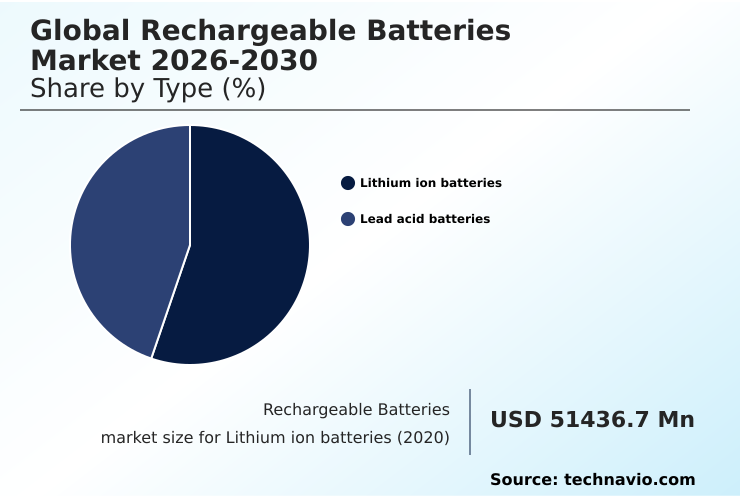
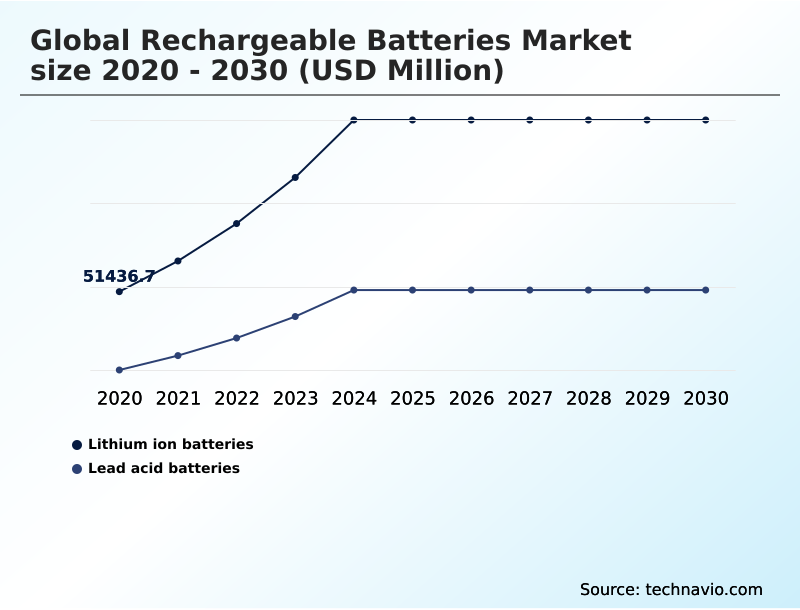
The Lithium ion batteries segment was valued at USD 72.82 billion in 2024 and showed a gradual increase during the forecast period.
Regional Analysis
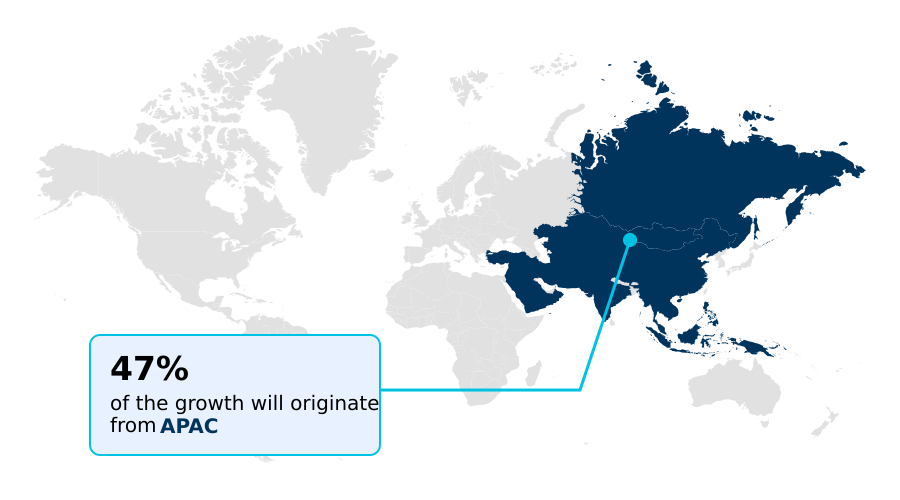
APAC is estimated to contribute 47.1% to the growth of the global market during the forecast period.Technavio’s analysts have elaborately explained the regional trends and drivers that shape the market during the forecast period.
See How Rechargeable Batteries Market Demand is Rising in APAC Get Free Sample
The geographic landscape of the rechargeable batteries market is dominated by the APAC region, which accounts for 47.1% of incremental growth and exhibits an expansion rate of over 13%.
This supremacy is built on extensive manufacturing capabilities and control over material processing, particularly for lithium iron phosphate technology.
In contrast, North America and Europe are focused on localizing supply chains by investing heavily in domestic energy storage infrastructure and R&D. These regions are pioneering advanced nanomaterials and sophisticated cathode architectures to enhance performance.
The development of robust thermal management architectures is a key focus globally to ensure reliability in diverse climates, supported by intelligent battery management systems.
This regional specialization fosters a competitive environment where innovations in utility-scale energy storage and other distributed energy resources are rapidly commercialized.
Market Dynamics
Our researchers analyzed the data with 2025 as the base year, along with the key drivers, trends, and challenges. A holistic analysis of drivers will help companies refine their marketing strategies to gain a competitive advantage.
- The global rechargeable batteries market is at a pivotal juncture, defined by complex technical and economic factors.
- A key consideration for stakeholders is the ongoing debate between lithium ion vs lead acid batteries, where Li-ion dominates in energy density for applications like rechargeable batteries for electric vehicles and rechargeable batteries in consumer electronics, while lead-acid maintains a foothold in specific industrial niches due to lower costs.
- The cost of rechargeable battery manufacturing remains a central issue, directly influenced by the volatile supply chain for battery raw materials, particularly the impact of cobalt on battery prices.
- To mitigate this, significant investment trends in battery technology are focused on advancements in battery energy density and the future of rechargeable battery chemistry, including the push toward solid state battery technology advantages and sodium ion battery commercialization status. Concurrently, the environmental impact of battery disposal is driving regulatory policies for battery recycling.
- Innovations in battery recycling and material recovery are crucial for a sustainable ecosystem. For grid stability, energy storage for renewable integration through grid scale battery storage projects and the role of batteries in smart grids are expanding rapidly.
- Safety standards for lithium batteries are becoming more stringent, necessitating sophisticated thermal management in battery packs, while lead acid battery maintenance practices continue to evolve for legacy systems.
What are the key market drivers leading to the rise in the adoption of Rechargeable Batteries Industry?
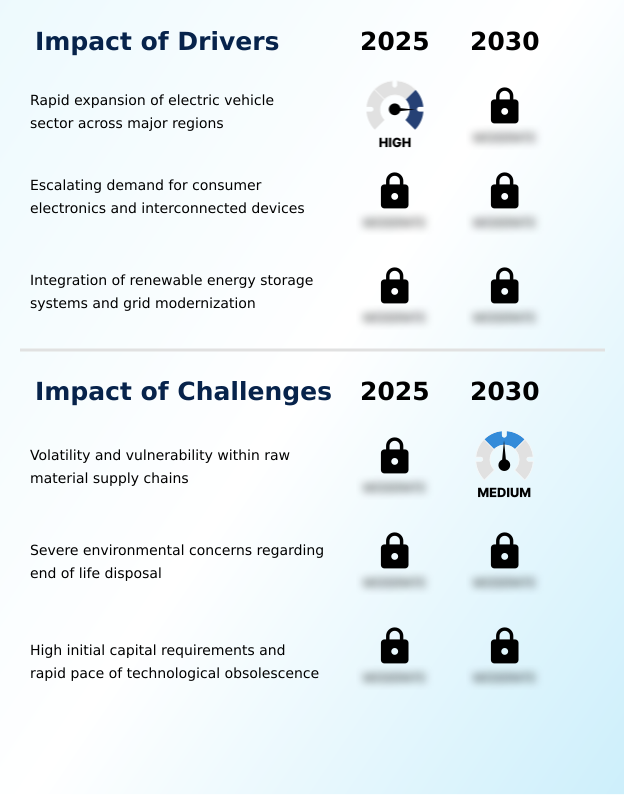
- The rapid expansion of the electric vehicle sector across key global regions serves as a primary driver for the rechargeable batteries market.
- Market growth is propelled by three core drivers transforming energy consumption. The global transition to electric mobility solutions is creating massive demand, accelerating R&D into high-nickel cathode chemistries and solid state technologies to improve range and performance.
- Secondly, the integration of renewables necessitates both grid scale energy storage and distributed home energy storage solutions to manage intermittency, with regions like APAC contributing 47.1% of the market's incremental growth.
- These systems are critical for smart grid integration, helping to reduce the 8-10% of electricity typically lost in transmission.
- Thirdly, the consumer electronics sector provides constant demand for compact power sources like lithium primary batteries, alongside traditional lead acid storage batteries and specialized energy storage batteries for various applications, all supported by an expanding network of electric vehicle charging stations.
What are the market trends shaping the Rechargeable Batteries Industry?
- A primary market trend is the accelerated adoption of solid-state and alternative chemistry architectures. This is driven by the industry's pursuit of higher energy density, improved safety, and longer operational lifespans.
- Key market trends are reshaping the competitive landscape, driven by the pursuit of performance and sustainability. The accelerated adoption of solid-state architectures and alternative chemistry architectures, including promising sodium-ion compositions, is a direct response to the need for advanced battery technologies with higher gravimetric energy density. This is particularly critical for specialized aerospace applications and next-generation mobile energy storage.
- Innovations are delivering tangible benefits, with some new designs offering up to three times faster charging. Concurrently, the institutionalization of circular economy principles is gaining momentum, with recovery rates for lithium-ion coin cells and other formats now exceeding 90%.
- This shift supports sustainability goals and creates more resilient supply chains, influencing everything from large-scale deployments to niche applications like battery swapping technology.
What challenges does the Rechargeable Batteries Industry face during its growth?
- Volatility and vulnerability within the raw material supply chains present a significant challenge affecting the growth and stability of the rechargeable batteries industry.
- The market faces significant structural challenges that temper its growth trajectory. The extreme volatility of raw material supply chains, stemming from the geographic concentration of brine-based lithium reserves and laterite nickel ores, creates profound uncertainty. Securing these materials often requires complex processing methods like high pressure acid leach.
- A second major hurdle is the environmental concern surrounding end-of-life processing, which necessitates sophisticated hydrometallurgical extraction and pyrometallurgical extraction techniques to manage hazardous waste effectively. Finally, the high initial capital required to establish manufacturing facilities, with costs often exceeding a billion dollars, presents a formidable barrier to entry.
- This investment risk is compounded by the rapid pace of technological obsolescence, where today's industrial power units could be outdated by next-generation innovations.
Exclusive Technavio Analysis on Customer Landscape
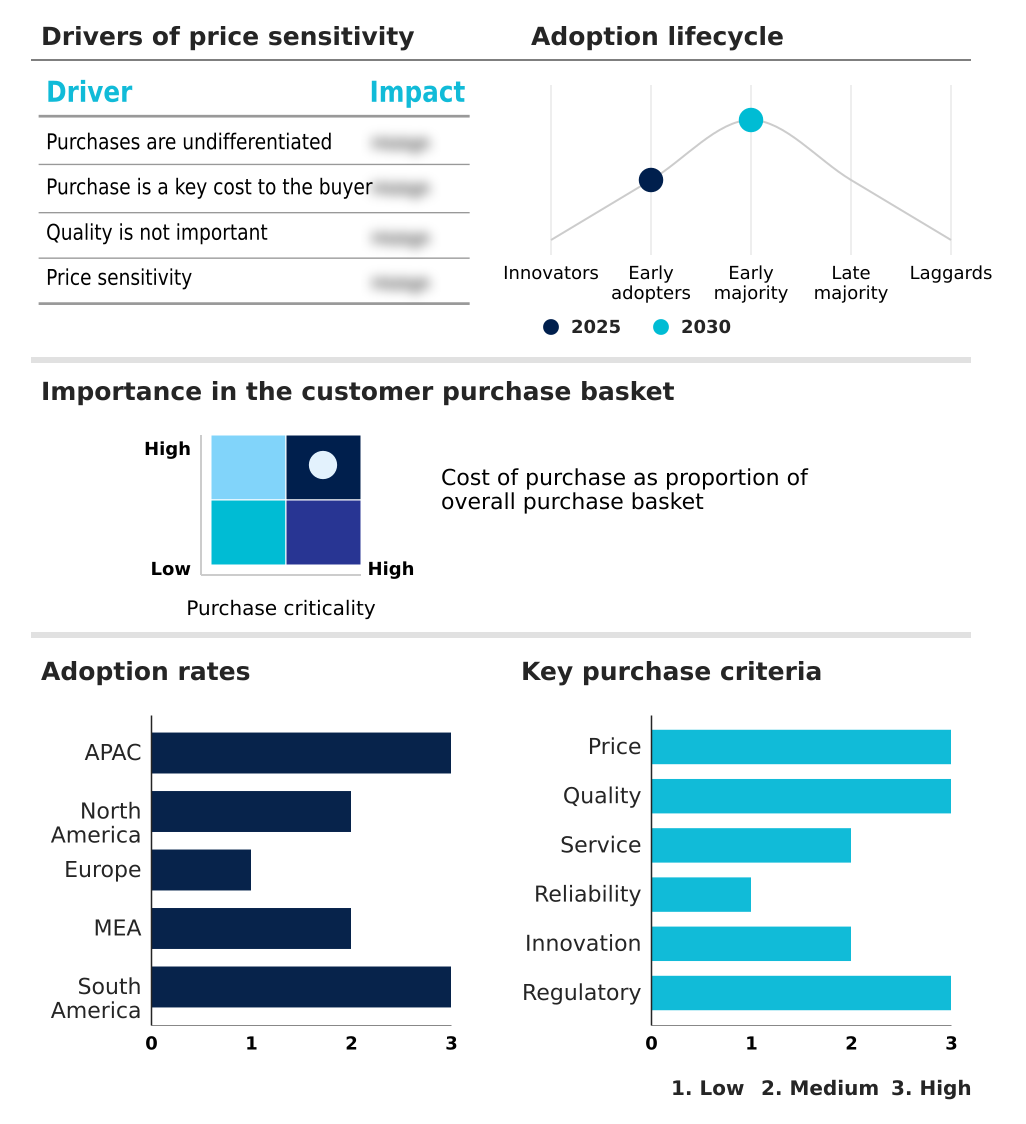
The rechargeable batteries market forecasting report includes the adoption lifecycle of the market, covering from the innovator’s stage to the laggard’s stage. It focuses on adoption rates in different regions based on penetration. Furthermore, the rechargeable batteries market report also includes key purchase criteria and drivers of price sensitivity to help companies evaluate and develop their market growth analysis strategies.
Customer Landscape of Rechargeable Batteries Industry
Competitive Landscape
Companies are implementing various strategies, such as strategic alliances, rechargeable batteries market forecast, partnerships, mergers and acquisitions, geographical expansion, and product/service launches, to enhance their presence in the industry.
BYD Co. Ltd. - The company provides advanced rechargeable batteries for electric vehicles and electronics, leveraging proprietary lithium iron phosphate technology for enhanced performance and safety.
The industry research and growth report includes detailed analyses of the competitive landscape of the market and information about key companies, including:
- BYD Co. Ltd.
- CLARIOS LLC
- Contemporary Amperex Ltd.
- East Penn Manufacture Co. Inc.
- Energizer Holdings Inc.
- EnerSys
- EVE Energy Co. Ltd.
- Exide Industries Ltd.
- Gotion Inc.
- GS Yuasa International Ltd.
- LG Energy Solution Ltd.
- Microvast Holdings Inc.
- Murata Manufacturing Co. Ltd.
- Northvolt AB
- Panasonic Holdings Corp.
- Samsung SDI Co. Ltd.
- Sunwoda Electronic Co. Ltd.
- The Duracell Co.
- VARTA AG
Qualitative and quantitative analysis of companies has been conducted to help clients understand the wider business environment as well as the strengths and weaknesses of key industry players. Data is qualitatively analyzed to categorize companies as pure play, category-focused, industry-focused, and diversified; it is quantitatively analyzed to categorize companies as dominant, leading, strong, tentative, and weak.
Recent Development and News in Rechargeable batteries market
- In March, 2025, Rio Tinto finalized its acquisition of Arcadium Lithium in a transaction valued at approximately $6.7 billion, aimed at securing critical raw materials for lithium-ion battery production.
- In July, 2025, Neuron Energy launched its Gen 2 lithium-ion battery packs, specifically developed to support the expanding electric vehicle ecosystem in India.
- In October, 2025, Chery Automobile presented a prototype all-solid-state battery module, a product of its internal Solid-State Battery Research Institute, at the Global Innovation Conference.
- In October, 2025, Sumitomo Metal Mining Co., Ltd. and Toyota Motor Corporation entered into a joint development agreement focused on establishing large-scale production of cathode materials for all-solid-state batteries for BEVs.
Dive into Technavio’s robust research methodology, blending expert interviews, extensive data synthesis, and validated models for unparalleled Rechargeable Batteries Market insights. See full methodology.
| Market Scope | |
|---|---|
| Page number | 306 |
| Base year | 2025 |
| Historic period | 2020-2024 |
| Forecast period | 2026-2030 |
| Growth momentum & CAGR | Accelerate at a CAGR of 12.5% |
| Market growth 2026-2030 | USD 110232.4 million |
| Market structure | Fragmented |
| YoY growth 2025-2026(%) | 11.1% |
| Key countries | China, Japan, India, South Korea, Australia, Indonesia, US, Canada, Mexico, Germany, UK, France, Italy, Spain, The Netherlands, Saudi Arabia, UAE, South Africa, Turkey, Israel, Brazil, Argentina and Colombia |
| Competitive landscape | Leading Companies, Market Positioning of Companies, Competitive Strategies, and Industry Risks |
Research Analyst Overview
- The rechargeable batteries market is defined by a strategic push toward technological sovereignty and supply chain resilience. Boardroom decisions are increasingly centered on mitigating the risks associated with raw material volatility by investing in advanced processing capabilities.
- Innovations in hydrometallurgical extraction and pyrometallurgical extraction techniques, which enable the recovery of over 90% of valuable metals from depleted cells, are becoming critical components of corporate strategy. The development of alternative chemistry architectures, including sodium-ion compositions and zinc-based compositions, provides a pathway to reduce dependence on geographically concentrated brine-based lithium reserves and laterite nickel ores.
- Manufacturers are refining cathode architectures and integrating advanced nanomaterials to boost performance. At the same time, the pursuit of superior gravimetric energy density is essential for specialized aerospace applications, demanding sophisticated thermal management architectures. This focus on high-value applications, coupled with the establishment of robust circular economy principles, is shaping a highly competitive and technologically advanced industrial landscape.
What are the Key Data Covered in this Rechargeable Batteries Market Research and Growth Report?
-
What is the expected growth of the Rechargeable Batteries Market between 2026 and 2030?
-
USD 110.23 billion, at a CAGR of 12.5%
-
-
What segmentation does the market report cover?
-
The report is segmented by Type (Lithium ion batteries, and Lead acid batteries), End-user (Automotive, Utilities, Commercial, and Residential), Application (Electric vehicles, Consumer electronics, Energy storage systems, and Industrial equipment) and Geography (APAC, North America, Europe, Middle East and Africa, South America)
-
-
Which regions are analyzed in the report?
-
APAC, North America, Europe, Middle East and Africa and South America
-
-
What are the key growth drivers and market challenges?
-
Rapid expansion of electric vehicle sector across major regions , Volatility and vulnerability within raw material supply chains
-
-
Who are the major players in the Rechargeable Batteries Market?
-
BYD Co. Ltd., CLARIOS LLC, Contemporary Amperex Ltd., East Penn Manufacture Co. Inc., Energizer Holdings Inc., EnerSys, EVE Energy Co. Ltd., Exide Industries Ltd., Gotion Inc., GS Yuasa International Ltd., LG Energy Solution Ltd., Microvast Holdings Inc., Murata Manufacturing Co. Ltd., Northvolt AB, Panasonic Holdings Corp., Samsung SDI Co. Ltd., Sunwoda Electronic Co. Ltd., The Duracell Co. and VARTA AG
-
Market Research Insights
- The rechargeable batteries market is shaped by intense competition and rapid technological evolution, with adoption rates for electric mobility solutions increasing by over 25% in some key markets. The expansion of energy storage infrastructure is critical, as utility-scale energy storage deployments are vital for grid stability.
- Effective battery management systems are enhancing the operational efficiency of industrial power units, while the proliferation of electric vehicle charging stations addresses consumer range anxiety. The push for a circular economy is also impacting the sector, with advanced end-of-life processing techniques now recovering a significantly higher percentage of raw materials compared to five years ago.
- This focus on sustainability is reshaping supply chains and influencing long-term investment strategies across the industry.
We can help! Our analysts can customize this rechargeable batteries market research report to meet your requirements.
 RIA -
RIA - 
