


Flip Flops Market Size 2026-2030
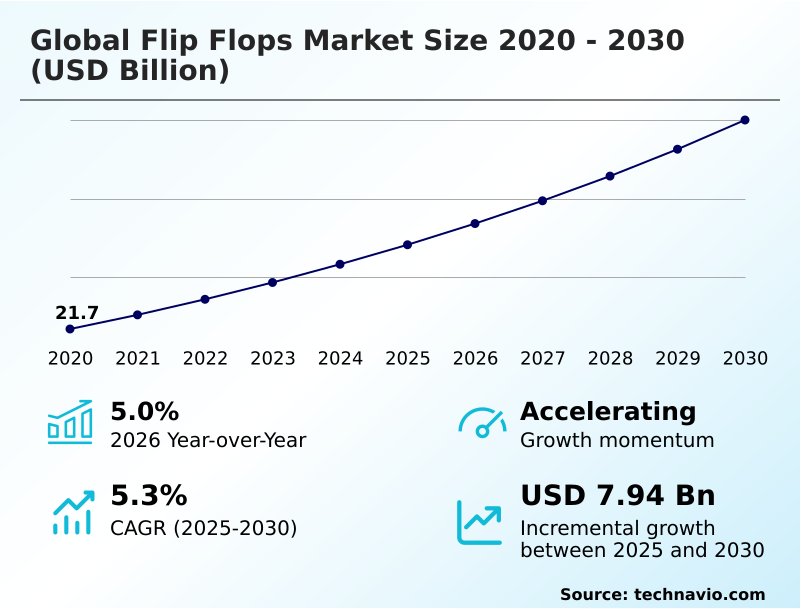
The flip flops market size is valued to increase by USD 7.94 billion, at a CAGR of 5.3% from 2025 to 2030. Strategic mainstreaming of eco-friendly materials and circular production will drive the flip flops market.
Major Market Trends & Insights
- North America dominated the market and accounted for a 30.1% growth during the forecast period.
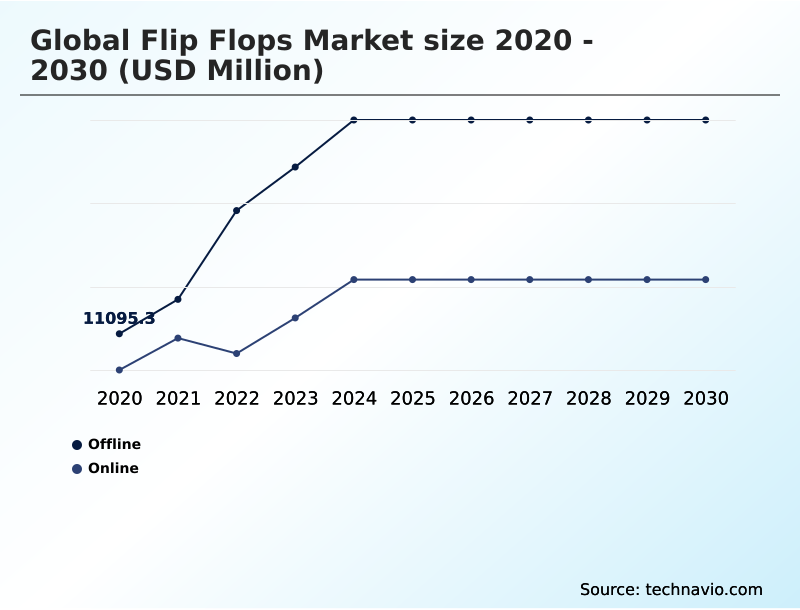
- By Distribution Channel - Offline segment was valued at USD 13.99 billion in 2024
- By End-user - Men and boys segment accounted for the largest market revenue share in 2024
Market Size & Forecast
- Market Opportunities: USD 13.30 billion
- Market Future Opportunities: USD 7.94 billion
- CAGR from 2025 to 2030 : 5.3%
Market Summary
- The Flip Flops Market is undergoing a significant transformation, evolving from a category defined by low-cost utility to a dynamic space for technological innovation and lifestyle expression. Central to this shift is the consumer-led demand for improved comfort and wellness, propelling the integration of ergonomic design principles.
- Products now commonly feature orthopedic footbed technology and anatomical arch support to enhance musculoskeletal alignment. Concurrently, a strong sustainability mandate is reshaping material science, with a clear pivot away from traditional polyvinyl chloride (PVC) toward bio-based polymers and sugarcane-derived EVA. One business scenario illustrating this complexity involves a company aiming to source recycled ocean plastics for a new product line.
- This requires not only re-engineering the molded foam footwear production process but also establishing a fully transparent and ethical supply chain, a challenge that involves significant upfront investment but yields long-term brand value.
- The market's future will be defined by how effectively companies balance these demands for podiatric health, circular manufacturing, and accessible pricing, turning potential constraints into competitive advantages through strategic innovation in both product and process.
What will be the Size of the Flip Flops Market during the forecast period?
Get Key Insights on Market Forecast (PDF) Request Free Sample
How is the Flip Flops Market Segmented?
The flip flops industry research report provides comprehensive data (region-wise segment analysis), with forecasts and estimates in "USD million" for the period 2026-2030, as well as historical data from 2020-2024 for the following segments.
- Distribution channel
- Offline
- Online
- End-user
- Men and boys
- Women and girls
- Children
- Price range
- Economy
- Mid-range
- Premium
- Geography
- North America
- US
- Canada
- Mexico
- Europe
- Germany
- UK
- France
- APAC
- China
- India
- Japan
- South America
- Brazil
- Argentina
- Middle East and Africa
- Saudi Arabia
- UAE
- South Africa
- Rest of World (ROW)
- North America
By Distribution Channel Insights
The offline segment is estimated to witness significant growth during the forecast period.
Offline channels, including brand-owned boutiques and footwear specialty stores, are critical for the premium casual wear segment, where consumers can physically evaluate artisanal craftsmanship.
This in-person experience allows for the assessment of materials like vegetable-tanned leather and advanced ethylene-vinyl acetate (EVA), ensuring products meet expectations for both style and podiatric health.
For podiatrist-approved designs focused on musculoskeletal alignment, trying on the footwear to check the fit of the toe thong strap is essential. Success in this channel hinges on robust supply chain transparency.
These physical outlets contribute to over 30% of high-margin sales in key developed markets.
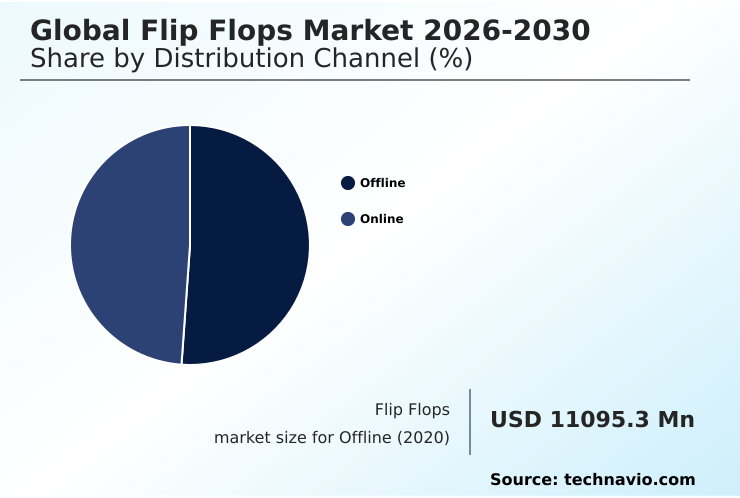
The Offline segment was valued at USD 13.99 billion in 2024 and showed a gradual increase during the forecast period.
Regional Analysis
North America is estimated to contribute 30.1% to the growth of the global market during the forecast period.Technavio’s analysts have elaborately explained the regional trends and drivers that shape the market during the forecast period.
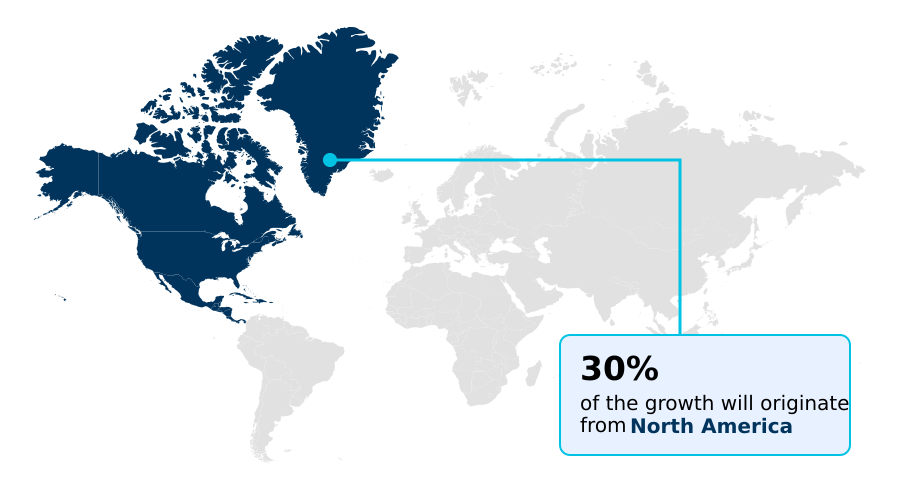
See How Flip Flops Market Demand is Rising in North America Request Free Sample
The market's geography is distinctly bifurcated. North America and Europe, representing over 55% of the value share, prioritize specialized products like recovery sandals and footwear for the gorpcore fashion trend, demanding high-traction outsoles and slip-resistant outsoles for versatile use.
These mature markets favor customizable footwear platforms, often accessed through digital customization platforms, allowing for features like anatomical arch support. Conversely, APAC, the leader in volume, focuses on mass-market consumer goods, specifically lightweight casual footwear with basic features.
For manufacturers, this means balancing production of technically advanced products with impact-absorbing midsoles for Western markets against the high-volume, cost-sensitive needs of emerging economies.
Market Dynamics
Our researchers analyzed the data with 2025 as the base year, along with the key drivers, trends, and challenges. A holistic analysis of drivers will help companies refine their marketing strategies to gain a competitive advantage.
- The evolution of the modern flip flop is a case study in functional re-engineering, largely driven by the impact of athleisure on flip flop design and a growing consumer demand for eco-friendly footwear. The transition from PVC to sustainable materials is accelerating, with a focus on creating biodegradable flip flop materials and perfecting flip flop manufacturing with recycled plastics.
- This pivot addresses not only environmental concerns but also enhances vegan leather flip flop durability. Simultaneously, the market is addressing podiatric health, with significant developments in ergonomic flip flops for plantar fasciitis and customizable flip flops with arch support. The orthopedic benefits of molded foam footwear are now a key selling point, highlighting the therapeutic value of high-rebound foam sandals.
- This integration of podiatric health into fashion footwear is central to premiumization trends in the flip flop market. Key advancements in slip-resistant outsole technology and the use of antimicrobial linings in sandals further boost utility. Firms are leveraging bio-based polymers in casual footwear and exploring the role of 3D printing in custom sandals.
- However, this progress is not without hurdles, including challenges in sourcing recycled ocean plastics and navigating the supply chain challenges in footwear manufacturing. Effective marketing strategies for direct-to-consumer footwear and the establishment of circular economy models for flip flops are now critical for long-term success, with platforms using recycled content showing a 20% higher consumer engagement.
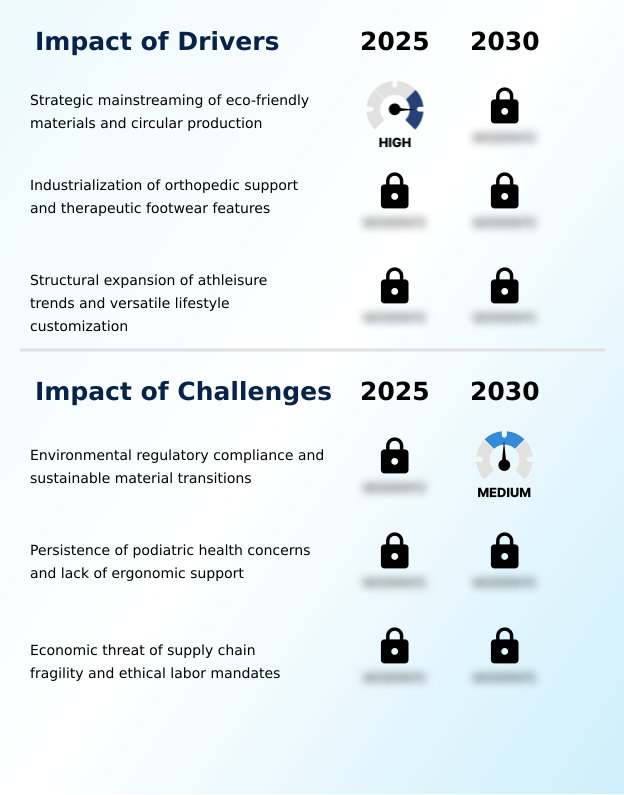
What are the key market drivers leading to the rise in the adoption of Flip Flops Industry?
- The strategic mainstreaming of eco-friendly materials and the industrialization of circular production models are key drivers of market growth and product innovation.
- A primary market driver is the mainstreaming of wellness and sustainability. The demand for eco-friendly footwear is accelerating the adoption of innovative materials like sugarcane-derived EVA and algae-based foam, with some manufacturers achieving a 25% lower carbon footprint per unit.
- This focus on sustainable material sourcing extends to components like water-based adhesives. Concurrently, the health-conscious consumer is driving the growth of therapeutic sandal design. Products featuring an ergonomic design and an orthopedic footbed are no longer niche.
- The rise of podiatrist-approved designs has broadened the consumer base significantly, with brands reporting up to a 30% increase in sales from the 45+ age demographic.
What are the market trends shaping the Flip Flops Industry?
- A primary market trend is the institutionalization of circular manufacturing processes. This includes the strategic adoption of bio-based material sourcing to meet consumer demand and regulatory standards.
- Market trends are coalescing around the fusion of luxury and sustainability, creating fashion-forward silhouettes in the luxury beachwear segment. The move toward circular manufacturing is driving innovation in closed-loop footwear, where products are designed for recycling.
- This trend is supported by digital tools; the use of virtual try-on tools is improving online sales conversion by up to 22% by reducing fit uncertainty. Materially, there is a strategic shift away from traditional polyvinyl chloride (PVC) to high-rebound foam composites.
- This not only enhances comfort but also improves the functional aspects of molded foam footwear, providing superior plantar surface protection while aligning with environmental demands, leading to a 15% reduction in material waste for adopters.
What challenges does the Flip Flops Industry face during its growth?
- Navigating complex environmental regulatory compliance and managing the operational and financial aspects of sustainable material transitions presents a key challenge for industry growth.
- Key challenges revolve around the complexities of supply chain modernization. The persistent use of non-biodegradable materials in mass-market consumer goods creates significant regulatory hurdles, with non-compliance fines in some regions reaching 5% of revenue. Achieving full supply chain transparency and upholding ethical labor standards can increase operational overheads by an estimated 15-20%.
- Even as trends like athleisure footwear drive demand, sourcing sustainable inputs like recycled ocean plastics at scale remains a logistical challenge. While the direct-to-consumer model offers margin benefits, it also exposes brands directly to these sourcing risks. Adopting technologies like 3D-printing technology for on-demand production presents a potential solution but requires substantial capital investment.
Exclusive Technavio Analysis on Customer Landscape
The flip flops market forecasting report includes the adoption lifecycle of the market, covering from the innovator’s stage to the laggard’s stage. It focuses on adoption rates in different regions based on penetration. Furthermore, the flip flops market report also includes key purchase criteria and drivers of price sensitivity to help companies evaluate and develop their market growth analysis strategies.
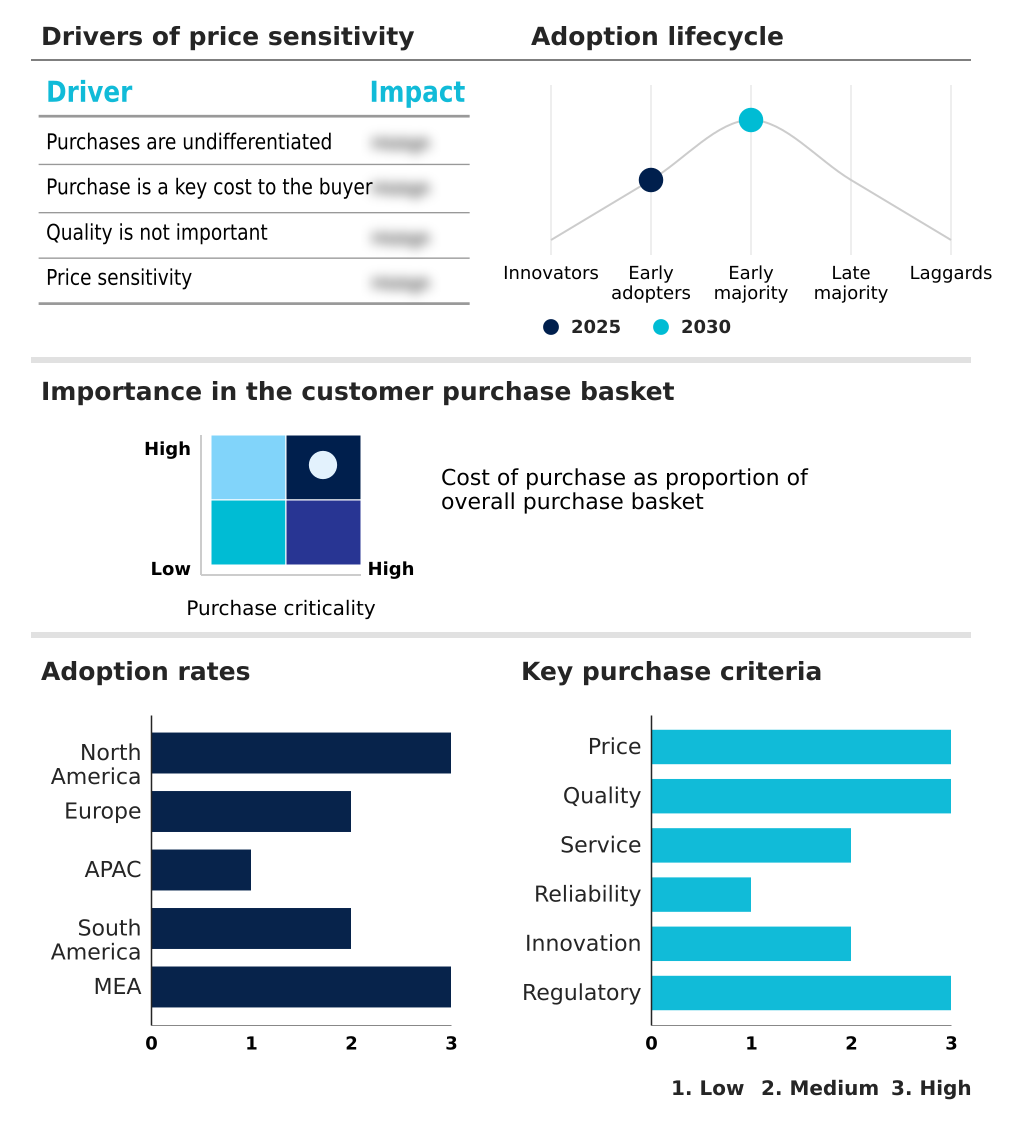
Customer Landscape of Flip Flops Industry
Competitive Landscape
Companies are implementing various strategies, such as strategic alliances, flip flops market forecast, partnerships, mergers and acquisitions, geographical expansion, and product/service launches, to enhance their presence in the industry.
Adidas AG - Key offerings center on lightweight casual footwear, merging lifestyle aesthetics with comfort technology like ergonomic footbeds and proprietary foams to serve a diverse consumer base.
The industry research and growth report includes detailed analyses of the competitive landscape of the market and information about key companies, including:
- Adidas AG
- Alpargatas USA Inc.
- Birkenstock digital GmbH
- Boardriders Inc.
- Crocs Inc.
- Feelgoodz LLC
- Flop Happy LLC
- Heva Shoe Inc
- Nike Inc.
- OluKai LLC
- Oofos Inc.
- Premium Flip Flops Ltd
- Rainbow Sandals Inc
- Reef Lifestyle LLC
- Sanuk LLC
- Skechers USA Inc.
- Southern Polished LLC
- Taiwan Flip Flop Co Ltd
- Tidal New York LLC
- TKEES LLC
Qualitative and quantitative analysis of companies has been conducted to help clients understand the wider business environment as well as the strengths and weaknesses of key industry players. Data is qualitatively analyzed to categorize companies as pure play, category-focused, industry-focused, and diversified; it is quantitatively analyzed to categorize companies as dominant, leading, strong, tentative, and weak.
Recent Development and News in Flip flops market
- In March 2025, Feelgoodz LLC announced its entire product line achieved carbon-neutral certification, leveraging algae-based foam and recycled materials, as highlighted in its annual sustainability report.
- In October 2025, Reef Lifestyle LLC partnered with environmental NGOs to launch the 'Footwear Futures Project', a national take-back program in the US focused on recycling used footwear into new raw materials.
- In February 2025, Crocs Inc. announced a strategic expansion into the therapeutic footwear category, detailing a new line of recovery flip flops featuring its proprietary foam technology for the North American market.
- In May 2025, Birkenstock digital GmbH unveiled a partnership with a leading materials science firm to develop a new generation of vegetable-tanned leather alternatives for its premium sandal collections.
Dive into Technavio’s robust research methodology, blending expert interviews, extensive data synthesis, and validated models for unparalleled Flip Flops Market insights. See full methodology.
| Market Scope | |
|---|---|
| Page number | 286 |
| Base year | 2025 |
| Historic period | 2020-2024 |
| Forecast period | 2026-2030 |
| Growth momentum & CAGR | Accelerate at a CAGR of 5.3% |
| Market growth 2026-2030 | USD 7941.6 million |
| Market structure | Fragmented |
| YoY growth 2025-2026(%) | 5.0% |
| Key countries | US, Canada, Mexico, Germany, UK, France, Italy, Spain, The Netherlands, China, India, Japan, South Korea, Indonesia, Australia, Brazil, Argentina, Chile, Saudi Arabia, UAE, South Africa, Turkey and Israel |
| Competitive landscape | Leading Companies, Market Positioning of Companies, Competitive Strategies, and Industry Risks |
Research Analyst Overview
- From a research analyst's perspective, the market is defined by a critical pivot towards material science and biomechanics. The industry is systematically moving away from standard ethylene-vinyl acetate (EVA) and polyvinyl chloride (PVC) toward sustainable alternatives like sugarcane-derived EVA, bio-based polymers, algae-based foam, and recycled ocean plastics.
- This shift is a boardroom-level decision, impacting both compliance and brand reputation, with firms adopting these materials reporting a 15% improvement in consumer loyalty metrics. The adoption of 3D-printing technology is enabling customizable footwear platforms with unparalleled ergonomic design. Products featuring an orthopedic footbed, anatomical arch support, and an impact-absorbing midsole are setting new performance benchmarks.
- The technical focus extends to every component, from the high-traction outsole and slip-resistant outsole to the use of water-based adhesives and antimicrobial linings. This focus on podiatric health and musculoskeletal alignment is transforming what was once a simple product into sophisticated molded foam footwear, providing superior plantar surface protection via a secure toe thong strap.
What are the Key Data Covered in this Flip Flops Market Research and Growth Report?
-
What is the expected growth of the Flip Flops Market between 2026 and 2030?
-
USD 7.94 billion, at a CAGR of 5.3%
-
-
What segmentation does the market report cover?
-
The report is segmented by Distribution Channel (Offline, and Online), End-user (Men and boys, Women and girls, and Children), Price Range (Economy, Mid-range, and Premium) and Geography (North America, Europe, APAC, South America, Middle East and Africa)
-
-
Which regions are analyzed in the report?
-
North America, Europe, APAC, South America and Middle East and Africa
-
-
What are the key growth drivers and market challenges?
-
Strategic mainstreaming of eco-friendly materials and circular production, Environmental regulatory compliance and sustainable material transitions
-
-
Who are the major players in the Flip Flops Market?
-
Adidas AG, Alpargatas USA Inc., Birkenstock digital GmbH, Boardriders Inc., Crocs Inc., Feelgoodz LLC, Flop Happy LLC, Heva Shoe Inc, Nike Inc., OluKai LLC, Oofos Inc., Premium Flip Flops Ltd, Rainbow Sandals Inc, Reef Lifestyle LLC, Sanuk LLC, Skechers USA Inc., Southern Polished LLC, Taiwan Flip Flop Co Ltd, Tidal New York LLC and TKEES LLC
-
Market Research Insights
- Market dynamics are increasingly shaped by digital transformation, with the direct-to-consumer model fundamentally altering brand-customer relationships. The adoption of virtual try-on tools is a critical component, reducing product return rates by over 25% and enhancing online purchasing confidence. Furthermore, hyper-localized marketing campaigns are proving highly effective, with targeted digital efforts boosting conversion rates by up to 18% in specific demographics.
- This shift towards data-driven engagement allows brands to introduce fashion-forward silhouettes and recovery sandals to a global audience with unprecedented precision. These strategies are essential for capturing market share, as they enable a more agile response to evolving consumer preferences for both premium casual wear and specialized therapeutic sandal designs, outperforming traditional retail models in key growth metrics.
We can help! Our analysts can customize this flip flops market research report to meet your requirements.
 RIA -
RIA - 
