



Mexico Retail Market Size 2024-2028
The mexico retail market size is forecast to increase by USD 78.49 billion, at a CAGR of 4.5% between 2023 and 2028.
- The market is witnessing significant growth, driven by the influx of numerous retail stores and innovative packaging and marketing initiatives by prominent companies. This dynamic market environment presents both opportunities and challenges for retailers. On the one hand, the increasing competition necessitates continuous innovation and differentiation to capture consumer attention. Retailers are investing in unique product offerings, enhanced shopping experiences, and creative marketing strategies to stand out from the crowd. Additionally, the adoption of technology, such as mobile payments and e-commerce platforms, is becoming increasingly common, providing new avenues for growth. On the other hand, issues related to logistics and supply chain operations pose significant challenges.
- Mexico's complex geography and infrastructure can make distribution and delivery difficult and costly, particularly for perishable goods. Retailers must navigate these obstacles to ensure timely and cost-effective delivery, while also maintaining the quality and freshness of their products. In conclusion, the market is characterized by a competitive landscape and a growing consumer base. Retailers seeking to succeed in this market must focus on innovation, differentiation, and effective logistics management to capitalize on opportunities and overcome challenges. By staying agile and responsive to changing market conditions, retailers can thrive in this dynamic and exciting market.
What will be the size of the Mexico Retail Market during the forecast period?
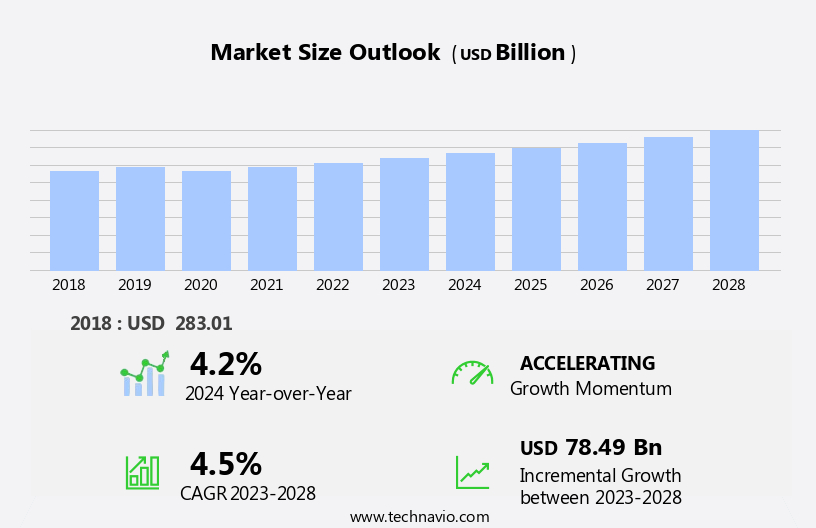
Explore in-depth regional segment analysis with market size data - historical 2018-2022 and forecasts 2024-2028 - in the full report.
Request Free Sample
- In Mexico's retail market, payment systems continue to evolve, with contactless and digital payments gaining traction. Retail infrastructure development remains a priority, shaping store locations and shopping habits. Consumer preferences shift towards convenience and personalized experiences, driving retail innovation and technological disruption. Risk management and retail metrics are crucial for competitive analysis, as market penetration and price elasticity impact sales growth. Emerging technologies, such as augmented reality and artificial intelligence, reshape retail partnerships and product differentiation strategies. Lease agreements and import duties pose challenges for retailers, requiring careful consideration in business decisions. Labor costs, consumer confidence, and the retail workforce are essential retail metrics, impacting brand loyalty and store expansion plans.
- E-commerce security and data privacy concerns persist, necessitating robust risk management strategies. Supply chain resilience and disaster recovery plans are essential for business continuity in the face of economic factors and population demographics. Crisis management and crisis communication are vital skills for retailers in a volatile market. Private label brands and income distribution patterns influence consumer behavior and economic trends. Retail real estate and population demographics shape store expansion plans, while crisis management and business continuity plans ensure operational resilience.
How is this market segmented?
The market research report provides comprehensive data (region-wise segment analysis), with forecasts and estimates in "USD billion" for the period 2024-2028, as well as historical data from 2018-2022 for the following segments.
- Product
- PFD and AB and TP
- Personal and household care
- AF and A
- Electrical and electronics
- Others
- Distribution Channel
- Offline
- Online
- Geography
- North America
- Mexico
- North America
By Product Insights
The pfd and ab and tp segment is estimated to witness significant growth during the forecast period.
The Mexican retail market is witnessing significant developments in various sectors, including packaged food and drinks, alcoholic beverages, and tobacco products. The upward trend in commodity prices is driving growth in these categories. Consumers' increasing preference for imported goods, particularly processed foods, is expected to result in the highest growth rate during the forecast period. Mini marts are gaining popularity in both big cities and small towns, primarily selling instant food and beverage products. Ready-to-eat food products have seen a surge in sales, leading manufacturers to launch and promote healthier options. In the realm of technology, energy efficiency, fraud prevention, and point-of-sale systems are essential for retailers.
Supply chain sustainability and ethical sourcing are becoming crucial factors in consumer decision-making. Social media marketing and digital marketing are essential tools for retailers to engage with customers and build loyalty programs. Mexican retail laws mandate strict adherence to food safety regulations and product safety standards. Retailers are leveraging data analytics, predictive analytics, and retail analytics to optimize sales forecasting, inventory management, and customer service. Category management, big data, machine learning, and artificial intelligence are being adopted for efficient supply chain management and warehouse management. Omnichannel retail, retail technology, and international trade are shaping the future of retail in Mexico.
Convenience stores and department stores are focusing on employee training and store layout to enhance the customer experience. E-commerce platforms are increasingly popular, necessitating effective distribution centers and logistics management. Sustainable retail practices, such as carbon footprint reduction and waste management, are becoming essential for retailers to remain competitive.
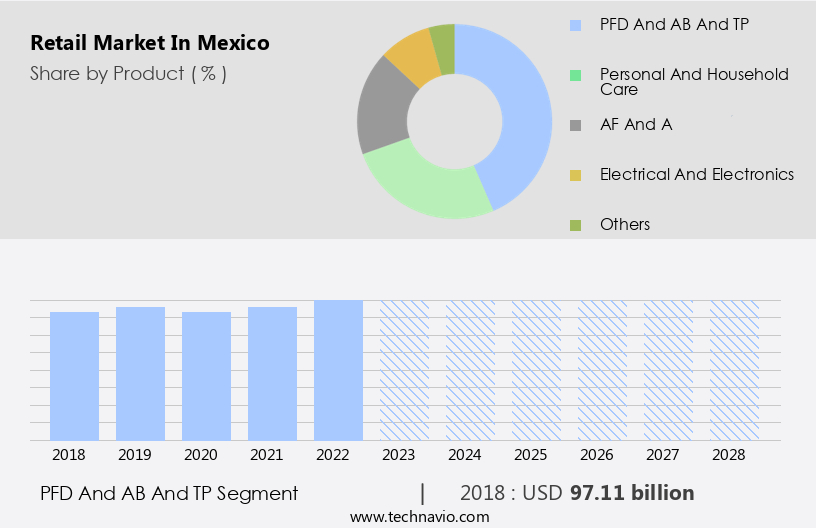
The PFD and AB and TP segment was valued at USD 97.11 billion in 2018 and showed a gradual increase during the forecast period.
Market Dynamics
Our researchers analyzed the data with 2023 as the base year, along with the key drivers, trends, and challenges. A holistic analysis of drivers will help companies refine their marketing strategies to gain a competitive advantage.
In the vibrant and dynamic retail landscape of Mexico, various sectors thrive, including supermarkets, discount stores, specialty shops, and e-commerce. Mexican consumers exhibit a strong preference for local and authentic products, making traditional markets and mom-and-pop stores significant players. Walmex, Soriana, and Comercial Mexicana dominate the supermarket scene, offering a wide range of goods from fresh produce to electronics. Discount retailers like Chedraui and Bodega Aurrera cater to budget-conscious shoppers. Specialty stores, such as Liverpool and Sears, provide fashion and home appliances. E-commerce platforms like Amazon Mexico and MercadoPago expand retail reach, enabling online shopping for convenience and accessibility. Mexican retailers effectively adapt to consumer preferences, integrating local products, technology, and competitive pricing to cater to the diverse and growing market.
What are the Mexico Retail Market drivers leading to the rise in adoption of the Industry?
- The significant influx of numerous retail stores serves as the primary driver for market growth.
- The market is experiencing notable growth, with an increasing number of retail outlets opening across the country. Retailers are expanding their presence to boost brand visibility and reach untapped markets, particularly in non-urban areas. The growing middle-class population is a significant factor driving this expansion, particularly in the grocery and fast-moving consumer goods (FMCG) sector. Hypermarkets and supermarkets dominate these sales, making it essential for retailers to expand their store chains to increase market share. To stay competitive, Mexican retailers are adopting advanced technologies such as mobile marketing, cloud computing, and e-commerce platforms. Product lifecycle management and inventory management systems are also becoming increasingly important to optimize operations and improve customer experience.
- Sustainable retail practices are gaining popularity, with retailers focusing on reducing their carbon footprint and adopting environmentally-friendly store layouts. Retail financing solutions are also becoming more accessible, enabling retailers to invest in their businesses and expand operations more efficiently. Employee training programs are essential to ensure a skilled workforce and provide excellent customer service. Distribution centers are being established to streamline supply chain management and reduce delivery times. Overall, the Mexican retail market is dynamic and competitive, with retailers continually seeking innovative ways to meet the evolving needs of consumers.
What are the Mexico Retail Market trends shaping the Industry?
- Prominent companies are implementing innovative packaging and marketing initiatives as the latest market trend. This approach aims to differentiate their products and capture consumer attention.
- The Mexican retail market is characterized by a high level of competition among various players. In response, leading retailers are focusing on enhancing the customer experience through innovative marketing initiatives. These include social media marketing, engaging online campaigns, and contests. Packaging is also a significant area of investment, with retailers utilizing appealing and innovative designs to differentiate their products. Moreover, retailers are prioritizing energy efficiency and fraud prevention to reduce operational costs and maintain security. Supply chain sustainability is another crucial aspect, with many companies adopting fair trade practices and implementing predictive analytics for demand planning. Point-of-sale (POS) systems and loss prevention technologies are essential components of retail operations, ensuring accurate pricing strategies and minimizing shrinkage.
- Store design plays a vital role in creating an immersive and harmonious shopping experience. Retailers are leveraging market research to stay informed about consumer preferences and trends, enabling them to adapt quickly to changing market dynamics. Online retail is gaining popularity, and retailers are investing in e-commerce platforms to cater to this growing segment. In conclusion, the Mexican retail market is dynamic and competitive, with retailers focusing on various initiatives to differentiate themselves and meet evolving consumer demands. These include innovative packaging, social media marketing, energy efficiency, fraud prevention, supply chain sustainability, pricing strategies, and market research.
How does Mexico Retail Market faces challenges face during its growth?
- The growth of the industry is significantly impacted by complex challenges in logistics and supply chain operations. These issues, which are inherent to the industry, require expert management and solutions to ensure efficient and effective manufacturing, distribution, and delivery processes.
- In Mexico's retail market, grocery stores dominate the sector, making up a significant portion of overall sales. Loyalty programs are increasingly popular, with retailers leveraging data analytics to understand consumer behavior and tailor promotional offers. Mexican retail laws prioritize ethical sourcing, ensuring compliance with food safety regulations. Back-end processes in the retail market are intricate, involving various functions such as product acquisition, warehouse management, packaging, inventory management, distribution, and visual merchandising. These processes entail substantial costs, including IT support, infrastructure management, and customer service. Managing transportation and supply for multiple retail stores adds complexity, particularly when dealing with potential product damage.
- Retailers in Mexico are adopting digital marketing strategies, including mobile retail, to reach consumers. Consumer protection regulations are stringently enforced, ensuring a harmonious balance between business and ethical practices. Category management is a crucial aspect of retail operations, allowing retailers to optimize their product offerings and maximize sales. Mexican retailers are utilizing retail analytics to gain insights into consumer trends and preferences, enabling them to make informed decisions and adapt to the market. Import/export regulations play a significant role in the retail landscape, with retailers needing to navigate these complexities to efficiently source and distribute goods.
- Overall, the Mexican retail market presents both challenges and opportunities for businesses looking to expand their reach.
Exclusive Mexico Retail Market Customer Landscape
The market forecasting report includes the adoption lifecycle of the market, covering from the innovator’s stage to the laggard’s stage. It focuses on adoption rates in different regions based on penetration. Furthermore, the report also includes key purchase criteria and drivers of price sensitivity to help companies evaluate and develop their market growth analysis strategies.
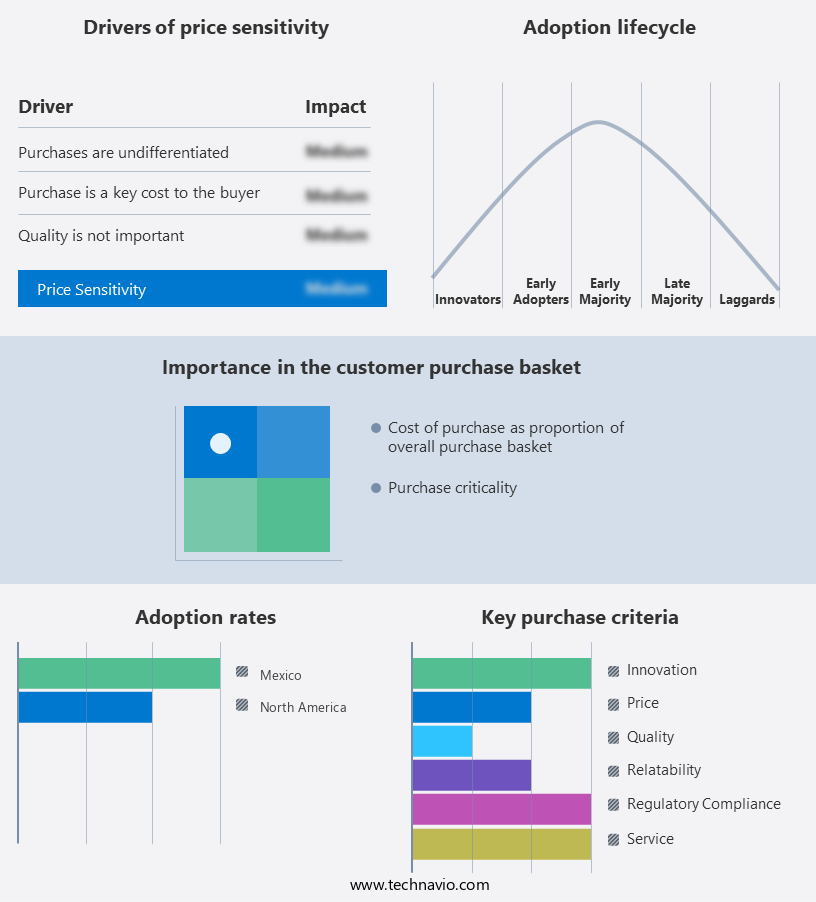
Customer Landscape
Key Companies & Market Insights
Companies are implementing various strategies, such as strategic alliances, market forecast partnerships, mergers and acquisitions, geographical expansion, and product/service launches, to enhance their presence in the market.
The market research and growth report includes detailed analyses of the competitive landscape of the market and information about key companies, including:
- Amazon.com Inc.
- CALIMAX
- Coppel SA de CV
- Costco Wholesale Corp.
- El Palacio de Hierro SA de CV
- El Puerto de Liverpool
- Grupo Carso SAB de CV
- Grupo Comercial Chedraui SAB de CV
- Grupo Famsa SAB de CV
- HEB SA de CV
- Heineken NV
- La Comer SAB de CV
- MercadoLibre S de RL de CV
- San Pablo Farmacia
- Organizacion Soriana
- Walmart Inc.
Qualitative and quantitative analysis of companies has been conducted to help clients understand the wider business environment as well as the strengths and weaknesses of key market players. Data is qualitatively analyzed to categorize companies as pure play, category-focused, industry-focused, and diversified; it is quantitatively analyzed to categorize companies as dominant, leading, strong, tentative, and weak.
Recent Development and News in Retail Market In Mexico
- In January 2024, Walmart Mexico, a subsidiary of Walmart Inc., announced the launch of its new e-commerce platform, Walmart.Com.Mx, marking a significant push into the Mexican online retail market (Walmart Press Release, 2024). This strategic move aimed to compete with local e-commerce giants like Amazon Mexico and MercadoLibre.
- In March 2024, Chedraui, a leading Mexican retailer, formed a partnership with Alibaba's Alibaba.Com to expand its export business. The collaboration enabled Chedraui to reach international markets and increase its product offerings through Alibaba's global platform (Alibaba Press Release, 2024).
- In May 2025, FEMSA, a leading retailer in Mexico, completed the acquisition of Comercial Mexicana, Mexico's fourth-largest retailer. This merger created a combined market share of approximately 15%, solidifying FEMSA's position as a major player in the Mexican retail sector (FEMSA Press Release, 2025).
- In the same month, the Mexican government announced the implementation of a new e-commerce law, requiring foreign retailers to have a local presence to sell goods online in Mexico. This policy change aimed to protect local businesses and promote the growth of the domestic e-commerce sector (Mexican Government Press Release, 2025).
Research Analyst Overview
In the dynamic retail landscape of Mexico, various sectors continually adapt to evolving market conditions. Security systems are increasingly integrated with customer experience initiatives, ensuring a safe and enjoyable shopping journey. Social media marketing strategies become more sophisticated, leveraging data analytics and predictive analytics to engage consumers effectively. Energy efficiency measures, such as smart lighting and HVAC systems, are adopted to reduce operational costs and promote sustainability. Fraud prevention technologies are employed to safeguard against financial losses, while supply chain sustainability practices gain traction, prioritizing ethical sourcing and fair trade. Pricing strategies are influenced by market research and demand planning, with online retail and loyalty programs shaping consumer behavior.
Loss prevention and point-of-sale systems are essential components of retail operations, providing real-time insights and enhancing the overall shopping experience. Store design and visual merchandising adapt to consumer preferences and trends, incorporating mobile retail and digital marketing to create immersive shopping environments. Retail technology, including machine learning and artificial intelligence, are employed to optimize inventory management, sales forecasting, and customer service. Sustainability initiatives, such as carbon footprint reduction and waste management, are integrated into retail operations, reflecting the industry's commitment to environmental stewardship. Mexican retail laws and regulations shape the industry, influencing import/export practices, product safety standards, and consumer protection policies.
Retailers embrace omnichannel retailing, seamlessly integrating brick-and-mortar and e-commerce platforms to cater to evolving consumer demands. Employee training programs are essential for adapting to the ever-changing retail landscape, ensuring a skilled and knowledgeable workforce. Retail financing, product lifecycle management, and retail branding strategies are crucial components of retail success, with distribution centers and department stores adopting advanced warehouse management systems to streamline operations and improve efficiency. Overall, the Mexican retail market is characterized by continuous adaptation and innovation, with retailers embracing technology, sustainability, and consumer-centric initiatives to thrive in a dynamic and competitive environment.
Dive into Technavio’s robust research methodology, blending expert interviews, extensive data synthesis, and validated models for unparalleled Retail Market in Mexico insights. See full methodology.
|
Market Scope |
|
|
Report Coverage |
Details |
|
Page number |
138 |
|
Base year |
2023 |
|
Historic period |
2018-2022 |
|
Forecast period |
2024-2028 |
|
Growth momentum & CAGR |
Accelerate at a CAGR of 4.5% |
|
Market growth 2024-2028 |
USD 78.49 billion |
|
Market structure |
Fragmented |
|
YoY growth 2023-2024(%) |
4.2 |
|
Competitive landscape |
Leading Companies, Market Positioning of Companies, Competitive Strategies, and Industry Risks |
What are the Key Data Covered in this Market Research Report?
- CAGR of the market during the forecast period
- Detailed information on factors that will drive the market growth and forecasting between 2024 and 2028
- Precise estimation of the size of the market and its contribution of the market in focus to the parent market
- Accurate predictions about upcoming market growth and trends and changes in consumer behaviour
- Growth of the market across Mexico
- Thorough analysis of the market’s competitive landscape and detailed information about companies
- Comprehensive analysis of factors that will challenge the growth of market companies
We can help! Our analysts can customize this market research report to meet your requirements Get in touch
 RIA -
RIA - 
