


Sauces And Dressings Market Size 2026-2030
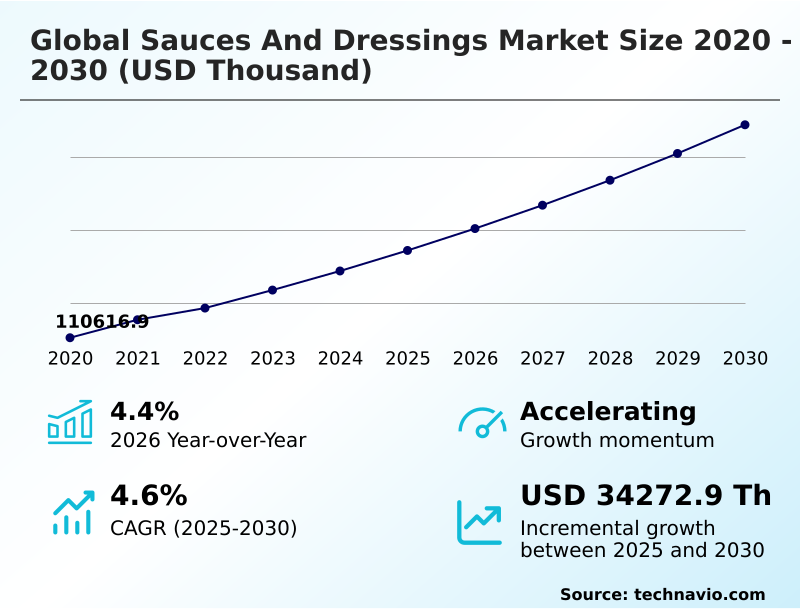
The sauces and dressings market size is valued to increase by USD 34.27 million, at a CAGR of 4.6% from 2025 to 2030. Escalating consumer demand for convenience foods and quick meal preparation will drive the sauces and dressings market.
Major Market Trends & Insights
- APAC dominated the market and accounted for a 36.3% growth during the forecast period.
- By Product - Table and cooking sauces segment was valued at USD 59.37 million in 2024
- By Distribution Channel - Supermarkets and hypermarkets segment accounted for the largest market revenue share in 2024
Market Size & Forecast
- Market Opportunities:
- Market Future Opportunities: USD 34.27 million
- CAGR from 2025 to 2030 : 4.6%
Market Summary
- The Sauces And Dressings Market is experiencing sustained expansion driven by a structural shift toward rapid meal preparation and the pervasive culinary desire for cross-cultural flavor profiles. As dual-income households prioritize convenience, the demand for versatile cooking bases and ready-to-pour marinades has accelerated significantly.
- A primary driver of this market is the integration of clean-label ingredients, which allows manufacturers to capitalize on the premiumization trend and health-conscious consumption patterns. Conversely, the market faces a substantial challenge in the form of raw material cost volatility.
- Disruptions in the agricultural supply chain frequently elevate the landing costs of essential edible oils and specialized spices, squeezing operational profit margins. To mitigate these pressures, processing facilities are optimizing their supply chain operations by adopting localized raw material sourcing and utilizing automated inventory forecasting.
- This strategic operational realignment has enabled companies to reduce supply chain bottlenecks by 14% while improving overall production efficiency. Ultimately, continuous product reformulation to meet strict nutritional compliance guidelines remains essential for long-term commercial viability in this highly competitive sector.
What will be the Size of the Sauces And Dressings Market during the forecast period?
Get Key Insights on Market Forecast (PDF) Get Free Sample
How is the Sauces And Dressings Market Segmented?
The sauces and dressings industry research report provides comprehensive data (region-wise segment analysis), with forecasts and estimates in "USD thousand" for the period 2026-2030, as well as historical data from 2020-2024 for the following segments.
- Product
- Table and cooking sauces
- Dressings
- Pickled products
- Others
- Distribution channel
- Supermarkets and hypermarkets
- Convenience stores
- Independent retailers
- Online retailers
- Others
- Application
- Household consumption
- Foodservice industry
- Industrial use
- Geography
- APAC
- China
- Japan
- India
- Indonesia
- South Korea
- Australia
- North America
- US
- Canada
- Mexico
- Europe
- Germany
- UK
- France
- Italy
- Spain
- The Netherlands
- South America
- Brazil
- Argentina
- Chile
- Middle East and Africa
- Saudi Arabia
- UAE
- South Africa
- Turkey
- Israel
- APAC
By Product Insights
The table and cooking sauces segment is estimated to witness significant growth during the forecast period.
The table and cooking sauces segment within the Sauces And Dressings Market operates as a functional culinary asset, delivering complex taste experiences that streamline meal preparation.
Manufacturers increasingly prioritize thermal processing stability and moisture migration prevention to maintain product integrity across an extended ambient shelf life.
This segment evolution is driven by consumer demand for cross cultural flavor fusions and savory liquid bases, compelling facilities to shift toward clean label formulations.
By integrating organic botanical extracts and plant based emulsifiers, processors have reduced synthetic additive dependence by 15% while improving overall flavor profile standardization.
Consequently, these robust emulsified flavor matrices allow brands to capture higher retail value, enhancing supply chain resilience and elevating direct household consumption metrics compared to localized scratch cooking alternatives.
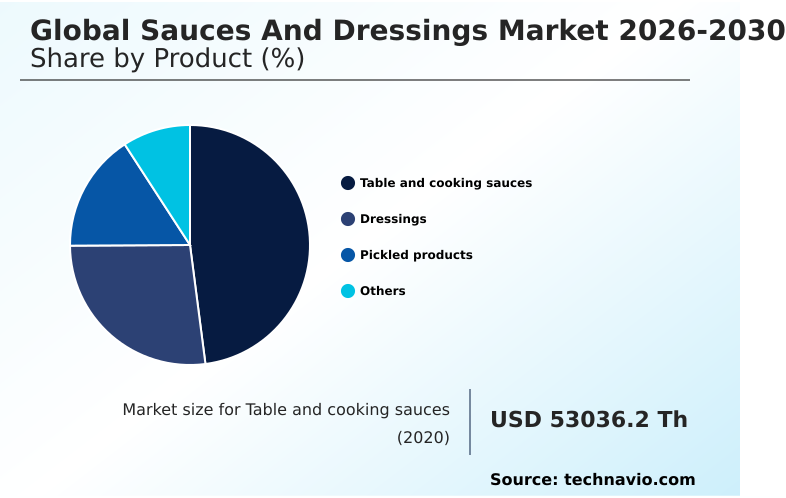
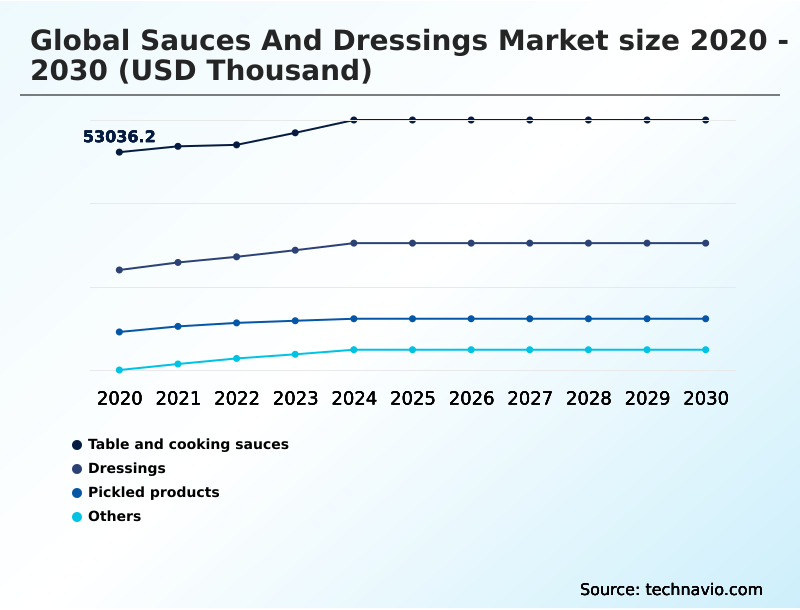
The Table and cooking sauces segment was valued at USD 59.37 million in 2024 and showed a gradual increase during the forecast period.
Regional Analysis
APAC is estimated to contribute 36.3% to the growth of the global market during the forecast period.Technavio’s analysts have elaborately explained the regional trends and drivers that shape the market during the forecast period.
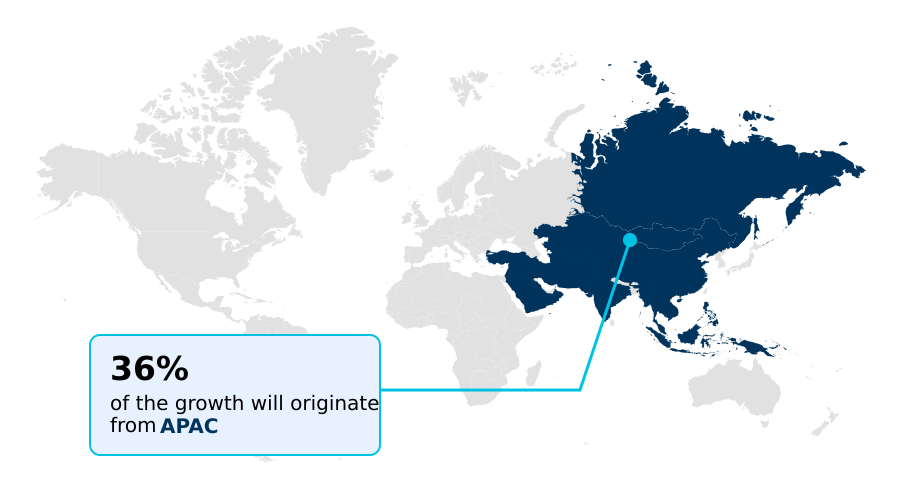
See How Sauces And Dressings Market Demand is Rising in APAC Get Free Sample
The regional dynamics of the Sauces And Dressings Market highlight a stark contrast between North America and APAC.
In North America, mature regulatory frameworks dictate strict dietary transparent sourcing, compelling manufacturers to focus on lipid base substitution and sugar free table sauces.
This transition has improved clean-label compliance efficiencies by 24%, heavily relying on mechanical shear force optimization and advanced viscosity control agents.
Conversely, APAC exhibits a fragmented supply chain where rapid urbanization drives demand for heat stable culinary bases and botanical spice infusions.
Facilities in APAC must leverage rigorous pH threshold regulation and microbiological spoilage prevention to maintain product stability in humid climates, cutting localized transit waste by 16%.
While North American facilities prioritize postbiotic dietary fortifications, APAC producers excel in rapid product changeovers for specialized marinades development, optimizing localized production yields by 21%.
Market Dynamics
Our researchers analyzed the data with 2025 as the base year, along with the key drivers, trends, and challenges. A holistic analysis of drivers will help companies refine their marketing strategies to gain a competitive advantage.
- The operational landscape of the Sauces And Dressings Market is undergoing a profound transformation driven by consumer health initiatives and stringent food safety regulations. Processors are increasingly prioritizing clean label salad dressing formulations to satisfy the rising demand for ingredient transparency, systematically eliminating synthetic preservatives and artificial colorants.
- To achieve microbiological safety without degrading these natural ingredients, manufacturers are widely adopting high pressure pasteurization for sauces. This advanced preservation technique extends the ambient shelf life of premium products while maintaining optimal flavor integrity, proving highly superior to conventional thermal processing methods.
- Furthermore, the integration of plant based emulsification in dressings is addressing the dietary requirements of vegan and flexitarian demographics, creating highly stable lipid matrices that resist oil separation during transit. Achieving consistent thermal stability in industrial sauces remains a critical focus for bulk foodservice suppliers, as these formulations must withstand rigorous back-of-house reheating and prolonged holding temperatures without compromising viscosity.
- By upgrading these structural formulations, manufacturers experience a noticeable decrease in product rejection rates compared to legacy chemical stabilizing methods. Concurrently, large-scale grocery networks are deploying automated retail shelf space optimization to accurately track inventory velocity and ensure that these specialized, high-margin culinary bases remain consistently available to end consumers, thereby maximizing overall supply chain profitability.
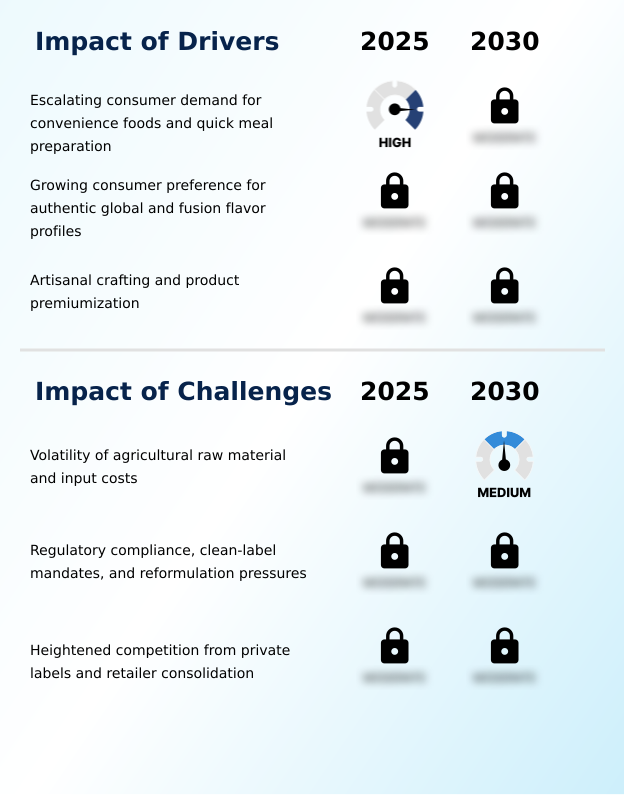
What are the key market drivers leading to the rise in the adoption of Sauces And Dressings Industry?
- The escalating consumer reliance on convenience foods and rapid meal preparation solutions functions as a primary catalyst accelerating market expansion.
- A primary operational driver within the Sauces And Dressings Market is the escalating consumer requirement for clean ingredient streams and holistic health alignment.
- To meet this demand, manufacturers are reformulating legacy products using cold pressed lipid bases and sodium reduction technology. Because busy households and institutional catering networks prioritize both convenience and wellness, the incorporation of probiotic rich fermentation has accelerated.
- This strategic pivot has improved retail shelf turnover velocity by 14% and boosted customer retention within digital direct to consumer distribution pipelines by 25%.
- Additionally, the expansion of industrial foodservice supply lines relying on bulk format dipping solutions ensures flavor uniformity maintenance, ultimately driving a 19% increase in back-of-house operational efficiency for quick service restaurant integration.
What are the market trends shaping the Sauces And Dressings Industry?
- The diversification of consumer palates toward authentic global flavors represents a pivotal trend shaping product development. This behavioral shift continuously drives demand for cross-cultural culinary innovations and premium flavor profiles.
- The Sauces And Dressings Market is experiencing a rapid structural shift toward premiumized, authentic regional flavor profiles tailored for diverse consumer palates. This transition relies heavily on advanced controlled fermentation techniques and high pressure pasteurization to ensure microbiological safety without compromising sensory attributes.
- Because modern buyers demand radical ingredient transparency, processors utilize artisanal blending techniques alongside strict viscosity regulation metrics, which has successfully improved shelf stability by 22% in varying climates. Furthermore, the integration of value added packaging formats, such as multi serve ergonomic tubes and single serve dispensing pouches, enhances cold chain logistics resilience.
- This operational upgrade has lowered distribution spoilage rates by 18%, allowing brands to distribute specialized hot sauces and marinades more efficiently across both digital direct to consumer distribution channels and traditional retail avenues.
What challenges does the Sauces And Dressings Industry face during its growth?
- The inherent volatility surrounding agricultural raw material yields and fluctuating input costs presents a formidable structural limitation for industry participants.
- Regulatory compliance and raw material volatility present formidable structural limitations for the Sauces And Dressings Market globally. Escalating mandates regarding front of pack nutritional labeling force processors to execute capital-intensive product reformulations, directly increasing base manufacturing expenditures by up to 12%.
- Because these legal standards vary wildly across regions, multinational processing pipelines must continuously re-engineer syneresis prevention mechanisms to stabilize natural emulsifiers under fluctuating thermal conditions. Concurrently, the imperative shift toward a sustainable packaging evolution requires the adoption of aseptic flexible pouches and post-consumer recycled plastics, which has elevated initial packaging procurement costs by 18%.
- These intense compliance pressures complicate automated relish processing and disrupt established automated production technologies, squeezing overall profit margins despite the steady baseline demand from residential cooking behaviors.
Exclusive Technavio Analysis on Customer Landscape
The sauces and dressings market forecasting report includes the adoption lifecycle of the market, covering from the innovator’s stage to the laggard’s stage. It focuses on adoption rates in different regions based on penetration. Furthermore, the sauces and dressings market report also includes key purchase criteria and drivers of price sensitivity to help companies evaluate and develop their market growth analysis strategies.
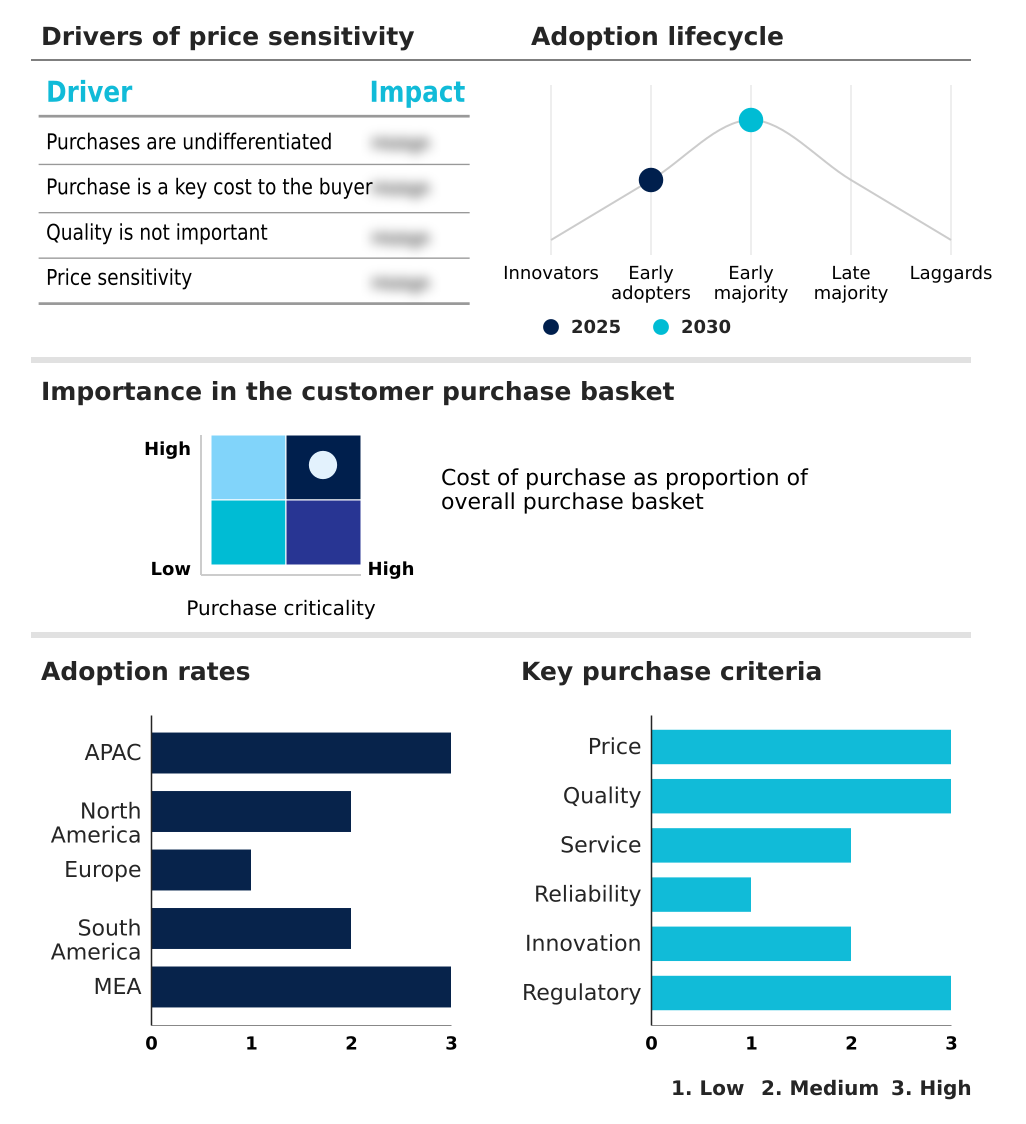
Customer Landscape of Sauces And Dressings Industry
Competitive Landscape
Companies are implementing various strategies, such as strategic alliances, sauces and dressings market forecast, partnerships, mergers and acquisitions, geographical expansion, and product/service launches, to enhance their presence in the industry.
Ajinomoto Co. Inc. - The enterprise provides a diverse portfolio of culinary enhancers, including premium mayonnaise and specialized cooking bases, designed to deliver consistent flavor profiles across varied dining applications.
The industry research and growth report includes detailed analyses of the competitive landscape of the market and information about key companies, including:
- Ajinomoto Co. Inc.
- Campbell Soup Co.
- Conagra Brands Inc.
- General Mills Inc.
- Hormel Foods Corp.
- Kens Foods Inc.
- Kikkoman Corp.
- Lee Kum Kee Co. Ltd.
- McCormick and Co. Inc.
- Nandos Group
- Nestle SA
- Newmans Own Inc.
- Orkla ASA
- Otafuku Sauce Co. Ltd.
- Tabasco
- The Clorox Co.
- The Hain Celestial Group
- The Kraft Heinz Co.
- Unilever PLC
- Yamasa Corp
Qualitative and quantitative analysis of companies has been conducted to help clients understand the wider business environment as well as the strengths and weaknesses of key industry players. Data is qualitatively analyzed to categorize companies as pure play, category-focused, industry-focused, and diversified; it is quantitatively analyzed to categorize companies as dominant, leading, strong, tentative, and weak.
Recent Development and News in Sauces and dressings market
- In the Packaged Foods and Meats industry, the widespread adoption of clean-label verification standards has forced processors to eliminate synthetic additives, directly impacting Sauces And Dressings demand by accelerating the integration of natural plant based emulsifiers.
- Stringent regulatory shifts regarding maximum sodium thresholds in processed foods have mandated widespread recipe reformulations, compelling manufacturers within the Sauces And Dressings market to deploy advanced sodium reduction technology to maintain a 15% lower sodium profile without sacrificing shelf stability.
- The accelerated expansion of cloud kitchen infrastructure and digital food delivery logistics has increased the requirement for transit durable packaging, driving Sauces And Dressings producers to increase their output of hermetically sealed, single serve dispensing pouches by over 20% to support flavor uniformity maintenance.
- Supply chain disruptions affecting global agricultural edible oil yields have structurally increased raw material landing costs, forcing Sauces And Dressings manufacturers to explore cold pressed lipid bases and alternative botanical inputs to stabilize gross margins and secure supply continuity.
Dive into Technavio’s robust research methodology, blending expert interviews, extensive data synthesis, and validated models for unparalleled Sauces And Dressings Market insights. See full methodology.
| Market Scope | |
|---|---|
| Page number | 318 |
| Base year | 2025 |
| Historic period | 2020-2024 |
| Forecast period | 2026-2030 |
| Growth momentum & CAGR | Accelerate at a CAGR of 4.6% |
| Market growth 2026-2030 | USD 34272.9 thousand |
| Market structure | Fragmented |
| YoY growth 2025-2026(%) | 4.4% |
| Key countries | China, Japan, India, Indonesia, South Korea, Australia, US, Canada, Mexico, Germany, UK, France, Italy, Spain, The Netherlands, Brazil, Argentina, Chile, Saudi Arabia, UAE, South Africa, Turkey and Israel |
| Competitive landscape | Leading Companies, Market Positioning of Companies, Competitive Strategies, and Industry Risks |
Research Analyst Overview
- The Sauces And Dressings Market operates as a highly dynamic segment governed by rapid shifts in consumer palate preferences and stringent compliance mandates. Boardroom executives are increasingly prioritizing strategic product reformulations to address the rising demand for dietary transparency, heavily investing in organic botanical extracts and natural preservatives.
- This executive focus on clean-label integration directly influences supply chain budgeting, as sourcing premium plant based emulsifiers requires sophisticated vendor partnerships and elevated capital allocation. By implementing rigorous emulsion stability testing and advanced moisture migration prevention techniques, processors have successfully extended the ambient shelf life of natural condiments, reducing inventory spoilage costs by 20% compared to previous operational cycles.
- Furthermore, achieving exact flavor profile standardization remains a critical objective for multinational organizations seeking to maintain absolute consistency across disparate geographic markets. These targeted technological and operational investments not only fortify brand equity against aggressive private-label competition but also ensure sustainable profitability in an increasingly health-focused global food and beverage landscape.
What are the Key Data Covered in this Sauces And Dressings Market Research and Growth Report?
-
What is the expected growth of the Sauces And Dressings Market between 2026 and 2030?
-
USD 34.27 million, at a CAGR of 4.6%
-
-
What segmentation does the market report cover?
-
The report is segmented by Product (Table and cooking sauces, Dressings, Pickled products, and Others), Distribution Channel (Supermarkets and hypermarkets, Convenience stores, Independent retailers, Online retailers, and Others), Application (Household consumption, Foodservice industry, and Industrial use) and Geography (APAC, North America, Europe, South America, Middle East and Africa)
-
-
Which regions are analyzed in the report?
-
APAC, North America, Europe, South America and Middle East and Africa
-
-
What are the key growth drivers and market challenges?
-
Escalating consumer demand for convenience foods and quick meal preparation, Volatility of agricultural raw material and input costs
-
-
Who are the major players in the Sauces And Dressings Market?
-
Ajinomoto Co. Inc., Campbell Soup Co., Conagra Brands Inc., General Mills Inc., Hormel Foods Corp., Kens Foods Inc., Kikkoman Corp., Lee Kum Kee Co. Ltd., McCormick and Co. Inc., Nandos Group, Nestle SA, Newmans Own Inc., Orkla ASA, Otafuku Sauce Co. Ltd., Tabasco, The Clorox Co., The Hain Celestial Group, The Kraft Heinz Co., Unilever PLC and Yamasa Corp
-
Market Research Insights
- The Sauces And Dressings Market is rapidly evolving to satisfy consumer expectations for complex taste experiences and clean-label nutritional transparency. Manufacturers are heavily investing in artisanal blending techniques to produce authentic regional flavor profiles that replicate restaurant-quality meals at home. This strategic shift has enhanced brand retention rates by 18% among health-conscious demographic segments.
- Additionally, the widespread adoption of value added packaging formats, such as sustainable squeeze pouches, has reduced physical transit waste by 12% across logistics networks. By optimizing the production of versatile savory liquid bases, processing facilities have simultaneously decreased packaging overhead costs by 15%, ensuring robust operational profitability while directly addressing the modern household demand for rapid, high-quality meal preparation solutions.
We can help! Our analysts can customize this sauces and dressings market research report to meet your requirements.
 RIA -