


Self-service Kiosk Market Size 2026-2030
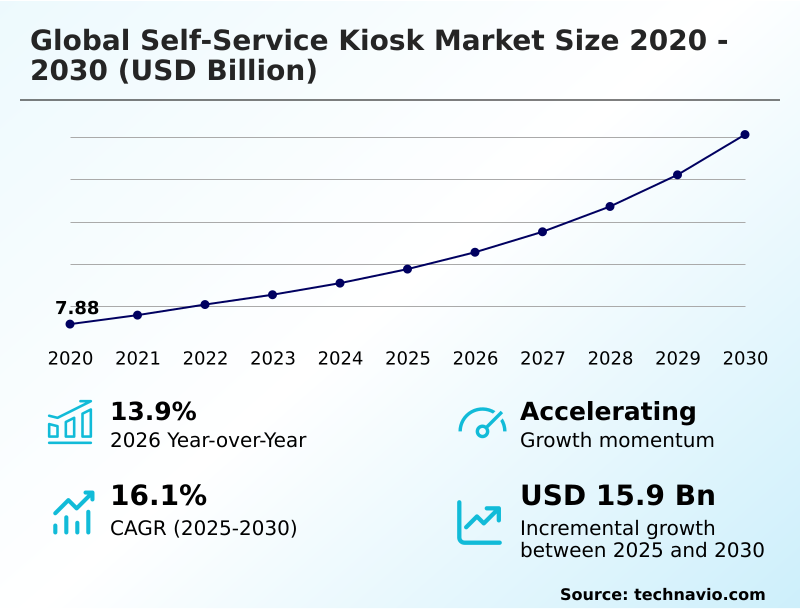
The self-service kiosk market size is valued to increase by USD 15.90 billion, at a CAGR of 16.1% from 2025 to 2030. Imperative for operational efficiency and cost reduction will drive the self-service kiosk market.
Major Market Trends & Insights
- North America dominated the market and accounted for a 41.9% growth during the forecast period.
- By End-user - Retail segment was valued at USD 4.50 billion in 2024
- By Component - Hardware segment accounted for the largest market revenue share in 2024
Market Size & Forecast
- Market Opportunities: USD 22.41 billion
- Market Future Opportunities: USD 15.90 billion
- CAGR from 2025 to 2030 : 16.1%
Market Summary
- The Self-Service Kiosk Market is undergoing significant expansion, driven by the dual imperatives of enhancing operational efficiency and meeting consumer demand for autonomous, convenient interactions. Businesses are deploying these solutions to automate routine tasks, which reduces direct labor costs and allows for the strategic reallocation of staff to more value-added roles.
- This shift is enabled by advancements in hardware, such as tamper-resistant enclosures and biometric sensors, and software, including robust application programming interfaces (APIs) and cloud-based management platforms. A key trend is the integration of artificial intelligence (AI) and machine learning (ML) to deliver a personalized user experience through automated upselling prompts and voice-activated commands.
- For instance, in a quick-service restaurant environment, AI-powered self-ordering kiosks can analyze purchasing data to offer tailored recommendations, increasing average transaction value. However, the market faces challenges related to the high total cost of ownership and the complexities of integrating kiosks with legacy backend systems, which requires secure, real-time data synchronization to maintain a seamless customer journey.
What will be the Size of the Self-service Kiosk Market during the forecast period?
Get Key Insights on Market Forecast (PDF) Get Free Sample
How is the Self-service Kiosk Market Segmented?
The self-service kiosk industry research report provides comprehensive data (region-wise segment analysis), with forecasts and estimates in "USD million" for the period 2026-2030, as well as historical data from 2020-2024 for the following segments.
- End-user
- Retail
- Financial services
- Travel and tourism
- Healthcare
- Others
- Component
- Hardware
- Software
- Services
- Display type
- LCD displays
- Touchscreens
- Projector-based displays
- Geography
- North America
- US
- Canada
- Mexico
- APAC
- China
- Japan
- India
- Europe
- UK
- Germany
- France
- South America
- Brazil
- Argentina
- Middle East and Africa
- Saudi Arabia
- UAE
- South Africa
- Rest of World (ROW)
- North America
By End-user Insights
The retail segment is estimated to witness significant growth during the forecast period.
The retail segment is a primary driver in the self-service kiosk market, fundamentally altering in-store customer experiences and operational management. Deployment is a strategic response to shifting consumer expectations toward autonomy and convenience.
Retailers are implementing advanced self-checkout systems and self-ordering kiosks to streamline the purchasing journey. These systems, featuring commercial-grade touchscreens and intuitive user interface (UI) design, empower customers and reduce wait times.
An omnichannel strategy is crucial, where a frictionless customer journey is supported by technologies like QR code integration.
Kiosks serve as digital touchpoints for endless aisle retail, loyalty program management, and processing returns, with some deployments recovering over 1% of turnover through AI-driven error detection.
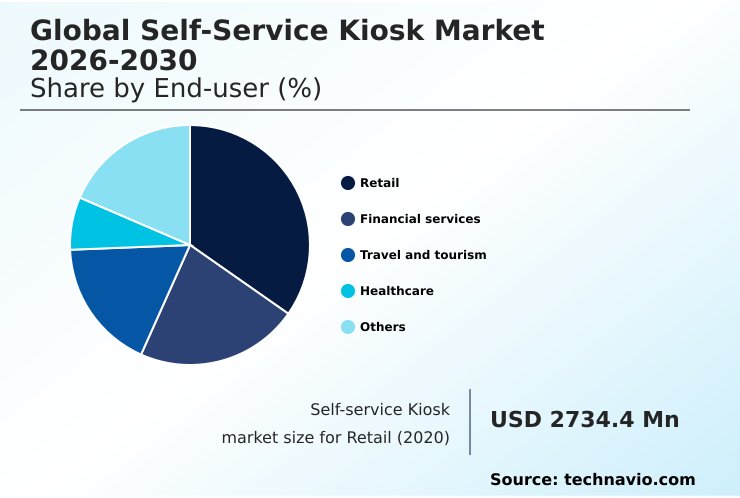
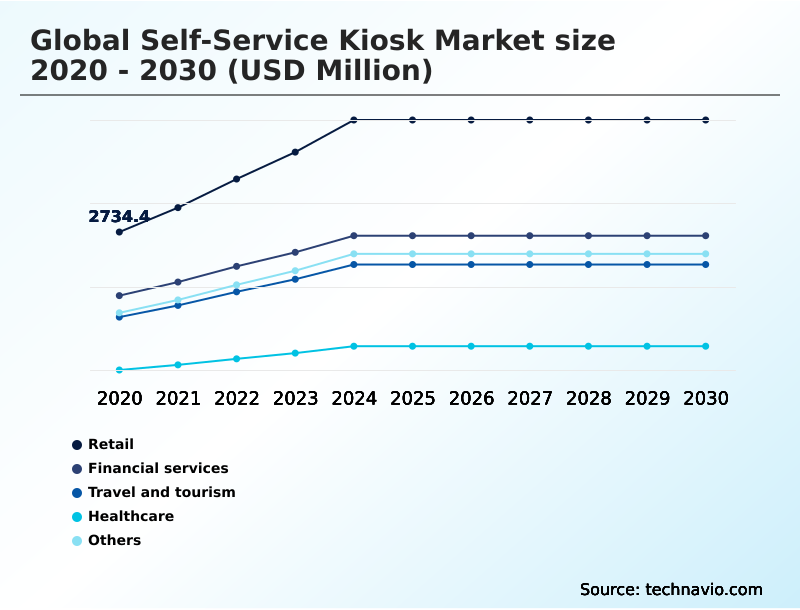
The Retail segment was valued at USD 4.50 billion in 2024 and showed a gradual increase during the forecast period.
Regional Analysis
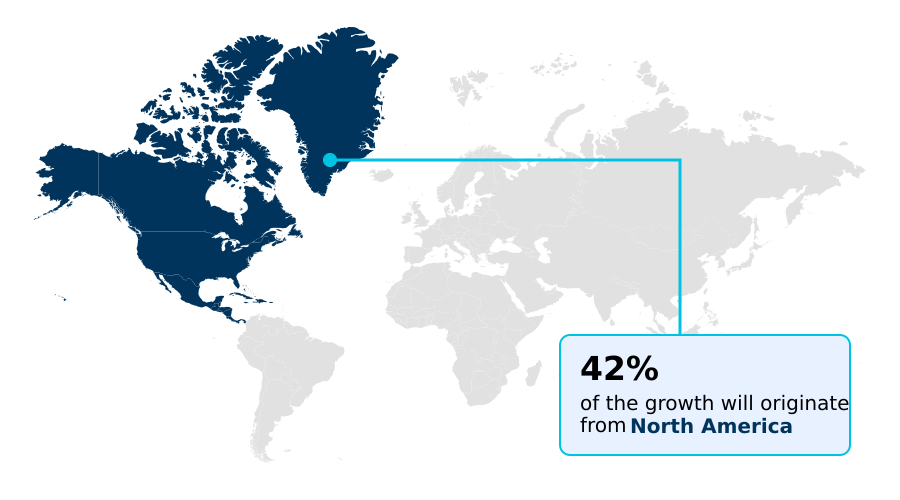
North America is estimated to contribute 41.9% to the growth of the global market during the forecast period.Technavio’s analysts have elaborately explained the regional trends and drivers that shape the market during the forecast period.
See How Self-service Kiosk Market Demand is Rising in North America Get Free Sample
The geographic landscape of the self-service kiosk market is diverse, with North America leading in maturity and innovation, accounting for over 41% of the market's incremental growth.
This region sees high adoption of advanced patient check-in kiosks and sophisticated self-checkout systems.
The APAC region is the fastest-growing market, with its adoption rate outpacing Europe by more than 1.5 percentage points, driven by rapid digitalization in countries like China and India.
Europe's market is characterized by a strong focus on regulatory compliance and security, with widespread use of kiosks in public transportation.
Key technologies driving growth across all regions include near-field communication (NFC) for payments and predictive maintenance analytics for hardware, both of which are critical for effective kiosk fleet management and ensuring a positive return on investment.
Market Dynamics
Our researchers analyzed the data with 2025 as the base year, along with the key drivers, trends, and challenges. A holistic analysis of drivers will help companies refine their marketing strategies to gain a competitive advantage.
- Achieving success in the self-service kiosk market requires a deep understanding of specific use cases and the challenges in self service kiosk deployment. For instance, kiosk integration with backend systems, such as connecting a patient registration kiosk and EHR integration, is a primary hurdle that demands robust and secure middleware.
- The goal of reducing wait times with self-service is a universal driver, compelling businesses to carefully consider kiosk design for outdoor environments and ensure kiosk accessibility for users with disabilities. A critical factor is the total cost of ownership for kiosks, which extends beyond hardware to include software maintenance and security.
- When evaluating options, comparing PCAP vs IR touch technology is essential for balancing user experience with durability. For financial institutions, biometric authentication in financial kiosks is becoming standard for secure transactions. Similarly, retailers implement self-checkout systems to reduce labor costs and focus on improving order accuracy with kiosks.
- The strategic application of AI in self service for personalization is also gaining traction, enabling dynamic user experiences. A comprehensive self-service kiosk ROI calculation must factor in hardware longevity, where solutions with predictive maintenance for kiosk hardware show uptime improvements of over 15% compared to reactive models.
- Ultimately, a focus on enhancing customer experience with automation, supported by features like contactless payment integration in kiosks and kiosk software for remote fleet management, defines a successful omnichannel retail and kiosk convergence strategy. The adoption of voice activated kiosks for hygienic interaction further addresses modern consumer concerns, reinforcing the technology's value proposition across various sectors.
What are the key market drivers leading to the rise in the adoption of Self-service Kiosk Industry?
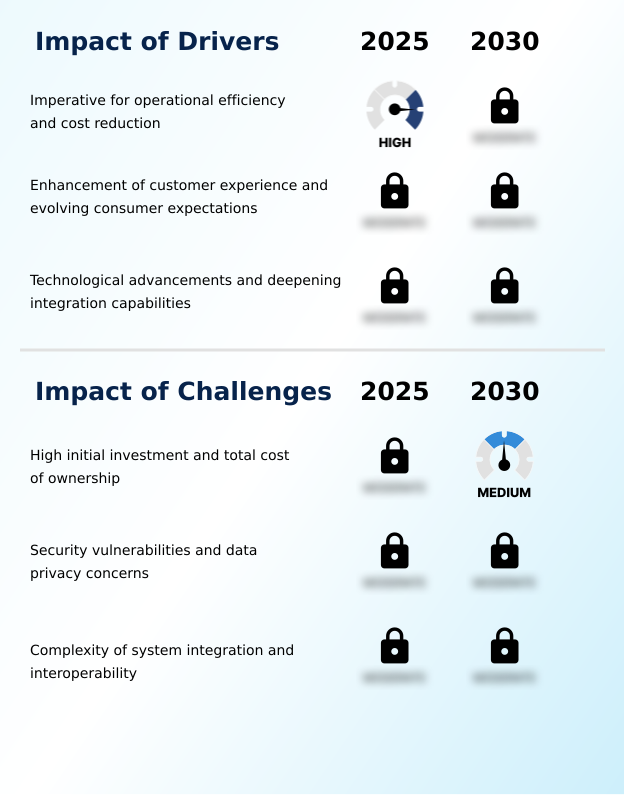
- The imperative for businesses to improve operational efficiency and reduce costs is a fundamental driver of market growth.
- The relentless pursuit of operational efficiency is a primary driver for the adoption of self-service kiosks.
- By automating routine tasks such as order taking and payment processing through self-ordering kiosks and interactive teller machines (ITMs), businesses can reduce direct labor costs by 20-30%.
- These systems, which utilize hardware like biometric sensors, are engineered for high accuracy, minimizing human error and enhancing the reliability of the customer self-service experience.
- The ability of kiosks to accelerate transactions—often being 50% faster than agent-assisted interactions—leads to higher customer throughput and shorter queues.
- This focus on customer throughput optimization directly supports branch transformation strategies and improves overall business performance, making the technology an essential component of modern service delivery.
What are the market trends shaping the Self-service Kiosk Industry?
- The proliferation of artificial intelligence and machine learning is a transformative trend, enabling enhanced personalization and predictive operations within self-service kiosk ecosystems.
- The integration of AI and machine learning is redefining self-service capabilities, elevating kiosks from static terminals to dynamic, responsive endpoints. This infusion of intelligence enables a highly personalized user experience, with systems leveraging real-time data to offer tailored recommendations.
- AI-powered voice-activated commands and gesture control technology are creating more intuitive and hygienic touchless user interfaces, with some systems showing a 40% higher adoption rate among users with mobility impairments. On the operational side, predictive maintenance analytics powered by ML can anticipate hardware component failures, reducing downtime by up to 25%.
- This shift to a predictive model, managed through a cloud-based management platform, significantly increases uptime and lowers the total cost of ownership for a kiosk fleet.
What challenges does the Self-service Kiosk Industry face during its growth?
- The high initial investment and total cost of ownership present a significant challenge to broader market adoption.
- A formidable challenge in the self-service kiosk market is the high total cost of ownership, which can be three to five times the initial hardware price over a five-year lifecycle. Beyond the upfront investment in tamper-resistant enclosures and peripherals, recurring expenses for software licensing, maintenance, and security updates are substantial.
- The complexity of integrating kiosks with existing backend systems via application programming interfaces (APIs) often requires custom development, adding to costs. Moreover, security remains a paramount concern.
- A single data breach resulting from hardware-based skimming or a software vulnerability can lead to customer churn rates exceeding 15%, causing irreparable brand damage and highlighting the critical need for robust data encryption at rest and diligent privacy-preserving principles.
Exclusive Technavio Analysis on Customer Landscape
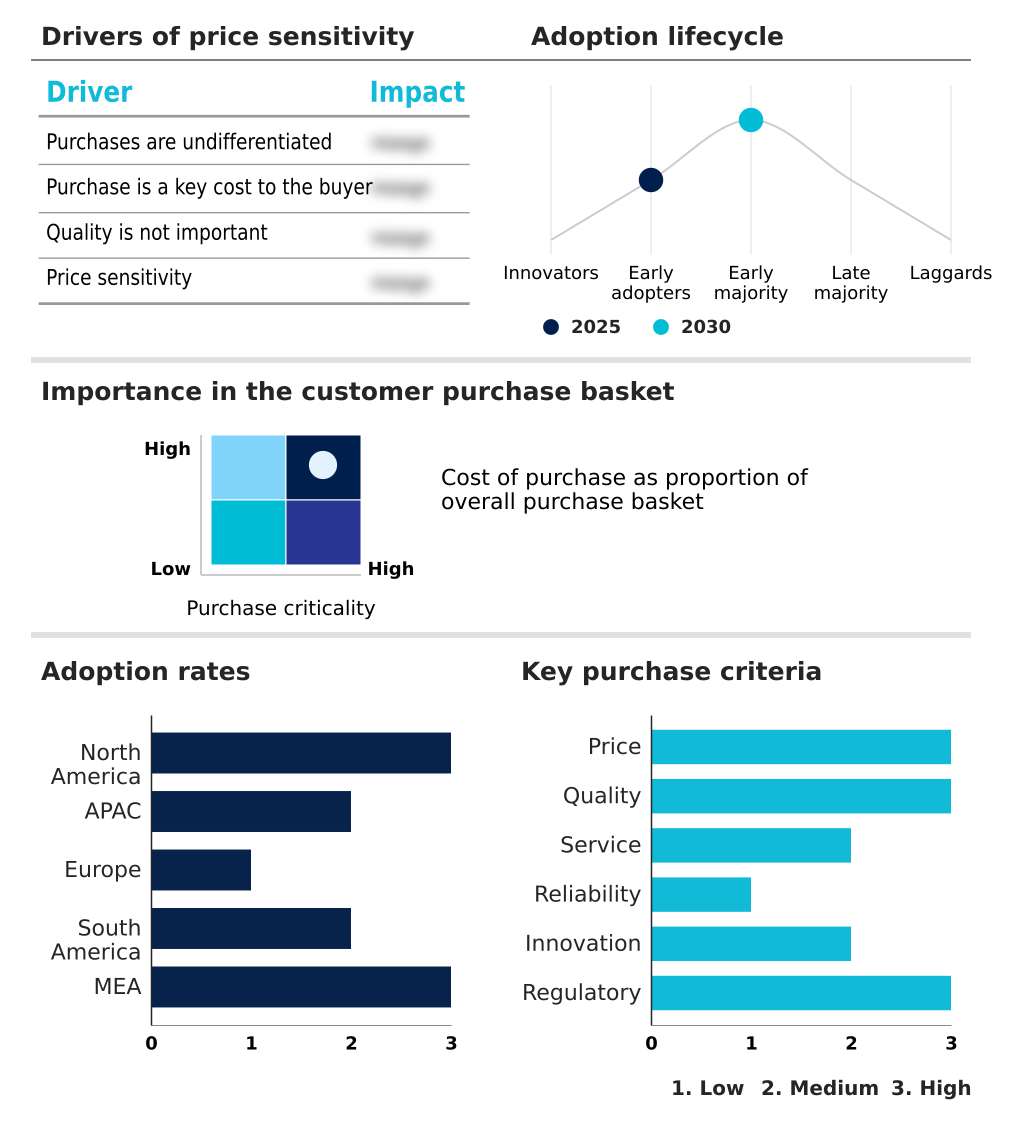
The self-service kiosk market forecasting report includes the adoption lifecycle of the market, covering from the innovator’s stage to the laggard’s stage. It focuses on adoption rates in different regions based on penetration. Furthermore, the self-service kiosk market report also includes key purchase criteria and drivers of price sensitivity to help companies evaluate and develop their market growth analysis strategies.
Customer Landscape of Self-service Kiosk Industry
Competitive Landscape
Companies are implementing various strategies, such as strategic alliances, self-service kiosk market forecast, partnerships, mergers and acquisitions, geographical expansion, and product/service launches, to enhance their presence in the industry.
Advanced Kiosk - Vendors offer integrated hardware and software solutions that enable secure, unattended transactions and services, transforming customer interaction points across various industries.
The industry research and growth report includes detailed analyses of the competitive landscape of the market and information about key companies, including:
- Advanced Kiosk
- Advantech Co. Ltd.
- Aksor SAS
- Diebold Nixdorf Incorp.
- DynaTouch Corporation
- Elo Touch Solutions Inc.
- Frank Mayer and Associates Inc.
- Glory Ltd.
- IER SAS
- KIOSK Information Systems
- Meridian Kiosks
- NCR Voyix Corp.
- Olea Kiosks Inc.
- Posiflex Technology Inc.
- Pyramid Computer
- RedyRef
- Slabb Kiosks
- Source Technologies
- VeriFone Inc.
- XIPHIAS Group
Qualitative and quantitative analysis of companies has been conducted to help clients understand the wider business environment as well as the strengths and weaknesses of key industry players. Data is qualitatively analyzed to categorize companies as pure play, category-focused, industry-focused, and diversified; it is quantitatively analyzed to categorize companies as dominant, leading, strong, tentative, and weak.
Recent Development and News in Self-service kiosk market
- In January, 2025, NCR Voyix Corp. announced its advanced, AI-powered bulk scanning self-checkout solution, designed to accelerate transactions in the convenience store segment by identifying multiple products simultaneously.
- In August, 2025, LG Electronics USA unveiled its next-generation self-ordering kiosks, developed with accessibility consultants to better serve users with vision, mobility, and hearing disabilities.
- In September, 2025, TravelCenters of America expanded its self-service kiosk program within its Popeyes restaurant locations, aiming to improve operational efficiency and enhance customer experience for travelers.
- In October, 2025, FamilyMart launched a fully unmanned, checkout-free convenience store in Tokyo, utilizing a sophisticated system of cameras and AI-powered sensors to enable a frictionless shopping experience.
Dive into Technavio’s robust research methodology, blending expert interviews, extensive data synthesis, and validated models for unparalleled Self-service Kiosk Market insights. See full methodology.
| Market Scope | |
|---|---|
| Page number | 302 |
| Base year | 2025 |
| Historic period | 2020-2024 |
| Forecast period | 2026-2030 |
| Growth momentum & CAGR | Accelerate at a CAGR of 16.1% |
| Market growth 2026-2030 | USD 15904.5 million |
| Market structure | Fragmented |
| YoY growth 2025-2026(%) | 13.9% |
| Key countries | US, Canada, Mexico, China, Japan, India, South Korea, Australia, Indonesia, UK, Germany, France, Italy, Spain, The Netherlands, Brazil, Argentina, Chile, Saudi Arabia, UAE, South Africa, Turkey and Nigeria |
| Competitive landscape | Leading Companies, Market Positioning of Companies, Competitive Strategies, and Industry Risks |
Research Analyst Overview
- The self-service kiosk market's evolution is defined by a shift from simple transactional devices to intelligent, integrated service endpoints. The convergence of advanced hardware, including commercial-grade touchscreens, central processing unit (CPU), and encrypted pin pads, with sophisticated kiosk operating system software is critical. The user interface (UI) design is a key differentiator, influencing adoption and satisfaction.
- For boardroom-level strategy, the integration of artificial intelligence (AI) directly impacts budgeting for R&D and data security, especially with the use of facial recognition cameras and the need for operating system hardening. The deployment of these systems facilitates a comprehensive omnichannel strategy, where real-time data synchronization between the kiosk and backend platforms is non-negotiable.
- Peripherals such as thermal receipt printers are essential for transaction completion. Advanced features like gesture control technology and automated upselling prompts, which contribute to an average transaction value increase of up to 10%, provide a clear return on investment.
- The complexity of ensuring privacy-preserving principles and executing data encryption at rest makes the choice of a remote management suite and robust application programming interfaces (APIs) a crucial decision.
What are the Key Data Covered in this Self-service Kiosk Market Research and Growth Report?
-
What is the expected growth of the Self-service Kiosk Market between 2026 and 2030?
-
USD 15.90 billion, at a CAGR of 16.1%
-
-
What segmentation does the market report cover?
-
The report is segmented by End-user (Retail, Financial services, Travel and tourism, Healthcare, and Others), Component (Hardware, Software, and Services), Display Type (LCD displays, Touchscreens, and Projector-based displays) and Geography (North America, APAC, Europe, South America, Middle East and Africa)
-
-
Which regions are analyzed in the report?
-
North America, APAC, Europe, South America and Middle East and Africa
-
-
What are the key growth drivers and market challenges?
-
Imperative for operational efficiency and cost reduction, High initial investment and total cost of ownership
-
-
Who are the major players in the Self-service Kiosk Market?
-
Advanced Kiosk, Advantech Co. Ltd., Aksor SAS, Diebold Nixdorf Incorp., DynaTouch Corporation, Elo Touch Solutions Inc., Frank Mayer and Associates Inc., Glory Ltd., IER SAS, KIOSK Information Systems, Meridian Kiosks, NCR Voyix Corp., Olea Kiosks Inc., Posiflex Technology Inc., Pyramid Computer, RedyRef, Slabb Kiosks, Source Technologies, VeriFone Inc. and XIPHIAS Group
-
Market Research Insights
- Market dynamics are shaped by evolving consumer preferences for autonomous, convenient service, with adoption rates for contactless interactions increasing by over 30% in high-traffic retail environments. Businesses are leveraging self-service kiosks as part of broader branch transformation strategies, particularly in the financial sector, where interactive teller machines (ITMs) handle routine transactions, improving efficiency.
- This focus on customer self-service and unattended retail solutions creates a more frictionless customer journey. The integration of kiosks into a unified commerce platform is critical, enabling a seamless digital-to-physical handoff.
- Deployments with advanced analytics capabilities have demonstrated the ability to optimize customer throughput, reducing average transaction times by up to 40% compared to traditional service counters, directly impacting operational profitability.
We can help! Our analysts can customize this self-service kiosk market research report to meet your requirements.
 RIA -
RIA - 
