
Software Bill Of Materials (SBOM) Management Market Analysis, Size, and Forecast 2026-2030: North America (US, Canada, and Mexico), Europe (Germany, UK, and France), APAC (China, India, and Japan), Middle East and Africa (Saudi Arabia, UAE, and South Africa), South America (Brazil, Argentina, and Colombia), and Rest of World (ROW)

Software Bill Of Materials (SBOM) Management Market Analysis, Size, and Forecast 2026-2030:
North America (US, Canada, and Mexico), Europe (Germany, UK, and France), APAC (China, India, and Japan), Middle East and Africa (Saudi Arabia, UAE, and South Africa), South America (Brazil, Argentina, and Colombia), and Rest of World (ROW)

Published: Mar 2026 302 Pages SKU: IRTNTR81285

Market Overview at a Glance

$2.41 B
Market Opportunity
22.1%
CAGR 2025 - 2030
33.4%
North America Growth
$745.2 Mn
Cloud-based segment 2024

Software Bill Of Materials (SBOM) Management Market Size 2026-2030

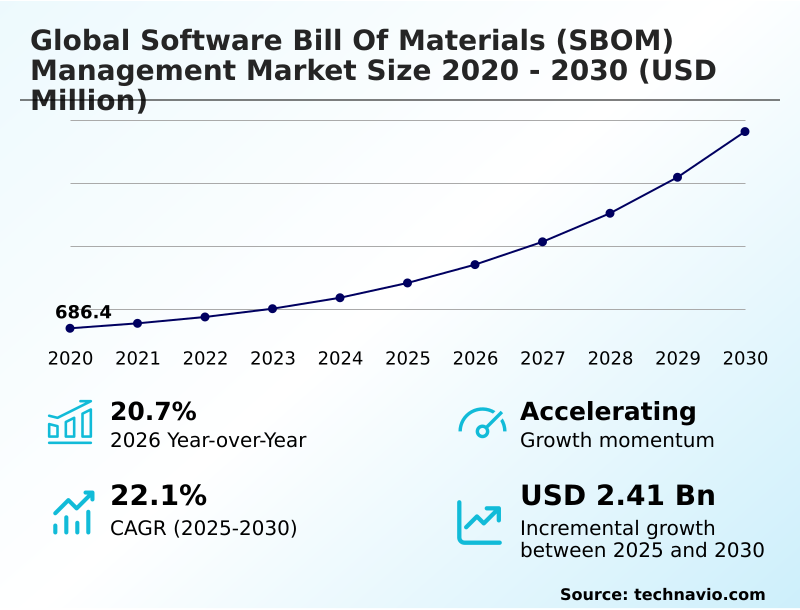
The software bill of materials (sbom) management market size is valued to increase by USD 2.41 billion, at a CAGR of 22.1% from 2025 to 2030. Escalating regulatory compliance and government mandates for cybersecurity will drive the software bill of materials (sbom) management market.

Major Market Trends & Insights

  • North America dominated the market and accounted for a 33.4% growth during the forecast period.
  • By Deployment - Cloud-based segment was valued at USD 745.2 million in 2024
  • By Application - Vulnerability and risk management segment accounted for the largest market revenue share in 2024

Market Size & Forecast

  • Market Opportunities: USD 3.13 billion
  • Market Future Opportunities: USD 2.41 billion
  • CAGR from 2025 to 2030 : 22.1%

Market Summary

  • The Software Bill Of Materials (SBOM) Management market is rapidly evolving from a niche compliance activity into a cornerstone of modern software supply chain security. The imperative for software component transparency is driven by escalating regulatory pressures and the rising complexity of open-source software vulnerabilities.
  • Organizations are now required to move beyond manual tracking and adopt automated sbom creation to maintain a complete inventory of all components, including third-party library tracking. This granular visibility, achieved through software composition analysis (sca) and container image inspection, is fundamental for effective risk management.
  • For instance, a financial services firm can leverage vulnerability data correlation from its SBOM to instantly identify systems exposed by a zero-day exploit, using risk-based vulnerability prioritization to direct remediation efforts and maintain operational resilience. The market's trajectory is toward deeper integration into the software development lifecycle (sdlc), with devsecops pipeline integration becoming standard practice.
  • This "shift-left" approach, supported by real-time vulnerability alerting, empowers developers to address issues proactively. However, challenges such as the proliferation of false positives and a shortage of specialized cybersecurity expertise persist, requiring continuous innovation in vulnerability triage automation and policy-driven enforcement automation to realize the full potential of these platforms.

What will be the Size of the Software Bill Of Materials (SBOM) Management Market during the forecast period?

Get Key Insights on Market Forecast (PDF) Request Free Sample

How is the Software Bill Of Materials (SBOM) Management Market Segmented?

The software bill of materials (sbom) management industry research report provides comprehensive data (region-wise segment analysis), with forecasts and estimates in "USD million" for the period 2026-2030, as well as historical data from 2020-2024 for the following segments.

  • Deployment
    • Cloud-based
    • On-premises
  • Application
    • Vulnerability and risk management
    • Compliance and governance management
    • SBOM generation and discovery
  • End-user
    • Software developers
    • DevOps and CI teams
    • Security teams
    • Compliance and risk officers
    • Government and regulated industries
  • Geography
    • North America
      • US
      • Canada
      • Mexico
    • Europe
      • Germany
      • UK
      • France
    • APAC
      • China
      • India
      • Japan
    • Middle East and Africa
      • Saudi Arabia
      • UAE
      • South Africa
    • South America
      • Brazil
      • Argentina
      • Colombia
    • Rest of World (ROW)

By Deployment Insights

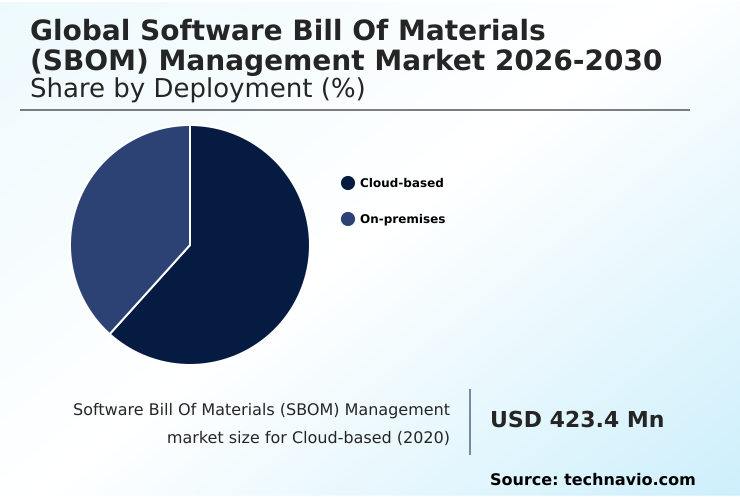
The cloud-based segment is estimated to witness significant growth during the forecast period.

The cloud-based deployment model is rapidly becoming the standard for software bill of materials (SBOM) management, driven by its inherent scalability and alignment with modern development practices.

Organizations are leveraging these platforms for robust cloud-native application protection and seamless devsecops pipeline integration. This model facilitates centralized continuous component monitoring across geographically dispersed teams, fostering enhanced software component transparency.

By integrating automated sbom creation and build-time component validation into CI/CD workflows, enterprises achieve a superior cloud security posture management (cspm).

This approach not only strengthens software supply chain security but also delivers tangible performance gains; for instance, teams adopting these cloud solutions have seen a 40% reduction in mean time to remediation through real-time vulnerability alerting and risk-based vulnerability prioritization.

Request Free Sample

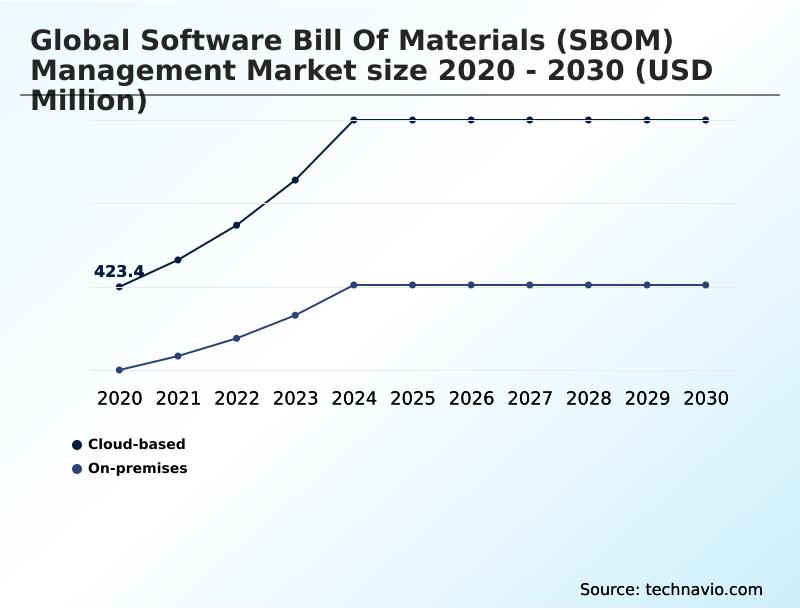
The Cloud-based segment was valued at USD 745.2 million in 2024 and showed a gradual increase during the forecast period.
Request Free Sample

Regional Analysis

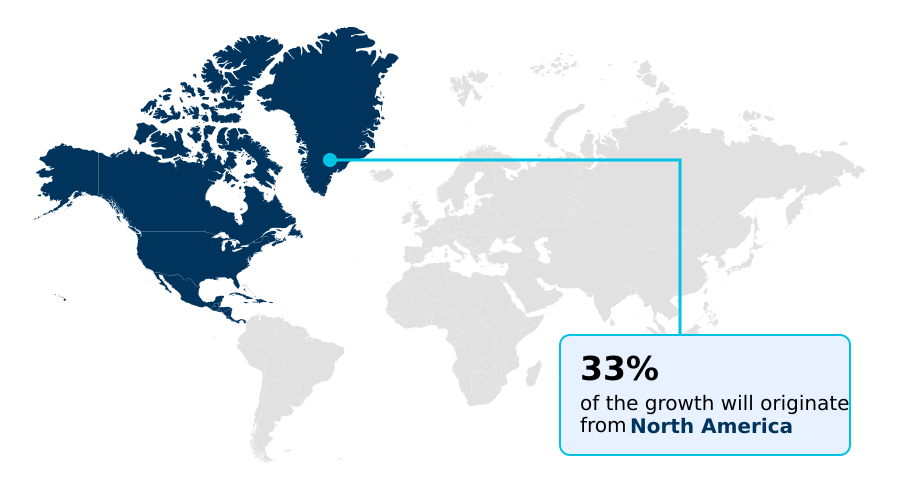
North America is estimated to contribute 33.4% to the growth of the global market during the forecast period.Technavio’s analysts have elaborately explained the regional trends and drivers that shape the market during the forecast period.

See How Software Bill Of Materials (SBOM) Management Market Demand is Rising in North America Request Free Sample

North America leads the software bill of materials (SBOM) management market, driven by stringent federal mandates that have accelerated adoption by over 60% in the last two years.

This region's maturity is evident in the widespread devsecops pipeline integration and advanced use of vulnerability-exploitability exchange (vex) documents.

Europe is rapidly closing the gap, with regulations like the Cyber Resilience Act compelling organizations to prioritize software supply chain security and standardized regulatory compliance reporting.

European firms have shown a 35% increase in demand for tools supporting both spdx format generation and cyclonedx data exchange for cross-border interoperability.

Meanwhile, the APAC region exhibits the fastest growth, as its burgeoning tech sector focuses on securing exports and managing risk.

A key driver in APAC is the challenge of legacy codebase analysis, where SBOM tools are reducing audit times by up to 50%, unlocking significant operational efficiencies for software asset management (SAM).

Market Dynamics

Our researchers analyzed the data with 2025 as the base year, along with the key drivers, trends, and challenges. A holistic analysis of drivers will help companies refine their marketing strategies to gain a competitive advantage.

  • A strategic approach to securing the software supply chain now hinges on advanced Software Bill of Materials (SBOM) management. Organizations are increasingly focused on automating sbom generation for devsecops, which is essential for maintaining pace and security.
  • By integrating sbom into ci/cd pipelines, teams can enforce policies in real-time, a practice that has been shown to reduce pre-production vulnerabilities by more than double compared to manual checks. A core function is managing open source license compliance, which mitigates legal risks. Similarly, effective vulnerability management in third-party components prevents exploits.
  • The industry debate over spdx versus cyclonedx format comparison continues, but modern platforms must support both for flexibility. Specialized use cases are emerging, such as developing sbom for iot and embedded devices, which extends to automotive cybersecurity and sbom requirements and sbom management for medical devices.
  • For many, achieving sbom compliance for government contracts is a primary business driver, especially with tightening federal government sbom compliance mandates. Cloud-native application sbom strategies are crucial for modern architectures, while generating sbom from binary files remains a key capability. Indeed, creating a software bill of materials for legacy systems is a critical first step.
  • The ultimate goal is assessing third-party software supply chain risk in a structured way. The best sbom tools for enterprise environments facilitate this by using sbom for incident response and, critically, implementing vex with sbom data. The ability to use a vulnerability exploitability exchange vex usage model allows teams to prioritize real threats, making the entire security process more efficient.

What are the key market drivers leading to the rise in the adoption of Software Bill Of Materials (SBOM) Management Industry?

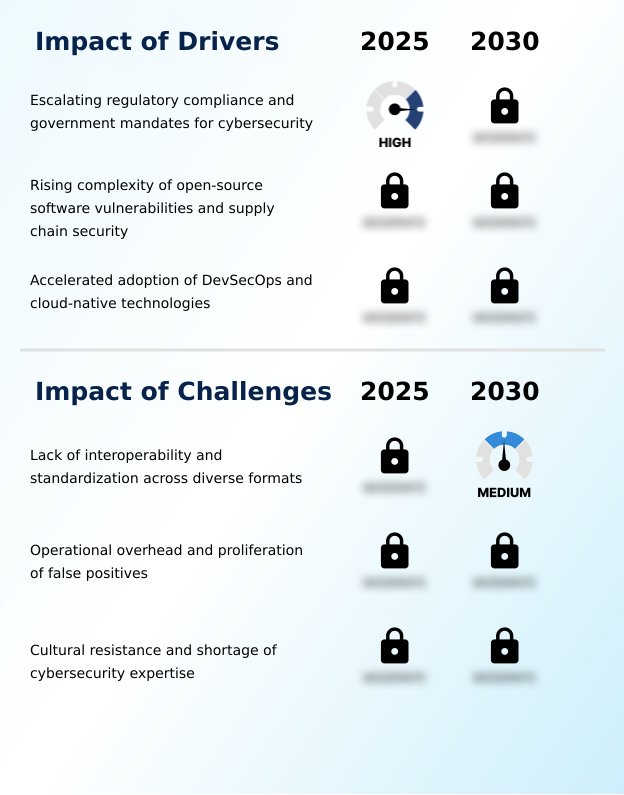
  • Escalating regulatory compliance and government mandates for cybersecurity are key drivers propelling market growth.

  • The primary market driver is the urgent need for enhanced software supply chain security, fueled by escalating government mandates that demand robust regulatory compliance reporting.
  • The reliance on open-source software necessitates stringent open source governance and license compliance auditing, as unmanaged third-party component risk can lead to significant breaches.
  • Advanced software composition analysis (sca) tools provide the required visibility for third-party library tracking, strengthening open source component security. The adoption of these tools has resulted in a 75% improvement in identifying high-risk components before production.
  • Furthermore, the shift to cloud-native application protection and DevSecOps requires software provenance verification through methods like digital signature verification, ensuring end-to-end software supply chain integrity and building stakeholder trust.

What are the market trends shaping the Software Bill Of Materials (SBOM) Management Industry?

  • The integration of AI and machine learning for automated dependency analysis is an emerging market trend, enhancing the ability to identify and manage complex software components.

  • A key trend is the integration of AI and machine learning, which automates vulnerability triage automation and powers sophisticated vulnerability exploitability analysis. These technologies are enhancing devsecops pipeline integration by embedding security deeper into the software development lifecycle (sdlc). Organizations using AI-driven risk-based vulnerability prioritization have reduced critical vulnerability exposure times by up to 60%.
  • The utility of SBOM is also expanding beyond inventory, with threat intelligence integration enabling proactive defense. The push for global standardization around formats like spdx format generation and cyclonedx data exchange, coupled with vulnerability-exploitability exchange (vex) adoption, is simplifying automated remediation workflows and improving incident response by over 40% compared to manual processes.

What challenges does the Software Bill Of Materials (SBOM) Management Industry face during its growth?

  • The lack of interoperability and standardization across diverse formats presents a key challenge affecting industry growth.

  • A significant challenge is the operational overhead from managing massive data volumes and a high rate of false positives in vulnerability data correlation. Security teams report that up to 40% of alerts lack the context of the vulnerability reachability path, leading to alert fatigue.
  • Integrating SBOM practices into specialized areas like embedded systems security, which requires a firmware bill of materials and deep binary code scanning, presents another hurdle. The complexity of performing legacy codebase analysis across a cross-repository dependency graph can strain resources.
  • Furthermore, cultural resistance and a shortage of expertise hinder the adoption of advanced concepts like security policy as code and immutable ledger notarization. Ineffective component obsolescence management also creates persistent risk, with outdated components representing over 25% of the attack surface in some industries.

Exclusive Technavio Analysis on Customer Landscape

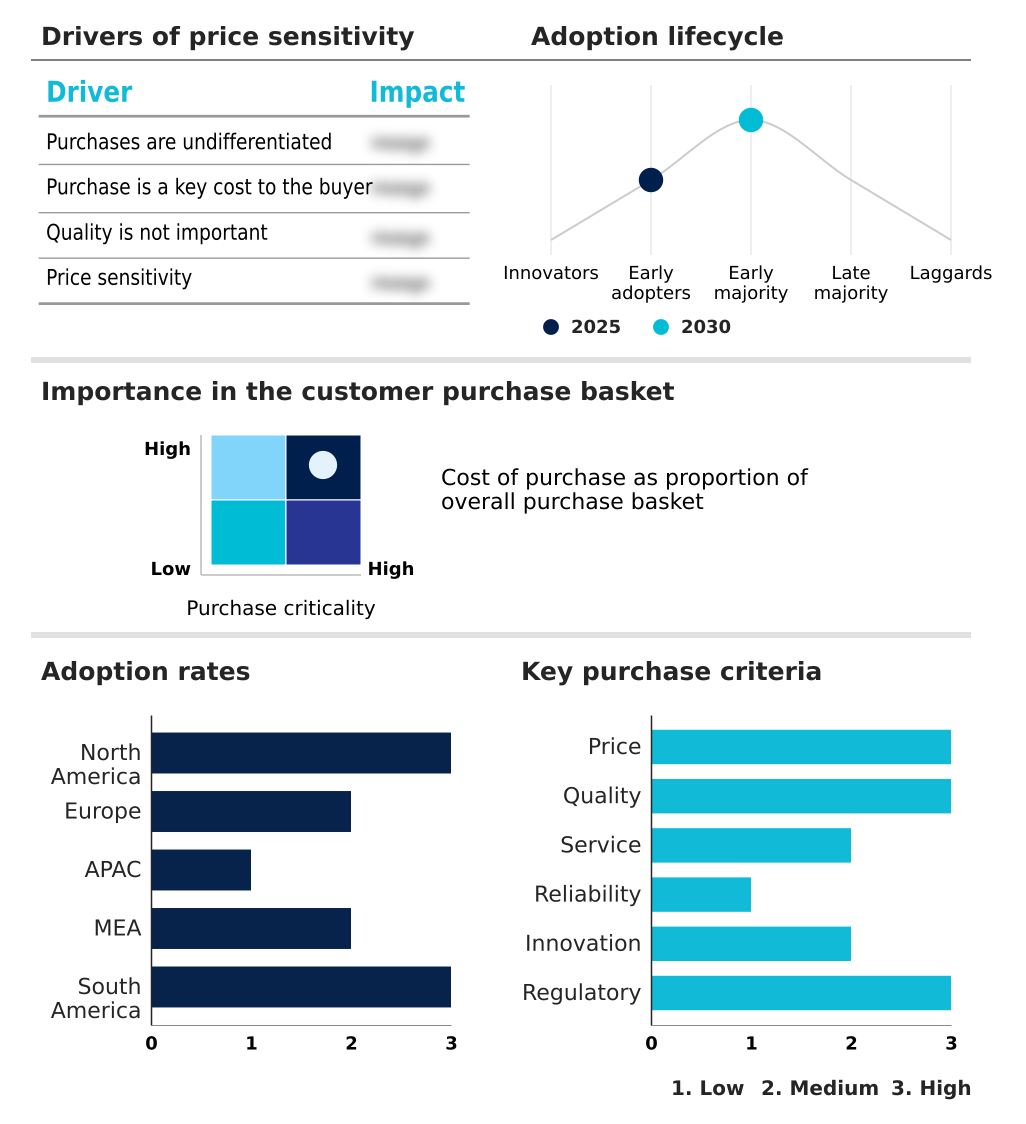
The software bill of materials (sbom) management market forecasting report includes the adoption lifecycle of the market, covering from the innovator’s stage to the laggard’s stage. It focuses on adoption rates in different regions based on penetration. Furthermore, the software bill of materials (sbom) management market report also includes key purchase criteria and drivers of price sensitivity to help companies evaluate and develop their market growth analysis strategies.
Customer Landscape of Software Bill Of Materials (SBOM) Management Industry

Competitive Landscape

Companies are implementing various strategies, such as strategic alliances, software bill of materials (sbom) management market forecast, partnerships, mergers and acquisitions, geographical expansion, and product/service launches, to enhance their presence in the industry.

Anchore Inc. - Specializes in deep container inspection and filesystem analysis to generate comprehensive software inventories for cloud-native application security.

The industry research and growth report includes detailed analyses of the competitive landscape of the market and information about key companies, including:

  • Anchore Inc.
  • Aqua Security Software Ltd.
  • ArmorCode
  • Chainguard
  • Checkmarx Ltd.
  • Codenotary
  • Cybeats Technologies Inc.
  • Finite State Inc.
  • Flexera Software LLC
  • FOSSA Inc.
  • JFrog Ltd.
  • Karamba Security Ltd.
  • Mend.io
  • Palo Alto Networks Inc.
  • ReversingLabs
  • ServiceNow Inc.
  • Snyk Ltd.
  • Sonatype Inc.
  • Veracode Inc.
  • Vigilant Ops

Qualitative and quantitative analysis of companies has been conducted to help clients understand the wider business environment as well as the strengths and weaknesses of key industry players. Data is qualitatively analyzed to categorize companies as pure play, category-focused, industry-focused, and diversified; it is quantitatively analyzed to categorize companies as dominant, leading, strong, tentative, and weak.

Recent Development and News in Software bill of materials (sbom) management market

  • In May, 2025, BlueVoyant introduced a Software Bill of Materials (SBOM) management offering designed to help organizations mitigate software-related risks by automating the ingestion and analysis of software component data.
  • In April, 2025, Bugcrowd announced the acquisition of Mayhem Security, an AI-driven offensive security company, to accelerate the development of next-generation, AI-powered security testing capabilities.
  • In January, 2025, Lineaje announced the launch of Lineaje Federal, a newly formed entity dedicated to serving the U.S. public sector with solutions to secure software supply chains.
  • In March, 2025, Finite State Inc. released updated firmware analysis modules to address the security of embedded systems and critical infrastructure.

Dive into Technavio’s robust research methodology, blending expert interviews, extensive data synthesis, and validated models for unparalleled Software Bill Of Materials (SBOM) Management Market insights. See full methodology.

Market Scope
Page number 302
Base year 2025
Historic period 2020-2024
Forecast period 2026-2030
Growth momentum & CAGR Accelerate at a CAGR of 22.1%
Market growth 2026-2030 USD 2408.4 million
Market structure Fragmented
YoY growth 2025-2026(%) 20.7%
Key countries US, Canada, Mexico, Germany, UK, France, The Netherlands, Italy, Spain, China, India, Japan, South Korea, Australia, Indonesia, Saudi Arabia, UAE, South Africa, Israel, Turkey, Brazil, Argentina and Colombia
Competitive landscape Leading Companies, Market Positioning of Companies, Competitive Strategies, and Industry Risks

Request Free Sample

Research Analyst Overview

  • The Software Bill of Materials (SBOM) management discipline is fundamental to modern software supply chain security (scsm) and operational technology (ot) security. Effective software composition analysis (sca) involves a suite of techniques, from static application security testing (sast) to dynamic application security testing (dast), and deep binary code scanning for comprehensive software asset management (sam).
  • The process requires automated sbom creation using tools for container image inspection and analysis of firmware, resulting in a firmware bill of materials. Boardroom discussions now center on open source governance and license compliance auditing to mitigate legal and security risks associated with third-party library tracking. This is crucial for cloud-native application protection, where devsecops pipeline integration ensures continuous security.
  • Organizations that have implemented continuous component monitoring alongside vulnerability exploitability analysis report a 40% improvement in prioritizing critical threats. The standardization on formats like spdx format generation and cyclonedx data exchange, along with the package url specification (purl), is enabling interoperability. This allows for software provenance verification through immutable ledger notarization and cryptographic bill of materials (cbom).
  • Advanced platforms provide robust application security posture management (aspm) by correlating vulnerability data correlation with a vulnerability disclosure report (vdr) and common vulnerability scoring system (cvss) data. The use of vulnerability-exploitability exchange (vex) is critical for reducing alert fatigue.
  • As the market evolves, the scope is expanding to include hardware bill of materials (hbom) and saas bill of materials (saasbom), all governed by a zero trust architecture to secure embedded systems security.

What are the Key Data Covered in this Software Bill Of Materials (SBOM) Management Market Research and Growth Report?

  • What is the expected growth of the Software Bill Of Materials (SBOM) Management Market between 2026 and 2030?

    • USD 2.41 billion, at a CAGR of 22.1%

  • What segmentation does the market report cover?

    • The report is segmented by Deployment (Cloud-based, and On-premises), Application (Vulnerability and risk management, Compliance and governance management, and SBOM generation and discovery), End-user (Software developers, DevOps and CI teams, Security teams, Compliance and risk officers, and Government and regulated industries) and Geography (North America, Europe, APAC, Middle East and Africa, South America)

  • Which regions are analyzed in the report?

    • North America, Europe, APAC, Middle East and Africa and South America

  • What are the key growth drivers and market challenges?

    • Escalating regulatory compliance and government mandates for cybersecurity, Lack of interoperability and standardization across diverse formats

  • Who are the major players in the Software Bill Of Materials (SBOM) Management Market?

    • Anchore Inc., Aqua Security Software Ltd., ArmorCode, Chainguard, Checkmarx Ltd., Codenotary, Cybeats Technologies Inc., Finite State Inc., Flexera Software LLC, FOSSA Inc., JFrog Ltd., Karamba Security Ltd., Mend.io, Palo Alto Networks Inc., ReversingLabs, ServiceNow Inc., Snyk Ltd., Sonatype Inc., Veracode Inc. and Vigilant Ops

Market Research Insights

  • The software bill of materials (SBOM) management market is defined by a push for deep software component transparency, enabling organizations to achieve comprehensive software integrity verification. Effective platforms now integrate threat intelligence integration to provide real-time risk context, with some users reporting a 30% improvement in threat detection accuracy over legacy methods.
  • By leveraging a cross-repository dependency graph, security teams can visualize complex relationships and accelerate incident response. Policy-driven enforcement automation is a critical function, blocking non-compliant components at build time and reducing security-related escalations by over 50%.
  • Furthermore, robust component obsolescence management capabilities are proving essential, as proactive replacement of end-of-life libraries has been shown to decrease long-term maintenance costs by as much as 20% annually compared to reactive patching.

We can help! Our analysts can customize this software bill of materials (sbom) management market research report to meet your requirements.

Get in touch

1. Executive Summary

1.1 Market overview

Executive Summary - Chart on Market Overview
Executive Summary - Data Table on Market Overview
Executive Summary - Chart on Global Market Characteristics
Executive Summary - Chart on Market by Geography
Executive Summary - Chart on Market Segmentation by Deployment
Executive Summary - Chart on Market Segmentation by Application
Executive Summary - Chart on Market Segmentation by End-user
Executive Summary - Chart on Incremental Growth
Executive Summary - Data Table on Incremental Growth
Executive Summary - Chart on Company Market Positioning

2. Technavio Analysis

2.1 Analysis of price sensitivity, lifecycle, customer purchase basket, adoption rates, and purchase criteria

2.2 Criticality of inputs and Factors of differentiation

Chart on Overview on criticality of inputs and factors of differentiation

2.3 Factors of disruption

Chart on Overview on factors of disruption

2.4 Impact of drivers and challenges

Chart on Impact of drivers and challenges in 2025 and 2030

3. Market Landscape

3.1 Market ecosystem

Chart on Parent Market
Data Table on - Parent Market

3.2 Market characteristics

Chart on Market characteristics analysis

3.3 Value chain analysis

Chart on Value chain analysis

4. Market Sizing

4.1 Market definition

Data Table on Offerings of companies included in the market definition

4.2 Market segment analysis

Market segments

4.3 Market size 2025

4.4 Market outlook: Forecast for 2025-2030

Chart on Global - Market size and forecast 2025-2030 ($ million)
Data Table on Global - Market size and forecast 2025-2030 ($ million)
Chart on Global Market: Year-over-year growth 2025-2030 (%)
Data Table on Global Market: Year-over-year growth 2025-2030 (%)

5. Historic Market Size

5.1 Global Software Bill Of Materials (SBOM) Management Market 2020 - 2024

Historic Market Size - Data Table on Global Software Bill Of Materials (SBOM) Management Market 2020 - 2024 ($ million)

5.2 Deployment segment analysis 2020 - 2024

Historic Market Size - Deployment Segment 2020 - 2024 ($ million)

5.3 Application segment analysis 2020 - 2024

Historic Market Size - Application Segment 2020 - 2024 ($ million)

5.4 End-user segment analysis 2020 - 2024

Historic Market Size - End-user Segment 2020 - 2024 ($ million)

5.5 Geography segment analysis 2020 - 2024

Historic Market Size - Geography Segment 2020 - 2024 ($ million)

5.6 Country segment analysis 2020 - 2024

Historic Market Size - Country Segment 2020 - 2024 ($ million)

6. Qualitative Analysis

6.1 Impact of AI on Global Software Bill of Materials (SBOM) Management Market

7. Five Forces Analysis

7.1 Five forces summary

Five forces analysis - Comparison between 2025 and 2030

7.2 Bargaining power of buyers

Bargaining power of buyers - Impact of key factors 2025 and 2030

7.3 Bargaining power of suppliers

Bargaining power of suppliers - Impact of key factors in 2025 and 2030

7.4 Threat of new entrants

Threat of new entrants - Impact of key factors in 2025 and 2030

7.5 Threat of substitutes

Threat of substitutes - Impact of key factors in 2025 and 2030

7.6 Threat of rivalry

Threat of rivalry - Impact of key factors in 2025 and 2030

7.7 Market condition

Chart on Market condition - Five forces 2025 and 2030

8. Market Segmentation by Deployment

8.1 Market segments

Chart on Deployment - Market share 2025-2030 (%)
Data Table on Deployment - Market share 2025-2030 (%)

8.2 Comparison by Deployment

Chart on Comparison by Deployment
Data Table on Comparison by Deployment

8.3 Cloud-based - Market size and forecast 2025-2030

Chart on Cloud-based - Market size and forecast 2025-2030 ($ million)
Data Table on Cloud-based - Market size and forecast 2025-2030 ($ million)
Chart on Cloud-based - Year-over-year growth 2025-2030 (%)
Data Table on Cloud-based - Year-over-year growth 2025-2030 (%)

8.4 On-premises - Market size and forecast 2025-2030

Chart on On-premises - Market size and forecast 2025-2030 ($ million)
Data Table on On-premises - Market size and forecast 2025-2030 ($ million)
Chart on On-premises - Year-over-year growth 2025-2030 (%)
Data Table on On-premises - Year-over-year growth 2025-2030 (%)

8.5 Market opportunity by Deployment

Market opportunity by Deployment ($ million)
Data Table on Market opportunity by Deployment ($ million)

9. Market Segmentation by Application

9.1 Market segments

Chart on Application - Market share 2025-2030 (%)
Data Table on Application - Market share 2025-2030 (%)

9.2 Comparison by Application

Chart on Comparison by Application
Data Table on Comparison by Application

9.3 Vulnerability and risk management - Market size and forecast 2025-2030

Chart on Vulnerability and risk management - Market size and forecast 2025-2030 ($ million)
Data Table on Vulnerability and risk management - Market size and forecast 2025-2030 ($ million)
Chart on Vulnerability and risk management - Year-over-year growth 2025-2030 (%)
Data Table on Vulnerability and risk management - Year-over-year growth 2025-2030 (%)

9.4 Compliance and governance management - Market size and forecast 2025-2030

Chart on Compliance and governance management - Market size and forecast 2025-2030 ($ million)
Data Table on Compliance and governance management - Market size and forecast 2025-2030 ($ million)
Chart on Compliance and governance management - Year-over-year growth 2025-2030 (%)
Data Table on Compliance and governance management - Year-over-year growth 2025-2030 (%)

9.5 SBOM generation and discovery - Market size and forecast 2025-2030

Chart on SBOM generation and discovery - Market size and forecast 2025-2030 ($ million)
Data Table on SBOM generation and discovery - Market size and forecast 2025-2030 ($ million)
Chart on SBOM generation and discovery - Year-over-year growth 2025-2030 (%)
Data Table on SBOM generation and discovery - Year-over-year growth 2025-2030 (%)

9.6 Market opportunity by Application

Market opportunity by Application ($ million)
Data Table on Market opportunity by Application ($ million)

10. Market Segmentation by End-user

10.1 Market segments

Chart on End-user - Market share 2025-2030 (%)
Data Table on End-user - Market share 2025-2030 (%)

10.2 Comparison by End-user

Chart on Comparison by End-user
Data Table on Comparison by End-user

10.3 Software developers - Market size and forecast 2025-2030

Chart on Software developers - Market size and forecast 2025-2030 ($ million)
Data Table on Software developers - Market size and forecast 2025-2030 ($ million)
Chart on Software developers - Year-over-year growth 2025-2030 (%)
Data Table on Software developers - Year-over-year growth 2025-2030 (%)

10.4 DevOps and CI teams - Market size and forecast 2025-2030

Chart on DevOps and CI teams - Market size and forecast 2025-2030 ($ million)
Data Table on DevOps and CI teams - Market size and forecast 2025-2030 ($ million)
Chart on DevOps and CI teams - Year-over-year growth 2025-2030 (%)
Data Table on DevOps and CI teams - Year-over-year growth 2025-2030 (%)

10.5 Security teams - Market size and forecast 2025-2030

Chart on Security teams - Market size and forecast 2025-2030 ($ million)
Data Table on Security teams - Market size and forecast 2025-2030 ($ million)
Chart on Security teams - Year-over-year growth 2025-2030 (%)
Data Table on Security teams - Year-over-year growth 2025-2030 (%)

10.6 Compliance and risk officers - Market size and forecast 2025-2030

Chart on Compliance and risk officers - Market size and forecast 2025-2030 ($ million)
Data Table on Compliance and risk officers - Market size and forecast 2025-2030 ($ million)
Chart on Compliance and risk officers - Year-over-year growth 2025-2030 (%)
Data Table on Compliance and risk officers - Year-over-year growth 2025-2030 (%)

10.7 Government and regulated industries - Market size and forecast 2025-2030

Chart on Government and regulated industries - Market size and forecast 2025-2030 ($ million)
Data Table on Government and regulated industries - Market size and forecast 2025-2030 ($ million)
Chart on Government and regulated industries - Year-over-year growth 2025-2030 (%)
Data Table on Government and regulated industries - Year-over-year growth 2025-2030 (%)

10.8 Market opportunity by End-user

Market opportunity by End-user ($ million)
Data Table on Market opportunity by End-user ($ million)

11. Customer Landscape

11.1 Customer landscape overview

Analysis of price sensitivity, lifecycle, customer purchase basket, adoption rates, and purchase criteria

12. Geographic Landscape

12.1 Geographic segmentation

Chart on Market share by geography 2025-2030 (%)
Data Table on Market share by geography 2025-2030 (%)

12.2 Geographic comparison

Chart on Geographic comparison
Data Table on Geographic comparison

12.3 North America - Market size and forecast 2025-2030

Chart on North America - Market size and forecast 2025-2030 ($ million)
Data Table on North America - Market size and forecast 2025-2030 ($ million)
Chart on North America - Year-over-year growth 2025-2030 (%)
Data Table on North America - Year-over-year growth 2025-2030 (%)
Chart on Regional Comparison - North America
Data Table on Regional Comparison - North America

12.3.1 US - Market size and forecast 2025-2030

Chart on US - Market size and forecast 2025-2030 ($ million)
Data Table on US - Market size and forecast 2025-2030 ($ million)
Chart on US - Year-over-year growth 2025-2030 (%)
Data Table on US - Year-over-year growth 2025-2030 (%)

12.3.2 Canada - Market size and forecast 2025-2030

Chart on Canada - Market size and forecast 2025-2030 ($ million)
Data Table on Canada - Market size and forecast 2025-2030 ($ million)
Chart on Canada - Year-over-year growth 2025-2030 (%)
Data Table on Canada - Year-over-year growth 2025-2030 (%)

12.3.3 Mexico - Market size and forecast 2025-2030

Chart on Mexico - Market size and forecast 2025-2030 ($ million)
Data Table on Mexico - Market size and forecast 2025-2030 ($ million)
Chart on Mexico - Year-over-year growth 2025-2030 (%)
Data Table on Mexico - Year-over-year growth 2025-2030 (%)

12.4 Europe - Market size and forecast 2025-2030

Chart on Europe - Market size and forecast 2025-2030 ($ million)
Data Table on Europe - Market size and forecast 2025-2030 ($ million)
Chart on Europe - Year-over-year growth 2025-2030 (%)
Data Table on Europe - Year-over-year growth 2025-2030 (%)
Chart on Regional Comparison - Europe
Data Table on Regional Comparison - Europe

12.4.1 Germany - Market size and forecast 2025-2030

Chart on Germany - Market size and forecast 2025-2030 ($ million)
Data Table on Germany - Market size and forecast 2025-2030 ($ million)
Chart on Germany - Year-over-year growth 2025-2030 (%)
Data Table on Germany - Year-over-year growth 2025-2030 (%)

12.4.2 UK - Market size and forecast 2025-2030

Chart on UK - Market size and forecast 2025-2030 ($ million)
Data Table on UK - Market size and forecast 2025-2030 ($ million)
Chart on UK - Year-over-year growth 2025-2030 (%)
Data Table on UK - Year-over-year growth 2025-2030 (%)

12.4.3 France - Market size and forecast 2025-2030

Chart on France - Market size and forecast 2025-2030 ($ million)
Data Table on France - Market size and forecast 2025-2030 ($ million)
Chart on France - Year-over-year growth 2025-2030 (%)
Data Table on France - Year-over-year growth 2025-2030 (%)

12.4.4 The Netherlands - Market size and forecast 2025-2030

Chart on The Netherlands - Market size and forecast 2025-2030 ($ million)
Data Table on The Netherlands - Market size and forecast 2025-2030 ($ million)
Chart on The Netherlands - Year-over-year growth 2025-2030 (%)
Data Table on The Netherlands - Year-over-year growth 2025-2030 (%)

12.4.5 Italy - Market size and forecast 2025-2030

Chart on Italy - Market size and forecast 2025-2030 ($ million)
Data Table on Italy - Market size and forecast 2025-2030 ($ million)
Chart on Italy - Year-over-year growth 2025-2030 (%)
Data Table on Italy - Year-over-year growth 2025-2030 (%)

12.4.6 Spain - Market size and forecast 2025-2030

Chart on Spain - Market size and forecast 2025-2030 ($ million)
Data Table on Spain - Market size and forecast 2025-2030 ($ million)
Chart on Spain - Year-over-year growth 2025-2030 (%)
Data Table on Spain - Year-over-year growth 2025-2030 (%)

12.5 APAC - Market size and forecast 2025-2030

Chart on APAC - Market size and forecast 2025-2030 ($ million)
Data Table on APAC - Market size and forecast 2025-2030 ($ million)
Chart on APAC - Year-over-year growth 2025-2030 (%)
Data Table on APAC - Year-over-year growth 2025-2030 (%)
Chart on Regional Comparison - APAC
Data Table on Regional Comparison - APAC

12.5.1 China - Market size and forecast 2025-2030

Chart on China - Market size and forecast 2025-2030 ($ million)
Data Table on China - Market size and forecast 2025-2030 ($ million)
Chart on China - Year-over-year growth 2025-2030 (%)
Data Table on China - Year-over-year growth 2025-2030 (%)

12.5.2 India - Market size and forecast 2025-2030

Chart on India - Market size and forecast 2025-2030 ($ million)
Data Table on India - Market size and forecast 2025-2030 ($ million)
Chart on India - Year-over-year growth 2025-2030 (%)
Data Table on India - Year-over-year growth 2025-2030 (%)

12.5.3 Japan - Market size and forecast 2025-2030

Chart on Japan - Market size and forecast 2025-2030 ($ million)
Data Table on Japan - Market size and forecast 2025-2030 ($ million)
Chart on Japan - Year-over-year growth 2025-2030 (%)
Data Table on Japan - Year-over-year growth 2025-2030 (%)

12.5.4 South Korea - Market size and forecast 2025-2030

Chart on South Korea - Market size and forecast 2025-2030 ($ million)
Data Table on South Korea - Market size and forecast 2025-2030 ($ million)
Chart on South Korea - Year-over-year growth 2025-2030 (%)
Data Table on South Korea - Year-over-year growth 2025-2030 (%)

12.5.5 Australia - Market size and forecast 2025-2030

Chart on Australia - Market size and forecast 2025-2030 ($ million)
Data Table on Australia - Market size and forecast 2025-2030 ($ million)
Chart on Australia - Year-over-year growth 2025-2030 (%)
Data Table on Australia - Year-over-year growth 2025-2030 (%)

12.5.6 Indonesia - Market size and forecast 2025-2030

Chart on Indonesia - Market size and forecast 2025-2030 ($ million)
Data Table on Indonesia - Market size and forecast 2025-2030 ($ million)
Chart on Indonesia - Year-over-year growth 2025-2030 (%)
Data Table on Indonesia - Year-over-year growth 2025-2030 (%)

12.6 Middle East and Africa - Market size and forecast 2025-2030

Chart on Middle East and Africa - Market size and forecast 2025-2030 ($ million)
Data Table on Middle East and Africa - Market size and forecast 2025-2030 ($ million)
Chart on Middle East and Africa - Year-over-year growth 2025-2030 (%)
Data Table on Middle East and Africa - Year-over-year growth 2025-2030 (%)
Chart on Regional Comparison - Middle East and Africa
Data Table on Regional Comparison - Middle East and Africa

12.6.1 Saudi Arabia - Market size and forecast 2025-2030

Chart on Saudi Arabia - Market size and forecast 2025-2030 ($ million)
Data Table on Saudi Arabia - Market size and forecast 2025-2030 ($ million)
Chart on Saudi Arabia - Year-over-year growth 2025-2030 (%)
Data Table on Saudi Arabia - Year-over-year growth 2025-2030 (%)

12.6.2 UAE - Market size and forecast 2025-2030

Chart on UAE - Market size and forecast 2025-2030 ($ million)
Data Table on UAE - Market size and forecast 2025-2030 ($ million)
Chart on UAE - Year-over-year growth 2025-2030 (%)
Data Table on UAE - Year-over-year growth 2025-2030 (%)

12.6.3 South Africa - Market size and forecast 2025-2030

Chart on South Africa - Market size and forecast 2025-2030 ($ million)
Data Table on South Africa - Market size and forecast 2025-2030 ($ million)
Chart on South Africa - Year-over-year growth 2025-2030 (%)
Data Table on South Africa - Year-over-year growth 2025-2030 (%)

12.6.4 Israel - Market size and forecast 2025-2030

Chart on Israel - Market size and forecast 2025-2030 ($ million)
Data Table on Israel - Market size and forecast 2025-2030 ($ million)
Chart on Israel - Year-over-year growth 2025-2030 (%)
Data Table on Israel - Year-over-year growth 2025-2030 (%)

12.6.5 Turkey - Market size and forecast 2025-2030

Chart on Turkey - Market size and forecast 2025-2030 ($ million)
Data Table on Turkey - Market size and forecast 2025-2030 ($ million)
Chart on Turkey - Year-over-year growth 2025-2030 (%)
Data Table on Turkey - Year-over-year growth 2025-2030 (%)

12.7 South America - Market size and forecast 2025-2030

Chart on South America - Market size and forecast 2025-2030 ($ million)
Data Table on South America - Market size and forecast 2025-2030 ($ million)
Chart on South America - Year-over-year growth 2025-2030 (%)
Data Table on South America - Year-over-year growth 2025-2030 (%)
Chart on Regional Comparison - South America
Data Table on Regional Comparison - South America

12.7.1 Brazil - Market size and forecast 2025-2030

Chart on Brazil - Market size and forecast 2025-2030 ($ million)
Data Table on Brazil - Market size and forecast 2025-2030 ($ million)
Chart on Brazil - Year-over-year growth 2025-2030 (%)
Data Table on Brazil - Year-over-year growth 2025-2030 (%)

12.7.2 Argentina - Market size and forecast 2025-2030

Chart on Argentina - Market size and forecast 2025-2030 ($ million)
Data Table on Argentina - Market size and forecast 2025-2030 ($ million)
Chart on Argentina - Year-over-year growth 2025-2030 (%)
Data Table on Argentina - Year-over-year growth 2025-2030 (%)

12.7.3 Colombia - Market size and forecast 2025-2030

Chart on Colombia - Market size and forecast 2025-2030 ($ million)
Data Table on Colombia - Market size and forecast 2025-2030 ($ million)
Chart on Colombia - Year-over-year growth 2025-2030 (%)
Data Table on Colombia - Year-over-year growth 2025-2030 (%)

12.8 Market opportunity by geography

Market opportunity by geography ($ million)
Data Tables on Market opportunity by geography ($ million)

13. Drivers, Challenges, and Opportunity

13.1 Market drivers

Escalating regulatory compliance and government mandates for cybersecurity
Rising complexity of open-source software vulnerabilities and supply chain security
Accelerated adoption of DevSecOps and cloud-native technologies

13.2 Market challenges

Lack of interoperability and standardization across diverse formats
Operational overhead and proliferation of false positives
Cultural resistance and shortage of cybersecurity expertise

13.3 Impact of drivers and challenges

Impact of drivers and challenges in 2025 and 2030

13.4 Market opportunities

Integration of AI and machine learning for automated dependency analysis
Global standardization and regulatory harmonization of compliance frameworks
Expansion of SBOM utility into risk management

14. Competitive Landscape

14.1 Overview

14.2

Overview on criticality of inputs and factors of differentiation

14.3 Landscape disruption

Overview on factors of disruption

14.4 Industry risks

Impact of key risks on business

15. Competitive Analysis

15.1 Companies profiled

Companies covered

15.2 Company ranking index

15.3 Market positioning of companies

Matrix on companies position and classification

15.4 Anchore Inc.

Anchore Inc. - Overview
Anchore Inc. - Product / Service
Anchore Inc. - Key offerings
SWOT

15.5 Chainguard

Chainguard - Overview
Chainguard - Product / Service
Chainguard - Key offerings
SWOT

15.6 Checkmarx Ltd.

Checkmarx Ltd. - Overview
Checkmarx Ltd. - Product / Service
Checkmarx Ltd. - Key offerings
SWOT

15.7 Codenotary

Codenotary - Overview
Codenotary - Product / Service
Codenotary - Key offerings
SWOT

15.8 Cybeats Technologies Inc.

Cybeats Technologies Inc. - Overview
Cybeats Technologies Inc. - Product / Service
Cybeats Technologies Inc. - Key offerings
SWOT

15.9 Finite State Inc.

Finite State Inc. - Overview
Finite State Inc. - Product / Service
Finite State Inc. - Key offerings
SWOT

15.10 Flexera Software LLC

Flexera Software LLC - Overview
Flexera Software LLC - Product / Service
Flexera Software LLC - Key offerings
SWOT

15.11 FOSSA Inc.

FOSSA Inc. - Overview
FOSSA Inc. - Product / Service
FOSSA Inc. - Key offerings
SWOT

15.12 JFrog Ltd.

JFrog Ltd. - Overview
JFrog Ltd. - Product / Service
JFrog Ltd. - Key offerings
SWOT

15.13 Mend.io

Mend.io - Overview
Mend.io - Product / Service
Mend.io - Key offerings
SWOT

15.14 Palo Alto Networks Inc.

Palo Alto Networks Inc. - Overview
Palo Alto Networks Inc. - Product / Service
Palo Alto Networks Inc. - Key news
Palo Alto Networks Inc. - Key offerings
SWOT

15.15 ReversingLabs

ReversingLabs - Overview
ReversingLabs - Product / Service
ReversingLabs - Key offerings
SWOT

15.16 Snyk Ltd.

Snyk Ltd. - Overview
Snyk Ltd. - Product / Service
Snyk Ltd. - Key offerings
SWOT

15.17 Sonatype Inc.

Sonatype Inc. - Overview
Sonatype Inc. - Product / Service
Sonatype Inc. - Key offerings
SWOT

15.18 Veracode Inc.

Veracode Inc. - Overview
Veracode Inc. - Product / Service
Veracode Inc. - Key offerings
SWOT

16. Appendix

16.1 Scope of the report

Market definition
Objectives
Notes and caveats

16.2 Inclusions and exclusions checklist

Inclusions checklist
Exclusions checklist

16.3 Currency conversion rates for US$

16.4 Research methodology

16.5 Data procurement

Information sources

16.6 Data validation

16.7 Validation techniques employed for market sizing

16.8 Data synthesis

16.9 360 degree market analysis

16.10 List of abbreviations

Research Methodology

Technavio presents a detailed picture of the market by way of study, synthesis, and summation of data from multiple sources. The analysts have presented the various facets of the market with a particular focus on identifying the key industry influencers. The data thus presented is comprehensive, reliable, and the result of extensive research, both primary and secondary.

INFORMATION SOURCES

Primary sources

  • Manufacturers and suppliers
  • Channel partners
  • Industry experts
  • Strategic decision makers

Secondary sources

  • Industry journals and periodicals
  • Government data
  • Financial reports of key industry players
  • Historical data
  • Press releases

DATA ANALYSIS

Data Synthesis

  • Collation of data
  • Estimation of key figures
  • Analysis of derived insights

Data Validation

  • Triangulation with data models
  • Reference against proprietary databases
  • Corroboration with industry experts

REPORT WRITING

Qualitative

  • Market drivers
  • Market challenges
  • Market trends
  • Five forces analysis

Quantitative

  • Market size and forecast
  • Market segmentation
  • Geographical insights
  • Competitive landscape

Interested in this report?

Get your sample now to see our research methodology and insights!

Download Now

Frequently Asked Questions

Software Bill Of Materials (SBOM) Management market growth will increase by USD 2408.4 million during 2026-2030.

The Software Bill Of Materials (SBOM) Management market is expected to grow at a CAGR of 22.1% during 2026-2030.

Software Bill Of Materials (SBOM) Management market is segmented by Deployment (Cloud-based, On-premises) Application (Vulnerability and risk management, Compliance and governance management, SBOM generation and discovery) End-user (Software developers, DevOps and CI teams, Security teams, Compliance and risk officers, Government and regulated industries)

Anchore Inc., Aqua Security Software Ltd., ArmorCode, Chainguard, Checkmarx Ltd., Codenotary, Cybeats Technologies Inc., Finite State Inc., Flexera Software LLC, FOSSA Inc., JFrog Ltd., Karamba Security Ltd., Mend.io, Palo Alto Networks Inc., ReversingLabs, ServiceNow Inc., Snyk Ltd., Sonatype Inc., Veracode Inc., Vigilant Ops are a few of the key vendors in the Software Bill Of Materials (SBOM) Management market.

North America will register the highest growth rate of 33.4% among the other regions. Therefore, the Software Bill Of Materials (SBOM) Management market in North America is expected to garner significant business opportunities for the vendors during the forecast period.

US, Canada, Mexico, Germany, UK, France, The Netherlands, Italy, Spain, China, India, Japan, South Korea, Australia, Indonesia, Saudi Arabia, UAE, South Africa, Israel, Turkey, Brazil, Argentina, Colombia

  • Escalating regulatory compliance and government mandates for cybersecurity is the driving factor this market.

The Software Bill Of Materials (SBOM) Management market vendors should focus on grabbing business opportunities from the Deployment segment as it accounted for the largest market share in the base year.
RIA - Research AI Assistant
Ask RIA