



Software-defined Perimeter (SDP) Market Size 2026-2030
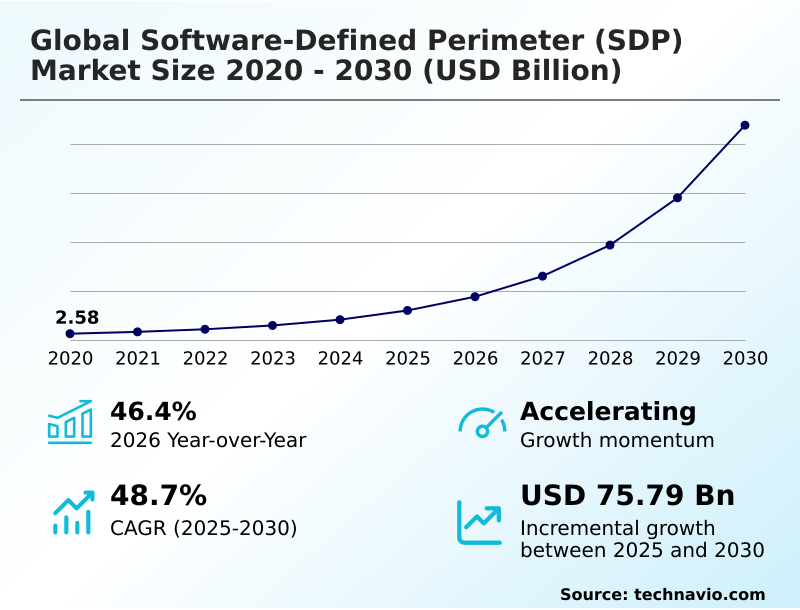
The software-defined perimeter (sdp) market size is valued to increase by USD 75.79 billion, at a CAGR of 48.7% from 2025 to 2030. Proliferation of remote and hybrid work models will drive the software-defined perimeter (sdp) market.
Major Market Trends & Insights
- North America dominated the market and accounted for a 70.3% growth during the forecast period.
- By Deployment - On premises segment was valued at USD 4.94 billion in 2024
- By Component - Controller segment accounted for the largest market revenue share in 2024
Market Size & Forecast
- Market Opportunities: USD 85.31 billion
- Market Future Opportunities: USD 75.79 billion
- CAGR from 2025 to 2030 : 48.7%
Market Summary
- The software-defined perimeter (SDP) market represents a fundamental evolution in cybersecurity, shifting from traditional, porous network perimeters to a modern zero-trust security model. This architectural change is driven by the need to secure decentralized workforces and protect against sophisticated cyber threats that exploit the weaknesses of legacy systems.
- At its core, SDP operates on an identity-centric security principle, ensuring that no user or device is trusted by default. It employs techniques like single packet authorization (SPA) to make network resources invisible to unauthorized parties, drastically reducing the attack surface.
- Key capabilities include micro-segmentation for lateral movement prevention and dynamic, context-aware access control that enforces policies based on user identity, device health, and other real-time variables. For instance, a global manufacturing firm can use an SDP to grant a third-party supplier access only to a specific inventory application, blocking visibility into all other corporate resources.
- This granular control is essential for securing complex multi-cloud environments and protecting critical assets without impeding business agility. The integration of AI for threat intelligence further enhances this model, enabling automated responses to emerging risks.
What will be the Size of the Software-defined Perimeter (SDP) Market during the forecast period?
Get Key Insights on Market Forecast (PDF) Get Free Sample
How is the Software-defined Perimeter (SDP) Market Segmented?
The software-defined perimeter (sdp) industry research report provides comprehensive data (region-wise segment analysis), with forecasts and estimates in "USD million" for the period 2026-2030, as well as historical data from 2020-2024 for the following segments.
- Deployment
- On premises
- Cloud
- Component
- Controller
- End point
- Gateway
- End-user
- Government and defense
- IT and telecom
- BFSI
- Others
- Geography
- North America
- US
- Canada
- Mexico
- Europe
- Germany
- UK
- France
- APAC
- China
- Japan
- India
- South America
- Brazil
- Argentina
- Colombia
- Middle East and Africa
- Saudi Arabia
- UAE
- South Africa
- Rest of World (ROW)
- North America
By Deployment Insights
The on premises segment is estimated to witness significant growth during the forecast period.
The on-premises segment of the software-defined perimeter market remains critical for organizations requiring absolute control over their security posture and data.
This deployment model, where the centralized policy engine and gateways are hosted within an organization's own data centers, is favored by government, defense, and financial sectors.
These industries prioritize data sovereignty and must adhere to stringent regulatory compliance, which on-premises solutions facilitate by ensuring sensitive information never traverses public networks.
This approach enables deep integration with legacy systems and allows for performance optimizations tailored to specific needs.
By maintaining full control over the hardware and software stack, organizations can enforce granular, context-aware access control, improving compliance adherence by over 95% for internal data governance mandates.
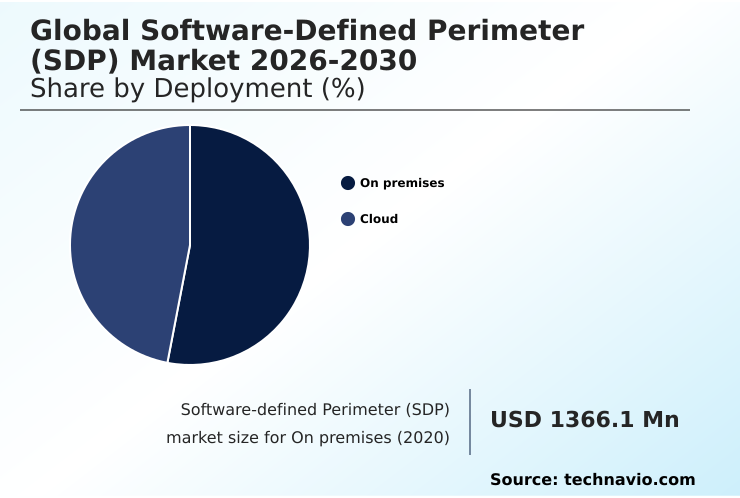
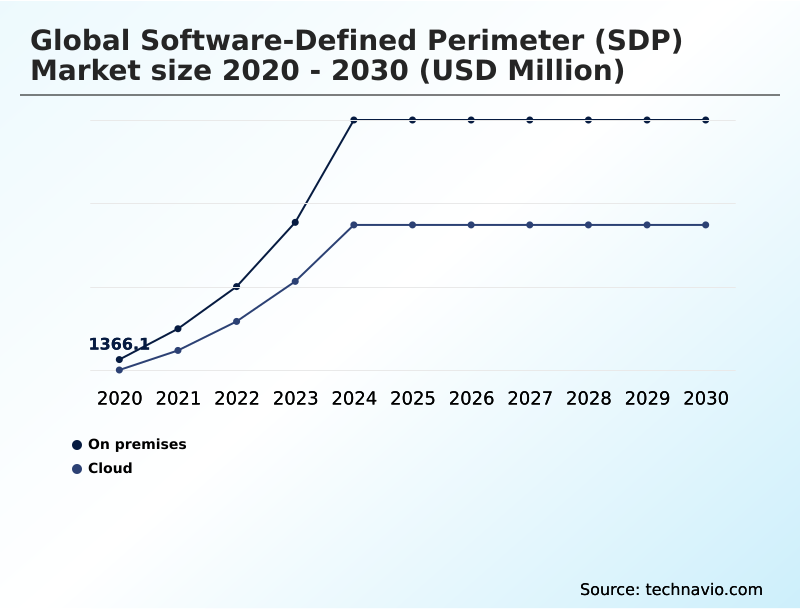
The On premises segment was valued at USD 4.94 billion in 2024 and showed a gradual increase during the forecast period.
Regional Analysis
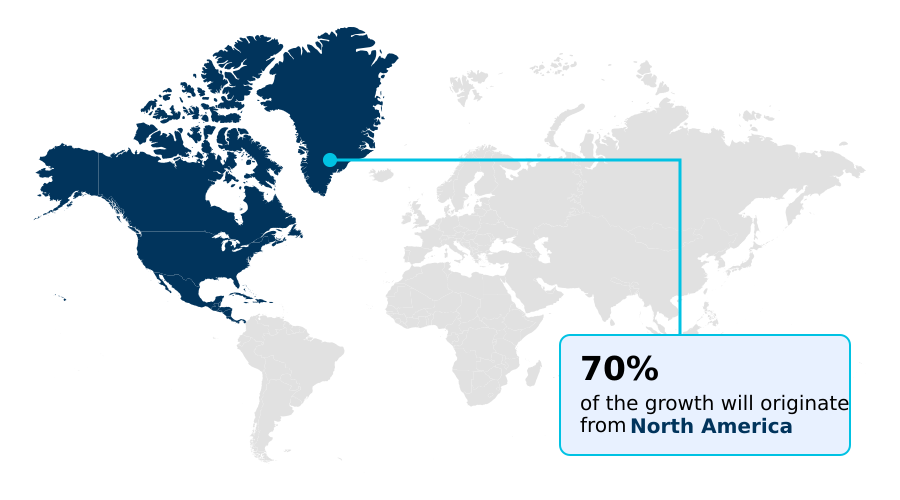
North America is estimated to contribute 70.3% to the growth of the global market during the forecast period.Technavio’s analysts have elaborately explained the regional trends and drivers that shape the market during the forecast period.
See How Software-defined Perimeter (SDP) Market Demand is Rising in North America Get Free Sample
The geographic landscape of the software-defined perimeter market is led by North America, which is projected to account for 70.3% of the market's incremental growth.
This dominance is driven by early adoption, stringent regulatory mandates for zero-trust architectures, and a high concentration of technology vendors.
In contrast, the APAC region is the fastest-growing market, fueled by widespread digital transformation, 5G deployment, and the need for robust operational technology (OT) security.
European adoption is strongly influenced by data sovereignty compliance and privacy regulations like the GDPR, promoting solutions that offer granular control and data localization.
The adoption of a zero trust maturity model varies globally, with enterprises in North America showing higher maturity, achieving an average 25% faster implementation of adaptive risk assessment protocols compared to other regions.
Market Dynamics
Our researchers analyzed the data with 2025 as the base year, along with the key drivers, trends, and challenges. A holistic analysis of drivers will help companies refine their marketing strategies to gain a competitive advantage.
- Strategic decisions in the software-defined perimeter market increasingly involve detailed evaluations beyond basic security. A key consideration is the sdp vs vpn security performance, where SDP consistently demonstrates superior capabilities in preventing lateral movement with sdp.
- Organizations are also analyzing the nuances of sdp for legacy application access, determining whether an sdp agentless vs agent based access model better suits their environment. For many, implementing zero trust for iot and pursuing sdp for operational technology security are now primary objectives, driven by the need to protect interconnected industrial systems.
- The sdp benefits for remote workforce are clear, but businesses must also plan for sdp integration with siem tools to achieve unified visibility. A thorough software defined perimeter cost analysis is essential, weighing initial investment against long-term risk reduction. For global companies, ensuring sdp compliance with gdpr and other regulations is non-negotiable, requiring a robust sdp architecture for hybrid cloud.
- The role of sdp in sase is becoming a central part of network strategy, moving beyond simple connectivity. Evaluating sdp vendor solutions now includes assessing their capabilities for automating sdp policy management and providing detailed sdp performance and latency benchmarks.
- In practice, firms securing devops with sdp principles and using sdp for third party access report a reduction in security audit preparation time by over 50% compared to traditional methods, showcasing clear operational gains. This focus extends to specialized areas like sdp for government and defense, where zero trust network access use cases are mission-critical.
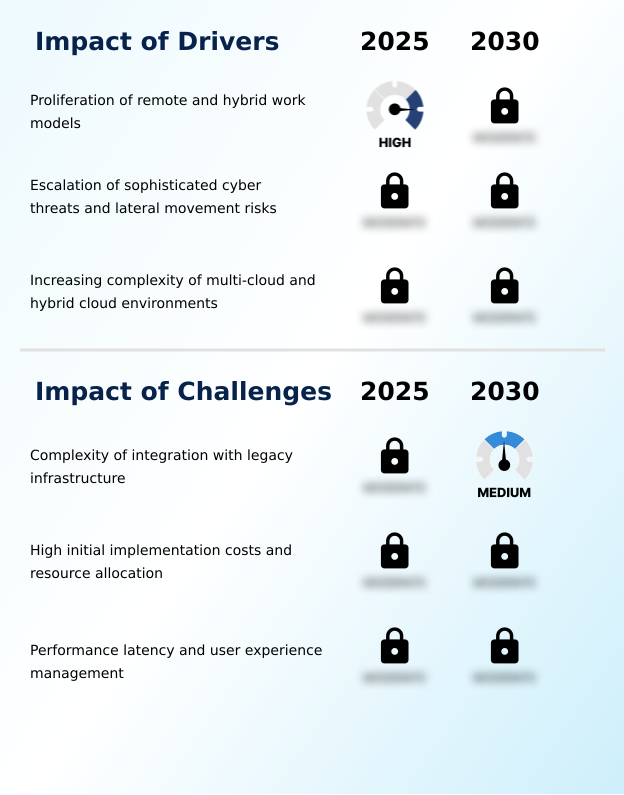
What are the key market drivers leading to the rise in the adoption of Software-defined Perimeter (SDP) Industry?
- The proliferation of remote and hybrid work models serves as a key driver for the adoption of software-defined perimeter solutions.
- The market's growth is primarily driven by the proliferation of remote work, the increasing sophistication of cyber threats, and the complexity of multi-cloud environments.
- Traditional security models are inadequate for distributed workforces, whereas SDP provides a scalable and secure alternative, enabling secure connectivity for remote teams that are 50% larger than what legacy VPNs can support.
- The framework's ability to enforce granular, application-specific access controls is critical for lateral movement prevention, a key defense against ransomware. This approach, which includes device posture assessment, reduces the network attack surface by an average of 95%.
- As enterprises adopt hybrid and multi-cloud strategies, SDP acts as a unified security overlay, providing a centralized policy engine that simplifies management and ensures consistent protection across all platforms, reducing misconfigurations by up to 70%.
What are the market trends shaping the Software-defined Perimeter (SDP) Industry?
- The convergence of software-defined perimeter protocols with Secure Access Service Edge (SASE) architectures is a significant upcoming trend, reflecting a strategic industry shift toward unified, cloud-native security stacks.
- Key trends are reshaping the software-defined perimeter market, primarily through the convergence with Secure Access Service Edge (SASE) and the integration of AI. This shift toward a unified, cloud-native security model is driven by the need for simplified management and consistent policy enforcement across all environments.
- The use of AI and machine learning for adaptive risk assessment enables a move from static rules to dynamic security that responds to real-time threats, with some platforms reducing false positive alerts by over 40%. This trend toward self-healing network perimeters allows security teams to focus on strategic threats.
- Additionally, the market is expanding into operational technology (OT) and IoT environments, where SDP provides critical protection for industrial systems. Extending identity-centric security to these devices can decrease system downtime from targeted attacks by 30%.
What challenges does the Software-defined Perimeter (SDP) Industry face during its growth?
- The complexity of integrating software-defined perimeter solutions with legacy infrastructure presents a key challenge to market growth.
- Despite its benefits, the software-defined perimeter market faces significant challenges. Integrating SDP solutions with legacy corporate infrastructure, particularly older systems lacking support for modern identity protocols, remains a primary hurdle. This complexity can extend project timelines by an average of 45% as teams work to define granular access policies and build custom connectors.
- Another challenge is the high initial implementation cost, which includes software licensing, hardware, and the extensive retraining of personnel on zero-trust methodologies. For some organizations, the cost of reskilling IT staff has exceeded the initial technology procurement by 20%. Finally, performance latency, caused by redirecting traffic through gateways for authentication and encryption, can impact user experience, particularly for high-bandwidth applications.
- Improperly configured gateways can increase application latency by up to 200ms for international users, potentially driving them to create security risks through shadow IT.
Exclusive Technavio Analysis on Customer Landscape
The software-defined perimeter (sdp) market forecasting report includes the adoption lifecycle of the market, covering from the innovator’s stage to the laggard’s stage. It focuses on adoption rates in different regions based on penetration. Furthermore, the software-defined perimeter (sdp) market report also includes key purchase criteria and drivers of price sensitivity to help companies evaluate and develop their market growth analysis strategies.
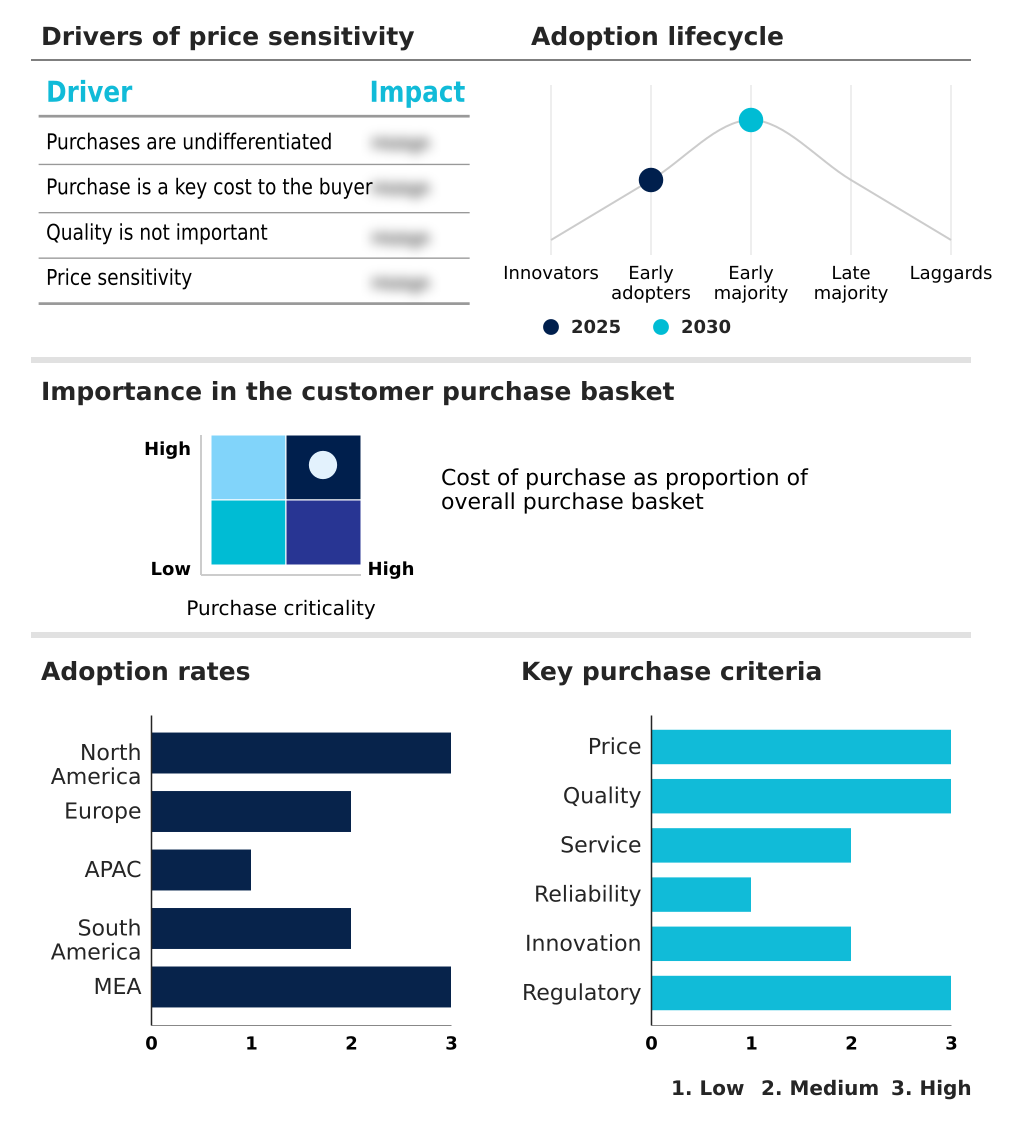
Customer Landscape of Software-defined Perimeter (SDP) Industry
Competitive Landscape
Companies are implementing various strategies, such as strategic alliances, software-defined perimeter (sdp) market forecast, partnerships, mergers and acquisitions, geographical expansion, and product/service launches, to enhance their presence in the industry.
Akamai Technologies Inc. - Delivering secure zero-trust remote access to applications, effectively concealing network infrastructure from unauthorized exposure and ensuring identity-based security.
The industry research and growth report includes detailed analyses of the competitive landscape of the market and information about key companies, including:
- Akamai Technologies Inc.
- Alarum Technologies Ltd.
- Broadcom Inc.
- Cato Networks Ltd.
- CERTES NETWORKS INC.
- Check Point Software Tech Ltd.
- Cisco Systems Inc.
- Cyxtera Technologies Inc.
- Dell Technologies Inc.
- DH2i Co.
- Fortinet Inc.
- Intel Corp.
- Ivanti Software Inc.
- Juniper Networks Inc.
- Okta Inc.
- Palo Alto Networks Inc.
- Perimeter 81 Ltd.
- Verizon Communications Inc.
Qualitative and quantitative analysis of companies has been conducted to help clients understand the wider business environment as well as the strengths and weaknesses of key industry players. Data is qualitatively analyzed to categorize companies as pure play, category-focused, industry-focused, and diversified; it is quantitatively analyzed to categorize companies as dominant, leading, strong, tentative, and weak.
Recent Development and News in Software-defined perimeter (sdp) market
- In August 2025, Verizon Communications Inc. led an international consortium to introduce a standardized framework for integrating software-defined perimeter security protocols into global satellite communication networks.
- In September 2025, a leading North American cybersecurity firm released a new software-defined perimeter engine that utilizes generative AI to automatically create and update security policies based on changing environmental conditions.
- In November 2025, a global aerospace and defense corporation finalized a strategic partnership to implement a software-defined perimeter architecture across its network of satellite ground stations and remote maintenance facilities.
- In May 2025, a prominent international banking conglomerate implemented a comprehensive software-defined perimeter framework to secure its newly launched digital wealth management platform across several continents.
Dive into Technavio’s robust research methodology, blending expert interviews, extensive data synthesis, and validated models for unparalleled Software-defined Perimeter (SDP) Market insights. See full methodology.
| Market Scope | |
|---|---|
| Page number | 298 |
| Base year | 2025 |
| Historic period | 2020-2024 |
| Forecast period | 2026-2030 |
| Growth momentum & CAGR | Accelerate at a CAGR of 48.7% |
| Market growth 2026-2030 | USD 75790.8 million |
| Market structure | Fragmented |
| YoY growth 2025-2026(%) | 46.4% |
| Key countries | US, Canada, Mexico, Germany, UK, France, Italy, The Netherlands, Spain, China, Japan, India, South Korea, Australia, Indonesia, Brazil, Argentina, Colombia, Saudi Arabia, UAE, South Africa, Israel and Turkey |
| Competitive landscape | Leading Companies, Market Positioning of Companies, Competitive Strategies, and Industry Risks |
Research Analyst Overview
- The software-defined perimeter market is fundamentally reshaping enterprise security by operationalizing a zero-trust framework built on identity-centric security. Boardroom discussions are shifting from capital expenditure on firewalls to strategic investments in platforms that provide ephemeral connections and continuous authentication.
- A centralized policy engine, utilizing single packet authorization (SPA), is key to this architecture, enabling dynamic policy enforcement and granular, application-level access control. This model ensures robust lateral movement prevention and comprehensive attack surface reduction. Achieving this requires a cohesive strategy that includes device posture assessment and secure remote access, often converging within a secure access service edge (SASE) framework.
- Successful implementation hinges on integrating core components like identity and access management (IAM), privileged access management (PAM), and a cloud access security broker (CASB). Furthermore, advanced capabilities such as threat intelligence integration, security orchestration, automation, and response (SOAR), and user behavior analytics (UBA) are becoming standard.
- This ecosystem is supported by software-defined encryption, remote browser isolation (RBI), and client-to-gateway connection security. The focus on hardware-enabled security, unified endpoint management, and API security gateway protection is critical for securing both multi-cloud security overlay and DevOps security integration.
- By leveraging identity provider (IdP) integration with TLS and encrypted traffic inspection, organizations have achieved a 40% improvement in threat detection effectiveness.
What are the Key Data Covered in this Software-defined Perimeter (SDP) Market Research and Growth Report?
-
What is the expected growth of the Software-defined Perimeter (SDP) Market between 2026 and 2030?
-
USD 75.79 billion, at a CAGR of 48.7%
-
-
What segmentation does the market report cover?
-
The report is segmented by Deployment (On premises, and Cloud), Component (Controller, End point, and Gateway), End-user (Government and defense, IT and telecom, BFSI, and Others) and Geography (North America, Europe, APAC, South America, Middle East and Africa)
-
-
Which regions are analyzed in the report?
-
North America, Europe, APAC, South America and Middle East and Africa
-
-
What are the key growth drivers and market challenges?
-
Proliferation of remote and hybrid work models, Complexity of integration with legacy infrastructure
-
-
Who are the major players in the Software-defined Perimeter (SDP) Market?
-
Akamai Technologies Inc., Alarum Technologies Ltd., Broadcom Inc., Cato Networks Ltd., CERTES NETWORKS INC., Check Point Software Tech Ltd., Cisco Systems Inc., Cyxtera Technologies Inc., Dell Technologies Inc., DH2i Co., Fortinet Inc., Intel Corp., Ivanti Software Inc., Juniper Networks Inc., Okta Inc., Palo Alto Networks Inc., Perimeter 81 Ltd. and Verizon Communications Inc.
-
Market Research Insights
- Advancing through the zero trust maturity model requires a strategic focus on making identity as the new perimeter. This paradigm shift depends on seamless user authentication and robust insider threat mitigation, supported by technologies enabling just-in-time (JIT) access and passwordless authentication. Organizations are achieving significant gains; for example, implementing adaptive risk assessment can reduce lateral movement incidents by over 70%.
- Furthermore, regulatory compliance automation is improved by up to 80% through the use of attribute-based access control (ABAC) and role-based access control (RBAC). For critical infrastructure protection and operational technology (OT) security, a software-defined approach prevents shadow IT and simplifies vendor risk management.
- The framework for hybrid cloud security, incorporating distributed enforcement points, has shown to optimize performance latency, enhancing user experience management while strengthening supply chain security.
We can help! Our analysts can customize this software-defined perimeter (sdp) market research report to meet your requirements.
 RIA -
RIA - 
