


Specialty Coffee Shops Market Size 2026-2030
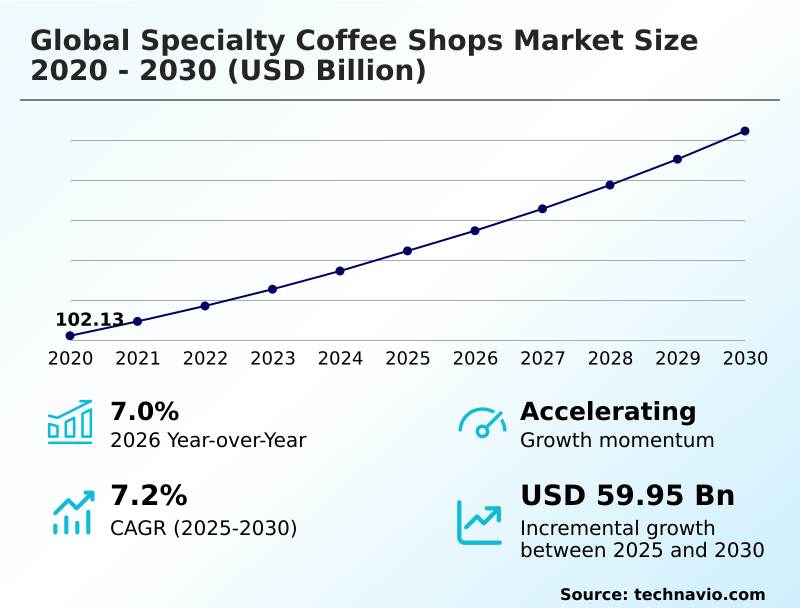
The specialty coffee shops market size is valued to increase by USD 59.95 billion, at a CAGR of 7.2% from 2025 to 2030. Acceleration of premiumization and experiential consumption will drive the specialty coffee shops market.
Major Market Trends & Insights
- North America dominated the market and accounted for a 32.8% growth during the forecast period.
- By Type - Independent coffee shops segment was valued at USD 73.51 billion in 2024
- By Distribution Channel - Offline segment accounted for the largest market revenue share in 2024
Market Size & Forecast
- Market Opportunities: USD 102.36 billion
- Market Future Opportunities: USD 59.95 billion
- CAGR from 2025 to 2030 : 7.2%
Market Summary
- The specialty coffee shops market is undergoing a significant transformation, moving beyond a transactional model to one centered on curated, experiential consumption. This evolution is defined by a consumer base that prioritizes third wave coffee culture, demanding transparency in direct trade relationships and a deep narrative behind the single origin beans they consume.
- Artisanal brewing techniques, from pour over to precise espresso extraction, are no longer niche but expected standards. In response, operators are integrating advanced technology to balance craft with efficiency. For instance, a chain might deploy IoT-enabled brewing systems federated across its network, using predictive data analytics to ensure consistency in every cup and optimize the green coffee supply chain.
- This approach helps manage the inherent volatility of microlots and co-fermented colombian lots while enhancing the customer experience through digital loyalty programs and omni-channel engagement.
- The market's trajectory is shaped by this delicate interplay between maintaining the authenticity of the craft and leveraging technological innovation to scale the premium experience, addressing both the demand for quality and the operational pressures of a competitive landscape defined by a focus on ethical consumption.
What will be the Size of the Specialty Coffee Shops Market during the forecast period?
Get Key Insights on Market Forecast (PDF) Get Free Sample
How is the Specialty Coffee Shops Market Segmented?
The specialty coffee shops industry research report provides comprehensive data (region-wise segment analysis), with forecasts and estimates in "USD million" for the period 2026-2030, as well as historical data from 2020-2024 for the following segments.
- Type
- Independent coffee shops
- Chain coffee shops
- Distribution channel
- Offline
- Online
- Age group
- 25-39 years
- 18-24 years
- 40-59 years
- Above 60
- Geography
- North America
- US
- Canada
- Mexico
- Europe
- Germany
- France
- Italy
- APAC
- China
- Japan
- India
- South America
- Brazil
- Colombia
- Argentina
- Middle East and Africa
- South Africa
- Saudi Arabia
- UAE
- Rest of World (ROW)
- North America
By Type Insights
The independent coffee shops segment is estimated to witness significant growth during the forecast period.
Independent coffee shops define the artisanal edge of the specialty market, operating on principles of high-touch service and deep product knowledge.
These establishments leverage their smaller scale to build authentic community connections, centering the value proposition on the story behind the single origin beans, the expertise in artisanal brewing techniques, and the unique ambiance of the physical space, which often functions as a third space.
Facing economic headwinds from the green coffee supply chain, many have formed collaborative procurement cooperatives, which have demonstrated the ability to secure premium microlots with up to a 15% cost advantage over individual purchasers.
This strategy allows them to ensure a steady supply for nitro infusion systems and co-fermented colombian lots while maintaining their unique brand identity and fostering brand loyalty through an unmatched experiential consumption model.
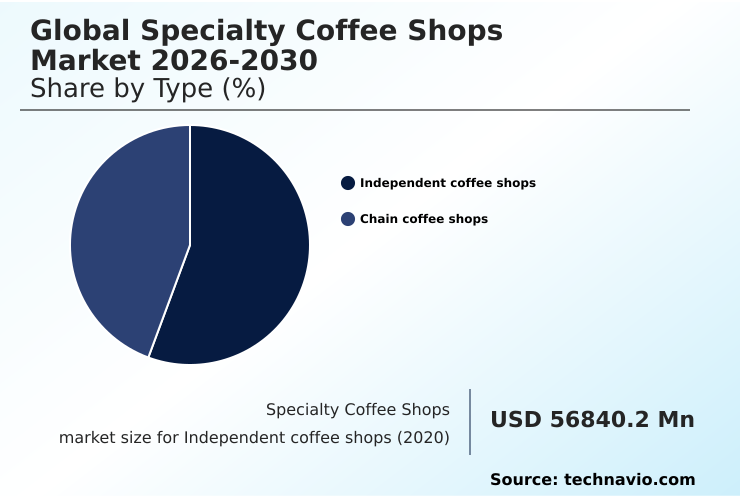
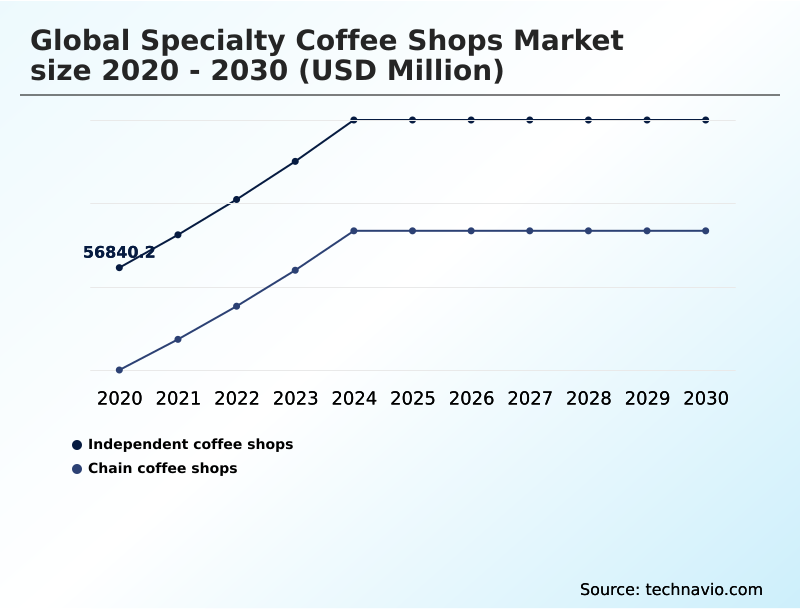
The Independent coffee shops segment was valued at USD 73.51 billion in 2024 and showed a gradual increase during the forecast period.
Regional Analysis
North America is estimated to contribute 32.8% to the growth of the global market during the forecast period.Technavio’s analysts have elaborately explained the regional trends and drivers that shape the market during the forecast period.
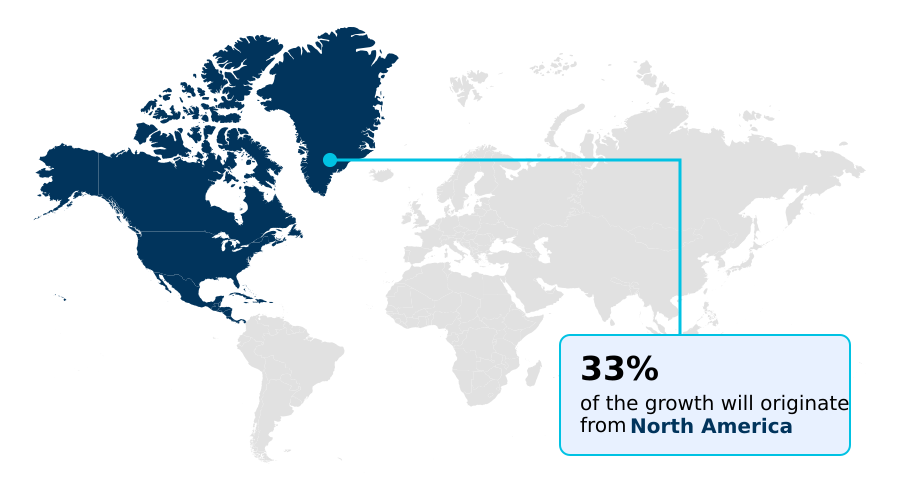
See How Specialty Coffee Shops Market Demand is Rising in North America Get Free Sample
The geographic landscape of the specialty coffee shops market is characterized by mature, sophisticated markets in North America and Europe, alongside rapid expansion in the APAC region.
In North America, the focus is on premiumization and the integration of technology, with the market expanding at a rate nearly 1.4 percentage points lower than in APAC.
European markets are heavily influenced by stringent sustainability standards and a deep-rooted café culture that is now embracing third wave coffee culture.
The APAC region, driven by a rising middle class and urbanization, represents the fastest-growing segment, where digital loyalty programs and omni-channel engagement are standard.
Investment in automated espresso calibration systems in high-volume Asian megacities has reduced beverage preparation variance by 25%. This global divergence requires operators to tailor strategies, balancing artisanal brewing techniques with the high-speed, tech-driven demands of emerging economies.
Market Dynamics
Our researchers analyzed the data with 2025 as the base year, along with the key drivers, trends, and challenges. A holistic analysis of drivers will help companies refine their marketing strategies to gain a competitive advantage.
- The global specialty coffee shops market 2026-2030 is navigating a complex operational landscape where long-term strategy is dictated by the need to balance premium offerings with systemic risks. The increasing volatility in green coffee supply chains, driven by climate factors, is compelling operators to adopt sustainable and regenerative sourcing models.
- This move is not merely ethical but a core business continuity strategy. To counter these supply-side pressures, businesses are investing in sophisticated technology. The deployment of an ai-driven inventory optimization system allows for precise management of high-value, perishable beans, while iot-enabled espresso calibration systems ensure that the quality of the final product remains consistent, protecting brand reputation.
- Furthermore, the diversification of menus via functional ingredients and advanced cold extraction methods has become critical for capturing a younger, health-conscious demographic. This menu evolution requires a flexible supply chain and advanced preparation technology, such as robotic arm technology for pour over preparation, which reports a nearly twofold increase in consistency compared to manual methods during peak hours.
- Simultaneously, the proliferation of ai and automation in retail operations helps manage escalating labor costs. This convergence of sustainability, technology, and menu innovation defines the path forward for operators aiming for resilient growth in a competitive environment.
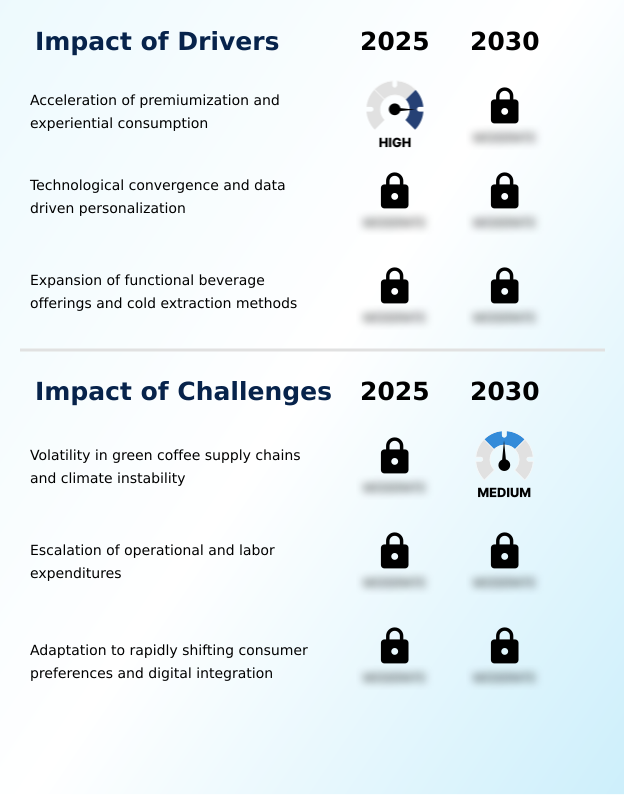
What are the key market drivers leading to the rise in the adoption of Specialty Coffee Shops Industry?
- The acceleration of premiumization and the growing demand for experiential consumption are key drivers propelling market growth.
- Market growth is propelled by the convergence of premiumization, technology, and evolving consumer tastes. The acceleration of premiumization and experiential consumption has elevated the importance of the café environment and the narrative behind the product.
- Technology integration acts as a powerful enabler, with iot-enabled espresso calibration systems reducing dependency on specialized labor and decreasing training-related errors by over 25%.
- Furthermore, data-driven personalization through ai-driven loyalty applications has been linked to a 10% increase in average transaction value by offering tailored recommendations.
- The expansion of functional beverage offerings, including cold extraction methods, captures a wellness-focused consumer segment, transforming the coffee shop into a versatile destination and solidifying its role in the daily routines of a broader customer purchase basket.
What are the market trends shaping the Specialty Coffee Shops Industry?
- The integration of sustainable and regenerative sourcing models is an emerging market trend. This shift emphasizes environmental accountability and ethical procurement strategies across the supply chain.
- Key trends reshaping the specialty coffee shops market are centered on sustainability, automation, and menu innovation. The push for sustainable and regenerative sourcing models is now a core operational mandate, with blockchain-enabled traceability pilots showing an ability to increase consumer trust metrics by 40% in initial rollouts.
- This focus on ethical consumption is complemented by the rapid proliferation of ai and automation in retail operations. The integration of ai-driven forecasting platforms has already reduced inventory spoilage by up to 18% in large-scale operations. Concurrently, the diversification of menus via functional ingredients and cold extraction methods caters to a new demographic.
- This trend is supported by investment in technologies like nitro infusion and precision chilling equipment, moving cold beverages from seasonal items to year-round staples and broadening the appeal of the third space beyond traditional coffee drinkers.
What challenges does the Specialty Coffee Shops Industry face during its growth?
- Volatility within green coffee supply chains, exacerbated by climate instability, presents a key challenge to the industry's growth.
- Operators in the specialty coffee shops market face significant structural challenges that test their resilience and adaptability. The volatility in green coffee supply chains, exacerbated by climate change, has led to green bean price fluctuations of up to 35% in a single season, complicating procurement and margin management.
- This is compounded by the escalation of operational and labor expenditures, which have compressed operating margins for some independent cafes by 5% to 8% year-over-year. In response, many are exploring automation, but the upfront capital remains a barrier. Simultaneously, adapting to rapidly shifting consumer preferences toward digital integration and functional beverages requires constant innovation.
- The challenge lies in maintaining the authenticity of the brand and the quality of artisanal brewing techniques while incorporating new technologies and menu items to stay competitive and ensure financial sustainability.
Exclusive Technavio Analysis on Customer Landscape
The specialty coffee shops market forecasting report includes the adoption lifecycle of the market, covering from the innovator’s stage to the laggard’s stage. It focuses on adoption rates in different regions based on penetration. Furthermore, the specialty coffee shops market report also includes key purchase criteria and drivers of price sensitivity to help companies evaluate and develop their market growth analysis strategies.
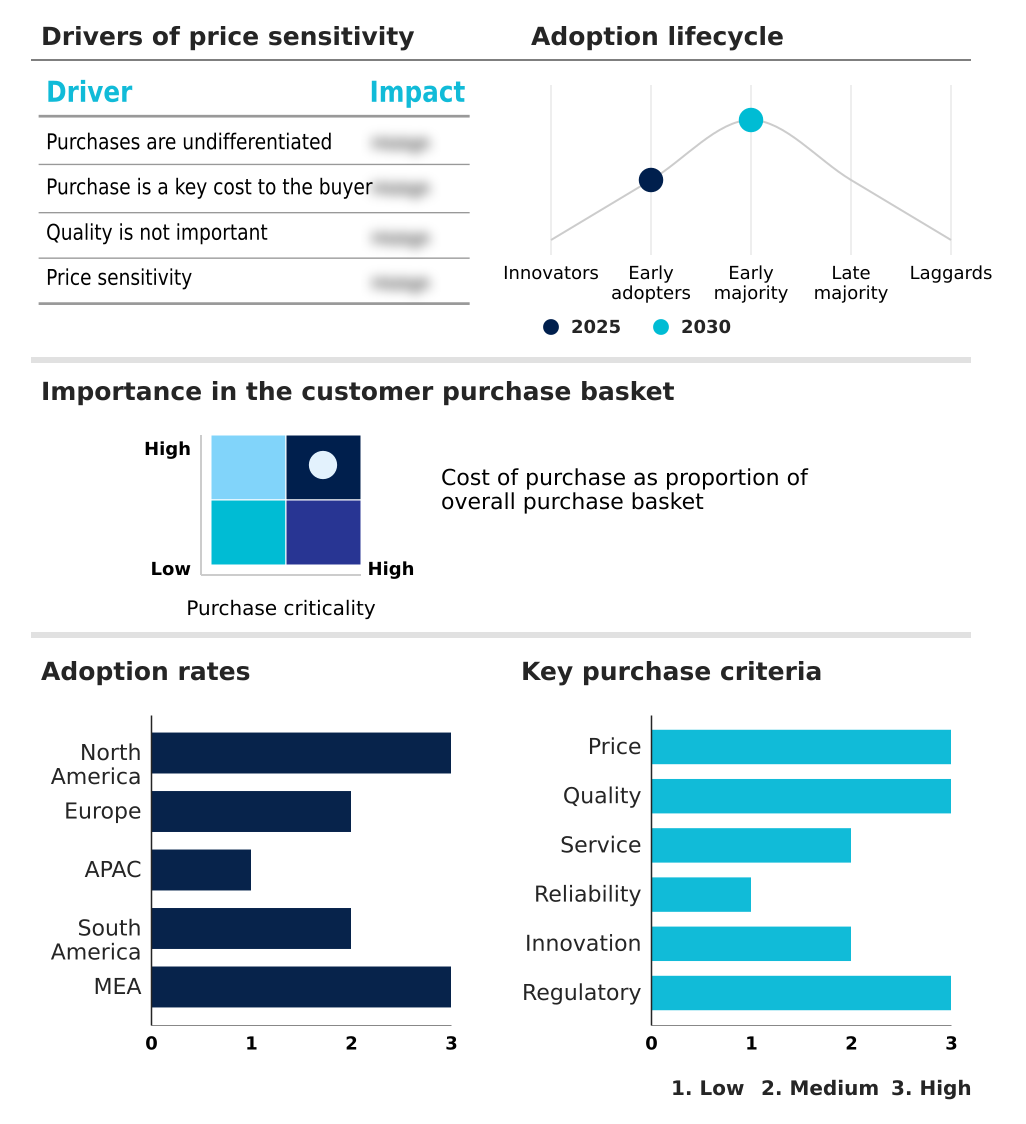
Customer Landscape of Specialty Coffee Shops Industry
Competitive Landscape
Companies are implementing various strategies, such as strategic alliances, specialty coffee shops market forecast, partnerships, mergers and acquisitions, geographical expansion, and product/service launches, to enhance their presence in the industry.
Barista Coffee Co. Ltd. - Delivering curated, third-wave coffee experiences through ethically sourced beans, precision brewing methods, and a focus on consumer engagement and education.
The industry research and growth report includes detailed analyses of the competitive landscape of the market and information about key companies, including:
- Barista Coffee Co. Ltd.
- Blue Bottle Coffee Inc.
- Brew Berrys Hospitality Pvt Ltd.
- Caffe Nero Group Ltd
- Caribou Coffee Operating Co.
- Coffee Beanery
- Coffee Day Global Ltd.
- Costa Ltd.
- DD IP Holder LLC
- Doutor Coffee Co. Ltd
- Ediya Co. Ltd.
- International Coffee and Tea LLC
- La Colombe Torrefaction Inc.
- Luckin Coffee Inc.
- Luigi Lavazza SpA
- Muhavra Enterprises Pvt. Ltd.
- Peets Coffee Inc.
- Pilot Coffee Roasters
- Starbucks Corp.
- Tim Hortons USA Inc.
Qualitative and quantitative analysis of companies has been conducted to help clients understand the wider business environment as well as the strengths and weaknesses of key industry players. Data is qualitatively analyzed to categorize companies as pure play, category-focused, industry-focused, and diversified; it is quantitatively analyzed to categorize companies as dominant, leading, strong, tentative, and weak.
Recent Development and News in Specialty coffee shops market
- In May, 2025, Portland Coffee Roasters expanded its retail strategy by launching a proprietary line of Ready-To-Drink (RTD) canned cold brew, signaling a move by specialty roasters to diversify revenue streams into convenient formats.
- In August, 2025, Freeman Spogli and Co., a private equity firm, announced its acquisition of Philz Coffee, demonstrating rising investor confidence in the growth potential of regional specialty coffee brands with strong brand equity.
- In September, 2025, several major regional coffee chains in the United States initiated a comprehensive sustainability campaign, replacing all single-use plastic packaging with fully compostable materials derived from coffee husks to align with consumer values.
- In March, 2025, the European Specialty Coffee Association formalized a new set of sustainability standards, mandating strict transparency in supply chains for all roasters and cafes operating within its network to ensure ethical procurement.
Dive into Technavio’s robust research methodology, blending expert interviews, extensive data synthesis, and validated models for unparalleled Specialty Coffee Shops Market insights. See full methodology.
| Market Scope | |
|---|---|
| Page number | 291 |
| Base year | 2025 |
| Historic period | 2020-2024 |
| Forecast period | 2026-2030 |
| Growth momentum & CAGR | Accelerate at a CAGR of 7.2% |
| Market growth 2026-2030 | USD 59949.6 million |
| Market structure | Fragmented |
| YoY growth 2025-2026(%) | 7.0% |
| Key countries | US, Canada, Mexico, Germany, France, Italy, UK, Spain, The Netherlands, China, Japan, India, South Korea, Vietnam, Indonesia, Brazil, Colombia, Argentina, South Africa, Saudi Arabia, UAE, Egypt and Ethiopia |
| Competitive landscape | Leading Companies, Market Positioning of Companies, Competitive Strategies, and Industry Risks |
Research Analyst Overview
- The specialty coffee shops market has fundamentally shifted toward a model where sensory experience and ethical sourcing are paramount. This evolution is driven by a sophisticated consumer base, steeped in third wave coffee culture, that demands transparency through direct trade relationships and blockchain-enabled traceability for the single origin beans they consume.
- To meet these expectations, operators are integrating advanced technology, such as iot-enabled brewing systems for precise espresso extraction and pour over techniques. In the back-end, machine learning and predictive data analytics are used to manage the volatile green coffee supply chain and forecast demand for unique offerings like co-fermented colombian lots or products from regenerative agriculture.
- A key boardroom-level decision involves aligning with new sustainability standards to mitigate risks from climate instability, a move that also strengthens brand reputation. The deployment of precision chilling equipment for cold extraction methods has been shown to improve beverage consistency by over 30% compared to traditional ice dilution techniques.
- This fusion of artisanal brewing techniques, including syphon and anaerobic fermentation, with cutting-edge technology defines the competitive frontier, where success depends on delivering both exceptional quality and a compelling narrative around microlots and ethical production.
What are the Key Data Covered in this Specialty Coffee Shops Market Research and Growth Report?
-
What is the expected growth of the Specialty Coffee Shops Market between 2026 and 2030?
-
USD 59.95 billion, at a CAGR of 7.2%
-
-
What segmentation does the market report cover?
-
The report is segmented by Type (Independent coffee shops, and Chain coffee shops), Distribution Channel (Offline, and Online), Age Group (25-39 years, 18-24 years, 40-59 years, and Above 60) and Geography (North America, Europe, APAC, South America, Middle East and Africa)
-
-
Which regions are analyzed in the report?
-
North America, Europe, APAC, South America and Middle East and Africa
-
-
What are the key growth drivers and market challenges?
-
Acceleration of premiumization and experiential consumption, Volatility in green coffee supply chains and climate instability
-
-
Who are the major players in the Specialty Coffee Shops Market?
-
Barista Coffee Co. Ltd., Blue Bottle Coffee Inc., Brew Berrys Hospitality Pvt Ltd., Caffe Nero Group Ltd, Caribou Coffee Operating Co., Coffee Beanery, Coffee Day Global Ltd., Costa Ltd., DD IP Holder LLC, Doutor Coffee Co. Ltd, Ediya Co. Ltd., International Coffee and Tea LLC, La Colombe Torrefaction Inc., Luckin Coffee Inc., Luigi Lavazza SpA, Muhavra Enterprises Pvt. Ltd., Peets Coffee Inc., Pilot Coffee Roasters, Starbucks Corp. and Tim Hortons USA Inc.
-
Market Research Insights
- The dynamics of the specialty coffee shops market are increasingly shaped by a blend of technological adoption and evolving consumer values. Data-driven personalization is a key differentiator, with AI-driven loyalty applications demonstrating a capacity to increase transaction frequency by over 15% through tailored recommendations.
- Simultaneously, predictive forecasting platforms have enabled operators to reduce spoilage of perishable goods by up to 20%, directly impacting profitability. This digital transformation supports a broader menu architecture focused on functional beverage offerings and cold extraction methods, aligning with consumer health trends.
- The emphasis on ethical consumption and a reduced carbon footprint governs procurement, compelling brands to prove their sustainability standards. This creates a competitive environment where brand loyalty is earned not just through quality, but through transparency and alignment with the customer's purchase basket priorities.
We can help! Our analysts can customize this specialty coffee shops market research report to meet your requirements.
 RIA -
RIA - 
