



Sports Tourism Market Size 2026-2030
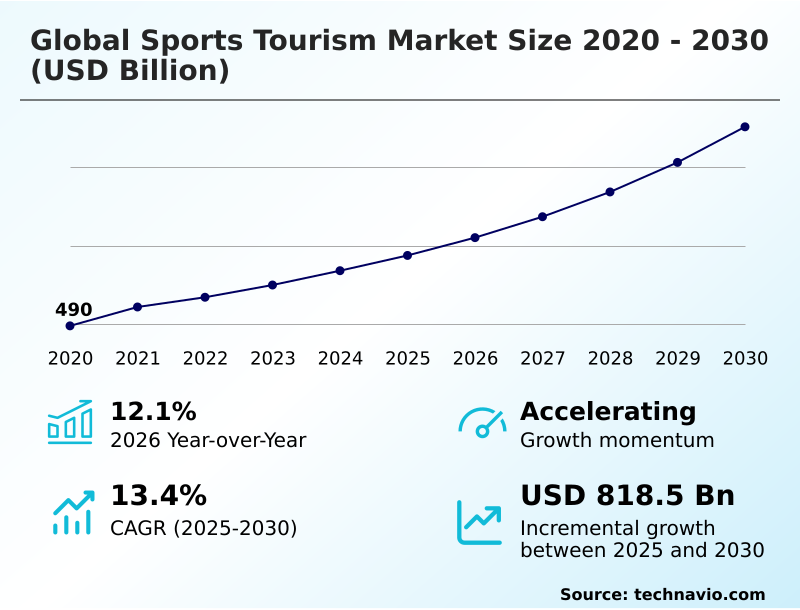
The sports tourism market size is valued to increase by USD 818.5 billion, at a CAGR of 13.4% from 2025 to 2030. Expansion of global mega-event calendars and metropolitan infrastructure investment will drive the sports tourism market.
Major Market Trends & Insights
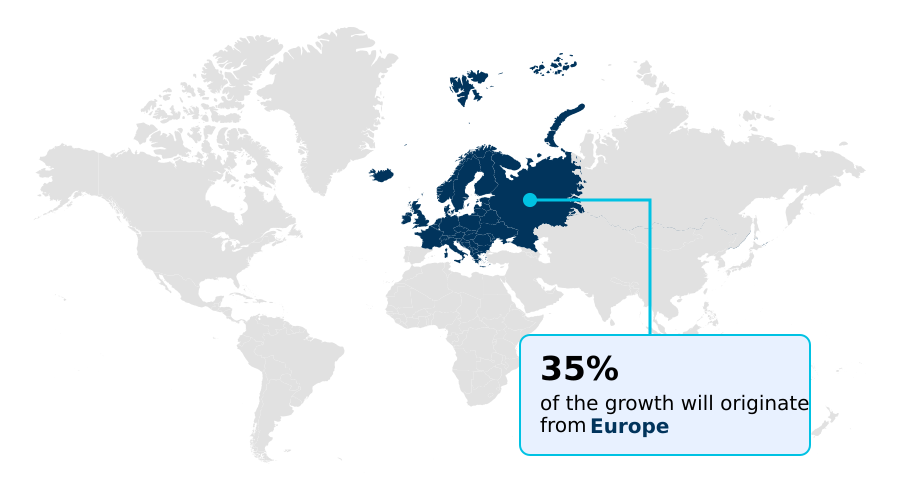
- Europe dominated the market and accounted for a 35.2% growth during the forecast period.
- By Type - Domestic sports tourism segment was valued at USD 501.8 billion in 2024
- By Product - Soccer tourism segment accounted for the largest market revenue share in 2024
Market Size & Forecast
- Market Opportunities: USD 1266.6 billion
- Market Future Opportunities: USD 818.5 billion
- CAGR from 2025 to 2030 : 13.4%
Market Summary
- The sports tourism market is a rapidly evolving sector characterized by the convergence of travel, entertainment, and technology. Growth is fueled by an increasing number of global sporting events and a rising consumer demand for experiential travel packages that go beyond simple spectating.
- Key trends include the integration of digital fan identity systems for seamless venue access control and the push for sustainable travel solutions to meet environmental mandates. The market encompasses everything from mass-participation events to luxury sports packages for high-profile championships.
- A significant challenge lies in managing the complex logistics and security for these events, which increasingly rely on real-time data analytics for crowd flow management. For instance, a host city's tourism authority might leverage anonymized data from fan engagement platforms to dynamically adjust public transport schedules and push localized retail promotions, improving the visitor experience while boosting ancillary revenue streams.
- This approach, blending operational efficiency with hyper-personalized fan journeys, highlights the industry's shift towards data-driven destination management and the importance of a robust digital infrastructure, including advanced biometric recognition and secure payment systems, to support the entire fan journey.
What will be the Size of the Sports Tourism Market during the forecast period?
Get Key Insights on Market Forecast (PDF) Get Free Sample
How is the Sports Tourism Market Segmented?
The sports tourism industry research report provides comprehensive data (region-wise segment analysis), with forecasts and estimates in "USD billion" for the period 2026-2030, as well as historical data from 2020-2024 for the following segments.
- Type
- Domestic sports tourism
- International sports tourism
- Product
- Soccer tourism
- Cricket tourism
- Tennis tourism
- Others
- Area
- Passive sports tourism
- Active sports tourism
- Geography
- Europe
- Germany
- UK
- France
- APAC
- China
- Japan
- India
- North America
- US
- Canada
- Mexico
- South America
- Brazil
- Argentina
- Middle East and Africa
- Saudi Arabia
- UAE
- South Africa
- Rest of World (ROW)
- Europe
By Type Insights
The domestic sports tourism segment is estimated to witness significant growth during the forecast period.
Domestic sports tourism represents a significant economic engine, driven by residents traveling within their own country for participatory sports events and to support national leagues.
This segment, crucial for regional economic development, is bolstered by destination branding initiatives and infrastructure investment planning focused on enhancing accessibility.
Growth is propelled by robust scholastic competitions and youth sports tournaments, which foster community engagement programs and grassroots talent development in sports. The appeal lies in lower travel friction and cost, attracting a broad demographic.
Targeted initiatives designed around sports heritage tours and major league schedules have proven effective, with some programs increasing regional travel intent by over 20% by creating holistic experiential travel packages.
This demonstrates a successful model for travel and hospitality integration at a national level.
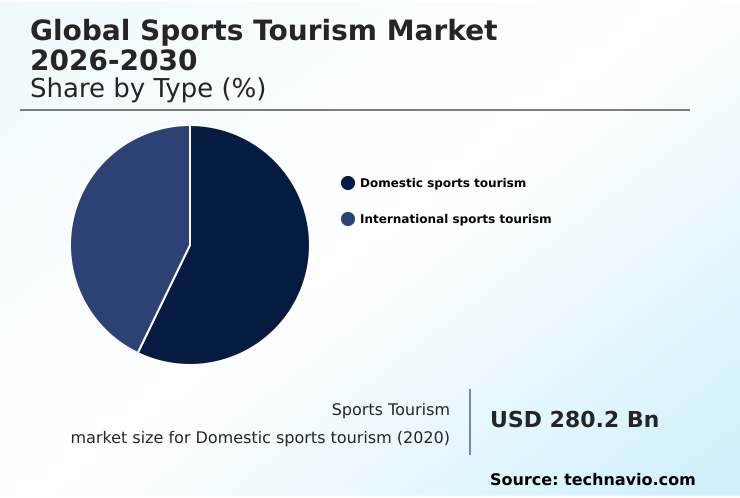
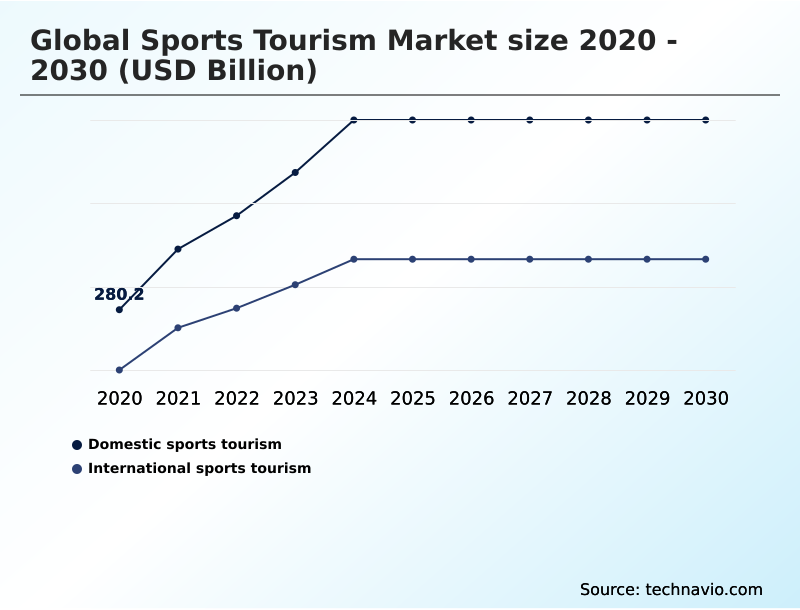
The Domestic sports tourism segment was valued at USD 501.8 billion in 2024 and showed a gradual increase during the forecast period.
Regional Analysis
Europe is estimated to contribute 35.2% to the growth of the global market during the forecast period.Technavio’s analysts have elaborately explained the regional trends and drivers that shape the market during the forecast period.
See How Sports Tourism Market Demand is Rising in Europe Get Free Sample
The geographic landscape is dynamic, with APAC exhibiting the fastest growth potential, outpacing Europe by nearly 1.5 percentage points annually, driven by government-led sports diplomacy initiatives.
North America remains a commercial powerhouse, distinguished by its mature leagues and high-value premium hospitality programs. In Europe, a focus on sustainability is paramount, with projects aiming to reduce fan transit times by 20% through integrated rail networks.
Emerging economies in the Middle East are investing heavily in smart stadium technology and e-sports tourism events, utilizing contactless payment solutions to enhance the fan experience.
This global competition fosters innovation in ticketing revenue models and requires acute tourism impact assessment for venue capacity optimization, sponsorship value analysis, and effective customer relationship management to ensure sustainable growth.
Market Dynamics
Our researchers analyzed the data with 2025 as the base year, along with the key drivers, trends, and challenges. A holistic analysis of drivers will help companies refine their marketing strategies to gain a competitive advantage.
- Strategic analysis of the sports tourism market reveals several interconnected growth vectors. Understanding the economic impact of sports mega-events is crucial for national governments planning long-term infrastructure. A key focus is on the infrastructure requirements for hosting olympics, which sets a benchmark for urban development.
- Concurrently, there is a strong push for sustainable travel solutions for fans, with an emphasis on environmental sustainability in sports venues. The digital transformation in fan experience is another critical area, where leveraging data for personalized fan journeys is paramount. This includes exploring the role of biometrics in stadium security to manage large crowds efficiently.
- Firms offering luxury sports travel packages analysis find that high-net-worth individuals prioritize exclusivity and seamless logistics. The challenges in sports event logistics are being addressed through technology and better cross-border sports event collaboration.
- A significant opportunity lies in the sports tourism market in emerging economies, where the growth of women's sports tourism is notable; marketing campaigns for these events show up to 30% higher digital engagement than traditional campaigns. The impact of esports on travel industry cannot be overstated, creating a new demographic of tech-savvy travelers.
- Niche segments also show strong potential, with fan engagement strategies for soccer tourism evolving constantly. Analysis shows that revenue generation from tennis grand slams remains highly profitable, while cricket tourism trends in South Asia continue to drive significant travel volumes.
- Finally, addressing cybersecurity threats in sports tourism and understanding corporate hospitality trends in motorsports are vital for specialized operators navigating the future of participatory sports events.
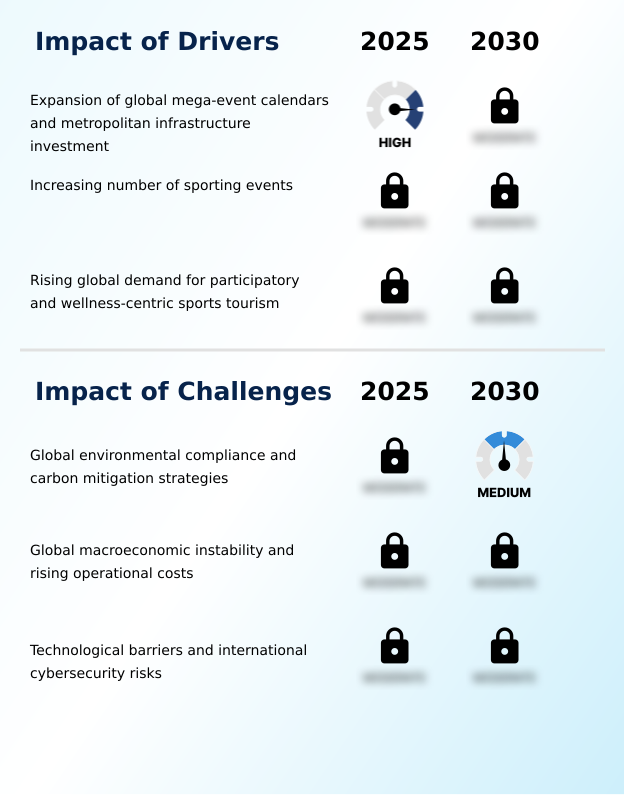
What are the key market drivers leading to the rise in the adoption of Sports Tourism Industry?
- The expansion of global mega-event calendars, coupled with significant metropolitan infrastructure investment, is a key driver propelling market growth.
- The expansion of global mega-event calendars is a primary driver, compelling significant infrastructure investment planning and spurring regional economic development.
- These events create a surge in demand for corporate sports hospitality and official event travel packages, managed through sophisticated sports event logistics.
- The rising global demand for wellness-centric tourism and active participation in mass-participation events like marathons has also become critical. These active tourists, who often travel for longer durations, increase the stability of revenue streams for hosts.
- For example, destinations with certified active-tourism infrastructure report visitor-stay durations that are 25% longer than spectator-focused locations. Effective destination marketing strategies are now highlighting both spectator sports experiences and unique participatory opportunities, supported by strong brand partnership activation.
What are the market trends shaping the Sports Tourism Industry?
- The integration of environmental sustainability and the development of green infrastructure represent a prominent upcoming trend. This shift is reshaping the market as stakeholders prioritize eco-friendly travel solutions.
- A major trend is the shift toward ecological sustainability, with a focus on green stadium infrastructure and sustainable travel solutions. Host cities are now expected to provide comprehensive environmental impact reporting, a key factor in global mega-event bidding.
- This has led to the development of high-speed rail corridors, reducing reliance on aviation and cutting transit-related carbon emissions by up to 30%. Concurrently, the digital transformation is creating hyper-personalized fan journeys through fan journey mapping and digital ecosystem development. This allows for customized ancillary revenue generation.
- The proliferation of women’s athletic competitions, supported by inclusive tourism design, is also diversifying the market, showing a 40% higher family-demographic engagement in some emerging regions.
What challenges does the Sports Tourism Industry face during its growth?
- Adherence to global environmental compliance standards and the implementation of effective carbon mitigation strategies present a key challenge to industry growth.
- A formidable challenge is aligning mass international travel with stringent carbon mitigation strategies and regulatory policy adherence. The mandated use of sustainable aviation fuel, for instance, can increase operational costs for team travel logistics by over 15%, creating pricing pressure. Concurrently, the rapid digital transformation introduces significant risks related to cybersecurity in travel and data privacy compliance.
- Implementing secure biometric security protocols and digital ticketing systems across varying international standards is complex and resource-intensive. A single data breach can compromise millions of user records, necessitating robust risk management for events and crisis communication planning. Furthermore, macroeconomic volatility impacts the entire supply chain for hospitality, affecting everything from operational costs to consumer spending power.
Exclusive Technavio Analysis on Customer Landscape
The sports tourism market forecasting report includes the adoption lifecycle of the market, covering from the innovator’s stage to the laggard’s stage. It focuses on adoption rates in different regions based on penetration. Furthermore, the sports tourism market report also includes key purchase criteria and drivers of price sensitivity to help companies evaluate and develop their market growth analysis strategies.
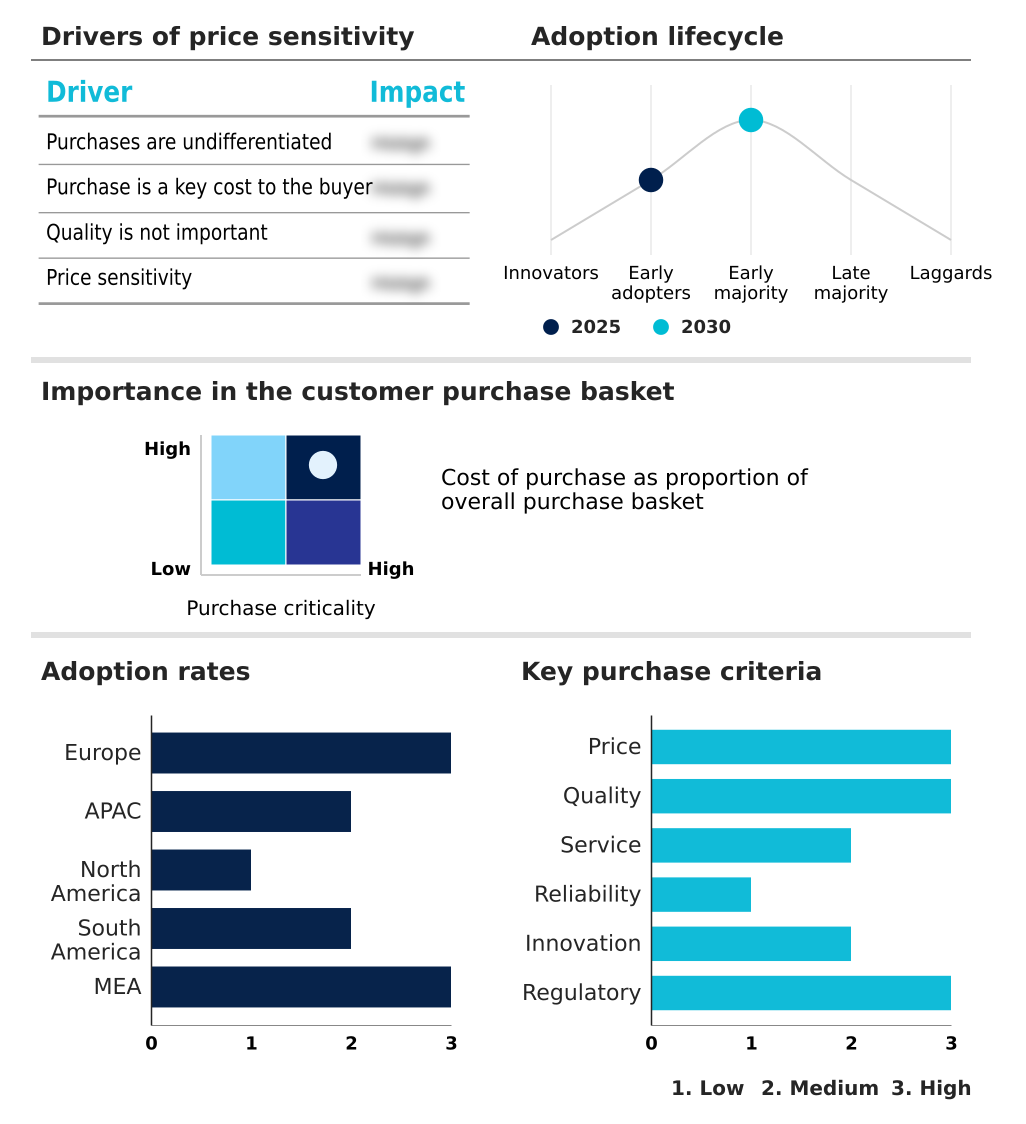
Customer Landscape of Sports Tourism Industry
Competitive Landscape
Companies are implementing various strategies, such as strategic alliances, sports tourism market forecast, partnerships, mergers and acquisitions, geographical expansion, and product/service launches, to enhance their presence in the industry.
ATPI Group - Delivers integrated corporate travel and MICE event logistics, specializing in complex team travel and corporate sports hospitality for global athletic delegations.
The industry research and growth report includes detailed analyses of the competitive landscape of the market and information about key companies, including:
- ATPI Group
- BAC Sports Ltd.
- DTB Sports Management Ltd.
- Expedia Group Inc.
- Fanatic Sports Pvt. Ltd.
- Gala Management Services Ltd.
- Global Sports Experiences
- Global Sports Travel Ltd.
- ISM Inc.
- ITC Travel Group
- JTB India Pvt. Ltd.
- Match Hospitality AG
- Quint
- Sporta Technologies Pvt. Ltd.
- Sports Tours International Ltd.
- Sportsnet Corp. Pty Ltd.
- STH Group Ltd.
- Thomas Cook India Ltd.
- Victory Sports Tours
Qualitative and quantitative analysis of companies has been conducted to help clients understand the wider business environment as well as the strengths and weaknesses of key industry players. Data is qualitatively analyzed to categorize companies as pure play, category-focused, industry-focused, and diversified; it is quantitatively analyzed to categorize companies as dominant, leading, strong, tentative, and weak.
Recent Development and News in Sports tourism market
- In August, 2025, the North American Hospitality Alliance, a consortium of major hotel chains and sports venues, introduced the Universal Fan Identity Protocol, which utilizes advanced biometric recognition to allow international travelers to check into hotels and access venues without physical documentation.
- In May, 2025, the European Union Agency for Railways, in coordination with several continental athletic federations, launched the Green Stadium Connection project, establishing a dedicated high-speed rail corridor for spectators traveling between major tournament host cities in France, Germany, and the Netherlands.
- In April, 2025, the Saudi Ministry of Tourism inaugurated the Riyadh Sports Aviation Hub, a specialized airport terminal expansion designed to manage a projected 30% increase in international fan arrivals for upcoming and future championships.
- In April, 2025, the Ministry of Tourism in Brazil, in partnership with the Brazilian Football Confederation, launched the Rota da Paixao (Route of Passion) initiative to stimulate interstate travel by creating curated tourism packages centered around the national football league schedule.
Dive into Technavio’s robust research methodology, blending expert interviews, extensive data synthesis, and validated models for unparalleled Sports Tourism Market insights. See full methodology.
| Market Scope | |
|---|---|
| Page number | 289 |
| Base year | 2025 |
| Historic period | 2020-2024 |
| Forecast period | 2026-2030 |
| Growth momentum & CAGR | Accelerate at a CAGR of 13.4% |
| Market growth 2026-2030 | USD 818.5 billion |
| Market structure | Fragmented |
| YoY growth 2025-2026(%) | 12.1% |
| Key countries | Germany, UK, France, Italy, Spain, The Netherlands, China, Japan, India, South Korea, Australia, Indonesia, US, Canada, Mexico, Brazil, Argentina, Chile, Saudi Arabia, UAE, South Africa, Israel and Turkey |
| Competitive landscape | Leading Companies, Market Positioning of Companies, Competitive Strategies, and Industry Risks |
Research Analyst Overview
- The sports tourism market is defined by a strategic push towards creating holistic spectator sports experiences and immersive fan experiences. This involves deploying smart stadium technology, augmented reality stadium tours, and comprehensive fan engagement platforms to deepen connections with attendees. The operational backbone relies on sophisticated team travel logistics and biometric security protocols for secure venue access control.
- At a boardroom level, the adoption of sustainable travel solutions and circular economy principles is no longer optional; it is integral to corporate ESG strategy and brand reputation, influencing decisions on everything from utilizing sustainable aviation fuel to implementing green stadium infrastructure.
- The deployment of biometric recognition for digital ticketing systems and contactless payment solutions has demonstrably improved efficiency, reducing venue entry processing times by over 40% at major events. This drive for efficiency extends to offerings like participatory sports events, youth sports tournaments, and specialized sports heritage tours, all supported by dynamic pricing models.
- Firms are also focused on developing official event travel packages, corporate sports hospitality, and luxury sports packages that generate significant ancillary revenue, with a growing interest in the burgeoning e-sports tourism and wellness-centric tourism segments, which are shaped by sports diplomacy initiatives and require advanced real-time data analytics for crowd flow management and delivery of premium hospitality programs.
What are the Key Data Covered in this Sports Tourism Market Research and Growth Report?
-
What is the expected growth of the Sports Tourism Market between 2026 and 2030?
-
USD 818.5 billion, at a CAGR of 13.4%
-
-
What segmentation does the market report cover?
-
The report is segmented by Type (Domestic sports tourism, and International sports tourism), Product (Soccer tourism, Cricket tourism, Tennis tourism, and Others), Area (Passive sports tourism, and Active sports tourism) and Geography (Europe, APAC, North America, South America, Middle East and Africa)
-
-
Which regions are analyzed in the report?
-
Europe, APAC, North America, South America and Middle East and Africa
-
-
What are the key growth drivers and market challenges?
-
Expansion of global mega-event calendars and metropolitan infrastructure investment, Global environmental compliance and carbon mitigation strategies
-
-
Who are the major players in the Sports Tourism Market?
-
ATPI Group, BAC Sports Ltd., DTB Sports Management Ltd., Expedia Group Inc., Fanatic Sports Pvt. Ltd., Gala Management Services Ltd., Global Sports Experiences, Global Sports Travel Ltd., ISM Inc., ITC Travel Group, JTB India Pvt. Ltd., Match Hospitality AG, Quint, Sporta Technologies Pvt. Ltd., Sports Tours International Ltd., Sportsnet Corp. Pty Ltd., STH Group Ltd., Thomas Cook India Ltd. and Victory Sports Tours
-
Market Research Insights
- The dynamics of the sports tourism market are shaped by a strategic push toward enhancing the fan experience while navigating economic pressures. The adoption of integrated digital platforms for ticketing and hospitality has been shown to reduce entry friction at major venues by over 25%.
- Concurrently, operators are implementing dynamic pricing models, which have helped increase ancillary revenues by up to 15% during peak demand periods. This balancing act requires sophisticated customer relationship management and robust brand partnership activation to maintain loyalty. As firms focus on destination marketing strategies, they must also manage complex sports event logistics and ensure data privacy compliance.
- The market's resilience is tested by the need for continuous infrastructure investment planning, with successful outcomes depending on effective travel and hospitality integration and rigorous tourism impact assessment to justify expenditures and ensure sustainable, long-term regional economic development.
We can help! Our analysts can customize this sports tourism market research report to meet your requirements.
 RIA -
RIA - 
