



Sustainable Fashion Certification Services Market Size and Growth Forecast 2026-2030
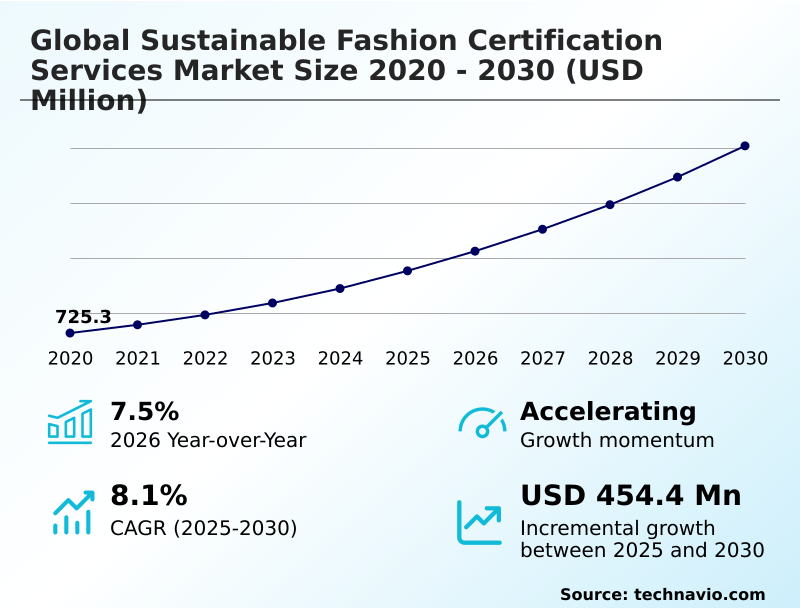
The Sustainable Fashion Certification Services Market size was valued at USD 951.5 million in 2025 growing at a CAGR of 8.1% during the forecast period 2026-2030.
APAC accounts for 36.1% of incremental growth during the forecast period. The Organic textile certification segment by Type was valued at USD 283.1 million in 2024, while the Apparel brands segment holds the largest revenue share by End-user.
The market is projected to grow by USD 680.6 million from 2020 to 2030, with USD 454.4 million of the growth expected during the forecast period of 2025 to 2030.
Get Key Insights on Market Forecast (PDF) Request Free Sample
Sustainable Fashion Certification Services Market Overview
The sustainable fashion certification services market is undergoing significant expansion as regulatory mandates and environmental, social, and governance (ESG) criteria become central to the apparel industry's operations. With APAC poised to contribute over 36% of the market's growth, the focus is on verifying complex global supply chains. Certification bodies provide the critical third-party environmental certification and social compliance auditing that brands need to mitigate greenwashing risks and substantiate claims. For instance, a mid-sized textile manufacturer pursuing B Corp Certification must provide evidence of its closed-loop system, demonstrating verifiable reductions in water usage and a commitment to material traceability. This involves a comprehensive lifecycle assessment (LCA) and chain of custody verification, transforming sustainability from a marketing claim into a quantifiable operational metric. As such, these services are becoming indispensable for securing market access and maintaining brand credibility in an increasingly conscientious marketplace, where factory compliance auditing and material sourcing documentation are standard requirements.
Drivers, Trends, and Challenges in the Sustainable Fashion Certification Services Market
The global sustainable fashion certification services market is shaped by a fundamental tension between its essential role and its practical implementation challenges. The high cost of certification for small and medium enterprises creates significant barriers to entry, often favoring larger corporations that can absorb the expenses associated with comprehensive audits.
This issue is compounded by the need for harmonization of global fashion certification standards, as the current fragmented landscape of labels can confuse consumers and create redundant compliance work for brands operating internationally. In response, technology is emerging as a critical enabler.
The push for blockchain integration for textile supply chain traceability offers a potential solution, creating immutable records that can streamline the verification of recycled content in apparel and simplify auditing for fair labor practices in garment factories.
This technological shift is crucial as regulations, such as the EU's Green Claims Directive, intensify scrutiny on the environmental impact of synthetic vs natural fibers. The growth disparity between regions, with APAC's market expansion outpacing Europe's by nearly 5%, underscores the global shift in manufacturing and the corresponding need for scalable, technologically advanced verification solutions.
A key operational scenario involves a textile manufacturer in Southeast Asia using a blockchain-based system to provide real-time data on water usage and chemical inputs to its European clients, satisfying both regulatory and brand partner requirements for verifiable sustainability data.
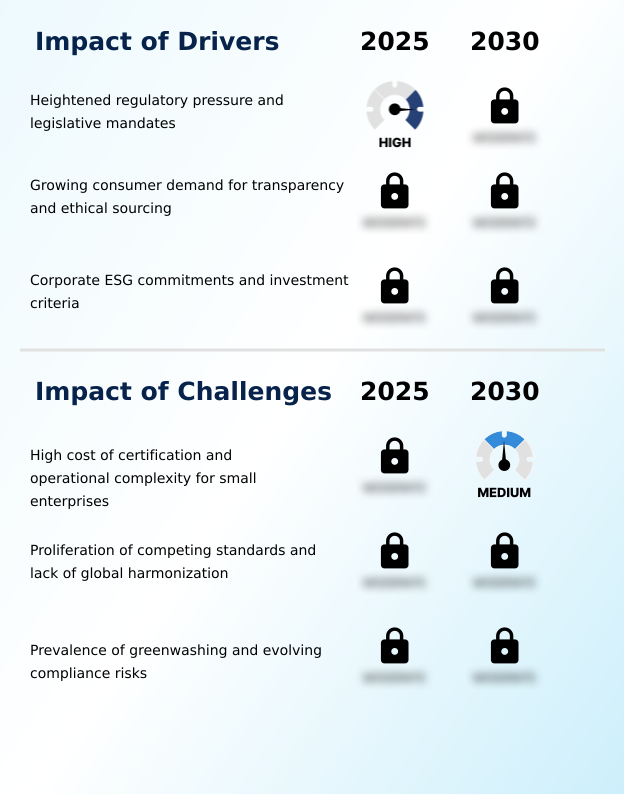
Primary Growth Driver: Heightened regulatory pressure and the implementation of legislative mandates that require verifiable proof of environmental and social claims are a key driver for the market.
Growth in the sustainable fashion certification services market is propelled by a convergence of regulatory mandates, consumer demand for transparency, and investor pressure.
Governments are enacting stringent laws, such as the EU's Corporate Sustainability Due Diligence Directive, that necessitate rigorous supply chain due diligence and verifiable proof of ethical claims, making third-party certification essential for compliance.
This is reinforced by investors who increasingly use environmental, social, and governance (ESG) criteria to evaluate risk and direct capital, linking financial incentives to certified performance.
Furthermore, rising consumer skepticism toward self-declared green marketing is driving brands to seek credible, independent environmental claim validation and social accountability standards to build trust and mitigate the risk of greenwashing, with the market showing an accelerating momentum and a year-over-year growth of 7.5%.
Emerging Market Trend: The integration of blockchain technology and digital product passports is enhancing traceability. This trend represents a fundamental shift away from static certifications toward dynamic, immutable records of a garment's lifecycle.
The market is evolving beyond raw material verification toward a holistic, technology-driven approach focused on circularity and data transparency. A primary trend is the integration of digital product passports, which provide immutable, blockchain-verified records of a garment's journey, from fiber origin to end-of-life. This enhances material traceability and combats greenwashing.
Concurrently, there is a significant expansion of circular economy principles, with new certification frameworks emerging to standardize lifecycle assessments (LCA) and validate textile-to-textile recycling processes. Certification bodies are now required to assess not just inputs but a product's entire lifecycle, including its design for disassembly and end-of-life recyclability.
This shift is critical as the market for recycled materials continues to grow, with the recycled material certification segment projected to see significant expansion.
Key Industry Challenge: The high cost of certification and the operational complexity of compliance present a key challenge, particularly for small and medium enterprises seeking to adopt sustainable practices.
The primary challenges hindering the market's universal adoption are the high cost of certification for small and medium enterprises, the fragmentation of standards, and the persistent threat of greenwashing. The financial burden of audits and compliance with standards like the Global Organic Textile Standard (GOTS) can be prohibitive for smaller brands, creating a market skewed toward large corporations.
This is exacerbated by a lack of harmonization of global fashion certification standards, which leads to confusion for consumers and redundant efforts for businesses seeking to operate across different regions. This fragmentation also creates opportunities for greenwashing, where misleading claims undermine the credibility of legitimate eco-labeling standards.
Mitigating these risks requires significant investment in supply chain transparency and robust chain of custody verification, further complicating the compliance landscape for all players.
Explore Full Market Dynamics Analysis Request Free Sample
Sustainable Fashion Certification Services Market Segmentation
The sustainable fashion certification services industry research report provides comprehensive data including region-wise segment analysis, with forecasts and analysis for the period 2026-2030, as well as historical data from 2020-2024 for the following segments.
Type Segment Analysis
The organic textile certification segment is estimated to witness significant growth during the forecast period.
The organic textile certification segment is foundational to the sustainable fashion services market, driven by consumer and regulatory demands for materials free from synthetic inputs.
This subsegment, which accounts for a significant share of the market, addresses the ecological impact of conventional agriculture by enforcing stringent verification processes.
These processes ensure absolute compliance with standards like the Global Organic Textile Standard (GOTS), which mandates comprehensive soil testing, crop rotation validation, and strict adherence to environmental protection protocols throughout the supply chain.
Auditors perform chain of custody verification to ensure integrity from farm to final product.
As apparel corporations commit to zero-toxic-discharge goals and regenerative agriculture protocols, the demand for rigorous raw material validation continues to grow, cementing this segment's role in the industry.
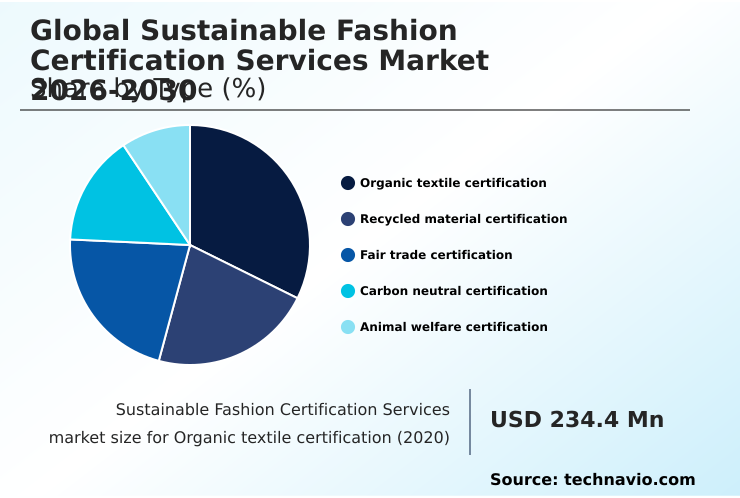
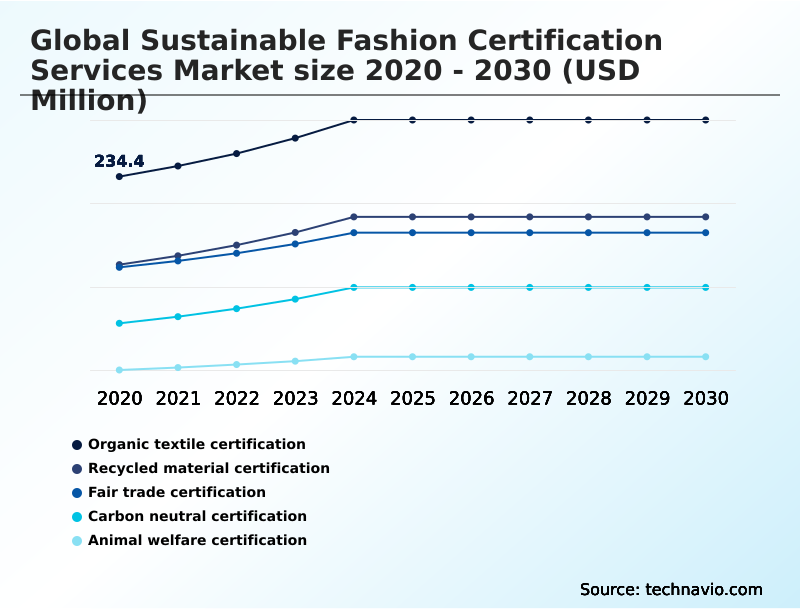
The Organic textile certification segment was valued at USD 283.1 million in 2024 and showed a gradual increase during the forecast period.
Sustainable Fashion Certification Services Market by Region: APAC Leads with 36.1% Growth Share
APAC is estimated to contribute 36.1% to the growth of the global market during the forecast period.
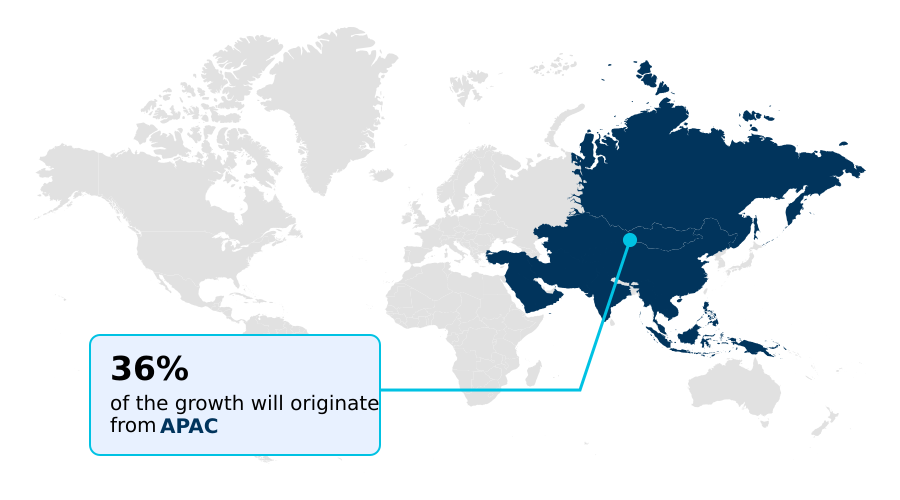
The geographic landscape of the sustainable fashion certification services market is dominated by APAC, which is set to contribute approximately 36.1% of the market's incremental growth.
This is largely because the region serves as the primary manufacturing hub for the global apparel industry, compelling factories to seek international validation through factory compliance auditing and material traceability programs to meet the demands of Western brands.
Europe, holding the second-largest share, acts as a regulatory pacesetter, with frameworks like the EU's Corporate Sustainability Due Diligence Directive mandating rigorous supply chain transparency.
In North America, growth is driven by consumer demand for ethical sourcing and the rise of circular business models requiring verification.
These regional dynamics create a global need for harmonized eco-labeling standards and third-party environmental certification to ensure consistency and trust across international supply chains.
Customer Landscape Analysis for the Sustainable Fashion Certification Services Market
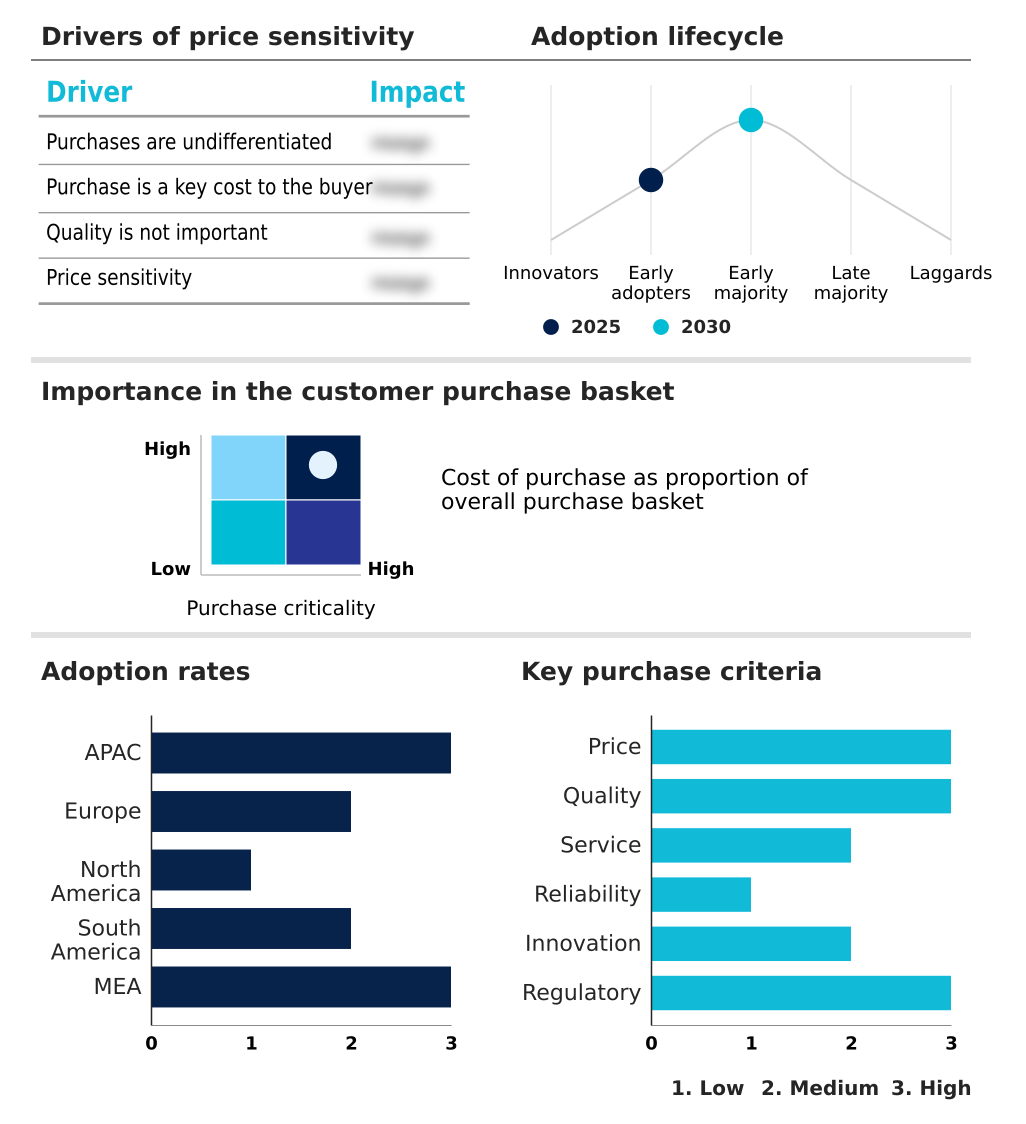
The sustainable fashion certification services market forecasting report includes the adoption lifecycle of the market, covering from the innovator’s stage to the laggard’s stage. It focuses on adoption rates in different regions based on penetration. Furthermore, the sustainable fashion certification services market report also includes key purchase criteria and drivers of price sensitivity to help companies evaluate and develop their market growth analysis strategies.
Competitive Landscape of the Sustainable Fashion Certification Services Market
Companies are implementing various strategies, such as strategic alliances, partnerships, mergers and acquisitions, geographical expansion, and product/service launches, to enhance their presence in the sustainable fashion certification services market industry.
B Lab - Services provide independent, third-party auditing and verification of environmental, social, and ethical claims across the global textile and apparel supply chain, ensuring compliance and enhancing transparency.
The industry research and growth report includes detailed analyses of the competitive landscape of the market and information about key companies, including:
- B Lab
- Bluesign Technologies AG
- Bureau Veritas
- Control union
- ECOCERT GROUP
- Intertek Group Plc
- OEKO-TEX Service GmbH
- SCS Global Services
- SGS SA
- TUV Rheinland Group
- UL LLC
Qualitative and quantitative analysis of companies has been conducted to help clients understand the wider business environment as well as the strengths and weaknesses of key industry players. Data is qualitatively analyzed to categorize companies as pure play, category-focused, industry-focused, and diversified; it is quantitatively analyzed to categorize companies as dominant, leading, strong, tentative, and weak.
Recent Developments in the Sustainable Fashion Certification Services Market
- In April 2025, OEKO-TEX implemented new regulations that introduced stricter chemical safety limits and improved verification processes for organic cotton used in certified textiles, enhancing the integrity of its labeling systems.
- In May 2025, amendments to the CarbonNeutral Protocol introduced Scope 1 and Scope 2 entity certification options. This update allows organizations to certify operational emissions separately from broader corporate emissions, improving transparency and helping companies demonstrate measurable climate action.
- In July 2025, The Global Organic Textile Standard initiated a public consultation process for a new certification framework called Global Responsible Textile Standard (GRTS), designed to expand sustainability criteria to responsibly produced fibres that are not necessarily organic.
- In November 2025, hospitality supplier Bokser Textiles launched a Vermilion sheeting collection marketed as carbon-neutral bedding. The collection combines recycled or sustainable materials and carbon-offset programs to neutralize lifecycle emissions while also reducing microplastic fiber pollution.
Research Analyst Overview: Sustainable Fashion Certification Services Market
The operational landscape for apparel and textiles has shifted, making third-party verification a non-negotiable aspect of risk management and brand equity. Boardroom decisions now directly link environmental, social, and governance (ESG) criteria to financial performance, compelling investment in comprehensive supply chain due diligence.
Adherence to frameworks such as the ZDHC Roadmap to Zero or achieving Leather Working Group (LWG) certification is now a baseline expectation for market access. For example, to comply with the EU's Corporate Sustainability Due Diligence Directive, a fashion conglomerate must deploy robust social compliance auditing across its entire supplier network, making material traceability a critical operational capability.
This demand fuels the market for services providing lifecycle assessment (LCA) and chain of custody verification. Organizations use standards like the Global Recycled Standard (GRS) and Bluesign system to validate environmental claims, while B Corp Certification offers a holistic benchmark for ethical performance.
The market's momentum is evident, with APAC alone contributing over 36% to incremental growth, reflecting the global scale of manufacturing and the corresponding need for standardized, verifiable compliance protocols.
Dive into Technavio’s robust research methodology, blending expert interviews, extensive data synthesis, and validated models for unparalleled Sustainable Fashion Certification Services Market insights. See full methodology.
| Market Scope | |
|---|---|
| Page number | 308 |
| Base year | 2025 |
| Historic period | 2020-2024 |
| Forecast period | 2026-2030 |
| Growth momentum & CAGR | Accelerate at a CAGR of 8.1% |
| Market growth 2026-2030 | USD 454.4 million |
| Market structure | Concentrated |
| YoY growth 2025-2026(%) | 7.5% |
| Key countries | China, India, Japan, South Korea, Australia, Indonesia, Germany, UK, France, Italy, Spain, The Netherlands, US, Canada, Mexico, Brazil, Argentina, Colombia, Saudi Arabia, UAE, South Africa, Israel and Turkey |
| Competitive landscape | Leading Companies, Market Positioning of Companies, Competitive Strategies, and Industry Risks |
Sustainable Fashion Certification Services Market: Key Questions Answered in This Report
-
What is the expected growth of the Sustainable Fashion Certification Services Market between 2026 and 2030?
-
The Sustainable Fashion Certification Services Market is expected to grow by USD 454.4 million during 2026-2030, registering a CAGR of 8.1%. Year-over-year growth in 2026 is estimated at 7.5%%. This acceleration is shaped by heightened regulatory pressure and legislative mandates, which is intensifying demand across multiple end-use verticals covered in the report.
-
-
What segmentation does the market report cover?
-
The report is segmented by Type (Organic textile certification, Recycled material certification, Fair trade certification, Carbon neutral certification, and Animal welfare certification), End-user (Apparel brands, Textile manufacturers, Retailers, and Fashion designers and private labels), Application (Clothing and apparel, Footwear, Accessories, and Home textiles) and Geography (APAC, Europe, North America, South America, Middle East and Africa). Among these, the Organic textile certification segment is estimated to witness significant growth during the forecast period, driven by rising adoption across key application areas. Each segment includes detailed qualitative and quantitative analysis, along with historical data from 2020-2024 and forecasts through 2030 with year-over-year growth rates.
-
-
Which regions are analyzed in the report?
-
The report covers APAC, Europe, North America, South America and Middle East and Africa. APAC is estimated to contribute 36.1% to market growth during the forecast period. Country-level analysis includes China, India, Japan, South Korea, Australia, Indonesia, Germany, UK, France, Italy, Spain, The Netherlands, US, Canada, Mexico, Brazil, Argentina, Colombia, Saudi Arabia, UAE, South Africa, Israel and Turkey, with dedicated market size tables and year-over-year growth for each.
-
-
What are the key growth drivers and market challenges?
-
The primary driver is heightened regulatory pressure and legislative mandates, which is accelerating investment and industry demand. The main challenge is high cost of certification and operational complexity for small enterprises, creating operational barriers for key market participants. The report quantifies the impact of each driver and challenge across 2026 and 2030 with comparative analysis.
-
-
Who are the major players in the Sustainable Fashion Certification Services Market?
-
Key vendors include B Lab, Bluesign Technologies AG, Bureau Veritas, Control union, ECOCERT GROUP, Intertek Group Plc, OEKO-TEX Service GmbH, SCS Global Services, SGS SA, TUV Rheinland Group and UL LLC. The report provides qualitative and quantitative analysis categorizing companies as dominant, leading, strong, tentative, and weak based on their market positioning. Company profiles include business segment analysis, SWOT assessment, key offerings, and recent strategic developments.
-
Sustainable Fashion Certification Services Market Research Insights
Market dynamics are increasingly shaped by corporate ESG commitments and the need for enhanced supply chain transparency, driving a year-over-year growth of 7.5%. Stakeholders demand verifiable proof of ethical sourcing and sustainable material sourcing, moving beyond self-declarations. This pressure is codified in frameworks like the Fashion Sustainability and Social Accountability Act, which mandates stringent material sourcing documentation.
In practice, a textile mill seeking to supply major apparel brands must now undergo regular factory compliance auditing for wastewater compliance under standards such as the ZDHC. This requirement for raw material validation and hazardous substance elimination forces investment in cleaner production technologies and transparent reporting systems.
The market is thus defined by a shift from voluntary initiatives to mandatory, audited compliance across the entire value chain.
We can help! Our analysts can customize this sustainable fashion certification services market research report to meet your requirements.
 RIA -
RIA - 
