


Sweet Snacks Market Size 2026-2030
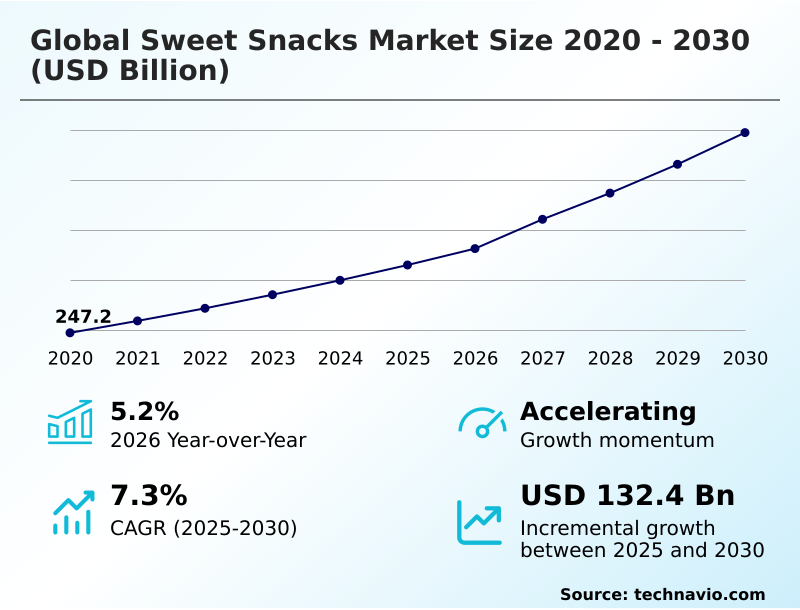
The sweet snacks market size is valued to increase by USD 132.4 billion, at a CAGR of 7.3% from 2025 to 2030. Pervasive influence of convenience and on-go consumption patterns will drive the sweet snacks market.
Major Market Trends & Insights
- APAC dominated the market and accounted for a 37.9% growth during the forecast period.
- By Product - Cakes segment was valued at USD 142.8 billion in 2024
- By Distribution Channel - Offline segment accounted for the largest market revenue share in 2024
Market Size & Forecast
- Market Opportunities: USD 200.2 billion
- Market Future Opportunities: USD 132.4 billion
- CAGR from 2025 to 2030 : 7.3%
Market Summary
- The sweet snacks market is defined by a core tension between consumer demand for permissible indulgence and the rising influence of health-conscious purchasing behaviors. This dynamic compels continuous innovation, moving beyond traditional formulations toward products featuring clean label ingredients, plant-based alternatives, and functional benefits.
- In this landscape, manufacturers must navigate complex supply chains to ensure ethical sourcing and cost stability for key commodities. For instance, a confectioner aiming to launch a new premium chocolate line must secure a transparent and resilient supply of certified sustainable cocoa, manage volatile commodity prices through hedging strategies, and develop packaging that is both protective and environmentally responsible.
- Success depends on harmonizing these operational imperatives with sophisticated marketing that communicates quality, taste, and wellness attributes to a discerning global audience. The market's trajectory is shaped by an ability to deliver on this multifaceted value proposition, where sensory appeal and responsible production are inextricably linked.
What will be the Size of the Sweet Snacks Market during the forecast period?
Get Key Insights on Market Forecast (PDF) Get Free Sample
How is the Sweet Snacks Market Segmented?
The sweet snacks industry research report provides comprehensive data (region-wise segment analysis), with forecasts and estimates in "USD billion" for the period 2026-2030, as well as historical data from 2020-2024 for the following segments.
- Product
- Cakes
- Cookies
- Others
- Distribution channel
- Offline
- Online
- Packaging
- Bag and pouches
- Boxes
- Jars
- Others
- Geography
- APAC
- China
- Japan
- India
- Europe
- Germany
- UK
- France
- North America
- US
- Canada
- Mexico
- Middle East and Africa
- Saudi Arabia
- UAE
- South Africa
- South America
- Brazil
- Argentina
- Colombia
- Rest of World (ROW)
- APAC
By Product Insights
The cakes segment is estimated to witness significant growth during the forecast period.
The market is segmented by product, distribution channel, packaging, and geography. Within the product segment, the cakes category is transforming to meet demands for individual consumption occasions and permissible indulgence.
This shift is evident in the proliferation of single-serving formats and portion control packaging. Innovation is a key battleground, with a focus on clean label ingredients and artisanal production methods.
Health and wellness trends have created a robust market for specialized options, including reduced sugar formulations and gluten-free options, with projections indicating a category scale-up of nearly 50% over a five-year horizon.
Strategic imperatives include a focus on a circular packaging economy, utilizing compostable films and materials that support sustainable packaging innovation.
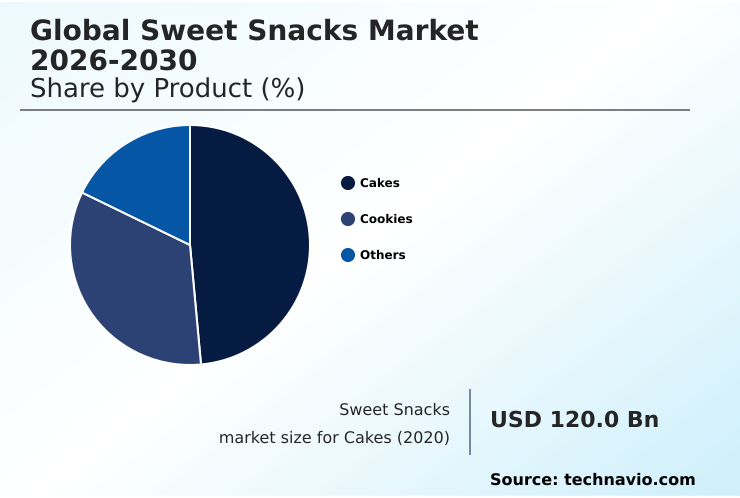
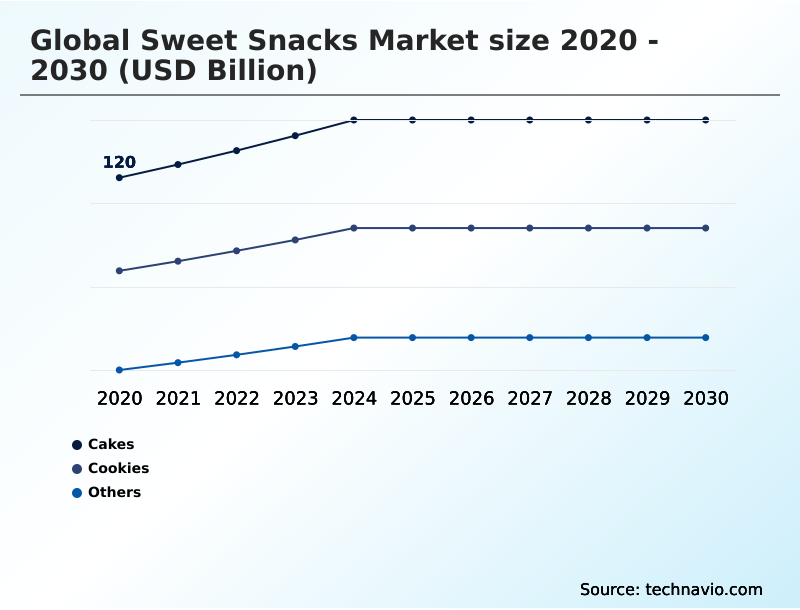
The Cakes segment was valued at USD 142.8 billion in 2024 and showed a gradual increase during the forecast period.
Regional Analysis
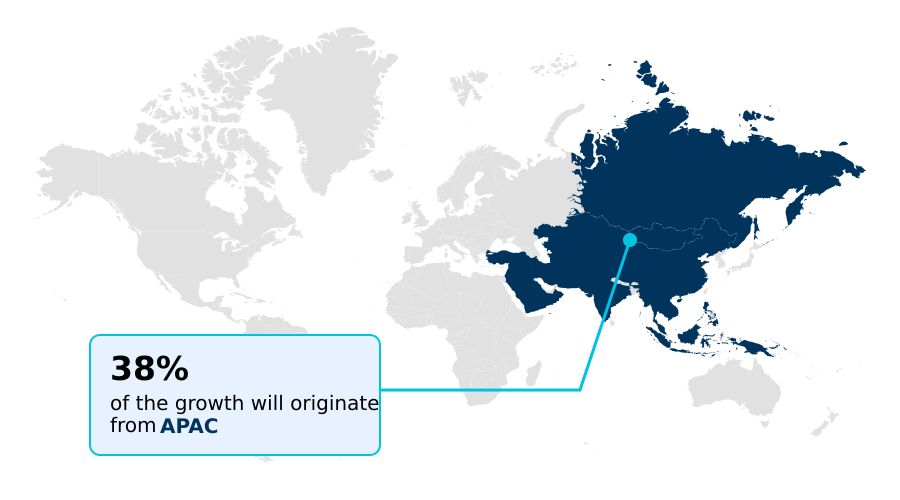
APAC is estimated to contribute 37.9% to the growth of the global market during the forecast period.Technavio’s analysts have elaborately explained the regional trends and drivers that shape the market during the forecast period.
See How Sweet Snacks Market Demand is Rising in APAC Get Free Sample
The geographic landscape is shifting, with APAC poised to contribute nearly 38% of the market's incremental expansion, outpacing North America's contribution by more than double. This is driven by demand for mindful snacking products and clean eating dessert trends.
In these regions, the emphasis on sustainable cocoa sourcing is intensifying, with brands leveraging food traceability technology to validate claims. Products featuring functional ingredients, along with gluten-free options and dairy-free alternatives made with clean label ingredients, are gaining traction.
A resilient supply chain management strategy is crucial for companies to manage commodity sourcing and distribution across these diverse, high-growth territories, where consumer preference for ethically produced goods is on the rise.
Market Dynamics
Our researchers analyzed the data with 2025 as the base year, along with the key drivers, trends, and challenges. A holistic analysis of drivers will help companies refine their marketing strategies to gain a competitive advantage.
- Strategic decision-making in the sweet snacks market is increasingly complex, shaped by a confluence of regulatory, economic, and consumer-driven factors. Navigating the impact of sugar taxes on product pricing requires sophisticated modeling to maintain margins without alienating price-sensitive demographics.
- This ties directly into the core challenge of balancing taste and nutrition in snacks, a task complicated by the strong consumer preference for natural ingredients. The parallel demand for portable snack packaging fuels innovation but also intersects with strategies for reducing packaging waste, a key pillar of corporate sustainability goals.
- At the same time, the role of e-commerce in snack distribution is expanding, offering a direct channel to consumers but requiring new logistical capabilities. Operationally, the challenges in sustainable ingredient sourcing and the need to manage commodity price volatility in food production demand a resilient and transparent supply chain.
- A company that successfully implements traceability can see a 10% improvement in supplier verification efficiency. Furthermore, the push toward navigating front-of-pack labeling regulations and fostering innovation in plant-based dessert recipes are no longer optional but essential for long-term relevance and market access.
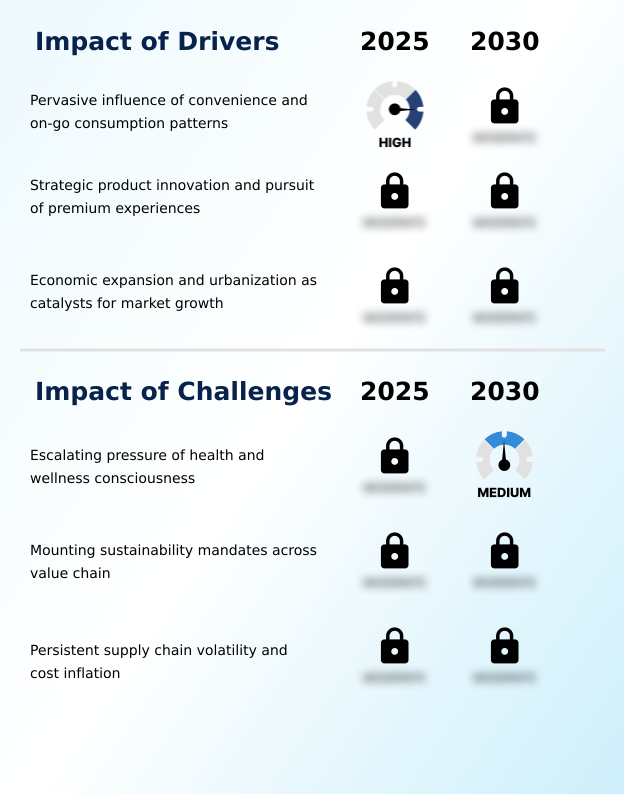
What are the key market drivers leading to the rise in the adoption of Sweet Snacks Industry?
- The market's primary driver is the pervasive influence of modern consumer lifestyles, which favor convenience and on-the-go consumption patterns.
- Market growth is fundamentally driven by the alignment of products with modern lifestyles. The demand for convenient snacking solutions is paramount, leading to a proliferation of single-serving portions and ready-to-eat formats that facilitate on-the-go consumption.
- This convenience factor is a strong impulse purchase driver, with sales from checkout displays accounting for up to 5% of a category's total revenue in certain retail environments.
- Concurrently, a push toward premiumization is evident, as consumers gravitate toward artisanal production methods and premium ingredients. This creates a market for healthier indulgence options that do not compromise on taste.
- However, this premium segment faces robust private label snack competition, which has matured to offer comparable quality at a lower price point, intensifying the need for continuous brand innovation.
What are the market trends shaping the Sweet Snacks Industry?
- The profound shift toward a digitally integrated, multi-channel ecosystem is reshaping market dynamics. This includes the expansion of the digital shelf through e-commerce and disruptive direct-to-consumer channels.
- Key trends are reshaping competitive dynamics, driven by a consumer search for novel experiences. Experiential consumption trends are fueling demand for products that offer sensory exploration, leveraging flavor globalization and multi-textural products. This is evident in the rise of co-branding food partnerships that create unique, limited-time offers.
- The expansion of direct-to-consumer sweet snacks and subscription snack boxes has seen online channel growth outpace offline by a factor of nearly two in recent periods. Social commerce for food is also an emerging frontier, particularly for plant-based alternatives.
- Packaging innovation focuses on functionality, with resealable pouches that cater to on-the-go lifestyles and a growing preference for sustainable options over traditional formats.
What challenges does the Sweet Snacks Industry face during its growth?
- A key market challenge stems from the escalating pressure of global health and wellness consciousness, which scrutinizes the nutritional profile of traditional sweet snacks.
- The primary market challenge is navigating the intersection of health regulations and consumer demand for transparency. The ingredient reformulation challenge is immense, as companies work to develop reduced sugar formulations using natural sweeteners without compromising taste.
- This is compounded by the front-of-pack labeling impact, where regulations in several key markets, now covering over 25% of the population in some regions, mandate clear warnings on products high in sugar or fat. Furthermore, demands for ethical sourcing and a transparent supply chain are non-negotiable. Ethical ingredient procurement, backed by food traceability technology, is becoming a standard operational requirement.
- On the sustainability front, companies are investing in mono-material structures and compostable films to move away from multi-layer plastics, which face recycling rates below 5% in many areas.
Exclusive Technavio Analysis on Customer Landscape
The sweet snacks market forecasting report includes the adoption lifecycle of the market, covering from the innovator’s stage to the laggard’s stage. It focuses on adoption rates in different regions based on penetration. Furthermore, the sweet snacks market report also includes key purchase criteria and drivers of price sensitivity to help companies evaluate and develop their market growth analysis strategies.
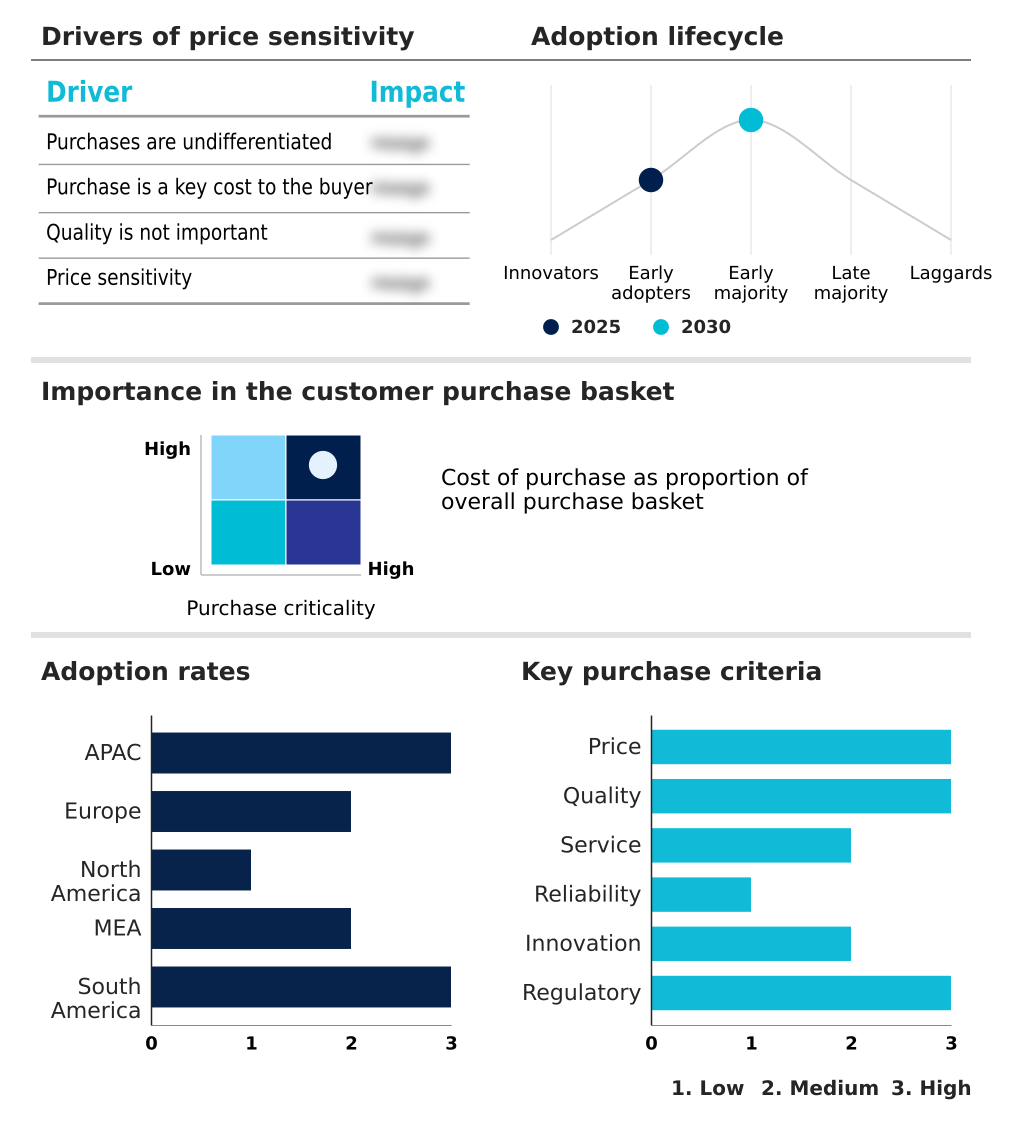
Customer Landscape of Sweet Snacks Industry
Competitive Landscape
Companies are implementing various strategies, such as strategic alliances, sweet snacks market forecast, partnerships, mergers and acquisitions, geographical expansion, and product/service launches, to enhance their presence in the industry.
Blue Diamond Growers - Key offerings focus on balancing permissible indulgence with healthier attributes, featuring clean label ingredients, functional benefits, and innovative formats designed for on-the-go consumption and sensory exploration.
The industry research and growth report includes detailed analyses of the competitive landscape of the market and information about key companies, including:
- Blue Diamond Growers
- Calbee Inc.
- Campbell Soup Co.
- Conagra Brands Inc.
- Ferrero International S.A.
- General Mills Inc.
- Haldiram Snacks Food Pvt. Ltd.
- HARIBO GmbH and Co. KG
- Jelly Belly Candy Co.
- Lindt and Sprungli AG
- Mars Inc.
- Mondelez International Inc.
- Nestle SA
- Palmer Candy Co.
- PepsiCo Inc.
- The Hain Celestial Group
- The Hershey Co.
- Unilever PLC
- Universal Robina Corp.
- WK Kellogg Co
Qualitative and quantitative analysis of companies has been conducted to help clients understand the wider business environment as well as the strengths and weaknesses of key industry players. Data is qualitatively analyzed to categorize companies as pure play, category-focused, industry-focused, and diversified; it is quantitatively analyzed to categorize companies as dominant, leading, strong, tentative, and weak.
Recent Development and News in Sweet snacks market
- In November 2024, Mondelez International announced a major investment of over $480 million to expand its manufacturing capabilities and build a new chocolate factory in India, underscoring the strategic importance of the APAC market.
- In January 2025, Hostess Brands LLC introduced Meltamors, a soft cake with a melting center designed to be microwaved, tapping into the consumer trend of experiential consumption and at-home indulgence.
- In September 2024, Mondelez International released the limited-edition Oreo Black and White Cookie, a culturally resonant innovation inspired by the iconic New York City delicacy to drive short-term sales and brand affinity.
- In April 2025, Krispy Kreme Inc. and Mars Inc. collaborated to launch a new collection of M&M'S-topped doughnuts, demonstrating a synergistic co-branding strategy to create buzzworthy products in the fresh bakery space.
Dive into Technavio’s robust research methodology, blending expert interviews, extensive data synthesis, and validated models for unparalleled Sweet Snacks Market insights. See full methodology.
| Market Scope | |
|---|---|
| Page number | 308 |
| Base year | 2025 |
| Historic period | 2020-2024 |
| Forecast period | 2026-2030 |
| Growth momentum & CAGR | Accelerate at a CAGR of 7.3% |
| Market growth 2026-2030 | USD 132.4 billion |
| Market structure | Fragmented |
| YoY growth 2025-2026(%) | 5.2% |
| Key countries | China, Japan, India, South Korea, Australia, Indonesia, Germany, UK, France, Italy, Spain, The Netherlands, US, Canada, Mexico, Saudi Arabia, UAE, South Africa, Israel, Turkey, Brazil, Argentina and Colombia |
| Competitive landscape | Leading Companies, Market Positioning of Companies, Competitive Strategies, and Industry Risks |
Research Analyst Overview
- The sweet snacks market operates on a complex axis, balancing permissible indulgence with health-driven innovation. Boardroom decisions are increasingly influenced by the need for portfolio diversification to include plant-based alternatives and reduced sugar formulations, driven by a consumer shift toward functional ingredients and clean label ingredients.
- The demand for on-the-go consumption has institutionalized formats like single-serving portions and ready-to-eat formats in resealable pouches, necessitating investment in specialized portion control packaging. At the same time, the push for ethical sourcing and a circular packaging economy is reshaping supply chains.
- Manufacturers are now investing in sustainable cocoa sourcing and mono-material structures, with some achieving a 15% reduction in non-recyclable material usage. Success hinges on a brand's ability to integrate premium ingredients into multi-textural products that also offer high protein content or high fiber content, meeting the nuanced expectations of the modern consumer.
What are the Key Data Covered in this Sweet Snacks Market Research and Growth Report?
-
What is the expected growth of the Sweet Snacks Market between 2026 and 2030?
-
USD 132.4 billion, at a CAGR of 7.3%
-
-
What segmentation does the market report cover?
-
The report is segmented by Product (Cakes, Cookies, and Others), Distribution Channel (Offline, and Online), Packaging (Bag and pouches, Boxes, Jars, and Others) and Geography (APAC, Europe, North America, Middle East and Africa, South America)
-
-
Which regions are analyzed in the report?
-
APAC, Europe, North America, Middle East and Africa and South America
-
-
What are the key growth drivers and market challenges?
-
Pervasive influence of convenience and on-go consumption patterns, Escalating pressure of health and wellness consciousness
-
-
Who are the major players in the Sweet Snacks Market?
-
Blue Diamond Growers, Calbee Inc., Campbell Soup Co., Conagra Brands Inc., Ferrero International S.A., General Mills Inc., Haldiram Snacks Food Pvt. Ltd., HARIBO GmbH and Co. KG, Jelly Belly Candy Co., Lindt and Sprungli AG, Mars Inc., Mondelez International Inc., Nestle SA, Palmer Candy Co., PepsiCo Inc., The Hain Celestial Group, The Hershey Co., Unilever PLC, Universal Robina Corp. and WK Kellogg Co
-
Market Research Insights
- Market dynamics are increasingly shaped by shifting consumer values and retail channel evolution. The rise of private label snack competition has captured significant retail share, with some chains seeing own-brand sales expand by over 15% in key categories. This pressures established brands, whose marketing ROI is 1.8 times higher when leveraging impulse purchase drivers at checkout.
- As consumers seek healthier indulgence options and convenient snacking solutions, the direct-to-consumer model gains traction, offering brands a channel for fostering loyalty and gathering valuable first-party data. Navigating this landscape requires a sophisticated understanding of these competitive pressures and evolving paths to purchase.
We can help! Our analysts can customize this sweet snacks market research report to meet your requirements.
 RIA -
RIA - 
