



Swimwear Market Size 2026-2030
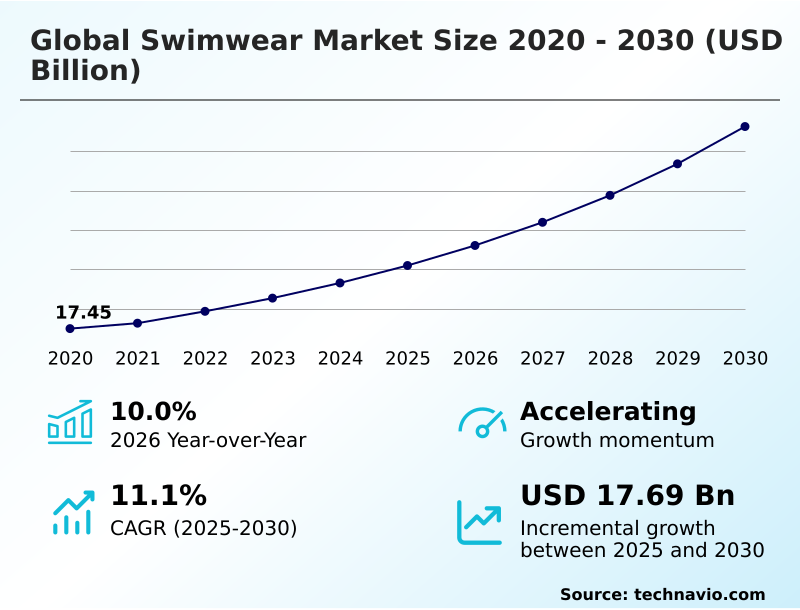
The swimwear market size is valued to increase by USD 17.69 billion, at a CAGR of 11.1% from 2025 to 2030. Surge in aquatic fitness and health-conscious lifestyles will drive the swimwear market.
Major Market Trends & Insights
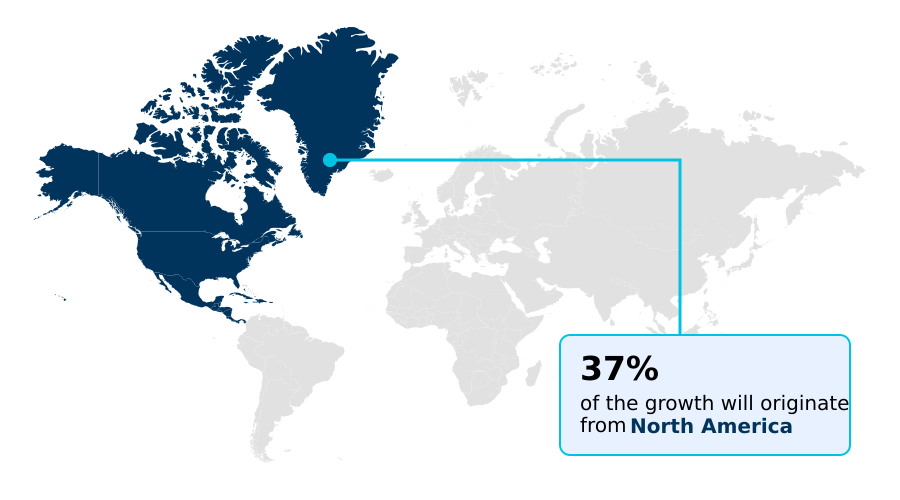
- North America dominated the market and accounted for a 36.8% growth during the forecast period.
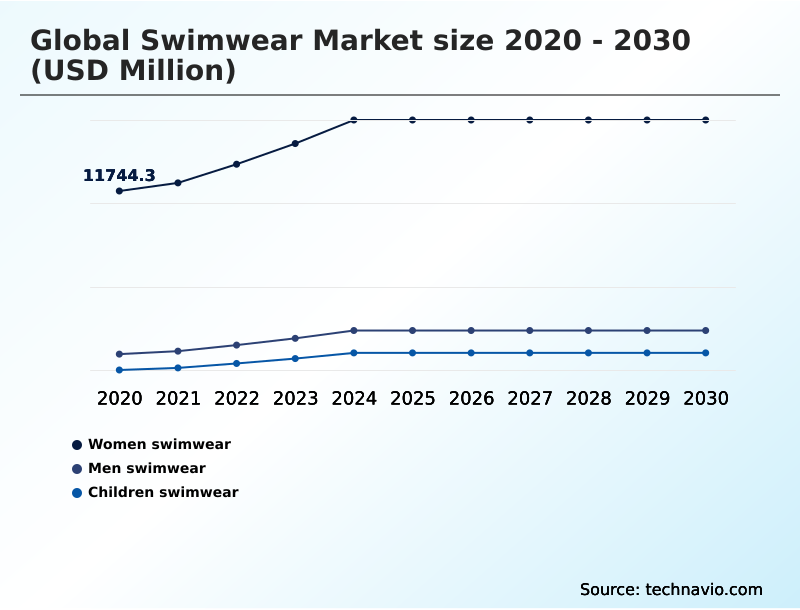
- By Type - Women swimwear segment was valued at USD 15.43 billion in 2024
- By Distribution Channel - Offline segment accounted for the largest market revenue share in 2024
Market Size & Forecast
- Market Opportunities: USD 25.72 billion
- Market Future Opportunities: USD 17.69 billion
- CAGR from 2025 to 2030 : 11.1%
Market Summary
- The swimwear market is undergoing a significant transformation, driven by a convergence of consumer values and technological advancements. A primary catalyst is the global shift toward health-conscious lifestyles, which has increased participation in aquatic fitness, boosting demand for high-performance textiles with features like muscle compression and hydrodynamic efficiency. Concurrently, the industry is navigating a strong consumer-led push for sustainability.
- This trend is compelling manufacturers to adopt circular economy principles, utilizing recycled fabrics such as regenerated nylon and investing in eco-friendly processes like waterless dyeing.
- For instance, a brand might leverage digital textile printing for on-demand production, a strategic move that not only aligns with sustainable practices but also mitigates the risks associated with volatile global supply chains by reducing waste and overproduction.
- However, this transition is not without its complexities, as the high cost of innovative materials and sizing inconsistencies in e-commerce continue to pose operational challenges. The market's future trajectory hinges on balancing performance, style, and environmental responsibility.
What will be the Size of the Swimwear Market during the forecast period?
Get Key Insights on Market Forecast (PDF) Get Free Sample
How is the Swimwear Market Segmented?
The swimwear industry research report provides comprehensive data (region-wise segment analysis), with forecasts and estimates in "USD million" for the period 2026-2030, as well as historical data from 2020-2024 for the following segments.
- Type
- Women swimwear
- Men swimwear
- Children swimwear
- Distribution channel
- Offline
- Online
- Material
- Polyester
- Nylon
- Others
- Geography
- North America
- US
- Canada
- Mexico
- Europe
- Germany
- UK
- France
- APAC
- China
- Japan
- Australia
- South America
- Brazil
- Argentina
- Colombia
- Middle East and Africa
- Saudi Arabia
- UAE
- South Africa
- Rest of World (ROW)
- North America
By Type Insights
The women swimwear segment is estimated to witness significant growth during the forecast period.
The women's segment is evolving beyond traditional designs, heavily influenced by body positivity fashion and the demand for inclusive sizing swimwear. This has expanded the market for fashion-oriented swimwear, including diverse styles like tankinis and adaptive swimwear designs.
Innovation is central, with a focus on durable swim fabrics that offer superior shape-retention fabric qualities. The convergence with everyday apparel is evident in the rise of athleisure swimwear and resort wear collections.
A significant shift towards sustainability is marked by the use of materials like regenerated nylon and the adoption of circular fashion principles, with virtual fitting tech reducing return rates by over 15%.
This blend of style, function, and ethics defines modern designer swim collections and stretchable swimwear fabric applications.
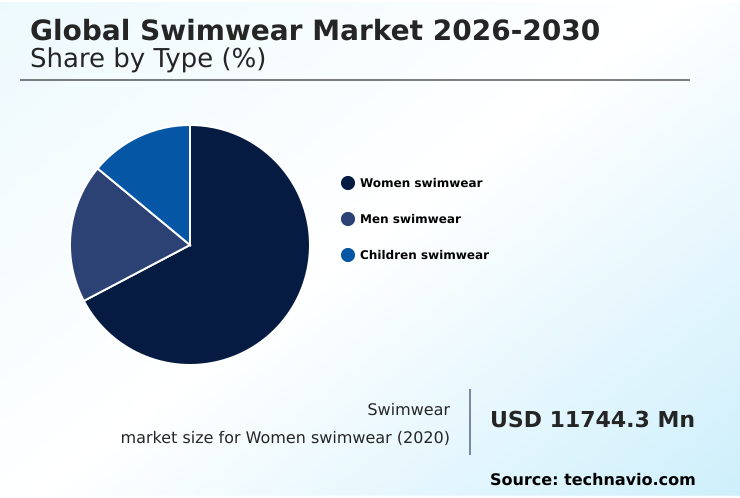
The Women swimwear segment was valued at USD 15.43 billion in 2024 and showed a gradual increase during the forecast period.
Regional Analysis
North America is estimated to contribute 36.8% to the growth of the global market during the forecast period.Technavio’s analysts have elaborately explained the regional trends and drivers that shape the market during the forecast period.
See How Swimwear Market Demand is Rising in North America Get Free Sample
The market landscape shows distinct regional preferences. North America, contributing over 36% of incremental growth, favors performance swimwear and athletic swim apparel, including triathlon swimwear and competitive racing suits.
In APAC, the fastest-growing region, there is high demand for UV protection swimwear such as rash guards, reflecting a focus on sun safety and driving a 15% increase in sales for this category.
European markets prioritize sustainability within their luxury swimwear collections, while South America leads trends in beachwear fashion with vibrant designs. Across all regions, quick-dry material and muscle compression swimwear are key features in men's board shorts and general aquatic sportswear.
Children's swim safety and family-coordinated swimwear are also becoming globally significant niches.
Market Dynamics
Our researchers analyzed the data with 2025 as the base year, along with the key drivers, trends, and challenges. A holistic analysis of drivers will help companies refine their marketing strategies to gain a competitive advantage.
- Understanding the modern swimwear market requires a deep dive into consumer choices and technical advancements. Key questions include how to choose performance swimwear and what are the benefits of chlorine resistant swimwear. The industry is rapidly evolving due to advancements in sustainable swimwear materials and the growing role of recycled fabrics in swimwear.
- The rise of modest swimwear fashion and the increasing demand for inclusive size swimwear are reshaping design philosophies. Concurrently, the growth of athleisure in swimwear has popularized multifunctional swimwear for active lifestyles, with trends in men's hybrid shorts reflecting this shift.
- Technology is also a major factor, with the impact of smart textiles on swimwear and the future of biometric sensor swimwear creating new possibilities. Innovations in digital textile printing are enabling more customized and sustainable production. For consumers and brands alike, comparing polyester vs nylon swimwear remains a practical consideration, while the market for luxury resort wear continues to expand.
- However, challenges of swimwear sizing online and broader supply chain issues in swimwear persist. The focus on eco-friendly swimwear and circular economy principles is now a core strategic pillar, influencing everything from the technical features of competitive swimsuits to children's swimwear safety features.
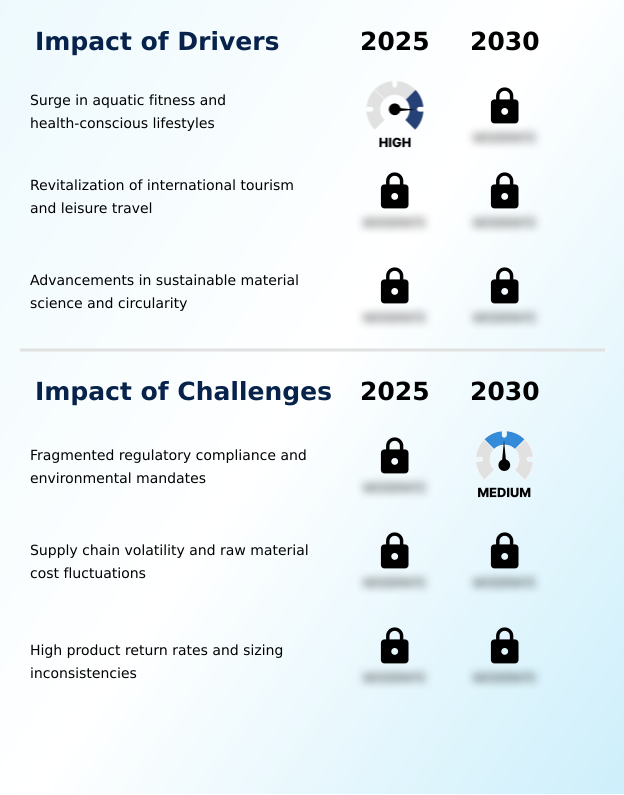
What are the key market drivers leading to the rise in the adoption of Swimwear Industry?
- A surge in aquatic fitness participation, driven by rising health and wellness awareness, is a fundamental driver for the swimwear market.
- The market is significantly driven by a consumer and regulatory push for sustainable swimwear, with recycled fabrics and eco-friendly textiles becoming standard.
- Innovations in high-performance textiles include materials like ECONYL fabric and bio-based elastomers, which reduce environmental impact without compromising the quality of technical swimwear. Adopting waterless dyeing technology can decrease water consumption in production by up to 60%.
- Simultaneously, demand for performance swimwear is rising, fueled by an interest in aquatic fitness. This necessitates advancements in hydrodynamic design and ergonomic swimwear design. The use of lightweight swimwear with water-repellent fabrics enhances comfort and performance, driving new product development.
What are the market trends shaping the Swimwear Industry?
- A key market trend is the expansion of modest and inclusive swimwear designs. This movement addresses diverse cultural, religious, and personal preferences by offering greater body coverage.
- A key trend is the expansion of modest swimwear, including burkinis, and sun-protective clothing, which addresses diverse consumer needs and boosts market accessibility. This push for functional swimwear extends to multi-functional apparel, where swim-to-street apparel designs increase garment utility by over 50%.
- The integration of smart textiles in swimwear is creating a new frontier; garments with biometric sensor swimwear technology are enhancing aquatic fitness gear, providing athletes with a 15% improvement in performance data tracking.
- This convergence of fashion and technology is also seen in thermal swimwear for cold-water activities, blurring the lines between specialized aquatic fitness apparel, leisure swimwear, and the demand for custom-fit swimwear.
What challenges does the Swimwear Industry face during its growth?
- A fragmented regulatory landscape and complex environmental mandates present a primary challenge to the swimwear market's growth.
- Supply chain volatility presents a major challenge, affecting the cost of core materials like polyester swimwear fabric and nylon swimwear fabric. This instability makes it difficult for brands to maintain pricing, especially when competing with fast-fashion swimwear alternatives.
- While digital textile printing allows boutique swimwear labels to manage smaller production runs, reducing inventory risk by 20%, the initial investment is high. Furthermore, ensuring product quality—such as creating colorfast swimwear or a truly chlorine-resistant fabric—requires significant R&D.
- The complex field of textile engineering must balance the demand for breathable swim material in recreational swimwear with the robust needs of professional swim gear, which often uses spandex blend swimwear or neoprene swimwear for specific performance attributes.
Exclusive Technavio Analysis on Customer Landscape
The swimwear market forecasting report includes the adoption lifecycle of the market, covering from the innovator’s stage to the laggard’s stage. It focuses on adoption rates in different regions based on penetration. Furthermore, the swimwear market report also includes key purchase criteria and drivers of price sensitivity to help companies evaluate and develop their market growth analysis strategies.
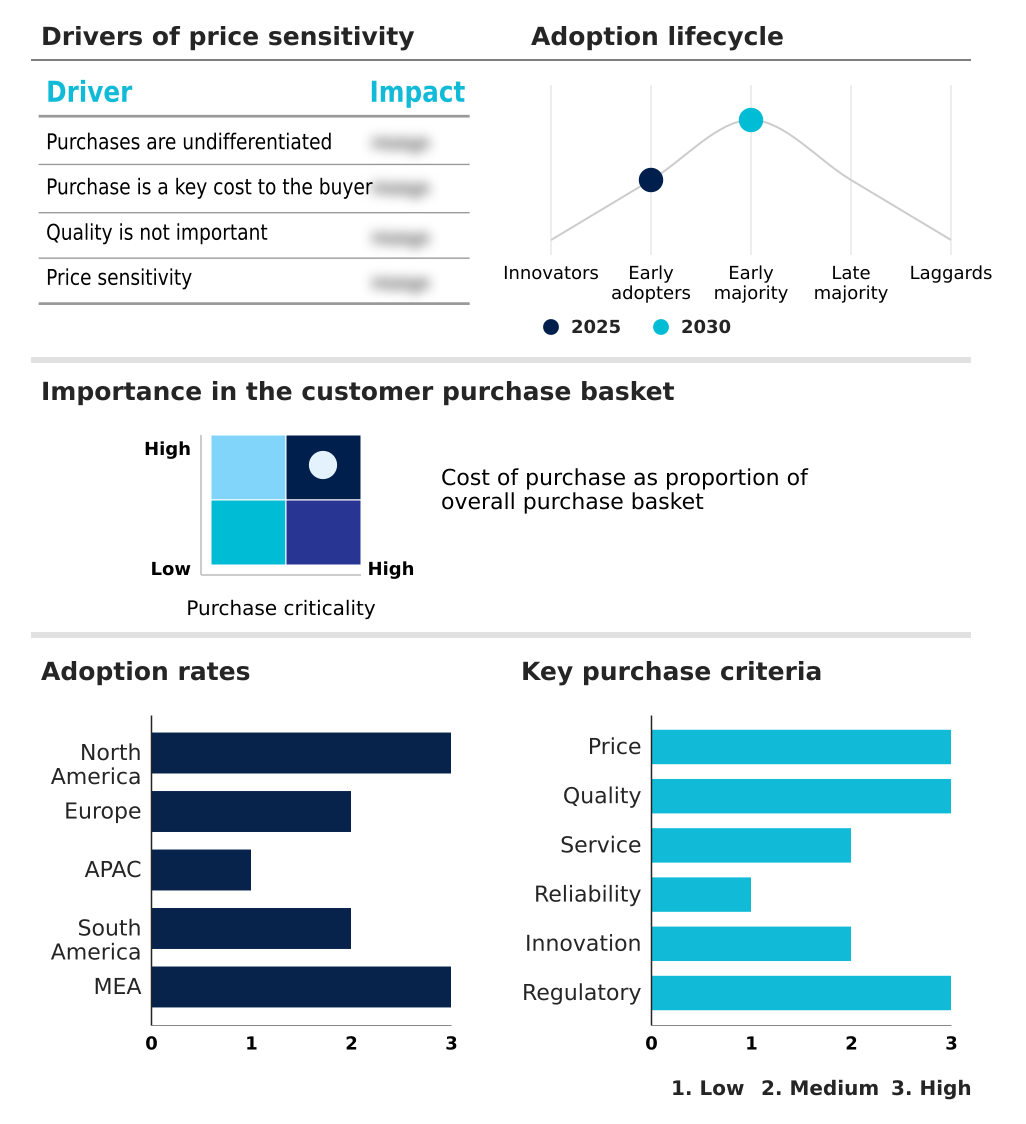
Customer Landscape of Swimwear Industry
Competitive Landscape
Companies are implementing various strategies, such as strategic alliances, swimwear market forecast, partnerships, mergers and acquisitions, geographical expansion, and product/service launches, to enhance their presence in the industry.
Adidas AG - Offers performance swimwear and athletic apparel designed for comfort and flexibility, including competitive suits, bikinis, and training gear.
The industry research and growth report includes detailed analyses of the competitive landscape of the market and information about key companies, including:
- Adidas AG
- Arena Spa
- Authentic Brands Group LLC
- Boutique La Vie en Rose Inc.
- Chanel Ltd.
- Decathlon SA
- Fast Retailing Co. Ltd.
- H and M Hennes and Mauritz GBC
- Industria de Diseno Textil SA
- L Space
- Nike Inc.
- PVH Corp.
- Seafolly Holdings Pty. Ltd.
- Solid and Striped
- Speedo International Ltd
- Summersalt Inc.
- TYR Sport Inc.
- VF Corp.
- Vilebrequin
- Zimmermann Wear Pty Ltd
Qualitative and quantitative analysis of companies has been conducted to help clients understand the wider business environment as well as the strengths and weaknesses of key industry players. Data is qualitatively analyzed to categorize companies as pure play, category-focused, industry-focused, and diversified; it is quantitatively analyzed to categorize companies as dominant, leading, strong, tentative, and weak.
Recent Development and News in Swimwear market
- In February, 2025, Adidas AG announced a collaboration with a biotechnology firm to produce bio-degradable swimwear.
- In March, 2025, Speedo International Ltd introduced a new hydro-carbon resistant textile designed for high-performance aquatic sports.
- In April, 2025, Nike Inc. launched a comprehensive aquatic fitness range specifically for the North American market to meet growing demand.
- In May, 2025, the Zoggs brand launched a series of high-visibility swim products tailored for the Australian market, focusing on open-water safety.
Dive into Technavio’s robust research methodology, blending expert interviews, extensive data synthesis, and validated models for unparalleled Swimwear Market insights. See full methodology.
| Market Scope | |
|---|---|
| Page number | 287 |
| Base year | 2025 |
| Historic period | 2020-2024 |
| Forecast period | 2026-2030 |
| Growth momentum & CAGR | Accelerate at a CAGR of 11.1% |
| Market growth 2026-2030 | USD 17690.7 million |
| Market structure | Fragmented |
| YoY growth 2025-2026(%) | 10.0% |
| Key countries | US, Canada, Mexico, Germany, UK, France, Italy, Spain, The Netherlands, China, Japan, Australia, South Korea, Indonesia, India, Brazil, Argentina, Colombia, Saudi Arabia, UAE, South Africa, Egypt and Morocco |
| Competitive landscape | Leading Companies, Market Positioning of Companies, Competitive Strategies, and Industry Risks |
Research Analyst Overview
- The swimwear market is defined by a strategic pivot towards advanced textile engineering and circular fashion principles. Boardroom decisions are increasingly focused on integrating sustainable swimwear, utilizing recycled fabrics like regenerated nylon and ECONYL fabric, and adopting waterless dyeing technology to meet stringent environmental mandates. This shift has driven a 40% increase in R&D for bio-based elastomers.
- The demand for performance swimwear, including competitive racing suits and triathlon swimwear, continues to drive innovation in hydrodynamic design and muscle compression swimwear. Athleisure swimwear and swim-to-street apparel are expanding the market's relevance, featuring quick-dry material. Inclusivity is another key pillar, with body positivity fashion leading to more inclusive sizing swimwear, modest swimwear, and diverse styles like burkinis and tankinis.
- The market offers everything from rash guards and board shorts to thermal swimwear and neoprene swimwear. Smart textiles in swimwear, including biometric sensor swimwear, represent the next frontier. Ensuring quality with chlorine-resistant fabric made from polyester swimwear fabric, nylon swimwear fabric, or a spandex blend swimwear remains critical for aquatic fitness apparel and resort wear collections.
What are the Key Data Covered in this Swimwear Market Research and Growth Report?
-
What is the expected growth of the Swimwear Market between 2026 and 2030?
-
USD 17.69 billion, at a CAGR of 11.1%
-
-
What segmentation does the market report cover?
-
The report is segmented by Type (Women swimwear, Men swimwear, and Children swimwear), Distribution Channel (Offline, and Online), Material (Polyester, Nylon, and Others) and Geography (North America, Europe, APAC, South America, Middle East and Africa)
-
-
Which regions are analyzed in the report?
-
North America, Europe, APAC, South America and Middle East and Africa
-
-
What are the key growth drivers and market challenges?
-
Surge in aquatic fitness and health-conscious lifestyles, Fragmented regulatory compliance and environmental mandates
-
-
Who are the major players in the Swimwear Market?
-
Adidas AG, Arena Spa, Authentic Brands Group LLC, Boutique La Vie en Rose Inc., Chanel Ltd., Decathlon SA, Fast Retailing Co. Ltd., H and M Hennes and Mauritz GBC, Industria de Diseno Textil SA, L Space, Nike Inc., PVH Corp., Seafolly Holdings Pty. Ltd., Solid and Striped, Speedo International Ltd, Summersalt Inc., TYR Sport Inc., VF Corp., Vilebrequin and Zimmermann Wear Pty Ltd
-
Market Research Insights
- The market's dynamism is fueled by innovations in high-performance textiles and a strategic shift toward functional swimwear that aligns with modern consumer values. The adoption of eco-friendly textiles is not just a trend but a performance metric, with brands reporting a 10% average increase in consumer engagement after launching sustainable lines.
- Similarly, advancements in athletic swim apparel address the needs of a growing aquatic fitness segment. To combat the challenge of online returns, which can exceed 30% for ill-fitting garments, companies are investing in virtual custom-fit swimwear technologies, successfully reducing return rates by up to 25%.
- This focus on technical swimwear and adaptive swimwear designs is reshaping the offerings from both luxury swimwear collections and mainstream aquatic sportswear brands, creating a more responsive and efficient market.
We can help! Our analysts can customize this swimwear market research report to meet your requirements.
 RIA -
RIA - 
