



Tennis Equipment Market Size 2024-2028
The tennis equipment market size is forecast to increase by USD 211.08 million at a CAGR of 2.21% between 2023 and 2028.
- The market is experiencing significant growth, driven by several key factors. The number of tennis courts globally is increasing, leading to a rise in the demand for tennis equipment. Additionally, there is a growing focus on sustainability in the sports industry, resulting in the production of eco-friendly tennis gear. E-commerce portals have revolutionized sales channels, enabling tennis enthusiasts to easily access a wide range of equipment, including rackets, footwear, and sports science-informed gear. Another trend influencing the market is the increasing popularity of e-sports and virtual tennis games, which is driving the demand for advanced tennis equipment for training and simulation purposes. These trends are expected to continue shaping the growth of the market in the coming years.
What will be the Size of the Tennis Equipment Market During the Forecast Period?
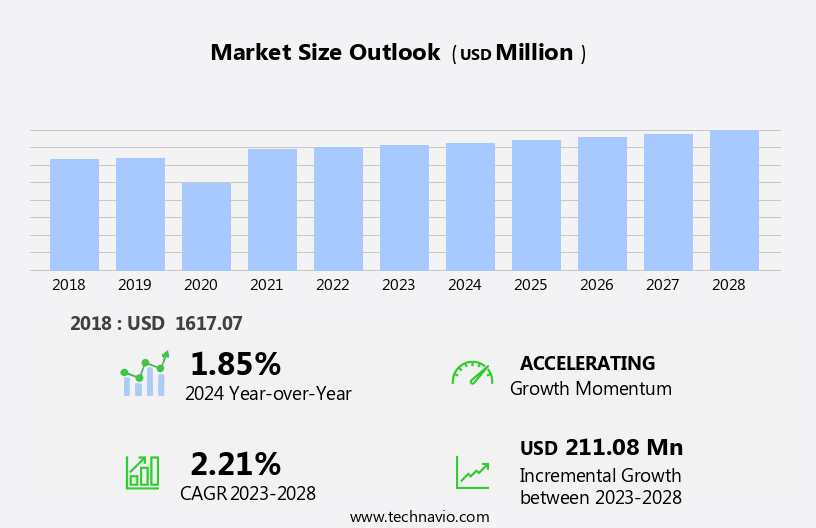
- The market is experiencing growth, driven by the increasing popularity of sporting goods and the athleisure trend. Health awareness and cardio tennis have emerged as key factors fueling market expansion. Racket technologies continue to evolve, with advanced materials and customized designs catering to various playing styles. Sensory immersion is a growing trend, with tennis equipment incorporating multisensory cues, such as sound-modulating and scented overgrips, to enhance the player's tactile and auditory experience. Sports science and physical conditioning have become integral to tennis, with a focus on player analytics and cognitive training.
- Ball impact and aeroacoustics research have led to innovations in racket design and materials, ensuring durability and optimized performance. Nanomaterials are increasingly used to create high-performance, lightweight, and long-lasting equipment. Tournaments and professional players continue to influence market trends, pushing the boundaries of tennis equipment technology. Overall, the market is dynamic, innovative, and poised for continued growth.
How is this Tennis Equipment Industry segmented and which is the largest segment?
The tennis equipment industry research report provides comprehensive data (region-wise segment analysis), with forecasts and estimates in "USD million" for the period 2024-2028, as well as historical data from 2018-2022 for the following segments.
- Distribution Channel
- Offline
- Online
- Product Type
- Tennis balls
- Tennis racquets
- Tennis strings
- Equipment bag
- Others
- Geography
- North America
- Canada
- US
- APAC
- China
- Europe
- Germany
- UK
- South America
- Middle East and Africa
- North America
By Distribution Channel Insights
The offline segment is estimated to witness significant growth during the forecast period. The market encompasses mono-brand stores, department stores, hypermarkets, supermarkets, and specialty stores. Monobrand stores, owned by product manufacturing companies, offer a wide selection of equipment under the same brand and are increasingly popular due to their premium look and feel. North American companies like Nike and Adidas are expanding their mono-brand stores to boost direct-to-customer sales. Athleisure trends and health awareness have fueled the demand for tennis equipment, with cardio tennis gaining popularity. E-commerce portals provide convenience, while Wilson Sporting and other brands invest in product promotions and player development. Technological advancements include sensory immersion through scented overgrips, cognitive training, and physical conditioning tools.
Specialized visors, aerodynamics, acoustics, and advanced materials enhance player performance. Sustainable initiatives and customized designs cater to diverse playing styles and player analytics. Tennis associations, such as the USTA, and tournaments, including those led by Naomi Osaka, continue to drive the popularity of the sport. Tennis courts, scoreboards, windbreaks, and drag mats are essential accessories. The market is driven by fitness-conscious consumers, professional tournaments, tennis tradition, and grassroots participation.
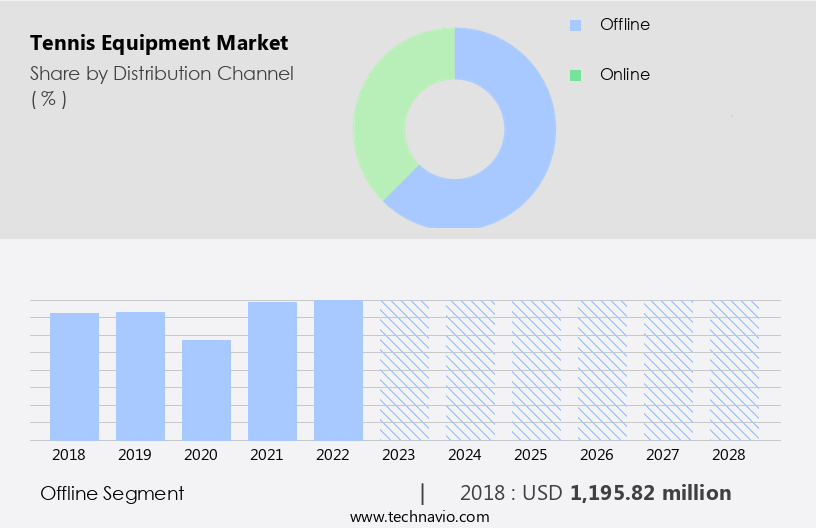
Get a glance at the market report of share of various segments Request Free Sample
The Offline segment was valued at USD 1.19 billion in 2018 and showed a gradual increase during the forecast period.
Regional Analysis
APAC is estimated to contribute 35% to the growth of the global market during the forecast period. Technavio's analysts have elaborately explained the regional trends and drivers that shape the market during the forecast period.

For more insights on the market size of various regions, Request Free Sample
The North American market is poised for growth due to the increasing popularity of the sport, particularly in the US and Canada. The rising number of regular players, driven by health awareness and the athleisure trend, is a significant factor fueling market expansion. Major tournaments, such as the US Open Squash Championships and the North American Open, attract substantial participation and boost demand for equipment.
Tennis enthusiasts seek advanced technologies, including racket innovations, specialized footwear, and sports science-driven products, such as cognitive training and physical conditioning tools. E-commerce portals offer convenience, while customized designs cater to diverse playing styles. Sustainable initiatives and advanced materials, like nanomaterials and aeroacoustics, also contribute to market growth. The tennis renaissance, with cultural inclusivity and grassroots participation, further expands the market's reach.
Market Dynamics
Our researchers analyzed the data with 2023 as the base year, along with the key drivers, trends, and challenges. A holistic analysis of drivers will help companies refine their marketing strategies to gain a competitive advantage.
What are the key market drivers leading to the rise in the adoption of Tennis Equipment Industry?
- Increase in the number of tennis courts globally is the key driver of the market. The market has experienced significant growth due to the increasing trend of athleisure and heightened health awareness. Tennis, as a sport, appeals to the fitness-conscious population, driving demand for specialized rackets, footwear, and other equipment. Innovations in sports science have led to the development of cardio tennis, which combines fitness and tennis, further boosting market growth. E-commerce portals have made tennis equipment easily accessible, enabling players to purchase products online with ease. Leading sporting goods brands like Wilson Sporting have introduced product promotions and collaborations with tennis stars such as Naomi Osaka to attract customers. The Tennis Association and other organizations have also focused on player development through sustainable initiatives and advanced materials.
- The use of sensory immersion techniques, such as sound-modulating rackets and scented overgrips, enhances the overall tennis experience. Cognitive training, physical conditioning, mental agility, and strategic prowess are crucial aspects of tennis, leading to the development of specialized visors, aerodynamic apparel, and equipment designed to optimize performance. The tennis renaissance has led to an increase in popularity, with more tournaments and grassroots initiatives, including academies, fostering inclusivity and cultural diversity in the sport. The future of tennis equipment lies in ethical sourcing, player analytics, and gameplay enhancements, providing spectators with innovative experiences.
What are the market trends shaping the Tennis Equipment Industry?
- Growing focus on sustainability is the upcoming market trend. The market is experiencing a significant shift towards sustainability, as health-conscious consumers express a growing preference for eco-friendly and ethically produced goods. This trend is particularly noticeable in the demand for tennis rackets, leading manufacturers to minimize their environmental footprint through the use of recycled materials and efficient production methods. The adoption of recycled materials for tennis balls is also gaining popularity, contributing to a reduction in the disposal of tennis balls in landfills. The athleisure trend and increasing health awareness have fueled the popularity of tennis, with cardio tennis and other fitness-focused initiatives attracting a diverse range of tennis enthusiasts.
- E-commerce portals have made it easier for players to access specialized visors, footwear, and other equipment tailored to their playing styles. Product promotions and collaborations with tennis stars like Naomi Osaka further boost market growth. Sustainable initiatives, advanced materials, and customized designs are key market drivers, with a focus on player development, strategic prowess, and cognitive training. Tennis associations and academies are also promoting inclusivity and cultural diversity, making tennis a sport for all. Tennis equipment is no longer just about physical conditioning; it's about mental agility, cognitive training, and spectator experiences. Aerodynamics, acoustics, ball impact, aeroacoustics, nanomaterials, and durability are all important considerations for tennis equipment. Tennis courts, scoreboards, drag mats, and windbreaks are essential components of the tennis ecosystem, catering to the needs of players and spectators alike. The tennis renaissance continues, with professional tournaments and grassroots initiatives driving popularity and participation.
What challenges does the Tennis Equipment Industry face during its growth?
- Increasing popularity of e-sports is a key challenge affecting the industry growth. The market is experiencing significant growth due to the athleisure trend and increasing health awareness among consumers. With the rise of cardio tennis, tennis is no longer just a sport but also a fitness activity. E-commerce portals have made tennis equipment easily accessible to tennis enthusiasts, enabling them to purchase specialized visors, rackets, footwear, and other equipment based on their playing styles and preferences. Sports science and sensory immersion are key drivers in the market, with advanced materials and customized designs offering cognitive training, physical conditioning, mental agility, and strategic prowess. Technological innovations in tennis equipment include sound-modulating, scented overgrips, and player analytics, enhancing the overall gameplay experience.
- Tennis associations, such as the United States Tennis Association (USTA), are promoting player development through sustainable initiatives and grassroots participation. The popularity of tennis, as evidenced by professional tournaments like the US Open and the presence of tennis legends like Federer and Naomi Osaka, continues to fuel the market's growth. Moreover, the tennis renaissance is embracing cultural inclusivity and diversity, making the sport accessible to a wider audience. Ethical sourcing and advanced materials, such as nanomaterials and aeroacoustics, are also gaining importance in the market. The future of tennis equipment lies in enhancing the spectator experience through technological innovations and catering to the needs of fitness-conscious consumers.
Exclusive Customer Landscape
The tennis equipment market forecasting report includes the adoption lifecycle of the market, market growth and forecasting, covering from the innovator's stage to the laggard's stage. It focuses on adoption rates in different regions based on penetration. Furthermore, the tennis equipment market report also includes key purchase criteria and drivers of price sensitivity to help companies evaluate and develop their market growth analysis strategies.
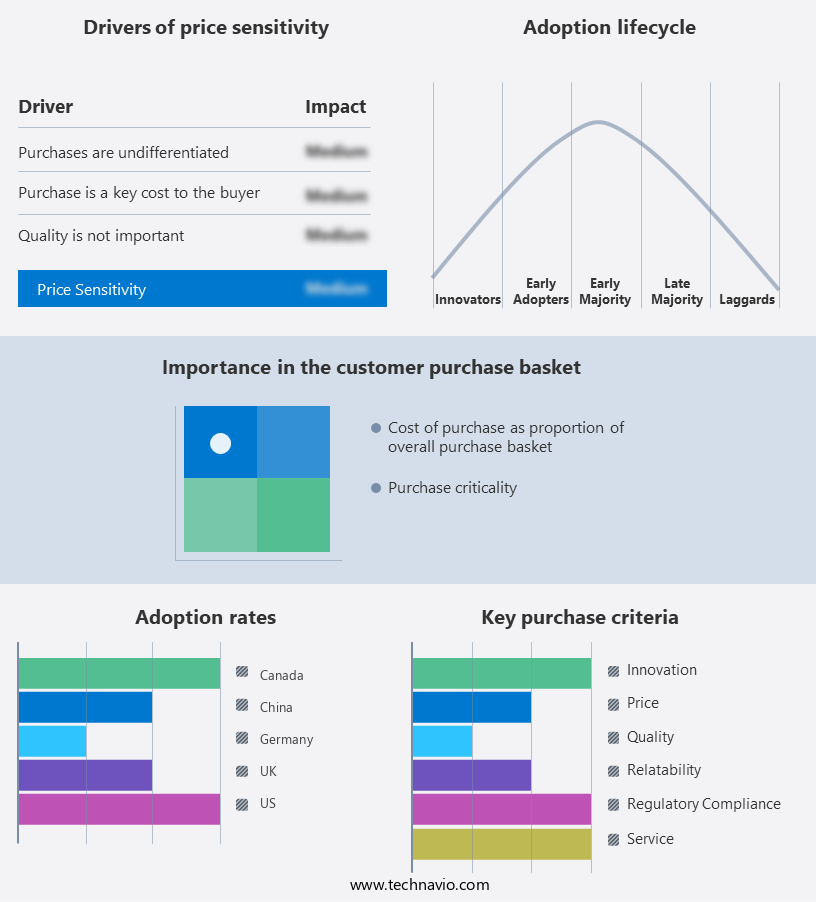
Customer Landscape
Key Companies & Market Insights
Companies are implementing various strategies, such as strategic alliances, tennis equipment market forecast, partnerships, mergers and acquisitions, geographical expansion, and product/service launches, to enhance their presence in the industry. The industry research and growth report includes detailed analyses of the competitive landscape of the market and information about key companies, including:
- Adidas AG
- ANTA Sports Products Ltd.
- ASICS Corp.
- Authentic Brands Group LLC
- Babolat
- Beiersdorf AG
- Bosworth Tennis
- Decathlon SA
- Dunlop Sports
- Fila Holdings Corp.
- Gamma Sports
- Harrow Sports
- KC Kinetic Solutions LLC
- Lacoste
- New Balance Athletics Inc.
- Nike Inc.
- PUMA SE
- Solinco Sports
- Yonex Co. Ltd.
- Frasers Group plc
Qualitative and quantitative analysis of companies has been conducted to help clients understand the wider business environment as well as the strengths and weaknesses of key industry players. Data is qualitatively analyzed to categorize companies as pure play, category-focused, industry-focused, and diversified; it is quantitatively analyzed to categorize companies as dominant, leading, strong, tentative, and weak.
Research Analyst Overview
The market continues to experience significant growth, fueled by various market dynamics. One of the key drivers is the athleisure trend, which has led to an increase in health awareness and participation in sports. Tennis, as a low-impact, full-body workout, has gained popularity among fitness-conscious individuals. Cardio tennis, a program designed to make tennis more accessible and enjoyable for players of all ages and abilities, has contributed to the growth of the market. E-commerce portals have also played a crucial role in making tennis equipment more readily available to consumers. Manufacturers are continually innovating to meet the demands of tennis enthusiasts.
Product promotions and collaborations with prominent tennis players have helped boost sales. Rackets, footwear, and other equipment have seen advancements in technology, with a focus on sports science and sensory immersion. Multisensory cues, such as sound-modulating and scented overgrips, have been introduced to enhance the playing experience. Cognitive training and physical conditioning programs have become essential components of player development. Mental agility and strategic prowess are now recognized as critical factors in competitive tennis. Specialized visors and clothing have been developed to improve aerodynamics and acoustics, optimizing ball impact and player comfort. Aeroacoustics and nanomaterials have been incorporated into racket technologies to enhance durability and performance.
Sustainable initiatives have become a priority in the tennis equipment industry, with manufacturers focusing on ethical sourcing and reducing their carbon footprint. The tennis renaissance has led to a renewed focus on inclusivity and cultural inclusivity, with diverse communities and grassroots initiatives playing a significant role in grassroots participation. Professional tournaments continue to attract large crowds, with player analytics and spectator experiences being prioritized to enhance the overall tennis experience. Racket technologies and player development programs have become essential components of tournament success. The market is expected to continue its growth trajectory, driven by these market dynamics and the enduring appeal of the sport. The market is diverse and dynamic, with a focus on innovation, sustainability, and inclusivity. Tennis equipment is no longer just a tool for playing the game; it is an essential component of the tennis experience.
|
Market Scope |
|
|
Report Coverage |
Details |
|
Page number |
159 |
|
Base year |
2023 |
|
Historic period |
2018-2022 |
|
Forecast period |
2024-2028 |
|
Growth momentum & CAGR |
Accelerate at a CAGR of 2.21% |
|
Market growth 2024-2028 |
USD 211.08 million |
|
Market structure |
Fragmented |
|
YoY growth 2023-2024(%) |
1.85 |
|
Key countries |
US, Canada, China, UK, and Germany |
|
Competitive landscape |
Leading Companies, Market Positioning of Companies, Competitive Strategies, and Industry Risks |
What are the Key Data Covered in this Tennis Equipment Market Research and Growth Report?
- CAGR of the Tennis Equipment industry during the forecast period
- Detailed information on factors that will drive the growth and forecasting between 2024 and 2028
- Precise estimation of the size of the market and its contribution of the industry in focus to the parent market
- Accurate predictions about upcoming growth and trends and changes in consumer behaviour
- Growth of the market across North America, APAC, Europe, South America, and Middle East and Africa
- Thorough analysis of the market's competitive landscape and detailed information about companies
- Comprehensive analysis of factors that will challenge the tennis equipment market growth of industry companies
We can help! Our analysts can customize this tennis equipment market research report to meet your requirements.
 RIA -
RIA - 
