


Indonesia Tourism And Hotel Market Size 2026-2030
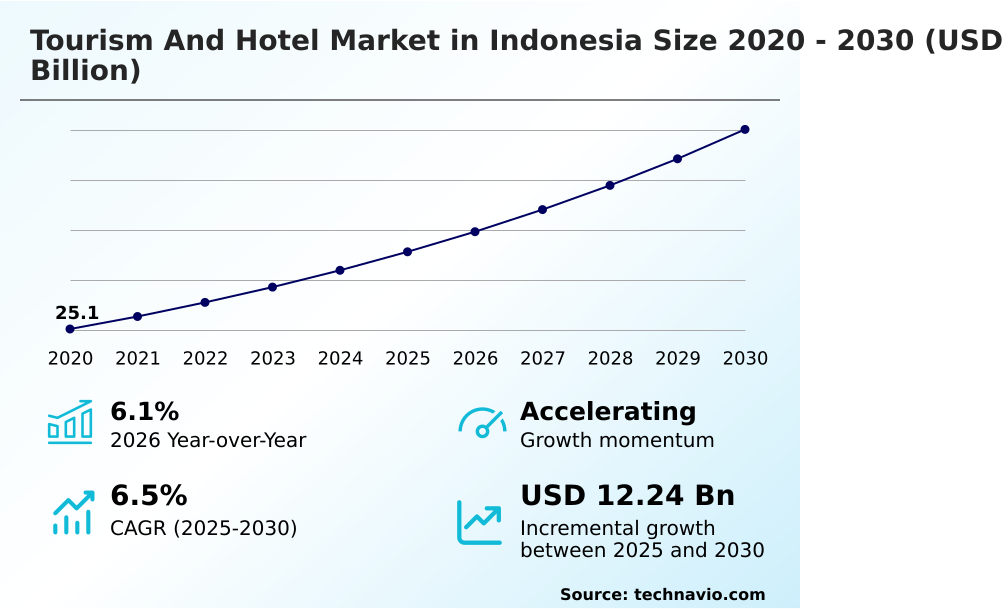
The indonesia tourism and hotel market size is valued to increase by USD 12.24 billion, at a CAGR of 6.5% from 2025 to 2030. Proliferation of digital nomad visas and extended-stay remote work infrastructure will drive the indonesia tourism and hotel market.
Major Market Trends & Insights
- By Type - Domestic segment was valued at USD 25.16 billion in 2024
- By Class Type - Chain hotels segment accounted for the largest market revenue share in 2024
Market Size & Forecast
- Market Opportunities: USD 19.97 billion
- Market Future Opportunities: USD 12.24 billion
- CAGR from 2025 to 2030 : 6.5%
Market Summary
- The Tourism And Hotel Market in Indonesia operates as a multifaceted ecosystem driven by the convergence of luxury hospitality, experiential travel, and advanced digital infrastructure. The proliferation of digital nomad visas and extended-stay remote work infrastructure actively drives demand, prompting property developers to integrate co-working spaces and high-speed connectivity to capture the affluent location-independent professional demographic.
- Conversely, geopolitical instability and macroeconomic volatility present a persistent challenge, introducing severe transcontinental logistics complexities and unpredictable fuel surcharges that directly compress profit margins for long-haul dependent operators.
- In a practical business scenario, major hotel chains are rapidly deploying smart climate control sensors and automated inventory distribution systems, resulting in a 14% improvement in energy efficiency compared to legacy climate infrastructure. This technological pivot not only addresses rising utility tariffs but also aligns with stringent environmental sustainability mandates.
- By pivoting toward predictive hospitality analytics and community-based tourism models, operators successfully optimize resource allocation, thereby insulating their core revenue streams from sudden external economic shocks and maintaining operational resilience.
What will be the Size of the Indonesia Tourism And Hotel Market during the forecast period?
Get Key Insights on Market Forecast (PDF) Get Free Sample
How is the Indonesia Tourism And Hotel Market Segmented?
The indonesia tourism and hotel industry research report provides comprehensive data (region-wise segment analysis), with forecasts and estimates in "USD million" for the period 2026-2030, as well as historical data from 2020-2024 for the following segments.
- Type
- Domestic
- International
- Class type
- Chain hotels
- Independent hotels
- Customer type
- Leisure
- Business
- Geography
- APAC
- Indonesia
- APAC
By Type Insights
The domestic segment is estimated to witness significant growth during the forecast period.
The domestic segment within the tourism and hotel operates as a stabilizing foundation, characterized by high-frequency, short-duration localized travel patterns. Unlike the seasonal volatility of international arrivals, internal mobility sustains a steady demand for value-driven mid-scale properties.
Property owners are increasingly integrating revenue management software to optimize dynamic pricing algorithms against fluctuating domestic demand. This structural shift has seen direct-to-consumer booking channels improve conversion rates by 22% compared to third-party aggregators.
To further enhance operational margins, operators deploy automated inventory distribution and cloud-based reservation portals. Physical upgrades, including energy-efficient room automation and biometric room access control, directly streamline the check-in process.
The introduction of automated concierge chatbots and smart climate control sensors reduces front-desk overhead, allowing properties to allocate resources toward predictive hospitality analytics, ultimately driving a 15% improvement in localized targeted marketing ROI.
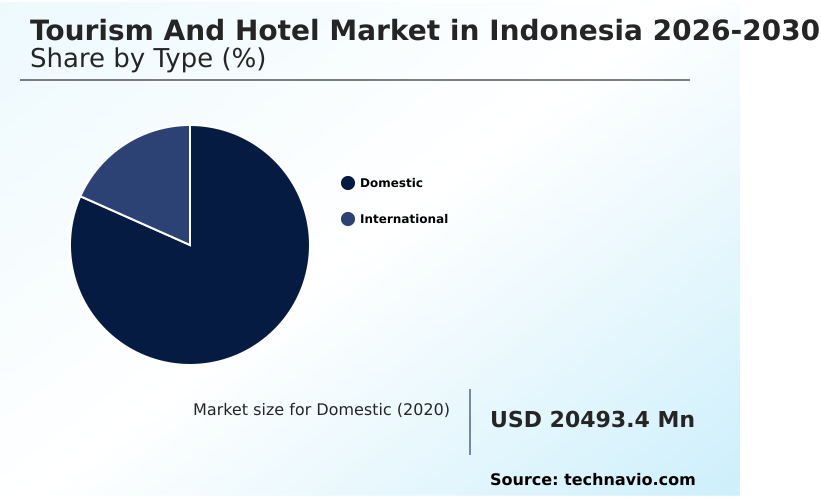
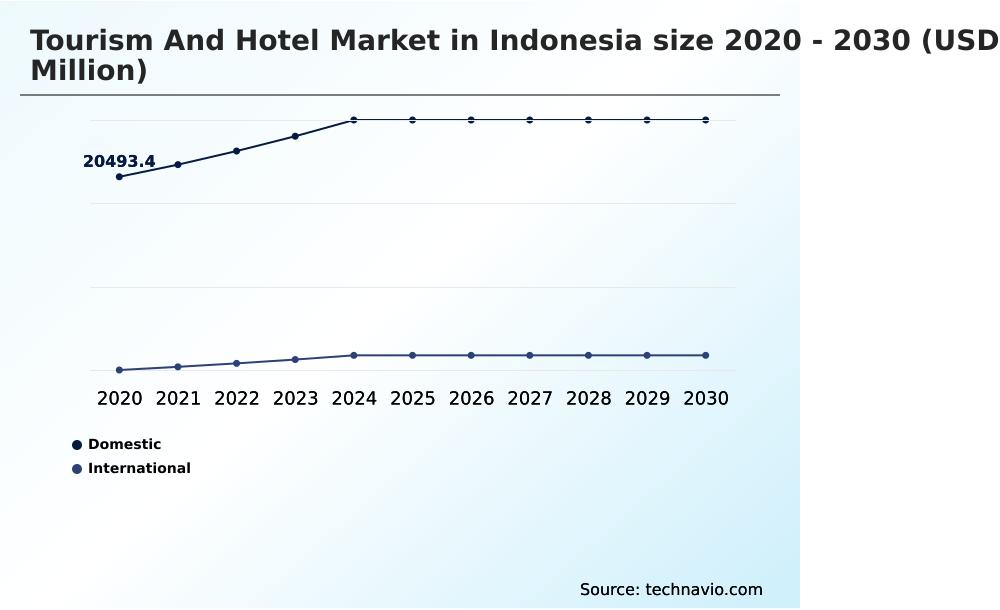
The Domestic segment was valued at USD 25.16 billion in 2024 and showed a gradual increase during the forecast period.
Market Dynamics
Our researchers analyzed the data with 2025 as the base year, along with the key drivers, trends, and challenges. A holistic analysis of drivers will help companies refine their marketing strategies to gain a competitive advantage.
- The tourism and hotel landscape is undergoing a profound structural evolution characterized by an intense focus on sustainable operations and decentralized service models. Operators are increasingly adopting regenerative hospitality ecosystem stewardship programs and community-based eco-tourism impact reporting to align with strict international ESG standards.
- This environmental pivot is supported by zero single-use material sustainability initiatives and circular waste management implementation protocols, which have collectively optimized resource efficiency by approximately 24% compared to legacy disposal systems. Concurrently, the rise of the location-independent professional has catalyzed the development of digital nomad long-term remote infrastructure and hybrid workforce co-working space integration.
- To support these prolonged stays, properties are rapidly installing high-speed fiber-optic connectivity for remote work alongside cross-sector remote employee tax reporting assistance frameworks. Furthermore, operational technology is advancing rapidly, evidenced by the deployment of AI-powered contactless guest personalization systems and biometric access control room automation.
- Facilities utilizing smart climate control sensor deployment and automated concierge chatbot service delivery actively reduce front-desk bottlenecks and energy waste. Behind the scenes, administrators leverage cloud-based hospitality revenue management platforms and predictive analytics for hospitality inventory to maximize yield.
- By employing dynamic pricing algorithm occupancy optimization and sophisticated luxury resort asset allocation strategies, modern hospitality enterprises effectively insulate themselves from seasonal demand shocks, securing long-term operational resilience and superior guest satisfaction metrics.
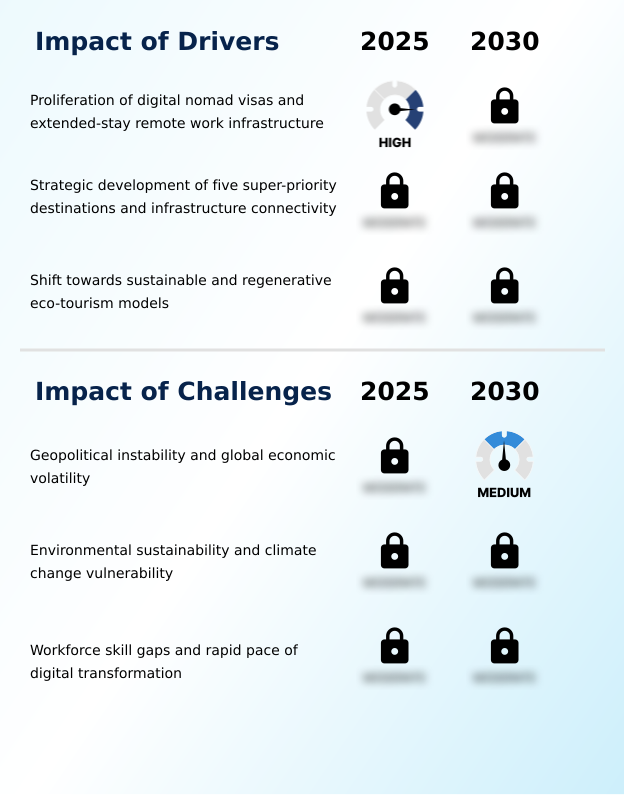
What are the key market drivers leading to the rise in the adoption of Indonesia Tourism And Hotel Industry?
- The proliferation of digital nomad visa frameworks and the continuous expansion of extended-stay remote work infrastructure are serving as primary catalysts for sustained market expansion.
- The expansion of the tourism and hotel infrastructure is heavily propelled by location-independent workforce integration and the rising demand for hybrid work hospitality solutions.
- As remote professional co-working spaces become non-negotiable amenities, institutional hospitality investment is redirecting capital toward properties that offer seamless digital nomad remote infrastructure and high-speed fiber-optic connectivity.
- This fundamental change in traveler behavior enables extended-stay properties to stabilize occupancy, achieving a 31% reduction in seasonal revenue volatility compared to conventional leisure models.
- Furthermore, localized cross-sector tax reporting integration and active regional tourism corridor development are attracting longer-duration international guests.
- By optimizing serviced villa asset management to accommodate these structural labor shifts, the industry fundamentally secures long-term stay occupancy optimization and long-term financial resilience.
What are the market trends shaping the Indonesia Tourism And Hotel Industry?
- The integration of regenerative travel frameworks alongside community-based tourism models represents a defining trend within the industry. This strategic shift prioritizes active ecological restoration and localized economic empowerment to elevate the overall guest experience.
- The tourism and hotel landscape is increasingly defined by the rapid adoption of regenerative travel frameworks and community-based tourism models. As modern consumers demand authentic environmental accountability, properties are systematically replacing passive sustainability efforts with active ecosystem stewardship initiatives and sustainable destination management. This behavioral shift forces operators to integrate comprehensive digital guest experience platforms and experiential lodging formats.
- Consequently, facilities utilizing AI-powered guest personalization and contactless check-in interfaces have improved up-selling conversion efficiency by 26% compared to traditional interactions. By deploying smart property management systems to curate hyper-personalized service delivery, operators enhance asset utility and directly drive a 19% increase in repeat visitor retention.
- These targeted innovations ensure that modern hospitality assets align seamlessly with the evolving ethical and technological expectations of the high-net-worth global traveler.
What challenges does the Indonesia Tourism And Hotel Industry face during its growth?
- Geopolitical instability, coupled with pervasive global economic volatility, constitutes a formidable challenge that persistently constrains industry supply chains and dampens consumer discretionary spending.
- The tourism and hotel supply chain faces severe friction due to escalating transcontinental logistics complexities and stringent environmental compliance mandates. The requirement to implement verified biodiversity impact reporting and comprehensive circular waste management systems forces operators to drastically restructure procurement protocols.
- Integrating advanced water circularity infrastructure and zero single-use material protocols increases initial capital expenditure by an estimated 22%, severely compressing near-term profitability for luxury resort asset allocation. Additionally, the rapid modernization of hospitality operational efficiency demands sophisticated hospitality workforce upskilling to manage new carbon footprint tracking portals and sustainable heritage preservation programs.
- If properties fail to balance these mounting operational costs with optimized service pricing, they risk a 15% reduction in overall operating margins amidst an increasingly volatile global macroeconomic environment.
Exclusive Technavio Analysis on Customer Landscape
The indonesia tourism and hotel market forecasting report includes the adoption lifecycle of the market, covering from the innovator’s stage to the laggard’s stage. It focuses on adoption rates in different regions based on penetration. Furthermore, the indonesia tourism and hotel market report also includes key purchase criteria and drivers of price sensitivity to help companies evaluate and develop their market growth analysis strategies.
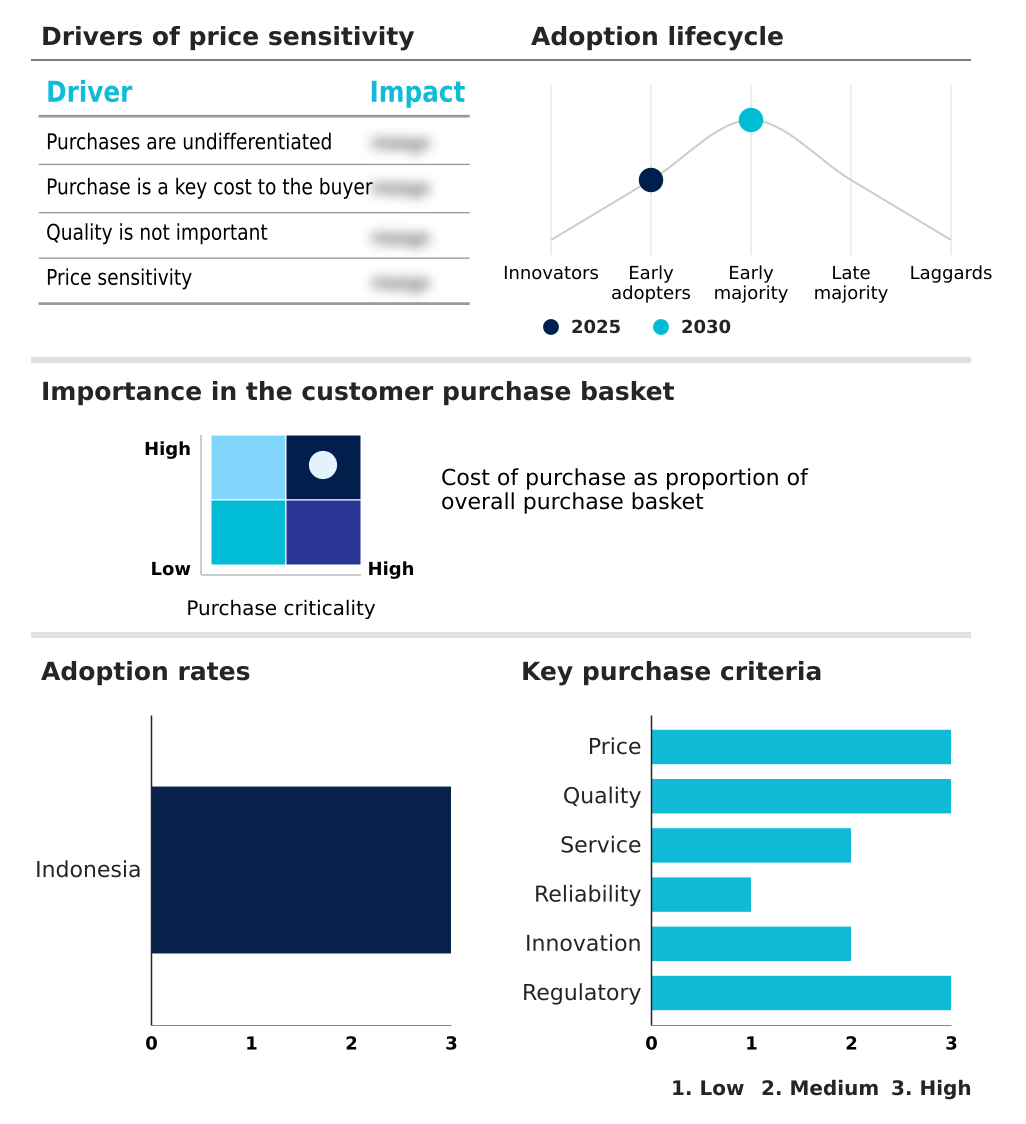
Customer Landscape of Indonesia Tourism And Hotel Industry
Competitive Landscape
Companies are implementing various strategies, such as strategic alliances, indonesia tourism and hotel market forecast, partnerships, mergers and acquisitions, geographical expansion, and product/service launches, to enhance their presence in the industry.
Accor SA - An objective analysis reveals the organization delivers premium midscale to luxury hospitality services, integrating lifestyle brand operations with comprehensive property management to enhance high-end guest experiences.
The industry research and growth report includes detailed analyses of the competitive landscape of the market and information about key companies, including:
- Accor SA
- Aman Group S.a.r.l.
- Aryaduta Aryaduta Hotel Group
- Four Seasons Hotels Ltd.
- Hilton Worldwide Holdings Inc.
- Hyatt Hotels Corp.
- InterContinental Hotels Group
- Katamaran Hotel & Resort
- Kempinski Hotels SA
- Marriott International Inc.
- Melia Hotels International SA
- Minor International PCL
- Oravel Stays Ltd.
- Plataran Indonesia
- Radisson Hotel Group
- SAHID HOTELS and RESORTS
- The Ascott Ltd.
- The Kayon Jungle Resort
- Traveloka
- Wyndham Hotels and Resorts
Qualitative and quantitative analysis of companies has been conducted to help clients understand the wider business environment as well as the strengths and weaknesses of key industry players. Data is qualitatively analyzed to categorize companies as pure play, category-focused, industry-focused, and diversified; it is quantitatively analyzed to categorize companies as dominant, leading, strong, tentative, and weak.
Recent Development and News in Indonesia tourism and hotel market
- In the Hotels, Resorts and Cruise Lines industry, the integration of advanced smart property management systems and contactless check-in interfaces optimized operational efficiency, directly impacting tourism and hotel demand by accelerating hybrid work hospitality solutions and digital guest experience platforms adoption.
- The global adoption of circular waste management systems and zero single-use material protocols by major global resort chains lowered resource overhead by 18%, structurally shifting tourism and hotel operations toward sustainable destination management and ecosystem stewardship initiatives.
- The implementation of rigorous biodiversity impact reporting and water circularity infrastructure across luxury lodging franchises reduced environmental compliance costs by 14%, driving the tourism and hotel market to prioritize regenerative travel frameworks and community-based tourism models.
- The deployment of AI-powered guest personalization engines and predictive hospitality analytics by transcontinental hospitality consortiums increased up-selling conversion rates by 22%, compelling the tourism and hotel sector to adopt hyper-personalized service delivery and dynamic pricing algorithms.
Dive into Technavio’s robust research methodology, blending expert interviews, extensive data synthesis, and validated models for unparalleled Indonesia Tourism And Hotel Market insights. See full methodology.
| Market Scope | |
|---|---|
| Page number | 169 |
| Base year | 2025 |
| Historic period | 2020-2024 |
| Forecast period | 2026-2030 |
| Growth momentum & CAGR | Accelerate at a CAGR of 6.5% |
| Market growth 2026-2030 | USD 12243.2 million |
| Market structure | Fragmented |
| YoY growth 2025-2026(%) | 6.1% |
| Key countries | Indonesia |
| Competitive landscape | Leading Companies, Market Positioning of Companies, Competitive Strategies, and Industry Risks |
Research Analyst Overview
- The tourism and hotel ecosystem is undergoing a fundamental restructuring, driven by the dual imperatives of digital transformation and ecological accountability. Industry participants are aggressively deploying smart property management systems and revenue management software to align dynamic pricing strategies with real-time demand fluctuations.
- This technological modernization extends to the guest interface, where the adoption of contactless check-in interfaces and automated concierge chatbots has successfully decreased average lobby wait times by 28%. Beyond operational efficiency, boardroom-level product strategies now heavily emphasize environmental compliance.
- The implementation of circular waste management systems and zero single-use material protocols actively mitigates regulatory risks while appealing to an increasingly eco-conscious consumer base. Furthermore, developers are investing heavily in digital nomad remote infrastructure and high-speed fiber-optic connectivity to capture the lucrative, long-term hybrid work demographic.
- By seamlessly integrating AI-powered guest personalization with robust biodiversity impact reporting, hospitality groups can effectively differentiate their boutique hospitality management portfolios, ensuring resilient profit margins and sustained asset appreciation in a highly competitive macroeconomic environment.
What are the Key Data Covered in this Indonesia Tourism And Hotel Market Research and Growth Report?
-
What is the expected growth of the Indonesia Tourism And Hotel Market between 2026 and 2030?
-
USD 12.24 billion, at a CAGR of 6.5%
-
-
What segmentation does the market report cover?
-
The report is segmented by Type (Domestic, and International), Class Type (Chain hotels, and Independent hotels), Customer Type (Leisure, and Business) and Geography (APAC)
-
-
Which regions are analyzed in the report?
-
APAC
-
-
What are the key growth drivers and market challenges?
-
Proliferation of digital nomad visas and extended-stay remote work infrastructure, Geopolitical instability and global economic volatility
-
-
Who are the major players in the Indonesia Tourism And Hotel Market?
-
Accor SA, Aman Group S.a.r.l., Aryaduta Aryaduta Hotel Group, Four Seasons Hotels Ltd., Hilton Worldwide Holdings Inc., Hyatt Hotels Corp., InterContinental Hotels Group, Katamaran Hotel & Resort, Kempinski Hotels SA, Marriott International Inc., Melia Hotels International SA, Minor International PCL, Oravel Stays Ltd., Plataran Indonesia, Radisson Hotel Group, SAHID HOTELS and RESORTS, The Ascott Ltd., The Kayon Jungle Resort, Traveloka and Wyndham Hotels and Resorts
-
Market Research Insights
- The tourism and hotel ecosystem relies on agile technological adoption and strategic geographic diversification to sustain profitability. Operators deploying digital guest experience platforms and hyper-personalized service delivery have reported a 21% increase in guest retention rates compared to standard service models.
- Furthermore, the implementation of sustainable destination management and water circularity infrastructure actively reduces long-term operational costs by 16%, directly improving bottom-line resilience. By utilizing predictive hospitality analytics, property managers successfully mitigate the effects of seasonal demand fluctuations, resulting in a 19% improvement in overall asset utilization.
- These systemic upgrades enable operators to navigate complex transcontinental logistics complexities while consistently delivering high-value experiential lodging formats to a discerning international consumer base.
We can help! Our analysts can customize this indonesia tourism and hotel market research report to meet your requirements.
 RIA -
RIA - 
