


Utility Vegetation Management Market Size 2026-2030
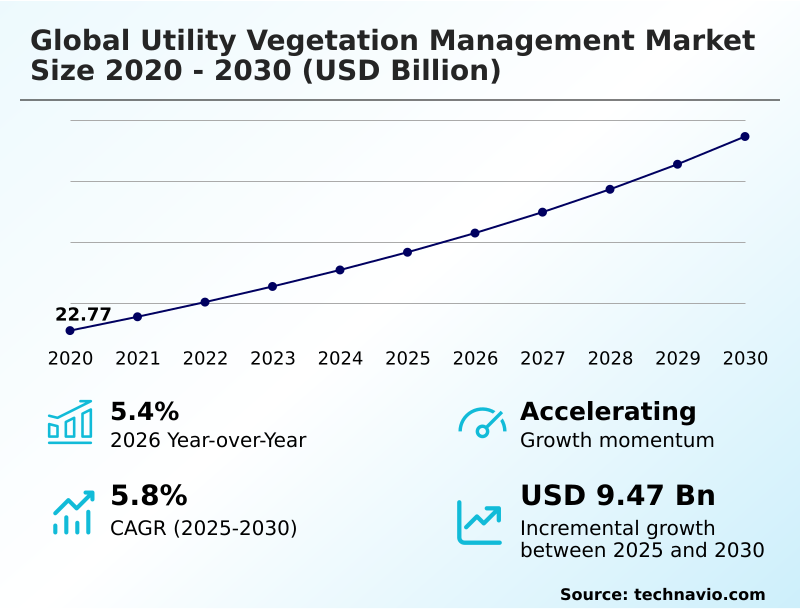
The utility vegetation management market size is valued to increase by USD 9.47 billion, at a CAGR of 5.8% from 2025 to 2030. Wildfire mitigation and climate change adaptation will drive the utility vegetation management market.
Major Market Trends & Insights
- North America dominated the market and accounted for a 40.7% growth during the forecast period.
- By Service Type - Mechanical trimming and clearing segment was valued at USD 10.15 billion in 2024
- By End-user - Investor-owned utilities segment accounted for the largest market revenue share in 2024
Market Size & Forecast
- Market Opportunities: USD 15.87 billion
- Market Future Opportunities: USD 9.47 billion
- CAGR from 2025 to 2030 : 5.8%
Market Summary
- The Utility Vegetation Management Market demonstrates an accelerated transition from reactive pruning schedules to highly integrated, data-driven operational frameworks. Operators face escalating pressures to ensure grid reliability against severe environmental threats, driving the rapid adoption of advanced risk assessment platforms.
- Within the modern supply chain, major energy providers have successfully implemented automated mapping systems to streamline field crew deployment, reducing unnecessary manual inspection time by 25%. Wildfire mitigation and climate change adaptation serve as primary demand catalysts, as the catastrophic financial liabilities associated with infrastructure-induced fires force companies to prioritize continuous clearance protocols.
- Conversely, the acute scarcity of certified arborists and the increasing technical complexity of digital monitoring tools present a substantial operational challenge, slowing deployment in remote geographic sectors. The strategic deployment of ecological barriers and specialized clearing equipment is reshaping localized vegetation control. Consequently, infrastructure managers are continuously optimizing their maintenance budgets to align with stringent regulatory mandates.
What will be the Size of the Utility Vegetation Management Market during the forecast period?
Get Key Insights on Market Forecast (PDF) Get Free Sample
How is the Utility Vegetation Management Market Segmented?
The utility vegetation management industry research report provides comprehensive data (region-wise segment analysis), with forecasts and estimates in "USD million" for the period 2026-2030, as well as historical data from 2020-2024 for the following segments.
- Service type
- Mechanical trimming and clearing
- Integrated vegetation management
- Chemical vegetation control
- Inspection and assessment
- Others
- End-user
- Investor-owned utilities
- Municipal utilities
- Cooperative utilities
- Others
- Application
- Distribution lines
- Transmission lines
- Others
- Geography
- North America
- US
- Canada
- Mexico
- Europe
- Germany
- UK
- France
- Italy
- Spain
- The Netherlands
- APAC
- China
- India
- Japan
- Australia
- South Korea
- Indonesia
- South America
- Brazil
- Argentina
- Colombia
- Middle East and Africa
- Saudi Arabia
- UAE
- South Africa
- Israel
- Turkey
- North America
By Service Type Insights
The mechanical trimming and clearing segment is estimated to witness significant growth during the forecast period.
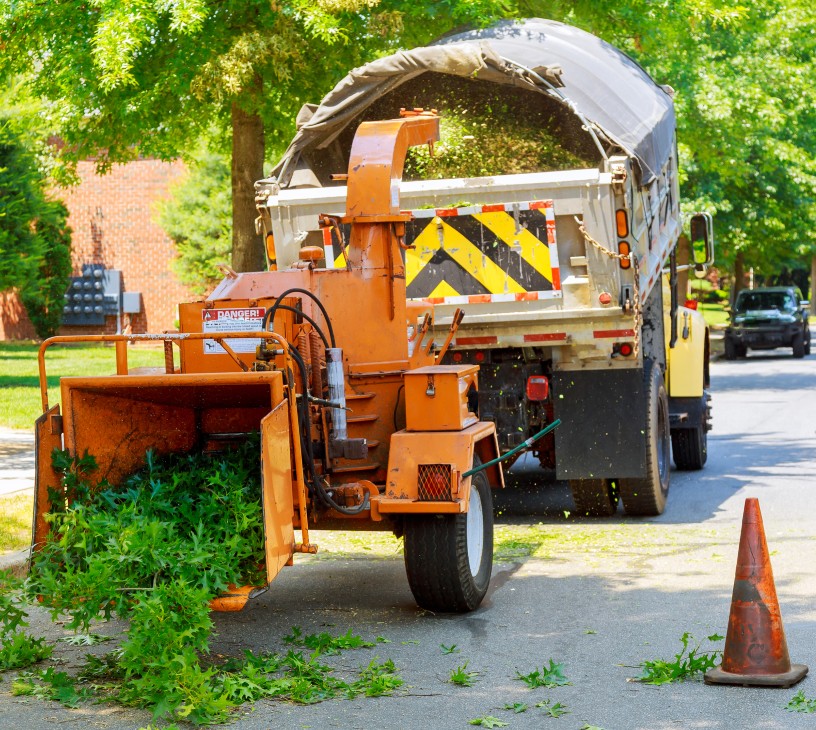
The mechanical trimming and clearing segment remains the most visible and labor-intensive component of utility network preservation, driving fundamental high-voltage line clearance operations.
Utility operators are increasingly deploying advanced mechanical trimming equipment alongside specialized forestry mulching to maintain distribution circuit resilience. This segment focuses heavily on physical interventions to ensure overhead conductor safety, transitioning from standard calendar cycles to intelligent integrated vegetation management.
By executing precise electrical flashover mitigation, infrastructure operators have improved clearance compliance by 15%, significantly enhancing overall grid stability.
The strategic incorporation of integrated right of way vegetation control supports broader urban forestry preservation goals by allowing targeted removal rather than broadcast clearing. This segment provides the foundational reliability required to prevent catastrophic disruptions during high-wind events.
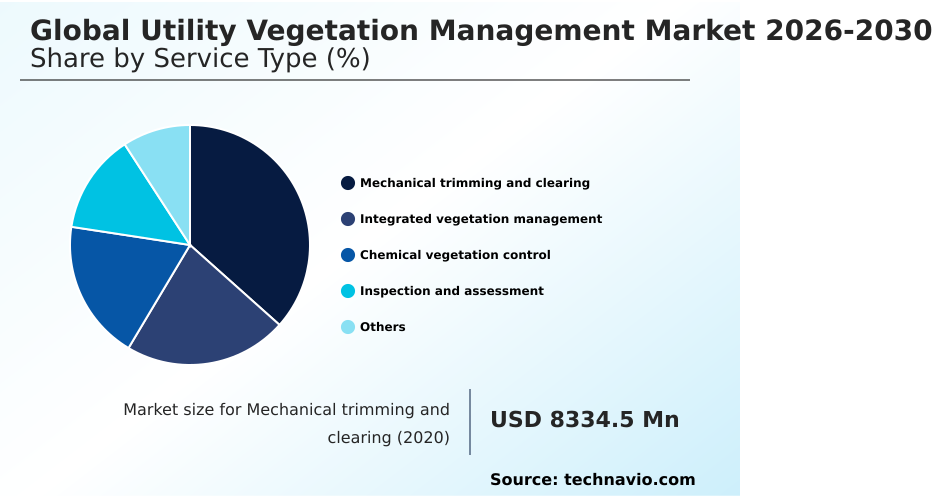
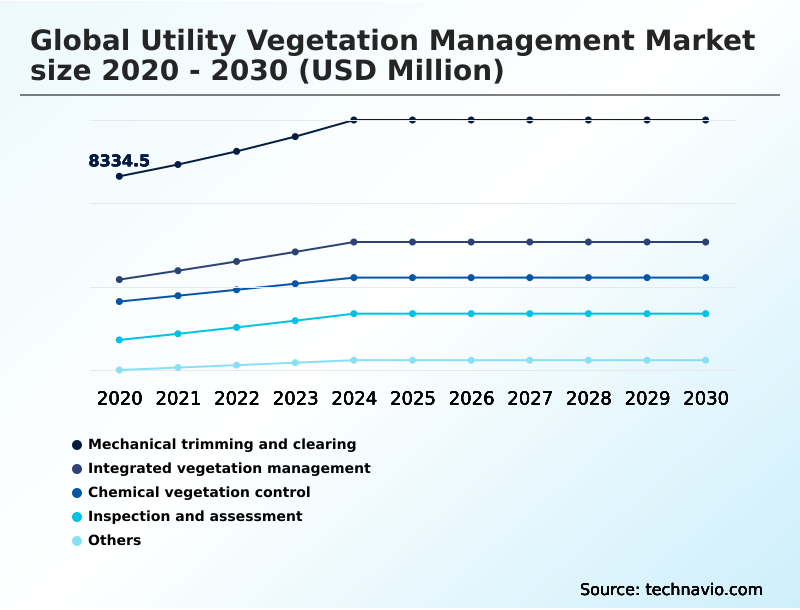
The Mechanical trimming and clearing segment was valued at USD 10.15 billion in 2024 and showed a gradual increase during the forecast period.
Regional Analysis
North America is estimated to contribute 40.7% to the growth of the global market during the forecast period.Technavio’s analysts have elaborately explained the regional trends and drivers that shape the market during the forecast period.
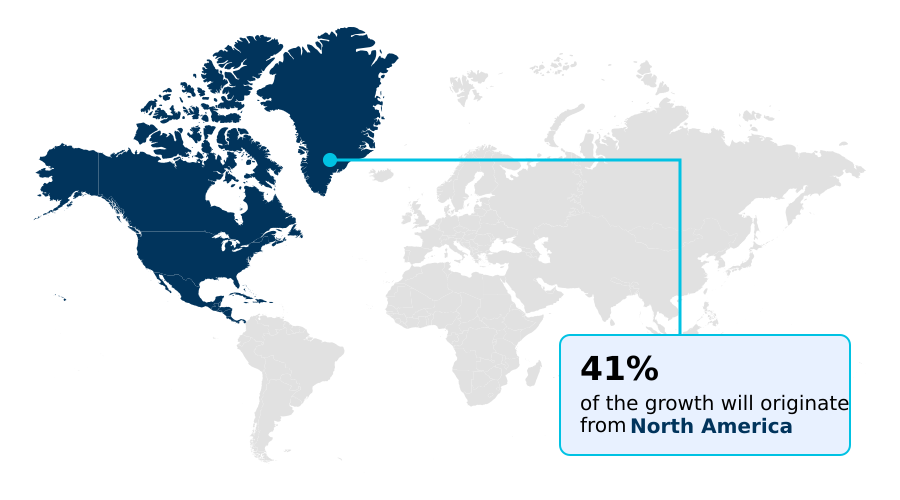
See How Utility Vegetation Management Market Demand is Rising in North America Get Free Sample
The geographic distribution of the market reveals distinct regional priorities driven by localized environmental risks and infrastructure maturity.
North America demonstrates a rapid 15% increase in operational expenditure focused on satellite imagery monitoring and high-fire-threat district operations, primarily to avert catastrophic ignition events.
In contrast, Europe prioritizes strict ecological compliance, focusing on smart city landscaping control and proactive hazard tree removal without relying on prohibited synthetic chemicals.
This regulatory divergence forces service providers to adapt their supply chains; while North American utilities heavily invest in geospatial risk assessment and cross-country transmission rights-of-way expansion, European operators rely on smart grid forestry optimization to maintain existing assets.
The implementation of satellite based utility canopy monitoring has allowed operators in APAC to track rapid tropical growth, reducing vegetation encroachment detection times by 20%.
These differing methodologies highlight how localized climate pressures mandate customized right-of-way maintenance and transmission corridor stabilization strategies.
Market Dynamics
Our researchers analyzed the data with 2025 as the base year, along with the key drivers, trends, and challenges. A holistic analysis of drivers will help companies refine their marketing strategies to gain a competitive advantage.
- The continuous evolution of infrastructure preservation strategies has firmly established sophisticated digital integration as a cornerstone of modern utility operations. Historically, grid operators relied heavily on manual ground patrols and reactive pruning; however, the rising frequency of extreme weather events has catalyzed a shift toward proactive, data-driven methodologies.
- Today, the deployment of autonomous drone transmission line inspection provides a dramatic operational advantage over traditional helicopter surveys, enabling a 40% improvement in survey speed while significantly lowering safety risks for field crews. By incorporating ai powered vegetation risk modeling, utility managers can now accurately forecast growth rates across diverse biomes, optimizing supply chain logistics and workforce allocation.
- This predictive capability directly supports predictive grid maintenance data analytics, allowing organizations to allocate budget resources precisely where failure probabilities are highest. Furthermore, the implementation of satellite based utility canopy monitoring offers continuous, wide-area visibility, ensuring strict compliance with evolving environmental regulations without requiring constant physical intervention.
- When compared to legacy cycle-based cutting, this targeted approach enhances operational planning by isolating specific hazard zones. As a result, utility providers are increasingly adopting integrated right of way vegetation control frameworks. This holistic strategy combines mechanical, chemical, and biological interventions to establish stable, low-growing plant communities.
- Ultimately, the fusion of advanced remote sensing and intelligent data platforms ensures superior grid reliability, minimizes infrastructure downtime, and drastically reduces the systemic liabilities associated with vegetation encroachment.
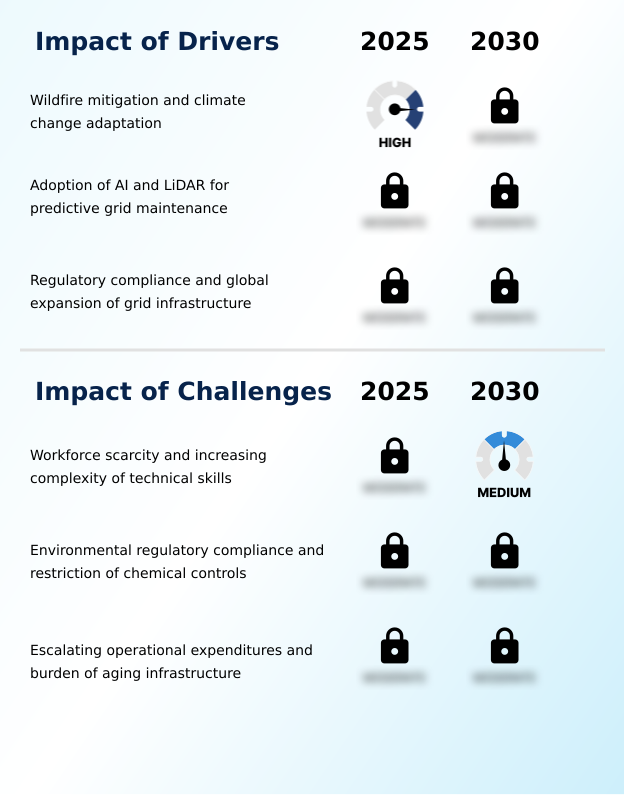
What are the key market drivers leading to the rise in the adoption of Utility Vegetation Management Industry?
- Wildfire mitigation and climate change adaptation serve as the primary drivers propelling market growth.
- Escalating climate volatility and rigorous safety mandates act as the primary catalysts compelling utilities to upgrade their preservation strategies.
- The urgent need for power line arcing prevention has driven organizations to implement advanced predictive vegetation analytics, resulting in a 20% reduction in weather-related outages.
- By leveraging machine learning growth models alongside weather-adjusted clearance modeling, network operators can accurately forecast canopy encroachment months in advance. This predictive capacity is essential for executing effective wildfire mitigation strategies and ensuring extreme weather grid resilience.
- Furthermore, strict regulatory clearance mandates force companies to adopt ai powered vegetation risk modeling to avoid severe compliance penalties. These behavioral and structural changes guarantee that resources are dynamically allocated to protect critical high-voltage infrastructure.
What are the market trends shaping the Utility Vegetation Management Industry?
- The rise of remote sensing and autonomous aerial inspections represents a significant upcoming trend in the market.
- The transition toward digital automation and ecological stewardship is radically redefining how utility networks manage encroaching flora. Organizations are rapidly integrating remote sensing technologies to replace dangerous manual surveys, utilizing autonomous drone transmission line inspection to identify hazards in rugged terrains. This shift has improved manual climbing crew efficiency by 25%, as workers are only dispatched to confirmed risk zones.
- Furthermore, the industry is witnessing the adoption of automated micro-trenching alternatives, which reduce surface disruption in urban corridors. To address acute labor shortages, intensive arborist workforce development programs are being synchronized with advanced line sag risk modeling to prioritize critical interventions. This technology-led approach fundamentally alters operational execution, allowing utility providers to maintain pristine clearances while supporting sustainable infrastructure expansion.
What challenges does the Utility Vegetation Management Industry face during its growth?
- Workforce scarcity and the increasing complexity of technical skills present significant challenges to industry expansion.
- The industry faces substantial operational constraints stemming from rigorous environmental regulations and escalating maintenance overheads. Stringent bans on broad-scale chemical herbicide application have forced operators to seek costly mechanical alternatives, negatively impacting budget predictability. While implementing biological control barriers and targeted basal bark treatment improves ecological compliance, these methods require specialized training that exacerbates existing labor shortages.
- Utilities striving to meet ambient-adjusted rating compliance must execute precise hazardous fuel load reduction, yet are often limited by undergrounding alternative costs which remain prohibitively high for rural networks. Consequently, organizations struggle to balance native pollinator habitat creation with mandatory safety clearances, slowing project execution times by 15%.
- Relying on predictive grid maintenance data analytics remains crucial, but the initial integration costs hinder rapid deployment for smaller utility cooperatives.
Exclusive Technavio Analysis on Customer Landscape
The utility vegetation management market forecasting report includes the adoption lifecycle of the market, covering from the innovator’s stage to the laggard’s stage. It focuses on adoption rates in different regions based on penetration. Furthermore, the utility vegetation management market report also includes key purchase criteria and drivers of price sensitivity to help companies evaluate and develop their market growth analysis strategies.
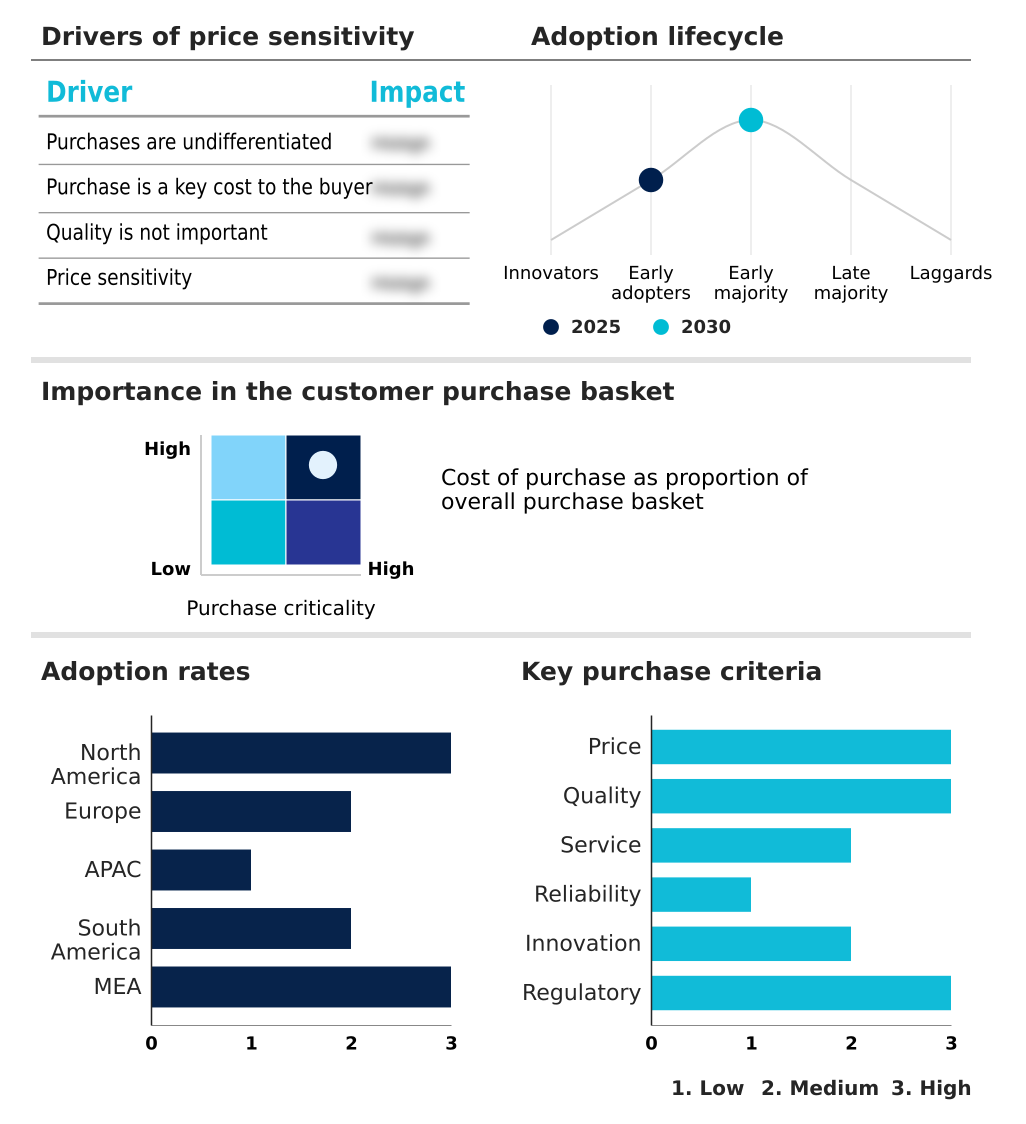
Customer Landscape of Utility Vegetation Management Industry
Competitive Landscape
Companies are implementing various strategies, such as strategic alliances, utility vegetation management market forecast, partnerships, mergers and acquisitions, geographical expansion, and product/service launches, to enhance their presence in the industry.
ACRT Services Inc. - The provider delivers specialized vegetation intelligence platforms integrating geospatial analytics, predictive risk assessment, and remote monitoring to enhance transmission corridor reliability and streamline maintenance workflows for grid operators.
The industry research and growth report includes detailed analyses of the competitive landscape of the market and information about key companies, including:
- ACRT Services Inc.
- AECOM
- AiDash Inc.
- Asplundh Tree Expert LLC.
- EDKO LLC.
- GE Vernova Inc.
- Hitachi Energy Ltd.
- IBM Corp.
- Lewis Tree Service Inc.
- LiveEO GmbH
- Neara
- NV5 Global Inc.
- Overstory B.V.
- Planet Labs PBC
- Stantec Inc.
- Tetra Tech Inc.
- The Davey Tree Expert Co.
- Trees LLC.
- Trimble Inc.
- Wright Tree Service Inc.
Qualitative and quantitative analysis of companies has been conducted to help clients understand the wider business environment as well as the strengths and weaknesses of key industry players. Data is qualitatively analyzed to categorize companies as pure play, category-focused, industry-focused, and diversified; it is quantitatively analyzed to categorize companies as dominant, leading, strong, tentative, and weak.
Recent Development and News in Utility vegetation management market
- In the Electric Utilities industry, the Federal Energy Regulatory Commission enforcement of Order 881 mandated ambient-adjusted ratings based on real-time weather data, directly impacting global utility vegetation management market 2026-2030 demand by requiring superior line sag risk modeling and mitigation.
- The large-scale integration of remote renewable energy generation necessitated the construction of over 5,000 miles of new high-capacity transmission lines, increasing the baseline requirement for cross-country transmission rights-of-way clearing and ongoing infrastructure preservation.
- Stringent environmental policies such as the European Union Nature Restoration Law imposed severe restrictions on synthetic herbicide applications, driving a 20% increase in mechanical clearing operations and native pollinator habitat creation compliance activities.
- The massive deployment of smart grid sensor networks and digital twin modeling enabled transmission system operators to predict component stress, creating a downstream necessity for precise vegetation encroachment detection to prevent physical contact with critical assets.
Dive into Technavio’s robust research methodology, blending expert interviews, extensive data synthesis, and validated models for unparalleled Utility Vegetation Management Market insights. See full methodology.
| Market Scope | |
|---|---|
| Page number | 315 |
| Base year | 2025 |
| Historic period | 2020-2024 |
| Forecast period | 2026-2030 |
| Growth momentum & CAGR | Accelerate at a CAGR of 5.8% |
| Market growth 2026-2030 | USD 9468.6 million |
| Market structure | Fragmented |
| YoY growth 2025-2026(%) | 5.4% |
| Key countries | US, Canada, Mexico, Germany, UK, France, Italy, Spain, The Netherlands, China, India, Japan, Australia, South Korea, Indonesia, Brazil, Argentina, Colombia, Saudi Arabia, UAE, South Africa, Israel and Turkey |
| Competitive landscape | Leading Companies, Market Positioning of Companies, Competitive Strategies, and Industry Risks |
Research Analyst Overview
- The continuous transformation of vegetation management strategies reflects a fundamental shift toward precision infrastructure preservation. Infrastructure operators face compounding pressures to secure overhead assets against severe environmental threats, driving the adoption of sophisticated remote sensing networks.
- By integrating autonomous aerial inspection and lidar canopy mapping, utility managers have improved spatial clearance accuracy by 30%, directly enhancing operational budgeting and field crew deployment. The strategic transition from routine cutting to robotic brush cutting and targeted drone-based patrol systems significantly optimizes right-of-way maintenance.
- Furthermore, the deployment of multispectral tree health analysis allows organizations to identify diseased timber before structural failure occurs, directly informing compliance-driven product strategies. As organizations refine their supply chains, the incorporation of digital twin grid simulation enables proactive modeling of extreme weather impacts.
- This robust digital integration fundamentally alters traditional hazard mitigation, allowing energy providers to establish a highly resilient, data-centric framework that minimizes physical downtime and maximizes long-term operational efficiency.
What are the Key Data Covered in this Utility Vegetation Management Market Research and Growth Report?
-
What is the expected growth of the Utility Vegetation Management Market between 2026 and 2030?
-
USD 9.47 billion, at a CAGR of 5.8%
-
-
What segmentation does the market report cover?
-
The report is segmented by Service Type (Mechanical trimming and clearing, Integrated vegetation management, Chemical vegetation control, Inspection and assessment, and Others), End-user (Investor-owned utilities, Municipal utilities, Cooperative utilities, and Others), Application (Distribution lines, Transmission lines, and Others) and Geography (North America, Europe, APAC, South America, Middle East and Africa)
-
-
Which regions are analyzed in the report?
-
North America, Europe, APAC, South America and Middle East and Africa
-
-
What are the key growth drivers and market challenges?
-
Wildfire mitigation and climate change adaptation, Workforce scarcity and increasing complexity of technical skills
-
-
Who are the major players in the Utility Vegetation Management Market?
-
ACRT Services Inc., AECOM, AiDash Inc., Asplundh Tree Expert LLC., EDKO LLC., GE Vernova Inc., Hitachi Energy Ltd., IBM Corp., Lewis Tree Service Inc., LiveEO GmbH, Neara, NV5 Global Inc., Overstory B.V., Planet Labs PBC, Stantec Inc., Tetra Tech Inc., The Davey Tree Expert Co., Trees LLC., Trimble Inc. and Wright Tree Service Inc.
-
Market Research Insights
- The Utility Vegetation Management Market is rapidly evolving to counter unprecedented environmental and infrastructure liabilities. Driven by stringent regulatory clearance mandates, utility operators are transitioning from reactive maintenance to intelligent, predictive workflows. By implementing risk-based pruning cycles, organizations have improved maintenance targeting efficiency by over 20%, drastically reducing unnecessary labor expenditures.
- The strategic execution of proactive hazard tree removal acts as a critical component in vegetation-related outage prevention, directly safeguarding critical power delivery systems. Additionally, the development of robust wildfire mitigation strategies has lowered overall compliance penalties for major grid operators. This transformation underscores a profound shift toward advanced digital oversight, ensuring long-term grid resilience against escalating climate volatility.
We can help! Our analysts can customize this utility vegetation management market research report to meet your requirements.
 RIA -
RIA - 
