


Water Parks Market Size 2026-2030
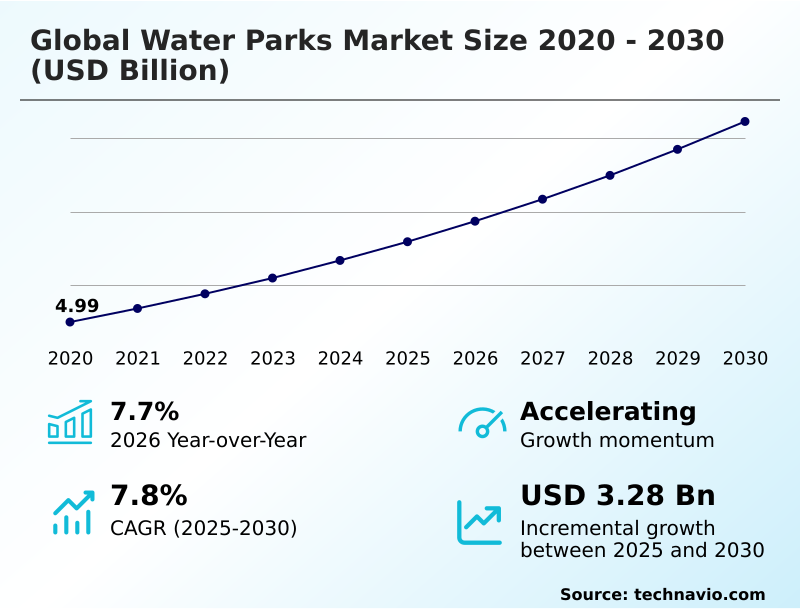
The water parks market size is valued to increase by USD 3.28 billion, at a CAGR of 7.8% from 2025 to 2030. Expansion of global travel and tourism sector and experiential leisure will drive the water parks market.
Major Market Trends & Insights
- APAC dominated the market and accounted for a 33.8% growth during the forecast period.
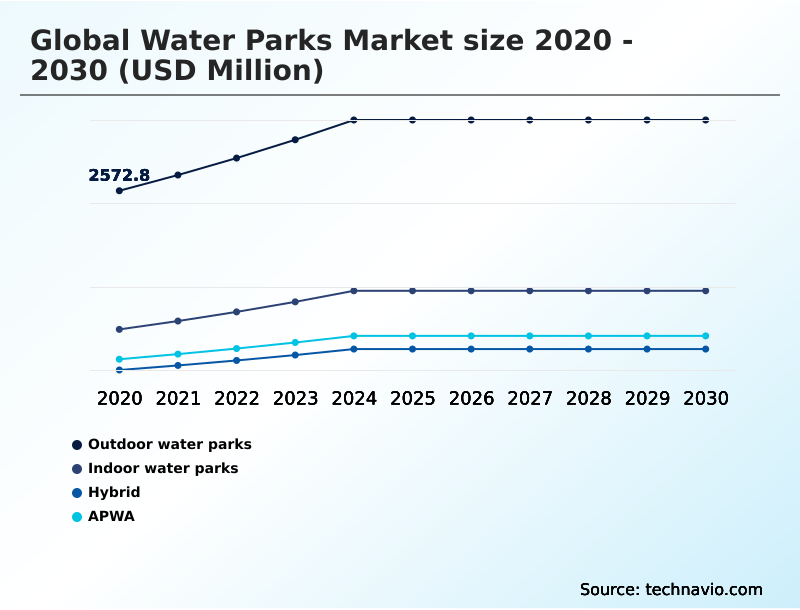
- By Type - Outdoor water parks segment was valued at USD 3.34 billion in 2024
- By Revenue Stream - Ticket sales segment accounted for the largest market revenue share in 2024
Market Size & Forecast
- Market Opportunities: USD 5.47 billion
- Market Future Opportunities: USD 3.28 billion
- CAGR from 2025 to 2030 : 7.8%
Market Summary
- The Water Parks Market is defined by a continuous push for innovation, balancing high-thrill attractions with operational efficiency. A core driver is the consumer shift toward experiential leisure, which has moved the industry beyond simple recreation to creating immersive, all-in-one entertainment hubs.
- This is achieved through sophisticated thematic design integration and the deployment of advanced technologies like high-intensity propulsion systems and augmented reality slides. However, the industry grapples with significant capital expenditure management hurdles and the complexities of seasonal revenue volatility. In a typical business scenario, an operator leverages guest data analytics to implement dynamic pricing models.
- This strategy helps manage crowd flow during peak times and optimizes ancillary revenue generation from services like gourmet dining options and luxury private cabanas, thereby maximizing profitability for the integrated resort experience. The focus on safety remains paramount, with advancements in automated monitoring systems and water treatment chemicals becoming standard.
- As the market matures, the ability to deliver a unique, safe, and digitally connected experience will determine long-term success.
What will be the Size of the Water Parks Market during the forecast period?
Get Key Insights on Market Forecast (PDF) Get Free Sample
How is the Water Parks Market Segmented?
The water parks industry research report provides comprehensive data (region-wise segment analysis), with forecasts and estimates in "USD million" for the period 2026-2030, as well as historical data from 2020-2024 for the following segments.
- Type
- Outdoor water parks
- Indoor water parks
- APWA
- Hybrid
- Revenue stream
- Ticket sales
- Food and beverage
- Hotel and resorts
- Merchandise
- Others
- Ownership
- Private owned
- Public
- Public private partnerships
- Geography
- North America
- US
- Canada
- Mexico
- APAC
- China
- Japan
- India
- Europe
- Germany
- UK
- France
- Middle East and Africa
- Saudi Arabia
- UAE
- South Africa
- South America
- Brazil
- Argentina
- Colombia
- Rest of World (ROW)
- North America
By Type Insights
The outdoor water parks segment is estimated to witness significant growth during the forecast period.
Outdoor water parks represent the industry's traditional segment, leveraging expansive land areas for high-capacity attractions. These seasonal aquatic facilities are engineered with robust filtration, using both ultraviolet filtration and ozone filtration systems, and must withstand environmental exposure.
The operational model faces challenges from weather dependency, prompting investment in water reclamation technology to improve efficiency. For instance, advanced water circulation systems have demonstrated the ability to reduce energy consumption by up to 30%.
To enhance guest experience and ancillary revenue generation, operators are integrating radio frequency identification for streamlined access and payments, alongside dynamic pricing models to manage crowd flow.
The deployment of computer vision monitoring for aquatic play systems and other high-capacity attractions is also becoming a standard for safety and operational oversight.
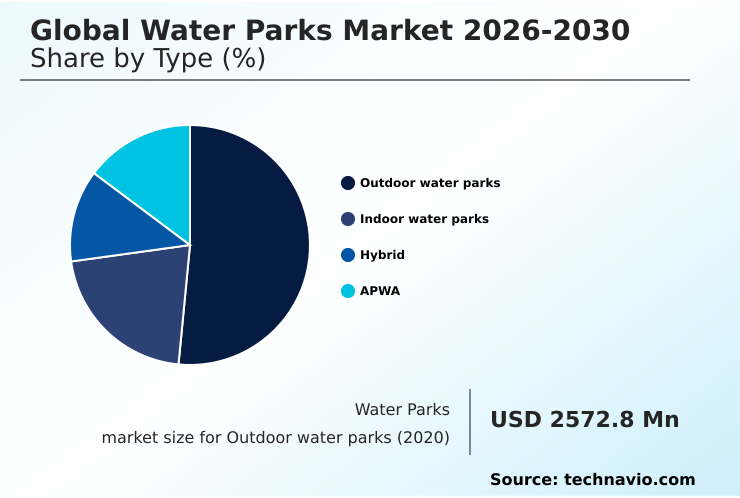
The Outdoor water parks segment was valued at USD 3.34 billion in 2024 and showed a gradual increase during the forecast period.
Regional Analysis
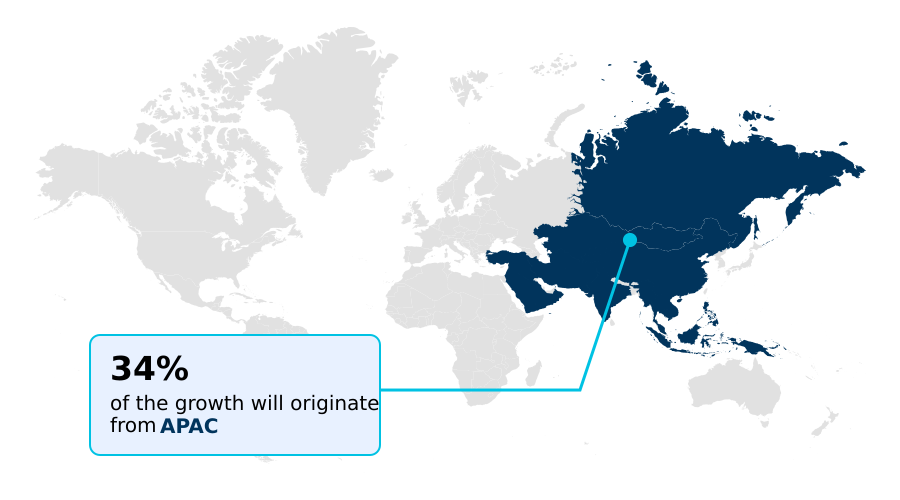
APAC is estimated to contribute 33.8% to the growth of the global market during the forecast period.Technavio’s analysts have elaborately explained the regional trends and drivers that shape the market during the forecast period.
See How Water Parks Market Demand is Rising in APAC Get Free Sample
The geographic landscape of the market is dual-faceted, defined by modernization in mature regions and explosive growth in emerging territories.
North America, with a market share of 33.76%, focuses on retrofitting existing amusement parks with water attractions and installing retractable roof enclosures to enable year-round operation.
In contrast, the APAC region, which is projected to account for 33.77% of market growth, is characterized by the development of massive new aquatic complex projects, often through public private partnerships.
These new destination resorts are key components of urban leisure integration. In these regions, a decentralized solar thermal grid or closed-loop water systems are often incorporated from the design phase to manage operational costs.
This regional diversification, with its focus on multi-generational appeal, ensures a robust and expanding global footprint.
Market Dynamics
Our researchers analyzed the data with 2025 as the base year, along with the key drivers, trends, and challenges. A holistic analysis of drivers will help companies refine their marketing strategies to gain a competitive advantage.
- Strategic development in the water parks market is increasingly multifaceted, considering not only attractions but also operational and business model innovations. Understanding the impact of hydraulic engineering on water coaster design is crucial for creating thrilling yet safe experiences. Simultaneously, the integration of rfid technology for cashless water park transactions has become standard for improving guest spending and operational flow.
- Digital integration for enhanced guest experiences now includes augmented reality integration in modern water slides and AI applications for water park crowd management. On the operational side, the benefits of uv and ozone water filtration systems are weighed against their costs, while strategies for managing high capital expenditure in parks remain a central boardroom concern.
- The challenges of seasonal revenue in outdoor water parks are being mitigated by new indoor water park design for year-round revenue. Integrated resort strategies for water park success often involve the premiumization trends in water park hospitality and leveraging the role of IP in water park theming and marketing.
- The growth in emerging economies underscores the impact of urbanization on water park development, with many operators now developing water parks in emerging tourism markets, sometimes through public-private partnerships for municipal water park projects. This growth is underpinned by technological innovations driving water park attractions and a focus on safety technology advancements in aquatic facilities.
- Firms that succeed are those that master a complex model, comparing outdoor indoor and hybrid water park models while managing operational costs in water park facilities and embracing sustainability practices in water park resource management. Parks adopting advanced safety systems have seen incident rates drop by more than 20% compared to those with traditional protocols.
What are the key market drivers leading to the rise in the adoption of Water Parks Industry?
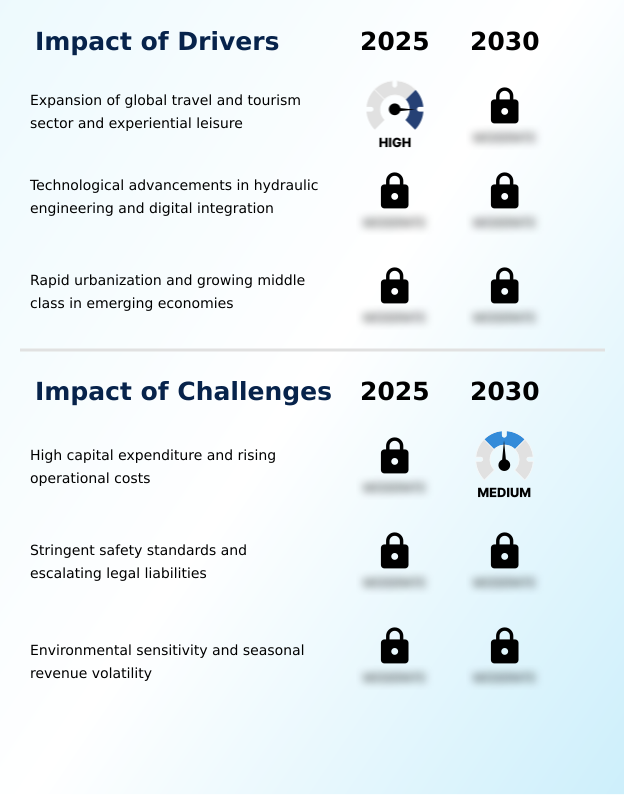
- The expansion of the global travel and tourism sector, coupled with growing consumer demand for experiential leisure, serves as a key driver for market growth.
- Market growth is significantly propelled by technological advancements in ride engineering and a consumer shift toward immersive entertainment.
- Innovations in hydraulic engineering and water propulsion systems, including linear induction motors and electromagnetic propulsion, have enabled the creation of faster and more complex water coasters. These high-thrill water slides are central to the modern park's appeal.
- The industry is capitalizing on the demand for experiential leisure by creating all-in-one entertainment hubs with strong thematic design integration. These high-thrill attractions are pivotal for attracting the family-oriented vacation market.
- Furthermore, the use of guest data analytics allows for optimized park layouts and tailored marketing, which has led to operational efficiency gains, including a 10% improvement in resource allocation at some facilities.
What are the market trends shaping the Water Parks Industry?
- The prioritization of sustainability and environmental engineering is an emerging market trend. This shift is influencing design, operations, and long-term investment strategies across the industry.
- Key trends are reshaping the market, with a strong emphasis on sustainability and digital immersion. The move toward carbon-neutral operations is driving the adoption of sustainable building materials and circular energy systems. New facilities are incorporating biological water purification and high-capacity heat exchangers, with some advanced systems reducing heating energy needs by up to 25%.
- This premiumization trend extends to the guest experience, with operators introducing luxury private cabanas and gourmet dining options. Digitally, guest engagement platforms are becoming standard, enabling cashless transactions and virtual queuing systems to manage visitor flow.
- The integration of digital projection mapping and augmented reality slides is transforming passive rides into interactive adventures, a strategy that has been shown to increase repeat visitation rates by 15% in targeted demographics.
What challenges does the Water Parks Industry face during its growth?
- High capital expenditure requirements and rising operational costs present a key challenge affecting the industry's growth trajectory and profitability.
- The market faces considerable financial and operational hurdles that temper growth. The primary challenge is high capital expenditure management for constructing attractions that use high-intensity propulsion systems and gravity-driven aquatic slides, compounded by the ongoing cost of water treatment chemicals and rigorous structural inspections. This creates significant seasonal revenue volatility, as high fixed costs persist during off-peak periods.
- Legal liability mitigation is another critical concern, driving investment in automated monitoring systems, computerized surveillance, and aquatic emergency response protocols, with some systems reducing incident response times by 40%.
- Additionally, environmental sensitivity and the demands of seasonal staffing management require sophisticated asset management strategies to ensure long-term viability, as inefficient water management can increase operational costs by up to 20% in arid regions.
Exclusive Technavio Analysis on Customer Landscape
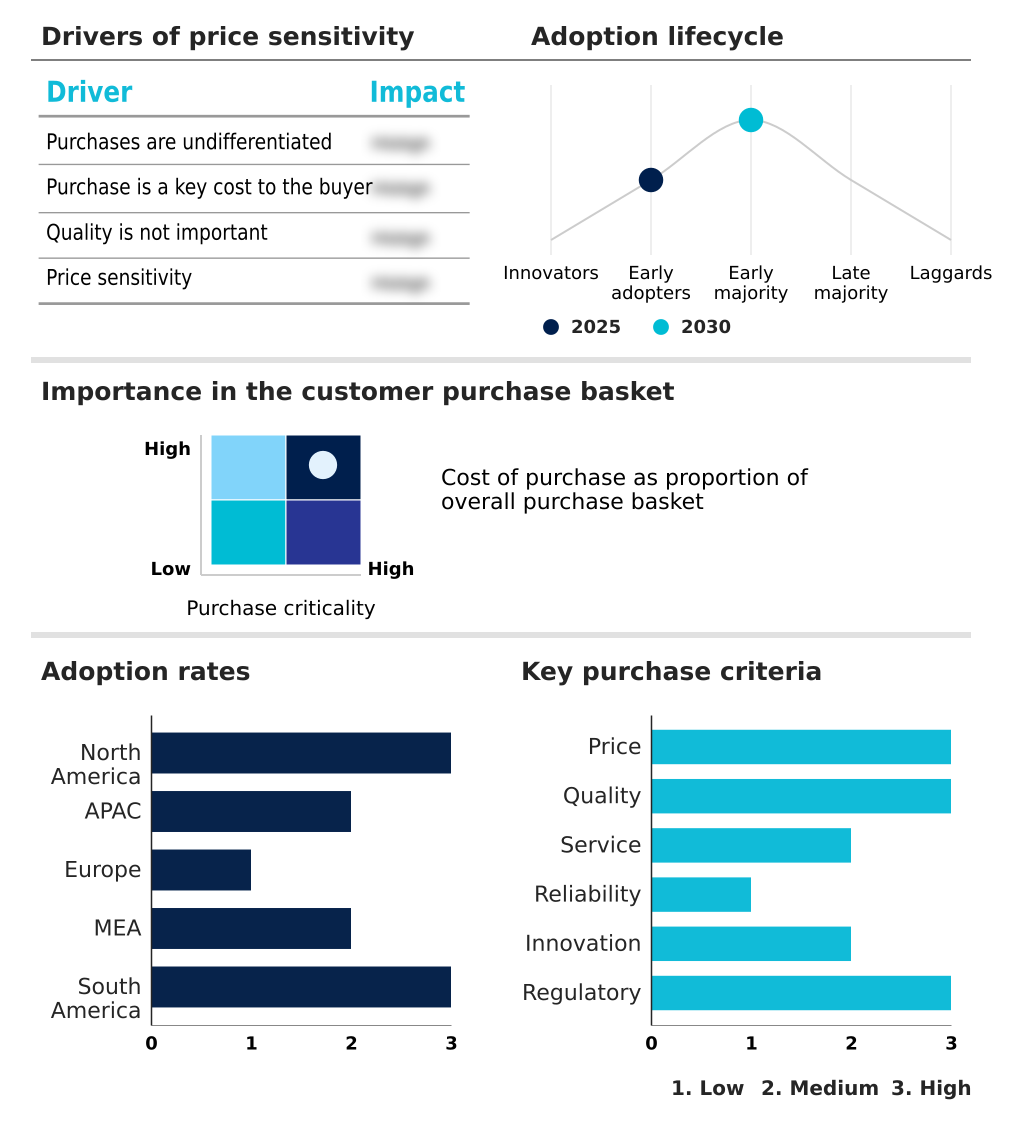
The water parks market forecasting report includes the adoption lifecycle of the market, covering from the innovator’s stage to the laggard’s stage. It focuses on adoption rates in different regions based on penetration. Furthermore, the water parks market report also includes key purchase criteria and drivers of price sensitivity to help companies evaluate and develop their market growth analysis strategies.
Customer Landscape of Water Parks Industry
Competitive Landscape
Companies are implementing various strategies, such as strategic alliances, water parks market forecast, partnerships, mergers and acquisitions, geographical expansion, and product/service launches, to enhance their presence in the industry.
Arihant Industrial Corp Ltd. - Specializes in the design and manufacture of water slides and comprehensive aquatic playground systems for the global amusement and leisure markets.
The industry research and growth report includes detailed analyses of the competitive landscape of the market and information about key companies, including:
- Arihant Industrial Corp Ltd.
- Aspro Parks SA
- Chimelong Group Co. Ltd.
- Cloward H2O
- FLUIDRA SA
- FORREC Ltd.
- Great Wolf Resorts Inc.
- Kerzner International Ltd.
- Merlin Entertainments Ltd.
- Murphys Waves Ltd.
- OpenAire Inc.
- Parques Reunidos SAU
- Polin Waterparks
- ProSlide Technology Inc.
- Six Flags Entertainment Corp.
- Splashtacular LLC.
- United Parks and Resorts Inc.
- Vortex International
- WhiteWater West Industries Ltd
- Wiegand.Waterrides Gmbh.
Qualitative and quantitative analysis of companies has been conducted to help clients understand the wider business environment as well as the strengths and weaknesses of key industry players. Data is qualitatively analyzed to categorize companies as pure play, category-focused, industry-focused, and diversified; it is quantitatively analyzed to categorize companies as dominant, leading, strong, tentative, and weak.
Recent Development and News in Water parks market
- In May 2025, WhiteWater West launched a new generation of circular water slides that utilize recycled composite materials to reduce the environmental footprint of large scale installations.
- In April 2025, a prominent engineering corporation in North America revealed a high-efficiency water reclamation system designed specifically for large-scale amusement parks that reduces the electrical consumption of circulation pumps by thirty percent.
- In March 2025, a national safety standards organization in North America released a comprehensive update to the protocols for automated aquatic emergency response systems, requiring facilities to integrate artificial intelligence-driven surveillance that can detect submerged victims within seconds.
- In October 2025, a major software company partnered with a Japanese aquatic park to launch a location-based mobile game that rewards visitors for physical movement and interaction within the facility.
Dive into Technavio’s robust research methodology, blending expert interviews, extensive data synthesis, and validated models for unparalleled Water Parks Market insights. See full methodology.
| Market Scope | |
|---|---|
| Page number | 309 |
| Base year | 2025 |
| Historic period | 2020-2024 |
| Forecast period | 2026-2030 |
| Growth momentum & CAGR | Accelerate at a CAGR of 7.8% |
| Market growth 2026-2030 | USD 3277.7 million |
| Market structure | Fragmented |
| YoY growth 2025-2026(%) | 7.7% |
| Key countries | US, Canada, Mexico, China, Japan, India, South Korea, Australia, Indonesia, Germany, UK, France, Italy, The Netherlands, Spain, Saudi Arabia, UAE, South Africa, Israel, Turkey, Brazil, Argentina and Colombia |
| Competitive landscape | Leading Companies, Market Positioning of Companies, Competitive Strategies, and Industry Risks |
Research Analyst Overview
- The water parks market is undergoing a significant transformation, driven by advancements in hydraulic engineering and a heightened focus on sustainability. The industry is moving beyond simple gravity-driven aquatic slides to embrace complex water coasters powered by linear induction motors and electromagnetic propulsion.
- This evolution in high-thrill water slides is complemented by innovations in operational technology, including high-intensity propulsion systems and sophisticated water propulsion systems. Thematic design integration is critical for creating immersive environments, often seen in large aquatic complex projects. On the sustainability front, facilities are adopting circular energy systems, decentralized solar thermal grids, and closed-loop water systems.
- Advanced water reclamation technology, alongside ultraviolet filtration, ozone filtration systems, and biological water purification, is becoming standard. These systems, supported by high-capacity heat exchangers, reduce reliance on water treatment chemicals and lower operational costs, with some parks reporting energy consumption reductions of 30%.
- Safety is enhanced through automated monitoring systems, computerized surveillance, and rapid aquatic emergency response protocols, all requiring rigorous structural inspections. Digital enhancements such as radio frequency identification, virtual queuing systems, and augmented reality slides, combined with digital projection mapping, are reshaping the guest experience.
- Furthermore, the development of amusement parks with water attractions, retractable roof enclosures, and diverse aquatic play systems using sustainable building materials reflects the market's adaptability. The creation of attractions featuring tidal wave equipment and advanced wave generation technology continues to be a key area of investment and differentiation.
What are the Key Data Covered in this Water Parks Market Research and Growth Report?
-
What is the expected growth of the Water Parks Market between 2026 and 2030?
-
USD 3.28 billion, at a CAGR of 7.8%
-
-
What segmentation does the market report cover?
-
The report is segmented by Type (Outdoor water parks, Indoor water parks, Hybrid, and APWA), Revenue Stream (Ticket sales, Food and beverage, Hotel and resorts, Merchandise, and Others), Ownership (Private owned, Public, and Public private partnerships) and Geography (North America, APAC, Europe, Middle East and Africa, South America)
-
-
Which regions are analyzed in the report?
-
North America, APAC, Europe, Middle East and Africa and South America
-
-
What are the key growth drivers and market challenges?
-
Expansion of global travel and tourism sector and experiential leisure, High capital expenditure and rising operational costs
-
-
Who are the major players in the Water Parks Market?
-
Arihant Industrial Corp Ltd., Aspro Parks SA, Chimelong Group Co. Ltd., Cloward H2O, FLUIDRA SA, FORREC Ltd., Great Wolf Resorts Inc., Kerzner International Ltd., Merlin Entertainments Ltd., Murphys Waves Ltd., OpenAire Inc., Parques Reunidos SAU, Polin Waterparks, ProSlide Technology Inc., Six Flags Entertainment Corp., Splashtacular LLC., United Parks and Resorts Inc., Vortex International, WhiteWater West Industries Ltd and Wiegand.Waterrides Gmbh.
-
Market Research Insights
- Market dynamics are increasingly shaped by a strategic focus on premiumization and operational efficiency gains. The premiumization trend is evident as operators develop luxury private cabanas and gourmet dining options to boost ancillary revenue generation, which has been shown to increase per-capita spending by over 20% in some integrated resort experience models.
- Concurrently, the deployment of guest engagement platforms that support cashless transactions and virtual queuing has improved guest throughput by 15% during peak hours. These digital tools provide valuable guest data analytics, enabling dynamic pricing models that enhance crowd flow management.
- The push toward year-round operation in certain climates further diversifies revenue, mitigating the financial risks associated with environmental sensitivity and seasonal staffing management.
We can help! Our analysts can customize this water parks market research report to meet your requirements.
 RIA -
RIA - 
