


Defense IT Spending Market Size 2025-2029
The defense IT spending market size is valued to increase by USD 26.01 billion, at a CAGR of 4.7% from 2024 to 2029. Development of autonomous systems will drive the defense it spending market.
Major Market Trends & Insights
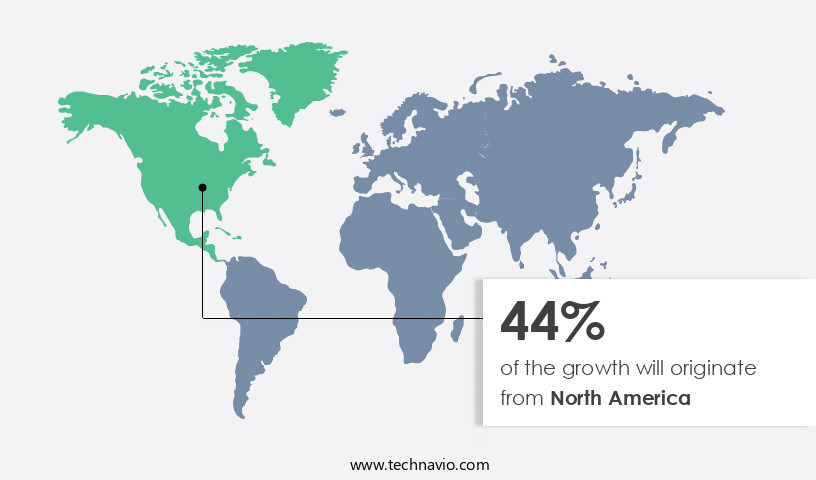
- North America dominated the market and accounted for a 44% growth during the forecast period.
- By Type - Service segment was valued at USD 33.88 billion in 2023
- By Application - Cyber security segment accounted for the largest market revenue share in 2023
Market Size & Forecast
- Market Opportunities: USD 49.98 billion
- Market Future Opportunities: USD 26.01 billion
- CAGR from 2024 to 2029 : 4.7%
Market Summary
- The market represents a significant investment in advanced technologies that fortify national security infrastructure. According to recent data, this market is projected to surpass USD1 trillion by 2025, fueled by the increasing adoption of autonomous systems, artificial intelligence (AI), and machine learning (ML) in defense applications. These technologies enable enhanced situational awareness, improved decision-making, and automated response capabilities, making them indispensable in defense contexts. However, the market also faces challenges, including ensuring digital sovereignty and addressing the ethical implications of advanced technologies in military applications. Digital sovereignty, or the ability to control and protect digital assets, becomes increasingly important as defense systems become more interconnected and reliant on third-party providers.
- Furthermore, the ethical implications of AI and ML in defense contexts, such as the potential for autonomous weapons, necessitate ongoing dialogue and regulation. Despite these challenges, the market's evolution continues to be driven by the need for advanced technologies to maintain a technological edge and protect national security interests. As defense organizations continue to invest in these technologies, they must navigate the complex landscape of digital sovereignty and ethical considerations to ensure their long-term success.
What will be the Size of the Defense IT Spending Market during the forecast period?

Get Key Insights on Market Forecast (PDF) Request Free Sample
How is the Defense IT Spending Market Segmented ?
The defense it spending industry research report provides comprehensive data (region-wise segment analysis), with forecasts and estimates in "USD billion" for the period 2025-2029, as well as historical data from 2019-2023 for the following segments.
- Type
- Service
- Software
- Hardware
- Application
- Cyber security
- IT infrastructure
- Logistic and asset management
- Others
- Force
- Defense forces
- Civilian forces
- Deployment Type
- Geography
- North America
- Europe
- France
- Germany
- Italy
- Spain
- UK
- Middle East and Africa
- APAC
- Australia
- China
- India
- Japan
- South Korea
- South America
- Rest of World (ROW)
By Type Insights
The service segment is estimated to witness significant growth during the forecast period.
The market is a dynamic and ever-evolving landscape, with defense organizations worldwide investing significantly in various IT services to ensure mission critical systems remain secure and optimized. According to recent reports, The market is projected to reach a value of USD120.3 billion by 2026, growing at a CAGR of 5.1% during the forecast period. Key service segments in this market include contract negotiation, program management office, acquisition processes, compliance frameworks, and business continuity. Defense firms prioritize threat intelligence platforms and incident response planning to enhance cybersecurity infrastructure and mitigate risks. Cloud computing adoption, IT budget allocation, and hardware procurement lifecycle are essential aspects of resource optimization.
Moreover, the integration of devsecops implementation, data analytics platforms, and system upgrades enables better performance benchmarking and cost-benefit analysis. IT modernization initiatives, including digital transformation, technology refresh cycles, and supply chain security, are crucial for enterprise resource planning and system integration services. Risk assessment methodologies, disaster recovery, capacity planning, and cyber resilience strategies are integral components of maintaining information assurance. Network security protocols, software defined networking, artificial intelligence defense, and system upgrades ensure cybersecurity infrastructure remains robust and adaptive. In conclusion, the market encompasses a wide range of services that cater to the unique needs of defense organizations. From consulting services and systems integration to compliance frameworks and cybersecurity infrastructure, these investments are essential for maintaining mission-critical systems and ensuring operational readiness.

Request Free Sample
The Service segment was valued at USD 33.88 billion in 2019 and showed a gradual increase during the forecast period.

Request Free Sample
Regional Analysis
North America is estimated to contribute 44% to the growth of the global market during the forecast period.Technavio's analysts have elaborately explained the regional trends and drivers that shape the market during the forecast period.
See How Defense IT Spending Market Demand is Rising in North America Request Free Sample
The market in North America encompasses the investments made by defense organizations and agencies in IT products and services within the region. With the presence of significant defense entities like the United States Department of Defense (DoD), this market holds substantial significance. The primary driver for defense IT spending is the escalating demand for advanced technologies to counteract escalating security threats.
The North American market experiences growth due to the increasing implementation of cloud computing, big data analytics, artificial intelligence, and cybersecurity solutions. Defense organizations' modernization initiatives and the necessity for efficient and effective decision-making tools further fuel the market expansion during the forecast period.
Market Dynamics
Our researchers analyzed the data with 2024 as the base year, along with the key drivers, trends, and challenges. A holistic analysis of drivers will help companies refine their marketing strategies to gain a competitive advantage.
The market is experiencing significant growth as governments and military organizations worldwide invest in modernizing their IT infrastructure to enhance security and operational efficiency. One of the key areas of focus is defense IT spending on cloud migration, enabling agility and cost savings through the use of cloud services. AI-driven cybersecurity threat detection is another priority, as organizations seek to improve their ability to identify and respond to cyber threats in real-time. DevSecOps implementation is also a critical aspect of defense IT spending, ensuring that security is integrated into the development process from the outset. Improving IT system performance metrics and optimizing infrastructure costs are ongoing concerns, with data center consolidation strategies and network security protocol implementation playing key roles. Effective cybersecurity risk assessment is essential for defense organizations, and supply chain risk management is increasingly recognized as a critical component of cybersecurity strategy. Defense IT budget allocation processes are undergoing transformation to ensure effective use of resources, with zero trust security architecture and cybersecurity awareness training programs becoming standard. Evaluating cloud service providers and implementing IT governance frameworks are crucial steps in ensuring IT operational efficiency and security. Defense IT system integration challenges continue to be a significant hurdle, requiring careful planning and execution. Big data analytics for defense applications and software-defined networking deployments are also driving innovation in the market. Overall, the focus on enhancing cybersecurity incident response and improving IT governance is driving significant growth in the market.

What are the key market drivers leading to the rise in the adoption of Defense IT Spending Industry?
- The development of autonomous systems serves as the primary catalyst for market growth.
- The market experiences significant momentum due to the integration of autonomous systems. Autonomous systems, characterized by their ability to perform functions independently, encompass autonomous weaponry, unmanned ground vehicles (UGVs), unmanned aerial vehicles (UAVs), and surveillance systems. Defense organizations worldwide recognize the potential benefits of these systems, which include operational efficiency, risk reduction, heightened situational awareness, and enhanced accuracy and precision in military operations.
- Consequently, a substantial portion of IT budgets is being dedicated to the development and implementation of autonomous systems, underpinning the market's continuous evolution.
What are the market trends shaping the Defense IT Spending Industry?
- The adoption of artificial intelligence (AI) and machine learning (ML) is becoming increasingly mandated in the market trend. These advanced technologies are set to reshape industries and enhance business operations.
- The market is experiencing a significant surge in the adoption of artificial intelligence (AI) and machine learning (ML) technologies. These innovations are increasingly recognized by governments and defense organizations as essential tools for bolstering military capabilities, optimizing decision-making processes, and safeguarding national security. One of the primary drivers of this trend is the development of autonomous systems, such as robotic systems, unmanned vehicles, and drones. By employing AI and ML algorithms, these autonomous systems can execute critical military tasks without human intervention. They excel in target detection, surveillance, and reconnaissance, as well as combat operations.
- Furthermore, AI and ML are instrumental in enhancing situational awareness, enabling real-time threat analysis, and improving overall operational efficiency. Another factor fueling the adoption of AI and ML in defense IT spending is the potential to streamline complex processes and reduce human error. These technologies can analyze vast amounts of data quickly and accurately, providing valuable insights for strategic planning and tactical operations. Moreover, AI and ML can assist in predictive maintenance, ensuring that defense equipment remains operational and effective. In conclusion, the market is witnessing a continuous evolution as AI and ML technologies become increasingly integrated into military operations.
- The potential benefits of these innovations are vast, ranging from autonomous systems and enhanced situational awareness to improved operational efficiency and reduced human error. As defense organizations worldwide embrace these technologies, the future of military capabilities and national security is poised for significant advancements.
What challenges does the Defense IT Spending Industry face during its growth?
- Digital sovereignty issues pose a significant challenge to the growth of the industry, as companies navigate the complexities of data ownership, security, and regulation in the digital age.
- The integration of advanced technologies like augmented reality in defense systems necessitates stringent data security measures due to the sensitivity of military information. The challenge of maintaining digital sovereignty arises when international defense IT spending involves frequent cross-border data transfers, with foreign technology providers supplying essential IT systems and infrastructure. This dependency can compromise digital sovereignty by limiting ownership and control over critical military capabilities. To address this issue, investing in domestic defense IT capabilities is crucial, but it requires substantial time and financial resources. According to recent trends, there is a significant shift towards indigenous IT solutions in defense sectors worldwide.
- For instance, the adoption of cloud technologies within defense organizations has increased by over 20% in the last two years. This trend underscores the importance of localizing IT infrastructure to ensure data security and sovereignty. Simultaneously, collaborations between governments and domestic tech companies are on the rise, fostering innovation and capability development within national borders.
Exclusive Technavio Analysis on Customer Landscape
The defense it spending market forecasting report includes the adoption lifecycle of the market, covering from the innovator's stage to the laggard's stage. It focuses on adoption rates in different regions based on penetration. Furthermore, the defense it spending market report also includes key purchase criteria and drivers of price sensitivity to help companies evaluate and develop their market growth analysis strategies.

Customer Landscape of Defense IT Spending Industry
Competitive Landscape
Companies are implementing various strategies, such as strategic alliances, defense it spending market forecast, partnerships, mergers and acquisitions, geographical expansion, and product/service launches, to enhance their presence in the industry.
Accenture - This company specializes in defense IT services, focusing on improving military personnel's analytics capabilities and increasing the utilization of digital applications within the defense sector. By leveraging advanced technologies, they enable more effective and efficient decision-making in national security environments.
The industry research and growth report includes detailed analyses of the competitive landscape of the market and information about key companies, including:
- Accenture
- BAE Systems
- Boeing
- CACI International
- Dell Technologies
- General Dynamics
- IBM
- Leidos
- Lockheed Martin
- Microsoft
- Northrop Grumman
- Palantir Technologies
- Raytheon Technologies
- SAIC
- Salesforce
- SAP
- Thales Group
- Amazon Web Services
- Cisco Systems
- L3Harris Technologies
Qualitative and quantitative analysis of companies has been conducted to help clients understand the wider business environment as well as the strengths and weaknesses of key industry players. Data is qualitatively analyzed to categorize companies as pure play, category-focused, industry-focused, and diversified; it is quantitatively analyzed to categorize companies as dominant, leading, strong, tentative, and weak.
Recent Development and News in Defense IT Spending Market
- In January 2024, IBM and Microsoft announced a strategic partnership to offer joint solutions for the defense sector, integrating IBM's Red Hat OpenShift and Microsoft's Azure for secure hybrid cloud environments (IBM Press Release, 2024).
- In March 2024, Palo Alto Networks acquired the cybersecurity firm, Evident.Io, to strengthen its cloud-native security offerings, marking a significant investment in the defense IT security segment (Palo Alto Networks Press Release, 2024).
- In April 2025, Amazon Web Services (AWS) secured a USD1 billion contract from the U.S. Department of Defense to provide cloud services, marking a major milestone in the adoption of cloud computing in defense IT infrastructure (Reuters, 2025).
- In May 2025, Raytheon Technologies and Microsoft announced a collaboration to develop an advanced data analytics platform for the defense sector, aiming to improve situational awareness and operational efficiency (Raytheon Technologies Press Release, 2025). These developments underscore the growing importance of cloud computing, strategic partnerships, and advanced technologies in the market.
Dive into Technavio's robust research methodology, blending expert interviews, extensive data synthesis, and validated models for unparalleled Defense IT Spending Market insights. See full methodology.
|
Market Scope
|
|
Report Coverage
|
Details
|
|
Page number
|
206
|
|
Base year
|
2024
|
|
Historic period
|
2019-2023 |
|
Forecast period
|
2025-2029
|
|
Growth momentum & CAGR
|
Accelerate at a CAGR of 4.7%
|
|
Market growth 2025-2029
|
USD 26.01 billion
|
|
Market structure
|
Fragmented
|
|
YoY growth 2024-2025(%)
|
4.4
|
|
Key countries
|
US, China, Germany, Japan, UK, Australia, India, France, Brazil, UAE, Rest of World (ROW), Saudi Arabia, France, South Korea, Mexico, Italy, and Spain
|
|
Competitive landscape
|
Leading Companies, Market Positioning of Companies, Competitive Strategies, and Industry Risks
|
Request Free Sample
Research Analyst Overview
- The market continues to evolve, driven by the ever-evolving threat landscape and the need for advanced technology solutions. Threat intelligence platforms play a crucial role in identifying and mitigating potential risks, while contract negotiation and program management offices ensure efficient resource allocation and compliance with various frameworks. Business continuity and disaster recovery plans are essential components of any IT strategy, with capacity planning and data center optimization key to ensuring mission-critical systems remain operational. Cloud computing adoption and software-defined networking are transforming the way organizations approach IT infrastructure, leading to significant cost savings and increased agility.
- Acquisition processes and IT modernization initiatives are ongoing priorities, with cybersecurity infrastructure and risk assessment methodologies critical to protecting sensitive data. DevSecOps implementation and incident response planning are also essential components of a robust IT strategy, with security information events and IT budget allocation key to maintaining a strong cybersecurity posture. Big data management and data analytics platforms are increasingly important for gaining insights and making informed decisions, while resource optimization and system integration services help organizations maximize the value of their IT investments. Cyber resilience strategies and system upgrades are also crucial for maintaining a strong IT infrastructure in the face of evolving threats.
- According to industry reports, the market is expected to grow by over 5% annually in the coming years, driven by the ongoing adoption of advanced technologies and the need for enhanced cybersecurity solutions. For instance, a large defense contractor reported a 15% increase in sales due to the implementation of a new threat intelligence platform and IT modernization initiatives.
What are the Key Data Covered in this Defense IT Spending Market Research and Growth Report?
-
What is the expected growth of the Defense IT Spending Market between 2025 and 2029?
-
What segmentation does the market report cover?
-
The report is segmented by Type (Service, Software, and Hardware), Application (Cyber security, IT infrastructure, Logistic and asset management, and Others), Geography (North America, APAC, Europe, Middle East and Africa, and South America), Force (Defense forces and Civilian forces), and Deployment Type (On-Premises and Cloud-Based)
-
Which regions are analyzed in the report?
-
North America, APAC, Europe, Middle East and Africa, and South America
-
What are the key growth drivers and market challenges?
-
Who are the major players in the Defense IT Spending Market?
-
Accenture, BAE Systems, Boeing, CACI International, Dell Technologies, General Dynamics, IBM, Leidos, Lockheed Martin, Microsoft, Northrop Grumman, Palantir Technologies, Raytheon Technologies, SAIC, Salesforce, SAP, Thales Group, Amazon Web Services, Cisco Systems, and L3Harris Technologies
Market Research Insights
- The market is a continually evolving landscape, encompassing various areas such as compliance audits, database security, penetration testing, software assurance, and zero trust architecture, among others. According to recent reports, the market for IT governance frameworks and strategic planning is projected to grow by 5% annually over the next five years. For instance, a leading organization in the financial sector reported a 10% increase in sales due to the implementation of advanced automation technologies and improved vulnerability management. This growth is driven by the increasing demand for enhanced security posture, including cloud security, IT governance, and system monitoring tools.
- Additionally, the adoption of cost reduction strategies, operational efficiency, and resource allocation are key factors fueling the market's expansion. Data governance, risk mitigation, and identity access management are also critical components, with data encryption methods and hardware upgrades playing essential roles in securing sensitive information.
We can help! Our analysts can customize this defense it spending market research report to meet your requirements.
Get in touch
1 Executive Summary
- 1.1 Market overview
- Executive Summary - Chart on Market Overview
- Executive Summary - Data Table on Market Overview
- Executive Summary - Chart on Global Market Characteristics
- Executive Summary - Chart on Market by Geography
- Executive Summary - Chart on Market Segmentation by Type
- Executive Summary - Chart on Market Segmentation by Application
- Executive Summary - Chart on Incremental Growth
- Executive Summary - Data Table on Incremental Growth
- Executive Summary - Chart on Company Market Positioning
2 Technavio Analysis
- 2.1 Analysis of price sensitivity, lifecycle, customer purchase basket, adoption rates, and purchase criteria
- Analysis of price sensitivity, lifecycle, customer purchase basket, adoption rates, and purchase criteria
- 2.2 Criticality of inputs and Factors of differentiation
- Overview on criticality of inputs and factors of differentiation
- 2.3 Factors of disruption
- Overview on factors of disruption
- 2.4 Impact of drivers and challenges
- Impact of drivers and challenges in 2024 and 2029
3 Market Landscape
- 3.1 Market ecosystem
- Parent Market
- Data Table on - Parent Market
- 3.2 Market characteristics
- Market characteristics analysis
4 Market Sizing
- 4.1 Market definition
- Offerings of companies included in the market definition
- 4.2 Market segment analysis
- 4.4 Market outlook: Forecast for 2024-2029
- Chart on Global - Market size and forecast 2024-2029 ($ million)
- Data Table on Global - Market size and forecast 2024-2029 ($ million)
- Chart on Global Market: Year-over-year growth 2024-2029 (%)
- Data Table on Global Market: Year-over-year growth 2024-2029 (%)
5 Historic Market Size
- 5.1 Global Defense IT Spending Market 2019 - 2023
- Historic Market Size - Data Table on Global Defense IT Spending Market 2019 - 2023 ($ million)
- 5.2 Type segment analysis 2019 - 2023
- Historic Market Size - Type Segment 2019 - 2023 ($ million)
- 5.3 Application segment analysis 2019 - 2023
- Historic Market Size - Application Segment 2019 - 2023 ($ million)
- 5.4 Geography segment analysis 2019 - 2023
- Historic Market Size - Geography Segment 2019 - 2023 ($ million)
- 5.5 Country segment analysis 2019 - 2023
- Historic Market Size - Country Segment 2019 - 2023 ($ million)
6 Qualitative Analysis
- 6.1 Impact of AI in global defense IT spending market
7 Five Forces Analysis
- 7.1 Five forces summary
- Five forces analysis - Comparison between 2024 and 2029
- 7.2 Bargaining power of buyers
- Bargaining power of buyers - Impact of key factors 2024 and 2029
- 7.3 Bargaining power of suppliers
- Bargaining power of suppliers - Impact of key factors in 2024 and 2029
- 7.4 Threat of new entrants
- Threat of new entrants - Impact of key factors in 2024 and 2029
- 7.5 Threat of substitutes
- Threat of substitutes - Impact of key factors in 2024 and 2029
- 7.6 Threat of rivalry
- Threat of rivalry - Impact of key factors in 2024 and 2029
- 7.7 Market condition
- Chart on Market condition - Five forces 2024 and 2029
8 Market Segmentation by Type
- 8.1 Market segments
- Chart on Type - Market share (2024-2029) (%)
- Data Table on Type - Market share (2024-2029) (%)
- 8.2 Comparison by Type
- Chart on Comparison by Type
- Data Table on Comparison by Type
- 8.3 Service - Market size and forecast (2024-2029)
- Chart on Service - Market size and forecast (2024-2029) ($ million)
- Data Table on Service - Market size and forecast (2024-2029) ($ million)
- Chart on Service - Year-over-year growth (2024-2029) (%)
- Data Table on Service - Year-over-year growth (2024-2029) (%)
- 8.4 Software - Market size and forecast (2024-2029)
- Chart on Software - Market size and forecast (2024-2029) ($ million)
- Data Table on Software - Market size and forecast (2024-2029) ($ million)
- Chart on Software - Year-over-year growth (2024-2029) (%)
- Data Table on Software - Year-over-year growth (2024-2029) (%)
- 8.5 Hardware - Market size and forecast (2024-2029)
- Chart on Hardware - Market size and forecast (2024-2029) ($ million)
- Data Table on Hardware - Market size and forecast (2024-2029) ($ million)
- Chart on Hardware - Year-over-year growth (2024-2029) (%)
- Data Table on Hardware - Year-over-year growth (2024-2029) (%)
- 8.6 Market opportunity by Type
- Market opportunity by Type ($ million)
- Data Table on Market opportunity by Type ($ million)
9 Market Segmentation by Application
- 9.1 Market segments
- Chart on Application - Market share (2024-2029) (%)
- Data Table on Application - Market share (2024-2029) (%)
- 9.2 Comparison by Application
- Chart on Comparison by Application
- Data Table on Comparison by Application
- 9.3 Cyber security - Market size and forecast (2024-2029)
- Chart on Cyber security - Market size and forecast (2024-2029) ($ million)
- Data Table on Cyber security - Market size and forecast (2024-2029) ($ million)
- Chart on Cyber security - Year-over-year growth (2024-2029) (%)
- Data Table on Cyber security - Year-over-year growth (2024-2029) (%)
- 9.4 IT infrastructure - Market size and forecast (2024-2029)
- Chart on IT infrastructure - Market size and forecast (2024-2029) ($ million)
- Data Table on IT infrastructure - Market size and forecast (2024-2029) ($ million)
- Chart on IT infrastructure - Year-over-year growth (2024-2029) (%)
- Data Table on IT infrastructure - Year-over-year growth (2024-2029) (%)
- 9.5 Logistic and asset management - Market size and forecast (2024-2029)
- Chart on Logistic and asset management - Market size and forecast (2024-2029) ($ million)
- Data Table on Logistic and asset management - Market size and forecast (2024-2029) ($ million)
- Chart on Logistic and asset management - Year-over-year growth (2024-2029) (%)
- Data Table on Logistic and asset management - Year-over-year growth (2024-2029) (%)
- 9.6 Others - Market size and forecast (2024-2029)
- Chart on Others - Market size and forecast (2024-2029) ($ million)
- Data Table on Others - Market size and forecast (2024-2029) ($ million)
- Chart on Others - Year-over-year growth (2024-2029) (%)
- Data Table on Others - Year-over-year growth (2024-2029) (%)
- 9.7 Market opportunity by Application
- Market opportunity by Application ($ million)
- Data Table on Market opportunity by Application ($ million)
10 Market Segmentation by Force
- 10.1 Market segments
- Chart on Force - Market share (2024-2029) (%)
- Data Table on Force - Market share (2024-2029) (%)
- 10.2 Comparison by Force
- Chart on Comparison by Force
- Data Table on Comparison by Force
- 10.3 Defense forces - Market size and forecast (2024-2029)
- Chart on Defense forces - Market size and forecast (2024-2029) ($ million)
- Data Table on Defense forces - Market size and forecast (2024-2029) ($ million)
- Chart on Defense forces - Year-over-year growth (2024-2029) (%)
- Data Table on Defense forces - Year-over-year growth (2024-2029) (%)
- 10.4 Civilian forces - Market size and forecast (2024-2029)
- Chart on Civilian forces - Market size and forecast (2024-2029) ($ million)
- Data Table on Civilian forces - Market size and forecast (2024-2029) ($ million)
- Chart on Civilian forces - Year-over-year growth (2024-2029) (%)
- Data Table on Civilian forces - Year-over-year growth (2024-2029) (%)
- 10.5 Market opportunity by Force
- Market opportunity by Force ($ million)
- Data Table on Market opportunity by Force ($ million)
11 Market Segmentation by Deployment Type
- 11.1 Market segments
- Chart on Deployment Type - Market share (2024-2029) (%)
- Data Table on Deployment Type - Market share (2024-2029) (%)
- 11.2 Comparison by Deployment Type
- Chart on Comparison by Deployment Type
- Data Table on Comparison by Deployment Type
- 11.3 On-Premises - Market size and forecast (2024-2029)
- Chart on On-Premises - Market size and forecast (2024-2029) ($ million)
- Data Table on On-Premises - Market size and forecast (2024-2029) ($ million)
- Chart on On-Premises - Year-over-year growth (2024-2029) (%)
- Data Table on On-Premises - Year-over-year growth (2024-2029) (%)
- 11.4 Cloud-Based - Market size and forecast (2024-2029)
- Chart on Cloud-Based - Market size and forecast (2024-2029) ($ million)
- Data Table on Cloud-Based - Market size and forecast (2024-2029) ($ million)
- Chart on Cloud-Based - Year-over-year growth (2024-2029) (%)
- Data Table on Cloud-Based - Year-over-year growth (2024-2029) (%)
- 11.5 Market opportunity by Deployment Type
- Market opportunity by Deployment Type ($ million)
- Data Table on Market opportunity by Deployment Type ($ million)
12 Customer Landscape
- 12.1 Customer landscape overview
- Analysis of price sensitivity, lifecycle, customer purchase basket, adoption rates, and purchase criteria
13 Geographic Landscape
- 13.1 Geographic segmentation
- Chart on Market share by geography 2024-2029 (%)
- Data Table on Market share by geography 2024-2029 (%)
- 13.2 Geographic comparison
- Chart on Geographic comparison
- Data Table on Geographic comparison
- 13.3 North America - Market size and forecast 2024-2029
- Chart on North America - Market size and forecast 2024-2029 ($ million)
- Data Table on North America - Market size and forecast 2024-2029 ($ million)
- Chart on North America - Year-over-year growth 2024-2029 (%)
- Data Table on North America - Year-over-year growth 2024-2029 (%)
- 13.4 APAC - Market size and forecast 2024-2029
- Chart on APAC - Market size and forecast 2024-2029 ($ million)
- Data Table on APAC - Market size and forecast 2024-2029 ($ million)
- Chart on APAC - Year-over-year growth 2024-2029 (%)
- Data Table on APAC - Year-over-year growth 2024-2029 (%)
- 13.5 Europe - Market size and forecast 2024-2029
- Chart on Europe - Market size and forecast 2024-2029 ($ million)
- Data Table on Europe - Market size and forecast 2024-2029 ($ million)
- Chart on Europe - Year-over-year growth 2024-2029 (%)
- Data Table on Europe - Year-over-year growth 2024-2029 (%)
- 13.6 Middle East and Africa - Market size and forecast 2024-2029
- Chart on Middle East and Africa - Market size and forecast 2024-2029 ($ million)
- Data Table on Middle East and Africa - Market size and forecast 2024-2029 ($ million)
- Chart on Middle East and Africa - Year-over-year growth 2024-2029 (%)
- Data Table on Middle East and Africa - Year-over-year growth 2024-2029 (%)
- 13.7 South America - Market size and forecast 2024-2029
- Chart on South America - Market size and forecast 2024-2029 ($ million)
- Data Table on South America - Market size and forecast 2024-2029 ($ million)
- Chart on South America - Year-over-year growth 2024-2029 (%)
- Data Table on South America - Year-over-year growth 2024-2029 (%)
- 13.8 US - Market size and forecast 2024-2029
- Chart on US - Market size and forecast 2024-2029 ($ million)
- Data Table on US - Market size and forecast 2024-2029 ($ million)
- Chart on US - Year-over-year growth 2024-2029 (%)
- Data Table on US - Year-over-year growth 2024-2029 (%)
- 13.9 India - Market size and forecast 2024-2029
- Chart on India - Market size and forecast 2024-2029 ($ million)
- Data Table on India - Market size and forecast 2024-2029 ($ million)
- Chart on India - Year-over-year growth 2024-2029 (%)
- Data Table on India - Year-over-year growth 2024-2029 (%)
- 13.10 China - Market size and forecast 2024-2029
- Chart on China - Market size and forecast 2024-2029 ($ million)
- Data Table on China - Market size and forecast 2024-2029 ($ million)
- Chart on China - Year-over-year growth 2024-2029 (%)
- Data Table on China - Year-over-year growth 2024-2029 (%)
- 13.11 Germany - Market size and forecast 2024-2029
- Chart on Germany - Market size and forecast 2024-2029 ($ million)
- Data Table on Germany - Market size and forecast 2024-2029 ($ million)
- Chart on Germany - Year-over-year growth 2024-2029 (%)
- Data Table on Germany - Year-over-year growth 2024-2029 (%)
- 13.12 Canada - Market size and forecast 2024-2029
- Chart on Canada - Market size and forecast 2024-2029 ($ million)
- Data Table on Canada - Market size and forecast 2024-2029 ($ million)
- Chart on Canada - Year-over-year growth 2024-2029 (%)
- Data Table on Canada - Year-over-year growth 2024-2029 (%)
- 13.13 UK - Market size and forecast 2024-2029
- Chart on UK - Market size and forecast 2024-2029 ($ million)
- Data Table on UK - Market size and forecast 2024-2029 ($ million)
- Chart on UK - Year-over-year growth 2024-2029 (%)
- Data Table on UK - Year-over-year growth 2024-2029 (%)
- 13.14 Japan - Market size and forecast 2024-2029
- Chart on Japan - Market size and forecast 2024-2029 ($ million)
- Data Table on Japan - Market size and forecast 2024-2029 ($ million)
- Chart on Japan - Year-over-year growth 2024-2029 (%)
- Data Table on Japan - Year-over-year growth 2024-2029 (%)
- 13.15 France - Market size and forecast 2024-2029
- Chart on France - Market size and forecast 2024-2029 ($ million)
- Data Table on France - Market size and forecast 2024-2029 ($ million)
- Chart on France - Year-over-year growth 2024-2029 (%)
- Data Table on France - Year-over-year growth 2024-2029 (%)
- 13.16 Italy - Market size and forecast 2024-2029
- Chart on Italy - Market size and forecast 2024-2029 ($ million)
- Data Table on Italy - Market size and forecast 2024-2029 ($ million)
- Chart on Italy - Year-over-year growth 2024-2029 (%)
- Data Table on Italy - Year-over-year growth 2024-2029 (%)
- 13.17 Brazil - Market size and forecast 2024-2029
- Chart on Brazil - Market size and forecast 2024-2029 ($ million)
- Data Table on Brazil - Market size and forecast 2024-2029 ($ million)
- Chart on Brazil - Year-over-year growth 2024-2029 (%)
- Data Table on Brazil - Year-over-year growth 2024-2029 (%)
- 13.18 Market opportunity by geography
- Market opportunity by geography ($ million)
- Data Tables on Market opportunity by geography ($ million)
- 13.19 US - Market size and forecast (2024-2029)
- Chart on US - Market size and forecast (2024-2029) ($ million)
- Data Table on US - Market size and forecast (2024-2029) ($ million)
- Chart on US - Year-over-year growth (2024-2029) (%)
- Data Table on US - Year-over-year growth (2024-2029) (%)
- 13.20 Australia - Market size and forecast (2024-2029)
- Chart on Australia - Market size and forecast (2024-2029) ($ million)
- Data Table on Australia - Market size and forecast (2024-2029) ($ million)
- Chart on Australia - Year-over-year growth (2024-2029) (%)
- Data Table on Australia - Year-over-year growth (2024-2029) (%)
- 13.21 UAE - Market size and forecast (2024-2029)
- Chart on UAE - Market size and forecast (2024-2029) ($ million)
- Data Table on UAE - Market size and forecast (2024-2029) ($ million)
- Chart on UAE - Year-over-year growth (2024-2029) (%)
- Data Table on UAE - Year-over-year growth (2024-2029) (%)
- 13.22 Rest of World (ROW) - Market size and forecast (2024-2029)
- Chart on Rest of World (ROW) - Market size and forecast (2024-2029) ($ million)
- Data Table on Rest of World (ROW) - Market size and forecast (2024-2029) ($ million)
- Chart on Rest of World (ROW) - Year-over-year growth (2024-2029) (%)
- Data Table on Rest of World (ROW) - Year-over-year growth (2024-2029) (%)
- 13.23 Saudi Arabia - Market size and forecast (2024-2029)
- Chart on Saudi Arabia - Market size and forecast (2024-2029) ($ million)
- Data Table on Saudi Arabia - Market size and forecast (2024-2029) ($ million)
- Chart on Saudi Arabia - Year-over-year growth (2024-2029) (%)
- Data Table on Saudi Arabia - Year-over-year growth (2024-2029) (%)
- 13.24 South Korea - Market size and forecast (2024-2029)
- Chart on South Korea - Market size and forecast (2024-2029) ($ million)
- Data Table on South Korea - Market size and forecast (2024-2029) ($ million)
- Chart on South Korea - Year-over-year growth (2024-2029) (%)
- Data Table on South Korea - Year-over-year growth (2024-2029) (%)
- 13.25 Mexico - Market size and forecast (2024-2029)
- Chart on Mexico - Market size and forecast (2024-2029) ($ million)
- Data Table on Mexico - Market size and forecast (2024-2029) ($ million)
- Chart on Mexico - Year-over-year growth (2024-2029) (%)
- Data Table on Mexico - Year-over-year growth (2024-2029) (%)
- 13.26 Spain - Market size and forecast (2024-2029)
- Chart on Spain - Market size and forecast (2024-2029) ($ million)
- Data Table on Spain - Market size and forecast (2024-2029) ($ million)
- Chart on Spain - Year-over-year growth (2024-2029) (%)
- Data Table on Spain - Year-over-year growth (2024-2029) (%)
14 Drivers, Challenges, and Opportunity/Restraints
- 14.3 Impact of drivers and challenges
- Impact of drivers and challenges in 2024 and 2029
- 14.4 Market opportunities/restraints
15 Competitive Landscape
- 15.2 Competitive Landscape
- Overview on criticality of inputs and factors of differentiation
- 15.3 Landscape disruption
- Overview on factors of disruption
- 15.4 Industry risks
- Impact of key risks on business
16 Competitive Analysis
- 16.2 Market positioning of companies
- Matrix on companies position and classification
- 16.3 Accenture
- Accenture - Overview
- Accenture - Product / Service
- Accenture - Key offerings
- 16.4 BAE Systems
- BAE Systems - Overview
- BAE Systems - Product / Service
- BAE Systems - Key offerings
- 16.5 Boeing
- Boeing - Overview
- Boeing - Product / Service
- Boeing - Key offerings
- 16.6 CACI International
- CACI International - Overview
- CACI International - Product / Service
- CACI International - Key offerings
- 16.7 Dell Technologies
- Dell Technologies - Overview
- Dell Technologies - Product / Service
- Dell Technologies - Key offerings
- 16.8 General Dynamics
- General Dynamics - Overview
- General Dynamics - Product / Service
- General Dynamics - Key offerings
- 16.9 IBM
- IBM - Overview
- IBM - Product / Service
- IBM - Key offerings
- 16.10 Leidos
- Leidos - Overview
- Leidos - Product / Service
- Leidos - Key offerings
- 16.11 Lockheed Martin
- Lockheed Martin - Overview
- Lockheed Martin - Product / Service
- Lockheed Martin - Key offerings
- 16.12 Microsoft
- Microsoft - Overview
- Microsoft - Product / Service
- Microsoft - Key offerings
- 16.13 Northrop Grumman
- Northrop Grumman - Overview
- Northrop Grumman - Product / Service
- Northrop Grumman - Key offerings
- 16.14 Palantir Technologies
- Palantir Technologies - Overview
- Palantir Technologies - Product / Service
- Palantir Technologies - Key offerings
- 16.15 Raytheon Technologies
- Raytheon Technologies - Overview
- Raytheon Technologies - Product / Service
- Raytheon Technologies - Key offerings
- 16.16 SAIC
- SAIC - Overview
- SAIC - Product / Service
- SAIC - Key offerings
- 16.17 Salesforce
- Salesforce - Overview
- Salesforce - Product / Service
- Salesforce - Key offerings
- 16.18 SAP
- SAP - Overview
- SAP - Product / Service
- SAP - Key offerings
- 16.19 Thales Group
- Thales Group - Overview
- Thales Group - Product / Service
- Thales Group - Key offerings
- 16.20 Amazon Web Services
- Amazon Web Services - Overview
- Amazon Web Services - Product / Service
- Amazon Web Services - Key offerings
- 16.21 Cisco Systems
- Cisco Systems - Overview
- Cisco Systems - Product / Service
- Cisco Systems - Key offerings
- 16.22 L3Harris Technologies
- L3Harris Technologies - Overview
- L3Harris Technologies - Product / Service
- L3Harris Technologies - Key offerings
- 16.23 Accenture PLC
- Accenture PLC - Overview
- Accenture PLC - Product / Service
- Accenture PLC - Key offerings
- 16.24 Amazon.com Inc.
- Amazon.com Inc. - Overview
- Amazon.com Inc. - Product / Service
- Amazon.com Inc. - Key offerings
- 16.25 BAE Systems Plc
- BAE Systems Plc - Overview
- BAE Systems Plc - Product / Service
- BAE Systems Plc - Key offerings
- 16.26 CRON AI
- CRON AI - Overview
- CRON AI - Product / Service
- CRON AI - Key offerings
- 16.27 Cubic Corp.
- Cubic Corp. - Overview
- Cubic Corp. - Product / Service
- Cubic Corp. - Key offerings
- 16.28 CyAmast Pty Ltd.
- CyAmast Pty Ltd. - Overview
- CyAmast Pty Ltd. - Product / Service
- CyAmast Pty Ltd. - Key offerings
- 16.29 Dell Technologies Inc.
- Dell Technologies Inc. - Overview
- Dell Technologies Inc. - Product / Service
- Dell Technologies Inc. - Key offerings
- 16.30 General Dynamics Corp.
- General Dynamics Corp. - Overview
- General Dynamics Corp. - Product / Service
- General Dynamics Corp. - Key offerings
- 16.31 Hewlett Packard Enterprise Co.
- Hewlett Packard Enterprise Co. - Overview
- Hewlett Packard Enterprise Co. - Product / Service
- Hewlett Packard Enterprise Co. - Key offerings
- 16.32 Holo Light GmbH
- Holo Light GmbH - Overview
- Holo Light GmbH - Product / Service
- Holo Light GmbH - Key offerings
- 16.33 International Business Machines Corp.
- International Business Machines Corp. - Overview
- International Business Machines Corp. - Product / Service
- International Business Machines Corp. - Key offerings
- 16.34 Kratos Defense and Security Solutions Inc.
- Kratos Defense and Security Solutions Inc. - Overview
- Kratos Defense and Security Solutions Inc. - Product / Service
- Kratos Defense and Security Solutions Inc. - Key offerings
- 16.35 Leidos Holdings Inc.
- Leidos Holdings Inc. - Overview
- Leidos Holdings Inc. - Product / Service
- Leidos Holdings Inc. - Key offerings
- 16.36 ManTech International Corp.
- ManTech International Corp. - Overview
- ManTech International Corp. - Product / Service
- ManTech International Corp. - Key offerings
- 16.37 Microsoft Corp
- Microsoft Corp - Overview
- Microsoft Corp - Product / Service
- Microsoft Corp - Key offerings
- 16.38 Northrop Grumman Corp.
- Northrop Grumman Corp. - Overview
- Northrop Grumman Corp. - Product / Service
- Northrop Grumman Corp. - Key offerings
- 16.39 Oracle Corp
- Oracle Corp - Overview
- Oracle Corp - Product / Service
- Oracle Corp - Key offerings
- 16.40 Palantir Technologies Inc.
- Palantir Technologies Inc. - Overview
- Palantir Technologies Inc. - Product / Service
- Palantir Technologies Inc. - Key offerings
- 16.41 Pennant International Group PLC
- Pennant International Group PLC - Overview
- Pennant International Group PLC - Product / Service
- Pennant International Group PLC - Key offerings
- 16.42 Science Applications International Corp. Inc
- Science Applications International Corp. Inc - Overview
- Science Applications International Corp. Inc - Product / Service
- Science Applications International Corp. Inc - Key offerings
17 Appendix
- 17.2 Inclusions and exclusions checklist
- Inclusions checklist
- Exclusions checklist
- 17.3 Currency conversion rates for US$
- Currency conversion rates for US$
- 17.4 Research methodology
- 17.7 Validation techniques employed for market sizing
- Validation techniques employed for market sizing
- 17.9 360 degree market analysis
- 360 degree market analysis
- 17.10 List of abbreviations