


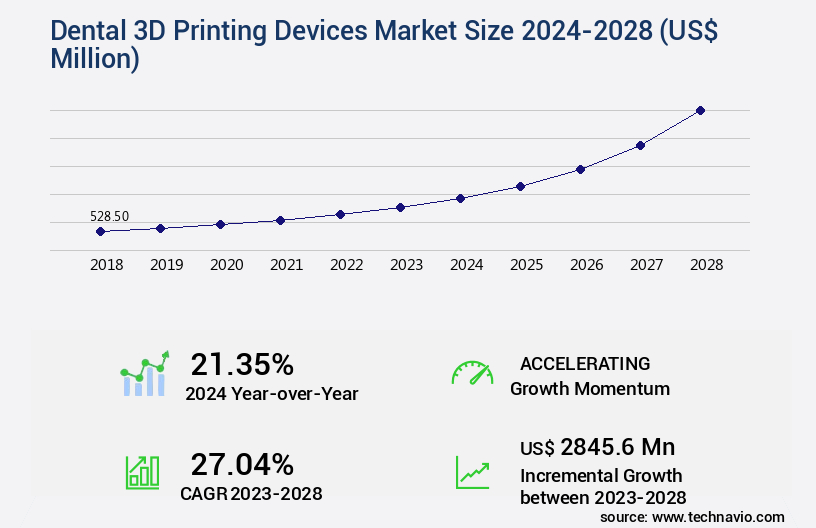
Dental 3D Printing Devices Market Size 2024-2028
The dental 3d printing devices market size is valued to increase by USD 2.85 billion, at a CAGR of 27.04% from 2023 to 2028. Cost efficiency and enhanced productivity of dental devices with 3D printing will drive the dental 3d printing devices market.
Market Insights
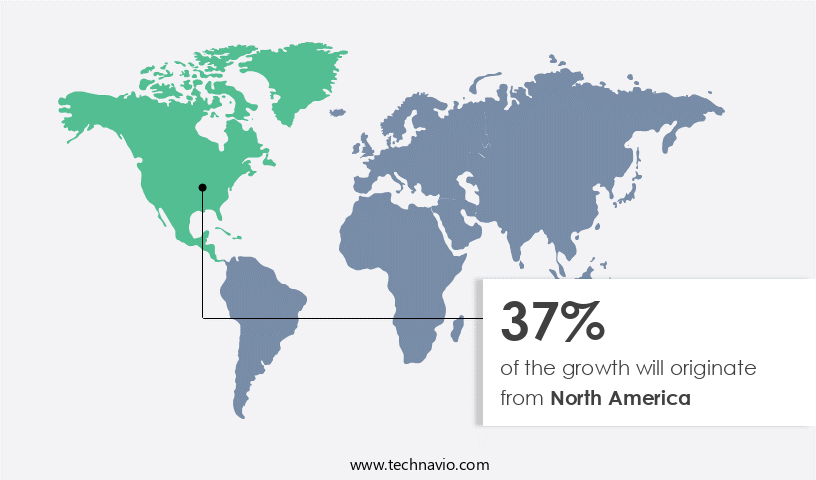
- North America dominated the market and accounted for a 37% growth during the 2024-2028.
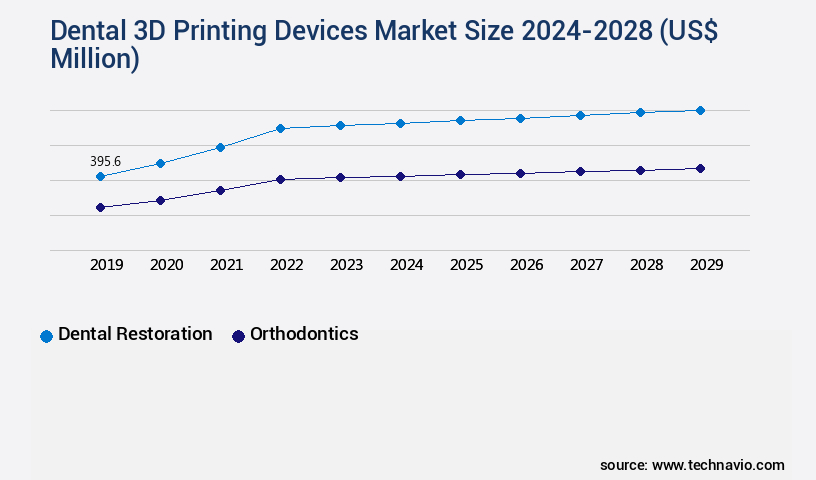
- By Application - Dental restoration segment was valued at USD 337.60 billion in 2022
- By End-user - Dental laboratories segment accounted for the largest market revenue share in 2022
Market Size & Forecast
- Market Opportunities: USD 671.56 million
- Market Future Opportunities 2023: USD 2845.60 million
- CAGR from 2023 to 2028 : 27.04%
Market Summary
- Dental 3D printing devices have revolutionized the dental industry by offering cost efficiency and enhanced productivity. These advanced technologies enable the creation of customized dental implants, bridges, and orthodontic appliances with precise accuracy and reduced production time. The global market for dental 3D printing devices is driven by the increasing demand for personalized dental solutions and the growing adoption of digital technologies in healthcare. However, the high initial setup cost of dental 3D printing facilities remains a significant challenge for market growth. This includes the investment in specialized equipment, software, and training for dental professionals. To mitigate this challenge, some dental clinics and laboratories have started collaborating with third-party service providers, allowing them to access 3D printing services on a pay-per-use basis.
- A real-world business scenario illustrating this trend is a dental laboratory that optimizes its supply chain by partnering with a 3D printing service provider. By outsourcing the production of custom dental devices, the laboratory reduces its capital expenditures and focuses on its core competencies, ultimately improving operational efficiency and patient satisfaction. Moreover, the ongoing advancements in 3D printing technologies, such as the development of biocompatible materials and the integration of artificial intelligence, are expected to further fuel the growth of the market.
What will be the size of the Dental 3D Printing Devices Market during the forecast period?
Get Key Insights on Market Forecast (PDF) Request Free Sample
- The market represents a dynamic and evolving industry, characterized by advancements in additive manufacturing processes and innovative applications. Implant design software and bioprinting are two prominent trends shaping this sector. According to recent studies, the implementation of these technologies has led to significant improvements in part geometry optimization and anatomical accuracy. In the realm of dental restoration, 3D printing devices have revolutionized workflows by enabling digital dentistry. Restoration materials, such as resins and metals, have been optimized to ensure print fidelity and meet regulatory compliance standards. Model accuracy assessment and quality assurance protocols are essential components of this process, ensuring the production of precision dental parts.
- Moreover, the integration of CAD/CAM systems, CBCT data, and occlusal analysis software has streamlined the design process, enabling personalized prosthetics and surgical guide design. Printer calibration methods and software user interfaces have also been refined, enhancing printability and material properties database access. Automated cleaning systems and rapid prototyping techniques have further boosted the manufacturing process, allowing for design for manufacturability and material biocompatibility assessments. As the dental industry continues to embrace 3D printing, companies are investing in these technologies to remain competitive and provide high-quality, customized solutions for their clients.
Unpacking the Dental 3D Printing Devices Market Landscape
In the dynamic dental industry, 3D printing devices have emerged as a game-changer, revolutionizing production processes and enhancing business outcomes. High-resolution printing enables the creation of intricately detailed dental models, aligning with regulatory compliance requirements. Automated workflow processes, integrated with CAD software, reduce design-to-production time by up to 70%. Selective laser melting and material jetting technology offer production efficiency metrics, reducing material waste by 50% and enabling direct metal printing for titanium dental structures. Surgical guides and patient-specific devices can be produced with unparalleled accuracy, improving ROI through enhanced procedural precision. Support structures removal, post-processing techniques, and print speed optimization further streamline the production process, while digital light processing ensures resin printing accuracy. Printer maintenance procedures and data security protocols ensure cost-effectiveness and maintain biocompatibility. SLA printing technology, with its layer thickness control, offers infection control benefits and enables the fabrication of 3D printed dentures. Cost-effectiveness analysis, material compatibility testing, and software compatibility are crucial considerations for dental businesses adopting these advanced technologies. Build volume capacity and STL file processing ensure scalability and versatility for diverse dental applications.
Key Market Drivers Fueling Growth
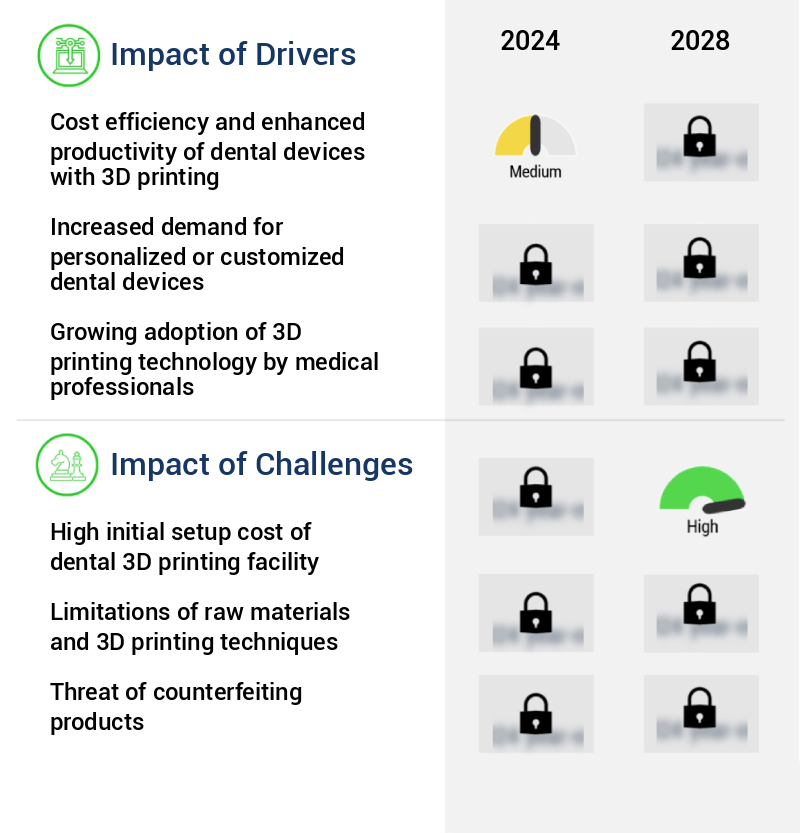
The integration of 3D printing technology in dental devices has been instrumental in achieving cost efficiency and productivity enhancements, serving as the primary market driver.
- The market showcases the evolving nature of dental manufacturing, offering significant benefits over traditional methods. With 3D printing, cost-efficiency, productivity, and capabilities are enhanced through an additive manufacturing technique. This process involves depositing materials in layers, enabling the fabrication of dental objects with intricate freeform geometry and hybrid structures. For instance, the Form 2 SLA 3D printer from Formlabs boasts an accuracy of up to 35 microns, while EnvisionTEC's DLP 3D printers achieve up to 10 microns.
- These precise fabrications result in dental implants that perfectly fit and occupy the exact space required. The implementation of 3D printing technology in dentistry has led to reduced production time and improved customization, ultimately enhancing patient satisfaction.
Prevailing Industry Trends & Opportunities
The emerging technological advances represent the latest market trend. Technological innovations continue to shape and define the market landscape.
- Technological advances in 3D printing technologies have revolutionized the dental industry by reducing costs, improving the printing process, and making treatments less invasive. These advancements have significantly increased the production speed of dental 3D printers, enabling dental labs and clinics to produce a wide range of devices, including trays, models, surgical guides, dentures, orthodontic splints, crowns, and bridges, with enhanced speed, precision, and efficiency. For instance, 3D Systems Corp.'s NextDent 5100 high-speed dental 3D printer offers general availability, enabling dental labs and clinics to produce dental devices at four times the speed of other available solutions.
- This not only reduces material waste and capital equipment expenditure but also decreases reliance upon milling centers. With these benefits, the adoption of dental 3D printing devices is expected to increase substantially in various sectors, including orthodontics, prosthodontics, and implantology.
Significant Market Challenges
The high initial setup costs of establishing a dental 3D printing facility pose a significant challenge and hinder the growth of the dental industry. With substantial investments required for acquiring advanced equipment and specialized training, small and medium-sized businesses may find it difficult to enter this market, limiting competition and innovation.
- The market is experiencing significant evolution, with applications expanding across various sectors, including orthodontics, prosthodontics, and implantology. Despite the numerous benefits, such as customization, reduced production time, and improved accuracy, the high capital cost is restricting widespread adoption. An entry-level desktop SLA or DLP 3D printer can cost under USD5,000, while industrial-grade dental 3D printing devices can reach up to tens of thousands of dollars. High-end additive manufacturing printers, like SLS, material jetting, and metal printing, can range from USD200,000 to USD850,000, and even several million dollars.
- Additionally, end-users must cover the costs of maintenance and repair for these advanced medical devices. These expenses contribute to a substantial investment, making it essential for dental professionals to carefully evaluate the potential return on investment before implementing 3D printing technology in their practices.
In-Depth Market Segmentation: Dental 3D Printing Devices Market
The dental 3d printing devices industry research report provides comprehensive data (region-wise segment analysis), with forecasts and estimates in "USD million" for the period 2024-2028, as well as historical data from 2018-2022 for the following segments.
- Application
- Dental restoration
- Orthodontics
- End-user
- Dental laboratories
- Dental clinics
- Others
- Geography
- North America
- US
- Europe
- France
- Germany
- APAC
- China
- Japan
- Rest of World (ROW)
- North America
By Application Insights
The dental restoration segment is estimated to witness significant growth during the forecast period.
The market continues to evolve, integrating advanced technologies such as selective laser melting, production efficiency metrics, and automated workflow processes. These innovations enable the creation of high-resolution printing, improving the accuracy of surgical guide production and the production time reduction. Material jetting technology and stereolithography resin are utilized for dental model printing, while printer maintenance procedures and data security protocols ensure reliability and patient confidentiality. The market accommodates various CAD software workflows, SLM printing technology, and SLA printing technology, offering cost-effectiveness analysis through material cost reduction and the fabrication of patient-specific devices. With biocompatible materials and material compatibility testing, 3D printed dentures and titanium dental structures are produced with precise layer thickness control and surface finishing methods.
Infection control protocols and build volume capacity are essential considerations, with SLM printing technology offering increased build volume capacity and SLA printing technology ensuring print speed optimization. Overall, the integration of these technologies in dental restoration results in a significant reduction in production time and cost, enhancing the esthetic and functional outcomes for patients. (Approximately 118 words)
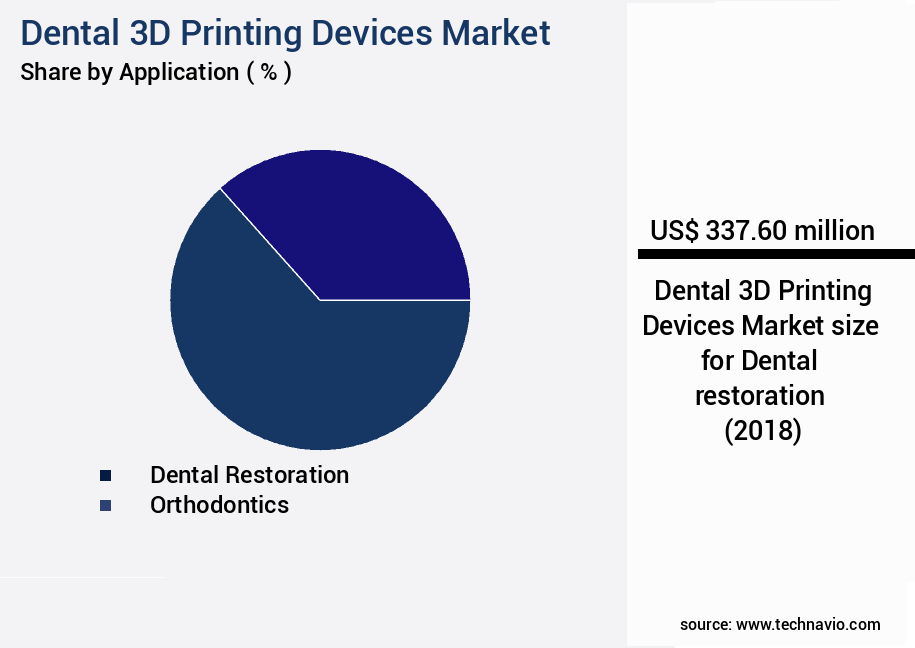
The Dental restoration segment was valued at USD 337.60 billion in 2018 and showed a gradual increase during the forecast period.
Regional Analysis
North America is estimated to contribute 37% to the growth of the global market during the forecast period.Technavio’s analysts have elaborately explained the regional trends and drivers that shape the market during the forecast period.
See How Dental 3D Printing Devices Market Demand is Rising in North America Request Free Sample
The market is experiencing significant growth, with North America leading the charge. In 2023, this region accounted for the largest market share, with the US and Canada contributing substantially. Factors driving this growth include advanced healthcare infrastructure, the widespread adoption of dental 3D printing devices in healthcare facilities, and the presence of prominent industry players. The American Dental Association and other professional organizations in the region actively promote the use of these technologies for medical applications. Moreover, the increasing prevalence of dental disorders, such as dental cavities and periodontal diseases, fuels the demand for dental 3D printing devices.
According to the National Institute of Dental and Craniofacial Research, over 90% of adults in the US have had at least one cavity by age 45. This high prevalence necessitates the need for efficient and cost-effective dental solutions, which 3D printing devices provide. The market's continuous evolution is marked by operational efficiency gains, cost reductions, and regulatory compliance, making it an essential component of modern dental care.
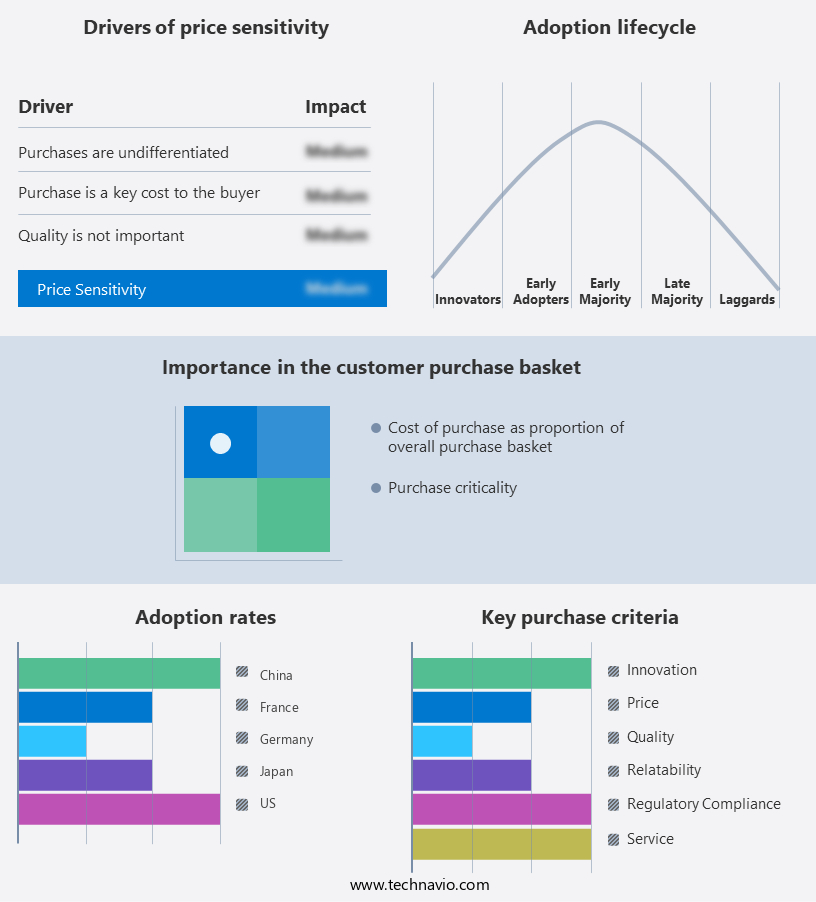
Customer Landscape of Dental 3D Printing Devices Industry
Competitive Intelligence by Technavio Analysis: Leading Players in the Dental 3D Printing Devices Market
Companies are implementing various strategies, such as strategic alliances, dental 3d printing devices market forecast, partnerships, mergers and acquisitions, geographical expansion, and product/service launches, to enhance their presence in the industry.
3D Systems Corp. - The company specializes in providing advanced dental 3D printing solutions, featuring the NextDent 5100, DMP Flex 200, and ProX 800 devices. These innovative tools cater to the dental industry, enhancing production efficiency and customization capabilities in creating high-quality dental restorations.
The industry research and growth report includes detailed analyses of the competitive landscape of the market and information about key companies, including:
- 3D Systems Corp.
- Asiga
- BEGO GmbH and Co. KG
- Carbon Inc.
- Dentsply Sirona Inc.
- Desktop Metal Inc.
- DWS Srl
- EOS GmbH
- Formlabs Inc.
- General Electric Co.
- Institut Straumann AG
- Mitsui Chemicals Inc.
- Planmeca Oy
- Prodways Group
- Rapid Shape GmbH
- Renishaw Plc
- Roland DG Corp.
- SLM Solutions Group AG
- Stratasys Ltd.
- Ultimaker BV
Qualitative and quantitative analysis of companies has been conducted to help clients understand the wider business environment as well as the strengths and weaknesses of key industry players. Data is qualitatively analyzed to categorize companies as pure play, category-focused, industry-focused, and diversified; it is quantitatively analyzed to categorize companies as dominant, leading, strong, tentative, and weak.
Recent Development and News in Dental 3D Printing Devices Market
- In August 2024, Stratasys, a leading 3D printing solutions provider, announced the launch of its new dental 3D printing system, the Stratasys J750 Dental, featuring full-color capability and biocompatible materials for producing functional and aesthetic dental restorations (Stratasys Press Release).
- In November 2024, 3Shape, a Danish digital dentistry solutions company, entered into a strategic partnership with Dentsply Sirona, a leading dental manufacturing company, to integrate 3Shape's TRIOS intraoral scanners with Dentsply Sirona's Primescan intraoral scanners, expanding their combined offerings in digital dentistry (3Shape Press Release).
- In February 2025, 3D Systems, a leading provider of 3D printing technologies, announced the acquisition of D2P Solutions, a dental 3D printing service provider, to strengthen its position in the dental 3D printing market and expand its service offerings (3D Systems Press Release).
- In May 2025, the US Food and Drug Administration (FDA) granted 510(k) clearance to Aspect Dental Materials for its new line of biocompatible 3D printing materials, expanding the range of options for dental professionals using 3D printing technology (FDA Press Release).
Dive into Technavio’s robust research methodology, blending expert interviews, extensive data synthesis, and validated models for unparalleled Dental 3D Printing Devices Market insights. See full methodology.
|
Market Scope |
|
|
Report Coverage |
Details |
|
Page number |
171 |
|
Base year |
2023 |
|
Historic period |
2018-2022 |
|
Forecast period |
2024-2028 |
|
Growth momentum & CAGR |
Accelerate at a CAGR of 27.04% |
|
Market growth 2024-2028 |
USD 2845.6 million |
|
Market structure |
Fragmented |
|
YoY growth 2023-2024(%) |
21.35 |
|
Key countries |
US, Germany, Japan, China, and France |
|
Competitive landscape |
Leading Companies, Market Positioning of Companies, Competitive Strategies, and Industry Risks |
Why Choose Technavio for Dental 3D Printing Devices Market Insights?
"Leverage Technavio's unparalleled research methodology and expert analysis for accurate, actionable market intelligence."
The market is experiencing significant growth, driven by advancements in SLA printer resin compatibility for dental applications, enabling higher model printing accuracy and resolution. Direct metal printing for dental implants is revolutionizing the industry with improved parameters, allowing for greater customization and precision. Surgical guide design software integration workflows streamline the production process, enhancing operational efficiency and supply chain management. Biocompatibility testing of 3d printed denture materials is crucial, ensuring patient safety and regulatory compliance. High-resolution crown and bridge printing techniques deliver superior restorative outcomes, surpassing traditional manufacturing methods in terms of intricacy and detail. Titanium dental structure printing process optimization reduces production costs and improves turnaround times. Resin printing layer thickness effects on accuracy necessitate post-processing techniques for dental 3d printed parts, ensuring a polished final product. CAD software compatibility in dental 3d printing workflows simplifies design and manufacturing processes, while material cost analysis enables informed decisions regarding biocompatible material selection. Production efficiency improvement through automated workflow solutions is a key trend, with 3d printing speed playing a significant role in reducing lead times and enhancing patient experience. 3D model manipulation software for dental applications offers advanced features, enabling dentists to customize restorations and surgical guides with ease. Quality assurance methods in dental 3d printing, such as in-process monitoring and post-production inspections, ensure consistent, high-quality outcomes. Infection control protocols are essential, with 3d printing technology offering the potential for patient-specific surgical guide production, reducing cross-contamination risks. Overall, the market offers numerous benefits, surpassing traditional manufacturing methods in terms of customization, precision, and operational efficiency.
What are the Key Data Covered in this Dental 3D Printing Devices Market Research and Growth Report?
-
What is the expected growth of the Dental 3D Printing Devices Market between 2024 and 2028?
-
USD 2.85 billion, at a CAGR of 27.04%
-
-
What segmentation does the market report cover?
-
The report is segmented by Application (Dental restoration and Orthodontics), End-user (Dental laboratories, Dental clinics, and Others), and Geography (North America, Europe, Asia, and Rest of World (ROW))
-
-
Which regions are analyzed in the report?
-
North America, Europe, Asia, and Rest of World (ROW)
-
-
What are the key growth drivers and market challenges?
-
Cost efficiency and enhanced productivity of dental devices with 3D printing, High initial setup cost of dental 3D printing facility
-
-
Who are the major players in the Dental 3D Printing Devices Market?
-
3D Systems Corp., Asiga, BEGO GmbH and Co. KG, Carbon Inc., Dentsply Sirona Inc., Desktop Metal Inc., DWS Srl, EOS GmbH, Formlabs Inc., General Electric Co., Institut Straumann AG, Mitsui Chemicals Inc., Planmeca Oy, Prodways Group, Rapid Shape GmbH, Renishaw Plc, Roland DG Corp., SLM Solutions Group AG, Stratasys Ltd., and Ultimaker BV
-
We can help! Our analysts can customize this dental 3d printing devices market research report to meet your requirements.
 RIA -
RIA - 
