


Dental Implants Market Size 2025-2029
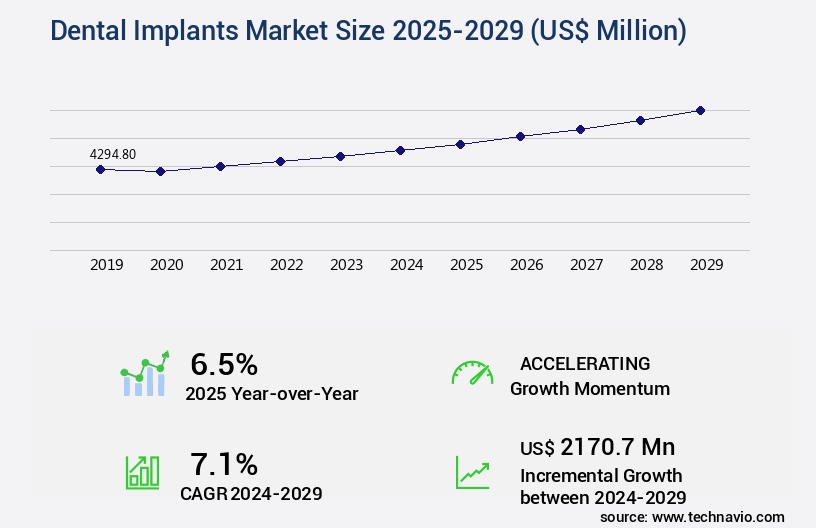
The dental implants market size is valued to increase USD 2.17 billion, at a CAGR of 7.1% from 2024 to 2029. Increasing number of treatments related to cosmetic dentistry will drive the dental implants market.
Major Market Trends & Insights
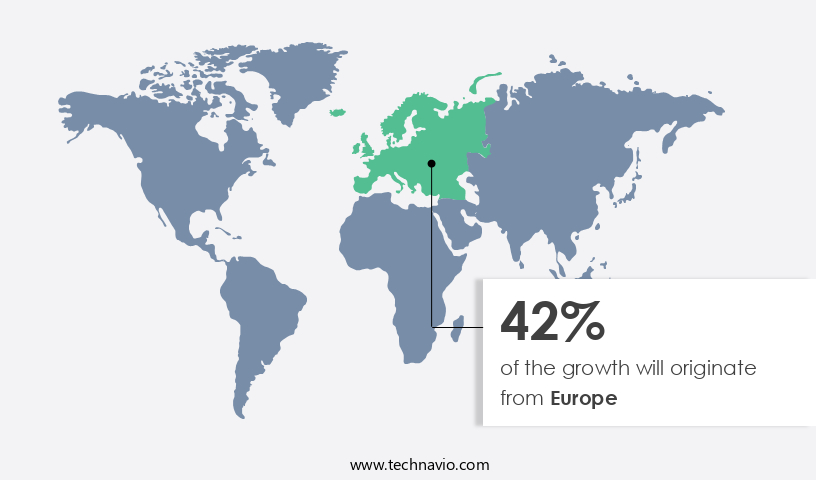
- Europe dominated the market and accounted for a 42% growth during the forecast period.
- By Type - Endosteal implants segment was valued at USD 3.71 billion in 2023
- By End-user - Dental hospitals and clinics segment accounted for the largest market revenue share in 2023
Market Size & Forecast
- Market Opportunities: USD 74.31 million
- Market Future Opportunities: USD 2170.70 million
- CAGR from 2024 to 2029 : 7.1%
Market Summary
- The market represents a significant segment within the healthcare industry, driven by the increasing prevalence of dental diseases and the growing awareness of aesthetic dentistry.Advancements in dental technology have led to the emergence of robotic dental surgery, streamlining the implantation process and ensuring higher precision. However, the high cost of dental implants and associated procedures remains a notable challenge, limiting accessibility for many individuals. Despite this hurdle, the market continues to evolve, fueled by the rising demand for long-term dental solutions and the growing popularity of cosmetic dentistry.
- The market's future direction lies in the integration of advanced technologies, such as 3D printing and nanotechnology, to enhance the functionality and durability of dental implants. Additionally, collaborations between industry players and research institutions are expected to drive innovation and improve patient outcomes. In conclusion, the market's growth is underpinned by the increasing prevalence of dental diseases, the emergence of advanced technologies, and the growing demand for cosmetic dentistry. Despite challenges, such as high costs, the market is poised for steady expansion, driven by the need for long-term dental solutions and the pursuit of aesthetic enhancements.
What will be the Size of the Dental Implants Market during the forecast period?
Get Key Insights on Market Forecast (PDF) Request Free Sample
How is the Dental Implants Market Segmented ?
The dental implants industry research report provides comprehensive data (region-wise segment analysis), with forecasts and estimates in "USD million" for the period 2025-2029, as well as historical data from 2019-2023 for the following segments.
- Type
- Endosteal implants
- Subperiosteal implants
- Zygomatic implants
- End-user
- Dental hospitals and clinics
- Dental laboratories
- Others
- Material
- Titanium implants
- Zirconia implants
- Procedure Type
- One-Stage Procedure
- Two-Stage Procedure
- Demographics
- Geriatric Population
- Adult Population
- Geography
- North America
- US
- Canada
- Mexico
- Europe
- France
- Germany
- Italy
- UK
- APAC
- China
- India
- Japan
- Rest of World (ROW)
- North America
By Type Insights
The endosteal implants segment is estimated to witness significant growth during the forecast period.
The market is experiencing significant growth, with endosteal implants leading the charge. These implants, which are placed directly into the jawbone, offer unparalleled stability and durability, making them a preferred choice for tooth replacement. The endosteal segment is characterized by continuous advancements in technology, including the use of biocompatible materials, such as zirconia and titanium, and surface modification techniques that promote osseointegration. Implant stability metrics and radiographic evaluation are crucial in ensuring successful implantation, with implant loading protocols and occlusal forces being key considerations. Esthetic considerations and soft tissue management are also essential, with infection prevention protocols and surgical guide fabrication playing vital roles in the implant restoration process.
The latest trends include guided bone regeneration, digital dentistry workflow, and sinus lift procedures, all aimed at improving patient outcomes and expanding the scope of dental restoration. According to recent studies, the implant longevity rate is as high as 95%, making dental implants a reliable and long-lasting solution for tooth loss. The market also prioritizes infection prevention protocols and implant placement techniques to minimize implant failure rates. With advancements in implant fixture design, treatment planning software, and peri-implantitis treatment, the future of dental implants looks promising.
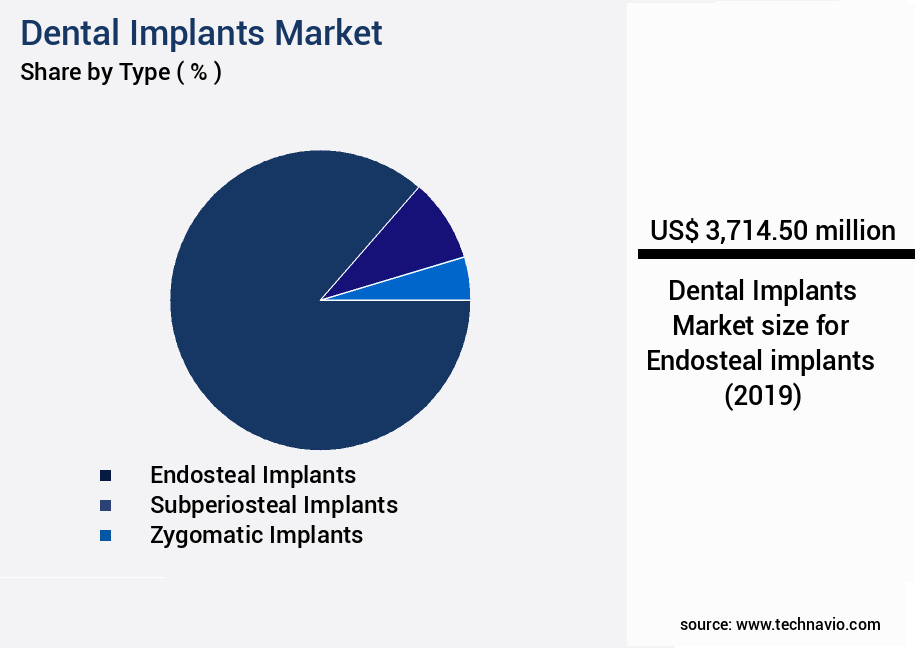
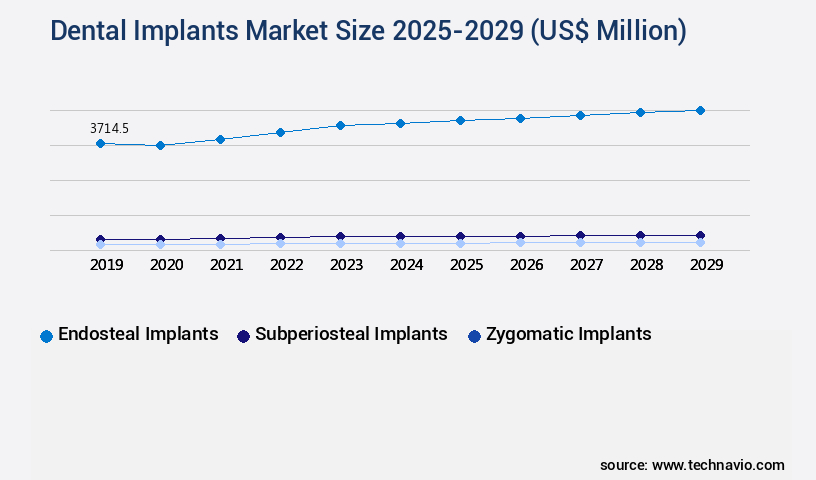
The Endosteal implants segment was valued at USD 3.71 billion in 2019 and showed a gradual increase during the forecast period.
Regional Analysis
Europe is estimated to contribute 42% to the growth of the global market during the forecast period.Technavio's analysts have elaborately explained the regional trends and drivers that shape the market during the forecast period.
See How Dental Implants Market Demand is Rising in Europe Request Free Sample
The European the market is experiencing significant growth, driven by several key factors. With an increasing number of manufacturing companies, the region is witnessing a surge in production. Moreover, favorable reimbursement policies in Western European countries like the UK and Germany are encouraging the adoption of dental implants. In addition, the implementation of intraoral scanner digital impression procedures and the increasing use of Computer-Aided Design/Computer-Aided Manufacturing (CAD/CAM) technology are further boosting market expansion.
However, despite these advancements, many Europeans remain apprehensive about dental implantation procedures due to limited reimbursement policies in most countries, leading to higher out-of-pocket costs. This dynamic market is expected to continue its robust growth trajectory in the coming years.
Market Dynamics
Our researchers analyzed the data with 2024 as the base year, along with the key drivers, trends, and challenges. A holistic analysis of drivers will help companies refine their marketing strategies to gain a competitive advantage.
The market is experiencing significant growth due to the increasing prevalence of tooth loss and the advancements in implant technology. One of the key trends in this market is the development of titanium implant surface modifications, which enhance osseointegration and improve implant success rates. Another trend is the use of zirconia implant abutment designs, which offer esthetic benefits and are suitable for patients with metal allergies. Guided bone regeneration techniques and sinus lift augmentation procedures are also gaining popularity in the market. These techniques help to ensure adequate bone density for implant placement, which is crucial for long-term success. Implant placement depth considerations and bone density measurement techniques are essential factors in the surgical planning process, and advanced radiographic evaluation parameters and soft tissue management protocols are used to assess implant stability and prevent peri-implantitis. CAD-CAM software applications and surgical planning software are used to design patient-specific surgical guides and select the appropriate surgical drill size. Infection prevention strategies, such as antibiotic prophylaxis and sterilization techniques, are also critical in minimizing implant failure risk factors. Peri-implantitis treatment options, including surgical and non-surgical approaches, are available for managing complications. Long-term implant success factors include biomechanical stress modeling, proper implant body diameter selection, and regular maintenance. Implant stability assessment methods, such as resonance frequency analysis and dynamic percussion testing, are used to evaluate implant stability and predict success. Overall, the market is driven by advancements in technology, increasing patient demand, and a growing awareness of the benefits of dental implants as a viable alternative to traditional dentures.
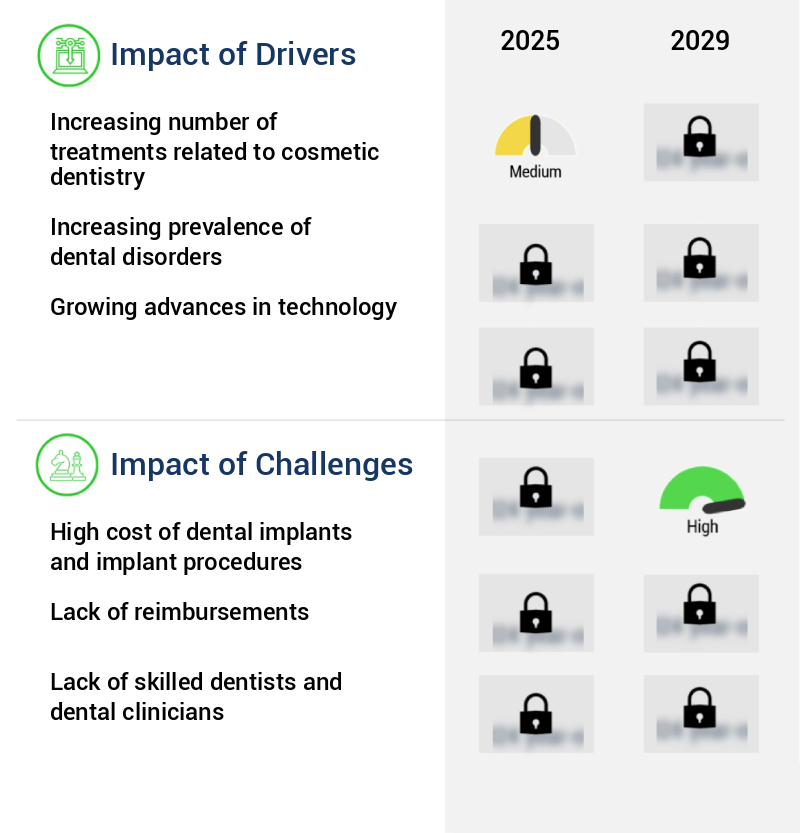
What are the key market drivers leading to the rise in the adoption of Dental Implants Industry?
- The surge in popularity of cosmetic dental treatments serves as the primary catalyst for market growth in this sector.
- Dental implants represent a significant segment within the evolving dental market, offering a durable and effective solution for missing teeth. According to recent studies, The market is projected to reach a value of over USD6.8 billion by 2025, growing at a steady pace due to increasing awareness and demand for advanced dental treatments. Dental implants are not only used to replace single missing teeth but also to support fixed or removable dental prostheses, such as bridges and dentures. The application of dental implants extends beyond cosmetic enhancement, as they also provide essential functional benefits, including improved speech, chewing ability, and facial structure support.
- The integration of advanced technologies, like Computer-Aided Design (CAD) and Computer-Aided Manufacturing (CAM) systems, has significantly improved the accuracy and success rate of dental implant procedures.
What are the market trends shaping the Dental Implants Industry?
- The emergence of robotic dental surgery represents a significant market trend in the healthcare industry. Robotic technology is increasingly being adopted for dental procedures due to its precision and potential benefits.
- Robotic dental surgery has emerged as a game-changer in the market, enhancing the precision and efficiency of implantation procedures. This technology's reliability is driving its widespread adoption among dental professionals. Robotic platforms offer real-time guidance, reducing the dependency on skilled labor in dental care. In countries facing a shortage of dental care professionals, the use of robotic platforms in dental implantation procedures is increasingly common.
- Approximately 5.5 million dental implants are placed globally each year, highlighting the market's significant size.
What challenges does the Dental Implants Industry face during its growth?
- The escalating costs associated with dental implants and their procedural implementation represent a significant barrier to growth in the dental industry.
- Dental implants, a modern solution for tooth replacement, have gained significant traction in the healthcare sector. The process involves a surgical procedure to fix a titanium post to the jawbone, followed by the placement of an abutment and crown. The cost of dental implantation procedures is influenced by various factors, including the number of teeth to be replaced and the necessity of diagnostic imaging. These procedures typically require two appointments with a dentist. The initial appointment involves the implantation process, while the second appointment occurs three to six months later for the placement of the abutment and crown.
- The cost of dental implantation can escalate due to the complexity of surgical procedures and subsequent consultations. For instance, multiple tooth replacements necessitate the use of multiple dental implants, crowns, or artificial teeth, thereby increasing the overall cost. Dental implants offer a robust and long-term solution for tooth loss, making them an attractive alternative to traditional dentures or bridges.
Exclusive Technavio Analysis on Customer Landscape
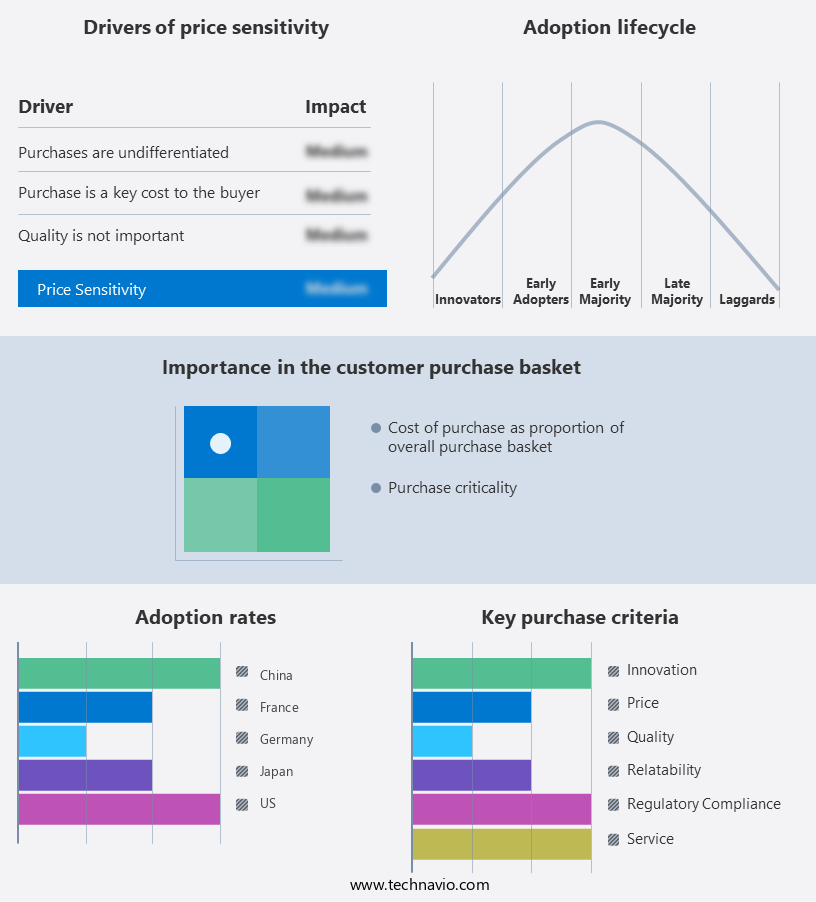
The dental implants market forecasting report includes the adoption lifecycle of the market, covering from the innovator's stage to the laggard's stage. It focuses on adoption rates in different regions based on penetration. Furthermore, the dental implants market report also includes key purchase criteria and drivers of price sensitivity to help companies evaluate and develop their market growth analysis strategies.
Customer Landscape of Dental Implants Industry
Competitive Landscape
Companies are implementing various strategies, such as strategic alliances, dental implants market forecast, partnerships, mergers and acquisitions, geographical expansion, and product/service launches, to enhance their presence in the industry.
AVINENT IMPLANT SYSTEM, SLU. - This company specializes in advanced dental implant solutions, including the biomimetic ICEBERG, CORAL, and OCEAN models. These implants employ innovative biomimetic technology, designed to mimic natural bone structure for optimal integration and durability.
The industry research and growth report includes detailed analyses of the competitive landscape of the market and information about key companies, including:
- AVINENT IMPLANT SYSTEM, SLU.
- B and B DENTAL Srl
- Bicon LLC
- Biodenta Swiss AG
- Blue Cross Blue Shield Association
- Dentsply Sirona Inc.
- DIO Implant Co. Ltd.
- Dyna Dental Engineering
- Envista Holdings Corp.
- GC Corp.
- Henry Schein Inc.
- Institut Straumann AG
- Keystone Dental Inc.
- Neo Biotech
- Nobel Biocare Services AG
- Osstem
- Southern Implants
- Thommen Medical AG
- ZEST Anchors LLC
- ZimVie Inc.
Qualitative and quantitative analysis of companies has been conducted to help clients understand the wider business environment as well as the strengths and weaknesses of key industry players. Data is qualitatively analyzed to categorize companies as pure play, category-focused, industry-focused, and diversified; it is quantitatively analyzed to categorize companies as dominant, leading, strong, tentative, and weak.
Recent Development and News in Dental Implants Market
- In January 2024, Dentsply Sirona, a leading dental solutions provider, launched the XiVE 3D Digital Implant Planning Software, integrating advanced imaging and implant planning capabilities (Dentsply Sirona press release). In March 2024, Straumann Holding AG, a global leader in dental implants, announced a strategic partnership with 3Shape, a Danish digital dentistry solutions provider, to expand their digital offerings (Straumann Holding AG press release).
- In April 2024, Zimmer Biomet Holdings, Inc., a global healthcare solutions company, completed the acquisition of Biomet 3i, a leading dental implant manufacturer, for approximately USD1.4 billion (Zimmer Biomet Holdings, Inc. SEC filing). In May 2025, the U.S. Food and Drug Administration (FDA) granted 510(k) clearance to Nobel Biocare Services AG for its All-on-4® Treatment Concept, an innovative dental implant solution for edentulous patients (Nobel Biocare Services AG press release). These developments underscore the market's focus on digitalization, strategic collaborations, and technological advancements to cater to evolving customer needs and improve treatment outcomes in the dental implants sector.
Dive into Technavio's robust research methodology, blending expert interviews, extensive data synthesis, and validated models for unparalleled Dental Implants Market insights. See full methodology.
|
Market Scope |
|
|
Report Coverage |
Details |
|
Page number |
208 |
|
Base year |
2024 |
|
Historic period |
2019-2023 |
|
Forecast period |
2025-2029 |
|
Growth momentum & CAGR |
Accelerate at a CAGR of 7.1% |
|
Market growth 2025-2029 |
USD 2170.7 million |
|
Market structure |
Fragmented |
|
YoY growth 2024-2025(%) |
6.5 |
|
Key countries |
US, Germany, UK, China, France, Japan, Canada, Italy, India, and Mexico |
|
Competitive landscape |
Leading Companies, Market Positioning of Companies, Competitive Strategies, and Industry Risks |
Research Analyst Overview
- The dental implant market continues to evolve, driven by advancements in technology and patient demand for superior restorative solutions. Implant stability metrics, such as resonance frequency analysis and micro-dynamics testing, are increasingly utilized to ensure optimal implant placement and long-term success. Zirconia implants, with their biocompatible properties and esthetic appeal, are gaining popularity among patients and dentists alike. Implant loading protocols are continually refined to minimize the risk of complications and enhance osseointegration time. Soft tissue management techniques, including guided tissue regeneration and surface modification, are essential for achieving esthetic outcomes and ensuring proper implant function.
- Biocompatible materials, such as titanium and zirconia, are the foundation of successful implant placements, while radiographic evaluation and implant abutment connection are crucial steps in the implant restoration process. Industry growth in the dental implant sector is projected to reach double-digit percentages over the next several years. For instance, a leading dental clinic reported a 15% increase in implant placement procedures due to the growing acceptance and demand for dental implants. Ongoing research focuses on improving implant fixture design, infection prevention protocols, and peri-implantitis treatment, ensuring that dental implant surgery remains a viable and effective option for patients.
- Implant placement techniques, such as sinus lift procedures and bone density assessment, are essential components of treatment planning software and digital dentistry workflows. Bone grafting materials and surgical protocols are continually refined to optimize implant osseointegration and minimize complications. Guided bone regeneration and occlusal forces are critical factors in the success of implant restoration types, including fixed and removable prosthetic components. Implant maintenance and infection prevention are ongoing concerns for both dentists and patients. Implant failure rates remain low, with studies reporting rates below 5%, but ongoing research and innovation are essential to maintaining these figures and improving patient outcomes.
- Implant placement techniques, such as surgical guide fabrication and implant fixture design, are continually refined to enhance patient comfort and minimize the risk of complications. Infection prevention protocols, including CBT imaging analysis and meticulous surgical techniques, are essential components of dental implant surgery. Implant placement techniques, such as sinus lift procedures and bone density assessment, are crucial steps in the implant restoration process. Ongoing research and innovation in the dental implant market ensure that this dynamic sector continues to provide superior restorative solutions for patients.
What are the Key Data Covered in this Dental Implants Market Research and Growth Report?
-
What is the expected growth of the Dental Implants Market between 2025 and 2029?
-
USD 2.17 billion, at a CAGR of 7.1%
-
-
What segmentation does the market report cover?
-
The report is segmented by Type (Endosteal implants, Subperiosteal implants, and Zygomatic implants), End-user (Dental hospitals and clinics, Dental laboratories, and Others), Material (Titanium implants and Zirconia implants), Geography (Europe, North America, Asia, and Rest of World (ROW)), Procedure Type (One-Stage Procedure and Two-Stage Procedure), and Demographics (Geriatric Population and Adult Population)
-
-
Which regions are analyzed in the report?
-
Europe, North America, Asia, and Rest of World (ROW)
-
-
What are the key growth drivers and market challenges?
-
Increasing number of treatments related to cosmetic dentistry, High cost of dental implants and implant procedures
-
-
Who are the major players in the Dental Implants Market?
-
AVINENT IMPLANT SYSTEM, SLU., B and B DENTAL Srl, Bicon LLC, Biodenta Swiss AG, Blue Cross Blue Shield Association, Dentsply Sirona Inc., DIO Implant Co. Ltd., Dyna Dental Engineering, Envista Holdings Corp., GC Corp., Henry Schein Inc., Institut Straumann AG, Keystone Dental Inc., Neo Biotech, Nobel Biocare Services AG, Osstem, Southern Implants, Thommen Medical AG, ZEST Anchors LLC, and ZimVie Inc.
-
Market Research Insights
- The market for dental implants is a dynamic and ever-evolving sector, characterized by continuous advancements in technology and techniques. Two significant data points illustrate this progression. First, the adoption of osseoconductive materials and advanced surgical methods has led to an increase in implant success rates, with studies reporting rates above 95%. Second, the industry is projected to experience steady growth, with estimates suggesting a yearly expansion of around 5% over the next decade. For instance, the integration of finite element analysis and computer-aided surgery in implant placement procedures has resulted in improved accuracy and reduced complications.
- Moreover, the development of patient-specific guides and aseptic techniques has enhanced infection control and tissue healing processes. These advancements, along with ongoing research into material properties, surface roughness, and implant integration stages, continue to shape the dental implant market.
We can help! Our analysts can customize this dental implants market research report to meet your requirements.
 RIA -
RIA - 
