



Nitrile Gloves Market Size 2025-2029
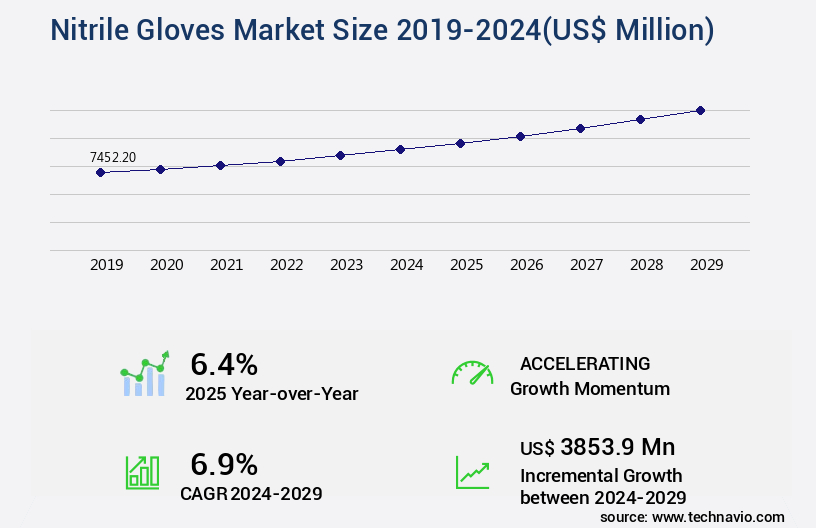
The nitrile gloves market size is forecast to increase by USD 3.85 billion, at a CAGR of 6.9% between 2024 and 2029.
- The market is a significant and dynamic sector, continually evolving to address the demands of various industries. This market's growth is driven by increasing concerns over hygiene and safety, particularly in the healthcare sector, where nitrile gloves are essential for preventing healthcare-associated infections. A notable trend in the market is the rising preference for biodegradable and powder-free nitrile gloves. Biodegradable gloves offer environmental benefits, reducing the environmental impact of disposable gloves. Powder-free gloves, on the other hand, help minimize the risk of allergic reactions and other health issues associated with glove powder. Despite these opportunities, the market faces challenges, including volatile raw material prices and currency fluctuations.
- These factors can significantly impact the cost structure of nitrile glove manufacturers and, ultimately, the prices paid by end-users. Moreover, the market's dynamics are influenced by factors such as technological advancements, regulatory requirements, and changing consumer preferences. For instance, the development of thinner, more flexible nitrile gloves has expanded their applications beyond healthcare, into industries like food processing and laboratory research. Comparing the global demand for nitrile gloves in 2019 to 2020, there was a 23.3% increase. This growth can be attributed to the factors mentioned above, as well as the ongoing COVID-19 pandemic, which has heightened awareness of the importance of hand hygiene and protective equipment.
- In conclusion, the market is a vibrant and evolving sector, shaped by various trends, challenges, and opportunities. Its continued growth is underpinned by the increasing demand for hygiene and safety, coupled with advancements in technology and consumer preferences.
Major Market Trends & Insights
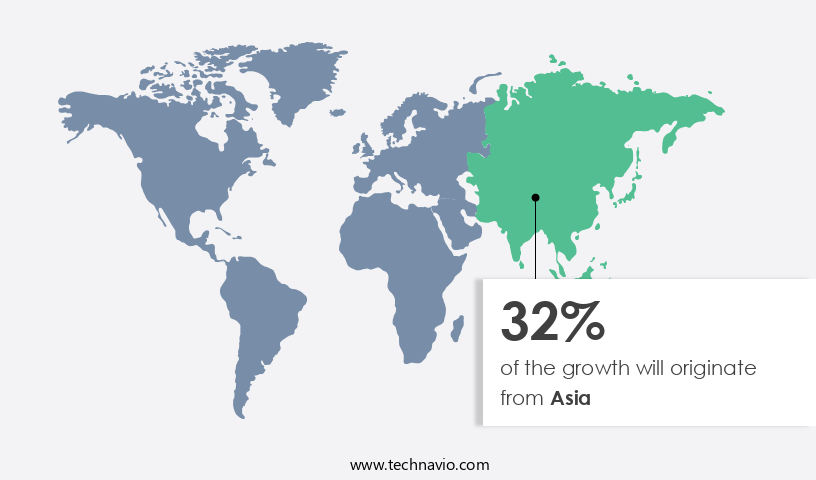
- Asia dominated the market and accounted for a 32% growth during the forecast period.
- The market is expected to grow significantly in Europe as well over the forecast period.
- By the Product, the Disposable sub-segment was valued at USD 5.41 billion in 2023
- By the End-user, the Medical sub-segment accounted for the largest market revenue share in 2023
Market Size & Forecast
- Market Opportunities: USD 81.47 billion
- Future Opportunities: USD USD 3.85 billion
- CAGR : 6.9%
- Asia: Largest market in 2023
What will be the Size of the Nitrile Gloves Market during the forecast period?
Get Key Insights on Market Forecast (PDF) Request Free Sample
- The global nitrile gloves market continues to evolve as industries place growing importance on safety, durability, and compliance in protective solutions. Increasing emphasis on polymer blend selection and optimization within the glove manufacturing process ensures that performance is maintained under diverse operating conditions. Companies are investing in advanced quality control protocols and referencing the material safety data sheet to validate product safety. User-focused innovation is also shaping demand, with ongoing research into glove comfort assessment, glove fit assessment, and tailored glove size distribution supporting a balance between protection and usability.
- A critical area of advancement lies in testing and validation processes. Rigorous tear resistance testing, microbial barrier testing, viral penetration testing, and bacterial penetration testing are central to meeting evolving standards. In addition, the incorporation of chemical permeation data helps determine the reliability of protective barriers. Manufacturers are also focusing on the polymer curing process, glove coating technology, and glove surface treatment to enhance resilience. Specialized considerations such as glove liner materials, glove texturing methods, and available glove color options are increasingly important in aligning with glove end-use applications.
- Comparative market data highlights how performance drivers are shifting. Demand linked to abrasion resistance accounted for 22.6% of material testing priorities, while future adoption tied to glove sterilization validation is projected to expand by 16.8%. This contrast underscores how immediate performance durability leads current focus, while compliance and sterilization requirements are expected to gain greater importance over time.
- Lifecycle factors are also critical in shaping strategies. Ongoing glove shelf life studies, evaluation of glove packaging materials, and structured glove decontamination methods support durability and reliability. Additionally, adherence to glove labeling requirements and regulatory compliance testing ensures alignment with safety standards, reinforcing trust across industries. Together, these advancements highlight a market where safety, innovation, and compliance remain continuous and evolving priorities.
How is this Nitrile Gloves Industry segmented?
The nitrile gloves industry research report provides comprehensive data (region-wise segment analysis), with forecasts and estimates in "USD million" for the period 2025-2029, as well as historical data from 2019-2023 for the following segments.
- Product
- Disposable
- Durable
- End-user
- Medical
- Non-medical
- Type
- Powder-free
- Powder
- Accelerator-free
- Polymer-coated
- Geography
- North America
- US
- Canada
- Europe
- France
- Germany
- UK
- APAC
- China
- India
- Japan
- South America
- Argentina
- Brazil
- Rest of World (ROW)
- North America
By Product Insights
The disposable segment is estimated to witness significant growth during the forecast period.
Nitrile gloves, fabricated from synthetic rubber, have gained considerable traction in various industries due to their superior durability and resistance to punctures, chemicals, and oils. This trend is particularly evident in the disposable segment of the market, which is experiencing substantial expansion. In the healthcare sector, disposable nitrile gloves are indispensable in hospitals, clinics, and laboratories, providing essential protection against infectious diseases, chemicals, and bodily fluids. The emphasis on infection control has fueled the demand for these gloves, with the shift from latex to nitrile gloves due to latex allergies being another significant contributing factor. According to market research data, in 2024 the nitrile gloves market was valued at approximately USD 4.71 billion, providing a clear snapshot of present-day usage and uptake.
Nitrile gloves' composition and properties offer advantages over traditional glove materials. Nitrile polymer's chemical resistance, elasticity, and high tensile strength make it a preferred alternative to latex and vinyl gloves. Ergonomic glove designs cater to various hand sizes and shapes, enhancing user comfort and dexterity. Glove manufacturers employ sterilization methods such as ethylene oxide and gamma radiation to ensure product hygiene and safety. Glove recycling processes and disposal methods are increasingly being explored to minimize environmental impact.
Looking ahead, market research data indicates that by 2030 the nitrile gloves market will reach USD 7.92 billion, reflecting sustained momentum and growth in the coming years. To compare these figures, the market is projected to increase from USD 4.71 billion in 2024 to USD 7.92 billion by 2030. This equates to an almost 68% absolute growth over the period, underscoring the sector's strong and compelling expansion trajectory. Powder-free gloves are gaining popularity due to their reduced risk of particle shedding, which can cause skin irritation. AQL inspection gloves undergo rigorous testing to ensure consistent quality and adherence to industry standards, such as ASTM and EN.
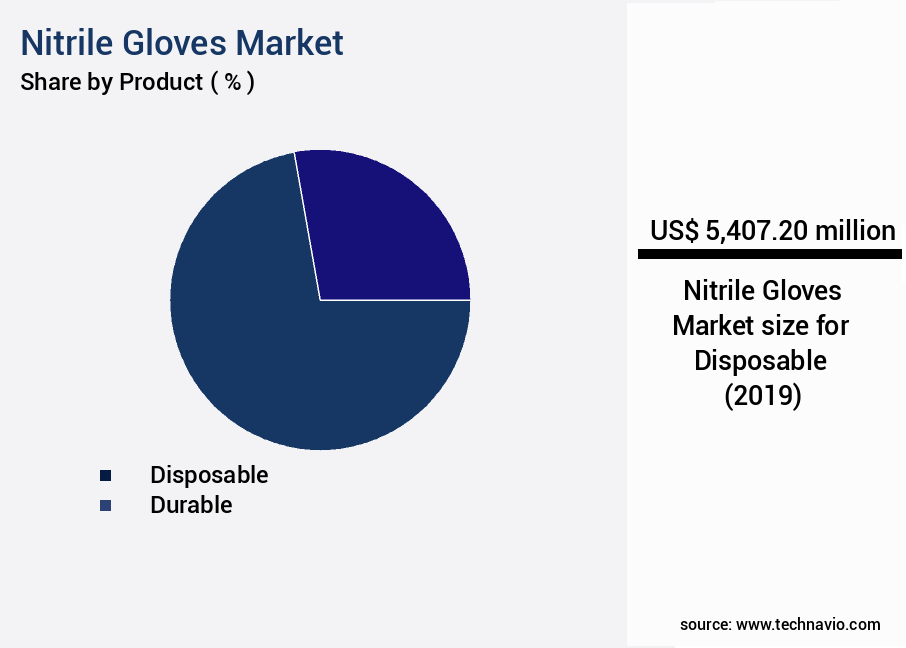
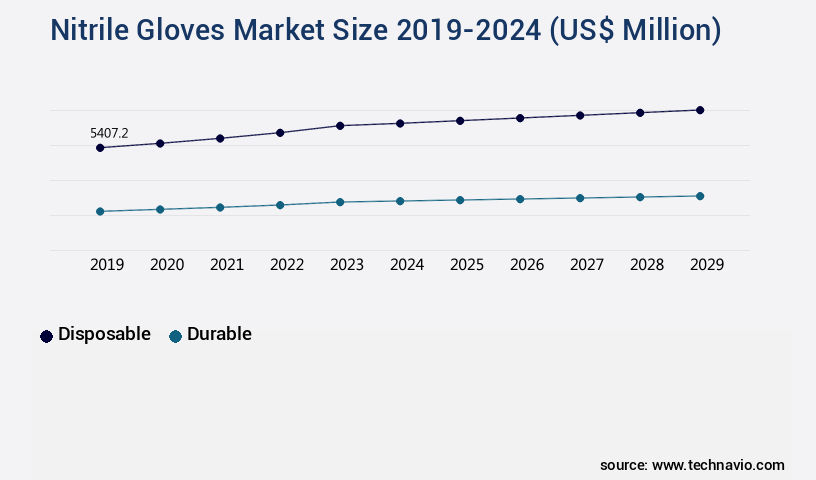
The Disposable segment was valued at USD 5.41 billion in 2019 and showed a gradual increase during the forecast period.
Nitrile gloves' chemical resistance and puncture resistance make them suitable for industrial applications, including automotive, food processing, and construction industries. The ongoing research and development in glove technology aim to enhance glove performance, durability, and ergonomics, catering to the evolving needs of diverse industries. According to recent studies, the disposable the market is projected to expand by 15% in the upcoming years, driven by the growing demand for infection control and increased awareness of glove usage in various industries. This growth is expected to continue as nitrile gloves become increasingly recognized for their superior performance and versatility.
Regional Analysis
Asia is estimated to contribute 32% to the growth of the global market during the forecast period.Technavio's analysts have elaborately explained the regional trends and drivers that shape the market during the forecast period.
See How Nitrile Gloves Market Demand is Rising in Asia Request Free Sample
Nitrile gloves, a crucial component in various industries, experienced significant growth in North America in 2024. This region emerged as one of the largest markets, with notable expansion anticipated during the forecast period. Factors fueling this growth include the increasing implementation of stringent regulations in healthcare facilities and industries such as food processing to minimize cross-contamination risks. These regulations, set by organizations like the Centers for Disease Control and Prevention (CDC) and the World Health Organization (WHO), aim to reduce hospital-acquired infections (HAIs) between healthcare professionals and patients. Moreover, the market's growth is driven by the enhanced distribution and supply of these gloves, as well as the rising demand for antimicrobial and powder-free options.
The market's expansion is expected to be robust, with a substantial increase in demand from various sectors. For instance, the healthcare IT industry's reliance on nitrile gloves to maintain hygiene standards and prevent infections is a significant growth driver. In addition, the food processing sector's increasing focus on food safety and hygiene is another key factor contributing to the market's growth. To put the market's growth into perspective, in 2024, North America accounted for approximately 35% of the market share. By 2029, this figure is projected to increase by over 20%, indicating a substantial expansion in the regional market. This growth trajectory underlines the market's continuous evolution and the significant role nitrile gloves play in various industries.
Market Dynamics
Our researchers analyzed the data with 2024 as the base year, along with the key drivers, trends, and challenges. A holistic analysis of drivers will help companies refine their marketing strategies to gain a competitive advantage.
The market caters to various industries requiring superior hand protection against chemical exposure and punctures. Nitrile, a synthetic rubber, is the material of choice due to its excellent chemical resistance properties and robust barrier protection against degradation caused by environmental factors. However, the impact of glove thickness on barrier protection and puncture resistance is crucial. Thinner gloves offer greater dexterity and comfort, while thicker gloves provide enhanced protection against sharper objects. When evaluating glove puncture resistance, methods such as the ASTM D6511-15 test are essential. This standard measures the resistance of gloves to penetration by a standardized probe. In comparison, the chemical resistance of nitrile gloves outperforms vinyl gloves, making them the preferred choice in industries dealing with harsh chemicals. Comfort and dexterity are essential factors in glove selection. Assessing glove fit for different hand sizes and evaluating glove comfort are crucial to ensure optimal performance. Glove manufacturers employ testing standards for disposable glove sterility, such as the ASTM F739-18, to maintain hygiene and prevent infection.
Comparing performance characteristics, powder-free nitrile gloves offer superior grip and are less likely to cause allergic reactions. The effect of glove use on hand skin health is an essential consideration, with nitrile gloves minimizing skin irritation and contact dermatitis. Glove disposal and environmental impact are increasingly important, with sustainable manufacturing practices reducing waste and minimizing environmental footprint. Economic impact is a significant consideration, with glove quality control ensuring cost savings through reduced glove failures and increased productivity. Factors influencing glove shelf life include storage conditions, frequency of use, and exposure to chemicals. Glove design considerations for specific tasks require a balance between protection, comfort, and dexterity. Regulatory requirements for glove labeling ensure transparency, with clear information on glove composition, size, and performance characteristics. Glove manufacturing automation processes and advanced materials for glove production drive innovation, while innovative glove designs improve ergonomics and enhance user experience. Evaluation of glove barrier properties against viruses is critical in the current climate, with nitrile gloves offering superior protection.
The performance characteristics of powder-free gloves have become increasingly important as industries move toward options that reduce contamination risks. Manufacturers are also integrating sustainable manufacturing practices for gloves, focusing on reducing environmental impact without sacrificing performance. Investments in the economic impact of glove quality control highlight how rigorous testing protocols prevent costly failures and enhance compliance. Additionally, innovative glove designs for improved ergonomics are addressing the need for safer and more comfortable solutions, reinforcing nitrile gloves as a critical component of modern safety standards across healthcare, industrial, and laboratory sectors.
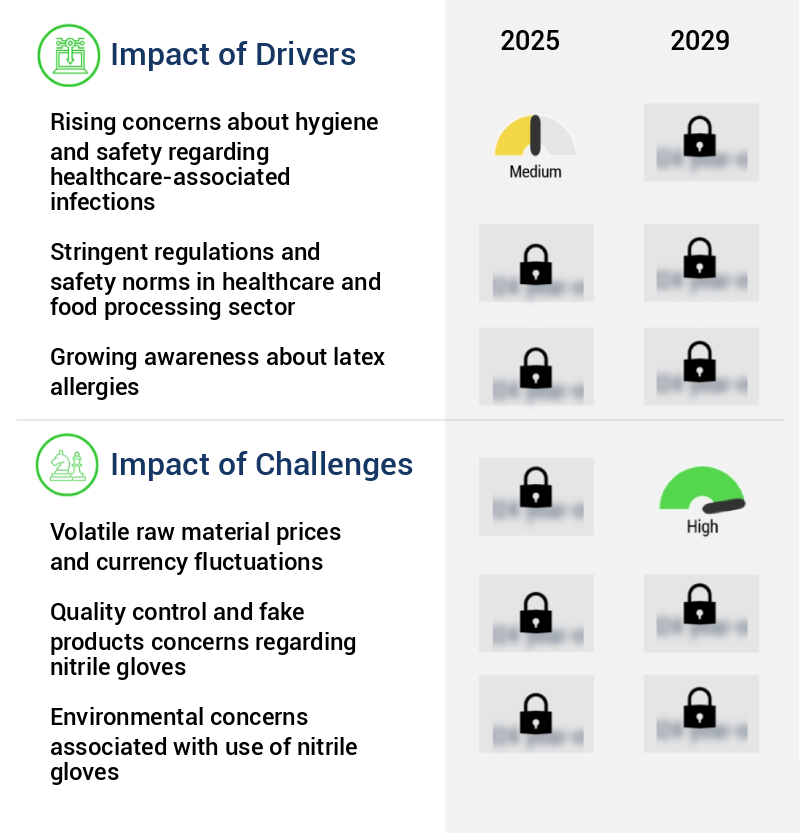
What are the key market drivers leading to the rise in the adoption of Nitrile Gloves Industry?
- The escalating concerns over hygiene and safety issues related to healthcare-associated infections serve as the primary catalyst for market growth in this sector.
- The market plays a significant role in the healthcare sector, addressing the critical need for infection prevention and control. With the increasing prevalence of HAIs (Hospital-Acquired Infections) in various healthcare settings, the demand for nitrile gloves continues to escalate. According to market reports, The market is experiencing substantial growth, driven by the rising awareness of infection prevention and control measures. Healthcare facilities, including hospitals, long-term care, home care, and ambulatory care settings, are major consumers of nitrile gloves. The market's growth is further fueled by the increasing number of co-morbidities, the transmission of drug-resistant bacteria, prolonged hospital stays, frequent disease outbreaks, and the prevalence of poor infection-control practices.
- In the US, approximately 1.7 million HAIs occur every year, affecting around 1 in 31 patients daily. The implementation and adoption of infection-control programs and practices in the healthcare sector are essential to prevent HAIs. Nitrile gloves are a crucial component of PPE (Personal Protective Equipment) used by healthcare professionals to minimize occupational infection transmission. The advantages of nitrile gloves include their excellent chemical resistance, puncture resistance, and superior flexibility, making them an ideal choice for various medical applications. The market's dynamics are influenced by several factors, including the increasing demand for nitrile gloves in the healthcare sector, advancements in technology, and the availability of alternative materials.
- The market's competitive landscape is characterized by numerous players, including both established manufacturers and new entrants. The market's future growth is expected to be driven by the increasing focus on infection prevention and control, the development of advanced nitrile gloves with enhanced features, and the expansion of the healthcare sector in emerging economies. In terms of volume, the Asia Pacific region is expected to dominate the market, driven by the large population base, increasing healthcare expenditures, and the presence of a significant number of manufacturers in the region. The European market is also expected to experience substantial growth due to the increasing focus on infection prevention and control measures and the presence of a well-established healthcare infrastructure.
- In conclusion, the market is experiencing significant growth due to the increasing demand for infection prevention and control measures in the healthcare sector. The market's dynamics are influenced by several factors, including technological advancements, the availability of alternative materials, and regional trends. The market's future growth is expected to be driven by the increasing focus on infection prevention and control, the development of advanced nitrile gloves, and the expansion of the healthcare sector in emerging economies.
What are the market trends shaping the Nitrile Gloves Industry?
- The preference for biodegradable and powder-free nitrile gloves is gaining momentum as the new market trend. A growing number of industries and healthcare professionals are favoring the use of these gloves due to their environmental friendliness and reduced risk of allergic reactions.
- Nitrile gloves, a type of synthetic rubber gloves, have gained significant traction in various industries due to their superior qualities over traditional gloves. The preference for nitrile gloves, particularly powder-free variants, is on the rise among end-users, including healthcare facilities, food processing, automotive, and others. This shift is driven by the health risks associated with powdered gloves, which contain starch powder. Exposure to this powder can lead to complications such as granulomas, pleuritis, myocarditis, and skin irritation. Healthcare workers, in particular, are mandated to maintain stringent hand hygiene practices. However, the use of powdered gloves necessitates hand washing after usage, which takes longer than applying an alcohol-based hand rub (ABHR).
- This extended hand washing process can hinder compliance with hand hygiene regulations. In response, manufacturers are focusing on producing powder-free nitrile gloves, eliminating the residual powder from their powdered counterparts. The demand for powder-free nitrile gloves is expected to continue growing, as industries recognize the benefits of reduced health risks and improved compliance with hygiene regulations. This trend is a significant development in the evolving the market, reflecting the ongoing efforts to enhance safety and efficiency in various sectors.
What challenges does the Nitrile Gloves Industry face during its growth?
- The volatile nature of raw material prices and currency fluctuations poses a significant challenge to the growth of the industry.
- Nitrile gloves, a type of synthetic rubber glove, have gained significant traction in various industries due to their superior resistance to chemicals, oil, and water. The market for nitrile gloves is subject to continuous evolution, shaped by various factors that influence the production and demand dynamics. One of the primary challenges faced by manufacturers is the volatility of raw material prices, specifically Nitrile Butadiene Rubber (NBR), a crucial component in glove production. The global shortage of NBR, caused by the permanent closure of several production facilities in Asia and North America, has led to a significant increase in NBR prices.
- Similarly, the price of butadiene, a core component of NBR, has experienced a sharp rise. The unpredictability of raw material prices poses challenges for manufacturers in managing sourcing costs effectively. Other factors contributing to this market instability include capacity constraints, stockpiling by end-users, new regulations, environmental conditions, foreign exchange rate shifts, seasonal demand changes, and broader economic instability. Despite these challenges, the market continues to expand, driven by its wide applicability across various sectors such as healthcare, food processing, and laboratory research. The healthcare industry, in particular, has seen a surge in demand due to the ongoing COVID-19 pandemic, further emphasizing the importance of nitrile gloves in protecting healthcare workers and patients.
- In terms of production, China remains the largest manufacturer and exporter of nitrile gloves, accounting for over 70% of the global supply. However, other countries like Thailand, Malaysia, and India are also making significant strides in the market, increasing their production capacities to cater to the growing demand. In conclusion, the market is subject to continuous change, influenced by various factors such as raw material prices, production capacity, and demand dynamics. Despite the challenges, the market's growth potential remains strong, driven by its wide applicability across various industries.
Exclusive Customer Landscape
The nitrile gloves market forecasting report includes the adoption lifecycle of the market, covering from the innovator's stage to the laggard's stage. It focuses on adoption rates in different regions based on penetration. Furthermore, the nitrile gloves market report also includes key purchase criteria and drivers of price sensitivity to help companies evaluate and develop their market growth analysis strategies.
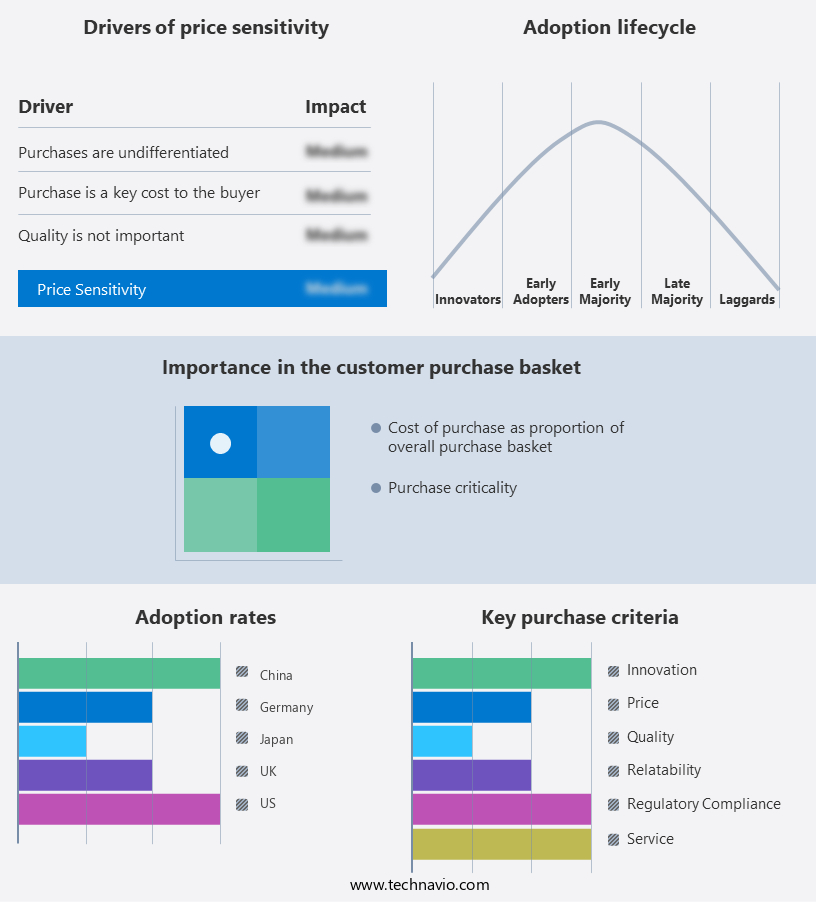
Customer Landscape of Nitrile Gloves Industry
Key Companies & Market Insights
Companies are implementing various strategies, such as strategic alliances, nitrile gloves market forecast, partnerships, mergers and acquisitions, geographical expansion, and product/service launches, to enhance their presence in the industry.
3M Co. - This company specializes in manufacturing and distributing a range of nitrile gloves, including medium (90011T), large (90011T), and X large (90011T) options. Their product offerings adhere to stringent quality standards, ensuring effective protection for various industries and applications.
The industry research and growth report includes detailed analyses of the competitive landscape of the market and information about key companies, including:
- 3M Co.
- Adenna LLC
- AMMEX Corp.
- Ansell Ltd.
- Atlantic Safety Products Inc.
- Cardinal Health Inc.
- Diamond Gloves
- Dolphin Products Inc.
- Dynarex Corp.
- Globus Shetland Ltd.
- Hartalega Holdings Berhad
- Hebei Aihede Protective Products Co. Ltd.
- Honeywell International Inc.
- Hongray Group
- Just Gloves
- Kanam Latex Industries Pvt. Ltd
- Kimberly Clark Corp.
- Kossan Rubber Industries Bhd
- McKesson Corp.
Qualitative and quantitative analysis of companies has been conducted to help clients understand the wider business environment as well as the strengths and weaknesses of key industry players. Data is qualitatively analyzed to categorize companies as pure play, category-focused, industry-focused, and diversified; it is quantitatively analyzed to categorize companies as dominant, leading, strong, tentative, and weak.
Recent Development and News in Nitrile Gloves Market
- In January 2024, Ansell Limited, a leading global provider of protective solutions, announced the launch of its new Nitrile Powder-Free Exam Gloves with Ezeeflow Technology. This innovation offers enhanced comfort and improved grip for healthcare professionals, addressing the growing demand for superior glove performance (Ansell Press Release).
- In March 2024, Top Glove Corporation Berhad, the world's largest rubber glove manufacturer, signed a strategic partnership with Cardinal Health, a global healthcare solutions company. The collaboration aimed to strengthen Top Glove's presence in the US market and improve Cardinal Health's glove offerings (Top Glove Press Release).
- In May 2024, Avintus Medical, a leading medical device contract manufacturer, completed the acquisition of Medline's glove manufacturing business. This acquisition significantly expanded Avintus Medical's production capacity and market share in the market (Avintus Medical Press Release).
- In February 2025, the European Chemicals Agency (ECHA) granted REACH registration for certain nitrile gloves produced by Hartalega Holdings Berhad. This approval confirmed the safety and compliance of these gloves with European Union regulations, enabling Hartalega to expand its market reach (Hartalega Holdings Press Release).
Research Analyst Overview
- The market encompasses a diverse range of applications, driven by the demand for protective gloves made from synthetic materials. Nitrile, a type of synthetic rubber, is the primary material for single use gloves due to its superior durability and resistance to various chemicals and environmental factors. Glove material composition plays a significant role in determining the performance of nitrile gloves. For instance, the elongation at break, which measures the amount of stretch before the material breaks, is a critical factor in assessing glove durability. Nitrile gloves exhibit excellent elongation at break, making them ideal for industries requiring high-performance gloves.
- Nitrile gloves are increasingly replacing latex and vinyl alternatives due to their superior barrier performance and reduced skin irritation potential. However, the glove donning technique and glove recycling processes are essential considerations in the market. Ergonomic glove design and glove tensile strength are crucial factors in ensuring optimal glove fit and durability. The nitrile polymer properties, such as chemical resistance and puncture resistance, are essential for various industrial applications. Glove degradation studies and glove thickness measurement are crucial in understanding the long-term performance and lifespan of nitrile gloves. The market is expected to grow at a steady pace, with industry analysts projecting a growth rate of approximately 5% annually.
- This growth is driven by the increasing demand for nitrile gloves in various sectors, including healthcare, manufacturing, and construction. Efforts to improve glove sterilization methods, develop powder-free gloves, and create ambidextrous glove designs are ongoing trends in the market. Additionally, there is a growing focus on glove recycling processes and glove disposal methods to reduce waste and promote sustainability. In conclusion, the market is a dynamic and evolving industry, driven by the demand for high-performance, synthetic gloves. Factors such as material composition, glove design, and performance testing are crucial considerations in understanding the market's trends and future developments.
Dive into Technavio's robust research methodology, blending expert interviews, extensive data synthesis, and validated models for unparalleled Nitrile Gloves Market insights. See full methodology.
|
Market Scope |
|
|
Report Coverage |
Details |
|
Page number |
207 |
|
Base year |
2024 |
|
Historic period |
2019-2023 |
|
Forecast period |
2025-2029 |
|
Growth momentum & CAGR |
Accelerate at a CAGR of 6.9% |
|
Market growth 2025-2029 |
USD 3853.9 million |
|
Market structure |
Fragmented |
|
YoY growth 2024-2025(%) |
6.4 |
|
Key countries |
US, China, Germany, Canada, Brazil, UK, France, Japan, India, and Argentina |
|
Competitive landscape |
Leading Companies, Market Positioning of Companies, Competitive Strategies, and Industry Risks |
What are the Key Data Covered in this Nitrile Gloves Market Research and Growth Report?
- CAGR of the Nitrile Gloves industry during the forecast period
- Detailed information on factors that will drive the growth and forecasting between 2025 and 2029
- Precise estimation of the size of the market and its contribution of the industry in focus to the parent market
- Accurate predictions about upcoming growth and trends and changes in consumer behaviour
- Growth of the market across North America, Europe, Asia, and Rest of World (ROW)
- Thorough analysis of the market's competitive landscape and detailed information about companies
- Comprehensive analysis of factors that will challenge the nitrile gloves market growth of industry companies
We can help! Our analysts can customize this nitrile gloves market research report to meet your requirements.
 RIA -
RIA - 
