



Foreign Exchange Market Size 2026-2030
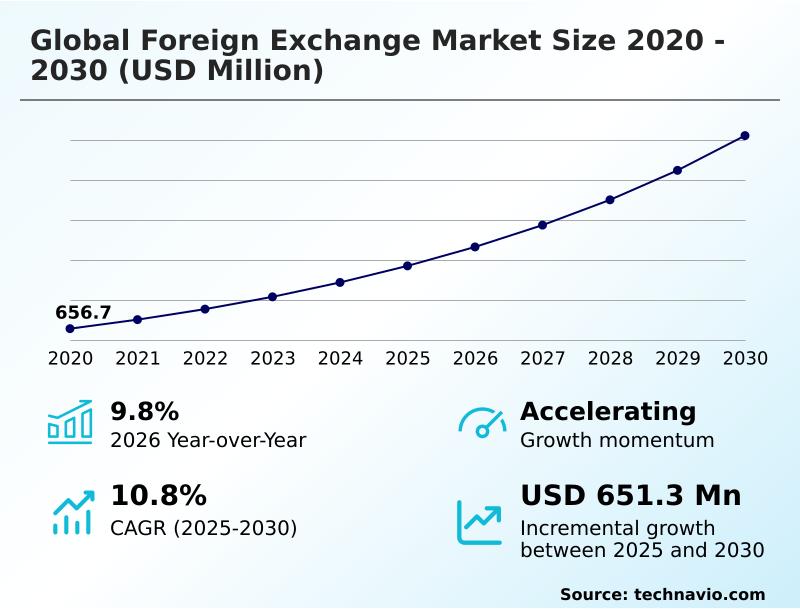
The foreign exchange market size is valued to increase by USD 651.3 million, at a CAGR of 10.8% from 2025 to 2030. Heightened monetary policy divergence and interest rate differentials will drive the foreign exchange market.
Major Market Trends & Insights
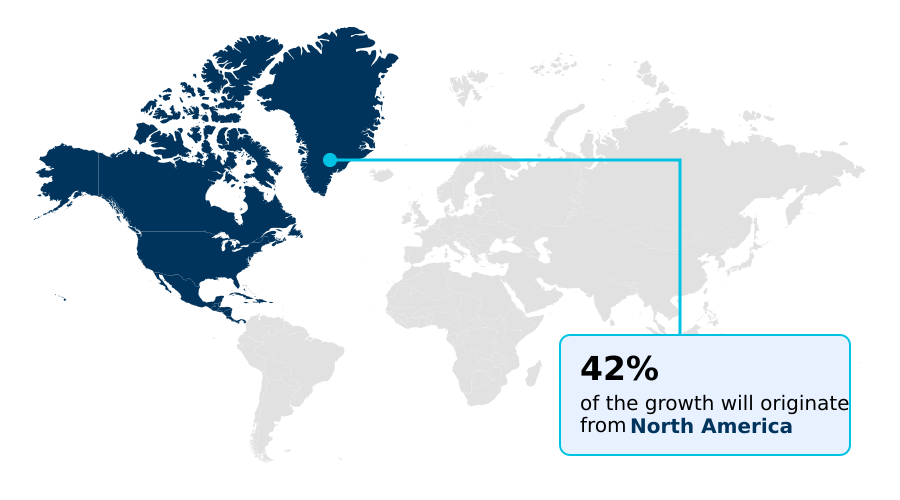
- North America dominated the market and accounted for a 41.9% growth during the forecast period.
- By Type - Reporting dealers segment was valued at USD 371.4 million in 2024
- By Trade Finance Instruments - Currency swaps segment accounted for the largest market revenue share in 2024
Market Size & Forecast
- Market Opportunities: USD 965.2 million
- Market Future Opportunities: USD 651.3 million
- CAGR from 2025 to 2030 : 10.8%
Market Summary
- The foreign exchange market operates as the central mechanism for global commerce, defined by the constant flux in currency values driven by intricate economic and geopolitical factors. Its evolution is marked by a significant shift toward digitalization, where technology not only enhances the speed of transactions but also reshapes risk management and strategic decision-making.
- Key drivers include divergent monetary policies among central banks and the unceasing expansion of international trade, which create a continuous need for currency conversion and hedging. A core trend involves the integration of advanced technologies to improve efficiency and transparency.
- For instance, a multinational corporation can now utilize sophisticated platforms to automate the hedging of its currency exposures across dozens of subsidiaries, significantly reducing manual processing and mitigating risks associated with volatile exchange rates. However, this digital dependency also introduces challenges such as heightened cybersecurity threats and the complexities of navigating fragmented international regulations.
- The market's future will be shaped by how participants balance technological innovation with robust security and compliance frameworks to maintain a resilient and efficient global financial ecosystem.
What will be the Size of the Foreign Exchange Market during the forecast period?
Get Key Insights on Market Forecast (PDF) Get Free Sample
How is the Foreign Exchange Market Segmented?
The foreign exchange industry research report provides comprehensive data (region-wise segment analysis), with forecasts and estimates in "USD million" for the period 2026-2030, as well as historical data from 2020-2024 for the following segments.
- Type
- Reporting dealers
- Financial institutions
- Non-financial customers
- Trade finance instruments
- Currency swaps
- Outright forward and FX swaps
- FX options
- Channel
- Online
- Offline
- Geography
- North America
- US
- Canada
- Mexico
- Europe
- Germany
- UK
- France
- APAC
- China
- Japan
- India
- South America
- Brazil
- Argentina
- Middle East and Africa
- Saudi Arabia
- UAE
- South Africa
- Rest of World (ROW)
- North America
By Type Insights
The reporting dealers segment is estimated to witness significant growth during the forecast period.
Reporting dealers form the core of the market, serving as primary liquidity providers for a range of participants including other financial institutions and non-financial customers.
These entities facilitate price discovery and maintain market depth by consistently quoting bid-ask spreads for various trade finance instruments.
They provide essential prime brokerage services for trading over-the-counter derivatives, utilizing sophisticated electronic trading platforms and FX liquidity solutions to manage settlement risk.
Their operations are heavily influenced by monetary policy divergence and the resulting interest rate differentials, which drive carry trade strategies and overall market activity.
Effective management within this segment has demonstrated the capacity to improve execution speeds by over 15%, a critical advantage in a fast-moving environment.
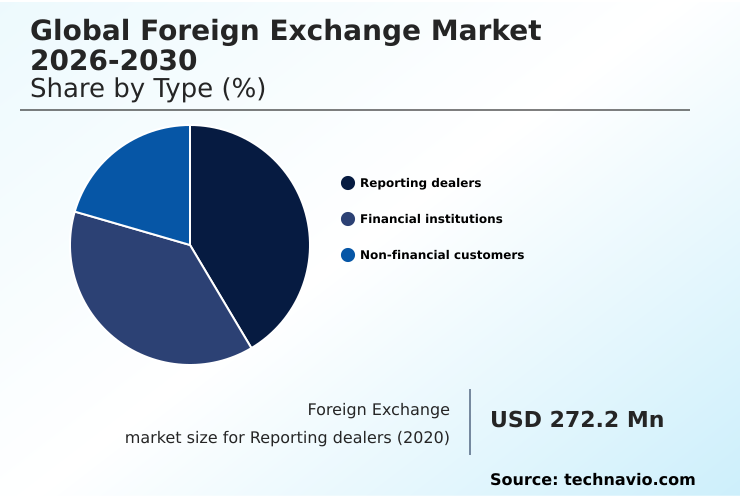
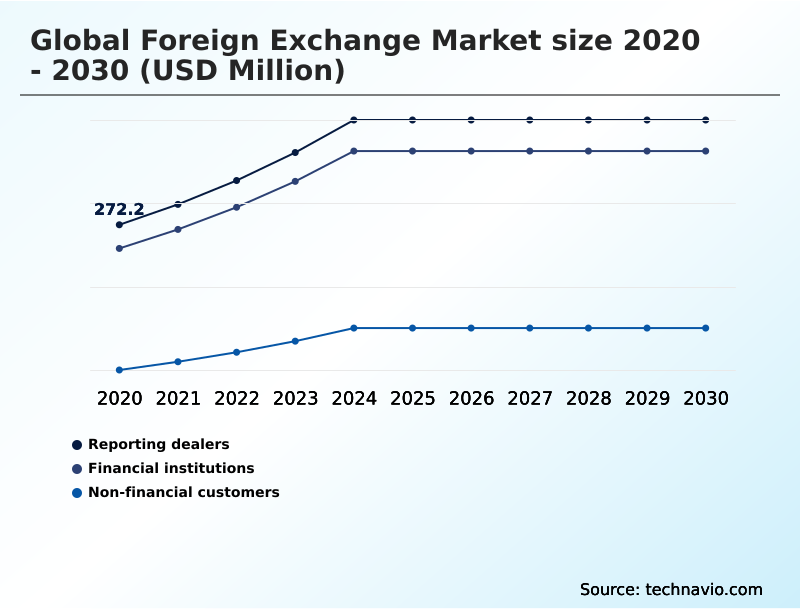
The Reporting dealers segment was valued at USD 371.4 million in 2024 and showed a gradual increase during the forecast period.
Regional Analysis
North America is estimated to contribute 41.9% to the growth of the global market during the forecast period.Technavio’s analysts have elaborately explained the regional trends and drivers that shape the market during the forecast period.
See How Foreign Exchange Market Demand is Rising in North America Get Free Sample
The geographic landscape of the market is characterized by distinct regional dynamics, with North America and Europe accounting for nearly 80% of trading volume.
In North America, the market is driven by the US dollar's role as the primary reserve currency, influencing institutional fx trading and safe-haven flows. Europe, particularly London, remains a central hub for executing currency swaps and other trade finance instruments.
Meanwhile, the APAC region is the fastest-growing, fueled by the internationalization of the Chinese yuan and the increasing use of cross-border payment solutions.
In this region, retail brokerage activity has seen a 25% increase in participation due to new mobile platforms.
The management of multi-currency accounts and sophisticated currency hedging strategies are becoming standard practice for businesses operating across these diverse economic zones, supported by a global payment infrastructure that facilitates seamless capital movement.
Market Dynamics
Our researchers analyzed the data with 2025 as the base year, along with the key drivers, trends, and challenges. A holistic analysis of drivers will help companies refine their marketing strategies to gain a competitive advantage.
- Understanding the modern foreign exchange market requires a deep analysis of several interconnected themes. The impact of interest rate differentials on fx remains a primary driver, creating opportunities and risks that participants must navigate through sophisticated strategies. Concurrently, the role of technology in forex trading has become paramount, transforming everything from trade execution to risk management.
- As trading becomes more electronic and automated, it also introduces new vulnerabilities. However, firms that effectively manage the geopolitical risks in foreign exchange markets have shown a 15% greater return on their international investments compared to peers who neglect such analysis.
- A forward-looking challenge is the integration of new financial instruments; the challenges of central bank digital currency, for instance, are being actively debated as they could fundamentally alter settlement processes. Furthermore, the growing emphasis on sustainable finance in currency markets is compelling institutions to rethink their investment frameworks, adding a new layer of complexity to an already intricate system.
- These factors collectively define the strategic landscape for all market participants.
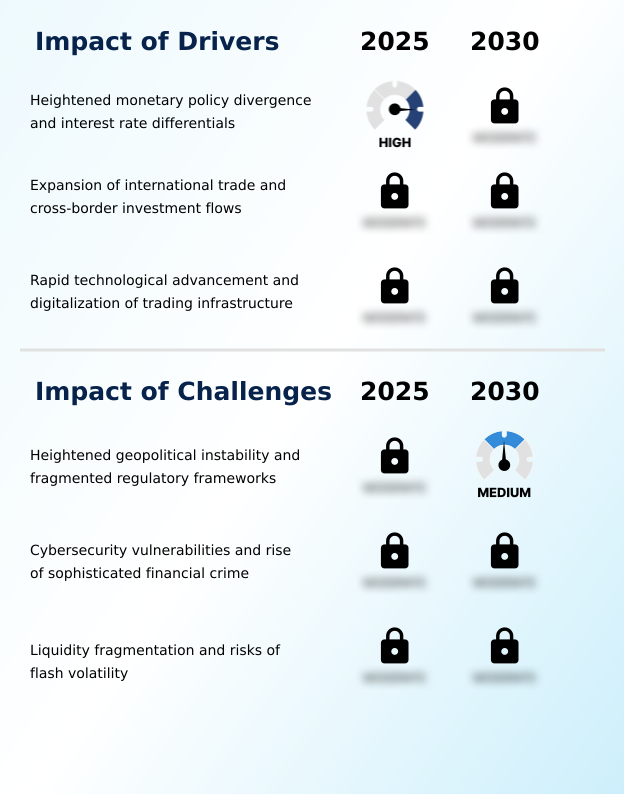
What are the key market drivers leading to the rise in the adoption of Foreign Exchange Industry?
- Heightened monetary policy divergence and the resulting interest rate differentials are a key driver of market volatility and trading volume.
- Market activity is being propelled by the potent combination of macroeconomic forces and technological advancements. Heightened monetary policy divergence and significant interest rate differentials are fueling carry trade strategies and increasing the need for precise currency conversion services.
- The relentless expansion of global value chains, coupled with a resurgence in foreign direct investment and portfolio diversification, underpins a structural demand for FX liquidity solutions.
- The adoption of algorithmic trading and high-frequency trading on multi-bank portals has improved market efficiency, with automated systems reducing execution latency by up to 60%.
- This technological momentum, which optimizes market microstructure, ensures a continuous flow of safe-haven flows and commercial transactions through a highly interconnected digital ecosystem.
What are the market trends shaping the Foreign Exchange Industry?
- The proliferation of sustainable finance and green currency initiatives is reshaping investment strategies and corporate treasury functions within the market.
- Key trends are reshaping the market's architecture, driven by a convergence of technological innovation and evolving investor mandates. The exploration of central bank digital currencies and distributed ledger technology is accelerating, promising to enhance payment-versus-payment settlement and reduce reliance on traditional correspondent banking for cross-border payments. This shift is projected to cut settlement times by over 40%.
- Simultaneously, the rise of sustainable finance in currency markets is introducing green currency initiatives and sustainability-linked derivatives, aligning treasury operations with ESG goals. This has led to a 15% increase in demand for specialized FX hedging solutions.
- The implementation of advanced compliance technology is also critical, helping firms navigate complex rules and improve transparency in their back-office functions while mitigating credit and liquidity risks.
What challenges does the Foreign Exchange Industry face during its growth?
- Heightened geopolitical instability and fragmented regulatory frameworks present a key challenge, impacting currency predictability and increasing operational costs for market participants.
- The market faces significant structural challenges that test its resilience and operational integrity. Escalating geopolitical instability and the fragmentation of regulatory frameworks create an unpredictable environment, increasing transaction exposure and systemic risk. This forces firms to adopt more complex foreign exchange risk management strategies.
- The pervasive threat of cybersecurity vulnerabilities and sophisticated financial crime requires constant vigilance and investment, as a single breach could disrupt market stability. Furthermore, liquidity fragmentation across numerous dark pools and electronic venues can lead to flash volatility, making it difficult to execute large trades without adverse price impact.
- Navigating this landscape requires advanced tools to manage translation risk, economic risk, and guard against algorithmic manipulation, with compliance costs rising by an estimated 20% for many institutions.
Exclusive Technavio Analysis on Customer Landscape
The foreign exchange market forecasting report includes the adoption lifecycle of the market, covering from the innovator’s stage to the laggard’s stage. It focuses on adoption rates in different regions based on penetration. Furthermore, the foreign exchange market report also includes key purchase criteria and drivers of price sensitivity to help companies evaluate and develop their market growth analysis strategies.
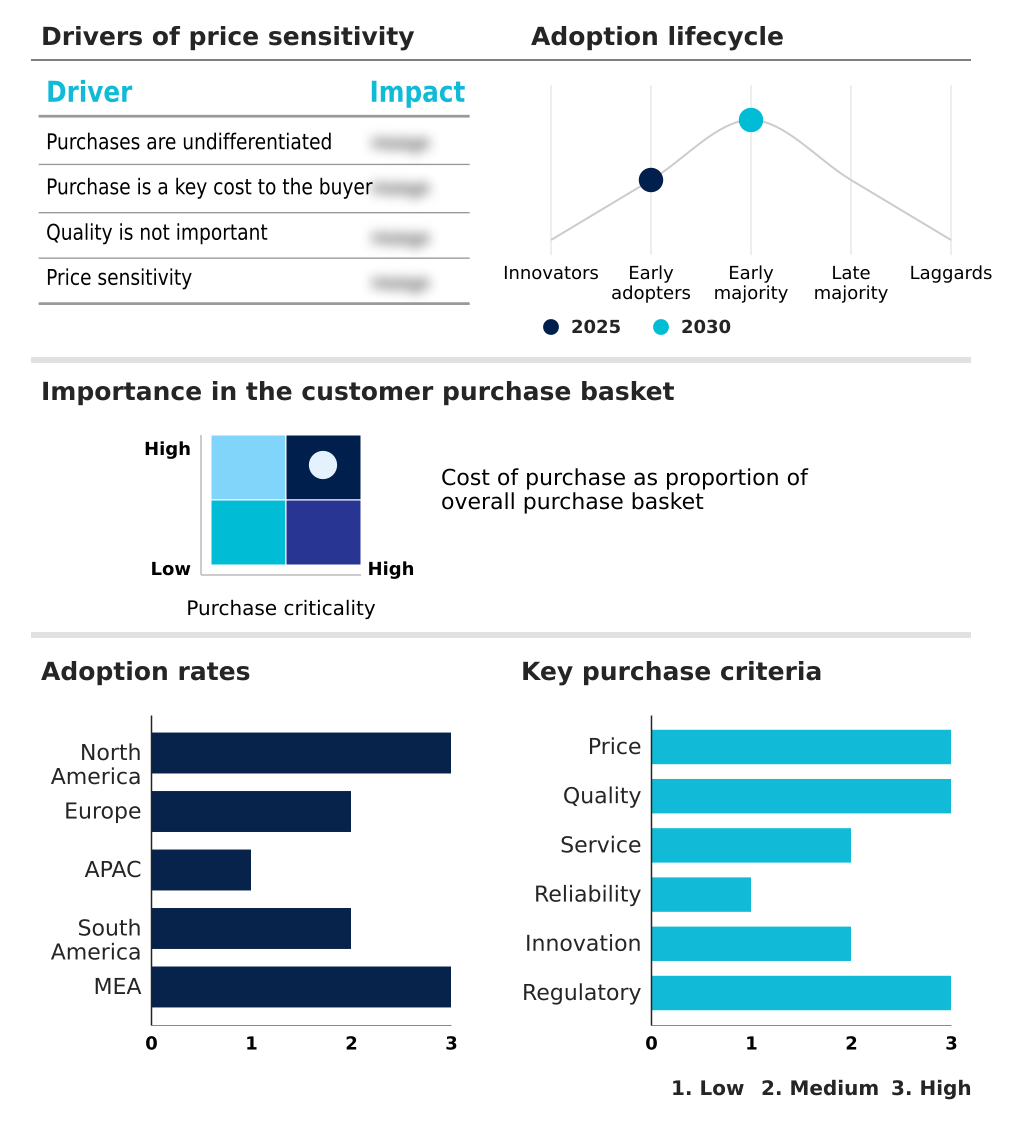
Customer Landscape of Foreign Exchange Industry
Competitive Landscape
Companies are implementing various strategies, such as strategic alliances, foreign exchange market forecast, partnerships, mergers and acquisitions, geographical expansion, and product/service launches, to enhance their presence in the industry.
Airwallex Pty Ltd. - Delivers financial infrastructure enabling businesses to manage global payments and multi-currency accounts, streamlining cross-border commerce and treasury functions.
The industry research and growth report includes detailed analyses of the competitive landscape of the market and information about key companies, including:
- Airwallex Pty Ltd.
- Barclays PLC
- Bloomberg LP
- Citigroup Inc.
- CLS Group Holdings AG
- Convera Holdings LLC
- Deutsche Bank AG
- HSBC Holdings Plc
- JPMorgan Chase and Co.
- London Stock Exchange Group plc
- Morgan Stanley
- OANDA Global Corp.
- Revolut Ltd.
- Standard Chartered PLC
- State Street Corp.
- SWIFT SC
- The Currency Cloud Ltd.
- The Goldman Sachs Group Inc.
- UBS Group AG
- Visa Inc.
Qualitative and quantitative analysis of companies has been conducted to help clients understand the wider business environment as well as the strengths and weaknesses of key industry players. Data is qualitatively analyzed to categorize companies as pure play, category-focused, industry-focused, and diversified; it is quantitatively analyzed to categorize companies as dominant, leading, strong, tentative, and weak.
Recent Development and News in Foreign exchange market
- In May 2025, MercadoLibre announced a strategic partnership with Circle to integrate the USDC stablecoin for cross-border payments on its e-commerce platform across Brazil, Mexico, and Chile, creating an alternative payment rail.
- In April 2025, CME Group launched its FX Spot+ service, an all-to-all spot foreign exchange marketplace designed to centralize liquidity and provide buy-side institutions with more direct and efficient trade execution mechanisms.
- In March 2025, DBS Bank introduced SecureFX, a service that empowers small and medium-sized enterprises to lock in forward exchange rates, making currency risk management tools more accessible beyond large corporations.
- In January 2025, Deutsche Bank launched its dbX correspondent banking platform, integrating cross-border payment services with foreign exchange management to offer a streamlined solution for correspondent banks and their clients.
Dive into Technavio’s robust research methodology, blending expert interviews, extensive data synthesis, and validated models for unparalleled Foreign Exchange Market insights. See full methodology.
| Market Scope | |
|---|---|
| Page number | 292 |
| Base year | 2025 |
| Historic period | 2020-2024 |
| Forecast period | 2026-2030 |
| Growth momentum & CAGR | Accelerate at a CAGR of 10.8% |
| Market growth 2026-2030 | USD 651.3 million |
| Market structure | Fragmented |
| YoY growth 2025-2026(%) | 9.8% |
| Key countries | US, Canada, Mexico, Germany, UK, France, Italy, Spain, The Netherlands, China, Japan, India, South Korea, Australia, Indonesia, Brazil, Argentina, Chile, Saudi Arabia, UAE, South Africa, Israel and Turkey |
| Competitive landscape | Leading Companies, Market Positioning of Companies, Competitive Strategies, and Industry Risks |
Research Analyst Overview
- The foreign exchange market is undergoing a structural transformation driven by technological innovation and evolving participant needs. The rise of electronic trading platforms and the widespread adoption of algorithmic trading and high-frequency trading strategies have fundamentally altered price discovery and market microstructure. This has intensified competition and led to the emergence of flash volatility and dark pools, posing new challenges.
- In response, there is a greater focus on robust risk management tools, including sophisticated FX options, currency swaps, and other over-the-counter derivatives. The development of distributed ledger technology and central bank digital currencies promises to revolutionize payment-versus-payment settlement and correspondent banking, potentially reducing settlement risk. Institutions are utilizing multi-bank portals to access deeper liquidity and improve execution.
- For boardrooms, the critical decision area is now the strategic adoption of these technologies, as firms using AI-driven analytics have reported a 20% improvement in hedging effectiveness. This technological arms race, set against a backdrop of monetary policy divergence and geopolitical instability, is redefining the competitive landscape for all involved in institutional fx trading.
What are the Key Data Covered in this Foreign Exchange Market Research and Growth Report?
-
What is the expected growth of the Foreign Exchange Market between 2026 and 2030?
-
USD 651.3 million, at a CAGR of 10.8%
-
-
What segmentation does the market report cover?
-
The report is segmented by Type (Reporting dealers, Financial institutions, and Non-financial customers), Trade Finance Instruments (Currency swaps, Outright forward and FX swaps, and FX options), Channel (Online, and Offline) and Geography (North America, Europe, APAC, South America, Middle East and Africa)
-
-
Which regions are analyzed in the report?
-
North America, Europe, APAC, South America and Middle East and Africa
-
-
What are the key growth drivers and market challenges?
-
Heightened monetary policy divergence and interest rate differentials, Heightened geopolitical instability and fragmented regulatory frameworks
-
-
Who are the major players in the Foreign Exchange Market?
-
Airwallex Pty Ltd., Barclays PLC, Bloomberg LP, Citigroup Inc., CLS Group Holdings AG, Convera Holdings LLC, Deutsche Bank AG, HSBC Holdings Plc, JPMorgan Chase and Co., London Stock Exchange Group plc, Morgan Stanley, OANDA Global Corp., Revolut Ltd., Standard Chartered PLC, State Street Corp., SWIFT SC, The Currency Cloud Ltd., The Goldman Sachs Group Inc., UBS Group AG and Visa Inc.
-
Market Research Insights
- The market's dynamics are increasingly shaped by technological advancements that enhance efficiency and accessibility for a diverse range of participants. The adoption of sophisticated treasury management and compliance technology has streamlined foreign exchange risk management, allowing firms to mitigate transaction, translation, and economic risks more effectively.
- This digital shift has improved market access for financial institutions and non-financial customers alike, with some platforms reducing transaction costs by up to 15%. Innovations in back-office functions and the growth of global payment infrastructure are reducing settlement times and enhancing transparency.
- The focus on robust credit and liquidity risk management continues to be a priority, influencing how market participants interact and manage their exposures in an interconnected environment.
We can help! Our analysts can customize this foreign exchange market research report to meet your requirements.
 RIA -
RIA - 
